
 (800) 949-0401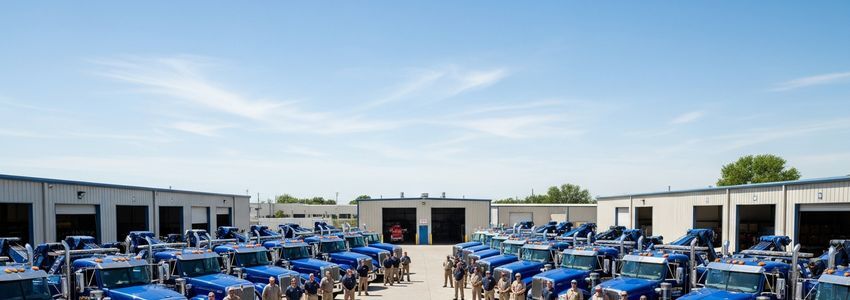
Towing Company Business Loans: The Complete Financing Guide for Towing Company Owners
The towing industry is the backbone of roadside assistance, a critical service that keeps traffic moving and drivers safe. As a towing company owner, you understand the immense pressure and capital required to operate successfully. From maintaining a modern, reliable fleet of wreckers and flatbeds to managing unpredictable cash flow, the financial challenges are significant. Accessing the right type of capital at the right time is not just a benefit; it's a necessity for survival and growth in this competitive field.
Traditional banks often struggle to understand the unique business model of a towing company. They may see the high-value, specialized equipment as a liability and the fluctuating revenue streams as a risk. This can lead to slow approvals, rigid terms, and frustrating denials. This guide is designed to cut through that complexity, providing a clear roadmap to securing towing company business loans that are structured to meet the specific demands of your operation, whether you're a one-truck owner-operator or managing a large, multi-state fleet.
In This Article
- What Are Towing Company Business Loans?
- Why Towing Companies Need Specialized Financing
- Types of Loans for Towing Companies
- The Towing Industry by the Numbers
- How Towing Company Loans Work
- Qualification Requirements
- How Crestmont Capital Helps Towing Companies
- Real-World Scenarios
- Comparison: Loan Options for Towing Companies
- Frequently Asked Questions
- How to Get Started (Next Steps)
- Conclusion
What Are Towing Company Business Loans?
Towing company business loans are a category of financial products specifically designed to address the capital needs of businesses in the vehicle recovery and transport industry. Unlike generic business loans, these financing solutions are tailored to the assets, cash flow cycles, and operational realities of a towing company. They provide the necessary funding to purchase essential equipment, manage day-to-day expenses, and seize growth opportunities.
The core purpose of these loans is to bridge the gap between immediate capital needs and long-term revenue generation. For example, acquiring a new heavy-duty rotator can cost hundreds of thousands of dollars, an amount most businesses cannot pay out-of-pocket. A specialized loan allows you to acquire that asset immediately and pay for it over time as it generates income for your business. This principle applies across all aspects of your operation, from hiring more drivers to launching a marketing campaign to win a lucrative municipal contract.
These financial tools recognize that your most valuable assets are on wheels. Lenders who specialize in the towing industry, like Crestmont Capital, understand the resale value of a well-maintained tow truck and the revenue potential of an expanded fleet. This expertise allows for more flexible underwriting, faster approval times, and loan structures that align with your business's financial health and projections. In essence, these are not just loans; they are strategic growth partnerships.
Why Towing Companies Need Specialized Financing
The towing industry operates under a unique set of financial pressures that make generic, one-size-fits-all loans ineffective. A lender who doesn't understand the difference between a wrecker and a flatbed, or the payment cycles of insurance companies and motor clubs, is unlikely to provide the optimal financing solution. Specialized financing is crucial for several key reasons.
First and foremost is the high cost of essential equipment. A single new heavy-duty tow truck can easily cost over $300,000, while specialized recovery vehicles can approach a million dollars. Equipment financing designed for the towing industry uses the truck itself as collateral, making it easier to secure funding without tying up other business or personal assets. This approach also allows for flexible terms that match the useful life of the vehicle.
Second, cash flow in the towing industry can be notoriously unpredictable. You may have a surge of business during a winter storm, followed by a slower period. At the same time, fixed costs like insurance, fuel, and driver salaries remain constant. Payment cycles from motor clubs and insurance companies can also be lengthy, creating gaps between when you perform a service and when you receive payment. Working capital loans and lines of credit provide a vital cash cushion to cover payroll, repairs, and other operating expenses during these lulls, ensuring your business runs smoothly.
Finally, growth opportunities often require immediate action. A competitor might be selling their fleet, a profitable municipal contract might become available, or you may have the chance to open a new yard in a strategic location. Specialized lenders can provide capital quickly, often in a matter of days, allowing you to act decisively. Traditional banks, with their lengthy application and underwriting processes, can take weeks or months, by which time the opportunity may have passed. This speed and agility are a significant competitive advantage.
Ready to Finance Your Towing Fleet?
Get fast, flexible financing from the #1 business lender in the U.S. Apply in minutes - no obligation.
Apply Now →Types of Loans for Towing Companies
Navigating the world of business financing can be confusing, but understanding the primary loan types available to you is the first step toward making a strategic decision. Each option is designed for a specific purpose, from acquiring new assets to managing daily cash flow. Here are the most common and effective financing solutions for towing company owners.
Equipment Financing and Tow Truck Financing
This is the most common type of financing for towing companies. Tow truck financing is a specific form of equipment financing where the loan is used to purchase new or used tow trucks, flatbeds, wreckers, or other service vehicles. The truck itself serves as the collateral for the loan, which often makes it easier to qualify for than other types of financing. Because the loan is secured by a hard asset with a predictable value, lenders can offer competitive rates and longer repayment terms, often from 2 to 7 years. This spreads the cost of the vehicle over its revenue-generating lifespan, making a significant capital investment much more manageable.
Working Capital Loans
Working capital is the lifeblood of any business, and it's especially critical in the towing industry. A working capital loan provides a lump sum of cash to cover short-term operational needs. This can include anything from payroll and insurance premiums to unexpected major repairs, fuel costs, or marketing expenses. These loans are designed to smooth out cash flow bumps caused by seasonal slowdowns or delayed payments from clients. They are typically shorter-term loans, with repayment periods ranging from a few months to a couple of years, and provide the liquidity needed to keep your business running without interruption.
Business Lines of Credit
A business line of credit offers more flexibility than a traditional loan. Instead of receiving a single lump sum, you are approved for a maximum credit amount that you can draw from as needed. You only pay interest on the funds you actually use, not the entire credit line. This makes it an ideal tool for managing unforeseen expenses or seizing small, time-sensitive opportunities. For a towing company, this could mean having funds on standby to purchase a slightly used truck at an auction or to cover a sudden, expensive engine repair without disrupting your budget. Once you repay the drawn amount, the credit becomes available to use again.
SBA Loans
SBA loans are partially guaranteed by the U.S. Small Business Administration, which reduces the risk for lenders. This often results in more favorable terms, such as lower interest rates and longer repayment periods, compared to conventional loans. Programs like the SBA 7(a) and 504 loans can be used for a wide range of purposes, including purchasing real estate for a new yard, acquiring a competitor's business, refinancing existing debt, or buying major equipment. While the benefits are significant, the application process for SBA loans is notoriously lengthy and document-intensive, making them less suitable for immediate funding needs.
Short-Term Loans
When capital is needed urgently, short-term loans can provide a solution. These loans offer rapid funding, sometimes within 24-48 hours, with a simplified application process. They are designed to address immediate cash flow shortages or to capitalize on urgent opportunities. The trade-off for this speed and convenience is typically a higher interest rate and a shorter repayment period, often less than 18 months. While not ideal for long-term investments, a short-term loan can be a powerful tool for bridging a critical financial gap and preventing a minor issue from becoming a major operational problem.
The Towing Industry by the Numbers
By the Numbers
Towing Industry Financing - Key Statistics
$11.8 Billion
The estimated market size of the Vehicle Towing industry in the U.S. in 2023, demonstrating a substantial and vital sector of the economy.
38,000+
The approximate number of towing businesses operating in the United States, highlighting a competitive but opportunity-rich landscape.
$80k - $700k+
The typical price range for a new tow truck, from a light-duty wrecker to a heavy-duty rotator, underscoring the need for significant capital investment.
75%
Approximately 75% of small businesses that apply for financing are seeking funds for expansion or new equipment, a trend that is especially true in the capital-intensive towing industry.
How Towing Company Loans Work
Securing a business loan for your towing company might seem daunting, but specialized lenders have streamlined the process to make it as efficient as possible. Understanding the key stages can help you prepare and ensure a smooth experience from application to funding. The process is designed for speed, recognizing that in your industry, time is money.

The first step is the application. Unlike traditional banks that require mountains of paperwork, modern lenders like Crestmont Capital offer a simple online application that can often be completed in minutes. You will provide basic information about your business, such as its legal name, time in business, and estimated annual revenue, as well as details about your financing needs, including the amount requested and its intended use.
Next comes underwriting and approval. This is where the lender evaluates the financial health of your business and the risk associated with the loan. They will review documents like recent bank statements and your business credit profile. For equipment financing, they will also assess the value of the tow truck you intend to purchase. Because specialized lenders understand the towing industry, this process is much faster than at a traditional bank. They can often provide a decision and a range of offers within hours, not weeks.
The final stage is funding. Once you accept a loan offer and complete the final documentation, the funds are disbursed. For working capital or short-term loans, the money is typically wired directly into your business bank account, often as soon as the same day. For equipment financing, the lender usually pays the dealership or seller directly, allowing you to take possession of your new truck and put it to work immediately. The entire process, from start to finish, can take as little as 24 hours.
Need Capital to Grow Your Towing Operation?
Fund new trucks, cover operating costs, or expand your fleet. Fast approvals and funding in as little as 24 hours.
Apply Now →Qualification Requirements
Qualifying for a towing company business loan is more accessible than many owners think, especially when working with a lender that understands your industry. While specific requirements vary by loan type and lender, there are several common factors that underwriters will evaluate to determine your eligibility and the terms of your offer.
Key qualification criteria typically include:
- Time in Business: Most lenders prefer to see that a business has been operational for at least six months to a year. This demonstrates a track record and a degree of stability. However, some programs are available for newer businesses, especially for equipment financing where the asset itself provides security.
- Annual Revenue: Lenders will look at your company's gross annual revenue to ensure you have sufficient cash flow to support loan repayments. A common minimum threshold is around $100,000 to $250,000 in annual revenue, though this can vary. Consistent monthly deposits shown on your bank statements are a strong indicator of financial health.
- Credit Score: Both your personal and business credit scores will be considered. While a high score is always beneficial, many alternative lenders have more flexible credit requirements than traditional banks. It's often possible to secure financing with a personal credit score in the low 600s, especially for asset-backed loans.
- Collateral: For secured loans like commercial fleet financing, the equipment being purchased serves as the collateral. This significantly reduces the lender's risk and can make it easier to get approved, even with less-than-perfect credit or a shorter time in business. Unsecured loans, like some working capital products, do not require specific collateral but may have stricter revenue and credit requirements.
Key Insight: Cash Flow Over Credit Score
For many modern lenders, consistent monthly revenue and healthy bank statements are more important than a perfect credit score. They want to see that your towing business is actively generating income and can comfortably handle the loan payments. This focus on real-world performance opens up financing opportunities for many owners who might be declined by traditional banks.
Preparing documents such as the last 3-6 months of business bank statements, a driver's license, and a voided business check can help expedite the process. For larger loan amounts or specific programs like SBA loans, additional documentation like financial statements and tax returns may be required.
How Crestmont Capital Helps Towing Companies
At Crestmont Capital, we are not just a general lender; we are financing partners with deep expertise in the transportation and service industries. We understand the unique challenges and opportunities that towing company owners face every day. This specialized knowledge allows us to provide financing solutions that are faster, more flexible, and better suited to your needs than what traditional financial institutions can offer.
Our primary advantage is speed. We know that when you need a new wrecker to replace a broken-down one or need capital to cover payroll, you cannot afford to wait weeks for a bank's approval committee. Our streamlined online application and rapid underwriting process mean you can get a decision in hours and have funds in your account in as little as one day. This agility ensures you never miss a critical opportunity or suffer from prolonged operational downtime.
We also offer a wide array of financing products under one roof. Whether you need a simple tow truck loan, a flexible line of credit for ongoing expenses, or a larger loan to expand your entire operation, we have a solution. Our financing specialists work with you to understand your specific goals and match you with the product that offers the best terms and structure for your situation. We look beyond just credit scores, focusing on your business's overall health and cash flow to find a way to get you funded.
Finally, we pride ourselves on transparency and partnership. We lay out all terms, rates, and fees clearly, so you can make an informed decision. Our goal is to build long-term relationships with our clients, providing the capital they need to grow and thrive over the years. When you work with Crestmont Capital, you gain a financial partner who is invested in the success of your towing business.
Real-World Scenarios
To better understand how different types of towing company business loans work in practice, let's explore a few common scenarios that owners face.
Scenario 1: Fleet Modernization with Equipment Financing
ABC Towing has been in business for 10 years and has a fleet of five trucks. Two of their older flatbeds are becoming unreliable, leading to increased maintenance costs and downtime. The owner wants to replace them with two new, more efficient models, costing $110,000 each. Instead of draining their cash reserves, they apply for equipment financing. The lender approves a loan for the full $220,000, using the two new trucks as collateral. ABC Towing makes a predictable monthly payment over a 6-year term, and the new, reliable trucks immediately increase their service capacity and reduce repair expenses, easily covering the cost of the loan payments.
Scenario 2: Managing a Cash Flow Gap with a Working Capital Loan
Reliable Recovery Services lands a major contract with a regional insurance provider. This results in a huge increase in service calls, but the insurance company pays on a net-60 day cycle. The owner faces a short-term cash crunch, needing money for fuel, overtime pay for drivers, and other increased operational costs before the first big payment comes in. They secure a $50,000 working capital loan. The funds are deposited within 48 hours, allowing them to service the new contract seamlessly. They repay the loan over 12 months, and the profits from the new contract far outweigh the cost of financing.
Did You Know?
According to data from Forbes Advisor, insufficient cash flow is a primary reason that many small businesses fail. Proactively securing a line of credit or working capital loan can be a crucial strategy for ensuring long-term stability.
Scenario 3: Seizing an Opportunity with a Business Line of Credit
The owner of Metro Towing learns that a competitor in an adjacent territory is retiring and selling a well-maintained, late-model heavy-duty wrecker for a great price. The opportunity is time-sensitive. Instead of applying for a new loan, the owner draws $75,000 from their pre-approved $150,000 business line of credit. They are able to purchase the truck that same week, expanding their heavy-duty recovery capabilities. They only pay interest on the $75,000 they used and can now aggressively pursue more lucrative commercial towing contracts.
Comparison: Loan Options for Towing Companies
Choosing the right financing product depends entirely on your specific business need. This table provides a quick comparison of the most common loan options to help you identify the best fit for your situation.
| Loan Type | Best For | Typical Amount | Term Length | Funding Speed |
|---|---|---|---|---|
| Equipment Financing | Purchasing new or used tow trucks, flatbeds, and service vehicles. | $25,000 - $1,000,000+ | 2 - 7 Years | 2 - 5 Days |
| Working Capital Loan | Covering payroll, fuel, insurance, repairs, and other operational expenses. | $10,000 - $500,000 | 6 - 24 Months | 1 - 3 Days |
| Business Line of Credit | Managing unexpected expenses, cash flow fluctuations, and small opportunities. | $10,000 - $250,000 | Revolving (1 - 3 Years) | 1 - 5 Days |
| SBA Loan | Major investments like buying real estate, acquiring a business, or large-scale expansion. | $50,000 - $5,000,000 | 7 - 25 Years | 30 - 90+ Days |
| Short-Term Loan | Urgent, time-sensitive needs where speed is the top priority. | $5,000 - $250,000 | 3 - 18 Months | As fast as 24 hours |
Frequently Asked Questions
What is the minimum credit score for a towing business loan? +
While requirements vary, many lenders can work with business owners who have a personal credit score of 600 or even lower, especially for equipment financing where the truck serves as collateral. Strong business revenue and cash flow can often offset a lower credit score.
How quickly can I get funded for a tow truck loan? +
With a specialized lender like Crestmont Capital, the process is very fast. After a quick application, you can receive approval within hours. Funding for a tow truck can happen in as little as 24-48 hours, allowing you to get your new vehicle on the road almost immediately.
Can I finance a used tow truck? +
Yes, absolutely. Most lenders who specialize in the towing industry offer financing for both new and used tow trucks. Financing a used truck can be a cost-effective way to expand your fleet, and lenders understand the value of well-maintained, pre-owned equipment.
What documents do I need to apply for a loan? +
For most streamlined applications, you will only need basic information and the last 3-6 months of your business bank statements. For larger loans or SBA loans, you may also need to provide tax returns, profit and loss statements, and a balance sheet.
Are towing company business loans secured or unsecured? +
They can be both. Tow truck and equipment financing are secured loans, with the equipment itself as collateral. Working capital loans and lines of credit can be unsecured, meaning they don't require specific collateral, but may require a personal guarantee.
Can a new towing business get a loan? +
While challenging, it is possible for startups. New businesses (less than 1 year old) may qualify for equipment financing, especially with a strong business plan, good personal credit, and a down payment. The purchased truck secures the loan, reducing the lender's risk.
What can I use a working capital loan for? +
You can use a working capital loan for nearly any short-term business expense. Common uses for towing companies include covering payroll, paying insurance premiums, buying fuel, funding marketing efforts, or handling unexpected major repairs to your vehicles.
How does a business line of credit work for a towing company? +
A business line of credit provides a revolving credit limit. You can draw funds as you need them, up to your limit, and you only pay interest on what you've used. It's a flexible safety net for unexpected costs, like a blown engine, or for seizing small, quick opportunities.
What are typical interest rates for towing company loans? +
Interest rates vary widely based on the loan type, your creditworthiness, time in business, and overall financial health. Secured equipment loans typically have lower rates than unsecured short-term loans. Working with a lender that has a large network can help you find the most competitive rates available.
Does a down payment help me get approved? +
Yes, especially for equipment financing. A down payment reduces the amount you need to borrow, which lowers the lender's risk and increases your chances of approval. It can also lead to better interest rates and more favorable loan terms.
Can I get a loan if my business has bad credit? +
Yes, it's possible. Many alternative lenders specialize in providing financing for businesses with less-than-perfect credit. They place a greater emphasis on your recent revenue and cash flow. Asset-backed loans are often the most accessible option for businesses with credit challenges.
What's the difference between a loan and a lease for a tow truck? +
With a loan, you are borrowing money to purchase the truck, and you own it at the end of the term. With a lease, you are essentially renting the truck for a set period. Leasing may offer lower monthly payments, but you don't build equity. At the end of the lease, you can typically return the truck, renew the lease, or purchase it.
How much financing can my towing company get? +
The amount of financing you can receive depends on your business's annual revenue, cash flow, credit profile, and the type of loan. It can range from as little as $5,000 for a small working capital loan to over $1,000,000 for large-scale equipment purchases or fleet expansion.
Are there specific loan programs for expanding my towing fleet? +
Yes. Commercial fleet financing is designed for this exact purpose. These programs allow you to finance multiple vehicles under a single agreement, often with flexible terms and structures that simplify the management of your fleet's financing.
Why should I choose a specialized lender like Crestmont Capital over a bank? +
Specialized lenders offer several key advantages: industry expertise, which leads to a better understanding of your needs; faster application and funding times (hours/days vs. weeks/months); more flexible qualification criteria that focus on cash flow; and a wider range of tailored products specifically for the towing industry.
Have More Questions? We Have Answers.
Our financing experts are ready to help you find the perfect loan for your towing business. Start your application today.
Apply Now →How to Get Started (Next Steps)
Securing the financing your towing company needs is a straightforward process with Crestmont Capital. We've eliminated the typical banking bureaucracy to get you from application to funding as quickly as possible. Follow these simple steps to take control of your business's financial future.
Submit a Quick Application
Fill out our secure online application in just a few minutes. You'll provide basic details about your business and your funding requirements. There's no cost or obligation to apply.
Review Your Offers
A dedicated financing specialist will contact you to discuss your needs and present you with the best available loan options. We'll walk you through the rates, terms, and payment structures so you can make a confident choice.
Get Funded
Once you select your preferred option and sign the final documents electronically, the funds are released. For equipment, we pay the seller directly. For working capital, the cash is deposited into your business account, often on the same day.
Conclusion
In the demanding and capital-intensive towing industry, having a reliable financial partner is not a luxury-it's a core component of your success. The ability to quickly acquire new trucks, manage unpredictable cash flow, and invest in growth is what separates thriving companies from those that stagnate. Generic small business loans from traditional banks often miss the mark, failing to account for the specific assets and operational rhythms of your business.
Specialized towing company business loans provide the tailored, flexible, and rapid funding you need to keep your fleet on the road and your business moving forward. From equipment financing that turns your most critical assets into a path for growth, to working capital loans that provide stability in a volatile market, the right financial tools are available. By partnering with a lender that understands your industry, you can spend less time worrying about financing and more time doing what you do best: serving your community and growing your business.
Disclaimer: The information provided in this article is for general educational purposes only and is not financial, legal, or tax advice. Funding terms, qualifications, and product availability may vary and are subject to change without notice. Crestmont Capital does not guarantee approval, rates, or specific outcomes. For personalized information about your business funding options, contact our team directly.








