
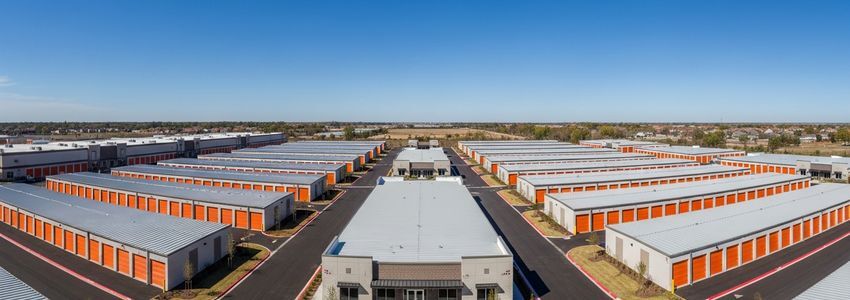
The self-storage industry is a cornerstone of the American commercial real estate landscape, known for its resilience and consistent demand, as recognized by industry analysts. For entrepreneurs and investors looking to enter or expand within this lucrative market, securing the right capital is the most critical step. Understanding the nuances of storage unit business loans is paramount to acquiring, constructing, or refinancing a facility successfully. These specialized financial products are designed to meet the unique needs of storage businesses, from ground-up construction projects to the acquisition of established, cash-flowing properties. Navigating the world of commercial lending can be complex, but with the right knowledge and a dedicated financial partner, you can unlock the funding necessary to achieve your business goals.
This comprehensive guide serves as your roadmap to storage facility financing. We will explore everything from the fundamental mechanics of these loans to the specific qualifications lenders look for. Whether you are a seasoned operator planning a multi-site expansion or a first-time buyer targeting your initial investment, this article will provide the clarity and insights you need. We will break down the various types of loans available, including SBA-backed options and conventional commercial mortgages, helping you determine which solution best aligns with your project's scope and financial profile. The goal is to empower you with the information to make strategic financing decisions that support long-term growth and profitability.
At Crestmont Capital, a top-rated U.S. business lender founded in 2015, we specialize in providing tailored financing solutions for the self-storage industry. Our team of experts understands the market dynamics, operational models, and asset-specific considerations that define a successful storage business. We are committed to simplifying the lending process, offering transparent terms and a streamlined application-to-funding experience. This guide reflects our deep industry knowledge and our dedication to helping storage facility owners like you access the capital required to build and grow a thriving enterprise. Let's dive into the complete guide to financing your storage facility venture.
In This Article
- What Are Storage Unit Business Loans?
- Key Benefits of Financing a Storage Facility
- How Storage Unit Business Financing Works
- Types of Financing Available
- Who Qualifies for Storage Facility Loans?
- Rates and Terms to Expect
- How Crestmont Capital Helps
- Real-World Financing Scenarios
- How to Apply for a Storage Unit Loan
- Storage Unit Loans vs. Other Options
- How to Get Started with Funding
- Frequently Asked Questions
- Conclusion
What Are Storage Unit Business Loans?
Storage unit business loans are a specialized category of commercial financing designed specifically for the acquisition, development, expansion, or refinancing of self-storage facilities. Unlike generic small business loans, these financial instruments are structured around the unique characteristics of the self-storage asset class, which is treated as a form of income-producing commercial real estate. Lenders who specialize in this niche, like Crestmont Capital, understand the business model, key performance indicators (KPIs), and risk factors associated with storage facilities, allowing them to offer more favorable and appropriate terms.
The core purpose of these loans is to provide the significant capital required to engage in the self-storage market. The funds can be used for a wide range of purposes, each critical to the lifecycle of a storage business:
- Acquisition: The most common use is to purchase an existing, operational self-storage facility. This allows an investor to acquire a business with an established customer base, existing cash flow, and a proven track record.
- Construction and Development: For entrepreneurs looking to build a new facility from the ground up, construction loans provide capital in stages (draws) as the project meets specific milestones. This covers costs like land acquisition, site preparation, building materials, and labor.
- Expansion: Owners of successful facilities often seek financing to expand their property by adding more units, climate-controlled buildings, or RV and boat storage areas. This capital helps them meet growing demand and increase revenue potential.
- Refinancing: Business owners may refinance an existing loan to secure a lower interest rate, change the loan term, or convert a variable-rate loan to a fixed rate. Cash-out refinancing is also common, allowing owners to pull equity from their property to reinvest in the business or other ventures.
- Renovation and Upgrades: Capital can be used to modernize an older facility. This includes projects like installing new security systems, upgrading to automated gate access, repaving driveways, or converting standard units to climate-controlled ones to command higher rents.
These loans are typically secured by the property itself, meaning the storage facility serves as collateral. This secured nature often allows for larger loan amounts, longer repayment terms, and more competitive interest rates compared to unsecured business loans. The underwriting process heavily scrutinizes the property's financial performance (or projected performance for new construction), including occupancy rates, rental income, operating expenses, and Net Operating Income (NOI). Lenders also assess the borrower's credit history, business experience, and financial strength. In essence, a storage unit business loan is a powerful tool that bridges the gap between an investor's vision and the reality of owning a profitable, high-value commercial asset.
Key Benefits of Financing a Storage Facility
The self-storage industry has proven to be one of the most resilient and profitable sectors in commercial real estate. According to a Forbes Advisor report, the industry has demonstrated remarkable stability even during economic downturns. Financing a storage facility, rather than purchasing it outright with cash, offers several strategic advantages that can amplify returns and accelerate growth for investors and operators.
Industry Growth: The U.S. self-storage market is projected to grow significantly, with market size expected to reach over $70 billion in the coming years. This growth is driven by consistent demand from residential and commercial customers needing extra space.
Here are the key benefits of using storage unit business loans:
1. Leverage and Amplified Returns
Leverage is the primary advantage of financing. By using a loan to cover the majority of the purchase or construction price (typically 75-90%), you can control a high-value asset with a relatively small initial cash investment (the down payment). This magnifies your potential return on equity (ROE). For example, if a facility's value increases by 10%, that gain is calculated on the total asset value, not just your down payment. This can result in a much higher percentage return on your actual cash invested compared to an all-cash purchase.
2. Preservation of Liquid Capital
Purchasing a commercial property like a storage facility requires a substantial amount of capital. Financing allows you to preserve your liquid cash for other critical business needs. This preserved capital can be used for:
- Operating Reserves: Covering initial operating expenses, marketing, and payroll before the facility reaches stable occupancy.
- Capital Improvements: Funding immediate upgrades to a newly acquired facility to increase its value and rental rates.
- Future Opportunities: Having cash on hand allows you to act quickly on other investment opportunities, such as acquiring another property or expanding your existing one.
3. Scalability and Portfolio Growth
For investors looking to build a portfolio, financing is essential for scalability. Instead of using all your capital to buy one facility, you can use that same amount of cash as down payments for multiple properties. This strategy allows you to grow your portfolio and revenue streams much faster. By spreading your investment across several assets, you also diversify your portfolio and mitigate risk associated with a single property's performance.
4. Stable and Predictable Cash Flow Model
The self-storage business model is built on consistent, recurring monthly revenue from a large number of tenants. This creates a stable and predictable cash flow stream, which is highly attractive to lenders. Once you secure a long-term, fixed-rate loan, your largest expense (debt service) becomes a fixed, predictable cost. This financial stability makes it easier to manage budgets, forecast profits, and plan for future growth. The net operating income after covering debt service becomes your profit, which can be substantial in a well-run facility.
5. Tax Advantages
Owning commercial real estate offers significant tax benefits. As a storage facility owner with a business loan, you can typically deduct several major expenses, including:
- Mortgage Interest: The interest paid on your storage unit business loan is a deductible business expense.
- Depreciation: You can depreciate the value of the buildings and other assets over time, creating a non-cash expense that can reduce your taxable income.
- Operating Expenses: All costs associated with running the facility, such as property taxes, insurance, utilities, and maintenance, are also deductible.
Consulting with a tax professional is crucial to fully leverage these advantages, which can significantly improve your net returns.
6. Building Business Credit and Financial Relationships
Successfully managing and repaying a significant commercial loan builds a strong credit history for your business. This track record makes it easier to secure financing for future projects on even more favorable terms. Furthermore, working with a specialized lender like Crestmont Capital establishes a valuable financial partnership. A lender who understands your business can become a strategic resource for future growth, offering advice and streamlined access to capital when you need it most.
Ready to Grow Your Storage Business?
Unlock the capital you need to acquire, expand, or build your next storage facility. Get a free, no-obligation quote from Crestmont Capital today.
Apply Now →How Storage Unit Business Financing Works
Securing financing for a self-storage facility involves a structured process that evaluates the property's viability, the borrower's financial health, and the overall market conditions. While the specifics can vary between lenders and loan types, the fundamental steps remain consistent. Understanding this process demystifies the experience and helps you prepare for a smooth and successful funding journey. Here’s a breakdown of how storage unit business financing typically works, from initial inquiry to closing.
Step 1: Pre-Qualification and Initial Consultation
The journey begins with an initial consultation with a lender like Crestmont Capital. During this phase, you will discuss your project's scope, whether it's an acquisition, new construction, or refinancing. You'll provide high-level information about the property, your business plan, and your financial background. The lender will conduct a pre-qualification assessment to give you a preliminary idea of the loan amount, interest rate, and terms you might be eligible for. This step is crucial for determining if your project is financially feasible before you invest significant time and resources.
Step 2: Formal Application and Document Submission
Once you decide to move forward, you'll complete a formal loan application. This is where you provide detailed documentation to support your request. The required documents typically include:
- Personal Financial Statements: For all principals with 20% or more ownership.
- Business Financial Statements: Including profit and loss statements and balance sheets for the past 2-3 years if you are an existing business.
- Tax Returns: Both personal and business returns.
- Property Information: For an acquisition, this includes the purchase agreement, current rent roll, and historical financial performance (T-12 or Trailing 12 Months).
- Business Plan: A detailed plan outlining your management strategy, marketing plan, financial projections, and market analysis, especially critical for new construction or startups.
- Construction Documents: For development projects, this includes the budget, plans, permits, and contractor agreements.
Submitting a complete and well-organized application package is key to a fast and efficient underwriting process.
Step 3: Underwriting and Due Diligence
This is the most intensive phase of the process. The lender's underwriting team will conduct a thorough review of all your submitted documents. Their goal is to assess the risk of the loan and verify the viability of the investment. Key activities during underwriting include:
- Credit Analysis: Reviewing your personal and business credit reports.
- Financial Analysis: Scrutinizing the property's Net Operating Income (NOI) and calculating the Debt Service Coverage Ratio (DSCR) to ensure the property's cash flow can comfortably cover the proposed loan payments. A DSCR of 1.25x or higher is a common benchmark.
- Third-Party Reports: The lender will order a commercial appraisal to determine the property's market value. They may also require an environmental report (Phase I ESA) and a property condition assessment.
The underwriter may come back with questions or requests for additional information during this stage. Prompt and thorough responses are essential.
Step 4: Loan Approval and Commitment Letter
If the underwriting process is successful, the loan committee will approve your loan. You will then receive a formal commitment letter. This legally binding document outlines the final terms and conditions of the loan, including the loan amount, interest rate, repayment term, amortization schedule, closing costs, and any specific covenants or conditions that must be met before closing. It is crucial to review this document carefully with your attorney or financial advisor before signing and accepting the offer.
Step 5: Closing and Funding
The final step is the closing process, which is typically handled by a title company or an attorney. During closing, all final loan documents are signed, any required down payment and closing costs are paid, and the lender funds the loan. If it's an acquisition, the funds are transferred to the seller, and you officially take ownership of the property. For a construction loan, the initial draw is funded, and a schedule for future draws is established. Once the loan is closed, you begin your repayment schedule as outlined in the loan agreement.
Quick Guide
How Storage Unit Business Financing Works - At a Glance
Consult & Apply
Discuss your project with a lending advisor and submit a complete application with all required financial documents.
Underwriting
The lender reviews your financials, analyzes the property's value and cash flow, and performs due diligence.
Approval & Terms
Receive a formal commitment letter outlining the approved loan amount, interest rate, and specific terms.
Closing & Funding
Sign final documents, pay closing costs, and receive the capital to purchase, build, or refinance your facility.
Types of Financing Available for Storage Facilities
When seeking a storage unit business loan, you'll find several different financing products available. The best option for you will depend on your specific needs, financial situation, and the nature of your project. Each loan type comes with its own structure, terms, and qualification criteria. As a leading provider of self storage business loans, Crestmont Capital offers a diverse range of solutions to meet the needs of any storage facility owner.

1. SBA Loans
Loans backed by the U.S. Small Business Administration (SBA) are among the most popular options for financing storage facilities, especially for new buyers or those undertaking construction. The SBA doesn't lend money directly but guarantees a portion of the loan made by a participating lender like Crestmont Capital. This guarantee reduces the lender's risk, often resulting in more favorable terms for the borrower.
- SBA 7(a) Loans: This is the SBA's most common loan program. It's highly versatile and can be used for acquiring an existing facility, refinancing debt, purchasing equipment, and providing working capital. Loan amounts can go up to $5 million, with repayment terms up to 25 years for real estate. They often feature lower down payment requirements (as low as 10%) compared to conventional loans.
- SBA 504 Loans: This program is specifically designed for financing major fixed assets, such as purchasing land and buildings or funding ground-up construction. The loan is structured with three parts: a lender (like Crestmont Capital) finances about 50% of the project cost, a Certified Development Company (CDC) finances up to 40% with an SBA-guaranteed debenture, and the borrower contributes as little as 10% as a down payment. This structure often results in a lower, blended interest rate.
2. Conventional Commercial Real Estate Loans
These are traditional loans offered by banks and direct lenders without any government guarantee. They are an excellent option for well-qualified borrowers with strong credit, significant experience in the industry, and a substantial down payment (typically 20-30%).
- Key Features: Conventional loans often offer more flexibility in their structure and may have a faster closing process compared to SBA loans. They can accommodate larger loan amounts (often exceeding the SBA's $5 million cap) and may offer fixed or variable interest rates.
- Best For: Experienced operators, investors acquiring high-value stabilized properties, or those who may not meet specific SBA eligibility criteria but have a strong financial profile.
3. Bridge Loans and Hard Money Loans
Bridge loans are short-term financing solutions (typically 1-3 years) used to "bridge" a gap until long-term financing can be secured. They are often used for time-sensitive acquisitions or for properties that need significant renovation or lease-up before they can qualify for a permanent loan. Hard money loans are a subset of bridge loans, typically offered by private investors and based more on the value of the collateral (the property) than the borrower's credit.
- Key Features: These loans feature very fast funding times but come with higher interest rates and fees.
- Best For: Quickly acquiring a value-add property, funding a major renovation project before refinancing, or situations where speed is the top priority.
4. Equipment Financing
While the real estate is the primary asset, a storage facility relies on various pieces of equipment to operate efficiently. Equipment financing allows you to purchase or lease essential assets without a large upfront cash outlay.
- Assets Covered: Security systems (cameras, gates, access control), management software, golf carts for large facilities, office furniture, and maintenance equipment.
- How It Works: The equipment itself serves as collateral for the loan. This makes it easier to qualify for and preserves your working capital for other needs.
5. Business Line of Credit
A business line of credit provides flexible, on-demand access to capital up to a pre-approved limit. You only draw funds when you need them and only pay interest on the amount you've used.
- Best For: Managing cash flow fluctuations, covering unexpected repairs or maintenance, funding marketing campaigns, or bridging short-term revenue gaps during the lease-up phase of a new facility. It acts as a financial safety net for ongoing operational needs.
Loan Types Comparison Table
| Loan Type | Best For | Typical Term | Down Payment |
|---|---|---|---|
| SBA 7(a) Loan | Acquisition, refinancing, working capital, first-time buyers | Up to 25 years (real estate) | 10-20% |
| SBA 504 Loan | New construction, major expansion, land/building purchase | 10, 20, or 25 years | As low as 10% |
| Conventional Loan | Experienced operators, high-value properties, faster closing | 5-25 years | 20-30% |
| Bridge Loan | Time-sensitive acquisitions, value-add projects, short-term needs | 1-3 years | Varies (LTV-based) |
| Business Line of Credit | Ongoing operational costs, cash flow management, unexpected expenses | Revolving (1-5 years) | N/A |
Who Qualifies for Storage Facility Loans?
Lenders evaluate several key factors to determine a borrower's eligibility for a storage unit business loan. The goal is to assess the overall risk and the likelihood that the loan will be repaid in full and on time. While requirements can differ between loan programs and lenders, the core principles of underwriting are universal. At Crestmont Capital, we take a holistic approach, looking at the complete picture of the borrower and the project. Here are the primary criteria that determine who qualifies.
1. Credit Score (Character)
Your personal credit score is a primary indicator of your financial responsibility. Lenders want to see a history of managing debt effectively.
- Minimum Score: For most conventional and SBA loans, a minimum personal credit score of 680 is typically required. Higher scores (720+) will command the best rates and terms.
- What They Look For: Lenders review your credit report for any red flags, such as recent bankruptcies, foreclosures, late payments, or high credit utilization. A clean credit history demonstrates reliability.
2. Cash Flow and Debt Service Coverage Ratio (Capacity)
This is arguably the most important factor for an income-producing property. The lender needs to be confident that the facility's net operating income (NOI) is sufficient to cover the proposed loan payments (debt service).
- Debt Service Coverage Ratio (DSCR): This ratio is calculated by dividing the property's annual NOI by its annual debt service. Lenders typically require a DSCR of at least 1.25x. This means the property generates $1.25 in net income for every $1.00 of debt payment, providing a 25% cash flow cushion.
- For Acquisitions: Lenders will analyze the property's historical financial statements (T-12) to calculate the current DSCR.
- For Construction/Startups: Lenders will rely on detailed financial projections in your business plan, supported by a third-party feasibility study and market analysis, to estimate future NOI and DSCR.
3. Down Payment and Equity (Capital)
A significant down payment demonstrates your commitment to the project and gives you "skin in the game." It reduces the lender's risk by lowering the loan-to-value (LTV) ratio.
- SBA Loans: Often require a down payment of 10-15%.
- Conventional Loans: Typically require a larger down payment, usually in the range of 20-30%.
Lenders will also look at your post-closing liquidity, ensuring you have sufficient cash reserves to cover operating expenses and unexpected costs for at least 6-12 months after the loan closes.
4. The Property Itself (Collateral)
The storage facility serves as the primary collateral for the loan. The lender will order a full commercial appraisal to determine the property's current market value and ensure it supports the requested loan amount.
- Loan-to-Value (LTV): This ratio compares the loan amount to the appraised value of the property. Lenders for storage facilities typically cap LTV at 75-90%, depending on the loan type.
- Property Condition: The appraisal also assesses the physical condition of the facility, its location, visibility, access, unit mix, and local market competition. A well-maintained property in a strong market is viewed more favorably.
5. Industry Experience and Management Plan (Conditions)
While not always a strict requirement, relevant experience in managing real estate or a similar business is highly valued by lenders.
- For Experienced Operators: A proven track record of successfully running a storage facility significantly strengthens your application.
- For Newcomers: If you lack direct experience, a strong application can be built with a comprehensive business plan that details a solid management and marketing strategy. Hiring an experienced third-party management company or a seasoned facility manager can also mitigate this concern for lenders.
Pro Tip: A well-crafted business plan is essential, especially for startups. It should include a market analysis, competitive analysis, marketing plan, management plan, and 3-5 years of detailed financial projections (pro forma).
Rates and Terms to Expect for Storage Unit Business Loans
The interest rates and repayment terms for storage unit business loans can vary widely based on the lender, the type of loan, the strength of the borrower, and prevailing market conditions. Understanding the typical structures can help you set realistic expectations and evaluate offers effectively. Here’s a detailed look at what you can generally expect.
Interest Rates
Interest rates are a critical component of your loan, as they directly impact your monthly payment and the total cost of borrowing over the life of the loan. They can be either fixed or variable.
- Fixed Rates: A fixed interest rate remains the same for the entire loan term (or a set period, e.g., the first 5 or 10 years). This provides predictability and stability in your monthly payments, making it easier to budget and forecast cash flow. Fixed rates are highly desirable for long-term real estate loans.
- Variable Rates: A variable rate is tied to a benchmark index, such as the Prime Rate or SOFR (Secured Overnight Financing Rate), plus a margin set by the lender. The rate can fluctuate over the life of the loan as the index changes. While they may start lower than fixed rates, they carry the risk of increasing payments if the benchmark rate rises.
Typical Rate Ranges: As of the current market, you can expect interest rates for storage facility loans to be in the range of Prime + 1% to Prime + 3% for strong SBA loans. Conventional loans may have slightly different pricing structures. Rates are influenced by your credit score, the loan-to-value ratio, and the overall risk profile of the deal.
Loan Terms and Amortization
The loan term is the period over which you agree to repay the loan. For commercial real estate like storage facilities, lenders offer long terms to keep monthly payments manageable.
- Repayment Term: This is the total length of the loan. For loans secured by real estate, terms of 20 to 25 years are common, particularly with SBA financing. Shorter terms (e.g., 5, 7, or 10 years) may be offered on conventional loans, often with a balloon payment at the end.
- Amortization Period: This is the period over which the loan payments are calculated. It's often the same as the loan term. A longer amortization period (e.g., 25 years) results in lower monthly payments but higher total interest paid over the life of the loan.
- Balloon Payments: Some conventional loans are structured with a shorter term (e.g., 10 years) but are amortized over a longer period (e.g., 25 years). This results in a large "balloon" payment of the remaining principal balance at the end of the 10-year term. The borrower must then either pay off the balance or refinance the loan.
Loan-to-Value (LTV) and Down Payment
The LTV ratio is a key metric that determines your required down payment. It's the loan amount divided by the property's appraised value.
- SBA 7(a) and 504 Loans: Can offer LTVs up to 90%, meaning a down payment of only 10% is required.
- Conventional Loans: Typically have a lower LTV, usually around 70-80%, requiring a down payment of 20-30%.
Fees and Closing Costs
Beyond the interest rate, be prepared for various fees and closing costs associated with securing a commercial loan. These can add up to 2-5% of the total loan amount.
- Origination Fee: A fee charged by the lender for processing the loan, typically 1-2% of the loan amount.
- SBA Guarantee Fee: For SBA loans, the SBA charges a guarantee fee that is based on the guaranteed portion of the loan. This fee can often be rolled into the loan amount.
- Third-Party Report Costs: Fees for the appraisal, environmental report, survey, and title insurance.
- Legal Fees: Costs for attorneys to review and prepare loan documents.
- Prepayment Penalties: Some loans, particularly fixed-rate conventional loans, may include a prepayment penalty if you pay off the loan before a specified period. SBA loans have more borrower-friendly prepayment terms, typically only applying for the first few years.
When comparing loan offers, it's essential to look at the Annual Percentage Rate (APR), which includes both the interest rate and most of the associated fees, to get a true sense of the total cost of financing.
How Crestmont Capital Helps Storage Facility Owners
Choosing the right lending partner is just as important as choosing the right property. At Crestmont Capital, we are more than just a source of funds; we are a strategic partner dedicated to the success of storage facility owners across the nation. As the #1 rated business lender in the U.S., our reputation is built on a foundation of expertise, speed, and unwavering client support. Since our founding in 2015, we have helped countless entrepreneurs in the self-storage industry achieve their goals.
Deep Industry Specialization
The self-storage industry is not generic commercial real estate, and it shouldn't be financed that way. Our lending team possesses deep, specialized knowledge of the self-storage market. We understand the key metrics that drive success, from occupancy rates and unit mix to revenue per available square foot (RevPAF). This expertise allows us to:
- Structure Smarter Loans: We design financing solutions that align with the cash flow patterns and growth cycles of a storage business.
- Recognize Value: We see the potential in a value-add opportunity or a well-conceived construction plan, often where generalist lenders might hesitate.
- Provide Insight: Our advisors can offer valuable insights on market trends and financial benchmarks to help strengthen your business plan and loan application.
A Broad Spectrum of Loan Products
We recognize that every storage facility project is unique. A startup building from the ground up has different capital needs than an established operator looking to refinance a portfolio. That's why we offer a comprehensive suite of financing options, all under one roof.
- SBA Loans (7a and 504): As a preferred SBA lender, we can streamline the application process for these powerful, low-down-payment loans.
- Conventional Loans: For seasoned investors and larger projects, our conventional loan products offer competitive rates and flexible terms.
- Bridge and Construction Loans: We provide the short-term capital needed to get your project off the ground or acquire a property quickly.
- Working Capital and Equipment Financing: Beyond the real estate, we fund the day-to-day needs of your business, from marketing budgets to new security gates. Our working capital loans provide the flexibility growing businesses need.
This diverse portfolio ensures we can find the perfect financial fit for your specific scenario, rather than forcing you into a one-size-fits-all product.
Streamlined Process and Fast Funding
In the competitive world of real estate, speed matters. Opportunities don't wait, and lengthy, bureaucratic loan processes can cause you to lose a deal. Crestmont Capital has engineered a process built for efficiency.
- Dedicated Advisors: From your first call, you will be assigned a dedicated funding advisor who will be your single point of contact throughout the entire process. They will guide you, answer your questions, and proactively manage your application.
- Technology-Driven Platform: We leverage modern technology to simplify document submission and communication, reducing paperwork and accelerating turnaround times.
- Decisive Underwriting: Our experienced in-house underwriting team understands storage deals, allowing them to make quick, informed decisions. We pride ourselves on moving from application to closing faster than traditional banks.
Unmatched Customer Service and Transparency
Our status as a top-rated lender comes from our commitment to our clients. We believe in building long-term relationships based on trust and transparency. We take the time to explain all your options, ensuring you fully understand the terms, rates, and fees associated with your loan. There are no hidden costs or surprises at closing. Our goal is to empower you to make the best financial decision for your business's future. We are not just closing a loan; we are investing in your success.
Partner with the #1 Lender for Storage Facilities
Experience the Crestmont Capital difference. Our specialized knowledge and streamlined process can help you secure the funding you need, faster.
Get Your Free Quote →Real-World Financing Scenarios for Storage Facility Owners
To better illustrate how different storage unit business loans apply in practice, let's explore some common real-world scenarios. These examples showcase how Crestmont Capital can tailor a financing solution to meet the specific needs of various investors and operators in the self-storage space.
Scenario 1: The First-Time Buyer Acquiring an Existing Facility
- The Client: Sarah, a successful professional with a high credit score and significant savings, wants to invest in her first commercial property. She identifies a stable, 300-unit self-storage facility in a growing suburban market listed for $2.5 million. The facility has a strong rental history and 92% occupancy.
- The Challenge: As a first-time commercial real estate owner, Sarah needs a loan with a low down payment to preserve her liquid capital for operating reserves and minor upgrades. Traditional banks are asking for a 30% down payment ($750,000), which is more than she wants to invest upfront.
- The Crestmont Solution: We guide Sarah through the SBA 7(a) loan program. With this loan, she is able to secure financing for 90% of the purchase price, requiring only a 10% down payment ($250,000). The loan is structured with a 25-year amortization, which keeps her monthly payments low and ensures strong positive cash flow from day one. Sarah preserves $500,000 in cash, which she uses to upgrade the facility's security system and launch a new digital marketing campaign.
Scenario 2: The Experienced Operator Building a New Facility
- The Client: David owns two successful storage facilities and has identified a prime parcel of land for a new ground-up development project. The total project cost, including land acquisition and construction, is estimated at $6 million.
- The Challenge: David needs a high-leverage construction loan that will transition into permanent financing once the facility is built and stabilized. He wants to lock in a long-term, fixed interest rate to protect against future rate hikes.
- The Crestmont Solution: The SBA 504 loan is the perfect fit. Crestmont Capital provides the first mortgage for 50% of the project cost ($3 million). A Certified Development Company (CDC) provides the second mortgage for 40% ($2.4 million) with a 25-year fixed rate. David only needs to contribute a 10% down payment ($600,000). This structure provides the high-leverage construction financing he needs and secures a favorable, long-term fixed rate on a significant portion of the debt.
Scenario 3: The Investor Expanding an Existing Facility
- The Client: ABC Storage, a family-owned business, has a highly profitable 50,000-square-foot facility that is consistently at 98% occupancy. They own an adjacent, undeveloped lot and want to build an additional 25,000-square-foot, climate-controlled building to meet high local demand. The expansion project will cost $1.2 million.
- The Challenge: The owners have an existing mortgage on the property and need a secondary financing solution specifically for the expansion. They want a flexible option that doesn't disrupt their current mortgage.
- The Crestmont Solution: We provide a commercial expansion loan structured as a second mortgage or a separate construction loan secured by the new building. We analyze the strong historical performance of the existing facility and the clear market demand, allowing us to approve the loan quickly. Additionally, we provide a $100,000 business line of credit to help them manage pre-leasing marketing expenses and other soft costs associated with the expansion.
Scenario 4: The Portfolio Owner Refinancing for Better Terms and Cash Out
- The Client: An investment group owns a portfolio of four storage facilities. Three of the properties have loans that are due to reset from fixed to variable rates in the next year. The portfolio has appreciated significantly in value since it was acquired.
- The Challenge: The group wants to refinance the entire portfolio to lock in a new long-term fixed rate, consolidate their debt, and pull out cash equity to fund their next acquisition.
- The Crestmont Solution: We arrange a conventional portfolio loan. By cross-collateralizing the four properties, we are able to offer a highly competitive fixed interest rate on a new $15 million loan. The loan is structured as a "cash-out" refinance, paying off the existing $11 million in debt and providing the investment group with $4 million in tax-free capital (return of equity). This move protects them from interest rate risk and provides the dry powder they need to continue growing their empire.
How to Apply for a Storage Unit Loan
At Crestmont Capital, we've streamlined our application process to be as efficient and transparent as possible. We understand that your time is valuable, and our goal is to get you from application to funding with clarity and speed. Here is a step-by-step guide on how to apply for your storage unit business loan with us.
Step 1: Initial Consultation and Pre-Qualification
The first step is a simple conversation. Reach out to our team of storage financing specialists via our website or by phone. During this no-obligation call, we will discuss:
- The details of your project (acquisition, construction, refinance).
- Your business background and experience.
- Your estimated funding needs.
- A high-level overview of your financial profile.
Based on this initial information, we can pre-qualify you and provide a realistic estimate of the loan terms you can expect. This helps you move forward with confidence.
Step 2: Complete the Online Application
Once you're ready to proceed, you can complete our secure online application. It's designed to be straightforward and can be completed in just a few minutes. This formalizes your request and provides us with the core information needed to begin the underwriting process.
Step 3: Gather and Submit Your Documentation
Your dedicated funding advisor will provide you with a clear, concise checklist of the documents required for your specific loan type. Our secure online portal makes it easy to upload everything digitally. Common documents include:
- Personal and Business Tax Returns (2-3 years)
- Personal Financial Statement
- Business Debt Schedule
- For Acquisitions: Purchase Agreement, Seller's Financials (T-12 P&L), and current Rent Roll
- For Construction: Detailed Budget, Plans, and Contractor Information
- A Comprehensive Business Plan
Your advisor is available to help you gather these documents and ensure your package is complete, which is key to a fast approval.
Step 4: Underwriting and Approval
Once your file is complete, it moves to our in-house underwriting team. They will conduct a thorough review of the property, the market, and your financial standing. They will order the necessary third-party reports, like the commercial appraisal. Because our underwriters specialize in self-storage, they can analyze deals efficiently and make informed decisions quickly. Your advisor will keep you updated throughout this stage and will be your advocate, working with underwriting to find solutions and get your loan approved.
Step 5: Review Term Sheet and Close
Upon approval, you will receive a detailed term sheet or commitment letter. This document will clearly outline all the terms of your loan. Your advisor will walk you through it line by line to ensure you are comfortable with every aspect. Once you accept, we will coordinate with the title company and all other parties to schedule a smooth and timely closing. The moment the loan closes, the funds are disbursed, and you are ready to move forward with your storage facility project.
Storage Unit Loans vs. Other Financing Options
While specialized storage unit business loans are typically the best-fit solution, it's wise for entrepreneurs to understand the full landscape of financing alternatives. Comparing these options highlights the distinct advantages of working with a lender that understands the self-storage asset class.
Storage Unit Business Loans (SBA, Conventional)
- Pros: Long amortization periods (up to 25 years) result in lower monthly payments. High loan amounts are available to cover the full scope of a real estate project. Competitive interest rates. Lenders understand the business model and can properly value the asset.
- Cons: The application process is more intensive and requires significant documentation. Closing can take longer (30-90 days) compared to other options. Stricter qualification criteria regarding credit and cash flow.
- Best For: Serious, long-term investments in acquiring, building, or significantly expanding a storage facility.
Personal Loans
- Pros: Faster application and funding process. Less documentation required. Can be unsecured, meaning no specific collateral is needed.
- Cons: Much lower borrowing limits (typically capped around $50,000-$100,000), which is insufficient for a real estate purchase. Shorter repayment terms (usually 3-7 years) lead to very high monthly payments. Higher interest rates compared to secured loans. Commingles personal and business finances, putting personal assets at risk.
- Best For: Very small initial expenses for a startup, like forming an LLC or initial marketing, but not for the property itself.
Seller Financing
- Pros: Can offer more flexible terms and a lower down payment than a traditional lender. The seller is motivated, which can speed up the closing process. May be an option for buyers who don't meet strict bank criteria.
- Cons: The seller may charge a higher interest rate. Loan terms are often much shorter (e.g., a 5-year balloon), requiring the buyer to refinance in a few years. The loan amount is limited to the seller's equity in the property. It can complicate negotiations.
- Best For: Situations where traditional financing is difficult to obtain, or as a component of a larger financing package (e.g., seller carries a second mortgage).
Crowdfunding or Private Equity
- Pros: Access to a large pool of capital from multiple investors. Can be used to fund large or complex projects. You gain partners who may bring additional expertise.
- Cons: You must give up a significant equity stake in your business, diluting your ownership and control. You will have to share profits with your investors. The process of structuring the deal and meeting securities regulations can be complex and expensive.
- Best For: Very large-scale development projects or for sponsors who specialize in syndicating deals rather than owning them outright.
For the vast majority of storage facility owners and investors, a dedicated storage unit business loan from a specialized lender like Crestmont Capital provides the optimal structure. It offers the best combination of loan size, term length, and interest rate, all designed to support the long-term profitability and success of the asset.
How to Get Started
Taking the first step toward financing your storage facility is easier than you think. At Crestmont Capital, we've designed a clear and supportive path to get you started on your funding journey. Follow these three simple steps to begin.
Reach Out for a Consultation
Contact our team of storage financing experts for a free, no-obligation consultation. We'll listen to your plans, understand your goals, and provide initial feedback on the best financing strategies for your project.
Gather Key Information
Prepare some basic information to make your consultation as productive as possible. This includes a summary of the project (purchase price, construction budget), your personal financial overview (credit score estimate, liquidity), and any existing business financials.
Start Your Application
With guidance from your dedicated advisor, complete our simple online application. This officially kicks off the process and allows us to begin working on securing the best possible financing terms for your storage facility.
Your Storage Facility's Future Starts Here
Don't let financing be a roadblock. Take the first step today by starting your application with Crestmont Capital, the trusted partner for storage facility owners.
Apply Now →Frequently Asked Questions
What are storage unit business loans?
Storage unit business loans are specialized commercial financing products used to purchase, build, expand, or refinance a self-storage facility. They are typically secured by the real estate asset and are structured to align with the property's income-generating potential.
How much can I borrow to finance a storage facility?
Loan amounts vary widely based on the project. SBA loans typically go up to $5 million, while conventional loans can be much larger, often into the tens of millions for large facilities or portfolios. The final amount depends on the property's value, its cash flow, and your financial strength.
What credit score do I need for storage unit business loans?
Most lenders, including for SBA-backed loans, look for a minimum personal credit score of 680. A score of 720 or higher will help you qualify for the most competitive interest rates and terms.
Can I get financing for a brand-new storage facility startup?
Yes, financing for new construction is available, most commonly through the SBA 504 or 7(a) loan programs. Lenders will require a very detailed business plan, a third-party feasibility study, financial projections, and a significant capital injection (down payment) from you.
What documents are typically required for storage unit loans?
Commonly required documents include personal and business tax returns (3 years), personal financial statements, business financial statements (if applicable), a business plan, a purchase agreement for acquisitions, and construction plans and budgets for new builds.
How long does approval take for storage unit business financing?
The timeline can vary. A streamlined process with a lender like Crestmont Capital can lead to closing in 30-45 days. More complex deals or traditional bank processes can take 60-90 days or longer. Submitting a complete application package is key to a faster closing.
Can I use a business loan to build new storage units?
Absolutely. Construction loans, particularly SBA 504 loans, are specifically designed for this purpose. They provide funds in stages or "draws" as your construction project reaches certain milestones, from land acquisition to final completion.
What is the difference between a business loan and SBA loan for storage?
An SBA loan is a type of business loan where the Small Business Administration guarantees a portion of the loan, reducing the lender's risk. This often results in lower down payments and longer repayment terms for the borrower. A conventional business loan has no government guarantee and may have stricter down payment and credit requirements.
What are typical interest rates for storage unit business loans?
Interest rates are typically based on a benchmark like the Prime Rate plus a margin. For a well-qualified borrower, rates can range from Prime + 1% to Prime + 3%. Rates depend on your creditworthiness, the loan type, and overall market conditions.
Can I finance storage unit software and management systems?
Yes. You can use an equipment financing loan to purchase technology like management software, security systems, and automated gate access controls. Alternatively, the cost of these systems can often be included as part of a larger acquisition or construction loan.
How does a business line of credit work for a storage facility?
A business line of credit provides a revolving credit limit for ongoing or unexpected expenses. You can draw funds as needed for things like marketing, repairs, or payroll, and you only pay interest on the amount you use. It's a flexible tool for managing cash flow.
Do I need collateral for storage unit business loans?
Yes. For loans used to acquire or build a facility, the property itself (the land and buildings) serves as the primary collateral for the loan.
What is the minimum time in business required to qualify?
There is no strict minimum time in business, as loans are available for startups and new acquisitions. However, lenders will want to see relevant management or real estate experience. For refinancing or expansion loans on an existing business, a history of at least two years of stable operations is typically preferred.
Can I use financing to refinance existing storage unit debt?
Yes, refinancing is a very common reason for seeking a new storage unit loan. Owners refinance to get a lower interest rate, switch from a variable to a fixed rate, extend the repayment term, or pull cash equity out of the property for other investments.
How do I choose the right lender for my storage facility?
Look for a lender with specific experience in the self-storage industry. They will understand the asset class and be able to offer more suitable terms. Compare their loan products, interest rates, fees, and customer reviews. Choose a partner like Crestmont Capital that acts as a dedicated advisor and prioritizes a transparent, efficient process.
Conclusion
The self-storage industry continues to offer a compelling opportunity for investors seeking stable cash flow and long-term asset appreciation. However, turning that opportunity into a reality hinges on securing the right financing. As we've explored, storage unit business loans are not a one-size-fits-all product. From versatile SBA loans that empower new buyers to sophisticated conventional financing for seasoned portfolio owners, a range of solutions exists to match every unique business goal. Understanding these options, the qualification criteria, and the application process is the first step toward a successful investment.
Navigating this landscape requires more than just capital; it requires a partnership with a lender that possesses deep industry expertise. A specialist lender can provide not only the necessary funds but also invaluable guidance, ensuring your loan is structured for maximum profitability and long-term success. By preparing a thorough business plan, organizing your financial documents, and clearly defining your objectives, you can position yourself as a strong candidate for the most favorable financing terms available.
At Crestmont Capital, we are committed to being that expert partner for you. As the #1 rated U.S. business lender, we combine a comprehensive suite of loan products with a streamlined, client-focused process designed to get you funded quickly and efficiently. Whether you are acquiring your first facility or expanding a multi-state portfolio, our team is ready to help you unlock the potential of your next self-storage venture. Contact us today to begin the conversation and take the definitive step toward achieving your business ambitions.
Disclaimer: The information provided in this article is for general educational purposes only and is not financial, legal, or tax advice. Funding terms, qualifications, and product availability may vary and are subject to change without notice. Crestmont Capital does not guarantee approval, rates, or specific outcomes. For personalized information about your business funding options, contact our team directly.



