
 (800) 949-0401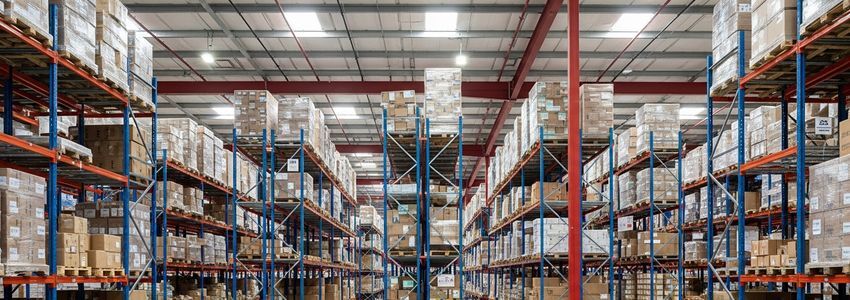
Storage Equipment Financing for Higher-Capacity Storage Systems
When your business is growing and your storage capacity is falling behind, the last thing you want is a capital bottleneck slowing everything down. Storage equipment financing gives businesses a practical path to acquiring the high-capacity racking, shelving, conveyor systems, automated retrieval units, and climate-controlled storage infrastructure they need - without draining working capital or tying up credit lines in a single large purchase.
Whether you operate a warehouse, a distribution center, a manufacturing facility, or a retail supply chain, the right storage systems are the backbone of operational efficiency. This guide covers everything you need to know about storage equipment financing: how it works, what you can finance, who qualifies, what rates look like in today's market, and how Crestmont Capital can structure a solution that fits your timeline and budget.
In This Article
- What Is Storage Equipment Financing?
- Types of Storage Equipment You Can Finance
- How Storage Equipment Financing Works
- Key Benefits for Growing Businesses
- Who Qualifies?
- Rates, Terms, and What to Expect
- Financing Options Compared
- Real-World Scenarios
- How Crestmont Capital Helps
- Frequently Asked Questions
- How to Get Started
What Is Storage Equipment Financing?
Storage equipment financing is a type of business loan or lease arrangement that allows companies to acquire the physical storage infrastructure they need to operate and scale - while spreading the cost over time rather than paying cash upfront. Instead of writing a large check for a high-density pallet racking system or an automated storage and retrieval system (ASRS), you finance the equipment through a lender and pay monthly installments that fit your cash flow.
The equipment itself typically serves as collateral, which means lenders can often offer competitive rates and flexible terms even to businesses that do not have extensive credit histories. Storage systems represent tangible, depreciating assets with strong resale value, a fact that makes them attractive collateral from a lender's perspective.
Storage equipment financing covers a wide range of assets used in warehousing, logistics, retail, cold chain management, manufacturing, and e-commerce fulfillment. If the equipment is essential to your storage and distribution operations, there is a good chance a lender can finance it.
This type of financing is closely related to broader equipment financing solutions, but it specifically addresses the capital-intensive challenge of scaling physical storage capacity, which is a unique operational pressure that growing businesses face as order volumes climb.
Types of Storage Equipment You Can Finance
The category of financeable storage equipment is broader than many business owners realize. Lenders who specialize in equipment financing can structure deals for virtually any piece of commercial storage infrastructure, including new and used systems.
Pallet Racking and Shelving Systems
Selective pallet racks, push-back racking, drive-in racks, cantilever racks, and mobile shelving are among the most commonly financed storage assets. These systems can cost anywhere from $10,000 for a basic shelving installation to several hundred thousand dollars for a multi-level high-density racking configuration in a large distribution center.
Automated Storage and Retrieval Systems (ASRS)
ASRS units use robotics and software to automatically store and retrieve inventory with minimal human labor. These systems dramatically increase storage density and throughput speed, but they carry a high upfront price tag - often $500,000 to several million dollars. Financing is nearly always necessary for these capital-intensive installations, and lenders with experience in industrial equipment are well-equipped to structure appropriate terms.
Conveyor Systems and Sortation Equipment
Conveyor belts, pick-and-pack sortation equipment, and vertical conveyor lifts are integral to modern warehouse operations. These systems are often purchased alongside racking infrastructure as part of a broader facility upgrade, and many lenders will bundle them into a single financing arrangement.
Mezzanine Floors and Vertical Storage
Structural mezzanine installations, vertical lift modules (VLMs), and vertical carousels maximize vertical space without requiring businesses to expand their footprint. Because these are semi-permanent structures attached to a facility, financing terms may vary depending on whether the lender treats them as equipment or real property improvements.
Cold Storage and Climate-Controlled Equipment
Refrigerated storage units, walk-in freezers, cold room partitions, and temperature-controlled rack systems serve the food and pharmaceutical industries. These systems are expensive to install and maintain, and specialized lenders understand their asset value and replacement cost cycles.
Modular Storage Systems and Containers
Stackable modular containers, wire mesh partitions, bulk storage bins, and industrial storage cabinets can also be financed, particularly when the total order size justifies a formal financing arrangement rather than a line of credit or working capital draw.
Industry Insight: According to data from the Material Handling Industry (MHI), the U.S. material handling equipment market exceeded $34 billion in annual revenue, with warehouse storage equipment representing one of the fastest-growing segments driven by e-commerce expansion and supply chain modernization. Financing enables businesses to keep pace with demand without waiting years to save the capital needed for major upgrades.
Ready to Upgrade Your Storage Capacity?
Crestmont Capital offers flexible financing for pallet racks, ASRS systems, cold storage, and more. Apply in minutes with no obligation.
Apply Now →How Storage Equipment Financing Works
The financing process for storage equipment follows a straightforward path that most business owners can navigate in a matter of days when working with an experienced lender. Here is the typical sequence from application to funded equipment.
Step 1: Identify Your Equipment Needs
Before approaching a lender, work with your operations team or a storage systems vendor to define exactly what you need. Get quotes from at least two or three vendors so you know the total project cost. This also helps lenders assess the equipment value and structure appropriate collateral terms.
Step 2: Apply for Financing
Most lenders require a basic application that includes your business financial statements, recent bank statements (typically three to six months), a summary of your existing debt obligations, and details about the equipment being financed. Many lenders can make a preliminary decision within 24 to 48 hours for transactions under $500,000.
Step 3: Receive a Financing Proposal
The lender will present a term sheet detailing the loan or lease amount, interest rate, monthly payment, term length, and any down payment requirements. For storage equipment, terms commonly range from 24 to 84 months depending on the asset type and the borrower's credit profile.
Step 4: Equipment Is Purchased or Delivered
Once you accept the terms and complete any required documentation, the lender either pays the vendor directly or reimburses you for equipment already purchased. In some cases, lenders will fund progress payments for large installation projects that are completed in phases.
Step 5: Begin Repayment
Monthly payments begin according to the schedule in your financing agreement. Payments are fixed, which simplifies budgeting and cash flow planning. At the end of the term, you either own the equipment outright (for a loan) or exercise a purchase option (for a lease).
By the Numbers
Storage Equipment Financing - Key Statistics
$34B+
U.S. material handling equipment market annual value
80%
of U.S. businesses use some form of equipment financing, per ELFA
2-7 Yrs
Typical financing terms for commercial storage systems
24-48 Hrs
Average approval time for equipment loans under $500K
Key Benefits for Growing Businesses
Storage equipment financing offers a range of financial and operational advantages that make it a preferred approach for businesses that need to scale capacity without compromising cash flow or overall financial flexibility.
Preserve Working Capital
Paying cash for a $200,000 pallet racking system drains reserves that might be needed for payroll, inventory purchases, marketing, or emergency expenses. Financing spreads that cost over 36 to 60 months, keeping your operating account liquid and your business agile. According to the SBA, maintaining adequate working capital is one of the top factors in small business survival beyond five years.
Fixed Payments Simplify Budgeting
Unlike a revolving line of credit that fluctuates month to month, equipment financing typically features fixed monthly payments. This predictability makes financial planning easier and lets operations managers model capacity expansion costs with confidence over a multi-year horizon.
Acquire Better Equipment Sooner
Many businesses that rely on cash purchases end up settling for lower-quality or used equipment because the premium option is beyond their immediate budget. Financing removes that constraint and lets you choose the right system for your long-term needs rather than the cheapest option available today. A high-density ASRS that improves throughput by 40 percent may pay for itself in labor savings within 24 months even with financing costs factored in.
Build Equity in Business Assets
With a loan (as opposed to a lease), you build equity in the equipment over the life of the financing. At the end of the term, you own the asset outright, which increases your business balance sheet value and provides collateral that can be used in future financing arrangements.
Scale as Demand Grows
Businesses that establish a financing relationship with a lender early can often scale up their credit line or finance additional equipment with minimal friction as their storage needs grow. This is particularly valuable for e-commerce fulfillment operations that are adding SKUs, channels, or warehouse locations on an accelerating timeline.
Did You Know? The Equipment Leasing and Finance Association (ELFA) reports that over 80 percent of U.S. businesses use some form of equipment financing or leasing. Among the top reasons cited: preserving cash flow, gaining access to better technology, and avoiding large single capital outlays.
Who Qualifies for Storage Equipment Financing?
Storage equipment financing is available to a wide range of businesses across industries, from early-stage startups equipping their first warehouse to established manufacturers upgrading legacy storage infrastructure. That said, lenders do look at specific criteria when evaluating an application.
Time in Business
Most traditional lenders prefer businesses that have been operating for at least 12 to 24 months. However, startup-friendly lenders and some specialty equipment finance companies will work with newer businesses, particularly when the equipment itself is high-quality collateral or the business owner has a strong personal credit history.
Credit Profile
Business and personal credit scores both factor into the lending decision. A business credit score of 650 or higher and a personal credit score of 680 or higher will typically qualify you for competitive rates. Businesses with lower scores may still qualify but can expect higher interest rates or may need to provide a larger down payment. To explore options if your credit history is less than ideal, Crestmont Capital's bad credit equipment financing solutions may provide a viable path.
Annual Revenue
Lenders typically want to see that your business generates enough revenue to support the monthly payment comfortably. A general benchmark is that your total monthly debt service (including the new equipment loan) should not exceed 15 to 20 percent of your average monthly revenue. For storage system loans in the $50,000 to $500,000 range, most businesses with $500,000 or more in annual revenue can qualify.
Down Payment
Many equipment loans require little or no down payment, particularly when the equipment has strong collateral value. Some lenders may require 10 to 20 percent down for larger transactions or for borrowers with less established credit profiles. Having a down payment available can also unlock better rates and terms.
Industry and Use Case
Lenders generally respond well to businesses in established industries with demonstrable storage needs: logistics, retail, food and beverage, pharmaceutical, e-commerce, construction supply, manufacturing, and cold chain operations. Clearly articulating how the equipment will be used and how it supports revenue generation helps lenders assess the risk accurately.
Rates, Terms, and What to Expect
Interest rates and terms for storage equipment financing vary based on your credit profile, the type of equipment, the loan amount, and the lender. Here is a general overview of what businesses should expect in the current market.
| Factor | Typical Range | Notes |
|---|---|---|
| Interest Rate (Equipment Loan) | 6% - 20% | Depends on credit, loan size, term |
| Lease Factor (Equipment Lease) | 0.015 - 0.035 | Multiply by equipment cost for monthly payment estimate |
| Loan Term | 24 - 84 months | ASRS systems often qualify for longer terms |
| Minimum Loan Amount | $10,000 | Some lenders require $25,000 minimum |
| Maximum Loan Amount | $5,000,000+ | Large ASRS and automation projects can exceed $10M |
| Down Payment | 0% - 20% | Many deals structured with $0 down |
| Approval Time | 24 - 72 hours | Larger transactions may take 5-10 business days |
It is important to look beyond the interest rate alone when evaluating financing offers. Consider the total cost of the loan over its full term, any origination or documentation fees, prepayment penalties, and what happens at the end of the term. For leases especially, end-of-term purchase options can vary widely and significantly affect the total cost of ownership.
For large-scale projects, some businesses combine storage equipment financing with an equipment line of credit, which provides the flexibility to draw funds as different phases of a storage buildout are completed rather than borrowing a single lump sum upfront.
Get Competitive Rates on Storage Equipment Loans
Crestmont Capital works with businesses of all sizes to find flexible financing that fits your budget. No prepayment penalties. No surprise fees. Just honest financing.
Check Your Rate →Financing Options Compared: Loan vs. Lease vs. Line of Credit
Businesses financing storage systems typically choose from three main structures. Understanding the differences between them helps you select the arrangement that best aligns with your ownership goals, cash flow, and accounting preferences.
Equipment Loan
With an equipment loan, you borrow the purchase price of the equipment and make fixed monthly payments over an agreed term. Once you repay the loan in full, you own the equipment outright with no further obligations. This is the best option for businesses that want to build equity and intend to use the storage equipment for many years.
If you have not already done so, reading up on equipment leasing vs. equipment financing can help clarify which structure is right for your specific situation.
Equipment Lease
An equipment lease functions more like a rental arrangement. You use the equipment during the lease term and pay a monthly lease payment, but the lender retains legal ownership. At the end of the term, you typically have the option to purchase the equipment for a predetermined residual value, renew the lease, or return the equipment.
For a full look at how equipment leasing works across multiple asset categories, the Crestmont Capital equipment leasing page provides additional context and program details.
Equipment Line of Credit
An equipment line of credit functions like a revolving credit facility dedicated to equipment purchases. Rather than borrowing a fixed amount for one purchase, you receive a credit limit that you can draw from as needed. This is an excellent choice for businesses executing multi-phase storage buildouts where equipment is purchased in stages over 12 to 24 months.
SBA Equipment Loans
The U.S. Small Business Administration offers loan programs that can be used to finance equipment, most notably the SBA 7(a) and SBA 504 programs. The SBA 504 loan program provides up to 40 percent of total project costs at a fixed rate, with the business contributing 10 percent and a conventional lender covering the remaining 50 percent. The trade-off is that SBA loans typically involve more documentation and a longer approval timeline than conventional equipment financing. Crestmont Capital offers dedicated SBA loans with guidance through the full application process.
Real-World Scenarios: How Businesses Use Storage Equipment Financing
To make storage equipment financing more concrete, consider how businesses across different industries approach these decisions in practice.
Scenario 1: E-Commerce Fulfillment Center Scaling Up
A direct-to-consumer e-commerce brand has grown from 500 orders per day to 3,000 orders per day over two years. Their existing shelving and pick-and-pack setup can no longer keep pace. They finance a $375,000 high-density pallet racking system with an automated pick conveyor over 60 months. The monthly payment of approximately $7,200 is offset by a reduction in fulfillment errors and the elimination of a third-party fulfillment fee of $12,000 per month. The system pays for itself within 18 months and positions the business to scale to 10,000 orders per day without a facility move.
Scenario 2: Wholesale Distributor Upgrading Cold Storage
A regional food distributor serving grocery chains needs to expand cold storage capacity as a new retail contract comes online. They finance $280,000 in refrigerated racking and cold room partitions through a 48-month equipment loan. The fixed payment of $6,800 per month is factored into the pricing model for the new contract, preserving the profitability of the deal without requiring a cash injection from the owners.
Scenario 3: Manufacturing Company Adding Vertical Storage
A mid-size auto parts manufacturer is losing floor space to raw material storage. They finance a $180,000 vertical lift module (VLM) system that recovers 4,000 square feet of floor space previously consumed by static shelving. The space reclaimed is converted into a second production line, generating an estimated $600,000 in additional annual revenue. The financing is structured as a 36-month lease with a $1 purchase option at term end.
Scenario 4: Pharmaceutical Distributor Requiring Compliance Storage
A pharmaceutical distributor is required by regulation to store controlled substances in DEA-compliant vault-style storage units. They finance $95,000 in specialized compliant storage equipment through an expedited loan process, receiving funding within 48 hours of approval. The quick funding timeline allows them to pass a regulatory inspection and retain a major hospital system contract worth $2.4 million annually.
Scenario 5: Startup 3PL Getting Its First Facility Equipped
A newly launched third-party logistics company signs a lease on a 40,000-square-foot warehouse and needs to equip it from scratch. Rather than depleting their startup capital on storage equipment, they finance $220,000 in selective racking, shelving, and dock equipment over 48 months. For businesses like this, understanding equipment financing basics from the ground up is essential before approaching a lender.
Scenario 6: Retail Chain Optimizing Back-of-House Storage
A regional grocery chain with 12 locations is upgrading the back-of-house storage systems at all stores simultaneously as part of a supply chain modernization initiative. They use an equipment line of credit to finance the rollout in phases over 18 months, drawing funds as each location's installation is completed. This approach avoids tying up a large sum of cash while allowing the project to proceed on the operational timeline the business needs.
Forbes Perspective: A 2024 analysis from Forbes highlighted that equipment financing remains one of the most accessible forms of business credit for small and mid-size companies because the collateral-backed nature of the loan reduces lender risk, translating to better approval rates and more favorable terms compared to unsecured business loans.
How Crestmont Capital Helps Businesses Finance Storage Systems
Crestmont Capital is a nationwide business lender rated among the top equipment financing providers in the country. We work with businesses across logistics, manufacturing, retail, food service, healthcare, and e-commerce to structure storage equipment financing solutions that match their operational needs and budget requirements.
Our approach to storage equipment financing is built on speed, flexibility, and transparency. We work with businesses at every stage, from early-stage startups equipping their first facility to established companies managing multi-million-dollar warehouse upgrades. Our team understands that storage infrastructure decisions are time-sensitive and that delays in financing can have real operational consequences.
What Sets Crestmont Capital Apart
- Fast approvals: Many applications receive a decision within 24 to 48 hours, with funding available in as little as two business days for qualified borrowers.
- Flexible structures: We offer loans, leases, and lines of credit tailored to the specific asset type and business need.
- Financing for new and used equipment: We finance new storage systems from vendors as well as certified used equipment, giving businesses more options for their budget.
- No industry restriction: Whether you are in wholesale distribution, cold chain logistics, pharmaceutical storage, e-commerce fulfillment, or any other sector, Crestmont has programs available.
- Startup-friendly programs: We have options for businesses with limited operating history when the equipment itself provides strong collateral.
Our broader capital equipment financing programs cover a wide range of asset classes beyond storage equipment, so as your business grows and your financing needs evolve, Crestmont can continue to serve you with new solutions.
If your business is a storage facility operator rather than a user of storage equipment, Crestmont also offers dedicated financing for self-storage businesses. Learn more about self storage business loans and how they differ from equipment-based financing.
For businesses exploring their full range of commercial capital options alongside equipment financing, our commercial financing hub provides an overview of the complete product suite available through Crestmont Capital.
Finance Your Storage System with Crestmont Capital
Join thousands of U.S. businesses that have partnered with Crestmont Capital to fund their equipment needs. Fast decisions. Honest terms. Real results.
Start Your Application →Frequently Asked Questions
How to Get Started
Complete our quick application at offers.crestmontcapital.com/apply-now. It takes just a few minutes and requires only basic business information to get started.
A Crestmont Capital advisor will review your storage equipment needs, evaluate your business profile, and match you with the loan or lease structure that best fits your operational and financial goals.
Once approved, funds are deployed to your equipment vendor directly or to your account. Most transactions close within 2 to 5 business days, so you can get your storage system ordered and installed without delay.
Conclusion
Storage equipment financing is one of the most practical tools available to businesses that need to grow their physical storage capacity without sacrificing financial stability. Whether you are upgrading from manual shelving to a fully automated ASRS, expanding cold storage for a new distribution contract, or equipping your first warehouse facility, financing allows you to move forward at the pace your business demands rather than the pace your savings account permits.
The key is choosing the right structure and working with a lender who understands the specific assets you are financing and the operational context behind the purchase. Crestmont Capital brings both the product depth and the industry knowledge to structure storage equipment financing that works for your business, on your timeline.
If you are ready to scale your storage capacity and want to explore what storage equipment financing looks like for your specific situation, start with a quick application or reach out to our team directly. The right system is within reach, and the right financing makes it possible.
Disclaimer: The information provided in this article is for general educational purposes only and is not financial, legal, or tax advice. Funding terms, qualifications, and product availability may vary and are subject to change without notice. Crestmont Capital does not guarantee approval, rates, or specific outcomes. For personalized information about your business funding options, contact our team directly.








