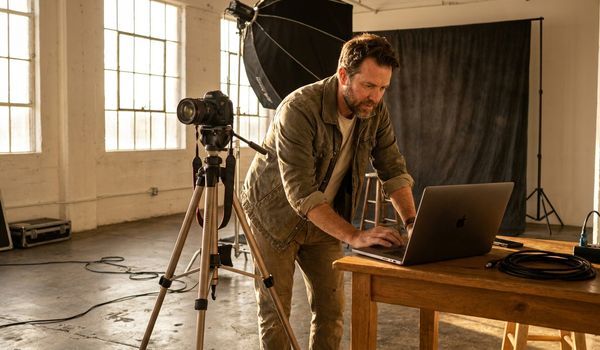
Photography is one of the most accessible small business categories in the United States, and also one of the most capital intensive at the professional level. The latest photography business financing statistics show an industry generating billions in annual revenue while relying heavily on financed equipment, short term working capital, and flexible credit lines to stay competitive. Whether you run a wedding studio, a commercial production company, or a portrait business, the 2026 data tells a clear story: the photographers who grow fastest are the ones who treat financing as a strategic tool rather than a last resort.
This report compiles the most important photography industry statistics for 2026, covering market size, business counts, revenue benchmarks, startup and equipment costs, approval rates, and the financing products photographers actually use. Every figure is drawn from government data, industry surveys, or lender-side reporting, and each section explains what the numbers mean for a working photography business owner.
In This Article
- What the 2026 Data Says About the Photography Industry
- Photography Business Revenue and Income Statistics
- The True Cost of Running a Photography Business
- How Photography Businesses Use Financing
- Photography Business Financing Options in 2026
- How Equipment Financing Works for Photographers
- Who Benefits Most From Photography Business Financing
- How Crestmont Capital Helps Photography Businesses
- Real-World Photography Financing Scenarios
- Photography Industry Outlook for 2026 and Beyond
- Frequently Asked Questions
- How to Get Started
What the 2026 Data Says About the Photography Industry
The United States photography services industry generates approximately $13 billion in annual revenue, according to industry market research tracking thousands of studios, freelancers, and production companies. That figure covers portrait and wedding photography, commercial and advertising work, real estate imaging, event coverage, and specialty niches such as aerial and product photography.
More than 230,000 photography businesses operate across the country. The vast majority are small operations: most photography businesses are sole proprietorships or studios with fewer than five employees. The U.S. Bureau of Labor Statistics counts roughly 150,000 employed photographers, a figure that excludes the large population of self-employed shooters who file as independent businesses.
Several structural trends define the 2026 landscape:
- Low barriers to entry, high barriers to scale. Anyone can register a photography business, but competing at the professional level requires $10,000 to $30,000 or more in camera bodies, lenses, lighting, and computing hardware.
- Revenue concentration in events and commercial work. Wedding and event photography remains the highest-revenue consumer segment, while commercial and real estate imaging deliver the most predictable repeat contracts.
- Equipment upgrade cycles are shortening. Mirrorless system transitions, drone integration, and AI-assisted editing hardware push professionals to refresh gear every three to five years instead of every seven to ten.
- Financing is normalized. Industry surveys consistently show that roughly four out of five U.S. businesses use some form of financing to acquire equipment, and photography is no exception.
The photography industry statistics matter for one practical reason: lenders evaluate photography businesses based on revenue consistency, equipment value, and time in business. Understanding where your studio sits relative to industry benchmarks tells you which financing products you are most likely to qualify for and at what terms.
Key Stat: The U.S. photography services industry generates approximately $13 billion per year across more than 230,000 businesses, yet most studios operate with lean cash reserves, making access to financing a primary driver of who can upgrade equipment and grow.
Photography Business Revenue and Income Statistics
Revenue in photography varies more widely than in almost any other service trade. A part-time portrait photographer might gross $25,000 per year, while an established commercial studio can bill $500,000 or more. The data points below frame where most businesses actually land.
Median photographer income. The U.S. Bureau of Labor Statistics reports a median annual wage of approximately $40,000 for photographers, with the top 10 percent earning above $90,000. Self-employed studio owners who run efficient operations frequently out-earn the median because they capture both the creative fee and the business margin.
Wedding photography revenue. The average couple spends roughly $2,500 to $3,000 on wedding photography, and premium markets such as New York, Los Angeles, and South Florida routinely support packages of $5,000 to $10,000. A studio booking 30 weddings per year at the national average generates $75,000 to $90,000 in gross revenue from that segment alone.
Commercial and corporate work. Day rates for commercial photography commonly range from $1,500 to $5,000, with licensing fees on top. Real estate photography, a volume business, typically bills $150 to $500 per property shoot, and high-volume operators serving brokerages can complete five to ten shoots per day with the right workflow.
Seasonality. Most photography businesses earn 60 to 70 percent of annual revenue during their peak season, which runs from late spring through early fall for wedding and portrait studios, and follows retail and real estate cycles for commercial shooters. This seasonality is the single most common reason photography businesses seek working capital financing: expenses run twelve months a year, but revenue does not.
Growth rates. Employment of photographers is projected to grow at roughly 4 percent over the current decade, about as fast as the average for all occupations. The growth is concentrated in commercial, real estate, and drone imaging, while traditional portrait segments remain flat. Businesses that diversify into video production, virtual tours, and content packages are growing meaningfully faster than the industry average.
The True Cost of Running a Photography Business
Photography is a equipment-heavy business. The photography industry statistics on startup and operating costs explain why financing plays such a central role in the trade.
Startup costs. A credible professional launch requires two camera bodies, a lens kit covering wide, standard, and telephoto ranges, lighting, and editing hardware. Industry estimates place a professional-grade startup kit between $10,000 and $30,000 depending on the niche. A wedding photographer's two-shooter kit with redundancy typically lands near $15,000 to $20,000, while a commercial studio buildout with strobes, modifiers, and grip equipment can exceed $40,000.
Specialty equipment. Drones capable of commercial imaging run $1,500 to $15,000. Medium format camera systems start around $5,000 for a body alone. Cinema-capable hybrid bodies, gimbals, and audio gear for studios offering video add another $5,000 to $15,000.
Recurring overhead. Beyond gear, photography businesses carry studio rent or home-office costs, insurance, software subscriptions, marketing, second-shooter fees, and vehicle expenses. A modest studio typically carries $3,000 to $8,000 in monthly overhead before the owner takes a draw.
| Expense Category | Typical Range | Notes |
|---|---|---|
| Professional camera bodies (2) | $4,000 - $13,000 | Redundancy is non-negotiable for paid work |
| Lens kit (wide, standard, telephoto) | $3,000 - $9,000 | Fast apertures command premium prices |
| Lighting and modifiers | $1,500 - $6,000 | Studio strobes cost more than speedlights |
| Editing workstation and storage | $2,000 - $6,000 | Color-accurate monitors and RAID backup |
| Drone (commercial grade) | $1,500 - $15,000 | Requires FAA Part 107 certification |
| Annual software and subscriptions | $1,000 - $3,000 | Editing, gallery delivery, bookkeeping |
| Insurance (liability and gear) | $600 - $2,500 / year | Venues routinely require certificates |
These figures explain the central finding of recent photography business financing statistics: the upfront capital requirement of a competitive studio exceeds what most owners can self-fund, which is why equipment financing and working capital products are standard tools in the industry rather than exceptions.
Need Gear to Grow Your Photography Business?
Finance cameras, lighting, and studio equipment with predictable monthly payments. Fast decisions from the #1 rated business lender in the U.S.
Apply Now →How Photography Businesses Use Financing
Financing in the photography trade clusters around five use cases, and the data on small business borrowing explains why each one matters.
1. Equipment acquisition. This is the dominant use. Industry surveys show that approximately 78 to 80 percent of U.S. businesses finance at least some of their equipment, and photography's high gear costs push that share even higher among full-time professionals. Financing converts a $20,000 camera and lighting purchase into a manageable monthly payment that the gear itself can earn back within a handful of bookings.
2. Seasonal working capital. Because most studios earn the majority of revenue in a six to seven month window, short term working capital bridges the off-season. Photographers use it to cover rent, insurance, marketing, and retainers during the months when bookings are thin, then repay from peak-season cash flow.
3. Marketing and growth spending. Wedding and portrait photography are referral- and advertising-driven businesses. Studios borrow to fund bridal show booths, advertising campaigns, website rebuilds, and sample album production, all of which directly generate bookings.
4. Studio buildouts and expansion. Moving from a home studio into a commercial space requires deposits, buildout capital, and furnishing. Term loans and business lines of credit are the standard tools for this step.
5. Hiring and second-shooter benches. Scaling past one photographer's calendar requires paying associates before client balances settle. A line of credit smooths the gap between payroll dates and final payments.
The broader lending context matters here. Federal Reserve small business credit surveys have consistently found that fewer than half of small business applicants receive the full financing amount they seek from traditional banks. Approval rates at alternative and online lenders run materially higher, which is why photography businesses, like most small service businesses, increasingly source financing outside the bank channel. The trade-off is speed and accessibility versus price, and the sections below lay out the real numbers.
Photography Business Financing Options in 2026
Not all financing products fit a photography business equally well. The photography business financing statistics on product usage show equipment financing and lines of credit dominating, with term loans and SBA products serving larger expansions. Here is how the main options compare.
| Feature | Equipment Financing | Business Line of Credit | Term Loan | SBA Loan |
|---|---|---|---|---|
| Best use | Cameras, lenses, lighting, drones | Off-season cash flow, payroll gaps | Studio buildout, expansion | Large purchases, real estate |
| Typical amount | $5,000 - $150,000 | $10,000 - $250,000 | $25,000 - $500,000 | $50,000 - $5,000,000 |
| Funding speed | 1 - 3 days | 1 - 5 days | 2 - 7 days | 30 - 90 days |
| Collateral | The equipment itself | Usually unsecured | Varies | Business assets, sometimes personal |
| Term length | 24 - 72 months | Revolving, 6 - 24 month review | 12 - 84 months | Up to 10 - 25 years |
| Credit profile needed | Flexible, 600+ common | 620+ typical | 640+ typical | 680+ typical |
The pattern in the data is consistent: photography businesses most often reach for equipment financing when upgrading gear, and a business line of credit when managing the seasonal revenue swings that define the trade. Larger moves, such as buying a commercial studio space, are where SBA loans come into play for owners with strong credit and time to wait through a longer approval process.
By the Numbers
Photography Business Financing - Key Statistics for 2026
$13B
Annual U.S. photography services revenue
230K+
Photography businesses operating in the U.S.
~80%
Of U.S. businesses that finance equipment purchases
$10-30K
Typical professional startup equipment investment
How Equipment Financing Works for Photographers
Equipment financing is the natural flagship product for this industry because the gear itself secures the loan. That structure keeps approval standards accessible and rates lower than unsecured alternatives. Here is how the process typically runs for a photography business.
Step 1: Identify the equipment and get a quote. Lenders finance new and used gear from dealers and private sellers. A formal invoice or quote listing the camera bodies, lenses, lighting, or drones is the starting document.
Step 2: Apply with basic business documentation. Most applications require three to six months of business bank statements, a government-issued ID, and the equipment quote. Photography businesses organized as LLCs or sole proprietorships both qualify.
Step 3: Approval and term selection. Terms for photography equipment commonly run 24 to 72 months. Longer terms lower the monthly payment but increase total interest. Approvals often arrive within one business day, and funding within one to three days.
Step 4: The lender pays the vendor, you get the gear. The financing company pays the dealer directly, and the photographer takes delivery immediately. The equipment goes to work earning revenue from the first booking.
Step 5: Own the gear at the end. With a standard equipment finance agreement or $1 buyout lease, the photographer owns the equipment outright when the term ends. That ownership matters because quality lenses and lighting hold resale value remarkably well.
Photographers weighing a lease-versus-own decision can review the mechanics in our guide to photography equipment financing, which breaks down the structures in more detail.
Pro Tip: Finance the gear that generates revenue first. A second camera body and a fast portrait lens pay for themselves within a few weddings, while niche accessories can wait until cash flow is stronger.
Who Benefits Most From Photography Business Financing
The photography business financing statistics point to four profiles that gain the most from outside capital.
New professionals going full-time. The jump from part-time to full-time requires a professional kit, a website, insurance, and marketing before the bookings exist to pay for them. A modest equipment loan or working capital facility bridges that gap. For owners weighing loan structures, our complete guide to photography business loans walks through qualification in detail.
Wedding and event studios entering peak season. These businesses earn most of their revenue in a compressed window. Financing a second-shooter bench, backup gear, and advertising in the off-season positions the studio to capture maximum bookings when the season opens.
Commercial shooters adding video and drone services. The fastest-growing revenue segments in the industry require new hardware. Financing lets an established stills business add cinema and aerial capability without draining reserves.
Established studios buying their space. Moving from renting to owning a studio is the largest capital event in a photography business. SBA 504 and 7(a) products exist specifically for this move, and owners with strong books can lock in long fixed terms.
How Crestmont Capital Helps Photography Businesses
Crestmont Capital is the #1 rated business lender in the United States, and photography businesses are a core segment we fund. Our products map directly onto the spending patterns the data above describes.
For gear purchases, our equipment financing programs fund camera bodies, lens kits, lighting packages, drones, and editing workstations with terms from 24 to 72 months and decisions in as fast as one business day. Because the equipment secures the financing, approvals remain accessible even for studios without years of tax returns.
For the seasonal gaps that define photography cash flow, our unsecured working capital loans and revolving credit lines cover rent, insurance, marketing, and payroll through the off-season, then get repaid from peak-season bookings. Studios planning a larger move, such as a commercial space purchase, can work with our SBA loan team on longer-term structures.
The application takes minutes, there is no obligation, and our funding specialists work with photography business owners every day. If the statistics in this report describe where your business is headed, the fastest next step is a two-minute application.
Get Funding Built for Photographers
Fast approvals, flexible terms, and specialists who understand seasonal creative businesses. Apply in minutes with no obligation.
Apply Now →Real-World Photography Financing Scenarios
Statistics describe the industry. These scenarios show how individual photography businesses put the same numbers to work.
Scenario 1: The wedding photographer going full-time. A part-time wedding shooter in Ohio has 14 weddings booked for the coming season at an average of $2,800 each, but her aging camera body and single flash kit create too much failure risk for paid events. She finances $16,500 of gear, including two mirrorless bodies, a 24-70mm f/2.8, a 70-200mm f/2.8, and a lighting kit, over 48 months at roughly $400 per month. Two average weddings cover the annual payment with room to spare.
Scenario 2: The portrait studio bridging the off-season. A family portrait studio in Texas earns 65 percent of its revenue between September and December. Each February, the owner draws $20,000 on a business line of credit to cover studio rent, insurance, and a spring marketing push, then repays the balance by June. Interest accrues only on the drawn amount, and the facility renews annually.
Scenario 3: The real estate photographer adding drone services. A real estate shooter in Arizona sees agents requesting aerial imagery on most listings above $500,000. He finances a $9,000 commercial drone package over 36 months at about $290 per month, adds a $150 aerial fee to each shoot, and recovers the payment with two bookings a month. Everything after that is margin.
Scenario 4: The commercial studio landing a contract that requires new gear. A product photography studio wins a retainer with an e-commerce brand that requires high-resolution medium format capture. The $28,000 camera and lens package is financed over 60 months, and the retainer covers the payment more than six times over. Without financing, the studio would have declined the contract.
Scenario 5: The established studio buying its building. A 12-year-old wedding and event studio in Florida has been renting a 2,400 square foot space for $3,100 per month. The owner uses an SBA 504 structure to purchase a comparable property with 10 percent down, converting rent into equity on a 25-year term. The monthly obligation rises modestly, but the payment now builds an asset.
Photography Industry Outlook for 2026 and Beyond
Several data trends shape what comes next for photography businesses and the financing that supports them.
New business formation remains elevated. The U.S. Census Bureau's Business Formation Statistics continue to show business applications running well above pre-2020 levels, and creative services, including photography, account for a steady share of new filings. More entrants means more demand for startup equipment financing.
Small business credit demand is broad-based. The U.S. Small Business Administration reports record lending volumes through its flagship programs in recent fiscal years, and Federal Reserve survey data shows roughly four in ten small employer firms seek external financing in any given year. Photography businesses mirror that pattern, with gear and working capital leading the requests.
Content demand keeps expanding. Industry coverage from outlets like Forbes and CNBC has tracked the explosion of visual content demand from e-commerce, short-form video, and real estate marketing. Every one of those channels consumes commercial photography and video at scale, which supports commercial day rates and justifies the equipment spending documented above.
Technology cycles will keep capital needs high. AI-assisted editing, higher-resolution capture standards, and drone integration all push refresh cycles shorter. Studios that finance equipment on three to five year terms can stay current without the cash-flow shocks of outright purchases.
Key Stat: Federal Reserve small business credit surveys have repeatedly found that fewer than half of applicants receive the full bank financing they seek, one reason alternative lenders now fund a growing share of photography equipment purchases.
Frequently Asked Questions
How big is the photography industry in the United States? +
The U.S. photography services industry generates approximately $13 billion in annual revenue across more than 230,000 businesses. The figure spans wedding and portrait studios, commercial production, real estate imaging, and specialty niches such as aerial photography. Most operators are small businesses with fewer than five employees.
How much does it cost to start a professional photography business? +
A credible professional launch typically requires $10,000 to $30,000 in equipment, covering two camera bodies, a lens kit, lighting, and editing hardware. Commercial studio buildouts with strobes and grip equipment can exceed $40,000. Add insurance, software, and marketing, and most full-time launches land between $15,000 and $35,000 all-in.
What is the average revenue of a photography business? +
Revenue varies widely by niche and market. The Bureau of Labor Statistics reports a median photographer wage near $40,000, while full-time studio owners frequently gross $75,000 to $250,000. A wedding studio booking 30 events at the national average of $2,500 to $3,000 generates $75,000 to $90,000 from weddings alone.
What percentage of businesses finance their equipment? +
Industry surveys consistently show that roughly 78 to 80 percent of U.S. businesses use some form of financing to acquire equipment. Among professional photographers, the share is comparable or higher because camera bodies, lenses, and lighting carry five-figure price tags and hold value well enough to secure the financing.
Can a new photography business get financing with no revenue history? +
Yes, though options narrow. Equipment financing is the most accessible because the gear secures the loan, and some programs approve newer businesses with strong personal credit. Working capital and lines of credit generally require at least six months of business bank statements showing consistent deposits.
What credit score is needed for photography equipment financing? +
Many equipment financing programs approve scores of 600 and above because the equipment itself serves as collateral. Scores above 680 unlock the best rates and longest terms. Lower scores can still qualify with a larger down payment, a co-signer, or additional documentation of business revenue.
How fast can a photography business get funded? +
Equipment financing decisions often arrive within one business day, with funding in one to three days. Working capital and lines of credit fund in one to five days. SBA loans are the exception, typically requiring 30 to 90 days from application to funding in exchange for the lowest rates and longest terms.
What financing works best for seasonal photography income? +
A business line of credit is the standard tool for seasonality. The studio draws funds during slow months to cover rent, insurance, and marketing, then repays from peak-season bookings. Interest accrues only on the drawn balance, and the revolving structure means the facility is available again the following off-season.
Is equipment financing or a loan better for camera gear? +
Equipment financing is purpose-built for gear and usually wins on rate, approval speed, and accessibility because the equipment secures the transaction. A general term loan makes more sense when the purchase mixes equipment with non-gear costs like a studio buildout or a marketing campaign that equipment-only financing will not cover.
Can wedding photographers get business loans? +
Yes. Wedding photography businesses qualify for the same products as other service businesses: equipment financing, working capital, lines of credit, term loans, and SBA products. Lenders evaluate bank statements, time in business, and credit history. Documented bookings and contracts strengthen an application by demonstrating forward revenue.
Do photography business loans require collateral? +
It depends on the product. Equipment financing uses the gear itself as collateral, so no additional assets are pledged. Unsecured working capital loans and many lines of credit require no specific collateral. Larger term loans and SBA loans may involve business assets and, in some cases, a personal guarantee from the owner.
How much can a photography business borrow? +
Equipment financing commonly runs from $5,000 to $150,000, which covers everything from a single camera body to a full commercial studio buildout. Working capital and lines of credit typically range from $10,000 to $250,000 based on revenue. SBA programs extend into the millions for studio real estate purchases.
Will a monthly payment strain off-season cash flow? +
It can if the payment is sized against peak-season revenue instead of average monthly income. The safer approach is to choose a term where the payment fits comfortably inside the studio's weakest quarter. Longer terms lower the payment, and pairing equipment financing with a small line of credit adds a buffer for slow months.
Can photographers finance drones and specialty equipment? +
Yes. Equipment financing covers drones, cinema cameras, gimbals, specialty lenses, and editing workstations the same way it covers stills gear. Commercial drone operators should hold FAA Part 107 certification, and lenders may ask for proof since it demonstrates the equipment will be used legally for revenue-producing work.
How do I apply for photography business financing? +
Start with a short online application covering the business, the amount needed, and the intended use. Have three to six months of business bank statements ready, plus an equipment quote if the funds are for gear. Most photography businesses receive a decision within one business day and funding within days, not weeks.
Your Next Lens Should Not Wait for Next Season
Join thousands of business owners who fund growth with Crestmont Capital. Two-minute application, fast decisions, no obligation.
Apply Now →How to Get Started
Decide whether you are financing equipment, bridging a seasonal gap, or funding a larger expansion. The use case determines the right product.
Pull three to six months of business bank statements, a photo ID, and an equipment quote if you are buying gear.
Complete the two-minute application at Crestmont Capital. There is no cost and no obligation to review your options.
Compare the approved structures, pick the payment that fits your average month, and put the capital to work within days.
The Bottom Line on Photography Business Financing Statistics
The 2026 photography business financing statistics describe a healthy, fragmented, $13 billion industry where access to capital separates the studios that grow from the ones that stall. Equipment costs of $10,000 to $30,000 at launch, revenue concentrated in six-month windows, and refresh cycles that never stop all push photography businesses toward financing as a standard operating tool rather than an emergency measure.
The good news in the data is accessibility. Equipment financing approves quickly because the gear secures it, lines of credit smooth out the seasonality that defines the trade, and SBA products give established studios a path to owning their space. Photographers who size payments to their average month and match the product to the use case consistently come out ahead.
Crestmont Capital funds photography businesses every day, from first camera kits to commercial studio purchases. If the numbers in this report match where your business is headed, the application takes two minutes and the decision often comes back the same day.
Disclaimer: The information provided in this article is for general educational purposes only and is not financial, legal, or tax advice. Funding terms, qualifications, and product availability may vary and are subject to change without notice. Crestmont Capital does not guarantee approval, rates, or specific outcomes. For personalized information about your business funding options, contact our team directly.

Allan Garfinkle
Allan Garfinkle is the Chief Revenue Officer at Crestmont Capital, where he has spent more than a decade leading revenue strategy, business development, and operational growth. With 28 years of experience building and advising startups and small businesses, Allan has helped more than 10,000 business owners navigate financing decisions, growth opportunities, and changing economic conditions. He earned a Bachelor of Science in Economics and an MBA with a concentration in Finance from Northeastern University, as well as a Juris Doctor from New England Law, where his studies focused on contracts and business law. His writing draws on extensive practical experience in small-business lending, equipment financing, business credit, and commercial finance.