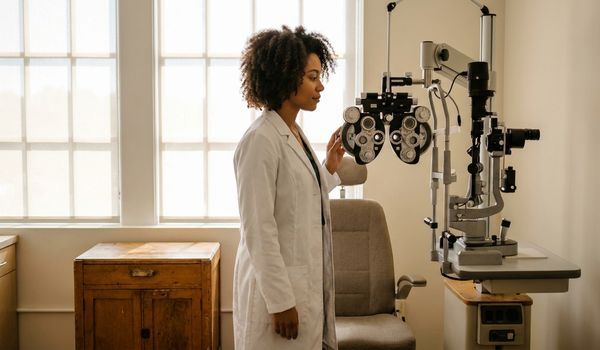
The optometry industry continues to be one of the most stable and profitable corners of American healthcare, and the financing data behind it tells a compelling story for practice owners. Whether you are planning to open your first practice, acquire an established one, or upgrade diagnostic equipment, understanding the latest optometry practice financing statistics helps you make smarter borrowing decisions and negotiate from a position of strength.
This report brings together the most important 2026 data points on optometry practice financing: average loan amounts, approval rates, equipment costs, interest rate ranges, practice valuations, and the funding trends shaping how eye care practices grow. Every figure is drawn from industry research, government data, and lender reporting so you can benchmark your own plans against the market.
In This Article
- What Is Optometry Practice Financing?
- 2026 Market Overview: The Numbers
- Key Benefits of Financing
- How Optometry Practice Financing Works
- Types of Financing for Optometry Practices
- Equipment Costs and Financing Data
- Who Qualifies for Financing?
- Comparing Your Funding Options
- Real-World Financing Scenarios
- How Crestmont Capital Helps
- Frequently Asked Questions
- Next Steps
What Is Optometry Practice Financing?
Optometry practice financing is any form of business funding designed for the specific economics of an eye care practice. That includes loans used to start a practice from scratch, buy an existing practice, purchase diagnostic and exam lane equipment, expand into additional locations, remodel an optical dispensary, or simply smooth out working capital between insurance reimbursements.
What makes optometry financing distinct from generic small business lending is the collateral profile and cash flow pattern of the industry. Optometry practices carry high-value medical equipment, generate recurring revenue from exams and eyewear sales, and historically show some of the lowest default rates of any healthcare specialty. Lenders know this, which is why eye care practices routinely qualify for larger amounts, longer terms, and better rates than businesses in higher-risk categories.
The financing toolbox for an optometry practice typically includes term loans, SBA 7(a) and 504 loans, equipment financing and leasing, business lines of credit, and working capital advances. Each product fits a different use case, and the statistics below show how optometry owners are actually using them in 2026.
Optometry Practice Financing Statistics: 2026 Market Overview
The numbers behind optometry practice financing in 2026 reflect a mature, growing industry with strong lender appetite. Here is what the data shows across market size, borrowing activity, costs, and approval trends.
Industry Size and Growth
The U.S. optometry industry generates an estimated $22 billion to $24 billion in annual revenue, according to industry market research, and has grown at roughly 3% to 5% per year over the past five years. Data from the U.S. Census Bureau's Statistics of U.S. Businesses program and industry market research put the count at approximately 40,000 to 45,000 optometry practice locations operating nationwide, employing more than 140,000 people across clinical, optical, and administrative roles. The Bureau of Labor Statistics counts roughly 44,000 licensed optometrists in the workforce and projects employment growth of about 8% to 9% through the early 2030s, faster than the average for all occupations.
Demand drivers are structural rather than cyclical. An aging population needs more frequent eye exams and medical eye care, myopia rates among children continue to climb, and an estimated 75% of American adults use some form of vision correction. Roughly 60% of a typical optometry practice's revenue comes from optical product sales such as frames, lenses, and contact lenses, with the remaining 40% from professional services and medical eye care. That retail-plus-clinical revenue mix produces the steady cash flow that lenders prize.
Borrowing Activity and Average Loan Amounts
Optometry practices borrow at every stage of their lifecycle, and the amounts vary widely by purpose. Based on lender reporting and industry benchmarks, here is how 2026 borrowing activity breaks down:
- Practice startup loans: typically $200,000 to $500,000, covering buildout, equipment, initial inventory, and working capital for the first year of operation.
- Practice acquisition loans: commonly $300,000 to $1.5 million, with established practices in metro markets frequently transacting above $1 million.
- Equipment financing: individual deals usually range from $25,000 to $250,000, with full exam lane and diagnostic suite buildouts at the upper end.
- Working capital loans and lines of credit: generally $25,000 to $250,000, sized to one to three months of operating expenses.
- Expansion and remodel loans: typically $75,000 to $400,000 depending on square footage and scope.
Across all purposes, the average optometry practice loan falls in the $250,000 to $400,000 range, notably higher than the average small business loan across all industries. That premium reflects the industry's strong repayment history: healthcare practice loans, including optometry, consistently post default rates well below the small business lending average, which is why specialized lenders compete aggressively for eye care borrowers.
Approval Rates
Approval rate data paints a clear picture of where optometry owners find the smoothest path to funding. Small business loan approval rates at large banks have hovered around 13% to 15% in recent reporting periods, according to the Biz2Credit Small Business Lending Index, while small and regional banks approve roughly 19% to 21% of applications. Alternative and non-bank lenders approve a substantially higher share, often 25% to 29% of all applicants, and approval rates for healthcare practices specifically run higher still because of the industry's low-risk profile. Broader small business lending conditions tracked by outlets such as CNBC's small business coverage continue to show non-bank lenders gaining share as owners prioritize speed and approval odds.
Practices with two or more years of operating history, consistent revenue, and a credit score above 680 see the strongest approval outcomes. New graduates and startups face more scrutiny but are far from shut out: SBA-backed loans and equipment financing structures give newer optometrists a realistic path to their first major facility.
Interest Rate and Term Benchmarks
Rates in 2026 reflect the broader lending environment, but optometry borrowers continue to price favorably. Conventional term loans for qualified practices commonly carry fixed rates in the 7% to 12% range. SBA 7(a) loans, which remain a workhorse for practice acquisitions and startups, price at the prime rate plus a capped margin, landing most borrowers in the 10% to 13% range with terms up to 10 years for working capital and up to 25 years for real estate. Equipment financing typically runs 6% to 11% with terms of three to seven years matched to the useful life of the equipment.
By the Numbers
Optometry Practice Financing at a Glance, 2026
|
$22B+ Estimated annual U.S. optometry industry revenue |
$250K-$400K Average optometry practice loan across all purposes |
|
13%-15% Small business loan approval rate at large banks |
~44,000 Licensed optometrists in the U.S. workforce (BLS) |
|
$200K-$500K Typical cost to start an optometry practice from scratch |
8%-9% Projected optometrist employment growth through early 2030s |
Key Takeaway
Optometry remains a lender-favorite industry. Low default rates, recurring revenue, and structural demand growth mean qualified eye care practices access larger loans at better terms than the average small business borrower.
Ready to Fund Your Optometry Practice?
Crestmont Capital has funded thousands of healthcare practices. Get a fast decision with no impact on your credit.
Apply Now in MinutesKey Benefits of Financing an Optometry Practice
Smart leverage is how most successful optometry practices grow. The data consistently shows that practices using financing to invest in equipment, real estate, and acquisition outpace peers who rely solely on retained earnings. Here are the benefits that matter most.
Preserve Cash While Acquiring Revenue-Generating Assets
An optometry practice's cash is its shock absorber. Payroll, lab bills, frame inventory, and insurance gaps all demand liquidity. Financing a $150,000 equipment package over five years, for example, keeps that cash available for operations while the new OCT or retinal camera generates revenue from day one. Equipment financing structures typically require little or no down payment, and the equipment itself serves as collateral.
Accelerate Growth on Someone Else's Capital
Acquiring a second location or absorbing a retiring optometrist's patient base is the fastest way to scale, and it almost always requires borrowed capital. Practice acquisition loans let buyers spread the purchase price over 7 to 10 years while the acquired cash flow services the debt. With practice valuations commonly running at 60% to 80% of annual collections, a $1 million revenue practice might trade for $600,000 to $800,000, a price point well within reach of standard practice financing.
Build Business Credit and Long-Term Banking Relationships
Every successfully repaid facility strengthens the practice's credit profile, which compounds over time. Practices that start with equipment financing and a modest line of credit often graduate to seven-figure SBA facilities for real estate purchases within five to seven years.
Match Repayment to the Asset's Revenue Life
Good financing aligns the payment schedule with how the asset earns. Exam lane equipment earns for a decade or more, so five-to-seven-year terms keep payments comfortably below the revenue the equipment supports. Lines of credit flex up and down with seasonal inventory needs. This matching principle is why well-structured optometry practices rarely feel over-leveraged even when carrying multiple facilities.
How Optometry Practice Financing Works
The mechanics of practice financing are straightforward once you understand how lenders evaluate eye care businesses. Here is the process from application to funding, with the benchmarks that matter at each step.
Step 1: Define the Purpose and Amount
Lenders price risk differently for startups, acquisitions, equipment, and working capital, so the first step is matching your need to the right product. A $180,000 diagnostic equipment package belongs in an equipment financing structure, not a working capital loan. A $900,000 practice acquisition belongs in a term loan or SBA 7(a) facility with a 10-year amortization. Getting the product fit right improves both approval odds and pricing.
Step 2: Assemble the Application Package
For established practices, lenders typically ask for two to three years of business tax returns, year-to-date profit and loss statements, bank statements, and a debt schedule. Startups add a business plan with financial projections and evidence of the owner's clinical credentials. Equipment deals often need only a one-page application plus the vendor quote for amounts under $250,000. The data shows that complete, well-organized packages move to approval in days, while incomplete files stall for weeks.
Step 3: Underwriting and Approval
Underwriters focus on three numbers: credit score, cash flow coverage, and time in business. Most optometry lenders want to see a personal credit score of at least 650 to 680, though equipment financing can approve scores in the low 600s with stronger cash flow. The key cash flow metric is debt service coverage ratio, and most lenders want to see the practice generating at least $1.20 to $1.25 of cash flow for every $1.00 of total debt payments after the new loan. Time in business requirements range from zero for equipment deals and SBA startups to two years for the best conventional pricing.
Step 4: Funding and Deployment
Speed varies dramatically by product. Alternative lenders fund working capital in one to three business days. Equipment financing typically funds in three to seven days once documents are signed. SBA loans take 30 to 90 days from application to funding but reward patience with the lowest rates and longest terms available. Practice acquisition financing usually closes in 45 to 60 days alongside the purchase agreement timeline.
Types of Financing for Optometry Practices
Each financing type serves a distinct role in an optometry practice's capital strategy. Here is how the five core products compare on use case, size, and typical 2026 terms.
Term Loans
The classic lump-sum business loan, repaid in fixed monthly installments over two to ten years. Term loans fit practice acquisitions, major remodels, and startup costs where the full amount is needed at once. Qualified optometry practices commonly secure $150,000 to $1.5 million at fixed rates between 7% and 12%, with the strongest credits pricing at the bottom of that range.
SBA Loans
Government-guaranteed loans through the Small Business Administration remain the gold standard for optometry startups and acquisitions. The 7(a) program lends up to $5 million with terms up to 10 years for practice purchases and up to 25 years when real estate is involved, while the 504 program finances owner-occupied buildings and major equipment with long fixed-rate terms. SBA rates price at prime plus a capped margin. The trade-off is paperwork and timing: expect 30 to 90 days and a full documentation package. The SBA's loan programs page outlines current caps and guarantee structures.
Equipment Financing and Leasing
Purpose-built for the diagnostic and optical equipment that drives optometry revenue. The equipment itself collateralizes the deal, which keeps rates in the 6% to 11% range and approvals fast, often within 24 to 48 hours. Terms run three to seven years, and structures include fair market value leases for technology that obsolesces quickly and dollar-buyout financing for durable assets. Practices investing in OCT imaging, retinal cameras, or full exam lane buildouts almost always use this product. Crestmont's medical equipment financing programs cover the full range of optometric technology.
Business Lines of Credit
A revolving facility for the timing gaps every practice knows well: insurance reimbursement delays, frame inventory restocks, and seasonal slowdowns. Lines typically range from $25,000 to $250,000, you pay interest only on what you draw, and the facility revolves as you repay. A business line of credit is the single most useful safety net a growing practice can hold.
Working Capital Loans
Short-term lump-sum funding for immediate operational needs, repaid over six to 24 months. These trade speed for cost: funding in one to three days, with factor-rate pricing that makes them best suited to short, high-return uses such as bridging a receivables gap or funding a marketing push ahead of a busy season. Unsecured working capital loans require no collateral and minimal documentation.
Optometry Equipment Costs and Financing Data
Equipment is the second-largest startup expense after buildout, and the single most common reason optometry practices borrow. Knowing what the core equipment actually costs in 2026 helps you size a financing package accurately.
What Core Equipment Costs
A fully equipped exam lane runs $25,000 to $50,000 new, including the chair and stand, phoropter ($5,000 to $15,000), slit lamp ($5,000 to $20,000), and acuity systems. Diagnostic imaging is the big-ticket category: an OCT (optical coherence tomography) unit runs $30,000 to $80,000 or more, retinal cameras $15,000 to $40,000, visual field analyzers $20,000 to $40,000, and corneal topographers $15,000 to $30,000. An in-house lens finishing lab adds $30,000 to $75,000. Altogether, equipping a new two-lane practice typically costs $150,000 to $300,000 before furniture and optical inventory.
How Practices Finance It
Industry data shows that roughly 70% to 80% of optometry equipment acquisitions use some form of financing or leasing rather than cash. The reasons are structural: the assets hold value, vendors coordinate directly with lenders, and approvals are fast. Three patterns dominate the 2026 data:
- New graduates and startups lean toward leasing or long-term equipment financing to minimize upfront cash, often rolling the full equipment package into the startup loan.
- Established practices upgrading technology favor three-to-five-year equipment loans timed to the revenue lift from new services such as OCT-based medical eye care billing.
- Multi-location groups negotiate master lease lines that let them add equipment location by location under pre-approved terms.
Worth Knowing
An OCT unit is one of the highest-ROI equipment purchases in optometry. Practices that add OCT imaging commonly report meaningful increases in medical billing revenue, which is why lenders view diagnostic imaging financing applications so favorably.
Finance Your Next Equipment Upgrade
Fast approvals on diagnostic imaging, exam lanes, and lab equipment. Terms matched to the life of the asset.
Get Equipment FinancingWho Qualifies for Optometry Practice Financing?
The qualification bar for optometry financing is lower than many practice owners assume, because lenders treat eye care as a preferred industry. Here is what the approval data says about who gets funded.
Credit Score Benchmarks
Personal credit remains the single fastest filter in underwriting. Conventional term loans and SBA loans generally want scores of 680 or higher for the best pricing, and borrowers above 720 consistently capture the lowest rates. Equipment financing approves a wider band, with many programs accepting scores from 620 upward when cash flow is strong. Below 620, options narrow to revenue-based products and specialty bad credit equipment financing programs, which weigh practice revenue more heavily than credit history.
Time in Business and Revenue
For established practices, most lenders want at least one to two years of operating history and annual revenue of $100,000 or more. The average independent optometry practice generates roughly $700,000 to $1.2 million in annual collections, so revenue minimums are rarely the binding constraint. Startups qualify through SBA programs and equipment financing structures that lean on the borrower's credentials, projections, and down payment instead of operating history.
The New Graduate Question
New optometrists often assume student debt disqualifies them from practice financing. The data says otherwise. Optometry school graduates carry average educational debt of roughly $200,000 to $230,000, yet lenders routinely approve practice loans for recent graduates because the degree itself functions as proof of earning power. What matters more than the debt balance is the borrower's payment history, a realistic business plan, and in many cases a modest equity injection of 10% to 20% on startup projects.
Optometry Practice Financing vs Other Funding Options
How does dedicated practice financing stack up against the alternatives? This comparison covers the options optometry owners weigh most often.
| Funding Option | Typical Amounts | Speed to Funding | Best For |
|---|---|---|---|
| Conventional Term Loan | $150K - $1.5M | 5 - 14 days | Acquisitions, major expansions |
| SBA 7(a) / 504 Loan | Up to $5M | 30 - 90 days | Startups, real estate, lowest rates |
| Equipment Financing | $10K - $500K | 1 - 7 days | Diagnostic imaging, exam lanes |
| Business Line of Credit | $25K - $250K | 1 - 5 days | Cash flow gaps, inventory |
| Working Capital Loan | $25K - $250K | 1 - 3 days | Short-term needs, fast funding |
| Self-Funding / Savings | Limited to reserves | Immediate | Small purchases only; depletes safety net |
The pattern in the data is clear: practices that grow fastest use purpose-built financing for each need rather than draining reserves or forcing a single product to do every job. A line of credit handles timing gaps, equipment financing handles technology, and term debt handles the big strategic moves.
Real-World Optometry Financing Scenarios
Statistics become useful when you can see them applied. These scenarios reflect common situations and the financing structures that fit them.
Scenario 1: The New Graduate Opening Cold
A 29-year-old optometrist three years out of school wants to open a two-lane practice in a growing suburb. She needs $380,000 for buildout, equipment, optical inventory, and six months of working capital. With a 710 credit score, $210,000 in student debt, and a detailed business plan, she qualifies for an SBA 7(a) loan with a 10% equity injection. The 10-year term keeps payments manageable through the ramp-up period, and the practice reaches breakeven in month 14, right in line with industry norms for cold starts.
Scenario 2: The Retirement Acquisition
An established optometrist learns that a colleague across town is retiring. The practice collects $850,000 annually and lists at $595,000, roughly 70% of collections. A conventional practice acquisition loan covers 90% of the price over 10 years. Because the buyer already runs a profitable location, approval takes under two weeks, and the acquired cash flow covers the new debt service from the first month.
Scenario 3: The Technology Upgrade
A solo practice owner wants to add OCT imaging and a retinal camera to capture more medical eye care revenue. The $95,000 package goes on a five-year equipment loan at a single-digit rate, with the equipment as collateral. The new imaging capability lets the practice bill medical insurance for diabetic exams and glaucoma management, and the incremental revenue exceeds the monthly payment within the first quarter.
Scenario 4: The Cash Flow Bridge
A three-location group faces a slow reimbursement quarter while two major vision plans reprocess claims. A $150,000 line of credit draw covers payroll and lab bills for six weeks. As reimbursements catch up, the group repays the draw and keeps the line open at zero balance, paying only a small annual fee for the safety net.
Scenario 5: The Second Location Expansion
A profitable single-location practice generating $1.1 million wants to open a satellite office. Buildout and equipment total $290,000. With three years of clean financials and a debt service coverage ratio above 1.5, the practice secures a conventional term loan at a competitive fixed rate and keeps its existing line of credit untouched for operations.
Scenario 6: The Optical Remodel
A practice with dated dispensary space invests $85,000 in a modern optical gallery remodel, financed over five years. Industry experience shows refreshed dispensaries lift capture rates and average frame sales, and the owner projects the upgrade pays for itself within 18 months of reopening.
Pro Tip
Apply before you urgently need the funds. Lenders price confidence, and applications made from a position of stability consistently win better rates and terms than emergency requests.
How Crestmont Capital Helps Optometry Practices
Crestmont Capital is a top-rated U.S. business lender with deep experience funding eye care practices at every stage. Our team understands optometry economics, from exam lane equipment cycles to optical inventory turns, and structures financing around how your practice actually generates revenue.
For technology investments, our equipment financing programs fund diagnostic imaging, exam lanes, and lab equipment with fast approvals and terms matched to the asset's life. Practices managing reimbursement timing or stocking frames rely on our working capital solutions and revolving lines of credit. For acquisitions, startups, and expansions, our lending team builds term facilities sized to the deal, and our small business financing programs cover the full spectrum of practice needs.
We also publish resources to help you plan. Our guide to optometry practice loans walks through loan structures in detail, and our article on optometry lab equipment financing covers the specific numbers behind equipping an in-house finishing lab.
Every application starts with a fast, no-obligation review. Most optometry applicants receive a decision within one business day, and funding follows in days rather than weeks.
Get Your Optometry Practice Funded
Join the thousands of healthcare practices that trust Crestmont Capital. One application, multiple funding options, fast decisions.
Start Your ApplicationFrequently Asked Questions
How much does it cost to start an optometry practice in 2026? +
Starting an optometry practice from scratch typically costs $200,000 to $500,000 in 2026. That range covers leasehold improvements and buildout, one to two equipped exam lanes, diagnostic imaging such as an OCT and retinal camera, optical inventory, and working capital for the first several months. Practices that skip in-house labs and buy certified pre-owned equipment land toward the lower end, while metro locations with full diagnostic suites land higher.
What is the average loan amount for optometry practice financing? +
Across all purposes, the average optometry practice loan falls between $250,000 and $400,000. Startup loans typically run $200,000 to $500,000, acquisition loans range from $300,000 to $1.5 million or more, and standalone equipment deals usually fall between $25,000 and $250,000. The average is higher than general small business lending because optometry's low default rates let lenders approve larger facilities.
What credit score do you need for an optometry practice loan? +
Most conventional and SBA lenders look for a personal credit score of 680 or higher, with the best rates reserved for scores above 720. Equipment financing programs are more flexible and routinely approve scores from 620 upward when practice cash flow is strong. Borrowers below 620 still have options through revenue-based programs and specialty equipment financing that weigh practice performance more heavily than credit history.
How long does it take to get approved for optometry practice financing? +
Approval speed depends on the product. Working capital loans and lines of credit from alternative lenders often approve within 24 hours and fund in one to three days. Equipment financing typically approves in one to two days and funds within a week. Conventional term loans take five to 14 days. SBA loans are the slowest at 30 to 90 days but deliver the lowest rates and longest terms.
Can a new optometry graduate get practice financing? +
Yes. New graduates routinely secure practice financing despite carrying average student debt of $200,000 to $230,000. Lenders treat the optometry degree as evidence of strong earning power and focus on payment history, a credible business plan, and usually a 10% to 20% equity injection. SBA 7(a) loans and equipment financing structures are the most common vehicles for new graduates opening their first practice.
What equipment can be financed in an optometry practice? +
Virtually every clinical and optical asset qualifies: phoropters, slit lamps, exam chairs and stands, autorefractors, OCT units, retinal cameras, visual field analyzers, corneal topographers, lens edgers and finishing lab equipment, practice management software, and even office furniture and buildout costs. Equipment financing covers both new and certified pre-owned equipment, with the asset itself serving as collateral.
Are optometry practice loans hard to get? +
Optometry practices are among the easiest healthcare businesses to finance because of the industry's historically low default rates and recurring revenue. While large banks approve only about 13% to 15% of small business loan applications overall, healthcare practices with solid financials see meaningfully higher approval rates, and alternative lenders approve 25% to 29% of all applicants. Complete documentation and a clear use of funds improve approval odds substantially.
What are typical interest rates for optometry practice loans in 2026? +
In 2026, qualified optometry borrowers see conventional term loan rates between 7% and 12% fixed. SBA 7(a) loans price at prime plus a capped margin, generally landing between 10% and 13%. Equipment financing runs 6% to 11% depending on credit, term length, and equipment type. Rates move with the broader rate environment, so locking a fixed rate when terms are favorable protects the practice from future increases.
How much revenue does an average optometry practice generate? +
The average independent optometry practice generates roughly $700,000 to $1.2 million in annual collections. About 60% of revenue typically comes from optical product sales such as frames, lenses, and contact lenses, with the remaining 40% from professional exam fees and medical eye care. Well-run practices typically keep 25% to 35% of collections as pre-tax owner income after overhead.
Can I finance an optometry practice acquisition? +
Yes, acquisition financing is one of the most common uses of optometry practice loans. Established practices commonly sell for 60% to 80% of annual collections, so a practice collecting $800,000 might transact around $480,000 to $640,000. Lenders routinely finance 85% to 100% of the purchase price for qualified buyers with terms of seven to 10 years, and the acquired practice's existing cash flow typically services the debt from day one.
What is the difference between an SBA loan and a conventional optometry practice loan? +
SBA loans carry a government guarantee that lets lenders offer lower down payments, longer terms up to 25 years for real estate, and more flexible approval standards, at the cost of more paperwork and 30-to-90-day timelines. Conventional practice loans move faster, often closing in one to two weeks, with slightly higher rates and stricter credit requirements. Startups and buyers with limited down payment usually fit SBA programs better, while established practices with strong financials often prefer conventional speed.
How much working capital does an optometry practice need? +
A common benchmark is one to three months of operating expenses held as accessible working capital. For a practice spending $40,000 per month on payroll, rent, lab bills, and inventory, that means $40,000 to $120,000 in cash or available credit. Practices with heavy insurance reimbursement mixes need more cushion because claims can take 30 to 60 days to pay, which is why revolving lines of credit are standard tools in eye care.
Do optometry practice loans require collateral? +
It depends on the product. Equipment financing uses the equipment itself as collateral and usually requires nothing else. SBA and conventional term loans may require a lien on business assets and, for larger amounts, available collateral. Unsecured working capital loans and many lines of credit require no collateral at all, trading higher rates for speed and simplicity. Most optometry lenders do not require personal real estate as security.
Can I refinance existing optometry practice debt? +
Yes, and the 2026 rate environment has made refinancing attractive for practices carrying high-cost debt from earlier years. Common moves include consolidating merchant cash advances or short-term loans into a single lower-rate term loan, refinancing equipment loans after credit improves, and restructuring acquisition debt once the practice has two or more years of strong post-purchase financials. Lenders want to see payment history and improved cash flow since the original loan.
How do I apply for optometry practice financing? +
The application process starts with a simple form covering the practice, the amount requested, and the intended use of funds. Established practices then provide recent bank statements, tax returns, and financial statements, while startups add a business plan and projections. Equipment deals often need only an application and the vendor quote. With Crestmont Capital, most optometry applicants receive a decision within one business day, and approved facilities fund in as little as one to three days.
Next Steps
You now have the 2026 financing benchmarks for optometry practices: what loans cost, what lenders approve, and how practices like yours use funding to grow. Here is how to put the data to work.
Define your funding need
Pin down the exact amount and purpose. Equipment, acquisition, and working capital each map to different products with different terms.
Check your numbers
Review your credit score, annual collections, and existing debt. Compare them against the benchmarks in this report to see where you stand.
Gather your documents
Pull recent bank statements, tax returns, and financial statements. Complete packages move to approval in days instead of weeks.
Apply and compare offers
Submit one application and review your options side by side. There is no cost and no obligation to see what your practice qualifies for.
Conclusion
The 2026 optometry practice financing statistics point to an industry in a genuinely strong position. Revenue is growing, lender appetite is high, approval rates for eye care practices outpace the broader small business market, and financing products exist for every stage of a practice's life, from a new graduate's first cold start to a multi-location group's next acquisition.
The practices that benefit most from this environment are the ones that act on it deliberately. They match each financing product to its best use, keep reserves intact by leveraging equipment financing and lines of credit, and build borrowing relationships before they urgently need them. With average loan amounts between $250,000 and $400,000, competitive rates for qualified borrowers, and fast funding timelines, optometry practice financing in 2026 is a tool for growth rather than a last resort.
If you are planning an equipment upgrade, an acquisition, a startup, or simply want a working capital safety net in place, the numbers say the market is ready for you. Crestmont Capital's eye care lending team is ready to help you put these benchmarks to work for your practice.
Disclaimer: The information provided in this article is for general educational purposes only and is not financial, legal, or tax advice. Funding terms, qualifications, and product availability may vary and are subject to change without notice. Crestmont Capital does not guarantee approval, rates, or specific outcomes. For personalized information about your business funding options, contact our team directly.

Allan Garfinkle
Allan Garfinkle is the Chief Revenue Officer at Crestmont Capital, where he has spent more than a decade leading revenue strategy, business development, and operational growth. With 28 years of experience building and advising startups and small businesses, Allan has helped more than 10,000 business owners navigate financing decisions, growth opportunities, and changing economic conditions. He earned a Bachelor of Science in Economics and an MBA with a concentration in Finance from Northeastern University, as well as a Juris Doctor from New England Law, where his studies focused on contracts and business law. His writing draws on extensive practical experience in small-business lending, equipment financing, business credit, and commercial finance.