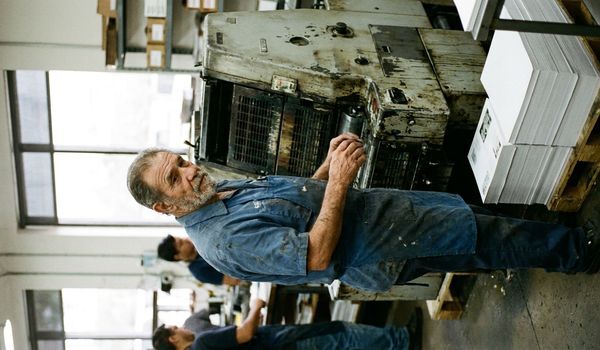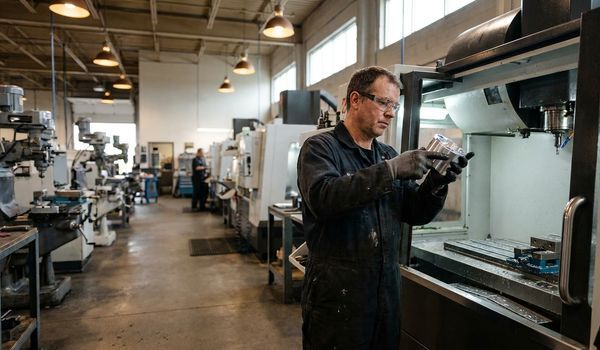
Machine shops sit at the center of American manufacturing. From aerospace components and medical device parts to automotive prototypes and custom fabrication, the precision machining sector supports nearly every supply chain in the country. Yet running a machine shop is capital intensive, and the latest machine shop financing statistics show that access to funding remains one of the biggest factors separating shops that grow from shops that stall.
This data roundup pulls together the most important numbers shaping machine shop financing in 2026: industry size, equipment costs, loan approval rates, funding amounts, and the trends driving owner decisions this year. Whether you run a two-person job shop or a 50-employee CNC production facility, these statistics will help you benchmark your business and plan your next financing move with confidence.
In This Article
- Machine Shop Industry Overview
- Key Machine Shop Financing Statistics
- Loan Approval Rates and the Lending Environment
- Machine Shop Equipment Costs in 2026
- How Machine Shop Financing Works
- Types of Machine Shop Financing
- Who Benefits Most From Machine Shop Financing
- Comparing Financing Sources
- How Crestmont Capital Helps Machine Shops
- Real-World Scenarios
- Frequently Asked Questions
- How to Get Started
Machine Shop Industry Overview: Size and Scope in 2026
Before diving into financing data, it helps to understand the scale of the industry itself. According to U.S. Census Bureau County Business Patterns data for NAICS code 332710, there are roughly 18,000 machine shop establishments operating in the United States, employing approximately 250,000 workers. Industry revenue estimates place the precision machining sector at more than $40 billion annually, with steady demand from aerospace, defense, medical, automotive, and energy customers.
The broader manufacturing sector accounts for roughly 10% of U.S. GDP and supports millions of jobs, and machine shops form the backbone of its supply chain. Most shops are small businesses: the majority operate with fewer than 20 employees, and a significant share are owner-operated job shops with fewer than 10 people on the floor. That small-business profile is exactly why financing structure matters so much in this industry. A single five-axis CNC machining center can cost more than an entire year of revenue for a small shop.
Several structural trends define the 2026 landscape:
- Reshoring momentum. OEMs continue moving production back to North America, and contract machining demand has risen alongside it. Shops reporting capacity constraints increasingly cite equipment, not demand, as their limiting factor.
- Labor pressure. The skilled machinist shortage continues to push shops toward automation: multi-axis machines, pallet changers, bar feeders, and robotic tending. Automation is a capital purchase, which ties labor strategy directly to financing.
- Aging equipment base. A large share of installed machine tools in the U.S. are more than 10 years old. Replacement cycles that were deferred in prior years are now converging, driving elevated demand for equipment financing.
- Higher ticket sizes. Machine tool prices have climbed with inflation, software integration, and tighter tolerances. The average financed equipment ticket in the machining sector has risen accordingly.
Key Stat: The U.S. is home to roughly 18,000 machine shop establishments employing about 250,000 workers, according to U.S. Census Bureau County Business Patterns data. Most are small businesses with fewer than 20 employees, making access to outside capital a defining factor in their growth.
Key Machine Shop Financing Statistics for 2026
The following statistics bring the current financing environment into focus. Together they describe an industry with strong demand, high capital requirements, and a widening gap between what traditional banks approve and what shops actually need.
Industry and Demand Numbers
- Machine shop services generate an estimated $40 billion or more in annual U.S. revenue.
- The global CNC machine tools market is valued in the range of $80 to $100 billion, with industry analysts projecting continued mid-single-digit annual growth through the decade.
- Manufacturing accounts for approximately 10% of U.S. GDP, and fabricated metal products (the category containing machine shops) consistently ranks among the largest manufacturing employer groups tracked by the Census Bureau.
- Surveys of contract manufacturers repeatedly show that a majority of shops plan at least one major capital equipment purchase within a 24-month window.
Financing Behavior Numbers
- Equipment financing is the dominant funding tool in the machining sector. Industry data consistently shows that a large majority of machine shops, commonly estimated at 70% to 80%, finance or lease at least some of their equipment rather than paying cash.
- The most common financed ticket sizes for CNC equipment fall between $100,000 and $500,000, though multi-machine automation cells regularly exceed $1 million.
- Working capital demand in the sector spikes around material costs. Shops commonly hold 30 to 90 days of material inventory and carry receivables of 45 to 75 days, creating a structural cash flow gap that financing fills.
- Small business lending data from the U.S. Small Business Administration shows tens of billions of dollars in guaranteed loans flowing to small businesses each fiscal year, with manufacturing consistently among the top industry categories by dollar volume.
Is Your Shop Keeping Pace?
Most growing machine shops finance their equipment. See what your shop qualifies for with a fast, no-obligation application.
Check Your Options →Loan Approval Rates and the Lending Environment
Approval rate data tells the most important story in small business lending: where you apply matters as much as what you apply for. Monthly small business lending indices tracking thousands of applications have shown a consistent pattern for years, and 2026 continues it.
Approval Rates by Lender Type
- Large national banks approve a minority of small business loan applications, with approval rates that have hovered in the low-to-mid teens as a percentage of applications. For capital-intensive manufacturers without long banking histories, effective approval odds are often lower.
- Small and regional banks approve a somewhat higher share, typically in the high teens. They remain relationship-driven and often require strong credit, collateral, and multi-year financials.
- Alternative and online lenders approve the largest share of completed applications, frequently in the 25% to 30% range and higher for equipment-secured deals, because the equipment itself serves as collateral and underwriting weighs cash flow more heavily than credit history alone.
The Federal Reserve's Small Business Credit Survey has repeatedly found that roughly 4 in 10 employer firms seek external financing in a given year, and that a substantial share of applicants receive less than the full amount they requested. For machine shops, shortfalls are usually tied to collateral requirements, time-in-business rules, or debt-service coverage ratios that traditional lenders apply rigidly.
Why This Matters: An approval rate gap of 10 to 15 percentage points between lender types means the same machine shop application can be declined at a national bank and approved at a specialized lender. Equipment-backed applications perform best because the machinery secures the debt.
What the 2026 Rate Environment Means
Interest rates remain elevated compared with the near-zero era of the early 2020s, which has two practical consequences for shop owners. First, total cost of capital is higher, so term selection and down payment strategy matter more. Second, banks have tightened credit boxes, pushing more manufacturers toward specialized equipment finance companies and alternative lenders that understand machinery values. Coverage from outlets like Reuters has tracked how small manufacturers are adapting to this higher-rate environment by prioritizing revenue-generating equipment purchases over discretionary expansion.
Machine Shop Equipment Costs in 2026
Equipment cost data is the foundation of any financing decision. Here is what shops are paying for core machinery in 2026, based on current dealer pricing and industry surveys:
- Entry-level CNC lathes: $40,000 to $90,000 for new 2-axis turning centers from value brands.
- Production CNC lathes with live tooling: $100,000 to $250,000 depending on bar capacity, sub-spindle configuration, and automation packages.
- 3-axis vertical machining centers: $60,000 to $150,000 for new machines; popular mid-range VMCs from major brands typically land between $80,000 and $120,000.
- 5-axis machining centers: $200,000 to $500,000 or more, with high-end trunnion and gantry configurations exceeding $750,000.
- Swiss-type lathes: $150,000 to $400,000 depending on axis count and bar feed integration.
- Wire EDM: $80,000 to $200,000; sinker EDM units run $60,000 to $150,000.
- Grinding equipment: $50,000 to $300,000 for surface, OD, and ID grinders.
- Inspection and metrology: $30,000 to $150,000 for CMMs and optical measurement systems, an increasingly common add-on as quality requirements tighten.
- Automation add-ons: Bar feeders ($10,000 to $40,000), pallet pools ($50,000 to $200,000), and robotic tending cells ($75,000 to $250,000).
Used equipment offers meaningful savings, typically 30% to 60% below new pricing, but availability of late-model machines with low hours has tightened. That supply squeeze is one reason used equipment financing volume has grown: buyers need funding fast when the right machine hits the market.
Pro Tip: Most lenders will finance used CNC equipment up to 10 to 15 years old, and some will fund older machines with strong service records. Because the machine secures the loan, equipment financing approvals depend more on the asset's value and your cash flow than on a perfect credit score.
How Machine Shop Financing Works
Machine shop financing follows a straightforward process, whether you are funding a single lathe or a full automation cell. Understanding the flow helps you move fast when opportunity appears, which matters in a market where quality used machines sell within days.
Step 1: Identify the need and the number. Define what you are buying (or what expense you are covering) and the total project cost. For equipment, get a formal quote or invoice from the seller. For working capital, calculate the gap: materials, payroll, and overhead carried while receivables age.
Step 2: Match the product to the purpose. Equipment purchases fit equipment financing or leasing. Ongoing cash flow gaps fit a line of credit or working capital loan. Large, multi-purpose expansions may fit an SBA loan. The statistics above show why this matching matters: equipment-secured applications approve at meaningfully higher rates than unsecured requests at traditional banks.
Step 3: Apply. Modern lenders keep this light: an application, a few months of bank statements, and the equipment quote. Bank applications, by contrast, often require years of tax returns, financial statements, and collateral documentation.
Step 4: Underwriting and approval. The lender evaluates time in business, revenue, cash flow, credit profile, and (for equipment deals) the collateral value of the machine. Specialized equipment lenders move fastest; approvals within 24 to 48 hours are common, compared with weeks at traditional banks.
Step 5: Funding and payoff. Funds go directly to the equipment seller (or to your account for working capital products). You repay over a fixed term, typically 24 to 84 months for equipment, and own the machine outright at the end of a financing agreement.
By the Numbers
Machine Shop Financing - Key Statistics for 2026
~18,000
Machine shop establishments in the U.S. (Census Bureau, NAICS 332710)
$40B+
Estimated annual U.S. machine shop services revenue
70-80%
Share of machine shops that finance or lease equipment
25-30%
Typical approval rates at alternative lenders vs. low-to-mid teens at big banks
Types of Machine Shop Financing
The statistics point to a clear conclusion: the shops that thrive match the right funding product to the right need. Here are the main categories, ranked by how commonly machine shops use them.
1. Equipment Financing
The workhorse of the industry. A lender funds the machine purchase and you repay over a fixed term, with the equipment itself as collateral. Terms run 24 to 84 months, down payments range from 0% to 20%, and approval is faster and more flexible than bank loans because the asset secures the deal. This is the natural fit for CNC machines, EDM, grinders, and automation cells. Crestmont Capital's CNC machine financing program is built specifically around this purchase type.
2. Equipment Leasing
Leasing trades ownership for lower monthly payments and built-in upgrade flexibility. It suits shops in fast-moving technology segments (5-axis, automation) where obsolescence risk matters. At the end of term you can buy the machine, upgrade, or return it.
3. Working Capital Loans
Short-term funding for materials, payroll, and operating expenses. In an industry where shops carry 45 to 75 days of receivables, working capital loans bridge the gap between shipping parts and getting paid.
4. Business Lines of Credit
A revolving credit line you draw against as needed and repay to restore availability. Best for recurring, variable needs: material buys ahead of a large order, covering a slow-paying customer, or seizing a used machine deal that will not wait.
5. SBA Loans
Government-backed loans with long terms and competitive rates, suited to large expansions, real estate purchases, or major multi-machine projects. The tradeoff is speed and paperwork: SBA deals take weeks to months, which is why shops typically reserve them for planned projects rather than opportunistic equipment buys.
6. Manufacturing Equipment Financing Programs
Some lenders maintain dedicated programs for the sector. Crestmont Capital's manufacturing equipment financing options, for example, are structured around how shops actually buy: dealer purchases, private-party sales, and auction wins all qualify.
| Financing Type | Best For | Typical Term | Funding Speed |
|---|---|---|---|
| Equipment Financing | CNC machines, EDM, grinders, automation | 24-84 months | 1-5 days |
| Equipment Leasing | Tech-heavy machines, upgrade cycles | 24-60 months | 1-5 days |
| Working Capital Loan | Materials, payroll, receivables gap | 6-24 months | 1-3 days |
| Business Line of Credit | Recurring or opportunistic needs | Revolving | 1-7 days |
| SBA Loan | Large expansions, real estate | 10-25 years | 30-90 days |
Who Benefits Most From Machine Shop Financing
Financing is not a fallback for struggling shops. The data shows it is the standard operating tool for the majority of the industry. These profiles benefit most:
- Growth-stage job shops that have more work than capacity. When a machine pays for itself in contract revenue, financing converts a capital expense into a monthly line item matched to the income it generates.
- Shops facing the labor squeeze. If you cannot hire enough machinists, automation is the answer, and automation is a financing decision. A robot tending a lathe through a lights-out shift effectively adds an employee at a fraction of the cost.
- Owners approaching equipment end-of-life. With a large share of installed machine tools past the 10-year mark, replacement is not optional. Financing lets you replace on your schedule instead of after a breakdown.
- Shops serving aerospace, medical, and defense. Tight tolerance and certification requirements demand newer machines and metrology equipment. Customers in these sectors audit capability, and capability is capital equipment.
- Newer shops without banking history. Because equipment financing is asset-secured, younger businesses with solid cash flow can qualify even when a bank will not return their calls.
Comparing Financing Sources: What the Data Shows
Not all funding sources perform equally for machine shops. Here is how the main options compare on the metrics that matter most, consistent with the approval rate statistics covered earlier.
| Factor | Traditional Bank | SBA Loan | Specialized Equipment Lender |
|---|---|---|---|
| Approval likelihood | Low-to-mid teens % of applications | Moderate; documentation-heavy | Highest; asset-secured underwriting |
| Funding speed | 2-8 weeks | 30-90 days | 24 hours to 5 days |
| Paperwork | Tax returns, financials, collateral docs | Extensive | Application, bank statements, quote |
| Credit flexibility | Strict (typically 700+) | Moderate | Flexible; cash flow weighted |
| Best use case | Established shops, low-rate priority | Large planned expansions | Time-sensitive equipment purchases |
| Cost of capital | Lowest | Low | Higher, offset by speed and approval odds |
The pattern in the numbers is consistent: banks win on price, specialized lenders win on speed and approval probability. For a machine shop that has located the right used 5-axis machine or needs to add capacity for a signed contract, speed and certainty usually outweigh a point or two of rate. For broader context on small business lending trends, our small business loan statistics roundup tracks the same lender-type patterns across industries, and CNBC's small business coverage regularly reports on how rate cycles shape owner financing decisions.
How Crestmont Capital Helps Machine Shops
Crestmont Capital is the #1 rated business lender in the U.S., and machine shops are one of the industries we know best. Our programs are built around the realities the statistics above describe: high equipment costs, uneven receivables, and opportunities that cannot wait weeks for a bank committee.
- Fast equipment financing. Approvals in as little as 24 hours and funding in days, for new and used CNC machines, lathes, mills, EDM, grinders, metrology, and full automation cells. Dealer, private-party, and auction purchases all qualify.
- Flexible underwriting. We weigh your cash flow and the equipment's value, not just a credit score. Shops with challenged credit, limited time in business, or past bank declines regularly get approved.
- Working capital and lines of credit sized to the receivables cycle of contract manufacturing, so material buys and payroll never wait on a slow-paying customer.
- Real guidance. Our advisors work with machine shops every day. If you want to go deeper on the CNC purchase process itself, our CNC machine financing guide walks through the full decision step by step.
Fund Your Next Machine in Days, Not Months
Crestmont Capital finances new and used CNC equipment with fast approvals and flexible terms. Apply in minutes.
Apply Now →Real-World Scenarios: How Shops Use Financing
Statistics describe the industry; scenarios show how individual shops put the numbers to work. These composite examples reflect common situations our advisors see every week.
Scenario 1: The Capacity-Constrained Job Shop
A 12-person shop in Ohio is turning away aerospace work because its two 3-axis VMCs run two shifts and still cannot keep up. A used 5-axis machining center is available from a dealer for $285,000. A bank quote requires 20% down, three years of returns, and a six-week decision. Instead, the owner finances the machine through a specialized lender with 10% down and a 60-month term, is approved in 48 hours, and has the machine cutting parts within three weeks. The new capacity supports roughly $60,000 in additional monthly revenue against a payment of about $5,500.
Scenario 2: The Lights-Out Automation Play
A Colorado shop cannot hire a second-shift machinist after six months of searching. The owner finances a robotic tending package for an existing lathe at $140,000. The cell runs unattended overnight, adding the equivalent of a full second shift of output at a monthly payment under $3,000, far below the fully loaded cost of the hire that never materialized.
Scenario 3: The Materials Gap
A Texas shop wins a $400,000 defense subcontract but must buy $120,000 of material upfront while the customer pays net-60. A working capital loan covers the material buy. The shop delivers on time, collects, repays the loan, and books a margin that dwarfs the financing cost.
Scenario 4: The Used Machine Opportunity
A low-hours Swiss lathe appears at auction at 40% below new pricing. The listing will not survive a 45-day SBA process. The owner draws on a pre-approved line of credit to win the bid, then refinances into a fixed-term equipment loan once the machine is on the floor.
Scenario 5: The Replacement Decision
A Michigan shop's 14-year-old machining center needs its third spindle repair in two years. Comparing repair quotes against the used equipment market, the owner finances a replacement VMC instead. Downtime drops, scrap rates fall, and the warranty removes the repair roulette entirely.
Frequently Asked Questions
What is machine shop financing? +
Machine shop financing is any funding product used to purchase equipment, cover operating expenses, or expand a machining business. The most common form is equipment financing, where the machine itself serves as collateral. Working capital loans, lines of credit, leasing, and SBA loans are also widely used depending on the purpose.
How big is the machine shop industry in the United States? +
U.S. Census Bureau data shows roughly 18,000 machine shop establishments (NAICS 332710) employing approximately 250,000 workers. Industry revenue is estimated at more than $40 billion annually, and the sector sits inside a manufacturing economy that accounts for about 10% of U.S. GDP.
What are the typical approval rates for machine shop loans? +
Approval rates vary sharply by lender type. Large banks approve a low-to-mid-teens percentage of small business applications, small banks approve in the high teens, and alternative or specialized lenders commonly approve 25% to 30% or more. Equipment-secured applications approve at higher rates than unsecured requests because the machinery serves as collateral.
How much does CNC equipment cost in 2026? +
Entry-level CNC lathes start around $40,000 to $90,000, production turning centers run $100,000 to $250,000, 3-axis VMCs typically cost $60,000 to $150,000, and 5-axis machining centers range from $200,000 to $500,000 or more. Automation add-ons like robotic tending cells run $75,000 to $250,000. Used machines typically sell for 30% to 60% below new pricing.
What credit score do I need for machine shop financing? +
Traditional banks typically want scores of 700 or higher. Specialized equipment lenders are far more flexible because the machine secures the debt; approvals are common in the 600 to 680 range, and some programs work with scores below 600 when cash flow is strong and the down payment is larger.
Can I get machine shop financing with bad credit? +
Yes. Equipment financing is one of the most accessible products for owners with damaged credit because the equipment serves as collateral. Expect a larger down payment (15% to 30%) and a shorter term, but approvals happen every day for shops with strong revenue and imperfect credit histories.
How long does it take to get funded? +
Specialized equipment lenders commonly approve within 24 to 48 hours and fund within 1 to 5 days. Traditional banks take 2 to 8 weeks. SBA loans take 30 to 90 days. If you are buying a used machine or bidding at auction, speed usually dictates which product fits.
What documents do I need to apply? +
With a specialized lender, typically just a one-page application, 3 to 6 months of business bank statements, and the equipment quote or invoice. Banks usually require 2 to 3 years of tax returns, financial statements, and a detailed business plan, which is part of why their timelines run weeks instead of days.
Is used CNC equipment eligible for financing? +
Yes. Most equipment lenders finance used machines up to 10 to 15 years old, and some go older with strong service documentation. Used equipment is financed every day from dealers, private sellers, and auctions. Because used machines sell quickly, working with a lender that funds in days is a real advantage.
What is the difference between equipment financing and leasing? +
With financing, you own the machine at the end of the term and build equity with each payment. With leasing, you pay for use, get lower monthly payments, and can upgrade, buy, or return the equipment at the end. Shops planning to run a machine for a decade usually finance; shops in fast-moving technology segments often lease.
How much can a machine shop borrow? +
Equipment financing commonly covers $25,000 up to several million dollars, with most machine shop transactions falling between $100,000 and $500,000. Working capital loans and lines of credit typically scale with monthly revenue. The practical ceiling is set by cash flow: lenders size approvals so payments stay comfortably inside what the machine's output supports.
Do I need a down payment for equipment financing? +
Not always. Strong applicants can qualify for 100% financing. Typical down payments run 0% to 20%, with larger down payments used to offset weaker credit, older equipment, or newer businesses. A down payment also lowers the monthly payment and total interest cost, so it is worth comparing structures.
Can a startup machine shop get financing? +
Yes, though terms are tighter. Startup programs exist for owners with industry experience, and equipment-secured structure helps. Expect higher down payments (20% to 40%), shorter terms, and more scrutiny of your background and signed customer commitments. Many successful shops started with one financed machine and a single anchor customer.
What interest rates and terms should I expect in 2026? +
Rates depend on credit strength, time in business, equipment age, and down payment. Well-qualified borrowers see competitive single-digit to low-double-digit rates; challenged credit profiles price higher. Equipment terms run 24 to 84 months, working capital products 6 to 24 months, and SBA loans 10 to 25 years. Comparing total cost of capital, not just rate, gives the clearest picture.
How do I choose the right lender for my machine shop? +
Match the lender to your priority. Choose a bank for the lowest rate if you have strong credit and months to spare. Choose an SBA loan for large planned expansions. Choose a specialized equipment lender for speed, approval odds, and flexibility, especially on used machines or time-sensitive deals. Ask every lender for the total cost of capital in writing and compare on equal terms.
Ready to Put These Numbers to Work?
Join the thousands of businesses funded by the #1 rated business lender in the U.S. Application takes minutes.
Get Started Today →How to Get Started
Complete our quick application at offers.crestmontcapital.com/apply-now - takes just a few minutes.
A Crestmont Capital advisor will review your needs and match you with the right financing option for your shop.
Receive your funds and put them to work - often within days of approval.
Conclusion
The machine shop financing statistics for 2026 describe an industry that is healthy, in demand, and capital hungry. Roughly 18,000 shops employ 250,000 Americans, most plan major equipment purchases within two years, and the majority finance or lease their machines rather than paying cash. Approval data shows the lender you choose matters as much as the application itself, and equipment-secured funding remains the most accessible path for shops of every size and credit profile.
For shop owners, the takeaway is practical: define the need, match the product to the purpose, and work with a lender that understands machining. Crestmont Capital finances the equipment, working capital, and growth plans of machine shops across the country, with approvals in as little as 24 hours. When the right machine or the next big contract appears, you will be ready to move.
Disclaimer: The information provided in this article is for general educational purposes only and is not financial, legal, or tax advice. Funding terms, qualifications, and product availability may vary and are subject to change without notice. Crestmont Capital does not guarantee approval, rates, or specific outcomes. For personalized information about your business funding options, contact our team directly.

Allan Garfinkle
Allan Garfinkle is the Chief Revenue Officer at Crestmont Capital, where he has spent more than a decade leading revenue strategy, business development, and operational growth. With 28 years of experience building and advising startups and small businesses, Allan has helped more than 10,000 business owners navigate financing decisions, growth opportunities, and changing economic conditions. He earned a Bachelor of Science in Economics and an MBA with a concentration in Finance from Northeastern University, as well as a Juris Doctor from New England Law, where his studies focused on contracts and business law. His writing draws on extensive practical experience in small-business lending, equipment financing, business credit, and commercial finance.