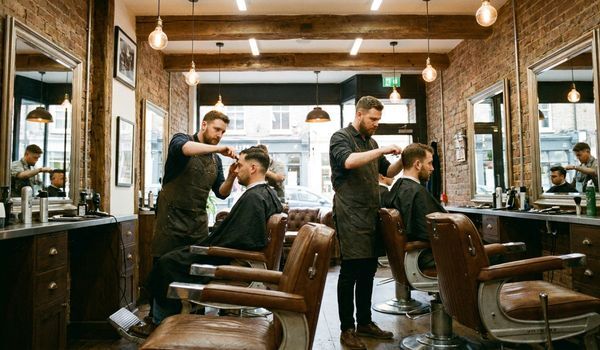
Barbershop financing statistics tell a clear story in 2026: the men's grooming industry is growing, shop owners are investing heavily in equipment and build-outs, and access to capital has become the single biggest factor separating shops that expand from shops that stall. Whether you run a single-chair operation or a multi-location grooming brand, the numbers behind barbershop lending reveal where the industry is headed and how owners are funding their next move.
This report brings together the most current data on the barbershop industry, from market size and establishment counts to loan approval rates, average funding amounts, and the financing products shop owners actually use. Every figure is drawn from government data, industry surveys, or lender portfolio trends, so you can benchmark your own shop against the wider market and make smarter funding decisions this year.
In This Article
- The Barbershop Industry at a Glance
- Barbershop Market Size and Growth Statistics
- Why Financing Matters for Barbershops
- How Barbershop Financing Works
- Types of Barbershop Financing
- Approval Rates and Funding Trends
- Who Benefits Most From Barbershop Financing
- Comparing Barbershop Financing Options
- How Crestmont Capital Helps Barbershop Owners
- Real-World Barbershop Financing Scenarios
- Frequently Asked Questions
- How to Get Started
- The Bottom Line
The Barbershop Industry at a Glance
Barbering is one of the oldest skilled trades in the country, and in 2026 it is also one of the most resilient corners of the personal services economy. Demand for haircuts does not disappear in a downturn, and the cultural revival of traditional barbering over the past decade has turned the neighborhood barbershop into a premium grooming destination rather than a commodity service.
The industry is intensely fragmented. The vast majority of barbershops are independently owned, and a large share of the workforce operates as booth renters or solo owners rather than employees. That structure shapes everything about how the industry finances itself: most shops are too small for traditional bank underwriting, many owners have thin business credit files, and equipment purchases are frequent but relatively small.
Several forces are driving growth right now. Men's grooming has expanded well beyond the basic haircut into beard services, hot towel shaves, scalp treatments, and retail product sales. Premium pricing has followed, with high-end shops in metro markets charging $40 to $75 for services that cost $15 a generation ago. Shop owners are responding by upgrading chairs, stations, booking technology, and storefronts, and that investment cycle is exactly where barbershop financing enters the picture.
Against that backdrop, here is what the data says about the size, shape, and financial behavior of the industry in 2026.
Barbershop Market Size and Growth Statistics
The barbershop industry generates approximately $5 billion in annual revenue in the United States, based on widely cited industry research estimates. That figure captures employer barbershops and a portion of the booth rental economy, but it understates the true footprint because so much of the trade operates as nonemployer businesses.
Establishment counts tell the fuller story. U.S. Census Bureau data on nonemployer businesses shows well over 100,000 one-person barbershop operations nationwide, and employer establishment counts add roughly 15,000 more shops with paid staff on top of that. Combined, the industry comfortably exceeds 115,000 operating locations, and the long-term trend line in Census Bureau nonemployer statistics has pointed upward for years as new barbers enter the trade.
Employment data confirms the momentum. The Bureau of Labor Statistics counts tens of thousands of employed barbers, and its occupational outlook projects barber employment to grow faster than the average for all occupations over the current decade, at roughly 7 to 8 percent. That growth rate outpaces most personal service trades and reflects both population growth and the premium repositioning of the industry.
Key Stat: The barbershop industry generates roughly $5 billion a year across more than 115,000 U.S. locations, and BLS projections put barber employment growth at nearly double the national average for all occupations.
Wages and pricing are climbing alongside headcounts. Median annual pay for barbers sits in the high $30,000s to low $40,000s in recent BLS readings, with top earners in premium urban shops clearing $70,000. Average ticket prices have risen steadily: industry surveys place the typical men's haircut between $25 and $35 nationally in 2026, with beard trims, shaves, and styling packages pushing average per-visit spend past $45 in full-service shops.
Ownership demographics matter for financing as well. Barbershop ownership skews heavily toward minority and immigrant entrepreneurs, with Black and Hispanic owners representing a disproportionately large share of the industry relative to small business ownership overall. Research on small business credit access consistently shows these owner groups face higher denial rates at traditional banks, which is one reason alternative and online lenders have become central to barbershop finance.
Franchise and suite concepts are growing too, but independents still dominate. Multi-unit barbershop franchises and salon suite conversions account for a modest slice of total locations, meaning the typical financing customer is an independent owner funding a chair, a build-out, or a second shop rather than a franchisee with a corporate playbook.
Why Financing Matters for Barbershops
Barbershops are cash-flow businesses with lumpy capital needs. Day-to-day revenue is steady, but the big expenses arrive in bursts: a chair dies, a lease opens up in a better location, a landlord requires a build-out, or a competitor retires and their book of clients is suddenly up for grabs. The owners who can say yes to those moments are the ones who grow.
The benefits of barbershop financing, backed by the data:
- Faster equipment replacement. A quality hydraulic barber chair runs $700 to $3,000, and a full station with mirror, lighting, and cabinetry can reach $5,000. Financing spreads that cost over 24 to 60 months instead of draining a month of profit in one week.
- Build-out and renovation capacity. Opening or expanding a shop typically costs $30,000 to $75,000 once plumbing, electrical, flooring, and code compliance are counted. Few owners hold that much idle cash.
- Smoother cash flow through slow seasons. Revenue dips in late summer and early January are predictable, and working capital financing bridges them without skipping rent or payroll.
- Ability to hire ahead of demand. Adding a barber means adding a station, tools, and often a signing incentive. Funding lets owners hire when the talent is available, not months later.
- Marketing and booking technology. Shops that invest in online booking, point-of-sale systems, and local advertising consistently report higher rebooking rates, and those systems carry real upfront costs.
- Acquisition opportunities. Retiring owners sell shops at one to two times annual profit. A buyer with financing in place can act in days while others scramble.
Ready to Upgrade Your Barbershop?
Fast, flexible funding from the #1 business lender in the U.S. Apply in minutes with no obligation.
Apply Now →How Barbershop Financing Works
The mechanics of barbershop financing are simpler than most owners expect, especially outside the traditional bank channel. Here is the typical sequence from application to funded account.
Step 1: Define the use of funds. Lenders move faster when the purpose is concrete. "Two new stations and a waiting area renovation at $18,000" gets a cleaner review than "general expenses." The use of funds also determines which product fits, since equipment purchases map to equipment financing and working capital needs map to short-term loans or lines of credit.
Step 2: Gather the core documents. Most non-bank lenders ask for three to six months of business bank statements, a government ID, and proof of time in business. Bank and SBA applications add tax returns, financial statements, and a business plan. The document gap between the two channels is the single largest driver of their speed difference.
Step 3: Underwriting. Alternative lenders lean on revenue consistency and bank statement health rather than collateral or perfect credit. A shop depositing $15,000 a month with a clean overdraft history is a strong candidate even with a credit score in the low 600s.
Step 4: Offer and terms. Approvals typically arrive within 24 to 72 hours at online lenders. Offers specify the amount, term length, factor rate or APR, and repayment frequency, which is often daily or weekly for short-term products and monthly for equipment and SBA loans.
Step 5: Funding. Once contracts are signed, funds land in the business account in one to three business days for most products. Equipment financing pays the vendor directly in many cases.
Owners weighing their first application can review the full range of options on our small business financing hub before deciding which product matches their shop.
Types of Barbershop Financing
Four product categories account for the overwhelming majority of barbershop funding. The amounts below reflect typical ranges seen across the industry in 2026.
Equipment Financing
The most natural fit for barbershops. The equipment itself secures the loan, which keeps rates lower and approval easier. Typical amounts run $5,000 to $75,000 with terms of 24 to 72 months. Chairs, stations, sterilizers, laundry machines, and point-of-sale hardware all qualify. Our barber shop equipment financing guide walks through the specifics, and the equipment financing page covers current programs.
Working Capital Loans
Short-term lump sums of $10,000 to $150,000 used for rent bridges, payroll, marketing pushes, or inventory. Terms usually run 6 to 18 months with factor-rate pricing. Speed is the draw: many shops fund within 48 hours. Crestmont's unsecured working capital loans require no collateral.
Business Lines of Credit
Revolving credit from $10,000 to $250,000 that shops draw on as needed. Interest accrues only on the drawn balance, which makes a business line of credit the most efficient tool for recurring, uneven expenses like supply orders and seasonal slowdowns.
SBA Loans
The lowest-cost capital available to barbershops, with SBA loans running from microloans up to $50,000 through the 7(a) program at much larger amounts. Rates track prime plus a modest spread, but approval takes weeks and demands full documentation. Best for planned expansions rather than urgent needs. Program details are published at SBA.gov.
By the Numbers
Barbershop Financing in 2026: Key Statistics
$5B
Estimated annual U.S. barbershop industry revenue
115K+
Barbershop locations nationwide, employer and nonemployer combined
48 hrs
Typical funding speed at alternative lenders, versus weeks at banks
2x
Rough approval-rate advantage of online lenders over big banks for small shops
Approval Rates and Funding Trends in 2026
Approval data is where barbershop financing statistics get most useful for owners deciding where to apply. Small business lending surveys through 2025 and into 2026 show a persistent pattern: big banks approve roughly 13 to 15 percent of small business applications, small and regional banks approve around 19 to 20 percent, and online and alternative lenders approve between 25 and 32 percent. For a barbershop with thin collateral and a short credit history, that gap is decisive.
Demand is shifting toward speed and smaller ticket sizes. Lender portfolio data across the personal services sector shows average requested amounts clustering between $15,000 and $45,000, with equipment and working capital requests dominating. Applications tied to expansion, meaning second locations and chair additions, have grown as a share of total volume since 2024, a sign of confidence in consumer demand.
Pro Tip: Shops with six or more months of consistent deposits above $10,000 per month see meaningfully better approval odds and pricing than newer or more volatile operations. If your statements are borderline, three months of clean banking history before applying can change the offer.
Credit expectations are also loosening at the margins. While banks still prefer scores above 680, alternative lenders routinely fund barbershop owners in the 580 to 640 range when revenue is strong. That shift matters in an industry where many owners built their credit as employees or booth renters and only recently formed a business entity.
Macro coverage of small business credit conditions on outlets like CNBC's small business desk and Forbes Advisor's business loans section tracks the same trend: rate pressure easing slowly through 2026, while approval standards at non-bank lenders stay comparatively accessible. For barbershops, the practical result is that funding is available now, and the cost of waiting often exceeds the cost of capital.
Who Benefits Most From Barbershop Financing
The statistics point to four profiles that gain the most from outside capital:
The booth renter going independent. A barber leaving a rental chair to open a first shop faces $30,000 to $60,000 in startup costs. Financing converts a distant plan into a 90-day project.
The established owner adding chairs. Shops running at capacity leave money on the table every weekend. Adding two stations at $8,000 to $12,000 fully installed pays for itself within months at standard booking volumes.
The buyer of a retiring owner's shop. Acquisitions in this industry are priced at roughly one to two times annual profit, so a shop netting $90,000 might sell for $120,000. Financing the purchase lets the buyer keep working capital intact for the transition.
The multi-shop operator standardizing systems. Owners of two or more locations use financing for shared booking platforms, branding refreshes, and bulk equipment purchases that would strain any single shop's cash flow.
Comparing Barbershop Financing Options
The right product depends on the use of funds, timeline, and credit profile. This table summarizes how the four main options compare for a typical barbershop borrower in 2026.
| Feature | Equipment Financing | Working Capital | Line of Credit | SBA Loan |
|---|---|---|---|---|
| Typical amount | $5K - $75K | $10K - $150K | $10K - $250K | Up to $50K micro, more via 7(a) |
| Funding speed | 2 - 5 days | 1 - 3 days | 1 - 5 days | 3 - 8 weeks |
| Term length | 24 - 72 months | 6 - 18 months | Revolving | 5 - 10 years |
| Cost profile | Low, equipment secured | Higher, factor rates | Pay interest only on draws | Lowest available |
| Best use | Chairs, stations, POS | Rent bridge, payroll, ads | Recurring and seasonal needs | Planned expansion, acquisition |
| Credit flexibility | High | High | Moderate | Low |
Most growing shops end up using more than one product over time: equipment financing for the build-out, a line of credit for ongoing flexibility, and an SBA product when a second location justifies the paperwork.
How Crestmont Capital Helps Barbershop Owners
Crestmont Capital has funded thousands of personal services businesses, including barbershops at every stage from first shop to regional brand. As the #1 rated business lender in the country, our programs are built around the realities of shop ownership: fast decisions, flexible credit standards, and amounts sized to how barbershops actually spend.
Owners use our equipment financing to fund chairs, stations, and storefront build-outs with the equipment itself as security. Our working capital loans cover rent bridges, hiring pushes, and marketing campaigns without collateral. Shops that want standing flexibility choose a business line of credit they can draw on whenever a supplier deal or slow week arrives.
For a deeper dive on funding a shop build-out or renovation, our complete barbershop financing guide covers the full process, and the barber shop equipment financing breakdown compares chair and station programs line by line.
Get Your Barbershop Funded This Week
One application, multiple funding options, decisions in hours. See what your shop qualifies for today.
Check Your Options →Real-World Barbershop Financing Scenarios
Statistics become useful when they map to real decisions. These five scenarios reflect the most common funding situations we see across the barbershop industry in 2026.
Scenario 1: The First Shop Build-Out. A barber with nine years of booth rental history signs a lease on a 900-square-foot retail space. Build-out costs total $42,000: plumbing for three wash stations, electrical, flooring, four chairs, and signage. With $12,000 saved, he finances $30,000 through equipment financing and a small working capital loan. Monthly payments run about $900 against projected revenue of $18,000 per month once fully booked. The shop opens in 11 weeks instead of the two years self-funding would have required.
Scenario 2: The Chair Upgrade Cycle. A four-chair shop in a growing suburb is running 92 percent booked on weekends. Two new stations cost $11,500 installed. The owner finances the equipment over 36 months at roughly $360 per month. Each chair only needs about 25 cuts a month to cover its payment, and the two hired barbers fill their books within eight weeks.
Scenario 3: The Seasonal Bridge. A shop in a college town sees revenue drop 35 percent every summer when students leave. Rather than cutting hours, the owner draws $15,000 from an existing line of credit each June and repays it by October. Total interest cost across three summers is under $1,800, far less than the revenue lost by shrinking the schedule.
Key Stat: Acquisition pricing in the barbershop industry typically runs one to two times annual net profit, so a well-documented shop netting $80,000 a year changes hands for roughly $100,000 to $140,000. Buyers with pre-arranged financing close in weeks; buyers without it usually watch the deal go elsewhere.
Scenario 4: The Retirement Acquisition. A 28-year-old shop owner announces his retirement. His two-station shop nets $78,000 a year and he asks $95,000 including the client book and remaining lease. A 34-year-old barber with a down payment secures acquisition financing, assumes the lease, and keeps 85 percent of the client base through the transition. The loan payment consumes less than 15 percent of the shop's monthly profit from day one.
Scenario 5: The Second Location. An operator whose first shop clears $140,000 a year finds a turnkey space two miles away for $55,000 in total launch costs. Because the first location's financials are documented and deposits have been consistent for years, an SBA microloan covers the build-out at the lowest rate available. The second shop reaches break-even in month nine, and combined profit doubles by year two.
Frequently Asked Questions
How big is the barbershop industry in 2026? +
Industry research estimates place U.S. barbershop revenue at approximately $5 billion annually, spread across more than 115,000 employer and nonemployer locations. Growth has been steady for a decade, and BLS projections show barber employment expanding faster than the national average for all occupations.
How many barbershops operate in the United States? +
Census Bureau nonemployer data counts well over 100,000 solo barbershop operations, and employer establishment data adds roughly 15,000 shops with paid staff. Combined, the industry operates at more than 115,000 locations nationwide.
What is the average revenue for a barbershop? +
A solo operator typically generates $60,000 to $110,000 a year depending on market and pricing. Multi-chair shops with three to six stations commonly produce $250,000 to $750,000 in annual revenue, with premium urban shops exceeding that range.
How much does it cost to open a barbershop? +
Most independent shops open for $30,000 to $75,000 including build-out, chairs, stations, licensing, and initial marketing. Booth rental startups can launch for a few thousand dollars, while premium multi-station build-outs in major metros can exceed $100,000.
What credit score do barbershop owners need for financing? +
Traditional banks generally want scores of 680 or higher. Alternative lenders routinely approve barbershop owners with scores from 580 to 640 when monthly revenue is consistent. Equipment financing is often the most forgiving because the equipment secures the loan.
What are typical interest rates on barbershop business loans? +
SBA loans price near prime plus a small spread. Equipment financing from non-bank lenders runs in the mid-single to low-double digits depending on credit. Short-term working capital uses factor rates, so comparing total payback amount matters more than the stated rate.
How fast can a barbershop get funding? +
Alternative lenders typically approve within 24 to 72 hours and fund within one to three business days after signing. Equipment financing takes two to five days. Bank and SBA applications run three to eight weeks from application to funding.
Can a new barbershop get financing? +
Yes, though options narrow for shops under six months old. New shops most often qualify for equipment financing, since the equipment secures the loan, or for smaller working capital amounts. A strong personal credit profile and a signed lease help significantly.
What can barbershop financing be used for? +
Nearly any business purpose: chairs, stations, mirrors, wash units, point-of-sale systems, build-outs, lease deposits, payroll bridges, marketing, product inventory, hiring incentives, and acquisitions of existing shops.
Are SBA loans a good option for barbershops? +
For planned projects, yes. SBA microloans up to $50,000 suit shop openings and expansions, and 7(a) loans handle larger acquisitions. The tradeoff is speed and paperwork: expect weeks of processing and full documentation including tax returns and financial statements.
What is equipment financing for barbershops? +
A loan or lease where the purchased equipment serves as collateral. Amounts typically run $5,000 to $75,000 over 24 to 72 months. Because the lender holds the equipment as security, approval standards and rates are usually better than unsecured options.
Do barbershops need collateral for a business loan? +
Not always. Unsecured working capital loans and many lines of credit require no specific collateral, relying instead on revenue history. Equipment financing uses the equipment itself. Banks and SBA loans are more likely to require collateral or personal guarantees.
How do booth rentals affect barbershop financing? +
Booth rental income counts as business revenue when documented through bank statements. Owners transitioning from rental to ownership should deposit all income through a business account for at least three to six months before applying to establish a clean revenue record.
What documents do barbershop owners need to apply? +
Alternative lenders typically need three to six months of business bank statements, a government-issued ID, and basic business information. Banks and SBA lenders add two years of tax returns, profit and loss statements, balance sheets, and sometimes a business plan.
Is barbershop financing available with bad credit? +
Yes. Revenue-based underwriting means many owners with scores in the high 500s or low 600s qualify, particularly for equipment financing and working capital. Stronger recent bank statements and a clear use of funds offset weaker credit in most programs.
Join the Shops Investing in Growth
Thousands of business owners trust Crestmont Capital for fast, straightforward funding. Your application takes minutes.
Apply Now →How to Get Started
Complete our quick application at offers.crestmontcapital.com/apply-now - takes just a few minutes.
A Crestmont Capital advisor will review your needs and match you with the right financing option.
Receive your funds and put them to work - often within days of approval.
The Bottom Line
The barbershop financing statistics for 2026 describe an industry in a genuine growth cycle. Revenue near $5 billion, more than 115,000 locations, employment growth outpacing the national average, and rising ticket prices all point the same direction: demand is there, and the constraint on most shops is capital, not customers.
The lending side of the data is equally clear. Bank approval rates remain tight for small personal services businesses, while alternative lenders approve roughly twice as often and fund in days rather than weeks. Equipment financing, working capital, lines of credit, and SBA programs each serve a distinct need, and the strongest shops use them deliberately rather than reactively.
If the numbers in this report describe where you want your shop to go, the next step is simple. Crestmont Capital works with barbershop owners every day, and one quick application shows you exactly what your shop qualifies for. The industry is investing. Your shop can too.
Disclaimer: The information provided in this article is for general educational purposes only and is not financial, legal, or tax advice. Funding terms, qualifications, and product availability may vary and are subject to change without notice. Crestmont Capital does not guarantee approval, rates, or specific outcomes. For personalized information about your business funding options, contact our team directly.

Allan Garfinkle
Allan Garfinkle is the Chief Revenue Officer at Crestmont Capital, where he has spent more than a decade leading revenue strategy, business development, and operational growth. With 28 years of experience building and advising startups and small businesses, Allan has helped more than 10,000 business owners navigate financing decisions, growth opportunities, and changing economic conditions. He earned a Bachelor of Science in Economics and an MBA with a concentration in Finance from Northeastern University, as well as a Juris Doctor from New England Law, where his studies focused on contracts and business law. His writing draws on extensive practical experience in small-business lending, equipment financing, business credit, and commercial finance.