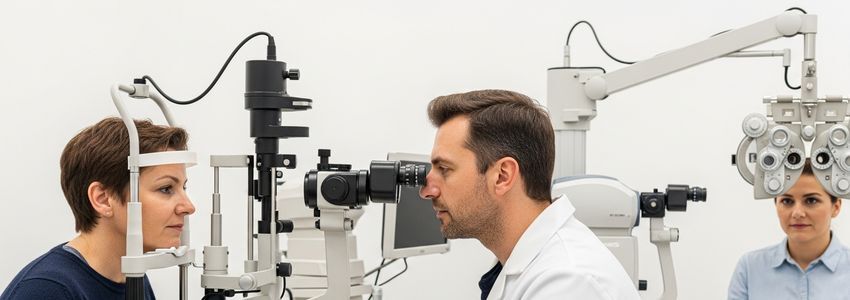
Running an optometry practice means delivering exceptional eye care while managing the financial complexities of a modern healthcare business. Whether you need to purchase cutting-edge diagnostic equipment, expand to a second location, hire additional staff, or smooth out seasonal cash flow gaps, optometry practice loans give you the capital flexibility to keep your practice growing. This guide covers every financing option available to optometrists — from SBA loans and equipment financing to working capital lines of credit — so you can make an informed decision and secure the funding your practice deserves.
In This Article
- What Are Optometry Practice Loans?
- Types of Financing for Optometry Practices
- How Optometry Business Loans Work
- What Can You Use Optometry Loans For?
- Qualifications and Requirements
- Optometry Lending by the Numbers
- How Crestmont Capital Helps Optometrists
- Real-World Scenarios
- Comparing Loan Options
- Frequently Asked Questions
- How to Get Started
What Are Optometry Practice Loans?
Optometry practice loans are business financing products specifically used by optometrists and eye care professionals to fund practice operations, expansion, and equipment. These loans function just like any other small business loan — you borrow a lump sum or access a revolving credit line, then repay the principal plus interest over an agreed term.
Unlike personal loans or student loan refinancing products, optometry practice loans are underwritten based on your business's financial health: revenue, cash flow, time in practice, and credit profile. Most lenders treat optometry practices as low-risk borrowers because the healthcare sector consistently performs well even during broader economic downturns. This translates into competitive rates and higher approval odds compared to many other industries.
Optometry practices of all sizes qualify — solo practitioners, group practices, multi-location clinics, and even practices looking to acquire an existing book of patients. Whether your practice is newly established or has decades of history, there is a financing solution structured to fit your stage of growth.
Key Insight: According to the SBA, healthcare and social assistance businesses are among the top recipients of SBA-backed financing, reflecting the strong creditworthiness of medical and vision care professionals.
Types of Financing for Optometry Practices
Optometry owners have access to several distinct financing products. Understanding the differences helps you match the right loan to the right need — and avoid overpaying for capital that doesn't fit your situation.
SBA Loans
The Small Business Administration's 7(a) and 504 loan programs are among the best financing options for established optometry practices. SBA loans offer low interest rates, long repayment terms (up to 25 years for real estate), and large loan amounts — sometimes $5 million or more for commercial property purchases. The downside is a longer approval timeline, typically 30 to 90 days, and extensive documentation requirements.
Term Loans
Traditional term loans deliver a lump sum upfront, which you repay in fixed monthly installments over a set period. These are ideal for equipment purchases, buildouts, or financing a practice acquisition. Terms typically range from 1 to 10 years, with annual interest rates between 6% and 30% depending on your creditworthiness and lender type.
Equipment Financing
Optometry practices are equipment-intensive. Digital retinal cameras, optical coherence tomography (OCT) systems, auto-refractors, slit lamps, and frame display systems carry five- and six-figure price tags. Equipment financing lets you acquire those tools without depleting your practice's working capital — the equipment itself often serves as collateral, making approval easier even for newer practices.
Business Line of Credit
A business line of credit is a flexible revolving facility you draw from as needed and repay over time. It's perfect for managing payroll during slow seasons, stocking optical inventory before the holiday rush, or covering unexpected repair expenses without disrupting cash flow. Interest accrues only on the outstanding balance, not the full credit limit.
Working Capital Loans
Working capital loans are short- to medium-term solutions for day-to-day operational expenses: rent, payroll, lab fees, insurance premiums, and marketing. They are often approved quickly — sometimes within 24 to 48 hours — making them a practical bridge when cash flow dips temporarily.
Practice Acquisition Loans
Buying an existing optometry practice or a retiring colleague's patient base requires specialized acquisition financing. These loans factor in the practice's patient volume, revenue history, and goodwill value in addition to tangible assets. Acquisition loans can fund both the tangible assets and the goodwill component.
Ready to Fund Your Optometry Practice?
Crestmont Capital offers fast, flexible financing tailored for eye care professionals. No lengthy bank process — apply in minutes.
Apply Now →How Optometry Business Loans Work
The application and funding process for optometry practice loans varies by lender type, but the core steps are consistent across most financing products.
Step 1 — Application: You complete a business loan application, providing basic information about your practice: legal business name, EIN, annual revenue, time in business, and requested loan amount. Many lenders offer fully online applications that take under 15 minutes.
Step 2 — Documentation: Lenders typically request 3 to 6 months of business bank statements, recent tax returns, and sometimes a profit-and-loss statement. For equipment financing, you may need a vendor quote. Acquisition loans require additional due diligence documents related to the practice being acquired.
Step 3 — Underwriting: The lender evaluates your credit score, business revenue trends, debt service coverage ratio, and overall financial health. Healthcare practices often receive preferential treatment because of their stable, recurring revenue from insurance and patient billing.
Step 4 — Approval and Offer: Once approved, you receive a loan offer outlining the amount, interest rate, term, and any fees. Review these carefully before accepting — pay attention to the APR, not just the interest rate, for an accurate cost comparison.
Step 5 — Funding: After you accept the offer and complete any final steps (such as signing loan documents), funds are typically deposited into your business bank account within 1 to 5 business days. Some lenders fund same-day or within 24 hours for smaller working capital products.
What Can You Use Optometry Practice Loans For?
Optometry practice financing is flexible enough to support virtually any legitimate business expense. Some of the most common uses include:
- Diagnostic and treatment equipment: OCT machines, digital fundus cameras, auto-refractors, phoropters, tonometers, and slit lamp biomicroscopes.
- Electronic health records (EHR) software: Transitioning to or upgrading a practice management system improves efficiency and patient satisfaction.
- Office expansion and renovation: Adding an exam lane, upgrading the optical dispensary, or relocating to a larger facility.
- Staffing and training: Hiring optometric technicians, front-desk staff, or opticians; paying for continuing education.
- Optical inventory: Stocking frames, contact lenses, and lens solutions to maximize dispensary revenue.
- Marketing and patient acquisition: Digital advertising, SEO services, and community outreach programs.
- Debt consolidation: Combining high-interest financing into a single, lower-rate payment.
- Practice acquisition: Purchasing an existing practice, a retiring doctor's patient base, or a franchise location.
Did You Know? According to CNBC's small business coverage, healthcare sector businesses typically have 20 to 40% higher approval rates for business loans than the average U.S. small business, reflecting the sector's strong revenue predictability.
Qualifications and Requirements
Lender requirements vary depending on the loan type and lender, but most optometry practice loans share a similar set of baseline qualifications:
- Time in business: Most lenders require at least 1 to 2 years in operation. Some alternative lenders work with practices open for as little as 6 months, though at higher rates.
- Annual revenue: Minimum revenue requirements typically range from $100,000 to $250,000 per year for standard term loans.
- Credit score: A personal credit score of 650 or higher opens most options. Scores of 700 or higher typically qualify for the best rates. Some lenders offer bad credit business loans for scores below 650, though at a higher cost of capital.
- Business bank account: Most lenders require an active business checking account for cash flow analysis and deposit of funds.
- Practice documentation: State optometry license, business registration (LLC, PC, PLLC), EIN, and malpractice insurance information.
SBA loans have additional requirements, including demonstrating that you have sought financing from conventional lenders first, meeting SBA size standards for small businesses, and confirming the business operates for profit in the United States. The SBA 7(a) program, in particular, requires a personal guarantee from owners with 20% or more ownership stake.
Optometry Lending by the Numbers
By the Numbers
Optometry Practice Financing — Key Statistics
40,000+
Practicing optometrists in the U.S.
$50K–$5M
Typical optometry loan range
24–48 hrs
Working capital funding timeline
$18B+
Annual U.S. optometry market revenue
How Crestmont Capital Helps Optometrists
Crestmont Capital specializes in small business financing for healthcare professionals, including optometrists at every stage of practice growth. Our approach is straightforward: we evaluate the full picture of your practice's financial health — not just a credit score — and match you with the loan product that best fits your goals and cash flow structure.
We offer a wide range of financing products for optometry practices:
- Term loans from $10,000 to $5 million for equipment, expansion, or acquisition
- Business lines of credit for ongoing operational flexibility
- Working capital loans with fast turnaround — often funded within 24 to 48 hours
- Equipment financing with flexible repayment tied to equipment expected lifespan
- SBA loan facilitation for practices seeking the lowest long-term rates
Our team understands the unique seasonality of optometry practices — the back-to-school rush, year-end vision benefit usage, and the slower summer months. We structure loan repayments to align with your cash flow, not against it. Many optometrists also find value in maintaining a revolving line of credit throughout the year, drawing as needed and repaying during high-revenue periods.
For optometrists with less-than-perfect credit or newer practices, Crestmont Capital offers fast business loans through alternative lending channels. These products prioritize your practice's revenue history over personal credit, giving more practitioners access to capital. Learn more about your options through our FAQ page or by applying directly.
Expand Your Practice. Upgrade Your Equipment.
Crestmont Capital is the #1-rated business lender in the U.S. Talk to a specialist today about optometry practice financing that fits your timeline and goals.
Get Funded Today →Real-World Scenarios for Optometry Practice Loans
Understanding how other optometrists use financing helps clarify which loan type fits your specific situation.
Scenario 1: Upgrading Diagnostic Equipment
Dr. Miller runs a solo optometry practice in a suburban area and wants to add OCT imaging to her practice's services. The machine costs $85,000. Rather than depleting her operating reserves, she secures an equipment loan for the full purchase price, repaid over 60 months at a competitive rate. The increased revenue from OCT-billed procedures more than covers the monthly payment within the first year.
Scenario 2: Opening a Second Location
An established group practice with two doctors wants to open a third exam lane and add a dispensary to an underserved suburb. They use a 7-year SBA 7(a) loan for $350,000 to fund leasehold improvements, initial inventory, and staffing. The long term keeps monthly payments manageable while the new location ramps up revenue.
Scenario 3: Managing Year-End Insurance Rush
Every October through December, a busy optometry clinic experiences a flood of patients using expiring vision insurance benefits. The clinic uses a $75,000 business line of credit to pre-stock frames and contact lenses, pay for overtime staffing, and cover the brief lag between services rendered and insurance reimbursement. By January, the line is paid off and available again for the next cycle.
Scenario 4: Acquiring a Retiring Colleague's Practice
A mid-career optometrist has the opportunity to buy a retiring colleague's established patient base and equipment for $600,000. He secures a practice acquisition loan covering both the goodwill and tangible assets, with repayment based on the acquired practice's historical cash flow. The deal closes in 45 days, maintaining seamless patient care continuity.
Scenario 5: Marketing and Patient Acquisition
A newer practice struggles to attract patients from a dominant regional chain. The owner takes a $30,000 working capital loan to fund a targeted digital marketing campaign, redesign the practice website, and offer new patient promotions. Within six months, new patient volume doubles and the loan is repaid entirely.
Scenario 6: Technology and Practice Management Upgrade
A practice running on legacy systems upgrades to a modern cloud-based EHR and practice management platform. The $45,000 implementation and training cost is financed through a short-term business loan. The efficiency gains — reduced administrative time, faster insurance claims processing, and improved scheduling — deliver measurable ROI within the first year.
| Loan Type | Best For | Typical Amount | Approval Speed |
|---|---|---|---|
| SBA 7(a) Loan | Acquisition, expansion, real estate | Up to $5M | 30–90 days |
| Term Loan | Equipment, renovation, large one-time expenses | $10K–$2M | 1–7 days |
| Equipment Financing | OCT, diagnostic devices, dispensary fixtures | $5K–$500K | 1–5 days |
| Line of Credit | Cash flow, inventory, seasonal expenses | $10K–$500K | 1–5 days |
| Working Capital Loan | Payroll, operations, short-term gaps | $5K–$500K | Same day–48 hrs |

Comparing Lender Options for Optometry Practices
When evaluating lenders for your optometry practice loan, it is important to look beyond the interest rate. The overall cost of capital, repayment flexibility, and lender expertise in healthcare financing all matter significantly.
Traditional banks typically offer the lowest interest rates but require the most documentation, have the highest credit score thresholds, and take the longest to fund. For optometrists with strong credit and time to wait, bank financing is worth pursuing — particularly for SBA-backed products.
Credit unions serve members in specific communities or professions and sometimes offer preferential rates for healthcare professionals. Their underwriting standards are similar to banks, but their member-focused mission can translate into more flexible terms.
Alternative lenders — including online lenders and specialty healthcare finance companies — move faster and are more flexible with credit and documentation requirements. The tradeoff is typically higher interest rates. For optometrists who need capital quickly or have less-than-perfect credit, alternative lenders provide access that traditional banks may not. According to Forbes, alternative lenders now account for a growing share of small business healthcare loans.
Equipment finance companies specialize specifically in financing equipment purchases. They often have pre-negotiated relationships with ophthalmic equipment manufacturers and distributors, which can simplify the process when you're purchasing from a known vendor.
Crestmont Capital works across all these categories — we match you with the lender and product that best fits your practice's specific profile, so you don't have to apply to multiple lenders and risk multiple hard credit pulls.
Frequently Asked Questions
What credit score do I need for an optometry practice loan?
Most traditional lenders prefer a personal credit score of 650 or higher, while SBA loans typically require 680 or above. Alternative lenders may approve optometrists with scores as low as 550, though interest rates will be higher. The stronger your credit, the better the terms you'll receive.
How much can I borrow for my optometry practice?
Loan amounts vary widely by product and lender. Working capital loans typically range from $5,000 to $500,000. Equipment loans can cover equipment up to $2 million or more. SBA 7(a) loans go up to $5 million, while SBA 504 loans for real estate can exceed $10 million in some cases. The right amount depends on your practice's annual revenue and debt service capacity.
How long does it take to get an optometry practice loan?
Funding timelines depend on lender type. Alternative lenders and online lenders can fund working capital loans within 24 to 48 hours. Term loans from online lenders typically fund within 3 to 7 business days. Traditional bank loans take 2 to 4 weeks. SBA loans require the longest timeline — typically 30 to 90 days from application to funding.
Can a new optometry practice qualify for a business loan?
Yes, though options are more limited for practices under one year old. Equipment financing is often the most accessible product for new practices because the equipment itself provides collateral security. Some alternative lenders work with practices open for as little as 6 months. SBA microloans can also provide startup capital for brand-new practices.
Do optometry practice loans require collateral?
It depends on the loan type and amount. Equipment loans use the financed equipment as collateral. SBA loans require collateral where available, which may include business assets or real estate, but the SBA does not automatically disqualify applications lacking sufficient collateral. Unsecured working capital loans and business lines of credit up to certain amounts may require no collateral — only a personal guarantee.
What interest rates should I expect on an optometry practice loan?
Interest rates vary significantly by product and creditworthiness. SBA loans currently range from approximately 8% to 13% APR. Traditional bank term loans range from 6% to 18%. Alternative lender products may range from 15% to 45% APR. Equipment financing typically falls between 5% and 20%. The stronger your credit and financials, the more competitive rates you'll qualify for.
Can I use a business loan to buy an existing optometry practice?
Yes. Practice acquisition loans and SBA 7(a) loans are both commonly used to purchase existing optometry practices. These loans can finance the entire purchase price, including tangible assets like equipment and inventory as well as intangible goodwill. The acquired practice's cash flow history is a key underwriting factor, so well-established practices with strong patient retention tend to get the best terms.
How does a business line of credit work for optometry practices?
A business line of credit is a revolving facility with a set credit limit. You draw funds as needed, repay the balance, and draw again — similar to a business credit card but with lower rates and larger limits. For optometry practices, it's ideal for managing cash flow gaps between delivering services and receiving insurance reimbursements, stocking inventory, or covering seasonal staffing costs.
What documents are needed to apply for an optometry practice loan?
Typical documentation includes 3 to 6 months of business bank statements, 1 to 2 years of business tax returns, a current profit-and-loss statement, your optometry license, and business formation documents (Articles of Organization or Incorporation). Equipment loans may require a vendor quote. SBA loans require additional documentation including a business plan, personal financial statement, and ownership disclosure form.
Will applying for a business loan hurt my personal credit?
Initial loan applications often involve a soft credit pull that does not affect your score. A hard inquiry only occurs when you proceed to the formal underwriting stage with a specific lender, which may temporarily reduce your score by a few points. Shopping multiple lenders within a short window (typically 14 to 45 days) is treated as a single inquiry by most credit bureaus, minimizing the impact.
Can I finance contact lens and optical frame inventory?
Yes. Inventory financing and working capital loans are both options for stocking frames, contact lenses, and optical supplies. Some lenders offer specialized inventory financing where the inventory itself serves as partial collateral. A business line of credit is also a flexible tool for managing recurring inventory purchases without depleting your operating cash reserves.
What is the typical repayment term for optometry practice loans?
Repayment terms vary by product. Working capital loans typically have terms of 3 to 24 months. Equipment loans align with equipment useful life, typically 3 to 7 years. SBA 7(a) business loans run up to 10 years for non-real-estate purposes. SBA 504 loans for commercial property can extend up to 25 years. Longer terms reduce monthly payments but increase total interest paid over the life of the loan.
Is a personal guarantee required for optometry loans?
Most small business loans, including SBA loans, require a personal guarantee from owners holding 20% or more of the business. This means if the business cannot repay the loan, the owner is personally liable. Some lenders offer no-personal-guarantee options for established businesses with strong revenue and credit, but these are typically reserved for larger, well-seasoned practices.
Can optometrists with existing debt qualify for additional financing?
Yes, in many cases. Lenders evaluate your debt service coverage ratio (DSCR) — the ratio of net operating income to total debt service. As long as your practice generates sufficient income to service both existing and new debt, additional financing is often available. Maintaining a DSCR above 1.25 is generally seen as favorable by most lenders.
How do optometry practice loans compare to medical practice loans?
Optometry practice loans are closely aligned with medical practice loans in terms of products, rates, and lender availability. Healthcare practices as a category — whether medical, dental, chiropractic, or optometric — are generally considered lower risk than non-healthcare small businesses. Optometry practices tend to have more predictable revenue due to insurance billing structures, which lenders view favorably. Some lenders specialize exclusively in healthcare professional financing and offer competitive products across all practice types.
How to Get Started
Complete our quick application at offers.crestmontcapital.com/apply-now — takes just a few minutes and starts with a soft credit pull that won't affect your score.
A Crestmont Capital advisor familiar with optometry and healthcare practice financing will review your application, clarify your options, and match you with the right loan product for your goals.
Receive funds in your business account — often within 24 to 48 hours for working capital products, or 3 to 7 days for term loans. Then put the capital to work growing your practice.
Conclusion
Optometry practice loans are a powerful tool for any eye care professional looking to invest in better equipment, grow patient volume, hire talented staff, or expand to new locations. With the right lender and the right loan structure, financing becomes an asset — one that generates measurable returns while preserving your working capital and personal financial stability.
Whether you're a solo OD just starting out, a growing group practice, or a seasoned practitioner looking to acquire and scale, Crestmont Capital has the financing products and healthcare expertise to help you move forward. The first step is simply applying — and we make that process as fast and straightforward as possible. Visit our contact page to speak with a specialist, or start your application today.
According to the Reuters business section, healthcare professional services continue to demonstrate strong credit performance even during economic uncertainty, making optometrists an attractive borrower category for lenders focused on quality portfolio management.
Start Your Optometry Practice Loan Today
Crestmont Capital — the #1-rated business lender in the U.S. Fast approvals, flexible terms, and specialists who understand eye care practices.
Apply Now →Disclaimer: The information provided in this article is for general educational purposes only and is not financial, legal, or tax advice. Funding terms, qualifications, and product availability may vary and are subject to change without notice. Crestmont Capital does not guarantee approval, rates, or specific outcomes. For personalized information about your business funding options, contact our team directly.