
 (800) 949-0401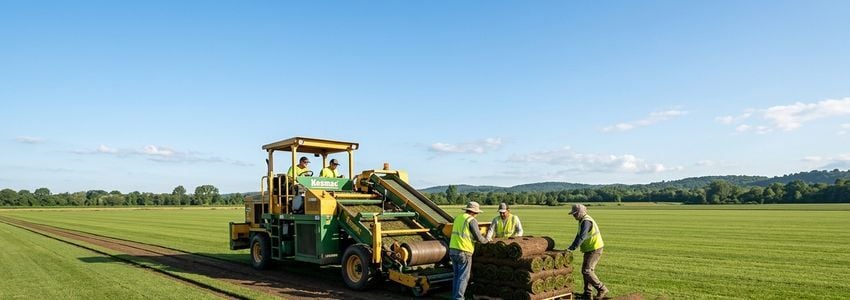
Sod Farm Equipment Financing: The Complete Guide for Turf Growers
Sod farm equipment financing gives turf growers a way to acquire harvesters, cutters, irrigation systems, and hauling equipment without draining working capital during planting and harvest cycles. For sod producers, the right machinery determines how much acreage you can turn each season, how quickly you can fill large commercial orders, and how efficiently you get product off the field and onto trucks. Because sod is a perishable, time-sensitive crop, equipment downtime is not a minor inconvenience. It is lost revenue.
This guide breaks down exactly how sod farm equipment financing works, what machinery qualifies, how lenders evaluate turf grower applications, and how to structure a deal that fits the seasonal cash flow of a sod operation. Whether you are replacing an aging roll harvester, adding a second cutting rig to keep up with landscaper demand, or building out irrigation infrastructure on newly leased acreage, understanding your financing options helps you move faster than competitors who are still saving up cash.
In This Article
What Is Sod Farm Equipment Financing?
Sod farm equipment financing is a category of commercial equipment lending built for turf and sod producers who need to purchase or lease specialized machinery used in growing, harvesting, and transporting sod. This includes sod harvesters (slab and big roll), sod cutters, tractors, irrigation systems, fertilizer spreaders, aerators, forklifts and roll handlers, and flatbed or dump trucks used to move product to landscapers, retailers, and commercial job sites.
Unlike a general small business loan, equipment financing is secured by the equipment itself, which typically makes it easier to qualify for and allows lenders to offer more competitive terms. The lender advances funds to purchase the equipment, and the sod farm repays the loan or lease over a set term, often structured to line up with seasonal revenue rather than a flat monthly payment year-round.
Key Stat: According to the USDA and industry trade data, the U.S. natural grass sod industry spans more than 376,000 acres across roughly 1,447 farms in at least 49 states, generating over $2.2 billion in annual sales.
Key Benefits for Turf Growers
Financing sod farm equipment instead of paying cash preserves working capital for seed, fertilizer, fuel, labor, and land lease payments that come due regardless of how machinery is funded. Here is why more turf growers are turning to financing rather than depleting reserves:
- Preserve cash flow during planting season. Equipment payments can be structured around your harvest and delivery cycles instead of draining cash before your busiest revenue months.
- Access newer, more reliable equipment. A financed automatic roll harvester or slab stacker reduces breakdowns during peak season, when downtime directly costs you fulfillable orders.
- Preserve your bank credit lines for emergencies. Using equipment-specific financing keeps your business line of credit open for unexpected repairs, weather events, or short-term payroll gaps.
- Potential tax advantages. Many equipment financing structures allow for accelerated depreciation treatment; consult your CPA to determine what applies to your specific tax situation.
- Fast approval and funding. Equipment-backed financing typically closes faster than unsecured loans because the collateral reduces lender risk.
- Scale acreage without waiting years to save up. Financing lets a growing operation add a second harvester or expand irrigation infrastructure the same season demand increases, rather than waiting for enough cash reserves to build.
How It Works
Sod farm equipment financing generally follows a straightforward path from application to funded purchase. Here is what the process looks like from start to finish.
Quick Guide
How Sod Farm Equipment Financing Works
Get a quote from a dealer for the harvester, cutter, irrigation system, or vehicle you need, new or used.
Provide basic business information, time in business, and recent bank statements. Most lenders do not require extensive paperwork for equipment under $250,000.
Lenders evaluate the equipment value, your time in business, and cash flow to structure a term, rate, and payment schedule.
The lender pays the dealer or seller directly, and you begin making scheduled payments, often structured seasonally.
Most equipment lenders can approve straightforward applications within 24 to 48 hours, with funding often completed within a week. Seasonal payment structures, where payments are lower or deferred during winter months and higher during spring and summer harvest, are common for agricultural borrowers and worth requesting specifically when you apply.
Ready to Add Equipment to Your Sod Operation?
Get fast, flexible financing built around your growing season. No obligation, apply in minutes.
Apply Now →Equipment Types and Categories
Sod farm equipment financing typically covers a wide range of machinery used across every stage of turf production. Common categories include:
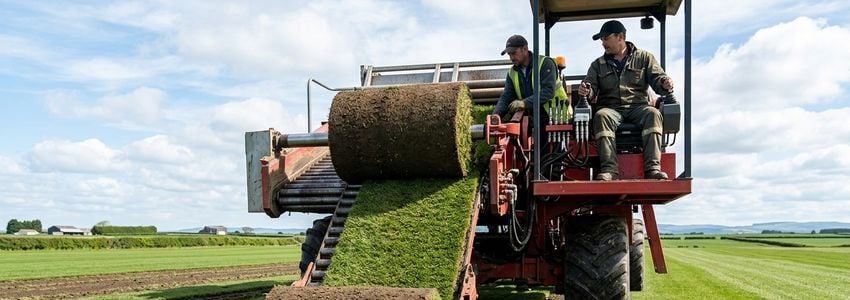
- Sod harvesters: Slab harvesters that cut and stack rigid sod pieces, and roll harvesters (including big roll harvesters used for sports fields and large commercial jobs) that cut, roll, and palletize sod automatically.
- Sod cutters: Walk-behind, self-propelled, or tractor-mounted cutters used to prepare ground before new sod is planted.
- Tractors and utility vehicles: Used for towing, hauling pallets, and general field maintenance across the operation.
- Irrigation systems: Center pivot systems, traveling sprinklers, and drip irrigation infrastructure needed to keep turf healthy through dry stretches.
- Fertilizer and chemical spreaders: Equipment for applying treatments evenly across large acreage.
- Seeders and aerators: Machinery for planting and maintaining turf health between harvest cycles.
- Roll handlers and forklifts: Equipment used to load, stack, and transport heavy sod rolls and pallets efficiently.
- Commercial mowers: Large-format mowers for regular turf maintenance across hundreds of acres.
- Flatbed and dump trucks: Vehicles used to deliver sod to landscapers, retailers, and job sites, often financed alongside farm equipment.
Financing is available for both new and used equipment. Used equipment financing is especially common in the sod industry, where a well-maintained used harvester or tractor can deliver years of productive life at a fraction of the cost of new machinery.
Who This Financing Is Best For
Sod farm equipment financing makes the most sense for a specific set of turf operations. It is well suited for:
- Established sod farms replacing aging equipment. If your current harvester or cutter is approaching the end of its productive life, financing lets you upgrade before a breakdown costs you an entire harvest window.
- Growing operations adding acreage. Farms expanding into leased or newly purchased acreage often need a second harvester, additional irrigation infrastructure, or more hauling capacity to keep pace.
- Sod farms diversifying into big roll or specialty turf. Moving into sports field or golf course supply often requires a big roll harvester, a significant capital investment that financing makes accessible.
- Seasonal operations needing flexible payment structures. Businesses whose revenue is concentrated in spring and summer benefit from financing structured around that cash flow pattern rather than flat year-round payments.
- Startups entering turf production with an existing land lease. New growers with committed acreage but limited capital can use financing to acquire core equipment without depleting startup funds needed for seed and labor.
Comparing Financing Options
Sod farm owners typically choose between a few different funding paths. Understanding the tradeoffs helps you pick the right structure for your operation.
| Option | Best For | Key Tradeoff |
|---|---|---|
| Equipment Financing | Purchasing harvesters, cutters, tractors outright | Equipment secures the loan, often lower rates |
| Equipment Leasing | Operations that upgrade equipment frequently | Lower payments, but you may not build equity |
| SBA Loans | Larger, longer-term equipment or land purchases | Competitive rates, but slower approval process |
| Business Line of Credit | Smaller equipment needs or emergency repairs | Flexible, but typically higher rates than secured equipment loans |
Cash purchases avoid interest entirely but tie up capital that could otherwise cover seed, labor, and land lease costs during the exact months when equipment is being used the most. For most turf growers, financing or leasing frees up that capital while still getting the equipment on the field when it is needed.
How Crestmont Capital Helps
Crestmont Capital works with agricultural and turf production businesses to structure agricultural equipment financing around seasonal revenue rather than forcing a flat payment schedule that ignores your busy and slow months. Our farm equipment financing programs cover sod harvesters, cutters, tractors, and hauling vehicles, whether new or used.
For growers expanding irrigation infrastructure alongside new acreage, our irrigation equipment financing options can be bundled with harvester or cutter financing to cover a full expansion in a single application. We also offer used equipment financing for growers looking to acquire a well-maintained harvester or tractor at a lower upfront cost than new machinery.
If your sod farm is exploring a broader equipment upgrade that spans multiple categories, our equipment leasing programs provide an alternative structure that can lower monthly payments while preserving your ability to upgrade again in a few years. And for operations combining equipment needs with working capital for payroll or supplies, our SBA loan programs may offer longer terms and lower rates for qualifying borrowers.
Turf and agricultural growers researching related equipment categories may also find our guide on turf equipment financing for lawn care and landscaping businesses useful, along with our broader overview of agricultural equipment leasing for tractors, harvesters, and farm machinery.
Pro Tip: When applying for sod farm equipment financing, ask specifically about seasonal or step-up payment structures. Many agricultural lenders will lower payments during your slow winter months and increase them during peak spring and summer harvest, which keeps cash flow aligned with revenue.
Grow Your Sod Operation This Season
From harvesters to irrigation systems, get the equipment financing your turf farm needs to keep up with demand.
Apply Now →Real-World Scenarios
Scenario 1: Replacing an Aging Roll Harvester
A family-owned sod farm in the Southeast had relied on the same roll harvester for over a decade. As breakdowns became more frequent during peak harvest weeks, the owner financed a new automatic roll harvester rather than paying cash, preserving reserves for fuel and labor during the busiest stretch of the season. The new equipment cut harvest time per acre significantly and eliminated the repair delays that had previously caused missed delivery windows.
Scenario 2: Expanding Into Big Roll Production for Sports Fields
A mid-sized turf grower wanted to start supplying big roll sod to sports complexes and golf courses in their region, a segment with higher margins than standard residential sod. The upfront cost of a big roll harvester was well beyond what the operation had in reserve, so the owner used equipment financing to acquire the machine and began fulfilling large commercial orders within the same growing season.
Scenario 3: Adding Irrigation Infrastructure to New Leased Acreage
When a turf grower leased an additional 80 acres to meet rising landscaper demand, the new ground lacked adequate irrigation coverage. Financing the irrigation system alongside a second tractor allowed the farm to bring the new acreage into production within one season instead of delaying expansion until enough capital was saved.
Scenario 4: A New Grower Starting With Leased Land
An entrepreneur entering the sod business secured a long-term land lease but had limited startup capital. By financing a used sod cutter, a tractor, and basic irrigation equipment, the new grower was able to plant the first crop cycle without exhausting the funds needed for seed, fertilizer, and labor during the first year of operation.
Scenario 5: Adding Hauling Capacity for Growing Delivery Volume
A turf farm that had historically relied on third-party haulers to deliver sod to landscaping customers found that outsourced trucking was becoming a bottleneck during peak season. Financing two flatbed trucks allowed the farm to control its own delivery schedule, fulfill more orders per week, and reduce per-load delivery costs over time.
Frequently Asked Questions
Next Steps
Identify the equipment your operation needs most this season, whether it is a harvester, irrigation upgrade, or hauling vehicle.
Get a quote from your equipment dealer for the new or used machine you want to finance.
Apply with Crestmont Capital and ask about seasonal payment structuring to match your revenue cycle.
Get funded and put the equipment to work before your next planting or harvest window.
Conclusion
Sod farm equipment financing gives turf growers a practical way to acquire the harvesters, cutters, irrigation systems, and delivery vehicles that keep a sod operation productive, without tying up the cash needed for seed, labor, and land lease payments. Whether you are replacing an aging harvester, expanding acreage, or entering the big roll market for sports fields and golf courses, structuring financing around your growing season can help you scale without disrupting cash flow during your busiest months.
Crestmont Capital works with turf growers across the country to structure equipment financing that fits how sod farms actually make money: seasonally, and often unpredictably depending on weather and demand. If you are ready to explore sod farm equipment financing for your operation, reach out to our team to discuss your specific equipment needs.
Get the Equipment Your Sod Farm Needs
Apply today and get a financing structure built around your growing season, not a generic monthly payment.
Apply Now →Disclaimer: The information provided in this article is for general educational purposes only and is not financial, legal, or tax advice. Funding terms, qualifications, and product availability may vary and are subject to change without notice. Crestmont Capital does not guarantee approval, rates, or specific outcomes. For personalized information about your business funding options, contact our team directly.








