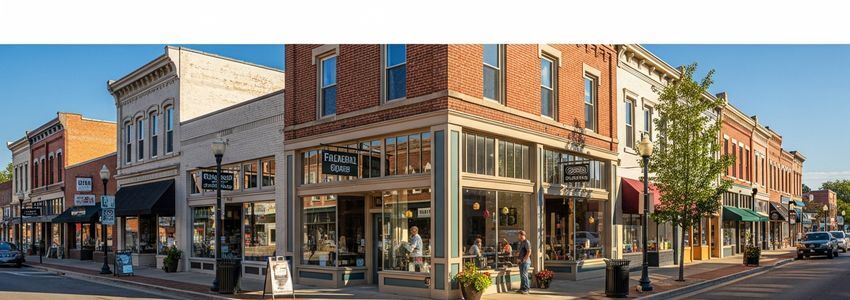
Fayetteville's dynamic economy presents a wealth of opportunities for entrepreneurs, but growth often requires capital. Understanding the landscape of small business loans in Fayetteville, Arkansas is a critical first step towards scaling your operations, purchasing new equipment, or managing cash flow. This comprehensive 2026 guide provides the insights and details you need to navigate the financing process with confidence.
In This Article
- What Are Small Business Loans?
- Why Fayetteville, Arkansas Is a Strong Market for Small Business
- Types of Small Business Loans Available in Fayetteville
- Key Benefits of Business Financing
- How Small Business Loans Work
- Who Qualifies for Small Business Loans in Fayetteville?
- How Crestmont Capital Helps Fayetteville Businesses
- Real-World Scenarios for Fayetteville Businesses
- Comparing Loan Options: A Side-by-Side Look
- Your Next Steps to Securing a Business Loan
- Frequently Asked Questions
What Are Small Business Loans?
A small business loan is a form of financing specifically designed to support the financial needs of a business rather than an individual. Unlike personal loans, these financial products are intended for business-related expenses, such as operational costs, expansion projects, equipment purchases, or inventory management. Lenders, including traditional banks, credit unions, and alternative financiers like Crestmont Capital, provide capital to a business, which then repays the principal amount plus interest and any associated fees over a predetermined period.
The structure of these loans can vary significantly. Some are delivered as a lump-sum payment, known as a term loan, which is ideal for large, one-time investments. Others provide a revolving credit line that businesses can draw from as needed, offering flexibility for ongoing or unexpected expenses. The terms, interest rates, and repayment schedules are tailored based on the type of loan, the lender's risk assessment, and the borrower's financial profile.
Securing a business loan involves a detailed application and underwriting process. Lenders evaluate several factors to determine creditworthiness, including the business's revenue, cash flow, time in operation, and the owner's personal credit history. The purpose of the loan is also a key consideration, as lenders want to ensure the capital will be used to generate revenue and support the company's ability to repay the debt. For entrepreneurs in Northwest Arkansas, understanding this fundamental definition is the starting point for leveraging external capital to fuel sustainable growth and achieve long-term business objectives.
Why Fayetteville, Arkansas Is a Strong Market for Small Business
Fayetteville, nestled in the scenic Ozark Mountains, is more than just a picturesque college town. It is the economic and cultural hub of Northwest Arkansas, a region experiencing remarkable growth and transformation. This dynamic environment makes it an exceptionally fertile ground for small businesses to plant roots and flourish. Several key factors contribute to Fayetteville's reputation as a strong market for entrepreneurs.
First, the regional economy is robust and diversified. While anchored by the University of Arkansas and major corporations like Tyson Foods and J.B. Hunt located nearby, the area has cultivated a thriving ecosystem of startups, retail establishments, tech companies, and service-based businesses. This economic diversity creates a stable foundation, insulating the local market from downturns that might affect regions dependent on a single industry. According to the U.S. Census Bureau, Fayetteville has seen consistent population growth, which translates to an expanding customer base and a deeper talent pool for employers.
Second, the quality of life in Fayetteville is a significant draw for both entrepreneurs and their employees. The city consistently ranks among the best places to live in the United States, celebrated for its outdoor recreation, vibrant arts scene, and family-friendly atmosphere. This high quality of life helps businesses attract and retain top talent, a critical component of long-term success. A happy and stable workforce is a productive one, giving Fayetteville businesses a competitive edge.
Key Stat: According to the U.S. Census Bureau, Fayetteville's population grew by over 20% in the last decade, far outpacing the national average and signaling a rapidly expanding local market for small businesses.
Third, there is a strong sense of community and support for local enterprises. Organizations like the Fayetteville Chamber of Commerce and Startup Junkie Consulting provide invaluable resources, networking opportunities, and mentorship for new and growing businesses. This collaborative spirit fosters an environment where entrepreneurs can share knowledge, overcome challenges, and celebrate successes together. The "shop local" ethos is palpable, with residents showing a strong preference for supporting independent businesses, from breweries on the Fayetteville Ale Trail to boutiques on the Historic Downtown Square.
Finally, the cost of doing business in Fayetteville remains relatively affordable compared to other high-growth metropolitan areas. Favorable tax policies and reasonable commercial real estate costs allow entrepreneurs to allocate more of their capital toward innovation, marketing, and talent development rather than just overhead. This financial advantage, combined with a supportive infrastructure and a growing market, makes Fayetteville an ideal location for launching and scaling a successful small business in 2026 and beyond.
Ready to Fuel Your Fayetteville Business?
Don't let a lack of capital hold you back. See how much you qualify for in minutes.
Apply Now →Types of Small Business Loans Available in Fayetteville
Fayetteville entrepreneurs have access to a diverse range of financing products, each designed to meet specific business needs. Selecting the right type of loan is crucial for aligning the funding with your strategic goals. Here is a detailed breakdown of the most common options available.
Term Loans
A traditional term loan is one of the most straightforward forms of business financing. A lender provides a lump sum of cash upfront, which the business repays over a set period (the "term") with fixed periodic payments that include principal and interest. Term loans are ideal for significant, planned investments such as purchasing commercial real estate, financing a major expansion, or acquiring another business. Terms can range from one to ten years or more, and interest rates can be fixed or variable. They typically require a strong credit history and a solid business plan, as they represent a significant commitment for both the borrower and the lender.
Business Lines of Credit
A business line of credit operates similarly to a credit card. Instead of a lump sum, a lender approves a maximum credit limit, and the business can draw funds from this limit as needed. You only pay interest on the amount you have drawn, not the entire limit. Once you repay the borrowed amount, the credit becomes available to use again. This flexibility makes a line of credit perfect for managing cash flow fluctuations, covering unexpected expenses, or seizing opportunities that require quick access to capital. It is an excellent tool for short-term working capital needs.
SBA Loans
The U.S. Small Business Administration (SBA) does not lend money directly but instead guarantees a portion of loans made by approved lenders, like banks and financial institutions. This government guarantee reduces the risk for lenders, making them more willing to offer favorable terms, lower interest rates, and longer repayment periods to small businesses that might not otherwise qualify. Popular programs include the SBA 7(a) loan for general business purposes and the SBA 504 loan for major fixed assets like real estate and equipment. While the application process for SBA loans can be extensive, the attractive terms make them a highly sought-after option for qualified Fayetteville businesses.
Equipment Financing
For businesses that rely on specific machinery or technology, equipment financing offers a direct path to acquiring necessary assets. This type of loan is structured so that the equipment being purchased serves as its own collateral. This secured nature often makes it easier to qualify for than an unsecured loan. Funds are used exclusively to buy equipment, from restaurant ovens and construction vehicles to medical imaging machines and computer systems. Repayment terms are typically aligned with the expected useful life of the equipment, helping businesses manage their investment over time without depleting their working capital.
Working Capital Loans
A working capital loan is a short-term financing solution designed to cover everyday operational expenses. Unlike term loans used for long-term assets, these funds are used for payroll, rent, inventory purchases, and other immediate costs. They are essential for seasonal businesses that need to bridge revenue gaps or for any company experiencing a temporary cash flow shortfall. Because they are intended for short-term needs, they usually have faster approval times and shorter repayment periods than other loan types.
Merchant Cash Advances (MCAs)
A Merchant Cash Advance is not technically a loan but an advance on future sales. A financing company provides a lump sum of cash in exchange for a percentage of the business's daily credit and debit card sales. Repayments are made automatically each day until the advance is paid back in full, plus fees. MCAs offer extremely fast funding and are accessible to businesses with less-than-perfect credit. However, they typically come with higher costs than traditional loans, so they are best suited for businesses that need immediate cash and have a high volume of card sales.
Key Benefits of Business Financing
Securing external financing is more than just a way to get cash; it is a strategic tool that can unlock significant opportunities and provide a competitive advantage. For Fayetteville business owners, leveraging a small business loan can lead to numerous benefits that directly impact growth, stability, and long-term success.
- Fueling Growth and Expansion: The most apparent benefit of a business loan is the ability to fund growth initiatives. Whether it is opening a second location in another part of Northwest Arkansas, launching a new product line, or expanding into e-commerce, these ventures require substantial upfront investment. A loan provides the necessary capital to execute these plans without having to wait years to accumulate the funds through profits, allowing you to seize market opportunities as they arise.
- Improving Cash Flow Management: Even profitable businesses can face cash flow challenges. A business loan or line of credit can act as a crucial financial buffer, ensuring you have the funds to cover payroll, rent, and other operational expenses during slow seasons or while waiting for client payments. This stability prevents disruptive and stressful cash crunches, allowing you to focus on running your business smoothly.
- Purchasing Necessary Equipment and Technology: Outdated or inefficient equipment can hinder productivity and put you at a disadvantage. Financing allows you to invest in the latest technology, machinery, and tools needed to improve efficiency, enhance product quality, and serve customers better. This investment can lead to lower operating costs and higher revenues over the long term.
- Building Business Credit: Successfully managing and repaying a business loan is an excellent way to build a strong credit profile for your company. A positive credit history makes it easier and more affordable to secure financing in the future. It demonstrates to lenders that your business is a reliable and responsible borrower, opening doors to better terms and larger loan amounts down the road.
- Increasing Inventory and Purchasing Power: For retail and wholesale businesses, having adequate inventory is critical. A loan allows you to purchase inventory in bulk, which can lead to significant supplier discounts. It also ensures you can meet customer demand during peak seasons, preventing lost sales due to stockouts.
- Hiring and Retaining Talent: Your team is your greatest asset. As your business grows, you need to hire more staff to manage the increased workload. Financing provides the funds to cover salaries, benefits, and training costs, enabling you to attract and retain the skilled employees necessary to scale your operations effectively.
In essence, business financing is an investment in your company's future. It provides the resources to not only navigate challenges but also to proactively pursue opportunities that drive sustainable growth and profitability in the competitive Fayetteville market.
How Small Business Loans Work
Navigating the process of obtaining a small business loan can seem complex, but it follows a logical sequence of steps. Understanding this workflow from start to finish demystifies the experience and empowers you to prepare effectively. The journey begins with self-assessment and concludes with the strategic deployment of capital into your business. Each stage requires careful attention to detail to ensure a smooth and successful outcome.
The initial phase involves a deep analysis of your business's financial needs and health. You must clearly define why you need the capital and exactly how much is required. This is not a time for guesswork; a well-researched figure backed by a solid business plan is essential. Simultaneously, you must gather all necessary financial documentation, including profit and loss statements, balance sheets, tax returns, and bank statements. This preparation is the foundation of a strong application.
Once you are prepared, you submit your application to a lender. The lender's underwriting team then begins a thorough review of your file. They will analyze your business's revenue, cash flow, credit history, and overall financial stability to assess the risk associated with the loan. If your application meets their criteria, they will extend a loan offer detailing the amount, interest rate, term, and any associated fees. After you carefully review and accept the offer, the final contracts are signed, and the funds are disbursed to your business bank account, ready for you to put to work.
-
Assess & PrepareDefine your funding needs, calculate the required amount, and gather essential documents like bank statements and financial reports.
-
Submit ApplicationComplete a simple online application. Our streamlined process takes just a few minutes to submit your information securely.
-
Review OffersOur team quickly reviews your file and works to secure the best possible loan offers from our network of lenders.
-
Receive FundingOnce you accept an offer and complete the final paperwork, the capital is deposited directly into your business account.
Unlock Your Business Potential
Access the capital you need to grow, expand, and thrive in Fayetteville's market.
Apply Now →Quick Guide
How to Get a Small Business Loan in Fayetteville - At a Glance
Calculate how much you need and what you will use it for - equipment, inventory, hiring, or working capital.
Review your credit score, time in business (typically 6+ months), and annual revenue to understand what loan programs you may qualify for.
Collect 3-6 months of bank statements, basic financial records, and proof of business ownership before applying.
Submit your application online. Many lenders like Crestmont Capital can approve and fund Fayetteville businesses in as little as 24-48 hours.
Who Qualifies for Small Business Loans in Fayetteville?
Lenders evaluate several key factors to determine a business's eligibility for financing. While specific requirements vary between loan products and lenders, a few core criteria are universally important. Understanding these qualifications will help you assess your readiness to apply and strengthen your application.
The primary pillars of qualification are often referred to as the "Five C's of Credit": Character, Capacity, Capital, Collateral, and Conditions.
- Credit Score (Character): Both your personal and business credit scores are critical. A strong credit history demonstrates your reliability in repaying debts. Lenders will review your credit reports for any late payments, defaults, or bankruptcies. While some alternative lenders work with lower credit scores, a score of 650 or higher is generally preferred for more traditional loan products.
- Annual Revenue & Cash Flow (Capacity): Lenders need to see that your business generates enough income to comfortably cover its existing expenses plus the new loan payment. They will analyze your bank statements, profit and loss statements, and tax returns to assess your revenue consistency and profitability. Strong, predictable cash flow is one of the most important indicators of your ability to repay a loan.
- Time in Business: Most lenders prefer to work with established businesses. The standard minimum requirement is often at least one to two years of operation. Businesses that have been operating longer have a proven track record of stability and are generally seen as less risky. Startups may need to seek out specific startup loans or provide a more detailed business plan and financial projections.
- Business Plan & Use of Funds (Conditions): You must have a clear and justifiable reason for seeking a loan. Lenders want to know precisely how you plan to use the funds and how that investment will benefit your business. A well-articulated plan that projects a positive return on investment-such as using funds to purchase revenue-generating equipment-strengthens your application.
- Collateral: For secured loans, you will need to pledge assets as collateral. This could be real estate, equipment, inventory, or accounts receivable. The collateral provides security for the lender; if you default on the loan, they can seize the asset to recoup their losses. Unsecured loans do not require specific collateral but are often harder to qualify for and may have higher interest rates.
Key Stat: According to a 2024 Forbes Advisor survey, 82% of small business owners who applied for financing in the past year were seeking funds to expand their operations or purchase new assets, highlighting the growth-oriented mindset of today's entrepreneurs.
Fayetteville business owners who can demonstrate strength across these areas will be in the best position to secure favorable loan terms. If you have weaknesses in one area, such as a shorter time in business, you can often compensate with strengths in others, like exceptionally strong revenue or a high credit score.

How Crestmont Capital Helps Fayetteville Businesses
In a bustling market like Fayetteville, finding the right financing partner is as important as finding the right loan. Crestmont Capital stands apart by offering a streamlined, transparent, and consultative approach to business funding. We understand the unique challenges and opportunities facing entrepreneurs in Northwest Arkansas and are dedicated to providing tailored solutions that align with your specific goals.
Our process is built on speed and efficiency. We know that in business, timing is everything. Our online application is simple and can be completed in minutes. Unlike traditional banks that can take weeks or even months to process a loan, we leverage technology to provide decisions and funding in a fraction of the time. This allows you to act quickly on opportunities, whether it's purchasing inventory at a discount or securing a new piece of equipment to fulfill a large order.
Crestmont Capital offers a wide portfolio of small business loans, ensuring we have the right product for your needs. We are not a one-size-fits-all lender. Our dedicated funding specialists take the time to understand your business, your industry, and your objectives. Based on this understanding, we can guide you toward the best financing option, whether it's a flexible business line of credit for managing cash flow, a strategic equipment financing agreement, or an advantageous SBA loan with excellent terms. Our expertise in Arkansas small business financing gives us a unique perspective on the local market.
Furthermore, we believe in transparency and partnership. There are no hidden fees or confusing jargon in our loan agreements. We present all terms clearly, ensuring you are fully informed and confident in your financial decisions. Our team is here to be a long-term resource for your business, providing guidance not just for your immediate funding needs but for your future growth as well. We have helped countless businesses across the state, and our insights are available to you. For a broader look at statewide options, you can also review our complete guide to Arkansas business loans.
By partnering with Crestmont Capital, Fayetteville entrepreneurs gain more than just access to capital; they gain a dedicated financial ally committed to their success.
Real-World Scenarios for Fayetteville Businesses
To better illustrate how different loan products can be applied, let's consider a few hypothetical scenarios based on real-world business types found in Fayetteville.
1. The Expanding Restaurant on Dickson Street
Scenario: A popular restaurant near the University of Arkansas wants to renovate its patio and upgrade its kitchen with a new, high-capacity oven to handle increasing demand. The total project cost is estimated at $85,000.
Solution: An Equipment Financing loan would be perfect for the $35,000 oven, as the equipment itself secures the loan. For the $50,000 renovation, a Term Loan would be ideal. It provides the full amount upfront with a predictable monthly payment schedule, allowing the owner to budget effectively for the repayment over the next five years as the investment generates more revenue.
2. The Boutique Retailer on the Downtown Square
Scenario: A clothing boutique experiences significant sales fluctuations. Business is booming during the fall semester and holiday season but slows down in the late winter and summer. The owner needs help managing cash flow to pay rent and staff during the slow months and to stock up on inventory before the busy seasons.
Solution: A Business Line of Credit is the perfect tool. The owner can draw funds as needed to cover expenses during slow periods and repay them quickly when sales pick up. Before the fall rush, she can use the line of credit to purchase a large inventory order, ensuring she is well-stocked to maximize her busiest season. The revolving nature of the credit line means it's always there when she needs it.
3. The Landscaping Company with a Growing Client List
Scenario: A successful landscaping company has won a major contract to maintain several large commercial properties, but they need to purchase a new commercial-grade zero-turn mower and a new truck to service the accounts. The total cost of the new assets is $70,000.
Solution: An SBA 7(a) Loan could be an excellent choice. While it might take a bit longer to secure, the favorable interest rates and long repayment terms would result in a lower monthly payment. This would allow the company to comfortably absorb the cost of the new equipment while using the profits from the new contract to grow the business further.
4. The Local Brewery Needing Immediate Cash
Scenario: A craft brewery suddenly gets an opportunity to purchase a large quantity of specialty hops from a supplier at a steep, limited-time discount. They need $15,000 within 48 hours to secure the deal, which will save them thousands over the next year.
Solution: A Working Capital Loan or a Merchant Cash Advance (MCA) would provide the necessary speed. Given the urgency, the slightly higher cost of these fast-funding options is justified by the significant savings from the bulk purchase. The brewery can get the cash in a day or two, secure the hops, and repay the financing from its steady stream of taproom and distribution sales.
Comparing Loan Options: A Side-by-Side Look
Choosing the right loan requires comparing the key features of each option against your specific business needs. This table provides a clear overview of the most common financing products available to Fayetteville entrepreneurs.
| Loan Type | Best For | Funding Speed | Loan Amount | Typical Requirements |
|---|---|---|---|---|
| Term Loan | Large, one-time investments like expansion, real estate, or business acquisition. | 1-2 weeks | $25,000 - $5,000,000+ | Strong credit, 2+ years in business, consistent revenue, profitability. |
| Business Line of Credit | Managing cash flow, unexpected expenses, and short-term working capital needs. | 2-5 days | $10,000 - $500,000 | Good credit, 1+ year in business, steady monthly revenue. |
| SBA Loan | Major long-term investments where favorable rates and long terms are a priority. | 3-8 weeks | $50,000 - $5,000,000 | Excellent credit, detailed business plan, collateral, 2+ years in business. |
| Equipment Financing | Purchasing new or used machinery, vehicles, or technology for the business. | 2-7 days | Up to 100% of equipment cost | Fair to good credit, quotes for the equipment, business history. |
| Merchant Cash Advance (MCA) | Businesses needing immediate cash that have high credit card sales volume. | 24-48 hours | $5,000 - $500,000 | Consistent credit card sales, 6+ months in business, lower credit scores accepted. |
Find Your Perfect Loan Match
Our experts can help you compare options and find the ideal financing for your goals.
Apply Now →Your Next Steps to Securing a Business Loan
Feeling prepared and ready to move forward? Taking a structured approach will make the process of securing a loan much smoother. Follow these steps to position your Fayetteville business for funding success.
Frequently Asked Questions
What is the most common type of small business loan in Fayetteville?
While it varies by need, term loans and business lines of credit are very common. Term loans are popular for planned expansions and large purchases, while lines of credit are widely used by retail and service businesses to manage day-to-day cash flow in Fayetteville's dynamic market.
How much can I borrow for my Fayetteville business?
Loan amounts can range from as little as $5,000 for a working capital advance to over $5 million for an SBA or commercial real estate loan. The amount you qualify for depends on your business's annual revenue, profitability, credit history, and the specific loan product.
What are the typical interest rates for business loans in 2026?
Interest rates vary widely based on the loan type, lender, and your business's risk profile. In 2026, you can expect rates for SBA loans and traditional bank loans to be the most competitive. Alternative financing options like working capital loans will have higher rates but offer faster funding and more flexible qualification criteria.
How long does it take to get funded?
Funding times differ significantly. A Merchant Cash Advance or working capital loan can be funded in as little as 24-48 hours. A business line of credit may take 2-5 days. A traditional term loan or equipment loan typically takes 1-2 weeks, while an SBA loan is the longest, often requiring 3-8 weeks.
Can I get a business loan with bad credit?
Yes, options exist for business owners with less-than-perfect credit. Products like MCAs and some working capital loans focus more on your business's revenue and cash flow than your personal credit score. While the costs may be higher, they provide a vital source of capital for many businesses.
What documents do I need to apply for a loan?
Generally, you will need 3-6 months of recent business bank statements, your most recent business tax returns, a year-to-date profit and loss statement and balance sheet, and a copy of the owner's driver's license. Some loans, like SBA loans, will require more extensive documentation.
What is the difference between a secured and an unsecured loan?
A secured loan is backed by collateral, such as property or equipment, which the lender can seize if you default. This reduces the lender's risk. An unsecured loan does not require specific collateral and is approved based solely on the borrower's creditworthiness and cash flow.
Why should I choose Crestmont Capital for my Fayetteville business loan?
Crestmont Capital offers a fast, streamlined application process, a wide range of loan products to fit any need, and a team of dedicated funding specialists who understand the Arkansas market. We prioritize transparency and act as a long-term financial partner for your business.
Is an SBA loan hard to get?
SBA loans have some of the strictest qualification requirements, including a high credit score, strong financials, and extensive documentation. The application process is longer and more complex than for other loan types. However, for businesses that qualify, the excellent terms make them worth the effort.
How does equipment financing work?
With equipment financing, the loan is used specifically to purchase business equipment. The equipment itself serves as the collateral for the loan. This makes it easier to qualify for, and it allows you to acquire necessary assets without tying up your working capital.
Can I use a business loan to pay myself?
Yes, you can use funds from a working capital loan or a line of credit to cover payroll, which includes your own salary as the owner. However, it's important that this is structured as a formal owner's draw or salary and is in line with your business's overall financial health.
Do I need a business plan to get a loan in Fayetteville?
For most alternative and working capital loans, a formal business plan is not required. However, for larger term loans and especially for SBA loans, a comprehensive business plan with financial projections is a critical part of the application.
What is the minimum time in business required to get a loan?
This varies. Some lenders, particularly for MCAs, may work with businesses that have been in operation for as little as six months. For most other loan types, including term loans and lines of credit, lenders typically require a minimum of one to two years in business.
Are there specific loan programs for businesses in Arkansas?
Yes, there are state and local programs that can supplement federal options like SBA loans. Organizations like the Arkansas Economic Development Commission sometimes offer targeted financing or grant programs. Crestmont Capital can help you navigate all available options, both public and private.
Can I repay my business loan early?
This depends on the loan agreement. Many loans, such as lines of credit and some term loans, allow for early repayment without penalty. However, some loans may include prepayment penalties, so it is crucial to read your loan agreement carefully and ask your lender about their specific policy.
Conclusion
The Fayetteville business landscape in 2026 is ripe with opportunity, but capitalizing on it often requires strategic financial investment. By understanding the various funding options available, from flexible lines of credit to long-term SBA loans, you can make informed decisions that propel your business forward. Preparing your financial documents, knowing your qualifications, and partnering with a trusted lender are the key steps to successfully securing the capital you need. Whether you are looking to expand, innovate, or simply stabilize your operations, the right small business loans in Fayetteville, Arkansas can be the catalyst for achieving your most ambitious goals.
Disclaimer: The information provided in this article is for general educational purposes only and is not financial, legal, or tax advice. Funding terms, qualifications, and product availability may vary and are subject to change without notice. Crestmont Capital does not guarantee approval, rates, or specific outcomes. For personalized information about your business funding options, contact our team directly.