
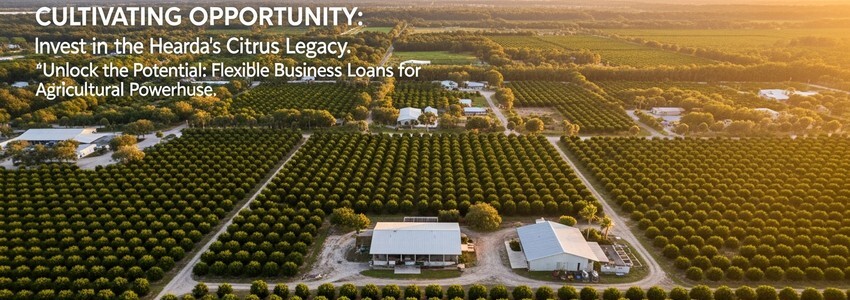
Florida agriculture is a cornerstone of the state's economy, generating over $8 billion in cash receipts annually and supporting hundreds of thousands of jobs across the Sunshine State. From the sprawling citrus groves of Central Florida to the sugarcane fields of the Everglades Agricultural Area and the vegetable farms of Southwest Florida, agricultural businesses face unique financial challenges that require specialized funding solutions. Whether you need to purchase equipment, manage seasonal cash flow, expand operations, or survive unexpected weather events, Florida agricultural loans can provide the capital your farm or agribusiness needs to thrive.
This comprehensive guide covers everything Florida agricultural businesses need to know about financing options, qualification requirements, and how to secure the right funding for your specific operation.
Florida Agriculture: An Economic Overview
Florida consistently ranks among the top agricultural states in the United States. According to the USDA National Agricultural Statistics Service, Florida generates approximately $8.1 billion in farm cash receipts annually. The state is the nation's leading producer of oranges, grapefruit, sugarcane, and several vegetable crops, making agricultural lending a critical financial infrastructure for the state's rural and semi-rural economies.
The diversity of Florida's agricultural sector creates both opportunity and complexity for farm financing. Florida growers contend with:
- Tropical weather risks: Hurricanes, freezes, and citrus greening disease have devastated crops, making lenders more cautious about pure farm risk
- Seasonal revenue cycles: Most crops generate revenue during specific harvest windows, creating cash flow gaps between planting and sale
- High land costs: Florida farmland has appreciated significantly due to development pressure, increasing both collateral values and purchase costs
- Labor intensity: Agricultural operations require significant workforce financing throughout the growing season
- Equipment demands: Modern farming requires substantial investment in specialized machinery, irrigation systems, and technology
These factors mean Florida farmers often need customized financing solutions that account for the cyclical nature of agricultural revenue and the specific risks associated with Florida's growing conditions.
According to the U.S. Small Business Administration, agricultural businesses represent one of the largest segments of small business lending activity in rural states, and specialized loan programs have been developed to address the unique needs of farming operations.
Types of Agricultural Loans in Florida
Florida agricultural businesses can access several distinct categories of financing, each suited to different operational needs and financial situations.
Farm Operating Loans
Operating loans provide working capital for day-to-day farm operations. These funds cover seed, fertilizer, pesticides, labor costs, and other recurring expenses needed to bring a crop to harvest. Operating loans are typically short-term instruments tied to the growing season, with repayment expected following harvest and sale of crops.
For Florida citrus growers, operating loans might fund grove management expenses, spray programs, irrigation costs, and harvest labor. For vegetable farmers, they fund transplants, row cover materials, and packing house fees. Operating loan amounts typically range from $25,000 to $500,000 depending on the size and type of operation.
Farm Ownership Loans
Purchasing farmland in Florida requires substantial capital. Farm ownership loans help agricultural producers purchase, improve, or enlarge farming operations. Land values vary significantly by county and crop type, with citrus-suitable land in Polk County or Highlands County typically commanding higher prices than general agricultural land in Panhandle counties.
These are long-term loans, often with 25 to 30 year amortization periods, similar to commercial real estate financing. Down payment requirements typically range from 20 to 35 percent depending on the lender and loan type.
Equipment and Machinery Loans
Modern Florida agriculture depends on sophisticated equipment: GPS-guided tractors, precision irrigation systems, harvesting machinery, refrigerated transport vehicles, and packing line equipment. Agricultural equipment loans allow farmers to acquire this technology without depleting operating capital.
Equipment loans are typically structured as term loans secured by the equipment itself, with repayment periods of 3 to 7 years. Interest rates vary based on creditworthiness and lender type. Specialized equipment financing programs can fund up to 100% of the equipment purchase price in some cases.
Lines of Credit for Agricultural Operations
A revolving business line of credit gives Florida farmers flexible access to capital as needs arise throughout the growing season. Rather than taking a lump sum loan, producers can draw funds when needed and repay as revenue arrives from harvest sales. This structure is particularly valuable for managing the uneven cash flow patterns common in agricultural businesses.
Emergency and Disaster Loans
Florida's vulnerability to hurricanes, freezes, and disease outbreaks makes disaster financing a critical component of agricultural risk management. The USDA Farm Service Agency (FSA) offers Emergency Loans to farmers who suffer significant losses due to natural disasters, while the SBA Economic Injury Disaster Loan (EIDL) program provides working capital to businesses unable to meet normal obligations after a disaster.
Citrus Farm Financing: Special Considerations
Florida's citrus industry has faced extraordinary challenges over the past two decades. Citrus greening disease (Huanglongbing or HLB) has reduced Florida orange production by more than 90% from peak levels in the 1990s. According to USDA data cited by Bloomberg, Florida orange production has fallen from over 200 million 90-pound boxes annually to fewer than 20 million boxes in recent seasons.
This context is critical for citrus farm financing because:
- Many traditional agricultural lenders have reduced their citrus loan portfolios due to perceived risk
- Remaining citrus growers face higher input costs as they implement disease management programs
- Research into greening-tolerant varieties creates new capital needs for growers willing to invest in the future
- Property values for former citrus groves have shifted as some acreage transitions to other uses
Despite these challenges, financing remains available for Florida citrus operations. Keys to securing citrus farm loans include:
Demonstrating Disease Management Programs
Lenders want to see that citrus growers have implemented proven HLB management protocols, including thermotherapy, nutritional programs, and in some cases, trial plantings of tolerant varieties. A well-documented management plan demonstrates that the borrower is taking proactive steps to protect the underlying collateral (the grove).
Diversified Revenue Streams
Citrus growers who have diversified into packing operations, direct marketing, agritourism, or alternative crops can demonstrate more stable cash flow, which improves loan qualification prospects. Lenders are more comfortable extending credit to operations with multiple revenue channels.
Strong Collateral Position
Even as grove productivity has declined, many citrus properties retain significant real estate value, particularly those with irrigation infrastructure, good drainage, and proximity to major transportation routes. Borrowers with owned real estate in good condition have stronger collateral to offer lenders.
Loans for Other Florida Agricultural Sectors
While citrus often dominates conversations about Florida agriculture, the state's agricultural economy is remarkably diverse. Each sector has specific financing needs and opportunities.
Vegetable and Row Crop Financing
Florida is a major producer of tomatoes, peppers, cucumbers, squash, and other vegetables destined for winter markets across the eastern United States. These operations typically require substantial working capital for transplant production, plastic mulch, drip irrigation, labor during peak harvest periods, and refrigerated storage and transportation.
Vegetable farm operating loans often cycle multiple times per year as growers complete two or three crop cycles on the same ground. Lines of credit work particularly well for these operations because they can be drawn down for each crop cycle and repaid upon sale.
Sugarcane Industry Financing
The Everglades Agricultural Area south of Lake Okeechobee produces the majority of Florida's sugarcane crop. Sugarcane operations are capital-intensive, requiring specialized harvesting equipment, significant land holdings, and long-term planning horizons given the multi-year ratoon cropping systems used.
Sugarcane farm financing typically involves larger loan amounts, longer terms, and closer relationships with major sugar processors who sometimes provide contract financing arrangements as part of purchase agreements.
Aquaculture and Marine Agriculture
Florida's coastal geography supports significant aquaculture operations producing clams, oysters, shrimp, and finfish. These businesses have unique financing needs including boat and vessel financing, lease payments for water-bottom aquaculture sites, and working capital for feed and stock.
According to CNBC's reporting on the aquaculture industry, domestic seafood production has grown significantly as consumers seek traceable, locally-produced seafood options, creating expansion opportunities for Florida aquaculture operators.
Cattle and Livestock Operations
Central and North Florida support substantial cattle ranching operations. Florida typically ranks among the top 10 cattle-producing states, with the Kissimmee Prairie region hosting some of the largest ranching operations in the eastern United States. Cattle operation financing includes land purchase loans, livestock purchase lines of credit, pasture improvement financing, and equipment loans for working facilities and hay operations.
Tropical and Specialty Crop Producers
South Florida's subtropical climate enables production of specialty crops including avocados, mangoes, tropical fruits, ornamental plants, and greenhouse vegetables. Miami-Dade County's Redland district is particularly known for specialty tropical agriculture. These operations often need smaller, more flexible financing options appropriate for boutique and niche market production.
Agricultural Equipment Financing
Modern Florida agriculture requires significant investment in specialized machinery. Equipment costs represent one of the largest capital expenditures for farming operations, and proper financing strategy can mean the difference between equipment that pays for itself and debt that burdens the operation for years.

Common Equipment Financed by Florida Farmers
- Tractors and implements: Range from $50,000 for smaller utility tractors to $500,000+ for large row crop tractors
- Irrigation systems: Drip irrigation, overhead irrigation, and microsprinkler systems for freeze protection can cost $500 to $2,000+ per acre
- Harvesting equipment: Citrus harvesting equipment, vegetable harvesters, and hay balers represent major capital investments
- Packing line equipment: Grading, sizing, and packing equipment for produce operations
- Refrigerated storage and transport: Walk-in coolers, refrigerated trailers, and trucks
- Precision agriculture technology: GPS guidance, variable rate technology, and drone systems
- Water management infrastructure: Pumps, wells, reservoirs, and drainage systems
Equipment Financing Structures
Equipment Term Loans: Traditional loans secured by the equipment, with fixed monthly payments over 3 to 7 years. Rates are typically lower than unsecured loans because the equipment serves as collateral.
Equipment Leasing: Operating leases allow farmers to use equipment without full ownership, with the option to purchase at the end of the lease term. This preserves capital and may offer certain accounting advantages.
Sale-Leaseback Arrangements: Existing equipment owners can sell equipment to a financing company and immediately lease it back, converting equipment equity into operating capital while retaining use of the machinery.
For Florida farmers considering equipment financing, agricultural equipment financing solutions can often be structured with seasonal payment schedules that align with harvest income rather than requiring equal monthly payments year-round.
How to Qualify for Agricultural Loans
Qualifying for agricultural loans in Florida requires demonstrating both creditworthiness and agricultural viability. Lenders evaluate several key factors when underwriting farm loans.
Credit Requirements
Most conventional agricultural lenders require minimum credit scores of 620 to 680 for farm operating loans. Farm ownership loans and larger credit facilities typically require scores of 680 or higher. However, some agricultural lenders consider the complete financial picture of the farm operation rather than relying solely on personal credit scores.
Alternative lenders offering bad credit business loans may work with farmers who have credit challenges, particularly when the farm has strong revenue history or valuable collateral.
Revenue and Cash Flow Documentation
Agricultural lenders want to see multiple years of tax returns (typically 2 to 3 years) to evaluate normalized farm income. Lenders understand that farm income is variable, so they often average income over multiple years. Key financial documents include:
- Federal farm tax returns (Schedule F)
- Business entity returns if farming through a corporation or LLC
- Farm financial statements showing assets, liabilities, and equity
- Crop production records and sales history
- Commodity contracts or marketing agreements showing future revenue
- Irrigation and crop insurance documentation
Collateral and Equity Position
Agricultural loans are typically secured by farm real estate, equipment, crops, or some combination. Lenders generally want loan-to-value ratios of 65 to 80 percent for farm real estate. Equipment loans are usually structured at 80 to 100 percent of appraised or market value.
Experience and Management Capability
Lenders want to know that the borrower has the agricultural expertise to successfully operate the farm and repay the loan. For new farmers or those transitioning to different crops, a detailed farm business plan demonstrating market knowledge, agronomic competence, and financial projections strengthens the loan application.
Insurance Requirements
Most agricultural lenders require crop insurance through USDA's Risk Management Agency (RMA) programs. Federal Crop Insurance provides revenue or yield protection for major Florida crops, and lenders may require coverage at minimum guarantee levels as a condition of credit. Citrus growers should be aware that specific citrus greening provisions may affect policy structures and availability.
Alternative Lenders vs. Traditional Banks for Florida Farmers
Florida agricultural producers have historically relied on USDA Farm Service Agency programs and agricultural banks like Rabo AgriFinance, AgFirst Farm Credit Bank, and Florida-based community banks with farm lending expertise. However, alternative lenders now offer competitive options that may serve farmers better in certain situations.
Traditional Agricultural Lenders: Pros and Cons
Pros: Generally lowest interest rates, longest terms available, deep agricultural expertise, specialized programs tailored to farming operations, established relationships with farm appraisers and agricultural professionals.
Cons: Slower approval processes (often 30 to 90 days), strict documentation requirements, less flexibility for farms with imperfect credit histories or unconventional operations, may have limited appetite for certain crop types or regions.
Alternative Business Lenders: Pros and Cons
Pros: Faster approvals (sometimes within 24 to 72 hours), more flexible qualification criteria, willing to consider businesses with shorter history or credit challenges, can structure loans to match agricultural cash flow patterns, offer a range of products from lines of credit to term loans.
Cons: Generally higher interest rates than traditional agricultural lenders, shorter terms for some products, may require personal guarantees.
For Florida farmers who need capital quickly, perhaps to purchase equipment before planting season or to cover unexpected expenses, alternative lending sources like fast business loans can bridge gaps that traditional agricultural lenders cannot serve within the required timeframe.
SBA Loan Programs for Florida Agricultural Businesses
The SBA loan programs provide government-backed financing to qualifying small businesses, including many agricultural operations. While the SBA does not directly lend to farmers for purely agricultural production purposes (that falls under USDA authority), SBA loans can fund agricultural-adjacent businesses and value-added operations.
SBA 7(a) Loans for Agribusiness
SBA 7(a) loans can fund agricultural processing facilities, direct-to-consumer farm operations, agritourism businesses, agricultural retail operations, and food manufacturing. Maximum loan amounts reach $5 million with terms up to 25 years for real estate and 10 years for equipment and working capital.
SBA 504 Loans for Agricultural Real Estate and Equipment
SBA 504 loans provide long-term fixed-rate financing for major fixed assets, including farmland purchases, agricultural facility construction, and large equipment acquisitions. The program works by combining a bank loan (typically 50% of project cost), an SBA-backed debenture (40%), and borrower equity (10%), enabling smaller down payments than conventional real estate financing.
USDA Business and Industry Guaranteed Loans
Separate from the FSA farm loan programs, the USDA Rural Development's Business and Industry (B&I) Guaranteed Loan program provides guarantees on loans made by private lenders to businesses in rural areas, including agricultural processors, agribusiness enterprises, and rural businesses that support farming communities.
According to the SBA's official website, agricultural businesses should work with their lender to determine whether their specific operation and loan purpose qualify under SBA or USDA programs.
Managing Seasonal Cash Flow with Agricultural Financing
Perhaps the most significant financial challenge for Florida farmers is managing the mismatch between when expenses occur (throughout the growing season) and when revenue arrives (at harvest and sale). This cash flow gap is structural in agricultural businesses and requires proactive financing strategies.
The Agricultural Cash Flow Timeline
A typical Florida vegetable operation might follow this pattern:
- August to September: Land preparation costs begin; no revenue
- October: Transplanting expenses; labor costs spike; no revenue
- November to December: Crop management costs; some early harvest begins
- January to March: Peak harvest and revenue period; costs remain high
- April to May: Season ends; land preparation for summer begins
Operating loans or lines of credit drawn at the start of the season and repaid at the end of harvest match this natural business cycle. For farms with multiple crops or year-round operations, a revolving line of credit that can be drawn and repaid continuously provides the most efficient capital structure.
Crop Insurance as a Financing Tool
Federal crop insurance not only protects against weather and market risks, it also serves as a credit enhancement tool. Lenders view insured farmers as lower-risk borrowers, which can result in better loan terms. The indemnity payments from crop insurance claims also provide a secondary repayment source that banks find reassuring.
Forward Contracting and Revenue Certainty
Florida farmers who have forward contracts with processors, packers, or retailers have a documented revenue stream that can support larger loan amounts and better terms. Commodity contracts, purchase agreements, and marketing contracts demonstrate to lenders that harvest revenue is reasonably assured.
How to Apply for Florida Agricultural Financing
Preparing a strong loan application is essential to securing the financing your Florida agricultural operation needs. Here is a step-by-step approach to the application process.
Step 1: Define Your Financing Needs
Before approaching any lender, clearly articulate what you need to fund, the amount required, and how the loan will be repaid from farm revenue. Vague requests are harder to approve than specific, well-documented loan proposals.
Step 2: Gather Documentation
Compile at minimum:
- Three years of personal and business tax returns
- Current farm balance sheet (assets and liabilities)
- Year-to-date income statement
- Farm business plan with production and marketing projections
- Crop insurance certificates
- Deeds or lease agreements for land
- Equipment lists with current values
- Government payment records if applicable
Step 3: Know Your Credit Profile
Pull your personal and business credit reports before applying. Address any errors or negative items that can be resolved before the application process. Understanding where your credit stands helps you target the right lenders and anticipate questions.
Step 4: Research Lenders
Different lenders serve different niches. For traditional farm operating and ownership loans, consider FSA, Farm Credit institutions, and community banks with agricultural expertise. For faster, more flexible options, alternative business lenders may provide the best path to capital for operational needs and equipment.
Step 5: Submit Applications Strategically
Rather than submitting applications to every lender simultaneously, research which lenders are most likely to approve your specific loan type and amount. Multiple hard credit inquiries within a short period can modestly lower your credit score, though credit bureaus typically treat multiple agricultural loan inquiries within a 45-day window as a single inquiry for scoring purposes.
Step 6: Evaluate Loan Offers Carefully
When offers arrive, compare total cost of capital, not just interest rates. Fees, origination charges, prepayment penalties, and term lengths all affect the true cost of borrowing. Use the annual percentage rate (APR) as a standardized comparison tool across different loan products.
Florida Agriculture Financing at a Glance
Florida Agricultural Loan Overview
| Loan Type | Best For | Typical Terms | Min. Credit Score |
|---|---|---|---|
| FSA Operating Loan | Season expenses | Up to 7 years | No minimum |
| Farm Credit Line | Ongoing operations | Revolving | 640+ |
| Equipment Loan | Machinery, systems | 3-7 years | 620+ |
| Farm Ownership Loan | Land purchase | Up to 40 years | 660+ |
| SBA 7(a) Loan | Agribusiness, value-add | Up to 25 years | 650+ |
| Alternative Lender | Fast capital needs | 6 months to 5 years | 550+ |
Next Steps for Florida Agricultural Businesses
Ready to Secure Agricultural Financing?
Follow these action steps to move your Florida farm financing forward:
- Assess your capital needs - Calculate exactly how much you need for operating expenses, equipment, or land and for what specific purposes
- Pull your credit reports - Review personal and business credit and address any errors before applying
- Gather financial documentation - Compile tax returns, farm records, and balance sheets
- Evaluate your collateral - Know the current market value of your land, equipment, and other assets
- Compare lender options - Research USDA FSA, Farm Credit, community banks, and alternative lenders for your specific situation
- Apply through the right channel - Match your loan type and amount to the lender most likely to approve your request
Crestmont Capital offers fast agricultural and agribusiness financing with approvals possible in as little as 24 to 48 hours. Our team understands the unique cash flow patterns and capital needs of Florida agricultural operations.
Apply for Your Florida Agricultural Loan Today
Crestmont Capital has helped thousands of agricultural and agribusiness owners access the capital they need. Get a decision in as little as 24 hours.
Get Your Agricultural Loan QuoteFrequently Asked Questions About Florida Agricultural Loans
What credit score do I need for a Florida agricultural loan?
Credit score requirements vary by lender and loan type. USDA FSA loans through the Farm Service Agency have no published minimum credit score and evaluate repayment ability holistically. Farm Credit institutions and traditional agricultural banks typically want scores of 640 to 680 or higher. Alternative business lenders may approve agricultural financing for borrowers with scores as low as 550, particularly when the operation has strong revenue and collateral.
Can I get an agricultural loan in Florida with bad credit?
Yes, several options exist for Florida farmers with credit challenges. USDA FSA offers Microloan and Emergency Loan programs with flexible credit standards. Alternative business lenders focus more heavily on revenue and business performance than personal credit scores. Additionally, some agricultural lenders may work with borrowers who have had past credit problems if the issues are explained and the current financial picture is strong.
How much can I borrow for a Florida farm operating loan?
Operating loan amounts depend on your farm's size, revenue, collateral, and the lender. USDA FSA Direct Operating Loans reach up to $400,000 while Guaranteed Operating Loans can reach $2.037 million (as of 2026 limits). Farm Credit and bank operating lines of credit can extend to $5 million or more for larger commercial operations. Alternative lenders typically offer operating capital in the $25,000 to $500,000 range depending on business revenue and qualifications.
Are there special loans for Florida citrus growers dealing with greening disease?
Florida citrus growers affected by HLB (citrus greening disease) may access USDA FSA Emergency Loans if they have suffered documented production losses. The Florida Department of Agriculture and Consumer Services has also advocated for targeted federal assistance programs for growers transitioning to disease-tolerant varieties or implementing management programs. Private lenders who specialize in Florida citrus understand the disease dynamics and may have programs tailored to viable operations with management plans in place.
What is the fastest way to get agricultural financing in Florida?
For the fastest agricultural financing in Florida, alternative business lenders can often provide decisions within 24 to 72 hours and fund within 1 to 5 business days. These lenders require less documentation than traditional agricultural lenders and evaluate businesses more holistically. While rates may be higher than traditional farm loans, the speed of access to capital can be critical during planting season or when unexpected equipment failures occur.
Do I need crop insurance to qualify for an agricultural loan in Florida?
Most traditional agricultural lenders require federally subsidized crop insurance through USDA's Risk Management Agency as a condition of operating loans. The specific coverage requirements vary by lender, but coverage at 60 to 75 percent of production is commonly required. Alternative business lenders typically do not require crop insurance but may offer better terms to insured farms due to the reduced risk profile. All farmers in eligible crop counties should strongly consider crop insurance regardless of lender requirements due to Florida's weather and disease risks.
Can I use SBA loans for my Florida farming operation?
SBA loans are available to qualifying agricultural businesses, but with important limitations. SBA programs generally do not fund pure agricultural production activities (which fall under USDA programs), but they do fund agricultural processing facilities, direct-to-consumer operations, agritourism businesses, food manufacturing, and rural businesses that support farming communities. Florida agribusiness owners who operate food processing plants, farmer's markets, agricultural retail operations, or value-added businesses are strong SBA candidates.
What collateral is accepted for Florida farm loans?
Common collateral for Florida agricultural loans includes farm real estate (land and improvements), agricultural equipment and machinery, growing crops and harvested commodities, livestock and aquaculture stock, government payment entitlements, and accounts receivable from crop sales. For alternative business loans, some lenders take a general lien on all business assets rather than requiring specific collateral. Land is generally the strongest collateral for the largest loan amounts and best terms.
How do I finance a new farming operation in Florida?
Beginning farmers in Florida have several financing options. USDA FSA offers Beginning Farmer loan programs with preference given to beginning applicants and lower down payment requirements for ownership loans. Farm Credit institutions and some community banks have beginning farmer programs as well. Alternative lenders may fund beginning agribusiness operations if the owners can demonstrate relevant experience and a viable business plan. Combining USDA FSA beginning farmer loans with equipment financing from alternative lenders is a common strategy for capitalizing new farm operations.
Are interest rates higher for agricultural loans than conventional business loans?
Agricultural loan rates vary significantly by program and lender. USDA FSA Direct Loans typically carry interest rates set below market rates, sometimes significantly lower for beginning farmers. Farm Credit associations generally offer competitive rates tied to capital markets. Commercial bank agricultural rates are typically similar to conventional commercial loan rates. Alternative lenders may charge higher rates than traditional agricultural lenders, but comparable to rates for conventional unsecured business financing, especially for borrowers without strong collateral or credit histories.
What is the difference between an FSA Direct Loan and an FSA Guaranteed Loan?
FSA Direct Loans are made directly from USDA funds, with USDA as the actual lender. These are designed for farmers who cannot qualify for conventional credit and carry interest rates set by USDA. FSA Guaranteed Loans are made by commercial lenders (banks, Farm Credit institutions) with USDA providing a guarantee to the lender, reducing the lender's risk. Guaranteed loan rates are set by the commercial lender but are generally lower than alternative financing since the guarantee reduces lender risk. Most farmers who can qualify for conventional lending are better served by the Guaranteed Loan program while those who cannot qualify conventionally should pursue Direct Loans.
Can aquaculture businesses in Florida access agricultural loans?
Yes, aquaculture is specifically included in USDA's definition of agriculture for loan eligibility purposes. Florida aquaculture operations cultivating clams, oysters, shrimp, finfish, or other aquatic species can access FSA operating and ownership loans for eligible aquaculture purposes. Farm Credit institutions also serve aquaculture clients in Florida. Alternative business lenders can fund aquaculture operations as general small business clients regardless of crop type.
How long does it take to get a USDA FSA farm loan in Florida?
USDA FSA Direct Loans typically take 30 to 60 days from complete application to funding, and can take longer during periods of high application volume. FSA Guaranteed Loans processed through commercial banks may be faster, often 2 to 4 weeks once the bank has received FSA's approval of the guarantee. For urgent capital needs that cannot wait for the FSA process, alternative business loans can often fund within 1 to 5 business days and serve as bridge financing until FSA funds are available.
Is a business entity required to get agricultural business loans in Florida?
A formal business entity is not required to access most agricultural loan programs. Many Florida farm loans are made to individuals operating as sole proprietors. However, operating through an LLC or corporation can provide liability protection for personal assets, may offer tax planning benefits, and can help build separate business credit history. Some alternative business lenders do prefer or require a formal business entity. Consult with an agricultural accountant or attorney to determine the best structure for your Florida farming operation.
What resources are available to help Florida farmers find loan programs?
Florida farmers seeking to identify loan programs can start with their local USDA Service Center, which houses both the Farm Service Agency (FSA) and the Natural Resources Conservation Service (NRCS). The Florida Department of Agriculture and Consumer Services provides a directory of state agricultural resources. The University of Florida IFAS Extension network offers free consultations with agricultural economists and business specialists who can help farmers evaluate financing options. The Florida Farm Bureau also maintains member resources on agricultural financing. Private lenders like Crestmont Capital can evaluate agricultural and agribusiness financing needs quickly and help identify the right loan product for your situation.
Secure Florida Agricultural Financing Today
Don't let cash flow gaps slow down your Florida farming operation. Whether you grow citrus, vegetables, sugarcane, or operate an aquaculture business, Crestmont Capital can match you with the right financing solution for your agricultural business.
Apply for Agricultural FinancingFast decisions. Flexible terms. Built for agricultural businesses.
Disclaimer: This content is provided for informational purposes only and does not constitute financial, legal, or agricultural advice. Loan availability, terms, and requirements vary by lender and are subject to change. Consult qualified financial and agricultural professionals before making financing decisions.



