Demand for locally raised, locally processed meat has never been stronger, and the bottleneck holding most operators back is not demand. It is slaughter capacity. Whether you run an established USDA-inspected facility, a custom-exempt plant ready to upgrade, or a ranch operation adding a mobile unit, the right slaughterhouse equipment is the single largest capital investment you will make, and it routinely runs into the hundreds of thousands of dollars before the first animal is ever processed.
Slaughterhouse equipment financing lets you acquire that equipment now and pay for it over time, preserving the cash you need for livestock inventory, payroll, compliance, and facility operations. This guide covers what slaughterhouse equipment financing is, what the equipment actually costs, which loan structures work best, who qualifies, and how to get funded without draining your operating accounts.
In This Article
- What Is Slaughterhouse Equipment Financing?
- How Much Does Slaughterhouse Equipment Cost?
- Key Benefits of Financing
- Types of Slaughterhouse Equipment You Can Finance
- How Slaughterhouse Equipment Financing Works
- Comparing Your Loan Options
- Who Qualifies for Slaughterhouse Equipment Financing?
- How Crestmont Capital Helps
- Real-World Scenarios
- Frequently Asked Questions
- How to Get Started
What Is Slaughterhouse Equipment Financing?
Slaughterhouse equipment financing is a specialized form of business funding used to purchase or lease the machinery a slaughter facility needs to operate: stunning and immobilization systems, bleeding and overhead rail lines, scalding tanks, dehairing machines, evisceration stations, carcass splitting saws, chill rooms, and the material handling equipment that ties the kill floor together. Because this equipment is expensive, highly specialized, and built to last for decades, lenders treat it as financeable collateral, which makes approval far more accessible than an unsecured loan of the same size.
Structures vary, but most slaughterhouse equipment financing falls into one of two categories. An equipment loan gives you ownership from day one: the lender advances the purchase price, you repay it in fixed monthly installments over a set term, and the equipment itself secures the debt. An equipment lease works more like a long-term rental with a purchase option: payments are often lower, and at the end of the term you can buy the equipment at a predetermined price, renew the lease, or upgrade to newer machinery.
What makes this category distinct from general business lending is the equipment-first underwriting. Lenders evaluate the value, condition, and resale market of the machinery alongside your business financials. A facility with strong contracts, steady throughput, and a clear compliance record can often finance six or seven figures of equipment even if its balance sheet would not support an unsecured facility of the same size.
Industry Context: According to reporting covered by CNBC, the four largest beef packers control roughly 85% of U.S. beef processing. That concentration has pushed ranchers, cooperatives, and independent operators to build regional slaughter capacity, and equipment financing is how most of them fund the buildout.
How Much Does Slaughterhouse Equipment Cost?
Slaughterhouse equipment cost depends on species, throughput, automation level, and whether you are buying new, used, or building a complete line. A single scald tub might cost as much as a luxury car. A fully equipped small plant can cost more than the real estate it sits on. Here are realistic ranges operators should budget for in 2026.
| Equipment Category | Typical Cost Range (New) | Notes |
|---|---|---|
| Stunning and immobilization systems | $2,000 to $25,000 | Captive bolt, electrical, or CO2 systems by species |
| Overhead rail and trolley systems | $20,000 to $150,000+ | Scales with line length and automation |
| Scalding tanks and dehairing machines (hog) | $15,000 to $100,000 | Combined scald-dehair lines cost more |
| Evisceration stations and equipment | $25,000 to $250,000 | Manual stations vs. mechanized lines |
| Carcass splitting saws and brisket saws | $5,000 to $30,000 | Per unit; high-volume plants need multiples |
| Chill rooms, blast chillers, and coolers | $30,000 to $250,000+ | Often the largest single line item |
| Mobile slaughter units (trailer-based) | $150,000 to $400,000 | USDA-compliant turnkey trailers |
| Complete small-plant buildout | $500,000 to $2,000,000+ | Equipment plus installation and commissioning |
These ranges explain why so few operators pay cash. Even a modest upgrade, say a new rail system and a blast chiller, can tie up $200,000 or more. Spreading that cost over a 5 to 7 year term converts an impossible upfront check into a manageable monthly payment that the equipment's own throughput helps cover.
Used equipment can cut these figures by 30% to 60%, and most lenders will finance used machinery from reputable dealers or auctions, though terms may be shorter and rates slightly higher. For a deeper look at how the downstream side of the plant is equipped, see our guide to meat processing equipment financing, which covers grinders, stuffers, smokehouses, and packaging lines in the same level of detail.
Key Benefits of Financing Slaughterhouse Equipment
Financing is not just a way to afford equipment. Structured correctly, it is a competitive tool. Here is what it actually buys you:
- Preserved working capital. Cash stays available for livestock purchases, payroll, utilities, and the constant compliance spending a slaughter operation demands.
- Fixed, predictable payments. Monthly installments make budgeting straightforward, even when livestock prices and throughput fluctuate seasonally.
- The equipment secures itself. Because the machinery serves as collateral, approvals are faster and personal exposure is lower than with unsecured debt.
- Faster path to USDA-ready capacity. Financing lets you buy compliant, inspection-ready equipment now instead of piecing together used machines over years.
- Higher throughput, sooner. A mechanized rail line or an additional chill room can double effective capacity, and the revenue from that capacity helps service the debt that paid for it.
- Upgrade flexibility with leases. Leasing structures let you refresh technology at term end instead of being locked into aging machinery.
Operators who finance also protect their credit lines for emergencies. A slaughter facility faces real operational volatility: a condemned cooler compressor or a failed refrigeration pump can halt production entirely. Keeping your business line of credit untouched for those moments, while financing the planned capital purchases separately, is how resilient operators structure their balance sheets.
Ready to Expand Your Slaughter Capacity?
Get fast, flexible equipment financing from the #1 business lender in the U.S. No obligation, apply in minutes.
Apply Now →Types of Slaughterhouse Equipment You Can Finance
Lenders will finance virtually every fixed asset on the kill floor and in the supporting rooms, as long as the equipment has a verifiable value and a resale market. Here is how the major categories break down.
Stunning and Immobilization Systems
Humane slaughter regulations require animals to be rendered insensible before processing, and the equipment that does this is species-specific: captive bolt stunners for cattle, electrical stunners for hogs and poultry, and controlled atmosphere systems for larger hog operations. Costs range from a few thousand dollars for handheld captive bolt units to $25,000 or more for automated stunning boxes with conveyors. Because these systems are tightly regulated, inspectors pay close attention to their condition, which makes modern, well-maintained stunning equipment a compliance asset as much as a production asset.
Overhead Rail, Trolley, and Bleeding Systems
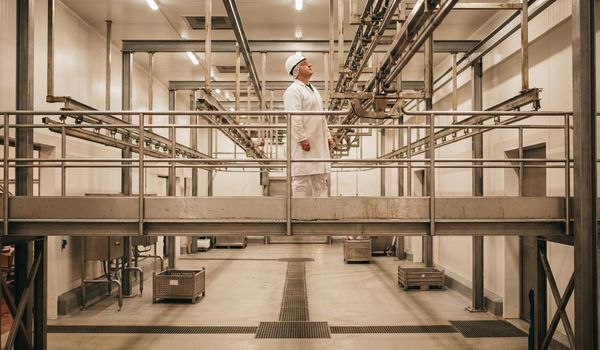
The overhead rail is the spine of the kill floor. Once an animal is stunned and hoisted, every subsequent step happens on the rail: bleeding, hide removal, evisceration, splitting, inspection, and movement to the cooler. Rail systems include the track itself, trolleys, hooks, gambrels, switches, and powered chain conveyors. A basic manual rail for a small plant might run $20,000 to $40,000 installed, while a powered, automated line for a high-throughput facility can exceed $150,000. Rail capacity largely dictates plant capacity, so this is often the first major upgrade a growing facility finances.
Scalding Tanks and Dehairing Machines
Hog processing requires scalding to loosen hair before removal, followed by mechanical dehairing. Scald tanks range from small single-animal tubs around $15,000 to continuous conveyor scalding systems many times that price. Dehairing machines use rotating paddles and rubber fingers to strip hair after scalding, with standalone units typically running $10,000 to $60,000 depending on capacity. Combined scald-and-dehair lines for regional plants commonly land in the $75,000 to $150,000 range and are a classic equipment-loan candidate.
Evisceration Equipment and Workstations
Evisceration stations include the platforms, viscera tables, pans, conveyors, and sanitation fixtures that let crews work efficiently and inspectors do their jobs. Manual stations for low-volume plants are relatively affordable, while mechanized evisceration lines with synchronized conveyors for higher volumes can run $100,000 to $250,000 or more. Hygienic design matters here: lenders and inspectors both favor stainless steel, easily sanitized equipment, and that preference holds resale values up over time.
Carcass Splitting Saws and Cutting Tools
Splitting saws divide beef and hog carcasses into halves for chilling and further processing. Commercial-grade splitting saws cost $5,000 to $30,000 each, and plants running any meaningful volume keep backups on hand. Related purchases, brisket saws, hock cutters, pneumatic dehiders, and sterilizer equipment, are frequently bundled into the same financing package as the larger line items.
Chill Rooms, Blast Chillers, and Refrigeration
Refrigeration is usually the most expensive single category in the facility. Carcass chill rooms must pull product temperature down fast enough to meet food safety requirements, and under-sized refrigeration is one of the most common capacity killers in small plants. A properly sized chill room for a small facility starts around $30,000 and climbs past $250,000 for larger installations with blast chilling capability. Because refrigeration equipment is standardized and holds value well, lenders are generally comfortable financing it over longer terms.
Mobile Slaughter Units
Mobile slaughterhouses are self-contained, trailer-based facilities that bring USDA-compliant processing directly to farms and ranches. They solve a real logistics problem in regions where the nearest inspected plant is hours away, and they have become a popular entry point for ranch cooperatives and direct-to-consumer meat brands. Turnkey units typically cost $150,000 to $400,000, and because a mobile unit is a titled, insurable, resellable asset, it finances much like heavy equipment or a commercial vehicle.
Rendering, Waste Handling, and Support Equipment
Blood collection systems, inedible material handling, bone crushers, wastewater pre-treatment equipment, boilers, and backup generators all belong in the financing conversation. These systems are expensive, regulated, and essential. Leaving them out of the capital plan is one of the most common budgeting mistakes new facility owners make, and lenders who understand the industry will expect to see them itemized.
How Slaughterhouse Equipment Financing Works
The process is more straightforward than most operators expect, especially compared to bank loans or SBA applications. Here is the typical sequence from quote to funded equipment:
- Get equipment quotes. Identify the machinery you need and obtain formal quotes from dealers, manufacturers, or auction houses. Lenders finance against documented purchase prices.
- Apply with a lender that understands the industry. Submit a short application with basic business information, time in business, revenue, and the equipment details. Online lenders like Crestmont Capital can often return a decision within hours.
- Review your approval and terms. Approvals spell out the amount, rate, term length, and monthly payment. Terms typically run 24 to 84 months depending on equipment type and expected useful life.
- Sign and fund. Once you accept, the lender pays the equipment vendor directly. Many transactions fund within one to three business days of approval.
- Take delivery and start producing. The equipment arrives, gets installed, and starts generating revenue while you repay over time.
One practical note: installation, freight, rigging, and commissioning can often be rolled into the financed amount, sometimes called soft costs. Ask about this upfront, because on a complex line installation those costs can add 10% to 20% to the purchase price.
By the Numbers
Independent Slaughter Capacity: Key Statistics
$1B
Committed by USDA through the American Rescue Plan to expand independent meat and poultry processing capacity
85%
Share of U.S. beef packing controlled by the four largest processors, driving demand for regional plants
800+
Federally inspected livestock slaughter establishments operating in the United States
$150K+
Typical starting cost for a turnkey, USDA-compliant mobile slaughter unit
Comparing Your Slaughterhouse Equipment Financing Options
Not every funding product fits every purchase. Here is how the main options compare for slaughter facility operators.
| Feature | Equipment Loan | Equipment Lease | SBA 7(a) / 504 | Working Capital Loan |
|---|---|---|---|---|
| Best for | Long-life core machinery | Tech you may upgrade | Large buildouts, real estate | Short-term operating needs |
| Typical term | 24 to 84 months | 24 to 60 months | 10 to 25 years | 3 to 18 months |
| Funding speed | Days | Days | Weeks to months | Days |
| Collateral | The equipment itself | The equipment itself | Business assets, often real estate | Often unsecured |
| Ownership | Yours from day one | Purchase option at term end | Yours from day one | N/A (cash) |
Equipment loans are the workhorse for core kill-floor machinery with 15 to 30 year useful lives. You build equity with every payment and own the asset outright at the end.
Equipment leases suit categories where technology is moving fast, such as automated inspection aids or control systems, because you can upgrade at term end without a resale hassle.
SBA loans offer the lowest rates and longest terms and are worth pursuing for full facility buildouts that combine equipment with construction or real estate. The tradeoff is paperwork and time. The SBA's loan programs, including the 7(a) program, can fund equipment, working capital, and property in a single package, but expect a process measured in weeks or months, not days.
Working capital loans are not equipment financing, but they pair well with it. Use them for livestock inventory, packaging, labels, and payroll while the equipment loan handles the machinery. Our page on unsecured working capital loans explains how those structures work.
Pro Tip: Match the loan term to the equipment's useful life, not to your cash-flow comfort. Financing a rail system with a 25-year service life over 3 years creates unnecessarily heavy payments, while financing a fast-depreciating item over 7 years leaves you paying for equipment past its prime.
Who Qualifies for Slaughterhouse Equipment Financing?
Qualification is more accessible than most operators assume, because the equipment itself carries much of the credit risk. While every lender has its own criteria, the benchmarks below reflect what most equipment lenders look for.
- Time in business: Most lenders want at least 6 to 12 months of operating history. Established plants with multi-year records get the best terms, but strong startups with experienced management and solid contracts can still qualify.
- Credit score: A personal score of 600 or higher opens most programs, and 650+ unlocks the most competitive rates. Lower scores can still be approved with larger down payments or additional collateral. If credit is a concern, our bad credit equipment financing programs are built for exactly that situation.
- Revenue: Lenders typically want to see monthly revenue that comfortably covers the new payment alongside existing obligations, often verified through 3 to 6 months of bank statements.
- Equipment documentation: A formal quote or purchase agreement from the seller, with model numbers, condition, and price. For used equipment, photos and serial numbers are usually required.
- Compliance posture: For inspected facilities, your USDA or state inspection status and any grant of inspection documentation strengthen the file, because they demonstrate the facility is a going concern with legal market access.
Key Stat: According to the U.S. Census Bureau's Annual Survey of Manufactures, animal slaughtering and processing is one of the largest manufacturing sectors in the country by shipment value, employing hundreds of thousands of workers. Lenders understand the sector's scale and stability, which works in your favor at application time.
One factor that surprises first-time applicants: down payments are often modest or even zero for strong files. Where a bank might demand 20% to 30% down on specialized agricultural infrastructure, equipment-focused lenders routinely finance 100% of the purchase price for qualified operators, sometimes including delivery and installation.
How Crestmont Capital Helps Slaughterhouse Operators Get Funded
Crestmont Capital is the #1 rated business lender in the U.S., and equipment financing for agricultural and food production businesses is one of our core specialties. We understand that a slaughter facility is not a generic small business: your revenue is seasonal, your equipment is specialized, and your compliance calendar never stops. Our underwriting accounts for all of it.
Here is what working with us looks like in practice:
- Fast decisions. Most applications receive a decision within hours, and funded deals typically close in one to three business days. When a scald tank fails mid-season or a rail line comes up at auction, speed matters.
- Flexible structures. Loans and leases from $10,000 into the millions, with terms matched to the equipment's useful life, seasonal payment options for operations with uneven cash flow, and programs for newer businesses.
- 100% financing available. Qualified operators can finance the full purchase price, and soft costs like freight, rigging, and installation can often be included.
- Used equipment welcome. We finance new and used machinery from dealers, private sellers, and auctions, which matters in an industry where quality used kill-floor equipment is a real market.
Whether you need a single splitting saw or a complete plant buildout, start with our equipment financing program. If your operation also handles livestock on the ranch side, our guide to financing livestock handling equipment covers chutes, squeeze systems, and handling facilities in detail. For broader facility needs beyond the kill floor, our commercial financing team can structure packages that cover construction, real estate, and equipment together.
Get Your Equipment Quote Funded This Week
One short application. Decisions in hours, funding in days. See what your operation qualifies for.
Apply Now →Real-World Scenarios: How Operators Use Slaughterhouse Equipment Financing
Numbers on a page only go so far. Here is how financing plays out for the operators who actually use it.
Scenario 1: The Ranch Cooperative Adding a Mobile Unit
A group of eight cattle ranchers in a rural county is three hours from the nearest USDA-inspected plant. Hauling animals that distance costs them money, stresses the livestock, and shrinks carcass quality. They form a cooperative, contract with a mobile unit builder, and finance a $275,000 turnkey trailer over 72 months. The unit serves all eight members on a rotating schedule, the cooperative sells slaughter services to neighboring ranches, and the service revenue covers most of the monthly payment. No single member had to write a six-figure check.
Scenario 2: The Established Plant Doubling Chill Capacity
A family-owned inspected facility has more demand than it can handle, but its bottleneck is not the kill floor. It is refrigeration. Carcasses back up waiting for cooler space, capping throughput at 60% of what the rail line could run. The owners finance a $180,000 blast chiller and cooler expansion over 60 months. Throughput jumps, contract customers get reliable delivery windows, and the incremental margin from the added volume exceeds the new payment within the first quarter.
Scenario 3: The Custom-Exempt Shop Upgrading to Federal Inspection
A custom-exempt processor wants to sell across state lines and serve wholesale accounts, which requires a federal grant of inspection. The upgrade means new stainless workstations, an inspected evisceration line, and sanitation system improvements, roughly $350,000 of equipment. A bank quotes a 90-day timeline. The operator instead finances the equipment package through a direct lender, closes in a week, and completes the upgrade in time to fulfill a signed grocery contract that more than covers the payments.
Scenario 4: The Hog Operation Replacing an Aging Scald Line
A regional hog plant is running a 25-year-old scalding and dehairing line that breaks down monthly and struggles to hold consistent scald temperature, creating quality and inspection headaches. Rather than patch it again, the owners finance a $120,000 combined scald-and-dehair replacement with 100% financing and no down payment. Maintenance costs collapse, line speed rises, and the plant stops losing production days to emergency repairs.
Scenario 5: The New Entrant Building a Small Inspected Plant
Two partners with meat industry experience secure a USDA meat processing grant to offset part of a new small plant, but the grant covers only a fraction of the $1.2 million equipment and installation budget. They stack an equipment loan for the kill-floor line and refrigeration with a working capital facility for startup operating costs. The blended structure gets the plant built without either partner liquidating personal assets, and the facility opens with contracted throughput from day one.
Frequently Asked Questions
What is slaughterhouse equipment financing?+
It is a business loan or lease used specifically to purchase slaughter facility machinery, from stunning systems and overhead rails to chill rooms and mobile units. The equipment itself serves as collateral, which keeps rates lower and approvals faster than unsecured borrowing of the same size.
How much does slaughterhouse equipment cost?+
Individual machines range from about $5,000 for a splitting saw to $250,000 or more for industrial refrigeration. A turnkey mobile slaughter unit runs $150,000 to $400,000, and complete small-plant buildouts typically start around $500,000. Used equipment can cut those figures by 30% to 60%.
Can I finance a mobile slaughterhouse unit?+
Yes. Mobile slaughter units are titled, insurable, resellable assets, so they finance much like heavy equipment or commercial vehicles. Ranch cooperatives, direct-to-consumer meat brands, and custom processors regularly finance them over 60 to 84 month terms.
What credit score do I need to finance slaughterhouse equipment?+
Most programs start around a 600 personal credit score, with the best rates reserved for 650 and above. Lower scores can still be approved with a larger down payment, shorter term, or additional collateral, because the equipment secures the transaction.
How long can I finance slaughterhouse equipment?+
Terms typically run 24 to 84 months. Long-life infrastructure like rail systems and refrigeration qualifies for the longest terms, while smaller tools and fast-depreciating items are usually financed over shorter periods.
Can a startup slaughterhouse qualify for equipment financing?+
Startups can qualify, though the bar is higher. Lenders look for experienced management, signed throughput or livestock supply contracts, a realistic business plan, and often a larger down payment. Most programs prefer at least 6 to 12 months of operating history for the strongest terms.
What is the difference between an equipment loan and an equipment lease?+
With a loan you own the equipment from day one and build equity with each payment. With a lease you make lower payments for use of the equipment and can purchase it, renew, or upgrade at the end of the term. Loans suit long-life core machinery; leases suit technology you may want to refresh.
Can I finance used slaughterhouse equipment?+
Yes. Most equipment lenders finance used machinery purchased from dealers, auctions, or private sellers, as long as condition and value can be documented with photos, serial numbers, and a bill of sale or quote. Terms may be slightly shorter than for new equipment.
Do I need a down payment?+
Often not. Qualified operators with solid credit and revenue routinely receive 100% financing, including soft costs like freight and installation. Down payments of 10% to 20% become more likely for newer businesses, lower credit scores, or highly specialized equipment with a thin resale market.
How fast can I get funded?+
With an online equipment lender, decisions often come back within hours and funding within one to three business days after approval. Bank and SBA routes take considerably longer, typically weeks to a few months from application to funding.
Can financing cover installation, freight, and rigging?+
Usually yes. These soft costs can often be rolled into the financed amount, which matters on complex kill-floor installations where rigging and commissioning add 10% to 20% to the purchase price. Confirm with your lender before signing so the quote reflects the full project cost.
What documents do I need to apply?+
Expect a short application, three to six months of business bank statements, the equipment quote or purchase agreement, and basic ownership information. Larger requests may call for financial statements or tax returns, and used equipment purchases typically need photos and serial numbers.
Are there grants or government programs for slaughterhouse equipment?+
USDA has committed roughly $1 billion to expand independent meat and poultry processing capacity, and various federal and state grant programs have funded equipment for qualifying facilities. Grants rarely cover the full cost, so most recipients pair them with equipment financing or an SBA-backed loan to fund the balance.
Can I finance slaughterhouse equipment with bad credit?+
Yes, options exist. Because the equipment collateralizes the deal, lenders can approve lower credit scores with adjustments like a larger down payment, a co-signer, or a shorter term. Specialized bad credit equipment financing programs are designed for exactly this situation.
Why finance instead of paying cash?+
Cash tied up in machinery is cash you cannot use for livestock, payroll, repairs, or opportunity purchases. Financing converts a six-figure capital expense into predictable monthly payments, keeps reserves intact for emergencies, and lets the new equipment's added throughput help pay for itself.
How to Get Started
Complete our quick application at offers.crestmontcapital.com/apply-now , takes just a few minutes.
A Crestmont Capital advisor will review your equipment quotes and match you with the right financing structure for your facility.
Receive your funds and put your new equipment to work, often within days of approval.
Build the Capacity Your Market Is Waiting For
Join the operators expanding regional slaughter capacity with fast, flexible financing from Crestmont Capital.
Apply Now →Conclusion
Regional slaughter capacity is one of the biggest opportunities in American agriculture right now, and the operators capturing it are the ones who solve the equipment problem first. Slaughterhouse equipment is expensive, specialized, and absolutely essential, but it does not have to drain your reserves. With the right financing structure, you can put inspection-ready rails, refrigeration, and kill-floor machinery to work this month and pay for it from the throughput it creates.
Whether you are adding a mobile unit, replacing an aging scald line, or building a full USDA-inspected facility, Crestmont Capital can structure slaughterhouse equipment financing around your operation's cash flow and timeline. Apply in minutes, get a decision in hours, and put your capital plan in motion.
Disclaimer: The information provided in this article is for general educational purposes only and is not financial, legal, or tax advice. Funding terms, qualifications, and product availability may vary and are subject to change without notice. Crestmont Capital does not guarantee approval, rates, or specific outcomes. For personalized information about your business funding options, contact our team directly.

Allan Garfinkle
Allan Garfinkle is the Chief Revenue Officer at Crestmont Capital, where he has spent more than a decade leading revenue strategy, business development, and operational growth. With 28 years of experience building and advising startups and small businesses, Allan has helped more than 10,000 business owners navigate financing decisions, growth opportunities, and changing economic conditions. He earned a Bachelor of Science in Economics and an MBA with a concentration in Finance from Northeastern University, as well as a Juris Doctor from New England Law, where his studies focused on contracts and business law. His writing draws on extensive practical experience in small-business lending, equipment financing, business credit, and commercial finance.