
 (800) 949-0401
Meat Processing Equipment Financing: The Complete Guide for Business Owners
Meat processing equipment is a major investment. Whether you run a butcher shop, a small meat packing facility, a USDA-inspected plant, or a farm-to-table processing operation, the machines that cut, grind, slice, stuff, smoke, and package meat are expensive - and they wear out. When your livelihood depends on production throughput, downtime is not an option.
Meat processing equipment financing gives business owners a practical path to acquire the machinery they need without draining cash reserves. Instead of paying for equipment upfront, you spread the cost over time while the equipment itself generates revenue to cover payments. This guide covers how financing works, what it costs, what lenders look for, and how to get approved fast.
- What Is Meat Processing Equipment Financing?
- Types of Meat Processing Equipment You Can Finance
- Financing Options for Meat Processing Businesses
- Costs, Rates, and Terms to Expect
- Meat Processing Equipment Financing at a Glance
- How to Qualify for Meat Processing Equipment Financing
- The Application Process Step by Step
- Why Work with an Alternative Lender?
- Tips for Getting the Best Rate
- Frequently Asked Questions
- Next Steps
What Is Meat Processing Equipment Financing?
Meat processing equipment financing is a type of equipment financing that lets butchers, processors, slaughterhouses, and related food businesses acquire machinery through a loan or lease rather than paying the full purchase price upfront. The equipment itself typically serves as collateral, which makes this type of financing more accessible than unsecured business loans.
Financing can cover new or used equipment, single machines or entire production lines, and purchases from dealers, manufacturers, or private sellers. Most lenders allow you to finance 80 to 100 percent of the equipment cost, with repayment terms ranging from 24 to 84 months depending on the equipment's expected useful life and the lender's policies.
Because meat processing equipment has strong resale value and a long useful life - commercial band saws, vacuum sealers, and walk-in coolers can last 10 to 20 years with proper maintenance - lenders are generally comfortable financing these assets.
Types of Meat Processing Equipment You Can Finance
Nearly any equipment used in meat processing, packaging, or storage is eligible for financing. Here are the most commonly financed categories:
Cutting and Slicing Equipment
- Commercial band saws and bone saws
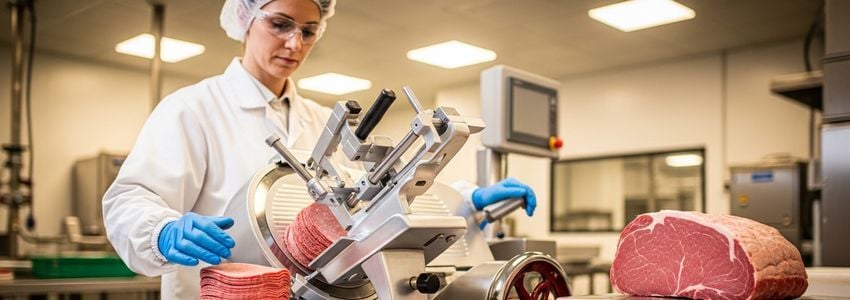
- Meat slicers and deli slicers
- Automatic portioning and slicing machines
- Cubing and tenderizing machines
- CNC-controlled cutting systems for high-volume operations
Grinding and Mixing Equipment
- Commercial meat grinders (floor and countertop models)
- Bowl choppers and food cutters
- Meat mixers and blenders for sausage and blended products
Sausage and Curing Equipment
- Sausage stuffers and linkers (manual, pneumatic, and automatic)
- Smoke ovens and smokehouse systems
- Curing injectors and brining systems
Packaging Equipment
- Vacuum packaging machines (chamber and external suction)
- Modified atmosphere packaging (MAP) systems
- Thermoforming packaging lines
- Labeling systems and date coders
- Shrink-wrap machines
Refrigeration and Cold Storage
- Walk-in coolers and walk-in freezers
- Blast chillers and shock freezers
- Refrigerated display cases
- Cooler and freezer compressor systems
Material Handling and Sanitation
- Stainless steel work tables and cutting blocks
- Meat rail systems and overhead conveyors
- High-pressure washdown systems
- Waste management and rendering equipment
In general, if it is a depreciable asset used in your meat processing operation, it can be financed. Lenders may also roll in soft costs like installation, delivery, and extended warranties up to 20 to 25 percent of the hard equipment cost.
Ready to Finance Your Meat Processing Equipment?
Crestmont Capital helps butchers, processors, and food businesses get funded in as little as 24 hours. Compare your options with no obligation.
Apply Now - It Takes 5 MinutesFinancing Options for Meat Processing Businesses
There is no one-size-fits-all solution when it comes to financing meat processing equipment. The right option depends on your business size, credit profile, cash flow, and whether you want to own the equipment outright or keep your options open.
Equipment Loans
A standard equipment loan provides a lump sum to purchase the equipment, which you then repay with fixed monthly payments over an agreed term (typically 36 to 84 months). Once the loan is paid off, you own the equipment free and clear. This is the most common choice for businesses that plan to keep equipment long-term. Interest rates generally range from 6 to 24 percent depending on creditworthiness.
Equipment Leasing
Equipment leasing is an alternative to buying where you pay monthly rent for use of the equipment. Leases come in two main forms:
- Operating lease (fair market value lease): Lower monthly payments, equipment returned at lease end. Good for technology that becomes outdated quickly.
- Finance lease (capital lease or $1 buyout): Higher monthly payments, you own the equipment at the end for a nominal amount. Functions similarly to a loan.
For meat processing equipment - which has long useful lives and does not become obsolete quickly - an equipment loan or finance lease is usually the better choice.
SBA Loans
SBA loans through the 7(a) or 504 programs offer the lowest interest rates and longest repayment terms available to small businesses. However, the application process is lengthy (typically 30 to 90 days) and documentation requirements are extensive. According to the SBA, 504 loans can cover equipment costs up to $5.5 million with terms up to 10 years at fixed below-market rates.
Small Business Loans
Small business loans from alternative lenders can be used to purchase equipment and often fund much faster than banks or SBA lenders - sometimes within 24 hours. These are a strong option when you need equipment quickly, have less-than-perfect credit, or cannot wait months for SBA approval.
Business Lines of Credit
A revolving line of credit can be used to purchase equipment or cover related costs like installation and training. Lines of credit offer flexibility but typically carry higher interest rates than dedicated equipment financing. They work well for smaller purchases or ongoing equipment maintenance costs.
Manufacturer and Dealer Financing
Many meat processing equipment manufacturers and distributors offer their own financing programs, sometimes at promotional rates. These programs can be attractive but often require strong credit and may have less flexibility than third-party lenders.
Costs, Rates, and Terms to Expect
Understanding the true cost of financing before you sign is critical. Here is a breakdown of what you can expect when financing meat processing equipment:
Interest Rates
- Bank equipment loans: 5 to 12 percent APR
- SBA loans: Prime + 2.25 to 2.75 percent (currently 8.5 to 11 percent range)
- Alternative lender equipment loans: 8 to 30 percent APR
- Equipment leases: Effective rates of 6 to 20 percent
Loan Terms
- Short-term (24-36 months): Lower total cost but higher monthly payments
- Mid-term (48-60 months): Balanced payments, common for $50,000 to $200,000 purchases
- Long-term (72-84 months): Lower monthly payments, higher total interest cost
Down Payment
Many equipment loans require 10 to 20 percent down, though some lenders offer 100 percent financing to qualified borrowers. If your credit profile is strong, you may be able to avoid a down payment entirely.
Fees to Watch For
- Origination fees: 1 to 3 percent of loan amount
- Documentation fees: $150 to $500
- Prepayment penalties: Some lenders charge if you pay off the loan early
- Late payment fees: Typically 5 percent of the missed payment
As reported by Forbes Advisor, equipment financing rates are closely tied to the Federal Reserve's benchmark rate, the borrower's credit score, and the equipment's residual value. Businesses with strong credit and established revenue can expect rates near the lower end of these ranges.
Meat Processing Equipment Financing at a Glance
By the Numbers: Meat Processing Equipment Financing
How to Qualify for Meat Processing Equipment Financing
Lender requirements vary, but most equipment financing programs look at the same core factors. Here is what you need to qualify:
Credit Score
Most traditional lenders want a minimum personal credit score of 650 to 680. Alternative lenders may approve borrowers with scores as low as 550 to 600, especially if the business has strong revenue. If your credit is challenged, consider bad credit business loans designed specifically for borrowers with imperfect histories.
Time in Business
Most lenders want to see at least 12 to 24 months in business. Startups with no business history face higher rates and more limited options. However, some lenders - particularly those specializing in equipment financing - will work with businesses as young as 6 months old if equipment is valued correctly.
Annual Revenue
Lenders want to confirm your business generates enough revenue to cover loan payments. A common benchmark is that your loan payment should not exceed 10 to 15 percent of your monthly revenue. For a $150,000 loan at 60 months and 12 percent APR, monthly payments would be approximately $3,335 - meaning you would want at least $22,000 to $33,000 in monthly revenue to qualify comfortably.
Industry and Equipment Type
Meat processing is an established, essential industry with steady demand. According to CNBC, the specialty meat and food processing market has grown significantly as consumer demand for locally sourced and processed products increases. This industry classification is generally viewed favorably by lenders.
Equipment Collateral
Since the equipment itself secures the loan, lenders also assess the equipment's age, condition, and resale value. New equipment from major manufacturers such as Berkel, Hobart, Biro, or Treif is easiest to finance. Used equipment can still be financed but may require a larger down payment or shorter loan term.
The Application Process Step by Step
Getting approved for meat processing equipment financing is straightforward when you are prepared. Here is what to expect:
Step 1: Know What You Need
Before contacting any lender, have a clear picture of what equipment you need, where you will buy it, the approximate cost (including delivery and installation), and why you need it now. A specific request is easier to approve than a vague one.
Step 2: Gather Your Documents
Most lenders will ask for:
- Business bank statements (3 to 6 months)
- Business tax returns (1 to 2 years)
- Equipment quote or invoice from the seller
- Business license and articles of incorporation or organization
- Driver's license or government ID
- Profit and loss statement (for larger loan amounts)
Step 3: Apply with Multiple Lenders
Applying to several lenders simultaneously lets you compare offers and negotiate better terms. Online applications often take 5 to 10 minutes and return decisions within hours.
Step 4: Review Your Offer Carefully
Before accepting any offer, review the APR (not just the interest rate), total repayment amount, prepayment penalties, and any balloon payments. If you are taking a longer-term loan, make sure you are comfortable with the total cost over the life of the loan.
Step 5: Close and Fund
Once approved, most equipment financing closes within 2 to 5 business days. Alternative lenders can often fund in 24 to 48 hours. Funds are typically sent directly to the equipment seller, or deposited in your account so you can make the purchase.
Get Your Meat Processing Equipment Financed Today
Crestmont Capital works with butcher shops, processors, and food producers of all sizes. Fast approvals, flexible terms, and no pressure.
Start Your Application NowWhy Work with an Alternative Lender?
Traditional banks offer competitive rates, but they come with significant tradeoffs: lengthy approval times, strict credit requirements, and mountains of paperwork. For meat processing businesses - where equipment failures can halt production within hours - speed often matters as much as rate.
Alternative lenders like Crestmont Capital specialize in fast, flexible financing for businesses that cannot wait. Here are the key advantages:
Speed
Alternative lenders can approve and fund equipment loans in 24 to 72 hours. Banks typically take 2 to 6 weeks, and SBA lenders can take 30 to 90 days. If your band saw breaks down on a Tuesday and your Friday deliveries depend on production, you need money now - not in three months.
Flexible Qualification Standards
Alternative lenders consider the full picture of your business health, not just your credit score. If you have strong revenue, steady cash flow, and the equipment holds good resale value, you may qualify even with a below-average credit score.
More Financing Products
Beyond equipment loans, alternative lenders offer long-term business loans for larger projects, fast business loans for urgent needs, and working capital financing to cover operational costs alongside equipment purchases.
Relationship-Based Service
Unlike large banks, many alternative lenders assign dedicated advisors who understand your industry. They can structure financing around your specific cash flow - for example, with seasonal payment schedules that align with your busiest revenue months.
As noted by Bloomberg, the gap in small business lending left by traditional banks has been increasingly filled by alternative lenders who can move faster and serve more diverse borrowers.
Tips for Getting the Best Rate on Meat Processing Equipment Financing
Build Your Business Credit
Before applying, make sure your business credit profile is as strong as possible. Pay all existing obligations on time, keep credit utilization low, and check your Dun and Bradstreet and Experian Business reports for errors.
Offer a Larger Down Payment
If you have some cash available, putting 20 percent down instead of 10 percent can meaningfully lower your interest rate and reduce your monthly payment. It also signals financial stability to lenders.
Consider Used Equipment
Quality used equipment - especially name-brand machines with service histories - can cost 30 to 60 percent less than new. Financing a $70,000 used commercial packaging line instead of a $150,000 new one means lower payments and less total interest paid.
Compare Multiple Offers
Never accept the first offer you receive. Get at least two to three competing quotes. Even a 2 to 3 percentage point difference in rate on a $100,000 loan over 60 months can save you $6,000 to $9,000 in interest.
Time Your Application Strategically
If you are in a seasonal business, apply for financing during your highest-revenue months. Lenders review recent bank statements, so applying when your balance is highest gives you the best chance of approval at the best rate.
Use Section 179 Tax Deduction
Under Section 179 of the IRS tax code, businesses can deduct the full purchase price of qualifying equipment - including financed equipment - in the year it is placed in service. For 2026, the Section 179 deduction limit is $1.22 million. This can dramatically reduce your after-tax cost of equipment financing. Consult your accountant for details specific to your situation.
Real-World Example: How Meat Processing Equipment Financing Works
Let's say you own a small butcher shop and processing facility that generates $600,000 per year in revenue. You need to replace your aging vacuum packaging line and add a new commercial slicer to meet growing wholesale demand from local restaurants. Total equipment cost: $85,000.
You apply with Crestmont Capital and qualify for an equipment loan with the following terms:
- Loan amount: $85,000
- Interest rate: 11.5 percent APR
- Repayment term: 60 months
- Monthly payment: approximately $1,867
- Total repayment: approximately $112,000
Your new packaging line handles three times the daily volume of your old unit. Within six months, you have added two wholesale accounts that generate an additional $8,000 per month in revenue. Your monthly loan payment of $1,867 is easily covered by the incremental revenue - and you are building equity in equipment you will own outright in five years.
Common Mistakes to Avoid When Financing Meat Processing Equipment
Underestimating Total Equipment Costs
The sticker price on equipment is rarely the final number. Factor in delivery (often $1,000 to $5,000 for heavy equipment), installation and setup, operator training, extended warranties, and any facility modifications needed to accommodate the new machine.
Ignoring Maintenance and Repair Costs
Financing equipment does not mean ignoring its upkeep. Budget for routine maintenance and plan for occasional repairs. A service contract from the manufacturer can provide predictable maintenance costs and protect your equipment investment.
Financing Equipment You Do Not Need Yet
Only finance equipment that directly supports current revenue needs or a firm expansion plan. Financing equipment speculatively - hoping demand will materialize - adds financial risk without guaranteed return.
Not Reading the Prepayment Penalty Clause
Some lenders charge substantial fees if you pay off your loan early. If you think you might refinance or pay off the loan before the term ends, look for lenders without prepayment penalties.
Missing Out on Tax Benefits
Failing to take advantage of the Section 179 deduction or bonus depreciation is a common and costly mistake. Talk to your accountant before you close any equipment financing deal to maximize your tax savings.
Frequently Asked Questions About Meat Processing Equipment Financing
What is the minimum credit score needed to finance meat processing equipment?
Most traditional lenders and banks require a personal credit score of at least 650 to 680 for equipment financing. Alternative lenders may work with scores as low as 550 to 600, particularly if your business revenue is strong and the equipment has good resale value. Some lenders specialize in working with borrowers who have imperfect credit histories.
How much can I borrow for meat processing equipment?
Most equipment financing programs allow you to borrow from $5,000 to several million dollars, depending on the lender and your qualifications. For meat processing businesses, financing amounts commonly range from $25,000 to $2 million or more for larger facilities building out full production lines.
Can I finance used meat processing equipment?
Yes. Many lenders finance both new and used equipment. Used equipment loans may require a slightly larger down payment (15 to 25 percent) or shorter repayment term, and the equipment typically must be in good working condition and have verifiable resale value. Equipment from recognized manufacturers like Hobart, Berkel, and Biro is generally easiest to finance used.
How long does the approval process take?
Approval times vary significantly by lender type. Alternative lenders can approve and fund in 24 to 72 hours. Banks typically take 1 to 3 weeks. SBA loan programs take 30 to 90 days from application to funding. If you need equipment quickly, alternative lenders offer the fastest path to capital.
Is meat processing equipment financing the same as a business loan?
Not exactly. Equipment financing is a specific type of business loan where the equipment itself serves as collateral. This makes it easier to qualify than unsecured business loans and often results in lower interest rates. Standard business loans may be unsecured or use other business assets as collateral.
What documents do I need to apply?
Typical documentation requirements include: 3 to 6 months of business bank statements, 1 to 2 years of business tax returns, an equipment quote or invoice, business license, and a government-issued ID. Larger loan amounts may also require profit and loss statements and a business plan. Alternative lenders often require less documentation than banks.
Can I finance installation and delivery costs along with the equipment?
Many lenders allow you to include soft costs - delivery, installation, training, and extended warranties - in your equipment loan, typically up to 20 to 25 percent of the hard equipment cost. This allows you to finance the complete cost of getting your equipment operational rather than paying soft costs out of pocket.
What happens if my equipment breaks down or becomes obsolete?
If you have purchased the equipment outright via a loan, you own it and are responsible for repair or replacement costs. If you have leased the equipment, your lease agreement may include maintenance provisions - check the terms carefully. Planning for equipment failure is part of responsible business management; consider building a maintenance reserve fund alongside your financing payments.
Can a startup meat processing business get equipment financing?
Startups face more limited options but are not locked out of equipment financing. Some lenders will work with businesses that have been operating for as little as 6 months. Startups may need a larger down payment (20 to 30 percent), a stronger personal credit score (680+), or a cosigner to qualify. Demonstrating a clear business plan and revenue projections also helps.
Is leasing or buying better for meat processing equipment?
For most meat processing operations, buying via an equipment loan is the better long-term choice because the equipment has a long useful life and does not become obsolete quickly. Leasing may make sense if you need flexibility to upgrade equipment frequently or if cash flow is very tight and you need the lowest possible monthly payment.
Does financing meat processing equipment affect my business credit?
Yes, in both directions. Making on-time payments builds positive business credit history, which improves your access to financing and lowers your rates over time. Missing payments or defaulting harms your credit and makes future financing more difficult and expensive. Treat your equipment loan payments like any other critical business obligation.
Can I refinance existing meat processing equipment debt?
Yes. If you have existing equipment loans with high interest rates, refinancing may allow you to lower your rate, extend your term to reduce monthly payments, or consolidate multiple loans into one. This can make sense if market rates have dropped since you originally financed, or if your credit has improved significantly.
What is the Section 179 tax deduction and how does it apply to equipment financing?
Section 179 of the IRS tax code allows businesses to deduct the full purchase price of qualifying equipment in the year it is placed in service, rather than depreciating it over many years. Importantly, this deduction applies to financed equipment - you do not have to pay cash. For 2026, the deduction limit is $1.22 million. Consult a tax professional to maximize your specific benefit.
Are there specific lenders that specialize in meat processing equipment financing?
Yes. Some equipment finance companies specialize in food processing and food safety equipment. However, most business-oriented lenders - including alternative lenders like Crestmont Capital - are comfortable financing meat processing equipment because it has established value and steady demand. Comparing offers from multiple lender types will help you find the best rate.
What is the difference between an equipment loan and an equipment lease for tax purposes?
With an equipment loan, you own the equipment and can take Section 179 depreciation and bonus depreciation deductions. With an operating lease, the leasing company owns the equipment and your payments are generally deductible as a business expense but you cannot take depreciation. With a finance lease, you may be treated as the owner for tax purposes. Always consult a tax advisor to understand the specific implications for your situation.
Next Steps: How to Get Started
Your Action Plan for Financing Meat Processing Equipment
Apply for Meat Processing Equipment Financing Today
Crestmont Capital is rated the #1 business lender in the U.S. We offer fast approvals, flexible terms, and dedicated support for meat processing businesses. Apply now and get a decision in hours, not weeks.
Get Funded Fast - Apply NowWhether you are a butcher shop owner upgrading your slicing equipment, a USDA-inspected processor adding new packaging capacity, or a farm-to-table operation building out your first processing facility, meat processing equipment financing can help you grow without sacrificing your working capital. The right lender and the right financing structure can make the difference between staying competitive and falling behind.
Don't let equipment costs limit your production capacity. Explore your options today with Crestmont Capital and take the next step toward a stronger, more efficient processing operation.
Disclaimer: The information provided in this article is for general educational purposes only and is not financial, legal, or tax advice. Funding terms, qualifications, and product availability may vary and are subject to change without notice. Crestmont Capital does not guarantee approval, rates, or specific outcomes. For personalized information about your business funding options, contact our team directly.








