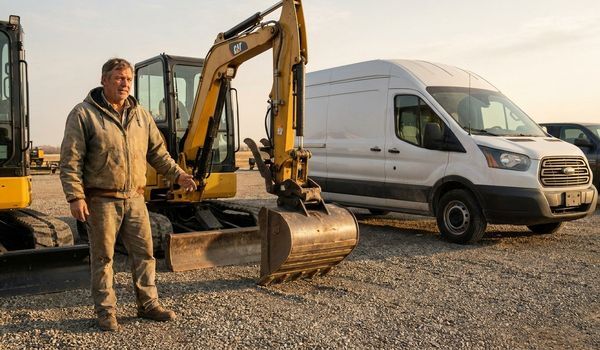
Sign installation businesses are essential to commercial construction, retail development, and municipal infrastructure. Whether you're hanging LED displays on high-rises, installing wayfinding systems at hospitals, or mounting channel letters for small businesses, this work demands a significant capital base - trucks, lifts, rigging equipment, and a crew ready to work at heights. Sign installation business loans give contractors access to the funding they need to take on bigger contracts, upgrade aging equipment, and keep cash flow stable between project completions.
In This Article
- What Are Sign Installation Business Loans?
- Key Benefits of Financing Your Sign Business
- How Sign Installation Loans Work
- Types of Financing for Sign Contractors
- Who Qualifies for Sign Installation Financing?
- What Sign Contractors Finance Most
- Comparing Financing Options
- How Crestmont Capital Helps Sign Contractors
- Real-World Scenarios
- Frequently Asked Questions
- How to Get Started
What Are Sign Installation Business Loans?
Sign installation business loans are financing products designed to help sign contractors, sign companies, and independent installers cover the costs of running and growing their operations. These costs include everything from boom truck financing and lift equipment to crew payroll, material purchases, and working capital between jobs. Unlike general small business loans that any business can access, sign contractors often benefit from lenders who understand the capital-intensive, project-based nature of their industry.
The sign installation industry touches a wide range of business types. Some contractors focus exclusively on commercial real estate signage, helping developers outfit entire shopping centers. Others specialize in neon or LED illuminated signs for the hospitality sector. Still others handle government, transportation, or wayfinding projects that require licensed crews and certified equipment. Each of these niches has different capital needs, and business financing can be tailored to match.
According to the U.S. Small Business Administration, small businesses in specialty trade contracting - the category that includes sign installation - face unique challenges around irregular cash flow, equipment demands, and working capital. Having access to a reliable credit facility can be the difference between winning a major contract and having to pass it up.
Industry Insight: The U.S. sign manufacturing and installation industry generates over $12 billion annually, according to industry data. With demand growing from retail buildouts, EV charging infrastructure, and digital signage upgrades, the need for capital to support sign contractors has never been higher.
Key Benefits of Financing Your Sign Installation Business
Sign contractors who access business financing gain meaningful advantages over those who rely solely on cash flow. Here are the most important benefits:
- Scale faster with better equipment: A newer boom truck or aerial work platform doesn't just make jobs safer - it expands the types of contracts you can bid on. Financing lets you acquire that equipment now rather than saving for years.
- Win larger contracts: Many commercial developers and municipalities require proof of financial capacity before awarding contracts. Having a line of credit or a well-financed equipment fleet signals that you're a serious, stable contractor.
- Smooth out cash flow gaps: Sign installation is project-based. You may complete a large job in March but not receive final payment until May. A working capital loan or line of credit covers payroll and supplier invoices during that gap.
- Keep up with technology: LED signage, digital displays, and smart wayfinding systems require installers to invest in new tools and training. Financing allows you to keep pace without depleting reserves.
- Hire and retain skilled crews: Finding experienced sign climbers and aerial lift operators is competitive. Financing payroll growth lets you lock in talent before projects begin rather than scrambling at the last minute.
- Protect cash reserves for emergencies: Smart business owners use financing for growth and keep cash in reserve for unexpected expenses - equipment breakdowns, insurance claims, or slower-than-expected payment from clients.
Ready to Grow Your Sign Installation Business?
Get fast, flexible financing from the #1 business lender in the U.S. Apply in minutes with no obligation.
Apply NowHow Sign Installation Business Loans Work
The loan process for sign contractors is similar to other specialty trade businesses, though lenders familiar with the industry understand the specific challenges. Here's how it typically unfolds:
Step 1 - Pre-application: Before applying, a sign contractor should gather basic financial documents including three to six months of bank statements, recent tax returns, and a list of current equipment and outstanding contracts. Some lenders also want to see accounts receivable aging reports, especially if you're applying for a working capital or accounts receivable financing product.
Step 2 - Application submission: Online lenders like Crestmont Capital have streamlined the application process. Most applications take less than ten minutes and ask for basic business and financial information. You'll be asked about your annual revenue, time in business, and the specific use of funds.
Step 3 - Underwriting: Lenders evaluate your credit profile (both personal and business), cash flow stability, existing debt obligations, and the strength of your accounts receivable. Sign contractors with consistent revenue from repeat commercial clients typically receive the best rates.
Step 4 - Approval and offer: Once approved, you'll receive a financing offer detailing the loan amount, interest rate or factor rate, repayment term, and any fees. It's important to compare total cost of capital, not just the interest rate.
Step 5 - Funding: Many online lenders fund within 24 to 72 hours of approval. Equipment financing products may take slightly longer as they require documentation of the specific asset being financed.
Step 6 - Repayment: Depending on the loan type, repayments may be daily, weekly, or monthly. Working capital loans and merchant cash advances often use daily ACH withdrawals, while term loans typically have fixed monthly payments.
Quick Guide
How Sign Installation Loans Work - At a Glance
Bank statements, tax returns, equipment list, and contracts in pipeline.
Complete a 10-minute application - no long bank forms required.
Lenders assess revenue, credit, and cash flow - often within hours.
Funds deposited directly to your business account - often within 1-3 days.
Types of Financing for Sign Installation Contractors
Sign contractors typically draw from several different financing products depending on their specific needs. Understanding each option helps you choose the right tool for the right situation.
Equipment Financing
Equipment financing is purpose-built for acquiring the tools of the trade - boom trucks, aerial lifts, rigging equipment, service vehicles, and installation rigs. The equipment itself serves as collateral, which typically results in lower interest rates and longer repayment terms than unsecured loans. Sign contractors can often finance up to 100% of the equipment's purchase price, preserving cash for other business needs. Visit Crestmont Capital's equipment financing page to explore options.
Working Capital Loans
Working capital loans provide short-term cash to cover operating expenses - crew payroll, material purchases, fuel, and overhead - between project completions. These are unsecured products, meaning no collateral is required. They're ideal for filling cash flow gaps that arise from net-30 or net-60 payment terms. Unsecured working capital loans can fund in as little as 24 hours, making them useful for urgent needs.
Business Line of Credit
A business line of credit provides revolving access to capital that you can draw from as needed. This is especially useful for sign contractors who need to purchase materials for multiple jobs simultaneously or who have lumpy revenue cycles. You only pay interest on what you draw, and as you repay, the credit becomes available again. Crestmont Capital offers flexible business lines of credit designed for contractors.
SBA Loans
SBA loans - particularly the SBA 7(a) program - offer the lowest interest rates available to small businesses. For established sign contractors with strong credit profiles and two or more years in business, an SBA loan can provide long-term capital for equipment, real estate, or business expansion at rates that minimize total cost. The tradeoff is that SBA loans take longer to process. Crestmont Capital is an approved SBA loan lender.
Revenue-Based Financing
Revenue-based financing (RBF) provides capital in exchange for a percentage of future revenue. Repayments adjust with your revenue - when business slows, you pay less; when business surges, you pay more. This flexibility makes RBF well-suited for sign contractors with seasonal revenue patterns or large projects that spike income temporarily.
Invoice Financing
For sign contractors who complete large commercial jobs and then wait 30 to 90 days for payment, invoice financing unlocks the value of outstanding invoices immediately. You receive up to 90% of the invoice value upfront, and when the client pays, you receive the remainder minus a small fee. This is a powerful tool for maintaining cash flow without taking on traditional debt.
By the Numbers
Sign Installation Financing - Key Statistics
$12B+
Annual U.S. sign industry revenue
24 hrs
Typical funding time with alternative lenders
$50K-$2M
Typical loan range for sign contractors
600+
Minimum credit score for most lenders
Who Qualifies for Sign Installation Business Loans?
Qualification criteria vary by lender and loan type. Here's what most lenders evaluate when reviewing a sign contractor's loan application:
Time in Business
Most traditional lenders require at least two years of operating history. Online lenders may approve businesses with six to twelve months of operating history, though rates may be higher. New sign installation companies with limited history can still access startup equipment financing or SBA microloans.
Annual Revenue
Lenders want to see consistent revenue generation. Most working capital and term loan products require a minimum of $100,000 to $250,000 in annual revenue. Higher revenue generally unlocks larger loan amounts and better rates.
Credit Profile
Personal credit scores above 620 open access to most loan products. Scores above 680 qualify for preferred rates. Business credit through Dun & Bradstreet (PAYDEX score) also matters, particularly for SBA and equipment loans. Sign contractors with lower credit scores can still access financing through working capital loans or merchant cash advances.
Cash Flow
Lenders review three to six months of bank statements to assess cash flow consistency. They look for regular deposits, a positive average daily balance, and no significant overdrafts. Project-based businesses like sign contractors may see irregular deposits - this is expected and most lenders account for it.
Pro Tip: If your credit score is below 620, focus on improving it before applying for traditional loans. Pay down existing revolving balances, dispute any errors on your credit report, and make all payments on time for 90 days. A 50-point improvement can significantly reduce your interest rate.
What Sign Contractors Finance Most
Understanding what your peers are financing helps you identify opportunities you may be overlooking. Here are the most common uses of sign installation business loans:
Boom Trucks and Aerial Work Platforms
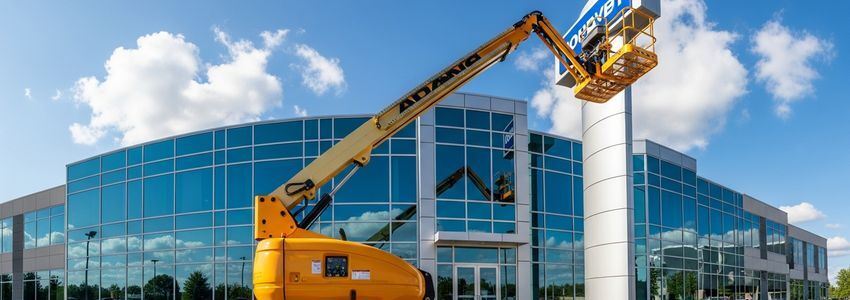
Boom trucks - also called bucket trucks or aerial work platforms - are the backbone of a sign installation operation. A single quality unit can cost $80,000 to $300,000 or more. Most sign contractors finance these vehicles rather than purchasing them outright, using equipment financing products that spread the cost over five to seven years.
Sign Installation Vehicles and Trailers
Beyond boom trucks, sign contractors need service trucks, vans for crew transport, and flatbed or enclosed trailers for hauling sign panels and rigging equipment. These are typically financed through commercial vehicle or equipment financing programs.
Rigging and Hardware
Professional rigging equipment - chain hoists, slings, shackles, climbing harnesses, and scaffolding - represents a significant upfront investment. Working capital loans or equipment lines of credit often fund these purchases.
LED and Digital Signage Components
The shift from static to digital signage requires contractors to invest in new tools for testing, programming, and installing LED modules, power supplies, and control systems. Staying current with this technology often requires ongoing capital investment.
Crew Payroll and Benefits
Skilled sign climbers, riggers, and electricians command competitive wages. Payroll financing or working capital loans ensure you can hire and retain the crew you need without waiting for client payments.
Insurance and Bonding
Commercial sign installation requires substantial liability insurance, workers' compensation coverage, and often performance bonds for government or commercial contracts. These premiums can strain cash flow, particularly at the start of a policy period.
Comparing Sign Installation Financing Options
Choosing the right financing product comes down to matching the loan type to your specific need, timeline, and financial profile. Use this comparison to guide your decision:
| Loan Type | Best For | Typical Amount | Funding Speed | Min. Credit |
|---|---|---|---|---|
| Equipment Financing | Boom trucks, vehicles | $25K-$2M+ | 2-5 days | 600 |
| Working Capital Loan | Payroll, materials, overhead | $10K-$500K | 24-48 hrs | 580 |
| Business Line of Credit | Ongoing working capital needs | $10K-$250K | 1-3 days | 620 |
| SBA 7(a) Loan | Large, long-term capital needs | Up to $5M | 4-12 weeks | 680 |
| Invoice Financing | Unlocking outstanding invoices | Up to 90% of invoice | 24-48 hrs | 550 |
| Merchant Cash Advance | Emergency, short-term needs | $5K-$250K | Same day | 500 |
How Crestmont Capital Helps Sign Installation Contractors
Crestmont Capital is one of the nation's top-rated business lenders, with deep expertise in contractor and trade financing. Sign installation businesses across the country trust Crestmont to provide fast, fair, and flexible financing that fits the project-based nature of their work.
Unlike traditional banks that may struggle to understand the seasonal and irregular cash flow patterns of sign contractors, Crestmont's underwriters evaluate the full picture of your business - including pending contracts, equipment assets, and your history of completing jobs on time and on budget. We don't just look at a credit score; we look at your business as a whole.
Crestmont offers several products that are particularly well-suited to sign contractors:
- Equipment financing for boom trucks, aerial platforms, and service vehicles - with flexible terms up to 84 months
- Unsecured working capital loans to bridge cash flow gaps between project completions and client payments
- Business lines of credit that provide revolving access to capital for materials, payroll, and operational needs
- SBA loans for established contractors seeking long-term, low-rate financing for growth initiatives
- Revenue-based financing for contractors with strong sales but less-than-perfect credit profiles
The application process is entirely online, takes under ten minutes, and our team provides a response within hours. You can also speak directly with a Crestmont financing specialist who understands sign installation and can help you structure the right loan package for your specific situation. Visit our small business financing hub to learn more.
Sign contractors who have previously used general-purpose financing may also benefit from reviewing our window installation business loans guide, as window and sign contractors often face similar cash flow and equipment financing challenges. Likewise, if you handle broader construction or site development projects, our land clearing business loans guide covers financing for contractors working across multiple specialties.
Real-World Scenarios: Sign Contractors Using Financing
Abstract concepts become clearer with concrete examples. Here are six realistic scenarios illustrating how sign installation businesses use financing to grow and operate more effectively.
Scenario 1: The Growing Regional Contractor
Marcus runs a ten-person sign installation company in the Southeast. He's been offered a contract to install signage for a 40-store shopping center development - the largest job his company has ever bid. The contract requires him to have two aerial lift trucks on site simultaneously, but he currently only has one. He takes out an equipment financing loan to purchase a second boom truck, wins the contract, and completes the project ahead of schedule. The revenue from the contract covers the equipment loan payments with room to spare.
Scenario 2: The Cash Flow Gap
A mid-size sign contractor in the Midwest completes a large hospital wayfinding project in February but won't receive final payment until the general contractor closes out the project in April. Meanwhile, she has payroll to meet, fuel costs to cover, and materials to purchase for her next three jobs. She draws $80,000 from her Crestmont business line of credit to cover operations in March and April, then repays it fully when the hospital payment clears.
Scenario 3: The Equipment Upgrade
A sign installation company in Texas has been using a 15-year-old boom truck that's becoming increasingly unreliable. Repair costs have doubled in the past year, and they've had to turn down two high-altitude jobs because their equipment doesn't reach the required height. They finance a new 60-foot insulated boom truck through Crestmont's equipment financing program, immediately expanding their service offerings and winning three new commercial contracts they previously couldn't bid on.
Scenario 4: The Digital Signage Transition
A traditional sign installer in the Mid-Atlantic region sees that LED digital signage is taking over the market. He needs to invest in new LED testing equipment, controller hardware, and specialized installation tools - a combined cost of $35,000. He uses a working capital loan to fund this transition, becomes certified in LED installation, and within a year, digital signage work makes up 40% of his revenue at significantly higher margins.
Scenario 5: The Multi-Location Expansion
A sign installation company with strong roots in one city wants to expand to a neighboring market 150 miles away. They need to set up a new shop, hire a local crew, and purchase a boom truck dedicated to that market. They use an SBA 7(a) loan for the longer-term capital required to establish the new location, securing a seven-year term at competitive rates that makes the expansion financially feasible from day one.
Scenario 6: The Invoice Backlog
A sign contractor completes multiple large jobs in November and December for retail clients preparing for the holiday season. The invoices total $280,000 but won't be paid until January or February. In the meantime, she still has rent, payroll, and insurance premiums due. She uses invoice financing to unlock 85% of those outstanding invoices immediately, keeping operations running smoothly through the slow winter months without taking on traditional debt.
Finance Your Sign Installation Equipment Today
From boom trucks to LED components - Crestmont Capital has fast, flexible financing for sign contractors across the U.S.
Get My QuoteFrequently Asked Questions
What credit score do I need to get a sign installation business loan?
Most traditional and SBA lenders prefer a personal credit score of 660 or higher. Online lenders can often work with scores as low as 580 to 620. Equipment financing tends to have lower credit requirements because the financed asset secures the loan. If your score is below 600, consider applying for revenue-based financing or invoice financing, which rely more heavily on cash flow and receivables than credit scores.
How much can a sign installation company borrow?
Loan amounts vary significantly by product and lender. Working capital loans typically range from $10,000 to $500,000. Equipment financing can go up to $2 million or more for specialized vehicles. SBA 7(a) loans cap at $5 million. Your borrowing capacity is ultimately determined by your annual revenue, cash flow, creditworthiness, and the specific use of funds.
Can a new sign installation business get financing?
Yes, though options are more limited for startups. Businesses with less than two years of operating history can typically access equipment financing, SBA microloans (up to $50,000 for businesses in early stages), and some alternative lenders who work with companies that have at least six months of history and consistent revenue.
What documents do I need to apply for a sign installation business loan?
Most lenders require: three to six months of business bank statements, the most recent one to two years of business tax returns, a copy of your business license or contractor's license, a government-issued ID, and basic business information. Equipment financing applications also require an invoice or quote for the specific asset being purchased.
How long does it take to get approved and funded?
Online lenders like Crestmont Capital can approve and fund working capital loans and lines of credit within 24 to 72 hours. Equipment financing typically takes two to five business days. SBA loans are the slowest, typically requiring four to twelve weeks for approval and funding.
Can I finance a used boom truck or aerial lift?
Yes. Used equipment financing is available through most commercial lenders, including Crestmont Capital. Lenders typically require the equipment to be less than ten to fifteen years old and in good working condition. A formal appraisal or inspection report may be required for older or high-value items.
Do sign installation loans require collateral?
It depends on the loan type. Equipment financing is secured by the equipment itself. SBA loans typically require a personal guarantee and may require business assets as collateral. Working capital loans from alternative lenders are often unsecured, relying on creditworthiness and cash flow rather than physical collateral.
What interest rates should I expect on sign installation business loans?
SBA 7(a) loan rates currently range from approximately 10% to 14% for most borrowers. Equipment financing rates typically range from 6% to 15%. Working capital loan APRs from online lenders range from 15% to 45%, depending on credit and cash flow. According to Federal Reserve data, small business loan rates have trended higher alongside broader interest rate movements.
Can I get financing if my sign business has seasonal revenue?
Yes. Many sign contractors experience seasonal fluctuations - outdoor installations peak in spring and summer, while indoor retail signage often surges in the fall. Alternative lenders understand this and evaluate your annual revenue and overall cash flow patterns. Revenue-based financing is particularly well-suited for seasonal businesses because repayments scale with your actual revenue.
What is the difference between equipment financing and an equipment lease for boom trucks?
With equipment financing, you take ownership of the boom truck at the end of the loan term. With an equipment lease, you use the equipment during the lease period and then either return it, renew the lease, or purchase it at a predetermined price. For most sign contractors, financing makes more sense because boom trucks have long useful lives and you build equity in the asset.
Can I use financing to hire and train my installation crew?
Yes. Working capital loans can be used for any legitimate business expense, including payroll, crew training, OSHA certifications, and aerial lift operator certifications. If you're expanding to take on a new contract that requires additional headcount, a working capital loan can cover the ramp-up costs before you start receiving payment from the new project.
Is it possible to get a sign installation loan with bad credit?
Yes, though your options narrow and rates increase as credit scores drop below 600. Merchant cash advances, short-term working capital loans, and invoice financing are typically the most accessible options for contractors with damaged credit. Invoice financing is a strong option as it focuses on the creditworthiness of your clients rather than your own score.
How do I choose between a working capital loan and a line of credit?
A working capital loan delivers a single lump sum that you repay over a fixed term. It's best when you have a specific, known expense - like funding a large material purchase for a defined project. A business line of credit is revolving, meaning you can draw and repay repeatedly up to your credit limit. It's best for ongoing, variable needs - like covering payroll gaps and materials costs across multiple projects simultaneously.
Will applying for a business loan hurt my credit score?
The initial application typically involves a soft credit pull, which does not affect your credit score. Once you proceed to formal underwriting, a hard credit inquiry is made, which may temporarily lower your personal score by a small amount (typically two to five points). Multiple hard inquiries from different lenders within a 30-day window are typically counted as a single inquiry for scoring purposes.
How can I improve my chances of getting approved for a sign installation business loan?
Maintain a personal credit score above 650, keep credit card balances below 30% of your limit, maintain consistent business bank account activity, separate personal and business finances, maintain up-to-date tax returns, and build business credit with vendor accounts that report to credit bureaus. According to U.S. Census Bureau data, small businesses with formal financial planning and credit management practices are significantly more likely to receive loan approvals.
How to Get Started
Complete our quick application at offers.crestmontcapital.com/apply-now - takes just a few minutes and won't affect your credit score.
A Crestmont Capital advisor who understands the sign installation industry will review your needs and match you with the right financing product.
Receive your funds - often within 24 to 72 hours - and put them to work on the equipment, crew, and contracts that grow your sign installation business.
Conclusion
Sign installation business loans provide the capital foundation that growing sign contractors need to bid on larger projects, acquire specialized equipment, and maintain smooth operations between project completions. Whether you're looking to finance your next boom truck, bridge a cash flow gap, or build a line of credit to support ongoing operations, there's a financing product designed to match your needs and your financial profile. Crestmont Capital specializes in contractor financing, offering fast approvals, flexible terms, and advisors who understand the realities of project-based work. The first step is simply applying - and that takes less time than it took to read this guide.
Disclaimer: The information provided in this article is for general educational purposes only and is not financial, legal, or tax advice. Funding terms, qualifications, and product availability may vary and are subject to change without notice. Crestmont Capital does not guarantee approval, rates, or specific outcomes. For personalized information about your business funding options, contact our team directly.