Septic service companies are among the most stable and recession-resistant businesses in the home services sector. Whether the economy is booming or contracting, septic tanks must be pumped on schedule, failing drain fields must be replaced, and new systems must be installed on properties without municipal sewer access. The approximately 21 million U.S. households with septic systems create a perpetual demand base that sustains septic service companies through every economic cycle. But growing a septic business — from a single pumper truck to a multi-truck operation offering pumping, inspection, repair, and installation — requires significant capital investment in specialized vehicles and equipment, environmental permits, and working capital. This guide covers every financing option available to septic service business owners.
In This Article
- Why Septic Service Businesses Need Financing
- Types of Septic Business Loans
- Truck and Equipment Financing for Septic Companies
- SBA Loans for Septic Service Companies
- How to Qualify for a Septic Business Loan
- Septic Business Loan Rates, Terms, and Amounts
- Best Uses for Septic Service Financing
- Septic Industry Statistics
- How to Apply and What to Prepare
- Why Septic Companies Choose Crestmont Capital
- Frequently Asked Questions
Why Septic Service Businesses Need Financing
Septic service is a capital-intensive business where the primary production asset — the pumper truck — costs $80,000 to $250,000+. Each truck serves dozens of customers per week, generating recurring revenue from scheduled pumping visits (every 3 to 5 years per household), inspections (required for real estate transactions), emergency service calls, and installation or repair work. But building the truck fleet to serve a growing customer base requires capital that septic service revenue alone rarely generates fast enough to keep pace with market opportunity.
Common financing needs for septic service businesses:
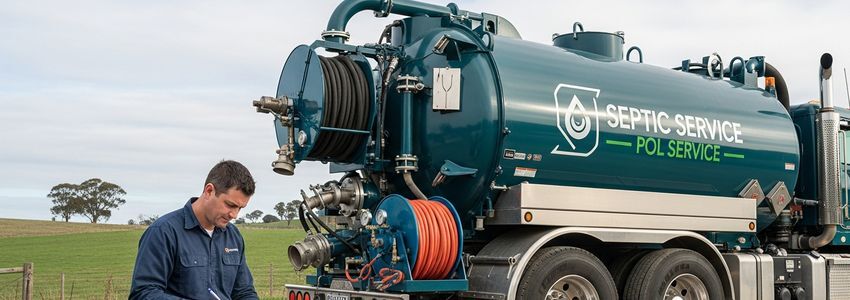
- Pumper trucks — vacuum/combination trucks for septic pumping ($80,000–$250,000 each, depending on tank capacity and truck specification)
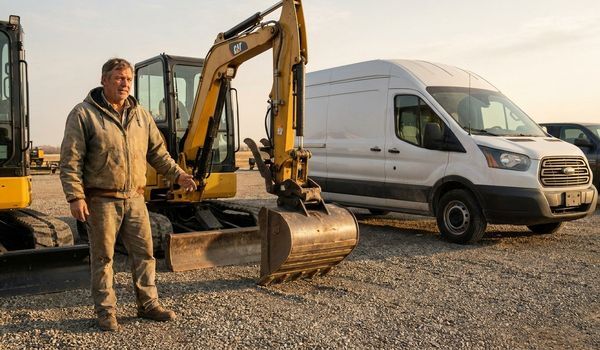
- Excavation equipment — mini excavators or full-size excavators for drain field installation and repair ($40,000–$200,000)
- Inspection equipment — sewer cameras, inspection systems, and locating equipment ($5,000–$30,000)
- Service trucks — work trucks for inspection, minor repair, and system maintenance ($30,000–$60,000)
- Working capital — commercial client billing gaps, supplies and consumables, seasonal cash flow management
- Environmental compliance — waste disposal manifests, handling equipment, and compliance systems for pumped waste transport
- Acquiring a septic company — purchasing an established operation with existing pump schedule, customer base, and equipment
- Route expansion — acquiring another company's residential route book and customer contracts
Recurring Revenue Advantage: Septic pumping companies with established residential customer schedules have a highly predictable recurring revenue base — customers are on 3 to 5 year pumping cycles and require service regardless of economic conditions. This revenue predictability makes established septic businesses strong loan candidates. For equipment financing specifics, see our Construction Equipment Financing: The Complete Guide for Contractors and Construction Companies. For working capital solutions, see our When to Use a Working Capital Loan: The Complete Guide for Small Business Owners.
Types of Septic Business Loans
Commercial Truck and Equipment Financing
Commercial truck financing is the primary capital tool for septic pumper trucks. Vacuum trucks and combination trucks serve as strong collateral — they are specialized but well-understood by commercial vehicle lenders. Rates of 5%–18% for new trucks, 7%–22% for used, over 48 to 84 months. Equipment financing covers excavators, inspection cameras, and specialty tools using the equipment as collateral.
Small Business Term Loans
Term loans provide lump-sum capital for working capital, equipment packages, and scaling. Online alternative lenders fund in 1 to 5 days; banks take 2 to 8 weeks at lower rates. Most appropriate for $50,000–$500,000 investments in fleet additions or shop development.
Business Lines of Credit
A revolving line of credit addresses working capital gaps — supplies, temporary staffing for busy seasons, and the gap between completing commercial jobs and receiving payment. Lines of $25,000–$100,000 provide operational flexibility without requiring new loan applications for each need.
SBA 7(a) Loans
SBA loans provide the lowest rates for qualified septic companies. Established businesses ($200,000+ revenue) can access $100,000 to $5 million for fleet expansion, facility purchase, or business acquisitions. Approval takes 60 to 90 days with thorough documentation.
SBA 504 Loans
For septic companies purchasing their facility (storage yard, maintenance shop, office) or a high-value combination of real estate and equipment, SBA 504 loans offer below-market fixed rates and long terms. The 10% down payment structure preserves cash for operations.
Ready to Grow Your Septic Business?
Get fast, flexible financing from the #1 business lender in the U.S. No obligation — apply in minutes.
Apply Now →Truck and Equipment Financing for Septic Companies
Pumper trucks and excavation equipment represent the largest capital need for septic businesses. Key assets and typical costs:
| Asset | New Cost | Used Cost | Function |
|---|---|---|---|
| Vacuum Pumper Truck (2,000–3,000 gal) | $120K–$200K | $40K–$120K | Residential and light commercial septic pumping |
| Combination Vacuum/Hydro Truck | $180K–$280K | $70K–$180K | Commercial/grease trap/heavy service |
| Mini Excavator (3–5 ton) | $55K–$90K | $25K–$55K | Drain field installation and repair |
| Sewer Camera / Inspection System | $8K–$25K | $3K–$12K | System inspection, real estate transactions |
| Service / Work Truck | $40K–$60K | $15K–$35K | Inspection and minor repair calls |
Commercial truck and equipment financing for septic businesses typically requires:
- Vehicle or equipment invoice or appraisal
- 6+ months in business
- Credit score 580+
- Bank statements or revenue documentation
- Commercial driver's license (for large pumper trucks)
- Environmental/septic contractor license
SBA Loans for Septic Service Companies
Septic service companies qualify for SBA programs as environmental service and plumbing/drain service businesses:
| SBA Program | Max Amount | Best Use | Min. Credit | Time to Fund |
|---|---|---|---|---|
| SBA 7(a) | $5 million | Fleet, equipment, acquisition, working capital | 650+ | 60–90 days |
| SBA 504 | $5.5M (CDC portion) | Facility real estate, large equipment packages | 680+ | 60–120 days |
| SBA Express | $500,000 | Working capital, equipment, LOC | 650+ | 30–45 days |
How to Qualify for a Septic Business Loan
Credit Score Requirements
- Bank term loans: 700+
- SBA 7(a) loans: 650–680+
- Online alternative term loans: 600–650+
- Commercial truck / equipment financing: 580–620+
- Business lines of credit: 600–650+
- MCAs: 500+
Time in Business
- Banks and SBA: 2 years preferred
- Online alternative lenders: 6 months to 1 year
- Commercial truck financing: 6 months (some startups for new trucks)
Annual Revenue
- SBA and bank loans: $150,000+ annually
- Online term loans: $100,000+ annually
- Truck financing: Varies by truck value
Septic Industry-Specific Considerations
- State septic/pumping contractor license: Septic pumping and installation typically require state environmental or plumbing contractor licenses. Verify all licenses are current before applying — unlicensed septage hauling is a significant regulatory violation.
- CDL requirements: Pumper trucks over 26,000 lbs GVWR require a Commercial Driver's License (CDL). Verify your drivers hold appropriate CDLs for your truck sizes.
- Environmental permits: Septage disposal requires permitted disposal sites. State environmental permits for waste hauling and disposal are required and reviewed by lenders.
- DOT registration: Septic trucks as commercial motor vehicles require USDOT registration and may require state hazardous materials endorsements for certain waste types.
Septic Business Loan Rates, Terms, and Amounts
| Loan Type | Typical Rate | Term | Amount Range | Speed |
|---|---|---|---|---|
| Commercial Truck Financing (new) | 5%–15% | 4–7 years | $80K–$300K | 3–14 days |
| Commercial Truck Financing (used) | 7%–22% | 3–5 years | $30K–$200K | 3–14 days |
| Equipment Financing | 6%–22% | 2–6 years | $10K–$200K | 1–7 days |
| SBA 7(a) Loan | 10%–13% | Up to 10 years | $100K–$5M | 60–90 days |
| Online Term Loan | 15%–45% | 3 months–5 years | $10K–$500K | 1–5 days |
| Business Line of Credit | 8%–35% | Revolving | $15K–$150K | 1–7 days |
Best Uses for Septic Service Financing
Adding a Pumper Truck
Each additional pumper truck typically serves 300–500 residential customers per year at $250–$500 per pumping service, generating $75,000–$250,000 in annual pumping revenue per truck. Commercial truck financing with the truck as collateral spreads the $80,000–$200,000 cost over 5 to 7 years while the additional truck generates revenue from its first service call. The math is compelling: a $150,000 truck financed at 10% over 6 years costs approximately $2,800/month while generating $6,000–$20,000 in monthly revenue at normal utilization.
Adding Excavation Capability
Septic companies that can both pump and install/repair drain fields offer a complete service that commands significantly higher per-project revenue ($3,000–$25,000+ for installation vs. $250–$500 for pumping). Adding a mini excavator ($25,000–$55,000 used) and obtaining installation contractor licensing enables a pumping-only operator to dramatically expand revenue per customer interaction. Equipment financing with the excavator as collateral is the standard structure.
Adding Inspection Services
Real estate transactions — home sales — require septic inspections in most markets with septic systems. Sewer cameras and inspection equipment ($8,000–$25,000 new) enable participating in this inspection market, which generates $200–$500 per inspection and creates relationships with real estate agents that lead to ongoing service referrals. Equipment financing covers inspection camera systems over 2 to 4 years.
Acquiring a Septic Company or Route Book
Purchasing an established septic company — with its customer pump schedule (1,000+ households on a recurring service schedule), equipment, and operator relationships — is one of the most efficient ways to scale. SBA 7(a) acquisition financing covers purchase price plus working capital. Septic company route books are highly valuable because they represent predictable recurring revenue that new business development cannot replicate quickly.
Expanding Service Area
Adding trucks to serve adjacent counties or markets extends recurring revenue from existing customer relationships and creates density in new markets. Working capital loans or term loans covering the additional truck and initial marketing in the new area support geographic expansion.
Septic Industry Statistics
- Approximately 21 million U.S. households rely on septic systems — roughly 1 in 5 American homes (U.S. Environmental Protection Agency)
- The septic tank cleaning and pumping industry generates approximately $5–7 billion in annual revenue across roughly 14,000 businesses (IBISWorld)
- EPA recommends septic tanks be inspected every 3 years and pumped every 3 to 5 years, creating a predictable and mandatory recurring service cycle
- The average septic pumping service generates $250 to $500 per visit for residential service, with commercial septic (restaurants, schools, commercial facilities) generating $500 to $2,000+ per service
- Drain field failure — which requires full system replacement at $10,000 to $25,000+ — represents the highest-revenue single service for septic contractors
- New home construction on properties without municipal sewer creates steady demand for new septic system installation in suburban and rural growth markets
- The septic service industry has one of the highest barriers to entry of any home service sector — state licensing, environmental permits, CDL requirements, and significant capital investment deter casual competition
How to Apply and What to Prepare
For Commercial Truck and Equipment Financing
- Truck or equipment invoice or appraisal
- 3 to 6 months of business bank statements
- Most recent business tax return
- Septic/environmental contractor license
- CDL documentation for applicable drivers
- Commercial auto and liability insurance certificates
- Environmental hauling permits
For SBA and Bank Loans
- 2 to 3 years of business and personal tax returns
- Year-to-date profit and loss statement
- Current balance sheet (with equipment values)
- 12 months of business bank statements
- All applicable contractor and environmental licenses
- USDOT registration documentation
- Environmental permits for septage hauling/disposal
- Insurance certificates (commercial auto, GL, workers' comp)
- Customer route documentation (if applying based on recurring revenue)
- Personal financial statement
Application Tips
- Quantify your customer schedule: The number of households on your pump schedule (recurring customers on 3–5 year cycles) is your most valuable asset for financing purposes. Document this — it's predictable recurring revenue that lenders find compelling.
- Verify all environmental compliance: State septic contractor licenses, environmental hauling permits, and DOT numbers must all be current. Compliance gaps are common application obstacles for septic businesses.
- Separate business banking: A dedicated business bank account with deposits matching your claimed revenue is essential for all truck and equipment loan applications.
Why Septic Companies Choose Crestmont Capital
Crestmont Capital is the #1 rated business lender in the United States. We work with septic service businesses — from solo pumpers adding their first second truck to regional environmental service companies with multiple trucks and full installation capabilities. We understand the regulatory complexity, recurring revenue model, and equipment-intensive capital needs of the septic industry.
- Commercial truck expertise: We understand vacuum and combination trucks as collateral assets
- Fast approvals: Decisions in as little as 24 hours for qualified applicants
- Multiple products: Truck loans, equipment financing, term loans, lines of credit, and SBA programs
- Transparent terms: No hidden fees, complete cost disclosure before you sign
Get Your Septic Service Business Loan Today
Apply in minutes. No obligation. Funding as fast as 24 hours.
Apply Now →Frequently Asked Questions
Frequently Asked Questions: Septic Service Business Loans
Disclaimer: This article is provided for general educational purposes only and does not constitute financial, legal, or environmental compliance advice. Loan rates, terms, and requirements vary by lender and are subject to change. Licensing, CDL, environmental permit, and DOT requirements vary by state and are subject to change — verify current requirements with your state environmental agency and the FMCSA. Consult a qualified financial advisor before making business financing decisions.