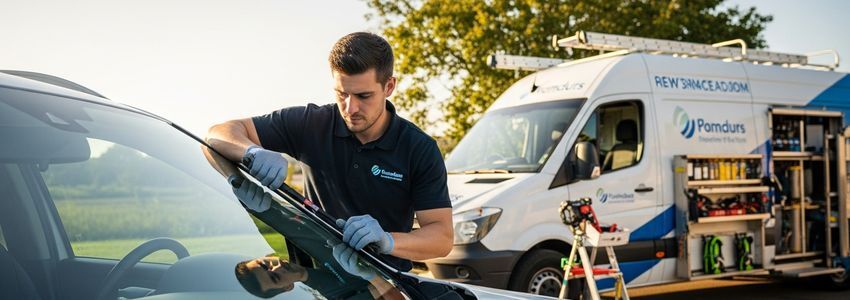
Glass repair and replacement is a recession-resistant service business with consistent demand from both auto and commercial markets. Vehicles crack windshields daily, storms break commercial windows, and construction and renovation activity constantly creates demand for glass installation and replacement. Auto glass companies can serve both retail customers and insurance-direct billing relationships, providing two distinct revenue streams. Commercial glass contractors work with builders, property managers, and building owners on everything from storefronts to high-rise curtain walls. Growing either type of glass business — from a mobile unit or small shop to a multi-vehicle operation or full commercial glass contractor — requires capital investment in vehicles, equipment, inventory, and working capital. This guide covers every financing option available to glass repair and glass company owners.
In This Article
- Why Glass Repair Businesses Need Financing
- Types of Glass Business Loans
- Equipment and Vehicle Financing for Glass Companies
- SBA Loans for Glass Repair Companies
- How to Qualify for a Glass Business Loan
- Glass Business Loan Rates, Terms, and Amounts
- Best Uses for Glass Business Financing
- Glass Repair Industry Statistics
- How to Apply and What to Prepare
- Why Glass Companies Choose Crestmont Capital
- Frequently Asked Questions
Why Glass Repair Businesses Need Financing
Glass businesses — whether auto glass focused or commercial glass contractors — face capital needs that vary by segment but share common themes: vehicle and equipment investment, inventory, and working capital to bridge insurance or commercial client payment gaps.
Auto glass businesses: Each mobile technician requires a fully equipped service vehicle ($35,000–$55,000), glass inventory and storage, repair/replacement equipment ($5,000–$15,000 per vehicle kit), and working capital to bridge the gap between jobs and insurance direct payment (typically net-15 to net-30 for insurance billing).
Commercial glass contractors: Commercial glazing work — storefronts, curtain walls, windows — requires significant glass inventory (fragile, expensive material that must be purchased before installation), specialty installation equipment, vehicles for transport, and working capital to bridge the gap between project completion and invoice payment on net-30 to net-60 commercial terms.
Common financing needs for glass businesses include:
- Service vehicles — cargo vans or trucks equipped for glass transport and mobile repair ($35,000–$55,000 each)
- Glass racks and transport systems — custom A-frame glass racks for safe transport ($3,000–$10,000 per vehicle)
- Auto glass tools — removal tools, setting tools, windshield repair kits, UV curing lamps ($5,000–$12,000 per technician kit)
- Commercial glazing equipment — suction cup handlers, glass lifts, silicone guns, frames and setting tools ($10,000–$50,000)
- Glass inventory — maintaining stock of common auto glass SKUs or sheet glass for commercial work (recurring working capital need)
- Working capital — covering payroll and supplies while waiting for insurance reimbursement or commercial client payment
- Storefront or shop — leasehold improvements for a physical shop location with glass storage, cutting table, and customer service area
- Acquiring a glass company — purchasing an established auto glass or commercial glass business with existing accounts and equipment
Insurance Billing Advantage: Auto glass businesses that bill insurance directly have more predictable and verifiable revenue than most service businesses — insurance payments are highly creditworthy and consistent. This makes auto glass companies with established insurance billing relationships strong loan candidates. For equipment financing details, see our Construction Equipment Financing: The Complete Guide for Contractors and Construction Companies. For working capital solutions, see our When to Use a Working Capital Loan: The Complete Guide for Small Business Owners.
Types of Glass Business Loans
Commercial Vehicle and Equipment Financing
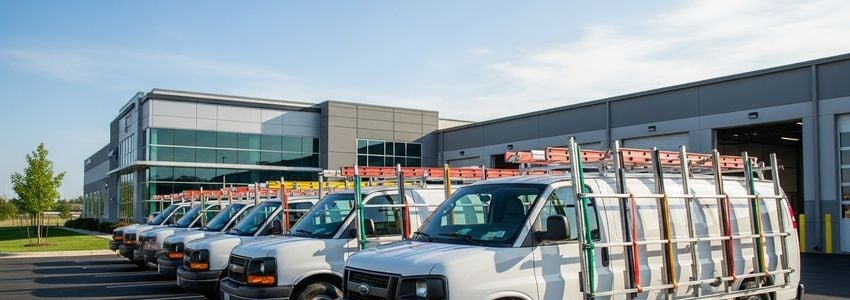
Vehicle financing is the primary capital tool for mobile auto glass businesses. Service vehicles with custom glass racks serve as collateral, enabling rates of 5%–18% over 36–72 months. Equipment financing covers glass handling tools, repair equipment, and specialty installation gear. Both new and used vehicles qualify.
Small Business Term Loans
Term loans provide lump-sum capital for working capital, shop buildout, inventory investment, and scaling. Online alternative lenders fund in 1 to 5 days; banks take 2 to 8 weeks at lower rates. Terms 12 to 84 months with rates 6% to 45%+.
Business Lines of Credit
A revolving line of credit addresses the glass business's most common cash flow challenge — the gap between completing jobs and receiving payment (insurance or commercial). Draw to cover payroll and glass inventory, repay when payments clear, draw again. Lines of $25,000–$150,000 eliminate working capital constraints for growing operations.
SBA 7(a) Loans
SBA loans provide the lowest rates for qualified glass companies. Most appropriate for established businesses ($200,000+ revenue) pursuing significant expansion — multiple vehicle additions, shop acquisition, or company acquisitions. Approval takes 60 to 90 days.
Invoice Financing
Invoice financing advances 80%–90% of outstanding commercial invoices immediately. For commercial glass contractors waiting on net-30 to net-60 payment from property managers or general contractors, invoice financing directly eliminates the payment gap. Costs 1%–5% per month on invoice value.
Ready to Grow Your Glass Business?
Get fast, flexible financing from the #1 business lender in the U.S. No obligation — apply in minutes.
Apply Now →Equipment and Vehicle Financing for Glass Companies
Glass company equipment and vehicles are the primary financing need. Key assets and typical costs:
| Asset | New Cost | Used Cost | Best For |
|---|---|---|---|
| Service Van (auto glass) | $40K–$55K | $18K–$35K | Mobile windshield repair/replacement |
| Glass Rack / A-Frame (vehicle mounted) | $4K–$10K | $1.5K–$5K | Safe transport of flat glass sheets |
| Auto Glass Tool Kit | $5K–$12K | N/A (buy new) | Windshield removal and installation |
| Flatbed/Stake Truck (commercial glass) | $50K–$90K | $20K–$55K | Large sheet glass transport |
| Vacuum Lifter / Suction Cup Handler | $3K–$15K | $1.5K–$8K | Large commercial glass installation |
| Glass Cutting Table | $2K–$8K | $800–$4K | Custom glass cutting at shop location |
Equipment financing for glass companies typically requires:
- Equipment or vehicle invoice or quote
- 6+ months in business
- Credit score 580+
- Basic revenue documentation (bank statements)
- Business license and insurance certificates
SBA Loans for Glass Repair Companies
Glass repair and commercial glazing companies qualify for SBA programs as service businesses and specialty trade contractors:
| SBA Program | Max Amount | Best Use | Min. Credit | Time to Fund |
|---|---|---|---|---|
| SBA 7(a) | $5 million | Fleet, equipment, shop acquisition, working capital | 650+ | 60–90 days |
| SBA Express | $500,000 | Working capital, equipment, LOC | 650+ | 30–45 days |
| SBA Microloan | $50,000 | Startup, equipment, initial working capital | 560+ | 30–60 days |
How to Qualify for a Glass Business Loan
Credit Score Requirements
- Bank term loans: 700+
- SBA 7(a) loans: 650–680+
- Online alternative term loans: 600–650+
- Commercial vehicle / equipment financing: 580–620+
- Business lines of credit: 600–650+
- Invoice financing: Based on commercial client creditworthiness
Time in Business
- Banks and SBA: 2 years preferred
- Online alternative lenders: 6 months to 1 year
- Equipment / vehicle financing: 6 months (some startups)
Annual Revenue
- SBA and bank loans: $150,000+ annually
- Online term loans: $100,000+ annually
- Equipment financing: Varies by equipment value
Glass Industry-Specific Considerations
- State contractor license: Most states require glazing contractor licenses for commercial glass installation. Auto glass technicians may need state-specific certifications (AGR certification is industry standard). Verify all licenses are current before applying.
- Insurance billing documentation: Auto glass companies with insurance direct billing should provide examples of insurance EOBs (Explanation of Benefits) or payment schedules — they demonstrate revenue predictability that lenders find compelling.
- Insurance coverage: Commercial general liability, commercial auto, and workers' compensation are typically required by lenders. Glass work has specific liability exposure (broken glass, windshield seal failures) that requires proper coverage.
- Vehicle DOT compliance: Vehicles used for glass transport may require DOT numbers and weight-appropriate commercial driver's licenses depending on truck size and jurisdiction.
Glass Business Loan Rates, Terms, and Amounts
| Loan Type | Typical Rate | Term | Amount Range | Speed |
|---|---|---|---|---|
| Commercial Vehicle Financing | 5%–18% | 3–6 years | $15K–$250K | 1–7 days |
| Equipment Financing | 6%–22% | 2–5 years | $5K–$100K | 1–7 days |
| SBA 7(a) Loan | 10%–13% | Up to 10 years | $50K–$5M | 60–90 days |
| Bank Term Loan | 8%–15% | 1–7 years | $25K–$500K | 2–8 weeks |
| Online Term Loan | 15%–45% | 3 months–5 years | $5K–$500K | 1–5 days |
| Business Line of Credit | 8%–35% | Revolving | $15K–$200K | 1–7 days |
Best Uses for Glass Business Financing
Adding Mobile Service Units
Each additional mobile auto glass technician requires a fully equipped service vehicle ($35,000–$55,000), glass racks ($4,000–$8,000), and a tool kit ($5,000–$12,000). A complete second unit costs $45,000–$75,000. Vehicle financing with the van as collateral spreads this cost over 4 to 5 years while the additional technician generates revenue from day one. A busy auto glass technician completing 4–6 windshield replacements per day at $200–$400 average generates $200,000–$500,000+ in annual revenue per unit.
Expanding into Commercial Glazing
Commercial glass work — storefront glass, window walls, curtain wall systems — offers higher revenue per project than auto glass. But commercial glazing requires specific equipment (flatbed trucks, vacuum lifters, scaffolding or lift access), glazing contractor licensing, and higher insurance limits. A $50,000–$100,000 financing package covering equipment and working capital can enable auto glass operators to bid commercial contracts.
Opening or Expanding a Shop Location
A physical shop location enables serving both drive-in customers and mobile dispatch, provides glass storage and inventory space, and creates a professional service environment. Shop leasehold improvements (glass cutting table, storage racks, customer service area) typically cost $30,000–$80,000. Term loans or SBA 7(a) financing cover this investment.
Building Glass Inventory
Auto glass businesses that stock common windshield and side glass SKUs reduce lead time and improve customer service — critical in the auto glass market where speed is a competitive advantage. Building glass inventory requires working capital or a business line of credit, as glass represents liquid but perishable (breakable) inventory that turns over predictably.
Acquiring a Glass Company
Purchasing an established auto glass or commercial glass company with existing insurance billing relationships, fleet, and technician team eliminates the client acquisition challenge that constrains startup growth. SBA 7(a) acquisition financing covers purchase price plus working capital.
Glass Repair Industry Statistics
- The U.S. auto glass industry generates approximately $4–5 billion in annual revenue, with 70%+ of work paid through automotive insurance direct billing (IBISWorld)
- Approximately 6 million windshields are replaced in the U.S. annually, driven by road debris, hail events, and temperature cycling that cracks glass
- The commercial glass and glazing contracting industry generates approximately $11–13 billion annually, driven by new construction and renovation activity
- ADAS (Advanced Driver Assistance Systems) adoption in newer vehicles has increased the average windshield replacement cost from approximately $250 to $400–$1,200+ due to camera calibration requirements — improving auto glass revenue per job
- Mobile auto glass repair and replacement has grown to represent approximately 60–70% of auto glass service volume, reflecting consumer preference for at-home or at-work service
- Hail storms represent one of the largest single-event demand spikes in the auto glass industry — major hail events in populated areas create backlogs of 3–6 weeks or more for local glass companies
How to Apply and What to Prepare
For Vehicle and Equipment Financing
- Vehicle or equipment invoice or quote
- 3 to 6 months of business bank statements
- Most recent business tax return
- State glazing contractor or auto glass certification
- Insurance certificates (commercial auto, GL, workers' comp)
- Driver's license (for vehicle financing)
For SBA and Bank Loans
- 2 to 3 years of business and personal tax returns
- Year-to-date profit and loss statement
- Current balance sheet
- 12 months of business bank statements
- Glazing or auto glass contractor licenses
- Insurance certificates
- Insurance billing documentation (for auto glass businesses with insurance direct)
- Personal financial statement
Application Tips
- Document insurance billing relationships: Auto glass businesses with established insurance direct billing accounts should provide copies of insurance network participation agreements or EOB examples — they're strong evidence of revenue predictability.
- Provide 12 months of statements: Auto glass revenue may spike after hail events. Twelve months of statements show lenders your normal base revenue plus event-driven spikes.
- Highlight ADAS capability: If your technicians are certified for ADAS camera recalibration after windshield replacement, document this — it's a meaningful competitive differentiator and revenue driver that lenders should understand.
Why Glass Companies Choose Crestmont Capital
Crestmont Capital is the #1 rated business lender in the United States. We work with auto glass companies and commercial glass contractors at every scale — from solo mobile technicians adding their second unit to regional glass companies with multiple shops and commercial glazing divisions. We offer:
- Vehicle and equipment financing expertise: We understand auto glass and commercial glass equipment as collateral
- Fast approvals: Decisions in as little as 24 hours for qualified applicants
- Multiple products: Vehicle loans, equipment financing, term loans, lines of credit, and SBA programs
- Transparent terms: No hidden fees, complete cost disclosure before you sign
Get Your Glass Business Loan Today
Apply in minutes. No obligation. Funding as fast as 24 hours.
Apply Now →Frequently Asked Questions
Frequently Asked Questions: Glass Repair Business Loans
Disclaimer: This article is provided for general educational purposes only and does not constitute financial, legal, or regulatory advice. Loan rates, terms, and requirements vary by lender and are subject to change. Licensing and certification requirements vary by state. Statistics cited reflect publicly available industry data and may not reflect current conditions. Consult a qualified financial advisor before making business financing decisions.