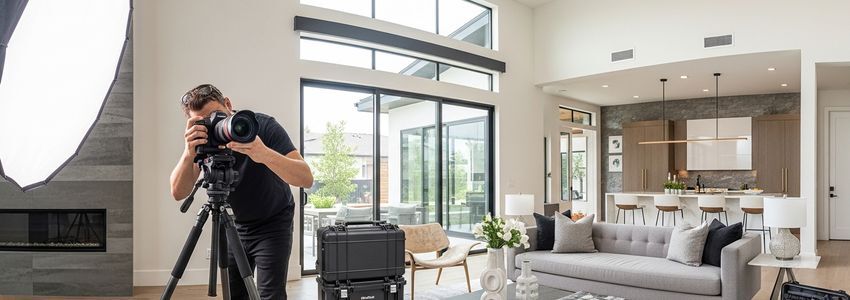
Real estate photography has transformed from a niche service into an essential component of every residential and commercial property listing. With over 95% of home buyers beginning their search online, professional photography — and increasingly, video tours, drone footage, 3D virtual tours, and twilight shoots — is no longer optional for serious sellers and agents. The result is a growing, well-paying specialty that rewards operators who invest in professional equipment, editing capabilities, and service diversification. Growing a real estate photography business — from a solo shooter with a DSLR to a multi-photographer media company serving hundreds of listings per month — requires strategic investment in equipment, technology, and sometimes working capital. This guide covers every financing option available to real estate photographers and property media companies.
In This Article
- Why Real Estate Photography Businesses Need Financing
- Types of Real Estate Photography Business Loans
- Equipment Financing for Property Photographers
- SBA Loans for Photography Businesses
- How to Qualify for a Photography Business Loan
- Photography Business Loan Rates, Terms, and Amounts
- Best Uses for Real Estate Photography Financing
- Real Estate Photography Industry Statistics
- How to Apply and What to Prepare
- Why Photography Businesses Choose Crestmont Capital
- Frequently Asked Questions
Why Real Estate Photography Businesses Need Financing
Real estate photography is an equipment-intensive service business where the quality and capability of your gear directly determines what contracts you can win. A solo photographer with a mid-range camera kit can serve residential listings at $150–$300 per shoot. Adding drone capabilities unlocks aerial packages at $100–$250 premium. Adding Matterport 3D tour capability commands $200–$500 per listing. Adding twilight and video services further expands revenue per visit. Each capability addition requires equipment investment that typically exceeds what monthly cash flow can easily accommodate — especially for a growing business reinvesting in marketing and hiring.
Common financing needs for real estate photography businesses:
- Camera bodies and lenses — professional full-frame cameras ($2,000–$6,000 each), wide-angle real estate lenses ($500–$2,500), telephoto lenses for commercial work
- Drone systems — DJI Mavic, Air, or Inspire series with commercial FAA Part 107 licensing ($1,500–$8,000 per drone system)
- 3D virtual tour equipment — Matterport Pro2 or Pro3 cameras ($3,500–$6,500), Leica BLK360 for commercial ($18,000+)
- Video production equipment — gimbals, sliders, audio equipment, lighting kits for property video tours ($2,000–$15,000)
- Editing workstations — high-end desktops or MacBook Pros with color-calibrated monitors for professional post-processing ($3,000–$8,000)
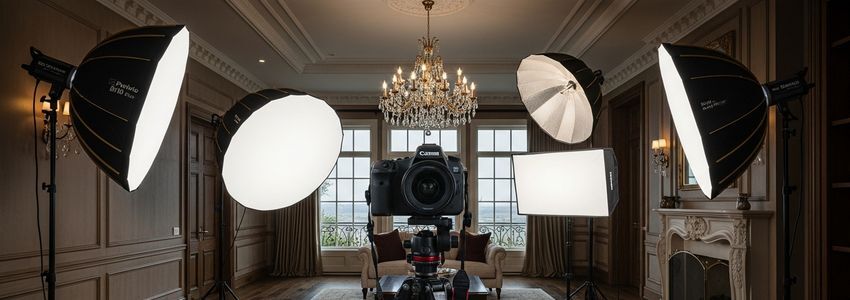
- Lighting equipment — flashes, strobes, light stands, and modifiers for interior real estate photography ($1,000–$5,000)
- Working capital — managing cash flow gaps between shoots and agent/broker payment, covering business overhead during slow real estate markets
- Scaling to a media company — hiring additional photographers, purchasing additional equipment packages, building out an editing team
Equipment as Collateral: Photography and drone equipment qualifies for equipment financing with the assets serving as collateral — typically the most cost-effective financing path for gear investment. For a detailed look at equipment financing structures, see our Construction Equipment Financing: The Complete Guide for Contractors and Construction Companies. For working capital solutions, see our When to Use a Working Capital Loan: The Complete Guide for Small Business Owners.
Types of Real Estate Photography Business Loans
Equipment Financing
Equipment financing uses photography gear, cameras, drones, and production equipment as collateral. Rates of 6%–22%, terms of 24–60 months, and credit score requirements as low as 580 make equipment financing the most accessible path for gear investment. Multiple equipment items can be bundled into a single financing package.
Small Business Term Loans
Term loans provide lump-sum capital for equipment packages, working capital, and scaling investments. Online alternative lenders approve in 1 to 5 days with minimal documentation; banks take 2 to 8 weeks at lower rates. Most useful for larger investments — full equipment packages for new photographers, Matterport systems, or drone fleets.
Business Lines of Credit
A revolving line of credit addresses real estate photography's market-dependent cash flow variation. Real estate markets are cyclical — busy spring and fall seasons followed by slower winter periods. A line of credit ($15,000–$75,000) smooths seasonal variation and covers gear maintenance or replacement costs without requiring new loan applications.
SBA 7(a) Loans
SBA loans provide the lowest rates for qualified small businesses. Best for established photography companies ($300,000+ revenue) pursuing significant expansion — building out a full media company with multiple photographers, investing in commercial real estate photography capabilities, or acquiring a competing photography business.
SBA Microloans
SBA Microloans (up to $50,000) through nonprofit intermediaries are specifically appropriate for solo or small real estate photographers needing their first professional equipment package, drone system, or Matterport camera. More accessible than conventional financing for newer businesses or those with limited credit history.
Ready to Grow Your Photography Business?
Get fast, flexible financing from the #1 business lender in the U.S. No obligation — apply in minutes.
Apply Now →Equipment Financing for Property Photographers
Equipment financing is the most commonly used financing tool for real estate photography businesses because photography gear is tangible, depreciable, and accepted as collateral by equipment lenders. Key equipment investment areas and typical costs:
| Equipment | Typical Cost | Revenue Unlock |
|---|---|---|
| Pro full-frame camera + real estate lens | $3,000–$8,000 | Interior/exterior photo packages $150–$350/listing |
| DJI Mavic 3 Pro drone kit | $2,500–$4,000 | Aerial package add-on $100–$200/listing |
| Matterport Pro3 camera | $5,000–$7,000 | 3D virtual tour add-on $200–$500/listing |
| Video production kit (gimbal, audio, lighting) | $3,000–$10,000 | Property video package $200–$600/listing |
| Professional editing workstation | $3,000–$8,000 | Enables faster turnaround, higher volume capacity |
| Flash/strobe lighting kit | $1,500–$4,000 | Enables consistent interior quality, twilight shoots |
Equipment financing structures for photography gear typically require:
- Equipment invoice or receipt (for individual items) or total package quote
- 6+ months in business (some lenders work with startups)
- Credit score 580+
- Basic revenue documentation (bank statements or tax return)
Bundling multiple equipment items (camera body, lenses, drone, lighting) into a single financing package simplifies administration and may qualify for better rates at higher loan amounts than financing each item separately.
SBA Loans for Photography Businesses
Real estate photography businesses qualify for SBA programs as service businesses. The most relevant programs:
| SBA Program | Max Amount | Best Use | Min. Credit | Time to Fund |
|---|---|---|---|---|
| SBA 7(a) | $5 million | Scale to full media company, acquisition, working capital | 650+ | 60–90 days |
| SBA Express | $500,000 | Equipment packages, working capital, expansion | 650+ | 30–45 days |
| SBA Microloan | $50,000 | Equipment for new/small photographers, working capital | 560+ | 30–60 days |
How to Qualify for a Photography Business Loan
Credit Score Requirements
- Bank term loans: 700+
- SBA 7(a) loans: 650–680+
- Online alternative term loans: 600–650+
- Equipment financing: 580–620+
- Business lines of credit: 600–650+
- SBA Microloans: 560+
Time in Business
- Banks and SBA 7(a): 2 years preferred
- Online alternative lenders: 6 months to 1 year
- Equipment financing: 6 months (some startups considered)
- SBA Microloans: Available for startups
Annual Revenue
- SBA 7(a) and bank loans: $100,000+ annually (lower revenue threshold than other industries due to lower overhead)
- Online term loans: $75,000+ annually
- Equipment financing: Varies by equipment value
Real Estate Photography-Specific Considerations
- FAA Part 107 certification: If you operate commercial drones, FAA Part 107 Remote Pilot certification is legally required. Lenders financing drone equipment may verify certification status.
- Real estate market context: Your revenue is tied to local real estate market activity. In applications, be prepared to contextualize your revenue relative to local market conditions — a slow market year doesn't necessarily reflect your competitive position.
- Client concentration: Dependence on a single brokerage or agent for the majority of revenue is a risk flag for lenders. Diversifying your client base before applying for large loans is advisable.
Photography Business Loan Rates, Terms, and Amounts
| Loan Type | Typical Rate | Term | Amount Range | Speed |
|---|---|---|---|---|
| Equipment Financing | 6%–22% | 2–5 years | $2K–$100K | 1–7 days |
| SBA Microloan | 8%–13% | Up to 6 years | Up to $50K | 30–60 days |
| Online Term Loan | 15%–45% | 3 months–5 years | $5K–$250K | 1–5 days |
| SBA 7(a) / Express | 10%–13% | Up to 10 years | $50K–$5M | 30–90 days |
| Business Line of Credit | 8%–35% | Revolving | $10K–$100K | 1–7 days |
Best Uses for Real Estate Photography Financing
Building a Complete Service Package
The highest-ROI investment for a real estate photographer is adding service capabilities that enable charging premium package prices. A photographer who can offer photos + drone + 3D tour + video from a single visit commands $600–$1,200+ per listing versus $150–$300 for photos only. A $15,000–$30,000 equipment package (drone, Matterport, video kit) financed over 3 years adds approximately $500–$800/month in payments while potentially adding $300–$600 per listing in revenue — ROI positive on just 1–2 additional premium bookings per month.
Equipping a Second Photographer
The most common growth constraint for real estate photography businesses is the owner's own time — there are only so many listings one photographer can cover per day. Adding a second photographer with their own full equipment kit ($8,000–$20,000) doubles coverage capacity and effectively doubles revenue potential. Equipment financing for the second kit covers the investment while the additional revenue services the payment.
Building Out an Editing Team
As shoot volume grows, editing becomes the production bottleneck. Investing in editing workstations ($3,000–$8,000 each) and an editing team infrastructure allows photographers to focus on shoots while editors process faster turnaround — enabling 24-hour delivery that commands premium pricing in competitive markets.
Working Capital During Slow Markets
Real estate photography revenue fluctuates with market activity. When the local real estate market slows — as it did in 2022–2023 when rising rates suppressed listing volumes — photography revenue drops proportionally. A business line of credit ($15,000–$50,000) covers fixed costs (subscriptions, insurance, equipment payments) during slow periods without requiring personal funds to bridge the gap.
Scaling to a Media Company
The most ambitious path is building from a solo operation to a regional real estate media company serving dozens of agents and brokerages with a team of photographers, editors, and production staff. SBA 7(a) financing supports this scale-up — covering equipment packages for multiple photographers, editing infrastructure, and working capital during the growth period.
Real Estate Photography Industry Statistics
- Properties with professional photography sell 32% faster and for 47% more per square foot than listings with amateur photos, according to research by Redfin
- Over 95% of home buyers use online resources in their home search, making photography the first and most important impression of any listing (National Association of Realtors)
- Listings with professional photography receive 118% more online views than listings without, according to IMOTO research cited by Wall Street Journal
- The real estate photography market is estimated at approximately $2–3 billion annually in the United States, with significant fragmentation between large companies and independent operators
- Drone aerial photography has become standard practice — approximately 68% of luxury listing agents and a growing percentage of standard residential agents use aerial footage
- 3D virtual tour adoption accelerated significantly post-2020, with Matterport reporting over 10 million spaces captured — creating demand for certified capture photographers in most real estate markets
How to Apply and What to Prepare
For Equipment Financing
- Equipment invoices or quotes for each item or bundled package
- 3 to 6 months of business bank statements
- Most recent business tax return (if available)
- Government-issued ID
- FAA Part 107 certificate (if financing drone equipment)
For Online Term Loans and Lines of Credit
- 3 to 6 months of business bank statements
- Most recent business tax return
- Government-issued ID
- Basic business information (EIN, entity type, address)
For SBA Loans
- 2 to 3 years of business and personal tax returns
- Year-to-date profit and loss statement
- Current balance sheet
- 12 months of business bank statements
- Equipment list with current values
- Business licenses
- Personal financial statement
Application Tips
- Document your service menu and pricing: A clear service list with per-service pricing and average listings per month demonstrates revenue capacity to lenders.
- Highlight portfolio and client diversity: A portfolio showing professional output and a client list that includes multiple brokerages or agents (versus one major client) signals stability.
- Explain real estate market context: If applying during a slow market period, include prior-year revenue or trailing 12-month revenue to show your business's normal performance baseline.
Why Photography Businesses Choose Crestmont Capital
Crestmont Capital is the #1 rated business lender in the United States. We work with creative and service businesses at every scale — from solo real estate photographers upgrading their gear to regional media companies scaling their teams and technology. We offer:
- Equipment financing expertise: We understand photography and production equipment as loan collateral
- Fast approvals: Decisions in as little as 24 hours for qualified applicants
- Flexible amounts: From $5,000 for a single equipment item to $500,000+ for full company buildouts
- Transparent terms: No hidden fees, complete cost disclosure before you sign
Get Your Real Estate Photography Business Loan Today
Apply in minutes. No obligation. Funding as fast as 24 hours.
Apply Now →Frequently Asked Questions
Frequently Asked Questions: Real Estate Photography Business Loans
Disclaimer: This article is provided for general educational purposes only and does not constitute financial, legal, or regulatory advice. Loan rates, terms, and requirements vary by lender and are subject to change. Revenue and ROI figures are estimates based on publicly available market data and may vary by market. FAA regulations for commercial drone operation are subject to change — verify current requirements at faa.gov. Consult a qualified financial advisor before making business financing decisions.