The powder coating industry is a dynamic and essential part of modern manufacturing, providing durable, high-quality finishes for everything from automotive parts to architectural elements. As a shop owner, you know that success hinges on precision, efficiency, and having the right equipment to handle any job. However, the capital-intensive nature of this business means that acquiring that equipment and managing cash flow can be a significant hurdle. This is where strategic financing becomes a critical tool for growth and stability.
Whether you are launching a new startup, expanding your current operations, or upgrading outdated machinery, securing the right funding is paramount. Powder coating business loans are not a one-size-fits-all solution; they are a diverse set of financial products designed to meet specific needs, from purchasing a new curing oven to covering payroll during a slow season. This comprehensive guide will walk you through every aspect of financing your powder coating shop, empowering you to make informed decisions that drive profitability and long-term success.
In This Article
- What Is a Powder Coating Business Loan?
- Why Powder Coating Shops Need Financing
- Types of Loans for Powder Coating Businesses
- How Powder Coating Equipment Financing Works
- How to Qualify for a Powder Coating Business Loan
- How Much Can You Borrow?
- How Crestmont Capital Helps Powder Coating Businesses
- Real-World Scenarios: Financing in Action
- Frequently Asked Questions
- How to Get Started
What Is a Powder Coating Business Loan?
A powder coating business loan is a broad term for any form of commercial financing used to support the operations and growth of a powder coating shop. Unlike a generic business loan, these financial tools are often structured to address the specific challenges and opportunities within the finishing industry. This means they are designed to help you purchase specialized equipment, manage inventory of powders and chemicals, hire skilled technicians, or expand your facility.
These loans are not just about borrowing money. They are strategic investments in your business's future. The right financing can unlock your shop's potential, allowing you to take on larger contracts, improve turnaround times, and enhance the quality of your finished products. This can be the key differentiator that sets you apart from competitors in a crowded market.
Financing can come from various sources, including traditional banks, credit unions, and alternative lenders like Crestmont Capital. Each source offers different products with unique terms, rates, and qualification requirements. The most common forms of financing for powder coating businesses include equipment financing, SBA loans, working capital loans, and business lines of credit. The best option for your shop depends entirely on your specific goal, whether it's buying a single piece of machinery or funding a large-scale expansion.
Why Powder Coating Shops Need Financing
Running a successful powder coating business requires a significant upfront and ongoing investment. The machinery is specialized and expensive, and operational costs can fluctuate based on project volume. Strategic financing provides the necessary capital to navigate these demands and seize growth opportunities. Here are the primary reasons why powder coating shops seek business loans.
Purchasing and Upgrading Essential Equipment
The core of any powder coating operation is its equipment. High-quality, reliable machinery is non-negotiable for producing superior finishes and maintaining efficiency. The cost of this equipment represents the single largest capital expenditure for most shops.
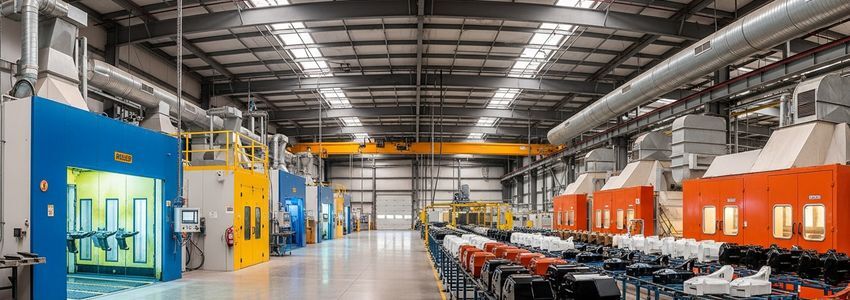
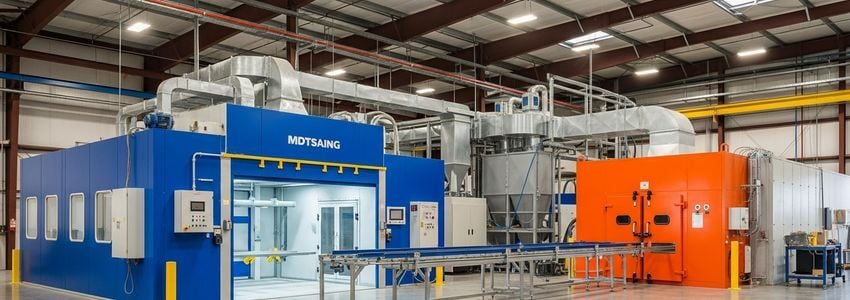
- Spray Booths: A professional-grade, enclosed spray booth is crucial for safety and quality control. Costs can range from $10,000 for a small batch booth to over $100,000 for a large, automated drive-through system.
- Curing Ovens: These are essential for properly curing the powder into a durable finish. A small batch oven might cost $15,000, while a large, conveyorized oven for high-volume production can easily exceed $250,000.
- Pretreatment Systems: Proper surface preparation is key to adhesion. This can involve sandblasting equipment, chemical wash stations, or multi-stage iron phosphate systems, with costs ranging from $5,000 to $75,000 or more.
- Powder Application Guns: Professional electrostatic spray guns are vital for an even coat. A single high-quality system can cost between $4,000 and $10,000.
- Conveyor Systems: For high-volume shops, automated conveyor systems streamline the entire process from pretreatment to curing. These complex systems can cost anywhere from $50,000 to $500,000, depending on size and complexity.
Financing allows you to acquire this vital equipment without depleting your working capital, spreading the cost over a manageable term while the machinery generates revenue.
Managing Working Capital and Cash Flow
Beyond equipment, daily operations require a steady flow of cash. Working capital loans and lines of credit are essential for managing these ongoing expenses.
- Inventory: You need to maintain a stock of various powder colors, finishes, and pretreatment chemicals. Bulk purchases can lead to discounts, but they tie up cash. Financing helps you stock up without straining your budget.
- Payroll: Skilled technicians are your most valuable asset. Consistent payroll is critical, even when waiting on client payments. A loan ensures you can meet payroll obligations on time, every time.
- Operating Expenses: Rent for your facility, utilities (especially for large ovens), insurance, and marketing costs all add up. Financing provides a safety net to cover these fixed costs.
Many shops face seasonal dips or delays in payments from large commercial clients. A line of credit can bridge these cash flow gaps, ensuring your operations run smoothly year-round.
Ready to Grow Your Powder Coating Business?
Get the capital you need for new equipment, working capital, or expansion. Fast, flexible financing solutions are just a few clicks away.
Apply Now →Funding Business Expansion
When demand outstrips your current capacity, it's time to grow. Expansion is an exciting phase, but it requires substantial investment. A business loan can fund numerous growth initiatives.
- Larger Facility: Moving to a bigger shop or building an addition allows you to install larger equipment and take on bigger projects, like long architectural extrusions or large industrial frames.
- Opening a Second Location: If you've saturated your local market, opening a new branch in a nearby city or industrial park can double your revenue potential.
- Adding New Services: You might expand into related services like ceramic coating, liquid painting, or advanced media blasting. Financing can cover the cost of the new equipment and training required.
Without access to capital, these growth opportunities can pass you by. A well-structured loan provides the fuel to scale your business strategically and capture more market share.
Refinancing Existing Debt
If you have existing business debt with high interest rates, such as from credit cards used for initial purchases, refinancing can be a smart financial move. Consolidating multiple high-interest debts into a single term loan with a lower rate can reduce your monthly payments, free up cash flow, and simplify your finances. This allows you to redirect more of your revenue toward growth instead of servicing expensive debt.
Types of Loans for Powder Coating Businesses
Navigating the world of small business financing can seem complex, but the options can be broken down into a few key categories. Each type of loan is suited for different business needs, timelines, and financial situations. Understanding these options is the first step toward choosing the right one for your powder coating shop.
1. Equipment Financing and Leasing
This is the most common and direct form of financing for powder coating businesses. An equipment loan is specifically designed for the purchase of new or used machinery. The equipment itself serves as collateral for the loan, which often makes it easier to qualify for than other types of financing.
- How it Works: You receive a lump sum to purchase a specific piece of equipment (e.g., a curing oven). You then make fixed monthly payments over a set term (typically 2-7 years). At the end of the term, you own the equipment outright.
- Best For: Purchasing high-cost assets like spray booths, ovens, conveyor systems, and pretreatment stations.
- Key Advantages: High approval rates, fast funding (often within days), and potential tax benefits through Section 179 depreciation. Our guide on Equipment Financing 101 covers this in greater detail.
2. SBA Loans
SBA loans are partially guaranteed by the U.S. Small Business Administration, which reduces the risk for lenders. This often results in longer repayment terms and lower interest rates, making them a highly attractive option for established businesses. However, the application process is more intensive and takes longer.
- SBA 7(a) Loan: This is the most versatile SBA loan. It can be used for a wide range of purposes, including equipment purchase, working capital, real estate acquisition, or refinancing debt. Loan amounts can go up to $5 million.
- SBA 504 Loan: This loan is specifically for major fixed assets, such as purchasing a building or buying heavy machinery. It involves two lenders: a bank or credit union for 50% of the cost, and a Certified Development Company (CDC) for up to 40%, with the business owner contributing the remaining 10%.
- Best For: Large-scale projects like buying a new facility, major equipment overhauls, or significant business expansion.
- Key Advantages: Excellent interest rates, long repayment terms (up to 25 years for real estate), and large loan amounts. For more information, explore our resources on SBA loans.
Key Stat: According to the Small Business Administration, manufacturing businesses (including fabricated metal product manufacturing) are one of the top recipients of SBA 7(a) and 504 loans, highlighting their importance in funding capital-intensive operations.
3. Working Capital Loans
A working capital loan is a short-term loan designed to cover day-to-day operational expenses. It provides a quick infusion of cash to manage payroll, purchase inventory, launch a marketing campaign, or bridge a temporary revenue gap. Unlike equipment financing, the funds are not tied to a specific asset purchase.
- How it Works: You receive a lump sum of cash and repay it with fixed payments (often daily or weekly) over a short term, typically 3-18 months.
- Best For: Covering immediate cash flow needs, stocking up on powder inventory for a big job, or paying for unexpected repairs.
- Key Advantages: Extremely fast funding (sometimes same-day), minimal paperwork, and accessible for businesses with less-than-perfect credit.
4. Business Line of Credit
A business line of credit offers more flexibility than a traditional loan. It provides access to a revolving pool of funds up to a certain limit. You can draw from it whenever you need capital and only pay interest on the amount you use. As you repay the funds, your available credit is replenished.
- How it Works: You are approved for a maximum credit limit (e.g., $100,000). You can draw $20,000 for a large powder order, and then later draw another $10,000 for an unexpected repair. You only pay interest on the $30,000 you've used.
- Best For: Ongoing cash flow management, handling unexpected expenses, and having a financial safety net.
- Key Advantages: Ultimate flexibility, pay only for what you use, and funds are readily available without needing to re-apply.
How Powder Coating Equipment Financing Works
For a business built around heavy machinery, understanding the nuances of equipment financing is crucial. This type of loan is often the lifeblood of a powder coating shop, enabling you to acquire the technology needed to compete and grow without a crippling upfront cash outlay. Let's break down the process and benefits.
The Step-by-Step Process
Securing an equipment loan is typically a much faster and more straightforward process than applying for a traditional bank loan. With a lender like Crestmont Capital, the process is streamlined for efficiency.
- Application: You start by filling out a simple, one-page application. This usually takes only a few minutes and requires basic information about your business and its owners.
- Documentation: Along with the application, you will typically need to provide a few recent business bank statements and a quote or invoice from the equipment vendor for the machinery you intend to purchase.
- Credit Review and Approval: The lender reviews your application, focusing on your business's cash flow and credit history. Because the equipment itself acts as collateral, the approval criteria are often more flexible. Approval can happen in as little as a few hours.
- Terms and Agreement: Once approved, you will receive a financing agreement outlining the loan amount, interest rate, term length, and monthly payment. You review and sign the documents electronically.
- Funding: The lender pays the equipment vendor directly. The vendor then ships the equipment to your shop, and you can put it to work immediately. Your repayment schedule begins shortly after.
Key Benefits of Equipment Financing
Choosing to finance equipment offers several strategic advantages over paying with cash or using other forms of credit.
- Preserves Working Capital: Instead of tying up tens or hundreds of thousands of dollars in a single purchase, you can keep your cash on hand for payroll, inventory, and other operational needs. This maintains healthy liquidity.
- 100% Financing: Many equipment loans cover the full cost of the asset, including taxes, shipping, and installation fees. This means you can often acquire new machinery with zero money down.
- Fixed, Predictable Payments: Equipment loans come with a fixed interest rate and a consistent monthly payment, making it easy to budget and forecast your expenses over the life of the loan.
- Builds Business Credit: Making timely payments on an equipment loan helps build a positive credit history for your business, making it easier to qualify for other types of financing in the future.
Tax Advantages: The Power of Section 179
One of the most significant benefits of equipment financing is the IRS Section 179 deduction. This tax incentive is designed to encourage small businesses to invest in themselves. Under Section 179, you can deduct the full purchase price of qualifying new or used equipment from your gross income in the year it's placed into service.
For example, if you finance a $150,000 conveyorized oven, you may be able to deduct the entire $150,000 from your taxable income for that year. This can result in substantial tax savings that can effectively lower the total cost of the equipment. It's a powerful tool for improving your return on investment. Always consult with a tax professional to understand the specific benefits for your business.
By the Numbers
Powder Coating Industry - Key Statistics
$18.4B
Projected global powder coatings market size by 2025, showing strong and sustained industry growth. (Source: Reuters)
25.5%
Share of the market held by the appliance and automotive industries, two key sectors for powder coating services.
~6,000
Number of establishments in the U.S. for Coating, Engraving, and Heat Treating Metals. (Source: U.S. Census Bureau)
5-7%
Typical annual growth rate (CAGR) for the powder coating market, outpacing many other manufacturing sectors.
How to Qualify for a Powder Coating Business Loan
Qualifying for a business loan can feel intimidating, but lenders primarily focus on a few key metrics to assess risk and determine your eligibility. While traditional banks often have very strict requirements, alternative lenders like Crestmont Capital offer more flexibility, focusing on the overall health of your business rather than a single data point. Here are the main factors lenders consider.
1. Credit Score
Your personal and business credit scores are a primary indicator of your financial responsibility. A higher score demonstrates a history of managing debt well.
- Traditional Banks & SBA Loans: Typically require a strong personal credit score, often 680 or higher.
- Alternative Lenders: Offer more flexible options. For many equipment and working capital loans, a minimum credit score in the low 600s (e.g., 600-620) may be sufficient, provided other factors are strong.
Even if your credit is not perfect, don't assume you won't qualify. Many financing products are designed specifically for business owners with fair credit.
2. Time in Business
Lenders want to see a track record of stability and operation. The longer you've been in business, the less risky you appear.
- Startups (0-1 year): Securing financing can be challenging but not impossible. Options are often limited to equipment financing (where the asset is collateral) or SBA microloans. A strong business plan and personal credit are essential.
- Established Businesses (2+ years): You will have access to the widest range of financing options, including SBA loans, larger lines of credit, and the most competitive rates. Most lenders prefer to see at least two years of operational history.
3. Annual and Monthly Revenue
Your business's cash flow is arguably the most important factor. Lenders need to see that you have sufficient and consistent revenue to comfortably handle a new loan payment. They will analyze your recent business bank statements to verify your income.
- Minimum Revenue: Many alternative lenders look for a minimum annual revenue, often starting around $100,000 to $250,000. This translates to roughly $10,000 - $20,000 in average monthly deposits.
- Consistency is Key: Lenders look for steady revenue streams. While some seasonal fluctuation is expected in the manufacturing world, they want to avoid seeing major, unexplained drops in income.
4. Business Financial Health
Beyond top-line revenue, lenders will assess the overall financial health of your business. This includes looking at your average daily bank balance, the number of non-sufficient funds (NSF) events, and your existing debt load. A business that maintains a healthy cash buffer and manages its bank account responsibly is seen as a much stronger candidate for a loan.
How to Improve Your Chances of Approval
If you're preparing to apply for a loan, there are several steps you can take to strengthen your application:
- Gather Your Documents: Have your recent bank statements, tax returns, and any equipment quotes ready. Being organized shows you are a serious and prepared applicant.
- Write a Business Plan: Especially for startups or large loan requests, a detailed business plan is crucial. It should outline how you will use the funds and project the expected return on investment. The SBA offers excellent resources for this.
- Know Your Numbers: Be prepared to discuss your revenue, profit margins, and key business metrics. Understanding your financials inspires confidence in lenders.
- Work with the Right Lender: Don't just apply to one bank. Working with a financing partner like Crestmont Capital gives you access to a network of lenders, increasing your chances of finding a program that fits your specific profile.
How Much Can You Borrow?
The amount of financing you can secure for your powder coating business depends on several factors, including the type of loan, your business's financial profile, and the specific use of the funds. There is a wide spectrum of loan amounts available, from a few thousand dollars for a small working capital boost to several million for a major facility acquisition.
Typical Loan Ranges by Financing Type
- Working Capital Loans: These are typically smaller, short-term loans. Amounts can range from $5,000 to $500,000, with the approved amount often based on a percentage of your monthly revenue (e.g., 1-2x your average monthly sales).
- Equipment Financing: The loan amount is directly tied to the cost of the equipment. You can typically finance 100% of the purchase price, whether it's a $15,000 batch oven or a $400,000 automated finishing line. Loan amounts can therefore range from $10,000 to over $1 million. For more on this, see our guide to industrial equipment financing.
- Business Lines of Credit: Credit limits typically range from $10,000 to $250,000 for most small businesses. The limit is based on your revenue, credit score, and time in business.
- SBA 7(a) Loans: These loans offer the highest potential amounts, with a maximum of $5 million. The amount you qualify for depends on a thorough underwriting process that assesses your business's ability to repay a large loan over a long term.
How Lenders Determine Your Maximum Loan Amount
Lenders use a concept called "debt service coverage ratio" (DSCR) to determine how much new debt your business can handle. In simple terms, they compare your net operating income to your total debt payments (including the proposed new loan). A healthy DSCR (typically 1.25 or higher) indicates you have more than enough cash flow to cover all your obligations.
For simpler products like working capital loans, the calculation is more direct: lenders will look at your average monthly deposits and approve you for an amount that ensures your repayment (often a daily or weekly debit) is a manageable percentage of your incoming cash flow. They want to ensure the loan helps your business, not hinders it.
How Crestmont Capital Helps Powder Coating Businesses
Choosing the right financing partner is just as important as choosing the right loan. While a traditional bank may not understand the specific capital needs of a powder coating shop, Crestmont Capital specializes in providing tailored financing solutions for businesses in the manufacturing and industrial sectors. We understand the equipment you use, the cash flow cycles you face, and the growth opportunities you want to capture.
Industry-Specific Expertise
We are not generalists. Our team has extensive experience working with businesses just like yours, from small custom shops to large-scale production facilities. We understand the difference between a batch oven and a conveyor oven, and we know what it takes to fund a multi-stage pretreatment system. This expertise allows us to structure financing that makes sense for your operational reality. We have helped businesses secure everything from CNC machine financing to complete metal fabrication business loans.
A Broad Network of Lenders
Crestmont Capital operates as a direct lender and also maintains a vast marketplace of lending partners. When you apply with us, you are not just applying to one institution. We match your application with the lender and program best suited to your needs and qualifications. This significantly increases your chances of approval and ensures you get the most competitive rates and terms available.
Key Advantage: Working with a financing specialist like Crestmont Capital gives you access to dozens of loan programs with a single application, saving you time and improving your odds of securing the perfect funding package.
Speed and Efficiency
We know that in business, opportunities are time-sensitive. You can't afford to wait weeks or months for a bank's decision when you have a chance to buy a used spray booth at a great price or need to hire technicians for a large contract. Our process is built for speed. With a streamlined online application and minimal paperwork, we can often provide approvals in hours and funding in as little as 24 hours for many loan types.
Flexible and Accessible Solutions
We believe that every viable business deserves access to capital. We work with a wide range of credit profiles and business histories. Whether you are a newer business, have less-than-perfect credit, or have been turned down by a traditional bank, we have financing solutions that can help. Our focus is on your business's potential and its recent performance, not just a historical credit score.
Partner with a Financing Expert
Let Crestmont Capital's industry knowledge work for you. We find the right financing so you can focus on what you do best: delivering flawless finishes.
Get Your Free Quote →Real-World Scenarios: Powder Coating Shop Financing in Action
Theory is helpful, but seeing how financing works in practice provides true clarity. Here are a few detailed scenarios illustrating how different powder coating business loans can be used to solve specific challenges and fuel growth.
Scenario 1: The Startup Shop
- The Business: "Precision Coatings," a new startup founded by an experienced technician with 15 years in the industry. He has a solid business plan and has secured a lease on a small industrial space.
- The Need: He needs to purchase a complete batch system: a small spray booth, a powder gun, and an 8x8x10 curing oven. The total equipment cost from a vendor is $45,000. He has some startup capital but wants to preserve it for working capital.
- The Solution: Equipment Financing.
- The Outcome: Precision Coatings applies for a $45,000 equipment loan. Because the founder has good personal credit (720) and a strong business plan, and because the equipment itself serves as collateral, he is approved quickly. The terms are a 5-year (60-month) loan with a monthly payment of approximately $950. Crestmont Capital funds the vendor directly, the equipment is delivered, and the shop is operational within two weeks. The startup capital remains intact for powder inventory, marketing, and initial operating costs.
Scenario 2: The Equipment Upgrade
- The Business: "Industrial Finishers," an established shop in business for 8 years. They have a steady stream of clients but are limited by their aging, inefficient batch oven. They are turning away larger, more lucrative jobs.
- The Need: To purchase a new, energy-efficient conveyorized curing oven to increase throughput and handle larger parts. The all-in cost, including installation, is $225,000.
- The Solution: SBA 7(a) Loan.
- The Outcome: The owner works with Crestmont Capital to prepare an SBA loan application. With 8 years of strong financial records and consistent profitability, the business is an ideal candidate. They are approved for a $250,000 loan (covering the oven and providing extra working capital) with a 10-year repayment term. The lower interest rate and long term result in a manageable monthly payment of around $2,800. The new oven triples their capacity, allowing them to land a major contract with an automotive parts manufacturer that was previously out of reach. According to a Forbes Advisor article, this type of strategic investment is exactly what SBA loans are designed for.
Scenario 3: The Cash Flow Crunch
- The Business: "Custom Coat Co.," a 4-year-old shop specializing in high-end custom work for motorcycles and race cars. Their revenue is strong but lumpy, with large payments arriving 60-90 days after a job is completed.
- The Need: They just landed their biggest job ever, a $100,000 contract to coat frames for a custom bike builder. They need to spend $15,000 upfront on a special-order powder and pay their two technicians for a month of work ($12,000) before they will receive any payment.
- The Solution: Business Line of Credit.
- The Outcome: The owner had previously established a $50,000 business line of credit for exactly this type of situation. They draw $27,000 to cover the immediate material and payroll costs. They pay interest only on the $27,000 they've used. Sixty days later, the client pays the $100,000 invoice. The owner immediately repays the $27,000 plus interest, and their full $50,000 credit line is available again for the next big project. The line of credit provided the essential bridge to take on a highly profitable job without derailing their finances.
Scenario 4: The Rapid Expansion
- The Business: "Apex Powder Coating," a successful 5-year-old business that is at maximum capacity in its current facility. A larger building has become available for lease two blocks away.
- The Need: Capital to cover the costs of the move, including the security deposit, first month's rent, moving the existing equipment, and purchasing an additional large spray booth to handle increased demand. Total estimated cost is $80,000.
- The Solution: Working Capital Loan.
- The Outcome: The owner needs the cash quickly to secure the new lease. They apply for an $80,000 working capital loan. Based on their consistent monthly revenue of over $60,000, they are approved within 24 hours. The funds are deposited directly into their business account. They secure the new facility, move their operations over a weekend to minimize downtime, and install the new spray booth. The loan is structured with a 12-month term, allowing them to repay it quickly as the new, larger facility begins to generate significantly higher revenue.
Frequently Asked Questions
What is the minimum credit score for a powder coating business loan?›
While requirements vary by lender and loan type, a minimum credit score of 600-620 is often a starting point for many alternative financing options. For traditional bank loans or SBA loans, a score of 680 or higher is typically preferred. Crestmont Capital works with a wide range of credit profiles to find suitable financing solutions.
Can I get a loan for a new powder coating startup?›
Yes, financing for startups is possible, though it can be more challenging than for established businesses. Options often include SBA microloans, equipment financing (where the equipment itself serves as collateral), or personal loans. Lenders will look for a strong business plan, industry experience, and good personal credit.
How quickly can I get funded for a powder coating equipment loan?›
The funding timeline depends on the lender and loan type. Alternative lenders like Crestmont Capital can often provide funding for equipment financing in as little as 24-72 hours after approval. In contrast, traditional bank loans or SBA loans can take several weeks or even months to process and fund.
What kind of equipment can I finance with a powder coating loan?›
You can finance virtually any piece of new or used equipment essential to your operations. This includes spray guns, powder coating booths, curing ovens, sandblasting and chemical pretreatment systems, conveyor lines, air compressors, and quality control instruments.
Can I finance used powder coating equipment?›
Absolutely. Many lenders, including Crestmont Capital, offer financing for both new and used equipment. Financing used equipment can be a cost-effective way to expand your capabilities without the high initial cost of brand-new machinery. The lender will assess the value and condition of the used equipment as part of the approval process.
What is the difference between an equipment loan and a lease?›
With an equipment loan, you borrow money to purchase the equipment and you own it outright once the loan is repaid. With a lease, you pay a monthly fee to use the equipment for a set term. At the end of the lease, you may have the option to buy it, return it, or renew the lease. Loans build equity, while leases often have lower monthly payments and can be treated as an operating expense.
Do I need to provide collateral for a powder coating business loan?›
It depends on the loan type. For equipment financing, the equipment itself serves as the collateral, so no additional assets are typically required. For unsecured working capital loans or lines of credit, no specific collateral is needed, though a personal guarantee is common. SBA loans may require collateral for larger loan amounts.
How much working capital should a powder coating business have?›
A general rule of thumb is to have enough working capital to cover 3 to 6 months of operating expenses. This includes payroll, rent, utilities, insurance, marketing, and the cost of materials like powder and chemicals. A working capital loan can provide this crucial cash buffer.
Can I use a powder coating business loan to hire more employees?›
Yes. A working capital loan or a business line of credit is an excellent tool for covering payroll expenses, hiring new technicians, or bringing on administrative staff. Investing in skilled labor is a critical growth driver, and financing can make it possible.
What documents are needed to apply for a powder coating business loan?›
For a streamlined application with an alternative lender, you typically need a simple one-page application, 3-6 months of recent business bank statements, and an invoice for any equipment you plan to purchase. For larger loans or SBA financing, you may also need tax returns, financial statements (profit and loss, balance sheet), and a detailed business plan.
Are there tax benefits to financing powder coating equipment?›
Yes, there can be significant tax advantages. Section 179 of the IRS tax code allows businesses to deduct the full purchase price of qualifying new or used equipment in the year it is put into service. This can substantially lower your taxable income. Always consult with a tax professional to understand how this applies to your specific situation.
What are typical interest rates for powder coating business loans?›
Interest rates vary widely based on the loan type, lender, your creditworthiness, time in business, and overall market conditions. SBA loans generally have the lowest rates, while short-term working capital loans may have higher rates reflecting their speed and convenience. Equipment financing rates are competitive because the loan is secured by the asset.
Can I get a loan if my powder coating business has inconsistent revenue?›
Yes. Many lenders understand that businesses, especially in manufacturing and custom finishing, can have fluctuating revenue. They will typically look at your average monthly revenue over a 6-12 month period rather than focusing on a single slow month. A business line of credit is an excellent tool for managing these cash flow gaps.
How does a business line of credit work for a powder coating shop?›
A business line of credit gives you access to a set amount of capital that you can draw from as needed. You only pay interest on the funds you use. It's ideal for managing unexpected expenses, bridging cash flow gaps between projects, or seizing opportunities like bulk discounts on powder supplies. Once you repay the drawn amount, your full credit line becomes available again.
What if I get denied for a loan from a traditional bank?›
A denial from a traditional bank is not the end of the road. Alternative lenders like Crestmont Capital have more flexible qualification criteria and specialize in working with small and medium-sized businesses that may not meet strict bank standards. We focus on your business's overall health and cash flow, offering a much higher approval rate for options like equipment financing and working capital loans.
Don't Let a Lack of Capital Hold You Back
Your next big project or equipment upgrade is within reach. Find out how much you qualify for today with our simple, no-obligation application.
Apply in Minutes →How to Get Started
Taking the next step toward funding your powder coating business is simple and fast with Crestmont Capital. Our process is designed to get you the capital you need with minimal hassle, so you can get back to running your shop. Follow these three easy steps to begin.
Complete our quick application at offers.crestmontcapital.com/apply-now - it takes just a few minutes.
A Crestmont Capital advisor will review your needs and match you with the right financing option from our extensive network of lenders.
Once you accept an offer, you can receive your funds and put them to work - often within days of approval.
Your powder coating business has immense potential for growth. With the right equipment, a stable cash flow, and the ability to expand, you can increase your market share and profitability. Strategic financing is the key that unlocks that potential. Let Crestmont Capital be your partner in building a stronger, more successful business.
Disclaimer: The information provided in this article is for general educational purposes only and is not financial, legal, or tax advice. Funding terms, qualifications, and product availability may vary and are subject to change without notice. Crestmont Capital does not guarantee approval, rates, or specific outcomes. For personalized information about your business funding options, contact our team directly.