Pool construction is one of the highest-ticket home improvement and commercial projects in the country. A residential inground pool project runs $40,000 to $100,000+; a commercial aquatic facility can cost $500,000 to several million. Pool builders and contractors operate in a business with consistently strong demand — particularly in Sun Belt markets — but face significant capital challenges: equipment is expensive and specialized, projects require substantial material deposits before work begins, and growth often requires taking on multiple large projects simultaneously. This guide covers every financing option available to pool construction business owners, what lenders look for, and how to get the right capital to expand your pool contracting business.
In This Article
- Why Pool Construction Businesses Need Financing
- Types of Pool Builder Business Loans
- Equipment Financing for Pool Contractors
- SBA Loans for Pool Construction Companies
- How to Qualify for a Pool Construction Business Loan
- Pool Builder Loan Rates, Terms, and Amounts
- Best Uses for Pool Construction Financing
- Pool Industry Statistics
- How to Apply and What to Prepare
- Why Pool Builders Choose Crestmont Capital
- Frequently Asked Questions
Why Pool Construction Businesses Need Financing
Pool construction companies face a distinctive cash flow challenge that stems from the project lifecycle: materials and labor must be paid throughout the build, but client payment is typically structured in milestones — a deposit at contract signing, progress payments at excavation and shell, and final payment at completion. When a pool company is managing multiple projects simultaneously, the gap between incurring costs and receiving payments can create significant working capital pressure.
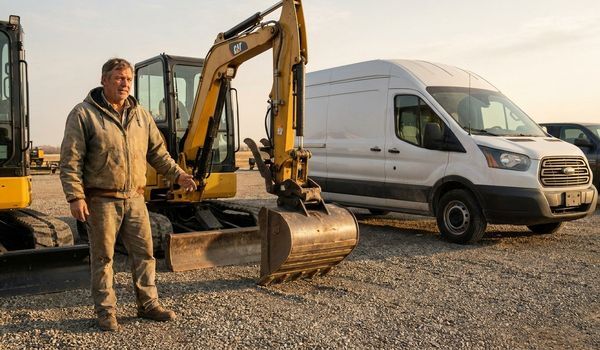
Compounding the cash flow challenge, pool construction is heavily equipment-dependent. Excavators, skid steers, concrete pumps, and specialty pool equipment represent millions of dollars in capital requirements for companies operating at scale. Managing, financing, and maintaining this equipment portfolio while funding active projects is the central capital challenge of the pool construction business.
Common financing needs for pool construction businesses:
- Working capital — funding labor and material costs between project milestone payments
- Equipment purchases — excavators, skid steers, concrete pumps, dump trucks, trailers
- Scaling crews and projects — adding installation teams to run multiple projects simultaneously
- Material deposits — purchasing pool shells, plumbing, equipment, and decking materials before project start
- Business acquisition — purchasing an established pool company with existing client base and equipment
- Commercial pool projects — larger commercial aquatic projects require more capital to fund the longer construction cycle
- Winter bridge financing — in seasonal markets, covering fixed costs (equipment payments, insurance, payroll for year-round staff) during the off-season
Lender Perspective: Pool construction businesses are viewed favorably by lenders in Sun Belt and warm-weather markets where demand is year-round. Established pool builders with consistent project backlogs and documented revenue history are strong financing candidates. For broader contractor financing context, see our Construction Business Loans: The Complete Financing Guide for Contractors and Builders.
Types of Pool Builder Business Loans
Small Business Term Loans
Term loans provide a lump sum repaid over a fixed period with scheduled payments. For pool builders, term loans work well for significant capital investments — equipment packages, fleet vehicles, or acquiring a competitor. Terms range from 12 to 84 months with rates from 6% to 45%+ depending on lender type and borrower profile.
Equipment Financing
Equipment financing is the most commonly used financing tool for pool construction companies. Excavators, skid steers, concrete pumps, and specialty pool equipment are all eligible as collateral. Equipment-secured financing typically offers lower rates (5%–22%) and easier approval than unsecured alternatives. See our Construction Equipment Financing: The Complete Guide for Contractors and Construction Companies for detailed structures.
Business Lines of Credit
A revolving business line of credit addresses the recurring cash flow gap between project milestone payments. Draw to cover payroll and materials when a milestone payment hasn't arrived yet, repay when the payment clears, draw again for the next project need. A $50,000 to $200,000 line of credit functions as a permanent working capital buffer for pool builders managing multiple active projects.
SBA 7(a) Loans
SBA loans offer the lowest rates for qualified small businesses. Pool construction companies qualify as specialty contractors under SBA guidelines. SBA loans work best for $100,000+ investments in equipment packages, fleet expansion, or business acquisitions. Approval takes 60 to 90 days with thorough documentation.
Invoice Financing
For pool builders with significant commercial project receivables — hotel pools, municipal aquatic facilities, HOA pools — invoice financing advances 80% to 90% of outstanding invoices immediately. Costs are 1% to 5% per month. Particularly valuable for companies doing large commercial projects with net-30 to net-60 payment terms.
Seasonal / Bridge Financing
Pool builders in markets with cold winters — the Northeast, Midwest, Mountain West — face revenue gaps during the off-season while fixed costs continue. Short-term bridge loans or lines of credit drawn during the slow season and repaid from the spring/summer revenue surge are a common financing strategy for seasonal pool companies.
Ready to Grow Your Pool Construction Business?
Get fast, flexible financing from the #1 business lender in the U.S. No obligation — apply in minutes.
Apply Now →Equipment Financing for Pool Contractors
Pool construction equipment is among the most capital-intensive in the specialty contracting sector. Key equipment categories and typical costs:
- Compact excavators (mini excavators): $30,000–$80,000 new; $15,000–$45,000 used — the primary excavation tool for residential pool construction
- Full-size excavators: $80,000–$250,000+ new for larger commercial applications
- Skid steer loaders: $25,000–$60,000 new — for material handling and backfilling
- Concrete pumps: $50,000–$200,000+ for gunite/shotcrete application equipment
- Dump trucks: $30,000–$80,000 for excavation spoil removal
- Trailers: $5,000–$20,000 for equipment transport
- Pool-specific tools: Trowels, plastering equipment, tile and coping tools, plumbing and electrical installation equipment
- Service vehicles (pickup trucks and cargo vans): $35,000–$55,000 new for crew transport
A pool construction company operating at 20 to 30 projects per year typically has $300,000 to $800,000+ in equipment value. Equipment financing spreads these costs over 3 to 7 years while the equipment generates revenue on active projects.
Equipment lenders for pool construction typically require:
- Equipment invoice or appraisal
- 6+ months in business
- Credit score 580+
- Basic revenue documentation
SBA Loans for Pool Construction Companies
Pool construction businesses qualify for SBA 7(a) and SBA 504 loans as specialty trade contractors. SBA 504 is particularly relevant for pool companies seeking to purchase owned equipment at scale or acquire commercial real estate for their business operations.
| SBA Program | Max Amount | Best Use | Min. Credit | Time to Fund |
|---|---|---|---|---|
| SBA 7(a) | $5 million | Equipment, working capital, fleet, acquisition | 650+ | 60–90 days |
| SBA 504 | $5.5M (CDC portion) | Major equipment, commercial real estate | 680+ | 60–120 days |
| SBA Express | $500,000 | Working capital, equipment, LOC | 650+ | 30–45 days |
How to Qualify for a Pool Construction Business Loan
Credit Score Requirements
- Bank term loans: 700+
- SBA 7(a) loans: 650–680+
- Online alternative term loans: 600–650+
- Equipment and vehicle financing: 580–620+
- Business lines of credit: 600–650+
- Invoice financing: Based primarily on client creditworthiness
- MCAs: 500+
Time in Business
- Banks and SBA: 2 years preferred
- Online alternative lenders: 6 months to 1 year
- Equipment financing: 6 months minimum
Annual Revenue
- SBA and bank loans: $150,000+ annually
- Online term loans: $100,000+ annually
- Equipment financing: Varies by equipment value
Contractor-Specific Considerations
- Contractor licensing: Pool construction typically requires a state specialty contractor license (e.g., C-53 in California, pool/spa contractor license in Florida and Texas). All licenses must be current.
- Insurance: Commercial general liability ($1M–$2M+), workers' compensation, and commercial auto are typically required. Pool contractors may also need builder's risk insurance on active projects.
- Project backlog documentation: Signed contracts and deposit checks for projects in queue demonstrate revenue pipeline beyond current bank statements.
- Seasonality context: Provide 12 months of bank statements so lenders see the full annual revenue cycle, especially for contractors in seasonal markets.
Pool Builder Loan Rates, Terms, and Amounts
| Loan Type | Typical Rate | Term | Amount Range | Speed |
|---|---|---|---|---|
| SBA 7(a) Loan | 10%–13% | Up to 10 years | $50K–$5M | 60–90 days |
| Bank Term Loan | 8%–15% | 1–7 years | $25K–$500K | 2–8 weeks |
| Online Term Loan | 15%–45% | 3 months–5 years | $5K–$500K | 1–5 days |
| Equipment / Vehicle Financing | 5%–22% | 3–7 years | $10K–$1M+ | 1–7 days |
| Business Line of Credit | 8%–45% | Revolving (1–3 yr facility) | $10K–$500K | 1–7 days |
| Invoice Financing | 1%–5% per month | Per invoice (net-30/60) | 80–90% of invoice value | 1–3 days |
Best Uses for Pool Construction Financing
Excavation Equipment
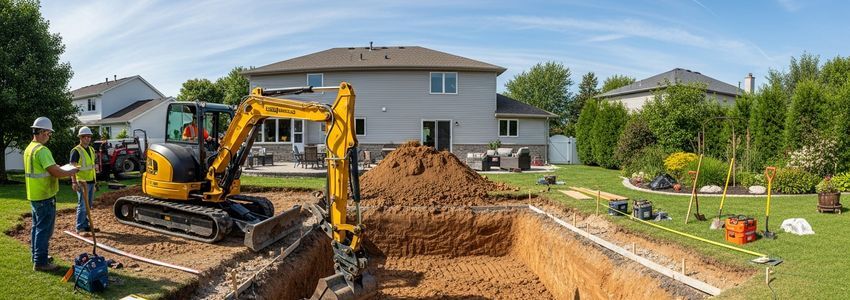
Compact excavators and skid steers are the backbone of residential pool construction. Owning vs. renting is a critical financial decision — a compact excavator rented at $800–$1,500/day on 100+ pool projects per year costs $80,000–$150,000 in annual rental costs, more than the purchase price of a quality used machine. Equipment financing spreads the purchase over 3 to 5 years while eliminating rental costs that far exceed monthly loan payments for active contractors.
Concrete and Gunite Equipment
Gunite/shotcrete equipment is essential for fiberglass pool installation and concrete pool shell construction. A concrete pump or shotcrete machine costs $50,000–$200,000+. Owning this equipment eliminates significant subcontract costs on each project. Equipment financing makes the purchase feasible with manageable monthly payments.
Working Capital for Multiple Projects
Pool builders running 5 to 15 active projects simultaneously need substantial working capital. If each project requires $15,000–$25,000 in materials before the next milestone payment, a portfolio of 10 active projects requires $150,000–$250,000 in available working capital. A business line of credit specifically sized for active project capacity eliminates the growth ceiling that working capital constraints create.
Acquiring a Pool Company
Purchasing an established pool construction company — with its existing brand, client pipeline, employee crew, and equipment — is often more efficient than organic growth in a competitive local market. SBA 7(a) acquisition loans can cover purchase price plus working capital. Lenders evaluate the target company's annual project volume, average contract value, client retention, and equipment condition.
Expanding into Pool Service and Remodeling
Pool construction companies that expand into recurring pool service (cleaning, maintenance, chemical management) and pool remodeling create annuity-style revenue streams that complement the project-based construction business. Capital to add service vehicles, equipment, and initial service client acquisition creates a diversified revenue model lenders view favorably.
Pool Industry Statistics
- The U.S. swimming pool construction industry generates approximately $7–8 billion in annual revenue (IBISWorld)
- Pool installation demand surged during the pandemic — new residential pool permits increased by over 25% from 2019 to 2021 — and has remained elevated as homeowners prioritize outdoor living spaces
- Florida, Texas, California, and Arizona account for approximately 60% of all U.S. residential pool installations, with strong year-round demand due to climate
- Average residential inground pool installation cost: $40,000–$90,000 for vinyl liner and fiberglass pools; $60,000–$120,000+ for concrete/gunite pools
- Pool industry backlog growth: the pool industry experienced a significant order backlog from 2020–2022, with many contractors booked 12–24 months out — demonstrating persistent demand that lenders view positively
- Commercial aquatic construction (hotels, community pools, water parks) represents approximately 25% of industry revenue and tends to produce larger individual project values
- Approximately 5.7 million residential pools are installed in the U.S., with an ongoing remodeling and renovation market estimated at $2–3 billion annually
How to Apply and What to Prepare
For Online Alternative Lenders
- 3 to 6 months of business bank statements (12 months preferred)
- Most recent business tax return
- Government-issued ID
- Basic business information (EIN, entity type, address)
For Equipment Financing
- Equipment invoice or appraisal
- 3 to 6 months of bank statements
- Contractor license
- Insurance certificates
For SBA and Bank Loans
- 2 to 3 years of business and personal tax returns
- Year-to-date profit and loss statement
- Current balance sheet
- 12 months of business bank statements
- All applicable contractor licenses
- Insurance certificates (GL, workers' comp, commercial auto)
- Project backlog documentation (signed contracts)
- Personal financial statement
Application Tips
- Show your backlog: Signed customer contracts awaiting construction are powerful evidence of near-term revenue that may not yet appear in bank statements.
- 12 months of statements: Seasonal contractors should always provide a full year so lenders see annual revenue capacity, not just a slow month.
- Document equipment owned: A schedule of equipment with estimated values demonstrates collateral and operational capacity.
- Maintain contractor license currency: A lapsed pool contractor license will delay or prevent approval in most states.
Why Pool Builders Choose Crestmont Capital
Crestmont Capital is the #1 rated business lender in the United States. We work with pool construction companies across the country — from residential builders in Florida and Texas to commercial aquatic contractors in the Northeast. We understand the equipment-intensive nature of pool construction, the project-based cash flow cycle, and the seasonal dynamics of the industry. We offer:
- Fast approvals: Equipment financing decisions in 24–48 hours for qualified applicants
- High loan amounts: Up to $5M+ for established contractors
- Full product suite: Equipment loans, working capital lines, term loans, SBA programs
- Contractor expertise: We understand project-based revenue and structure financing accordingly
- Transparent terms: No hidden fees, complete cost disclosure before you sign
Get Your Pool Construction Business Loan Today
Apply in minutes. No obligation. Funding as fast as 24 hours.
Apply Now →Frequently Asked Questions
Frequently Asked Questions: Pool Construction Business Loans
Disclaimer: This article is provided for general educational purposes only and does not constitute financial, legal, or tax advice. Loan rates, terms, and requirements vary by lender and are subject to change. Statistics cited reflect publicly available industry data as of the publication date and may not reflect current conditions. Consult a qualified financial advisor before making business financing decisions.