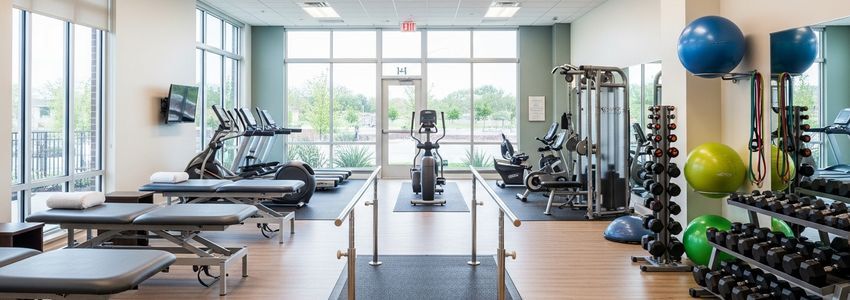
Running a successful physical therapy practice means balancing exceptional patient care with smart business management. As your practice grows, you will inevitably face the need for capital to purchase new equipment, expand your space, or manage cash flow between insurance reimbursements. Physical therapy practice loans are designed to meet these specific challenges, and at Crestmont Capital, we specialize in providing the fast, flexible financing that healthcare professionals need to thrive and grow.
The Physical Therapy Industry: Growth, Opportunity, and Capital Needs
The physical therapy industry is a robust and rapidly expanding sector of the American healthcare system. With a market size exceeding $40 billion and projected to grow consistently, the demand for physical therapy services has never been higher. This growth is fueled by several powerful demographic and societal trends. The aging Baby Boomer generation requires more rehabilitative care to maintain mobility and recover from age-related conditions and surgeries like joint replacements. Furthermore, a more active population across all age groups leads to a higher incidence of sports-related injuries, while a greater awareness of chronic condition management, such as for arthritis and diabetes, positions physical therapists as essential care providers.
The U.S. Bureau of Labor Statistics (BLS) validates this optimistic outlook, projecting that employment for physical therapists will grow by an impressive 15 percent from 2022 to 2032, a rate much faster than the average for all occupations. According to the BLS Occupational Outlook Handbook, this will result in about 13,900 new job openings for physical therapists each year over the decade. This sustained demand creates a significant opportunity for both established practice owners and aspiring entrepreneurs looking to enter the field. However, capitalizing on this growth requires strategic financial planning and access to adequate capital.
Running a physical therapy practice is a capital-intensive endeavor. The financial needs extend far beyond simply having a space and a treatment table. These practices require specialized, often expensive, equipment to provide state-of-the-art care. Modalities like therapeutic ultrasound machines, laser therapy systems, electrical stimulation units, and advanced exercise equipment like anti-gravity treadmills can cost tens of thousands of dollars. Without this technology, a practice risks falling behind competitors and may be unable to offer the most effective treatment plans for patients.
Beyond equipment, human capital is the most valuable asset. Hiring and retaining licensed physical therapists, physical therapist assistants, and administrative staff is a major operational expense. To attract top talent in a competitive market, practices must offer competitive salaries and benefits, which requires consistent cash flow. Expansion presents another significant need for financing. Whether you are opening a second location, moving to a larger clinic to accommodate more patients, or renovating your current space, these projects involve substantial upfront costs for leases, construction, and marketing.
Perhaps the most unique and persistent financial challenge for physical therapy practices is managing the cash flow gaps created by insurance billing cycles. Practices typically provide services and then wait weeks, or even months, to receive reimbursement from insurance companies and government payors like Medicare. During this waiting period, the practice must still cover payroll, rent, utilities, and supply costs. This lag can create a serious cash crunch, and a reliable source of working capital is essential to bridge these gaps and maintain smooth operations. Physical therapy practice loans are the critical tool that allows owners to overcome these financial hurdles, invest in growth, and focus on what they do best: helping patients recover and improve their quality of life.
Types of Financing Available for Physical Therapy Practices
Physical therapy practice owners have a variety of financing options available, each designed to meet a specific business need. Understanding the differences between these loan types is the first step in choosing the right funding solution to achieve your goals. From acquiring the latest technology to managing daily operational costs, the right financing can be a powerful catalyst for growth.
Equipment Financing
State-of-the-art equipment is the backbone of any modern physical therapy practice. It not only enhances patient outcomes but also serves as a key differentiator in a competitive market. However, the cost of this technology can be prohibitive. Equipment financing is a specialized loan product designed to solve this exact problem. Instead of paying a large lump sum upfront, this loan allows you to acquire necessary assets with predictable monthly payments. The equipment itself typically serves as the collateral for the loan, which often makes these loans easier to qualify for than other types of financing.
Common equipment financed by PT practices includes:
- Therapeutic Modalities: Ultrasound therapy units, electrical stimulation (E-stim) devices, laser therapy systems, and diathermy machines.
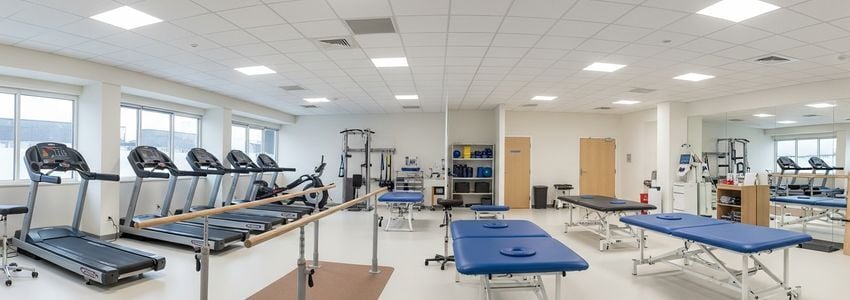
- Exercise Equipment: Medical treadmills, stationary bikes, elliptical machines, weight machines, parallel bars, and balance training systems.
- Diagnostic Tools: Electromyography (EMG) devices and force plates.
- Practice Management Software: Electronic Health Record (EHR) and Electronic Medical Record (EMR) systems, billing software, and patient scheduling platforms.
A major benefit of equipment financing is that it helps preserve your working capital for other critical needs like payroll and marketing. Additionally, many business owners can take advantage of the Section 179 tax deduction, which allows them to deduct the full purchase price of qualifying equipment in the year it is placed into service, providing a significant tax benefit.
SBA Loans for PT Practices
Loans backed by the U.S. Small Business Administration (SBA) are among the most sought-after financing options due to their favorable terms. While the SBA does not lend money directly, it guarantees a portion of the loan, reducing the risk for lenders like Crestmont Capital. This allows lenders to offer higher loan amounts, longer repayment terms, and lower interest rates than many conventional loans. The two most common SBA loans for PT practices are the 7(a) and 504 programs.
- SBA 7(a) Loan: This is the most popular and versatile SBA loan. It can be used for a wide range of purposes, including working capital, equipment purchase, debt refinancing, and even practice acquisition. Loan amounts can go up to $5 million, with repayment terms of up to 10 years for working capital and equipment, and up to 25 years for real estate.
- SBA 504 Loan: This loan is specifically for purchasing major fixed assets, such as commercial real estate (buying or building your clinic) or long-term heavy equipment. The loan is structured with a portion from a conventional lender, a portion from a Certified Development Company (CDC), and a smaller down payment from the borrower.
While SBA loans have a more intensive application process and longer approval times compared to other options, their excellent terms make them an ideal choice for large-scale projects like buying a building or acquiring another practice.
Business Lines of Credit
The cash flow of a physical therapy practice can be unpredictable, largely due to the delays in insurance reimbursements. A business line of credit provides the ultimate financial safety net to manage these fluctuations. Unlike a term loan where you receive a lump sum, a line of credit gives you access to a set amount of capital that you can draw from as needed. You only pay interest on the funds you use, and as you repay the balance, your available credit is replenished.
This flexibility makes it perfect for:
- Covering payroll during a slow reimbursement month.
- Paying for unexpected repairs when a critical piece of equipment breaks down.
- Seizing a time-sensitive opportunity, such as buying supplies in bulk at a discount.
- Managing seasonal dips in patient volume.
A line of credit ensures you always have access to capital to keep your practice running smoothly without needing to apply for a new loan for every short-term need.
Working Capital Loans
While a line of credit is for ongoing, flexible needs, a working capital loan provides a lump sum of cash to cover immediate operational expenses. These are typically short-term loans with fast approval and funding times, designed to inject capital directly into your business to fuel day-to-day activities and growth initiatives. For a PT practice, this funding is invaluable for non-asset related expenses.
Common uses include:
- Hiring: Covering the salary and training costs for a new physical therapist or front-office staff member before they begin generating revenue.
- Marketing: Launching a new digital marketing campaign, redesigning your website, or running local ads to attract more patients.
- Supplies: Purchasing consumable supplies like therapy bands, kinesiology tape, lotions, and office supplies.
- Overhead: Ensuring you can cover rent, utilities, and insurance premiums without interruption.
Working capital loans are a straightforward way to boost your cash flow and invest in activities that directly contribute to your practice's growth.
Practice Acquisition Loans
Growth often comes through acquisition. You may have the opportunity to buy out a retiring practitioner, purchase a competing clinic, or become a partner in an existing practice. A practice acquisition loan provides the significant capital required for such a transaction. These loans are structured to cover the purchase price of the practice, which can include its patient list, equipment, real estate, and goodwill. Lenders will carefully evaluate the financial health and valuation of the practice being acquired, as well as the buyer's experience and creditworthiness. This type of financing can also be used to expand your current operation by opening a new location from scratch, covering the costs of the lease, build-out, initial staffing, and marketing.
Fast Business Loans
Sometimes, opportunities and emergencies do not wait for a lengthy loan application process. A critical piece of equipment might fail during peak hours, or a key insurance payment might be delayed longer than expected, putting you in a tight spot. Fast business loans, often available through alternative lenders like Crestmont Capital, are designed for speed. The application process is streamlined, often taking just minutes online, with approvals in as little as 24 hours and funding shortly after. While these loans may have higher interest rates than an SBA loan, the value of their speed can be immense, allowing you to solve an urgent problem or seize an opportunity without missing a beat. They are an excellent tool for bridging short-term financial gaps and ensuring your practice's continuity of care is never compromised.
Ready to Grow Your PT Practice?
Crestmont Capital specializes in healthcare practice financing. Get approved in as little as 24 hours.
Apply Now - Free, No CommitmentHow to Qualify for a Physical Therapy Practice Loan
Securing financing for your physical therapy practice involves meeting a set of criteria that lenders use to assess risk and determine your ability to repay the loan. While specific requirements can vary between lenders and loan products, understanding the core qualifications will help you prepare a strong application and increase your chances of approval. Lenders are primarily interested in your financial health, business history, and the viability of your practice.
Here are the key factors lenders evaluate:
- Credit Score: Both your personal and business credit scores are critical. For most conventional and alternative loans, a personal credit score of at least 600 to 650 is often the minimum threshold. A score above 700 will open up more options with better interest rates and terms. Lenders view a strong credit history as an indicator of financial responsibility. They will look for a clean record, free of recent bankruptcies, foreclosures, or significant delinquencies.
- Time in Business: Most lenders prefer to work with established practices. A minimum of one to two years in business is a common requirement. This history provides lenders with financial data to analyze your practice's stability and performance. Startups are considered higher risk, but financing is not impossible. New PT practices will need a comprehensive business plan, strong personal credit, industry experience, and potentially some form of collateral or a down payment to secure a startup loan.
- Annual Revenue: Lenders need to see that your practice generates sufficient and consistent revenue to support loan payments. The minimum annual revenue requirement varies widely, from $100,000 for some online lenders to over $250,000 for others. You will need to demonstrate this revenue through bank statements and tax returns. Lenders will also analyze your cash flow to ensure you have enough profit after expenses to comfortably handle the new debt.
- Financial Documentation: A well-organized set of documents is essential for a smooth application process. Be prepared to provide:
- Business Bank Statements: Typically the most recent 3 to 6 months to show your monthly cash flow.
- Tax Returns: Usually the last 2 to 3 years of both business and personal tax returns.
- Financial Statements: A current Profit and Loss (P&L) statement and a Balance Sheet.
- Business Licenses: A copy of your state-issued physical therapy license and any other relevant business permits.
- Insurance Contracts: A list of your major insurance payors and contracts can be helpful to demonstrate your revenue streams.
- Business Plan: Required for startups and large expansion loans, this document should detail how you will use the funds and project future revenue.
Tips to Strengthen Your Application:
If you are concerned about meeting these qualifications, there are proactive steps you can take. First, review your personal and business credit reports for any errors and work on paying down existing debts to improve your credit score and debt-to-income ratio. Second, ensure your financial records are accurate, up-to-date, and professionally organized. A clear and detailed business plan that outlines a specific use for the funds and a clear path to generating a return on the investment can significantly bolster your case. For larger loans, especially those related to real estate, the SBA offers guidance on what lenders look for in healthcare practice applications. Finally, demonstrating strong, consistent monthly deposits into your business bank account is one of the most powerful ways to show a lender that your practice is healthy and capable of taking on new financing.
How PT Practices Use Business Financing
Business financing is not just about covering expenses; it is a strategic tool for growth, efficiency, and enhanced patient care. Successful physical therapy practice owners leverage capital to make targeted investments that yield significant returns. Understanding the practical applications of a business loan can help you identify opportunities within your own practice and create a clear plan for using the funds effectively.
Here are some of the most common and impactful ways PT practices use business financing:
- Acquiring Advanced Therapeutic Equipment: A loan can enable the purchase of a new therapeutic laser system or an anti-gravity treadmill. This not only allows you to offer cutting-edge treatments that attract new patient demographics but also improves outcomes for existing patients, building your practice's reputation for excellence. The new equipment can generate its own revenue stream, often paying for itself over the life of the loan.
- Expanding to a Second Location: When your current clinic is at capacity, a loan can fund the expansion to a new location. This capital can cover the down payment on a lease, the costs of renovations and build-out, the purchase of new equipment for the satellite office, and the initial marketing budget to launch the new site successfully.
- Hiring Additional Therapists and Staff: To see more patients, you need more qualified hands. A working capital loan can cover the salary and benefits of a new physical therapist or support staff for the first several months. This gives them time to build a full caseload and begin generating positive cash flow for the practice, without straining your current operational budget.
- Remodeling and Upgrading Clinic Space: The patient experience begins the moment someone walks through your door. Financing can be used to remodel your waiting room, create more private treatment areas, or upgrade your facility to be more accessible and modern. A fresh, professional environment can improve patient satisfaction and retention.
- Investing in Marketing and Patient Acquisition: You can be the best therapist in town, but your practice will not grow if people do not know about you. A loan can fuel a strategic marketing plan, including developing a professional website with online appointment booking, running targeted social media and Google ad campaigns, or hiring a consultant to improve your physician referral network.
- Bridging Insurance Reimbursement Gaps: This is a critical, ongoing need. A business line of credit or a short-term working capital loan provides the cash reserves to make payroll, pay rent, and order supplies while you wait for insurance payments to be processed. This financial stability prevents operational disruptions and reduces owner stress.
- Upgrading Technology and Software: Implementing a modern Electronic Health Record (EHR) system can dramatically improve your practice's efficiency, streamline billing, and ensure regulatory compliance. The upfront cost for software, hardware, and training can be substantial, making a loan or equipment financing an ideal solution to cover these expenses.
How Crestmont Capital Helps Physical Therapy Practice Owners
When seeking financing, physical therapy practice owners have a choice between traditional banks and alternative lenders like Crestmont Capital. While banks have their place, their slow processes and rigid requirements are often not a good fit for the dynamic needs of a growing healthcare practice. Crestmont Capital understands the unique financial landscape of the physical therapy industry and has built a lending platform designed to provide the speed, flexibility, and support that practice owners require.
One of the most significant advantages of working with Crestmont Capital is speed. A traditional bank loan application can take weeks or even months to move from submission to funding. In that time, the opportunity to buy discounted equipment or lease a prime new location could be lost. At Crestmont Capital, our online application is simple and can be completed in minutes. We often provide approvals in as little as 24 hours, with funding following shortly after. This agility ensures you can act decisively when opportunities arise.
We also offer far more flexible terms and a wider range of loan products than most banks. Our team has deep experience in healthcare financing and recognizes that a physical therapy practice's financial profile is different from a retail store or restaurant. We look beyond just the credit score to understand the overall health of your practice, including your patient volume and insurance payor mix. This holistic approach allows us to find funding solutions for a broader range of businesses. For practice owners with less-than-perfect credit, we have specialized programs and can offer bad credit business loans that traditional lenders would immediately decline.
Our expertise is not limited to one type of healthcare. Just as we have created comprehensive guides for Dental Practice Loans, we understand the specific equipment needs, cash flow cycles, and growth patterns of physical therapists. This industry-specific knowledge means we can offer more relevant advice and structure a loan that truly fits your business. We serve clients across the country, providing tailored solutions whether you need Small Business Loans in Lakeland, FL, or financing for a practice in a major metropolitan area. Our process is transparent, starting with a no-obligation application that does not require a hard credit pull, so you can explore your options without any negative impact on your credit score. With a dedicated funding specialist to guide you, Crestmont Capital acts as a true financial partner committed to your practice's success.
See How Much Your PT Practice Can Qualify For
No hard credit pull. No commitment. Get a funding estimate in minutes from a lender that understands healthcare.
Check Your OptionsPhysical Therapy Practice Funding: At a Glance
Frequently Asked Questions About Physical Therapy Practice Loans
Here are answers to the most common questions from physical therapy practice owners seeking financing.
What types of loans are available for physical therapy practices?
How much can a physical therapy practice borrow?
What credit score do I need for a PT practice loan?
Can I get financing for PT equipment with bad credit?
How long does it take to get approved for a physical therapy practice loan?
What documents do I need to apply for a PT practice loan?
Can a new physical therapy practice get a startup loan?
Are SBA loans available for physical therapy practices?
How can I use a business loan to expand my PT practice?
What is the difference between equipment financing and a working capital loan for PT?
How do PT practices handle insurance reimbursement cash flow gaps with financing?
Can I buy an existing physical therapy practice with a loan?
Does Crestmont Capital lend to physical therapy practices?
What interest rates can PT practices expect on business loans?
How do I apply for a physical therapy practice loan?
Next Steps: Securing Financing for Your PT Practice
Ready to take your physical therapy practice to the next level? Follow these steps:
Clearly define why you need funding and exactly how much you require. Whether it is for a $50,000 ultrasound machine or a $500,000 clinic expansion, having a precise number and a detailed plan will strengthen your application.
Organize your key documents in advance to expedite the process. This includes your last 3-6 months of business bank statements, recent tax returns, and current financial statements like your P&L.
Check both your personal and business credit scores. Knowing where you stand allows you to address any issues and helps set realistic expectations for the types of loans and terms you may qualify for.
Complete our quick, no-obligation online application. It does not require a hard credit pull, so you can safely explore your options and see how much your practice is eligible to receive.
Once approved, you will review the final terms, sign the agreement, and receive the funds directly in your business bank account. You can then put the capital to work immediately to improve and grow your practice.
Get Your PT Practice Funded Today
Crestmont Capital works with physical therapy practices across the U.S. Fast approvals, flexible terms, and a dedicated funding specialist to guide you through the process.
Start Your ApplicationConclusion
The physical therapy industry is positioned for remarkable growth, driven by an aging population and a greater focus on health and wellness. For practice owners, this represents a tremendous opportunity to expand services, enhance patient care, and build a more profitable business. However, capitalizing on this potential requires access to timely and appropriate financing. From purchasing state-of-the-art equipment and managing cash flow to expanding into new locations, strategic use of capital is the lifeblood of a thriving practice.
Navigating the world of business financing can seem complex, but understanding your options is the first step toward making empowered decisions. Whether you need the flexibility of a business line of credit to smooth out insurance reimbursement cycles, the long-term benefits of an SBA loan to purchase your own building, or the speed of a working capital loan to hire a new therapist, there is a solution tailored to your specific goal. The key is to partner with a lender that understands the nuances of the healthcare industry.
Traditional banks often fall short, with slow processes and inflexible criteria that do not align with the fast-paced needs of a modern medical practice. This is where Crestmont Capital excels. We combine deep industry expertise with a streamlined, technology-driven process to provide physical therapy owners with the capital they need, when they need it. Our focus on speed, flexibility, and personalized service makes us a trusted partner for healthcare entrepreneurs nationwide who are serious about growth, a trend highlighted by reports from outlets like Forbes on healthcare business opportunities.
Do not let a lack of capital hold your practice back. By taking the next step and exploring your financing options, you can invest in the technology, talent, and infrastructure necessary to provide superior care and achieve your business objectives. Contact Crestmont Capital today to discover how our tailored financing solutions can help you build a stronger, more successful physical therapy practice.
Disclaimer: The information provided in this article is for general educational purposes only and is not financial, legal, or tax advice. Funding terms, qualifications, and product availability may vary and are subject to change without notice. Crestmont Capital does not guarantee approval, rates, or specific outcomes. For personalized information about your business funding options, contact our team directly.