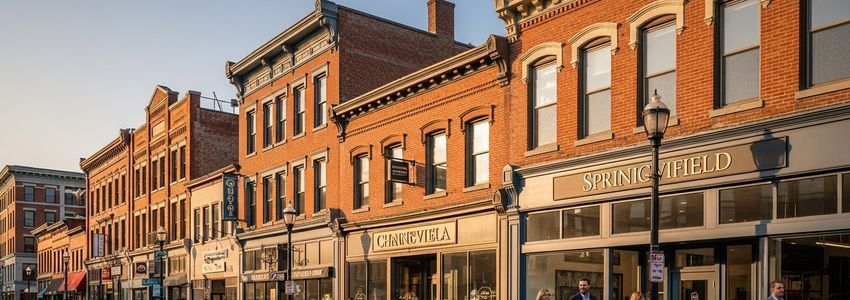
Springfield, Massachusetts, often called the "City of Firsts," boasts a rich history of innovation and a resilient economic spirit. As the economic hub of Western Massachusetts, Springfield presents a unique environment for entrepreneurs. From its strong roots in manufacturing and precision industries to its modern growth in healthcare, education, and hospitality, the city offers a diverse landscape for small businesses to thrive. The presence of major institutions like Baystate Health, MassMutual, and several universities provides a stable economic base and a skilled workforce.
For small business owners, this environment is ripe with opportunity. The city's strategic location at the crossroads of New England, with easy access to Boston and New York City, further enhances its appeal. However, capitalizing on these opportunities requires a critical resource: access to capital. Whether it's launching a new startup in the Innovation District, expanding a family-owned restaurant in the South End, or upgrading equipment for a manufacturing firm, securing the right business funding is often the pivotal step toward growth and long-term success.
This guide is designed specifically for Springfield entrepreneurs navigating the world of business financing in 2026. We will explore the various types of small business loans available, from traditional bank loans and SBA-backed financing to more flexible alternative lending options. We will cover the qualification requirements, the application process, and strategies for using capital effectively to fuel your business's ambitions. Understanding your financing options is the first step in building a resilient and prosperous business in the heart of the Pioneer Valley.
In This Article
- What Small Business Owners in Springfield Need to Know About Financing
- Types of Business Loans Available in Springfield, Massachusetts
- SBA Loans for Springfield Businesses
- Equipment Financing and Leasing Options
- Working Capital Loans and Lines of Credit
- How to Qualify for a Small Business Loan in Springfield
- How to Use Business Financing Effectively
- How Crestmont Capital Helps Springfield Businesses
- Real-World Scenarios for Springfield Businesses
- Key Industries Driving Springfield's Economy
- Frequently Asked Questions
- How to Get Started
- Conclusion
What Small Business Owners in Springfield Need to Know About Financing
Securing business funding in Springfield is a process that requires preparation and a clear understanding of the current lending environment. For entrepreneurs in Hampden County, the financing landscape is influenced by both national economic trends and local market dynamics. Nationally, lending standards can fluctuate based on factors like interest rates set by the Federal Reserve and overall economic health. According to recent reports from the Federal Reserve's Small Business Credit Survey, businesses continue to seek financing primarily for expansion, meeting operating expenses, and refinancing existing debt.
In Springfield, specifically, the demand for capital is strong across its key sectors. A healthcare services provider near Baystate Medical Center might need funds for new diagnostic equipment, while a logistics company leveraging the city’s position as a transportation hub might need capital to expand its fleet. The first step for any business owner is to conduct a thorough self-assessment. Before approaching any lender, you must have a firm grasp of your financial situation and a clear purpose for the funds.
Lenders will want to know exactly how the capital will be used to generate revenue and support growth. Will it be used to purchase inventory for a retail shop in the Eastfield Mall area? Is it for a marketing campaign to attract tourists visiting the MGM Springfield? Or is it to cover payroll during a seasonal downturn for a landscaping company? Having a detailed business plan and precise financial projections is not just a formality; it is the foundation of a successful loan application. It demonstrates to lenders that you are a responsible steward of capital and have a viable plan for repayment.
Furthermore, it is important to understand the distinction between different types of lenders. Traditional banks in the Springfield area often have stringent requirements, favoring businesses with long operating histories, strong credit, and significant collateral. Credit unions may offer slightly more flexible terms for their members. However, for many small businesses, especially startups or those needing funds quickly, alternative lenders like Crestmont Capital represent a vital source of small business financing. These lenders often have more streamlined application processes, faster funding times, and can be more flexible on criteria like credit scores and time in business. Understanding which type of lender aligns with your business profile and needs is a critical part of your financing strategy.
Types of Business Loans Available in Springfield, Massachusetts
Springfield entrepreneurs have access to a wide array of business funding products, each designed for different needs, timelines, and business profiles. Choosing the right type of loan is as important as getting approved. A mismatch between the funding type and its intended use can create financial strain. Here is a breakdown of the most common types of business loans Springfield MA business owners can consider.
Term Loans
A term loan is what most people picture when they think of a business loan. A lender provides a lump sum of cash upfront, which the borrower repays in regular installments over a predetermined period (the "term"). Terms can range from a few months to over ten years. Interest rates can be fixed or variable. Term loans are ideal for large, one-time investments with a clear return, such as opening a new location, purchasing another business, or undertaking a major renovation project.
Business Lines of Credit
A business line of credit operates similarly to a credit card. You are approved for a maximum credit limit and can draw funds as needed, up to that limit. You only pay interest on the amount you have drawn. As you repay the principal, your available credit is replenished. This flexibility makes it an excellent tool for managing cash flow, handling unexpected expenses, or seizing opportunities without needing to apply for a new loan each time. A Springfield-based contractor, for example, could use a line of credit to purchase materials for a new job before the client's first payment arrives.
SBA Loans
The U.S. Small Business Administration (SBA) does not lend money directly. Instead, it guarantees a portion of the loan made by an approved lender, like a bank or a specialized financing company. This guarantee reduces the lender's risk, making them more willing to offer favorable terms, such as lower interest rates and longer repayment periods. SBA loans are highly sought after but come with a rigorous application process and stricter eligibility requirements. We will cover these in greater detail in the next section.
Equipment Financing
This type of loan is used specifically to purchase business equipment. The equipment itself typically serves as the collateral for the loan. This can make equipment financing easier to obtain than other types of loans, even for businesses with less-than-perfect credit. For Springfield's manufacturing, healthcare, and construction industries, equipment financing is an essential tool for acquiring everything from CNC machines and medical imaging devices to commercial vehicles and restaurant ovens.
Invoice Financing (Accounts Receivable Financing)
Invoice financing allows businesses to get an advance on their outstanding invoices. Instead of waiting 30, 60, or 90 days for a customer to pay, you can sell your invoices to a financing company for an immediate cash advance (typically 80-90% of the invoice value). When the customer pays the invoice, the financing company releases the remaining balance, minus their fee. This is a powerful tool for B2B companies in Springfield that deal with long payment cycles and need to improve their cash flow.
Merchant Cash Advance (MCA)
A merchant cash advance is not technically a loan but an advance against your future sales. A funding company provides a lump sum of cash in exchange for a percentage of your daily credit and debit card sales. Repayment is automatic and adjusts with your sales volume-you pay more on busy days and less on slow days. While MCAs offer very fast funding with minimal paperwork, they typically have higher costs than traditional loans and are best suited for short-term, urgent capital needs.
KEY POINT: The best financing option depends entirely on your specific business need. A long-term expansion project calls for a term loan, while managing day-to-day cash flow is better suited for a line of credit.
SBA Loans for Springfield Businesses
For many Springfield business owners, securing an SBA loan is a primary goal. Backed by the U.S. Small Business Administration, these loans are known for their competitive interest rates, long repayment terms, and manageable monthly payments. The government guarantee encourages lenders to provide financing to small businesses that might not otherwise qualify for a conventional loan. Obtaining SBA loans in Springfield, Massachusetts, involves working with an SBA-approved lender and meeting specific eligibility criteria.
The SBA offers several distinct loan programs, each tailored to different business needs. The most common programs available to Springfield entrepreneurs include:
SBA 7(a) Loan Program
The 7(a) program is the SBA's most popular and flexible loan program. Funds can be used for a wide range of business purposes, including working capital, purchasing equipment, refinancing existing business debt, or even buying a business or commercial real estate. Loan amounts can go up to $5 million. The repayment terms are generous: up to 10 years for working capital and equipment, and up to 25 years for real estate. This extended repayment period significantly lowers the monthly payment, freeing up cash flow for other operational needs. This makes it an excellent choice for a well-established Springfield service business looking to expand its operations.
SBA 504 Loan Program
The 504 loan program is designed for long-term, fixed-asset financing. These loans are specifically for purchasing major assets like commercial real estate, constructing new facilities, or buying heavy machinery. The financing structure is a partnership: a conventional lender provides about 50% of the project cost, a Certified Development Company (CDC) provides up to 40% (backed by the SBA), and the business owner contributes at least 10% as a down payment. The primary benefit is access to long-term, fixed-rate financing, which provides stability and predictable costs for major investments. A manufacturing company in Springfield could use a 504 loan to purchase its own facility, building equity instead of paying rent.
SBA Microloan Program
For startups and smaller businesses in Springfield that need a smaller amount of capital, the SBA Microloan program is an excellent option. These loans range from a few hundred dollars up to $50,000. They are administered by non-profit, community-based intermediary lenders. Microloans can be used for working capital, inventory, supplies, or the purchase of small equipment. While the interest rates might be slightly higher than 7(a) loans, the eligibility requirements can be more flexible, making them accessible to new businesses or entrepreneurs with limited credit history.
Eligibility and Application Process
To qualify for an SBA loan, your business must meet the SBA's definition of a "small business," which varies by industry. General requirements include:
- Operating as a for-profit business in the United States.
- Having a reasonable amount of invested equity.
- Demonstrating a need for the loan funds.
- Having a sound business purpose for using the funds.
- Not being delinquent on any existing debt obligations to the U.S. government (like student loans or taxes).
The application process is notoriously detailed. You will need to prepare a comprehensive package that includes a detailed business plan, several years of personal and business financial statements, tax returns, and legal documents. Working with an experienced lender like Crestmont Capital can help streamline this process, ensuring your application is complete and accurately represents the strength of your business, increasing your chances of approval for SBA loans in Springfield, Massachusetts.
Ready to Explore Your SBA Loan Options?
Crestmont Capital simplifies the SBA application process for Springfield businesses. Find out if you qualify today.
Apply Now →Equipment Financing and Leasing Options
For many of Springfield's core industries-manufacturing, healthcare, construction, and transportation-the right equipment is not just a tool, it is the engine of the business. However, state-of-the-art machinery and technology come with a significant price tag that can be prohibitive for small businesses. This is where equipment financing and leasing provide a critical solution, allowing businesses to acquire necessary assets without depleting their working capital.
Equipment financing is a specialized type of term loan where the funds are used exclusively to purchase a piece of equipment. The key feature is that the equipment itself serves as the collateral for the loan. This secured nature often makes it easier for businesses to qualify for equipment financing compared to an unsecured loan. If the business defaults on the loan, the lender can repossess the equipment to recoup its losses. This reduced risk for the lender can translate into more favorable rates and terms for the borrower.
A Springfield-based machine shop, for example, could finance a new CNC mill over five to seven years. The loan payments are structured so that the equipment generates revenue for the business while it is being paid for. Once the loan is fully paid off, the business owns the equipment outright. This allows companies to stay competitive by using the latest technology without a massive upfront cash outlay.
Equipment leasing is an alternative to financing. Instead of buying the equipment, the business pays a monthly fee to use it for a specific period. At the end of the lease term, the business typically has several options:
- Return the equipment.
- Renew the lease.
- Purchase the equipment at its fair market value or a predetermined price.
Leasing is an attractive option for equipment that quickly becomes obsolete, such as computers or medical diagnostic tools. It allows a business to regularly upgrade to the newest models. Lease payments are often lower than loan payments and can be fully deducted as an operating expense, offering potential tax advantages. A medical practice in Springfield might choose to lease an MRI machine to avoid the massive purchase price and the risk of it becoming outdated.
Whether financing or leasing is the better choice depends on the business's long-term strategy, the lifespan of the equipment, and its financial situation. Financing is about ownership and building equity in an asset, while leasing is about access and flexibility. Both are powerful tools for providing business funding in Springfield that directly supports operational capacity and growth.

Working Capital Loans and Lines of Credit
While large investments in equipment and real estate are crucial for long-term growth, managing the day-to-day financial health of a business is just as important. Cash flow is the lifeblood of any small business, and even profitable companies can face challenges when expenses come due before revenue is collected. This is where working capital financing becomes essential. Working capital loans and lines of credit are designed to cover short-term operational needs and ensure the business runs smoothly.
A working capital loan provides a lump sum of cash to cover immediate expenses. These loans typically have shorter repayment terms, ranging from a few months to two years. They are perfect for specific, short-term needs such as:
- Inventory Purchases: A retail store in downtown Springfield can use a working capital loan to stock up on inventory before the busy holiday season.
- Payroll: A construction company can ensure its crew is paid on time while waiting for a project payment to clear.
- Marketing Campaigns: A restaurant can fund a major advertising push to attract customers for a new menu launch.
- Bridging Cash Flow Gaps: Any business experiencing a seasonal dip in revenue can use the funds to cover rent, utilities, and other fixed costs.
Because they are often unsecured (not backed by specific collateral), lenders focus more on the business's cash flow and daily sales volume for approval. This can make them more accessible than traditional loans, with much faster funding times.
A business line of credit, as mentioned earlier, offers more flexibility than a working capital loan. It provides a standing pool of funds that a business can access whenever needed. This makes it an ideal tool for ongoing cash flow management and handling unexpected expenses. For example, a Springfield auto repair shop might face a sudden need to purchase a specialized diagnostic tool or cover the cost of an unexpected repair to its own facility. Instead of applying for a new loan, the owner can simply draw from their existing line of credit.
The key benefit of a line of credit is control. You decide when to draw funds and how much to take, and you only pay interest on the outstanding balance. It acts as a financial safety net, providing peace of mind and the agility to respond to both challenges and opportunities. For any Springfield business, having access to these types of working capital solutions is fundamental to maintaining financial stability and fostering sustainable growth.
Springfield, MA Small Business Snapshot
99.5%
Percentage of Massachusetts businesses that are small businesses, employing nearly 1.5 million people.
Source: SBA Office of Advocacy
$18.1B
Value of small business loans under $100k originated by the top 25 lenders in Massachusetts in a single year.
Source: Federal Reserve
18,000+
Number of employer firms in Hampden County, the vast majority of which are small businesses.
Source: U.S. Census Bureau
24.1%
Percentage of Springfield's workforce employed in Education and Health Services, a key sector for small business financing.
Source: U.S. Bureau of Labor Statistics
How to Qualify for a Small Business Loan in Springfield
Securing a small business loan requires more than just a good idea. Lenders, whether they are traditional banks or alternative financiers, use a set of criteria to assess the risk of lending to your business. Understanding these factors and preparing your documentation accordingly can dramatically improve your chances of approval. While specific requirements vary by lender and loan product, most evaluate your application based on a few key pillars.
The 5 C's of Credit
This traditional lending framework is still highly relevant today. Lenders use it to get a holistic view of your business's financial health and creditworthiness.
- Character: This refers to your personal and business reputation and credit history. Lenders look at your personal credit score (FICO) and your business credit score to gauge your track record of paying debts on time. A history of responsible financial management is crucial.
- Capacity: This is your ability to repay the loan. Lenders analyze your business's cash flow, typically by reviewing bank statements and financial reports. They want to see consistent revenue and sufficient cash flow to cover your existing expenses plus the new loan payment. A key metric they use is the debt-service coverage ratio (DSCR).
- Capital: This refers to the amount of money you have personally invested in the business. A significant personal investment demonstrates your commitment and shows you have "skin in the game," which reduces the lender's risk.
- Collateral: This is an asset you pledge to secure the loan. If you are unable to repay, the lender can seize the collateral. Collateral can include real estate, equipment, inventory, or accounts receivable. While many modern loans are unsecured, offering collateral can help you qualify for larger loan amounts or better rates.
- Conditions: This refers to the purpose of the loan, the amount you are requesting, and the prevailing economic conditions. Lenders want to see a clear, well-defined plan for how you will use the funds to grow your business. They also consider the health of your industry and the local Springfield economy.
Key Documents and Information
To evaluate the 5 C's, you will need to provide a set of documents. Being prepared with this information will speed up the application process. For a deeper look, you can review a detailed guide on general business loan requirements. Typically, you should have the following ready:
- Personal and Business Credit Scores: Know your scores before you apply. A higher score generally leads to better options.
- Business Bank Statements: Most lenders will ask for the last 3-6 months of statements to verify your revenue and cash flow.
- Financial Statements: This includes your profit and loss statement, balance sheet, and cash flow statement.
- Personal and Business Tax Returns: Usually the last 2-3 years are required.
- Business Plan: Especially for startups or large loan requests, a detailed business plan with financial projections is essential.
- Legal Documents: This includes your articles of incorporation, business licenses, and any franchise agreements.
KEY POINT: Even if your credit score is not perfect, strong and consistent business revenue can often make you eligible for many types of business financing. Lenders are increasingly focused on the actual performance of your business.
By the Numbers
Small Business Lending in Springfield and Massachusetts - Key Statistics
700K+
Small businesses across Massachusetts
$2.1B
SBA loans approved in Massachusetts annually
48%
Of small businesses seek financing each year
24 Hrs
Typical approval time with alternative lenders
How to Use Business Financing Effectively
Getting approved for a loan is only half the battle. The true measure of success is how effectively you use that capital to achieve your business goals. Deploying funds strategically can generate a significant return on investment, while mismanaging them can lead to financial distress. Here are some principles for using business financing effectively.
Invest in Growth, Not Just Maintenance
While working capital loans are vital for covering operational expenses, the most impactful use of financing is for growth initiatives. This means investing in activities that will directly increase revenue or improve efficiency. Examples include:
- Expanding Your Physical Footprint: Using a term loan to open a second location in another part of Springfield or a neighboring town like West Springfield or Chicopee.
- Purchasing Productive Assets: Acquiring new equipment that increases your production capacity, reduces labor costs, or allows you to offer new services.
- Launching a Strategic Marketing Campaign: Investing in a well-planned digital marketing or local advertising campaign to reach new customers and build your brand.
- Hiring Key Talent: Bringing on a skilled employee, such as a sales manager or a specialized technician, who can drive revenue and improve operations.
Separate Your Funds
Once you receive your loan funds, it is wise to deposit them into a separate business bank account. Do not commingle them with your general operating funds. This practice makes it much easier to track exactly how the capital is being spent and to measure the return on your investment. It also enforces discipline, preventing the funds from being absorbed by minor, everyday expenses instead of being used for their intended strategic purpose.
Monitor Your Return on Investment (ROI)
Before you even take the loan, you should have a clear idea of the expected return. If you are financing a new piece of equipment, calculate how much additional revenue it will generate or how much it will save in costs. If you are funding a marketing campaign, set clear metrics to track its success, such as new leads, conversion rates, and customer acquisition cost. Regularly review these metrics to ensure the investment is performing as expected. This data-driven approach will not only validate your decision but will also strengthen your case for future financing.
Avoid Overleveraging
It can be tempting to take the maximum loan amount offered, but it is critical to borrow only what you need and what you can comfortably repay. Taking on too much debt can strain your cash flow and put the business at risk. A good lender will help you determine a responsible loan amount that aligns with your capacity to repay. If you're looking to secure a significant amount, it's worth reading up on how to qualify for larger business loans to ensure you're prepared.
How Crestmont Capital Helps Springfield Businesses
Navigating the world of small business financing can be complex and time-consuming. Crestmont Capital simplifies this process for Springfield entrepreneurs by providing a streamlined, technology-driven approach combined with personalized expert guidance. We understand that business owners need to focus on running their companies, not on filling out endless paperwork.
Our mission is to connect businesses with the right funding solutions quickly and efficiently. Unlike traditional banks that may have a rigid, one-size-fits-all approach, we offer a diverse portfolio of loan products from a wide network of lending partners. This allows us to find the optimal financing for your specific situation, whether you are a startup, have imperfect credit, or need funding in a matter of days.
The Crestmont Capital advantage for Springfield businesses includes:
- A Simple, Fast Application: Our online application can be completed in minutes. We have minimized the paperwork to get you a decision as quickly as possible.
- Rapid Funding: For many of our loan products, funds can be deposited into your business account in as little as 24 hours after approval. This speed can be a game-changer when opportunities or challenges arise unexpectedly.
- High Approval Rates: By leveraging a broad network of lenders and a variety of funding products, we are able to find a solution for many businesses that may have been turned down by traditional banks.
- Dedicated Funding Specialists: Every applicant is paired with a dedicated specialist who will guide them through the process. They will take the time to understand your business and your goals, answer your questions, and help you compare offers to make an informed decision.
- Solutions for Every Industry: We have experience working with businesses across all of Springfield's key sectors, from healthcare and manufacturing to retail and professional services. We understand the unique financial needs of your industry.
Our goal is to be more than just a lender; we strive to be a long-term financing partner for your business's growth. We provide the capital and support that Springfield businesses need to hire more employees, serve more customers, and contribute to the vibrant local economy.
Real-World Scenarios for Springfield Businesses
To better understand how different loan products apply in practice, let's consider a few hypothetical scenarios for businesses in the Springfield area.
Scenario 1: The Downtown Restaurant
Business: An established Italian restaurant on Main Street wants to renovate its outdoor patio to increase seating capacity for the summer season. The project cost is estimated at $40,000 for new furniture, landscaping, and a retractable awning.
Challenge: The owner has good credit and the business is profitable, but they do not want to tie up their operating cash in a large, one-time expense right before their busy season.
Solution: A Short-Term Loan. The owner applies for a $40,000 short-term loan with a 24-month repayment period. The fast funding allows them to complete the renovation before the warm weather arrives. The additional revenue generated from the expanded patio seating easily covers the monthly loan payments, and the investment pays for itself within the first season. The loan is paid off quickly, and the restaurant enjoys the long-term benefits of its improved space.
Scenario 2: The Precision Manufacturing Company
Business: A precision manufacturing firm that supplies parts to the aerospace and medical device industries needs to purchase a new 5-axis CNC machine to keep up with demand and take on more complex jobs. The machine costs $250,000.
Challenge: A cash purchase of this magnitude would severely impact the company's ability to cover payroll and other operational costs. The owner wants to preserve working capital.
Solution: Equipment Financing. The company secures an equipment financing agreement for the full $250,000. The CNC machine itself serves as the collateral for the loan. The repayment term is set for seven years, aligning with the productive lifespan of the machine. The new equipment allows the firm to increase its output and bid on more lucrative contracts, and the monthly loan payment is a predictable operating expense.
Scenario 3: The Home Healthcare Agency
Business: A growing home healthcare agency based in the Forest Park neighborhood experiences fluctuating cash flow. They need to pay their staff of nurses and aides weekly, but they often wait 30-60 days for reimbursements from insurance companies and Medicare.
Challenge: This payment gap creates a consistent cash flow crunch, making it difficult to meet payroll on time and take on new clients.
Solution: A Business Line of Credit. The agency is approved for a $75,000 business line of credit. Each week, they draw the necessary funds to cover payroll. When the insurance reimbursements arrive, they pay down the balance on the line of credit. This revolving access to capital smooths out their cash flow, eliminates the stress of meeting payroll, and gives them the confidence to continue expanding their services to meet the community's needs.
What's Your Business Scenario?
Every Springfield business has unique needs. Let our specialists find the perfect funding solution for your story.
Get a Free Quote →Key Industries Driving Springfield's Economy
Springfield's economy is diverse, with several key industries creating a stable and growing environment for small businesses. Understanding the financial needs of these sectors is crucial for providing effective business funding.
Healthcare and Social Assistance
As home to Baystate Health, one of the largest healthcare systems in New England, the healthcare sector is Springfield's dominant employer. This creates a vast ecosystem of related small businesses, including private medical practices, dental offices, physical therapy clinics, medical labs, and home healthcare agencies. These businesses often require financing for expensive medical equipment, electronic health record (EHR) system upgrades, facility expansions, and managing the complex billing cycles associated with insurance reimbursements.
Manufacturing
Springfield has a long and proud history of manufacturing, from the Springfield Armory to Smith & Wesson. Today, the city is home to a robust sector of precision manufacturing, fabricated metal products, and food processing companies. The primary financing need in this industry is for equipment. Manufacturers constantly need to invest in new machinery to improve efficiency, maintain quality, and stay competitive. Equipment financing, SBA 504 loans for facility purchases, and working capital for raw materials are all common needs.
Education Services
With institutions like Springfield College, Western New England University, and American International College, education is another pillar of the local economy. This supports a range of small businesses, from student housing providers and tutoring services to bookstores and restaurants catering to the student population. These businesses often have seasonal revenue patterns, making lines of credit and working capital loans essential for managing cash flow during summer and winter breaks.
Hospitality and Food Services
The opening of MGM Springfield has significantly boosted the city's hospitality sector. This has created opportunities for new restaurants, bars, and entertainment-related businesses. Financing in this industry is often used for renovations, purchasing kitchen equipment, marketing, and managing the high upfront costs of inventory and staffing. Merchant cash advances can be a useful tool for businesses in this sector due to their alignment with daily sales volumes.
Professional and Technical Services
This broad category includes law firms, accounting firms, marketing agencies, IT services, and engineering companies. These businesses are less capital-intensive in terms of equipment but often need financing for technology upgrades, hiring skilled professionals, and managing cash flow while waiting for client payments. A business line of credit is often the most valuable financial tool for this sector.
Frequently Asked Questions
What is the minimum credit score required for a business loan?
There is no single minimum credit score, as requirements vary significantly by loan type and lender. For SBA loans and traditional bank loans, you will generally need a personal credit score of 680 or higher. However, many alternative financing options, such as working capital loans or merchant cash advances, are available for business owners with scores as low as 550. Lenders for these products place more emphasis on your business's revenue and cash flow.
How long does it take to get funded?
Funding times can range from 24 hours to several months. Alternative lenders like Crestmont Capital can often provide funding for working capital or equipment loans in 1-3 business days. SBA loans have the longest timeline, typically taking 30 to 90 days from application to funding due to the extensive documentation and approval process.
How much can I borrow for my Springfield business?
Loan amounts vary widely based on the loan product, your business's annual revenue, profitability, and overall financial health. Loan amounts can range from $5,000 for a small working capital advance to over $5 million for an SBA 7(a) or 504 loan for a major real estate or equipment purchase.
Do I need collateral to get a business loan?
Not always. Many modern business loans, such as unsecured term loans and lines of credit, do not require specific collateral. Instead, they are secured by a general lien on business assets and a personal guarantee from the owner. However, for larger loans, SBA loans, and equipment financing, specific collateral is typically required.
Can I get a loan if my business is a startup?
Financing a startup can be challenging, as most lenders prefer to see at least 1-2 years of operating history. However, options do exist. SBA Microloans, certain equipment financing agreements, and business credit cards can be good starting points. You will also need a very strong business plan and personal financial profile.
What documents do I need to apply?
For a simple application with an alternative lender, you may only need 3-4 months of recent business bank statements and a one-page application. For larger or more traditional loans (like an SBA loan), you will need a more extensive package, including several years of business and personal tax returns, financial statements (P&L, balance sheet), a business plan, and legal entity documents.
What is the difference between a term loan and a line of credit?
A term loan provides a one-time lump sum of cash that you repay over a set period with fixed payments. It's best for large, planned investments. A line of credit provides a revolving credit limit that you can draw from as needed. You only pay interest on the amount used, making it ideal for managing ongoing cash flow and unexpected expenses.
Can I use a business loan to refinance existing debt?
Yes, debt refinancing is a common and smart use of business financing. If you have high-interest debt, such as from multiple credit cards or a merchant cash advance, you can use a term loan or an SBA loan to consolidate that debt into a single, lower-interest monthly payment. This can improve your cash flow and save you a significant amount of money in interest costs.
Are there any restricted industries?
Yes, most lenders have a list of restricted or prohibited industries. These often include adult entertainment, gambling (casinos may be an exception with some lenders), speculative real estate, and certain financial businesses. However, Crestmont Capital works with a wide range of industries and can often find solutions even for businesses in hard-to-place sectors.
How does the application process work with Crestmont Capital?
Our process is designed to be simple and fast. You start by filling out a short online application. A dedicated funding specialist will then contact you to discuss your needs and collect any necessary documents, like bank statements. We then submit your file to our network of lenders to find the best offers for you. Your specialist will present you with the options, and if you choose to move forward, funding can happen in as little as 24 hours.
Will applying for a loan affect my credit score?
Most initial applications, including ours at Crestmont Capital, use a "soft credit pull," which does not affect your credit score. This allows us to pre-qualify you and see what options are available. A "hard credit pull," which can temporarily lower your score by a few points, is only performed once you decide to move forward with a specific loan offer.
What is a personal guarantee?
A personal guarantee is a legal promise by the business owner to repay the loan personally if the business is unable to do so. It is a standard requirement for almost all small business loans, especially those that are unsecured. It demonstrates your commitment to the loan and gives the lender an additional layer of security.
Can I repay my loan early?
This depends on the loan product. Many term loans and lines of credit allow for early repayment without any penalty. However, some loans, particularly those with fixed interest costs, may have prepayment penalties or may not offer a financial benefit for paying off the loan early. It is important to ask your lender about their specific prepayment policy before signing the loan agreement.
How are interest rates determined?
Interest rates are determined by a combination of factors, including your personal and business credit scores, time in business, annual revenue, the loan amount and term, and the overall risk profile of your business and industry. Generally, businesses with stronger financials and longer operating histories will qualify for lower interest rates.
What if I have been turned down by a bank?
Do not be discouraged. Many successful businesses are turned down by traditional banks due to their strict lending criteria. Alternative lenders like Crestmont Capital specialize in working with businesses that may not fit the traditional mold. We have more flexible requirements and can often provide funding when a bank cannot. Applying with us is an excellent next step.
Fuel Your Springfield Business Growth
Don't let a lack of capital hold you back. Access the funding you need to succeed. The application is fast, free, and won't impact your credit score.
Apply in Minutes →How to Get Started
Taking the next step toward securing funding for your Springfield business is straightforward. Follow this simple three-step process to get the capital you need.
Apply Online
Complete our simple online application in just a few minutes. It's secure, free, and there is no obligation. All you need is basic information about your business.
Speak with a Specialist
A dedicated funding specialist will contact you to review your application, understand your specific needs, and discuss the best financing options available for your business.
Receive Your Funds
Once you select an offer and complete the final steps, the capital is deposited directly into your business bank account, often in as little as 24 hours.
Conclusion
For entrepreneurs in Springfield, Massachusetts, the opportunities for growth are abundant. The city's diverse economy, strategic location, and resilient community provide a strong foundation for success. However, turning ambition into reality requires the right resources, and access to capital is paramount. Whether you are looking to expand, purchase new equipment, manage cash flow, or seize a new opportunity, understanding the landscape of small business loans in Springfield is the key to unlocking your company's potential.
From the favorable terms of an SBA loan to the speed and flexibility of a working capital loan or a line of credit, there is a financing solution tailored to every business need. The most important step is to be prepared: understand your financial position, have a clear plan for the funds, and gather your documentation. By partnering with a knowledgeable and efficient lender like Crestmont Capital, you can navigate the process with confidence and secure the business funding you need to thrive in the City of Firsts and beyond.
Disclaimer: The information provided in this article is for general educational purposes only and is not financial, legal, or tax advice. Funding terms, qualifications, and product availability may vary and are subject to change without notice. Crestmont Capital does not guarantee approval, rates, or specific outcomes. For personalized information about your business funding options, contact our team directly.