
 (800) 949-0401
Pet Food Brand Business Loans: The Complete Financing Guide for Pet Food Brand Owners
The U.S. pet food industry is a dynamic and rapidly growing market, driven by owners who view their pets as family members and demand high-quality, nutritious products. For brand owners, this presents a massive opportunity, but scaling to meet demand requires significant capital investment. Securing the right pet food brand business loans is often the critical ingredient for growth, enabling you to upgrade equipment, source premium ingredients, and expand your market reach.
In This Article
- What Are Pet Food Brand Business Loans?
- The Pet Food Industry at a Glance
- Types of Financing for Pet Food Brands
- How Pet Food Brand Loans Work
- What Pet Food Brands Can Use Loans For
- Qualification Requirements
- How Crestmont Capital Helps Pet Food Brands
- Real-World Scenarios
- Pet Food Brand Loans vs. Other Funding Options
- Frequently Asked Questions
- How to Get Started
- Conclusion
What Are Pet Food Brand Business Loans?
Pet food brand business loans are specialized financial products designed to meet the unique capital needs of companies that manufacture, market, and sell pet food. Unlike generic business loans, these funding solutions are structured with an understanding of the industry's specific challenges and opportunities. This includes the high costs of ingredient sourcing, the need for specialized manufacturing equipment, complex supply chains, and the significant investment required for marketing and distribution.
These loans are not a one-size-fits-all solution. They encompass a range of financing types, from working capital to cover day-to-day expenses to equipment financing for purchasing new production machinery. The core purpose of these loans is to provide the necessary liquidity for pet food brands to scale operations, innovate their product lines, and capture a larger share of a highly competitive market. Whether you are a startup launching a new line of grain-free kibble or an established brand expanding into the fresh or raw food segment, a tailored loan can provide the fuel for your growth engine.
Lenders who specialize in this sector, like Crestmont Capital, understand the seasonal fluctuations in ingredient costs, the long lead times for packaging, and the capital-intensive nature of achieving certifications like AAFCO, USDA Organic, or Non-GMO Project Verification. This industry-specific knowledge allows for a more nuanced underwriting process, focusing on the key performance indicators that truly matter for a pet food brand's success. Ultimately, these loans bridge the gap between your current operational capacity and your long-term growth ambitions, providing the financial stability needed to thrive.
The Pet Food Industry at a Glance
The American pet food market is not just large- it is a booming, resilient, and continuously evolving sector of the economy. The driving force behind this growth is the "humanization" of pets, a trend where owners treat their cats and dogs as integral family members. This emotional connection translates directly into spending habits, with a growing willingness to invest in premium, high-quality, and specialized nutrition for their animal companions.
This trend has fragmented the market, creating lucrative niches beyond traditional kibble. Segments like fresh-frozen, freeze-dried, raw, and limited-ingredient diets are experiencing explosive growth. Consumers are more educated than ever, scrutinizing ingredient labels for sourcing transparency, nutritional value, and the absence of artificial additives. This demand for quality creates a high barrier to entry but also a significant opportunity for brands that can deliver on these promises. According to a Forbes Advisor report, total pet industry expenditures in the U.S. reached a staggering $136.8 billion in 2022, with pet food and treats making up the largest portion at $58.1 billion.
However, the industry is not without its challenges. Supply chain disruptions can impact the availability and cost of key ingredients like proteins and grains. Regulatory compliance, including standards set by the FDA and the Association of American Feed Control Officials (AAFCO), is complex and non-negotiable. Furthermore, competition is fierce, with established conglomerates and agile direct-to-consumer startups all vying for the attention of pet parents. Succeeding in this environment requires not only a superior product but also a robust financial strategy to navigate these complexities and fund continuous growth and innovation.
By the Numbers
The U.S. Pet Food Industry - Key Statistics
$64.4 Billion
Projected U.S. pet food and treat sales in 2023, showcasing consistent market growth.
86.9 Million
The number of U.S. households that own a pet, representing a massive and stable consumer base.
+11%
The growth in online pet food sales, highlighting the importance of a strong e-commerce and distribution strategy.
72%
Percentage of pet owners who state they would make financial sacrifices for their pets, indicating a recession-resistant market.
Ready to Grow Your Pet Food Brand?
Don't let capital constraints hold you back. Get the funding you need to scale production, expand your reach, and dominate the market.
Apply Now →Types of Financing for Pet Food Brands
Choosing the right financing is crucial for a pet food brand's success. The ideal loan type depends on your specific business need, whether it is managing daily cash flow or making a major long-term investment. Here are the most common and effective financing options for pet food brand owners.
Working Capital Loans
Working capital is the lifeblood of any business, and it is especially critical in the pet food industry where cash flow can be unpredictable. Working capital loans are short-term financing solutions designed to cover everyday operational expenses. This can include purchasing raw ingredients, paying staff salaries, covering utility bills, or funding a marketing campaign. These loans provide a quick infusion of cash to bridge revenue gaps or seize time-sensitive opportunities, such as securing a bulk discount on a key protein source. Unlike other loans tied to a specific asset, working capital funds are flexible and can be used for nearly any immediate business need.
Equipment Financing
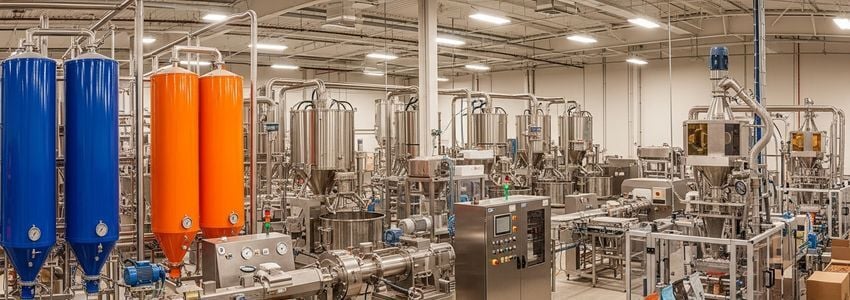
The production of high-quality pet food requires specialized and expensive machinery. Equipment financing allows you to purchase or lease essential assets without depleting your cash reserves. The equipment itself serves as collateral for the loan, which can make this type of financing easier to secure than an unsecured loan. Pet food brands can use equipment loans to acquire:
- Extruders and Cookers: For producing kibble and semi-moist foods.
- Mixers and Grinders: For blending ingredients consistently.
- Packaging Machinery: Automated systems for bagging, sealing, and labeling.
- Refrigeration and Freezer Units: For storing raw ingredients or finished fresh-frozen products.
- Lab Equipment: For quality control and nutritional analysis.
By financing this equipment, you can preserve your working capital for other growth initiatives while immediately benefiting from increased production capacity and efficiency.
SBA Loans
Backed by the U.S. Small Business Administration, SBA loans are a popular choice for established pet food brands looking for significant capital with favorable terms. These loans are not issued by the SBA itself but by partner lenders like Crestmont Capital. The SBA guarantees a portion of the loan, which reduces the lender's risk and often results in lower interest rates and longer repayment periods compared to conventional loans. The two most common types are:
- SBA 7(a) Loans: Highly versatile, these loans can be used for a wide range of purposes, including working capital, equipment purchases, and even real estate acquisition for a new manufacturing facility.
- SBA 504 Loans: Specifically designed for purchasing major fixed assets like commercial real estate or long-term machinery.
While the application process can be more intensive, the attractive terms make SBA loans an excellent option for long-term strategic investments.
Business Line of Credit
A business line of credit offers unparalleled flexibility for managing your brand's finances. It functions like a credit card for your business: you are approved for a specific credit limit and can draw funds as needed, up to that limit. You only pay interest on the amount you use, not the entire credit line. Once you repay the drawn amount, the full credit line becomes available again. This makes it an ideal tool for managing unexpected expenses, handling seasonal cash flow fluctuations, or taking advantage of opportunities without having to apply for a new loan each time. For a pet food brand, this could mean quickly purchasing a large shipment of ingredients that becomes available at a discount or covering costs while waiting for a large payment from a retail distributor.
Inventory Financing
Inventory is one of the largest assets and expenses for a pet food company. Inventory financing is a specific type of asset-backed loan or line of credit where your stock of raw ingredients and finished products serves as collateral. This is particularly useful for brands that need to make large, upfront purchases of ingredients to meet production demands or to achieve volume-based cost savings. By leveraging the value of your inventory, you can unlock capital to ensure your supply chain remains robust and you never have to turn down a large order due to a lack of stock. This is a powerful tool for managing growth and ensuring you can consistently meet customer demand.
How Pet Food Brand Loans Work
Navigating the business loan process can seem daunting, but it follows a structured path from initial inquiry to funding. Understanding these steps can help you prepare effectively and streamline your experience. At Crestmont Capital, we've refined this process to be as efficient and transparent as possible for busy brand owners.
Step 1: Pre-Qualification and Consultation
The journey begins with an initial consultation and pre-qualification. You will connect with a financing specialist who understands the pet food industry. During this stage, you will discuss your business's financial health, your funding needs, and your growth objectives. You will provide basic information, such as your time in business, monthly revenue, and credit score. This allows the specialist to quickly assess your eligibility and recommend the most suitable loan products for your specific situation. This step saves you time by ensuring you only proceed with options for which you have a high likelihood of approval.
Step 2: Formal Application and Documentation
Once you have identified the best loan option, you will complete a formal application. This involves providing more detailed information and documentation to support your request. While requirements vary by loan type, you should be prepared to submit documents such as:
- Recent business bank statements (typically 3-6 months)
- Business and personal tax returns
- Profit and loss statements and a balance sheet
- A detailed business plan (especially for startups or large loan requests)
- A list of existing business debts
- Quotes or invoices for equipment if seeking equipment financing
Our streamlined online portal makes it easy to securely upload these documents.
Step 3: Underwriting and Credit Review
After your application is submitted, it moves to the underwriting stage. This is where the lender conducts a thorough review of your business's financial health and creditworthiness. Underwriters analyze your revenue, cash flow, profitability, debt-to-income ratio, and payment history. For a pet food brand, they will also consider industry-specific factors like your supply chain stability, customer base, and market position. The goal is to assess the risk associated with the loan and determine your ability to repay it. This is the most critical phase of the process.
Step 4: Approval and Offer
If the underwriting review is successful, you will receive a loan approval and a formal offer. This offer will clearly outline all the terms of the financing, including the total loan amount, the interest rate, the repayment term (the length of the loan), and any associated fees. It is crucial to review this document carefully and ask your financing specialist any questions you may have. A transparent lender will ensure you understand every aspect of the offer before you commit.
Step 5: Funding
Upon accepting the offer and signing the loan agreement, the final step is funding. Depending on the loan type, this process can be incredibly fast. For options like working capital loans or a line of credit, funds can often be deposited directly into your business bank account in as little as 24-48 hours. For more complex loans like SBA financing, the funding process may take longer, but the capital will be disbursed according to the loan agreement, allowing you to put your growth plans into action immediately.
Key Insight: The speed of funding is a major differentiator between traditional banks and alternative lenders like Crestmont Capital. While a bank loan can take weeks or months, many of our solutions can provide capital in under 48 hours, allowing you to seize opportunities as they arise.
What Pet Food Brands Can Use Loans For
Strategic capital infusion can be transformative for a pet food brand. Business loans provide the resources to invest in key areas that drive growth, efficiency, and market share. Here are eight of the most common and impactful ways pet food brand owners utilize financing.
- Manufacturing Equipment Upgrades: Purchasing new or upgraded machinery is often the single most effective way to scale production. Financing can cover the cost of a high-capacity extruder, an automated packaging line, larger mixing vats, or advanced quality control systems. This investment leads to higher output, improved product consistency, and lower per-unit production costs.
- Ingredient Sourcing and Inventory: Cash flow is often tied up in inventory. A loan can provide the working capital to make large, upfront purchases of high-quality ingredients like free-range chicken or wild-caught salmon. Buying in bulk can significantly reduce costs and protect your brand from price volatility in the commodities market. It also ensures you have the stock on hand to fulfill large orders from distributors.
- Packaging and Branding: In a crowded market, packaging is paramount. It is your brand's first impression on the shelf or online. Funds can be used to hire a top design agency, invest in premium, sustainable packaging materials, or purchase printing equipment for custom bags and labels. This enhances brand perception and can justify a higher price point.
- Marketing and Advertising: A great product is not enough- you need to tell people about it. A loan can fund a comprehensive marketing strategy, including digital advertising on social media, search engine optimization (SEO), influencer marketing campaigns with pet-focused creators, and attendance at major industry trade shows like Global Pet Expo.
- Distribution and Logistics Expansion: Expanding your reach from a local or regional brand to a national one requires a significant investment in logistics. Financing can be used to partner with a national third-party logistics (3PL) provider, lease warehouse space in key distribution hubs, or build out your own fleet of delivery vehicles to service retailers more effectively.
- Retail Expansion and Slotting Fees: Getting your product onto the shelves of major pet store chains or supermarkets is a major milestone. This often requires paying "slotting fees" to secure shelf space. A business loan can provide the capital needed to pay these fees and fund the initial large inventory purchase required by the retailer, opening up massive new sales channels.
- Hiring Key Personnel: As you grow, you cannot do it all yourself. A loan can cover the salaries and recruitment costs for hiring critical team members. This could be an experienced food scientist to perfect your formulations, a national sales director with established retail relationships, or a digital marketing expert to scale your online presence.
- Obtaining Certifications and Compliance: Earning certifications like USDA Organic, Non-GMO Project Verified, or demonstrating AAFCO feeding trial compliance builds consumer trust and allows you to access premium market segments. The process can be expensive, involving audits, lab testing, and reformulations. Financing can cover these costs, adding valuable credibility to your brand.
Qualification Requirements
Lenders evaluate several key factors to determine a business's eligibility for financing. While specific requirements can vary based on the loan type and lender, understanding these core criteria will help you prepare a stronger application. At Crestmont Capital, we take a holistic view of your business, but these are the primary areas we assess.
1. Credit Score
Both your personal and business credit scores are important indicators of your financial responsibility. A higher credit score generally demonstrates a history of managing debt well and making payments on time, which reduces the lender's risk. For many of our small business loans, a minimum personal credit score in the low 600s is often required, but higher scores (700+) will unlock more favorable terms and larger loan amounts. For programs like SBA loans, credit requirements are typically stricter.
2. Time in Business
Lenders prefer to see a track record of stability and operation. Most financing products require a minimum of six months to one year in business. Established brands with two or more years of operation are viewed more favorably as they have a proven history of revenue generation and market viability. While some options exist for startups, demonstrating experience and a solid business plan is crucial.
3. Annual and Monthly Revenue
Consistent revenue is one of the most critical factors. It shows that your pet food brand has a market and is actively generating sales. Lenders will analyze your bank statements to verify your monthly and annual gross revenue. Minimum revenue requirements vary significantly by loan product. For example, a working capital loan might require at least $15,000 in monthly revenue, while a larger equipment loan or SBA loan will have much higher thresholds, often in the range of $250,000 or more in annual revenue.
4. Cash Flow and Profitability
Beyond top-line revenue, lenders want to see healthy cash flow. Your bank statements should show a positive cash flow trend, meaning more money is coming into the business than going out. This indicates that you have the liquidity to comfortably handle a new loan payment. Profitability, as shown on your profit and loss statements, is also a key consideration, especially for larger, long-term loans. You must demonstrate that the business is not just surviving but is financially sustainable.
5. Business Plan and Use of Funds
For larger loan requests or younger businesses, a well-structured business plan is essential. This document should detail your business model, market analysis, growth strategy, and financial projections. Crucially, you must clearly articulate how you plan to use the loan proceeds. A specific, well-reasoned plan- such as "purchase a new packaging machine to increase output by 40%"- is much more compelling to an underwriter than a vague request for "working capital." This shows that you have a strategic vision for deploying the capital to generate a return on investment.
How Crestmont Capital Helps Pet Food Brands
At Crestmont Capital, we are more than just a lender; we are a strategic financing partner dedicated to the growth of your pet food brand. As the #1 business lender in the U.S., we have a deep understanding of the unique financial landscape of the pet industry. We recognize the capital-intensive nature of manufacturing, the importance of a nimble supply chain, and the immense potential for brands that can effectively scale to meet consumer demand.
Our approach is built on three pillars: speed, expertise, and flexibility.
Speed: We know that in the fast-moving pet food market, opportunities do not wait. Traditional bank loans can take months to approve, causing you to miss out on bulk ingredient deals, retail opportunities, or critical equipment upgrades. Our streamlined online application and efficient underwriting process mean you can get a decision in hours and receive funding in as little as 24 hours for many of our loan products. This speed provides a significant competitive advantage.
Expertise: Our financing specialists are not generalists. They have experience working with businesses across the pet care supply chain, from manufacturers and distributors to retailers running a pet store business. This industry-specific knowledge allows us to understand your business model, appreciate your growth plans, and structure a financing solution that makes sense for your unique operational needs. We speak your language and understand your challenges.
Flexibility: We reject the one-size-fits-all approach. Your pet food brand is unique, and your financing should be too. We offer a comprehensive suite of funding solutions, including working capital loans, equipment financing, SBA loans, and business lines of credit. This diverse portfolio allows us to tailor a financial package that aligns perfectly with your goals, whether you need a quick injection of cash to manage inventory or a large, long-term loan to build a new production facility. We work with you to find the right product with the right terms.
Partnering with Crestmont Capital means gaining access to the capital you need to thrive. We are committed to providing a transparent, efficient, and supportive financing experience so you can focus on what you do best: creating exceptional products for the pets we all love. Apply now to see how we can help fuel your brand's journey to success.
Unlock Your Brand's Potential
Access a wide range of financing options designed for the unique needs of the pet food industry. Our experts are ready to help.
Get a Free Quote →Real-World Scenarios
To better understand how pet food brand business loans work in practice, let's explore a few realistic scenarios. These examples illustrate how different types of financing can solve specific challenges and unlock growth at various stages of a brand's lifecycle.
Scenario 1: The Fresh Food Startup
The Business: "Pawsitively Fresh," a two-year-old startup specializing in direct-to-consumer, subscription-based fresh dog food. They have a loyal customer base but are struggling to keep up with demand due to their limited kitchen space and manual packaging process.
The Challenge: They need to move into a larger, commercial-grade kitchen and purchase a vacuum sealer and an automated portioning machine to increase production tenfold.
The Solution: Pawsitively Fresh secures $150,000 in equipment financing. The loan is structured so that the new equipment serves as the collateral. This allows them to acquire the necessary machinery without a massive upfront cash outlay. They use the financing to purchase the portioning machine, sealer, and commercial-grade refrigerators. As a result, they can fulfill their growing subscription list, reduce labor costs, and improve product consistency, setting them up for national expansion.
Scenario 2: The Established Kibble Brand
The Business: "Heritage Farms," a 15-year-old family-owned brand known for its high-quality, all-natural kibble. They have strong regional distribution in pet specialty stores.
The Challenge: A major national retailer has offered them a contract to be in 1,000 stores nationwide. This requires a massive increase in production and inventory, and the retailer's payment terms are net-90, creating a significant cash flow gap.
The Solution: Heritage Farms obtains a $750,000 business line of credit. They use an initial draw of $400,000 to purchase bulk raw ingredients and run their production facility 24/7 to build up inventory for the initial order. They then use subsequent draws to cover payroll and operational costs during the 90-day waiting period for the retailer's payment. Once the payment arrives, they pay down the line of credit, keeping it available for future large orders.
Scenario 3: The Niche Treat Maker
The Business: "Barker's Bites," a small company that makes single-ingredient, freeze-dried organ meat treats for dogs with allergies.
The Challenge: Their primary supplier of grass-fed beef liver offers them a one-time opportunity to purchase a year's supply at a 30% discount. The owner doesn't have the $50,000 in cash available to make the purchase.
The Solution: Barker's Bites secures a $50,000 working capital loan. The application is approved in one day, and the funds are available the next. They use the capital to make the bulk ingredient purchase, locking in a significantly lower cost of goods for the entire year. This single transaction dramatically increases their profit margin on every bag of treats sold, and the interest on the short-term loan is easily offset by the savings.
Scenario 4: The Innovator Expanding Operations
The Business: "AquaPaws," a successful brand that developed a unique, sustainable cat food using insect protein. After five years of strong online sales, they are ready to build their own dedicated manufacturing facility.
The Challenge: They need to purchase a piece of land and construct a 20,000-square-foot facility, an investment of several million dollars.
The Solution: AquaPaws works with Crestmont Capital to secure a multi-million dollar SBA 504 loan. This loan program is specifically designed for major fixed-asset purchases. The favorable long-term repayment schedule and lower down payment requirement make the project financially viable. The loan covers the land acquisition, construction costs, and the purchase of large-scale, specialized processing equipment. This move gives them full control over their production, ensures quality, and positions them as a major player in the sustainable pet food market.
Did You Know? The pet care industry extends beyond just food. Financing is also critical for sectors like dog grooming businesses and veterinary clinics, each with its own unique capital needs.
Pet Food Brand Loans vs. Other Funding Options
When seeking capital, it is important to understand the full spectrum of available options. While specialized business loans are often the most suitable, comparing them against alternatives like traditional bank loans or seeking investors provides a clearer picture of the best path for your brand. Each option has distinct advantages and disadvantages regarding speed, flexibility, and control.
| Funding Option | Speed | Approval Difficulty | Best For |
|---|---|---|---|
| Working Capital Loans (Crestmont) | Very Fast (1-2 days) | Low to Moderate | Short-term needs: inventory, marketing, bridging cash flow gaps. |
| Traditional Bank Loans | Very Slow (1-3 months) | Very High | Large, long-term projects for highly established businesses with perfect credit. |
| SBA Loans (Crestmont) | Moderate (2-6 weeks) | High | Major investments: real estate, large equipment, business acquisition. |
| Business Line of Credit (Crestmont) | Fast (a few days) | Moderate | Ongoing, flexible access to cash for managing unpredictable expenses and opportunities. |
| Venture Capital / Angel Investors | Slow (months of pitching) | Extremely High | High-growth startups with a unique product and massive scaling potential, but requires giving up equity. |
The primary trade-off is often between speed and cost versus control. Alternative lenders like Crestmont Capital provide rapid access to capital, which is invaluable in a dynamic market. In contrast, traditional banks may offer lower rates but have a slow, arduous application process with stringent requirements that many growing brands cannot meet. Seeking equity investment from venture capitalists or angel investors can provide large sums of capital and valuable expertise, but it comes at the cost of giving up a percentage of ownership and control over your company's direction. For most established pet food brands, debt financing through a specialized lender offers the best balance, providing the necessary capital for growth while allowing you to retain 100% ownership of your business.
Frequently Asked Questions
What is the minimum credit score needed for a pet food brand business loan? +
While requirements vary, many financing options are available for business owners with a personal credit score starting in the low 600s. A higher score (700+) will generally result in better rates and terms. We look at the overall health of your business, not just the credit score.
How quickly can I get funded? +
The funding speed depends on the loan type. Working capital loans and lines of credit can often be funded in as little as 24-48 hours after approval. Equipment financing may take a few days, while SBA loans have a longer timeline, typically a few weeks.
Can I get a loan if my pet food brand is a startup? +
Financing for startups can be challenging, as most lenders require at least 6-12 months of business history and revenue. However, options like equipment financing (where the asset is collateral) or SBA microloans may be available. A strong business plan and good personal credit are essential for startup funding.
What documents do I need to apply? +
Typically, you will need 3-6 months of recent business bank statements, your most recent business tax return, a profit and loss statement, and a balance sheet. For larger loans or equipment financing, you may also need a detailed business plan, personal financial statements, and quotes for the equipment.
Will applying for a loan affect my credit score? +
Our initial pre-qualification process uses a "soft" credit pull, which does not impact your credit score. A "hard" credit pull, which may have a small, temporary impact on your score, is only conducted when you proceed with a formal application after reviewing your initial offers.
What loan amounts are available for pet food brands? +
Loan amounts can range from as little as $5,000 for a small working capital loan to over $5 million for an SBA loan used to purchase a manufacturing facility. The amount you qualify for depends on your business's revenue, cash flow, credit history, and the specific use of funds.
Can I use a business loan to pay for marketing and advertising? +
Absolutely. A working capital loan or a business line of credit is an excellent tool for funding marketing initiatives. Investing in digital advertising, social media campaigns, or trade show attendance can generate a significant return, and financing allows you to launch these campaigns without draining your operational cash.
What is the difference between a term loan and a line of credit? +
A term loan provides a lump sum of cash upfront, which you repay in fixed installments over a set period. A line of credit gives you access to a revolving pool of funds up to a certain limit; you can draw and repay funds as needed, and you only pay interest on the amount you have borrowed.
Do I need to provide collateral for a pet food brand loan? +
It depends on the loan type. Many working capital loans are unsecured, meaning they do not require specific collateral. However, equipment financing is secured by the equipment being purchased, and SBA loans often require a general lien on business assets and sometimes personal guarantees.
How are interest rates determined? +
Interest rates are based on the lender's assessment of risk. Key factors include your credit score, time in business, annual revenue, cash flow, the loan amount, and the repayment term. Stronger, more established businesses typically qualify for lower interest rates.
Can I repay my loan early? +
Many of our loan products do not have prepayment penalties, allowing you to pay off the loan early and save on future interest payments. It is important to confirm the prepayment terms in your specific loan agreement, as some long-term loans may have them.
What if I have an existing business loan? +
You can still qualify for financing even if you have an existing loan. Lenders will assess your total debt service coverage ratio to ensure your business can comfortably handle the payments for both the existing and the new loan. In some cases, a new loan can be used to consolidate and refinance existing debt at a better rate.
Are there specific loans for buying ingredients? +
Yes. Working capital loans, a business line of credit, and inventory financing are all excellent options for purchasing raw ingredients. These products provide the liquidity needed to make bulk purchases, manage supply chain fluctuations, and ensure you always have the necessary stock for production.
How does an SBA loan differ from a conventional loan? +
The main difference is the government guarantee. The U.S. Small Business Administration (SBA) guarantees a portion of the loan amount to the lender, which reduces the lender's risk. This often results in lower interest rates, longer repayment terms, and higher loan amounts compared to conventional loans. However, the application process is typically more rigorous.
Why should I choose Crestmont Capital over my local bank? +
Crestmont Capital offers speed, flexibility, and industry expertise that traditional banks often cannot match. We have a wider range of loan products, a much faster application and funding process (hours instead of months), and more flexible qualification requirements. Our specialists understand the pet food industry and can tailor a solution to your specific needs.
How to Get Started
Taking the next step toward funding your pet food brand's growth is simple and straightforward. Our process is designed to be fast, transparent, and respectful of your time as a busy business owner. Follow these three steps to get started.
Apply in Minutes
Complete our secure online application. It takes just a few minutes and requires only basic information about you and your business. This is a soft credit pull and will not affect your credit score.
Review Your Offers
A dedicated financing specialist will contact you to discuss your needs and present you with the best available loan options. We provide full transparency on rates, terms, and payments so you can make an informed decision.
Get Funded
Once you select your preferred option and sign the agreement, the funds will be transferred directly to your business bank account. For many of our products, this can happen in as little as 24 hours.
Your Growth Journey Starts Here
Take the first step towards securing the capital your pet food brand deserves. Our simple application takes less than five minutes.
Apply Now and Get Funded →Conclusion
In the competitive and rapidly expanding pet food market, strategic financial planning is as vital as the quality of your ingredients. Having access to the right capital at the right time can be the difference between stagnation and market leadership. Pet food brand business loans are not just a financial tool; they are a catalyst for innovation, expansion, and long-term success. By understanding the various financing options available and partnering with a lender that specializes in your industry, you can confidently invest in the equipment, inventory, and marketing needed to take your brand to the next level. Crestmont Capital is ready to be that partner, providing the fast, flexible funding solutions your business needs to thrive.
Disclaimer: The information provided in this article is for general educational purposes only and is not financial, legal, or tax advice. Funding terms, qualifications, and product availability may vary and are subject to change without notice. Crestmont Capital does not guarantee approval, rates, or specific outcomes. For personalized information about your business funding options, contact our team directly.








