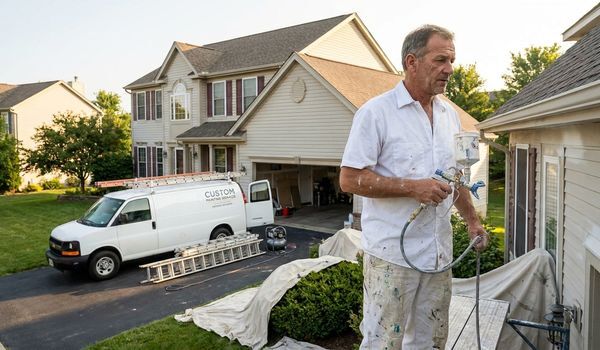
Painting contractor financing statistics tell a clear story in 2026: the businesses winning the biggest jobs are the ones with reliable access to capital. The U.S. painting and wall covering industry generates an estimated $41 billion to $49 billion in annual revenue across roughly 230,000 to 252,000 businesses, yet the vast majority of those companies are small crews of one to four people. For owners in that position, a single slow month, a large commercial contract, or a broken paint sprayer can decide whether the business grows or stalls. This report breaks down the most important painting contractor financing statistics for 2026, including industry size, growth trends, borrowing patterns, approval expectations, and the funding options painting businesses actually use.
Whether you run a two-person residential repaint crew or a growing commercial operation, the numbers below will help you benchmark your company against the industry and understand how financing fits into a healthy growth plan.
In This Article
- The Painting Industry at a Glance
- Key Painting Contractor Statistics for 2026
- Why Financing Matters for Painting Contractors
- How Painting Contractors Use Financing
- Types of Financing Available
- Painting Business Costs
- Who Benefits Most
- Comparing Financing Options
- How Crestmont Capital Helps
- Real-World Financing Scenarios
- Frequently Asked Questions
- How to Get Started
The Painting Industry at a Glance: 2026 Market Overview
The painting contractor industry is one of the largest specialty trade segments in American construction. Businesses classified under NAICS code 238320, painting and wall covering contractors, handle interior and exterior painting, wallpapering, protective coatings, and surface preparation across residential, commercial, and industrial settings. According to U.S. Census Bureau data tracked through County Business Patterns and industry research estimates, the sector produces between $41 billion and $49.1 billion in annual revenue in 2026.
The industry is remarkably fragmented. An estimated 230,000 to 252,000 painting businesses operate in the United States, employing roughly 419,000 people. About 75% of those businesses are micro-operations with just one to four employees. That structure matters for financing because most painting contractors do not have a CFO, a dedicated bookkeeper, or deep cash reserves. When expenses spike or a growth opportunity appears, outside funding is often the only realistic path forward.
The residential house painting segment alone accounts for approximately $28.1 billion to $28.2 billion in annual revenue spread across about 223,000 businesses. Globally, the painting and wall covering contractors market is estimated at $229.7 billion in 2025 and $237.5 billion in 2026, with projections reaching roughly $276 billion by 2030 at a compound annual growth rate between 3.4% and 3.9%. Steady growth at the global level signals durable demand for the services U.S. contractors provide.
Key Stat: Roughly 3 out of every 4 painting businesses in America operate with four or fewer employees. Small scale makes these companies agile, but it also means a single equipment failure or slow-paying client can squeeze cash flow within weeks.
Key Painting Contractor Statistics for 2026
The following painting business statistics frame the financing landscape contractors are operating in this year:
- Industry revenue: $41 billion to $49.1 billion annually in the United States across all painting and wall covering work.
- Business count: Approximately 230,000 to 252,000 active painting businesses, with the residential segment alone representing about 223,000 companies.
- Employment: Around 419,000 workers are employed by U.S. painting contractors.
- Average revenue per business: Dividing industry revenue by business count yields an average of roughly $165,000 to $195,000 per company, which reflects how many small operators share the market.
- Global growth rate: A projected 3.4% to 3.9% CAGR through 2030, driven by construction activity, property turnover, and commercial maintenance cycles.
- Market structure: Highly fragmented, with no single company holding a dominant national share, which leaves room for local and regional contractors to grow with the right capital.
Several demand drivers sit behind these numbers. Housing turnover fuels repaint work, since most sellers freshen paint before listing and many buyers repaint after closing. Commercial property managers operate on maintenance cycles that call for repainting every three to seven years. Industrial facilities need protective coatings on fixed schedules regardless of economic conditions. Each driver creates recurring, contractable revenue for painting businesses, and recurring revenue is exactly what lenders look for when evaluating a funding application.
Small business data from the SBA Office of Advocacy consistently shows that access to capital ranks among the top barriers to growth for firms of this size. Painting contractors are no exception: the businesses that scale past the four-employee mark are usually the ones that secure funding to add crews, vehicles, and equipment ahead of demand rather than after it.
Market research remains one of the most underused tools among trade contractors. The SBA market research guide recommends that small businesses benchmark themselves against industry data before making major financial decisions, and the statistics in this report provide exactly that benchmark for painting company owners weighing a financing decision in 2026.
Why Financing Matters for Painting Contractors
Painting is a cash-intensive trade disguised as a simple one. Before a single wall is coated, a contractor has already spent money on labor, materials, insurance, fuel, and equipment. On commercial jobs, payment terms of net 30 to net 90 are standard, which means a crew can finish a $40,000 project in March and not see the money until June. That gap between spending and collecting is where most painting businesses feel financial pressure, and it is the primary reason painting contractor financing statistics show consistent borrowing demand year after year.
The benefits of securing financing before it is urgently needed include:
- Stable cash flow: Cover payroll, materials, and overhead while waiting on client payments.
- Bigger job capacity: Bid on commercial contracts that require upfront material purchases and larger crews.
- Equipment readiness: Replace or upgrade sprayers, lifts, and vehicles before failures cost you work.
- Seasonal protection: Bridge slow winter months in northern markets where exterior work pauses.
- Growth on your schedule: Add a crew or open a second territory when the opportunity appears, not months later.
- Marketing investment: Fund the advertising and lead generation that keeps the estimate pipeline full.
Contractors who treat financing as a planned tool rather than an emergency measure consistently report smoother operations. The data pattern across the trades is clear: businesses with established funding relationships survive slow seasons and capitalize on busy ones, while businesses without them react to whatever the bank account allows.
Ready to Grow Your Painting Business?
Get fast, flexible financing from the #1 business lender in the U.S. No obligation, apply in minutes.
Apply Now →How Painting Contractors Use Financing
Financing in the painting trade clusters around five practical uses. Understanding where the money typically goes helps explain which loan products dominate painting contractor financing statistics.
Materials and supplies represent the most frequent use. A mid-size commercial repaint can require $8,000 to $20,000 in paint, primer, masking materials, and sundries before the first invoice goes out. Contractors with working capital available can take these jobs confidently; those without it either pass on the work or stretch supplier credit to uncomfortable limits.
Equipment purchases come second. Airless sprayers, pressure washers, scaffolding, boom lifts, and sanders wear out on predictable cycles. A professional-grade airless sprayer runs $1,500 to $6,000, and a used bucket truck or boom lift can exceed $30,000. Equipment financing spreads those costs across the revenue-generating life of the asset.
Vehicles rank third. Every crew needs at least one reliable van or truck, and each additional crew multiplies that need. Payroll bridging is fourth, covering wages during the gap between completing work and collecting payment. Marketing and hiring round out the list, since growth requires estimators, sales efforts, and advertising spend that precede new revenue by months.
The application process itself has become dramatically faster in recent years. Where a bank loan application once took weeks of document gathering, online business lenders now typically ask for basic company information, three to six months of bank statements, and a simple application. Approvals can arrive within 24 hours, and funding often lands within one to three business days. That speed aligns with how painting contractors actually operate: opportunities appear quickly, and the ability to say yes matters.
Types of Financing Available to Painting Businesses
Five financing products account for nearly all funding activity among painting contractors. Each fits a different situation, and the strongest businesses often combine two or more.
Equipment financing lets a contractor acquire sprayers, lifts, compressors, and vehicles with the equipment itself serving as collateral. Terms typically run two to seven years, and approval standards are often more flexible than unsecured products because the lender holds a tangible asset. Crestmont Capital's equipment financing programs are built for exactly this kind of purchase, with structures that match payments to the useful life of the equipment.
A business line of credit provides revolving access to capital that a contractor draws on as needed and repays as invoices are collected. For seasonal businesses, a line of credit is often the single most valuable financial tool: it absorbs winter slowdowns and funds spring ramp-ups without repeated applications. A business line of credit works like a financial shock absorber for the natural rhythm of the painting trade.
Working capital loans deliver a lump sum for short-term needs like materials for a large contract, payroll during a slow stretch, or a marketing push before peak season. Terms are shorter, usually six to eighteen months, and approvals emphasize recent revenue over long credit history.
SBA loans offer the lowest rates and longest terms but require the most documentation and patience, often 30 to 90 days from application to funding. They suit established contractors making major moves such as buying a building or acquiring a competitor. Invoice financing advances cash against outstanding commercial invoices, converting net 60 receivables into immediate working capital.
By the Numbers
Painting Contractor Financing Statistics, Key Figures for 2026
$41B+
Annual U.S. painting industry revenue
230K+
Painting businesses operating nationwide
75%
Micro-businesses with 1 to 4 employees
3.9%
Projected global market CAGR through 2030
Painting Business Costs: What the Numbers Show
Understanding typical operating costs explains why financing demand stays steady in this trade. Startup costs for a basic residential painting operation run between $2,000 and $10,000, covering a sprayer, ladders, brushes, drop cloths, insurance deposits, and initial marketing. A fully equipped commercial operation with vehicles, lifts, and specialty equipment can require $50,000 or more before the first contract is signed.
Ongoing monthly expenses for an established crew typically include payroll at 40% to 50% of revenue, materials at 15% to 25%, vehicle and fuel costs, insurance premiums, and marketing. Net profit margins for well-run painting businesses generally land between 10% and 20%, which means a $500,000 company might retain $50,000 to $100,000 in profit. Margins at that level leave little room for absorbing a $15,000 equipment failure or funding a $30,000 materials purchase for a new contract out of pocket.
The table below shows typical cost ranges painting contractors face when starting or expanding:
| Expense Category | Typical Range | Financing Fit |
|---|---|---|
| Airless sprayer and accessories | $1,500 - $6,000 | Equipment financing |
| Work van or truck (used) | $18,000 - $45,000 | Equipment or vehicle financing |
| Boom lift or scaffolding | $8,000 - $35,000 | Equipment financing |
| Materials for a large commercial job | $8,000 - $25,000 | Working capital or line of credit |
| Seasonal payroll bridge (3 months) | $15,000 - $60,000 | Line of credit |
| Marketing and lead generation | $500 - $3,000 / month | Working capital |
Pro Tip: Match the financing term to the life of what you are buying. A sprayer that will earn revenue for five years belongs on a multi-year equipment loan. A 60-day materials gap belongs on a line of credit, not a long-term loan.
Who Benefits Most from Painting Contractor Financing
Financing is not one-size-fits-all, and the painting contractor statistics above point to four profiles that gain the most from outside capital.
Growing residential crews that have more estimate requests than they can staff benefit immediately: financing a second van, a second sprayer setup, and two additional painters can double monthly revenue within one season. Commercial-focused contractors benefit because commercial work demands upfront material spending and tolerance for slow payment terms; working capital converts those contracts from cash flow risks into profit centers.
Seasonal operators in northern states benefit from lines of credit that carry payroll and overhead through winter so the spring restart happens at full strength. Established owners pursuing acquisitions benefit when a retiring competitor's customer list, equipment, and crew become available at once, a situation where speed of funding decides who wins the deal.
The common thread is timing. Painting businesses rarely fail from lack of demand. They stall when the right expense arrives at the wrong cash flow moment, and financing exists precisely to close that gap.
Comparing Painting Business Financing Options
Each financing product carries different costs, speeds, and qualification standards. The comparison below reflects typical market terms in 2026 for established painting businesses with reasonable credit.
| Feature | Equipment Financing | Line of Credit | Working Capital Loan | SBA Loan |
|---|---|---|---|---|
| Typical amount | $5K - $500K | $10K - $250K | $10K - $500K | $50K - $5M |
| Funding speed | 1 - 5 days | 1 - 3 days | 1 - 3 days | 30 - 90 days |
| Term length | 2 - 7 years | Revolving | 6 - 18 months | 5 - 25 years |
| Best use | Sprayers, lifts, vehicles | Seasonal gaps, materials | Short-term needs | Major expansion, real estate |
| Relative cost | Low to moderate | Moderate | Moderate to high | Lowest |
The pattern is consistent: speed and cost trade against each other. SBA loans offer the best rates but the slowest process. Working capital and lines of credit fund in days at moderate cost. Equipment financing sits in the middle, with the purchased asset securing the loan and keeping rates reasonable. Most thriving painting businesses hold at least two of these products at once, using each for what it does best.
How Crestmont Capital Helps Painting Contractors
Crestmont Capital works with painting businesses at every stage, from solo operators buying their first professional sprayer to multi-crew companies funding regional expansion. As the #1 rated business lender in the U.S., the team structures funding around how trade contractors actually earn: seasonal cycles, project-based revenue, and equipment-heavy operations.
Painting contractors can access unsecured working capital loans for short-term needs like materials and payroll, equipment financing for sprayers, lifts, and vehicles, and revolving credit lines that absorb seasonal slowdowns. Applications take minutes, decisions often arrive within 24 hours, and funding can land in as little as one business day. There are no long bank queues and no weeks of document gathering.
For contractors comparing funding strategies, Crestmont's blog library offers additional depth. The guide on painting business loans walks through loan structures specific to this trade, and the auto repair shop financing statistics report shows how a sister trade approaches the same capital decisions. Broader context is available on the small business financing hub for owners comparing every option in one place.
General small business trends also matter here. Forbes small business statistics show that access to capital remains one of the strongest predictors of small business survival past the five-year mark, a pattern that holds across the trades.
Get Funding Built for Painting Contractors
Fast approvals, flexible terms, and a team that understands the painting trade. Apply online in minutes.
Apply Now →Real-World Financing Scenarios for Painting Businesses
Statistics become useful when they translate into decisions. These four scenarios show how painting contractors typically put financing to work.
Scenario 1: The second crew expansion. A residential repaint company in Texas books estimates faster than its four-person crew can complete them. The owner finances a used van, a second airless sprayer setup, and two months of payroll for a new crew through a $45,000 equipment loan plus a working capital draw. Within one season, monthly revenue climbs from $38,000 to $71,000, and the financing payment represents less than 8% of the added revenue.
Scenario 2: The commercial contract bridge. A contractor wins a $120,000 office complex repaint with net 60 payment terms. Materials alone will cost $22,000 before the first invoice. A draw on an existing business line of credit covers paint, primer, and masking supplies. The line is repaid in full when the client's check arrives, and total interest cost comes to under $900 for two months of float.
Scenario 3: The winter bridge. A Midwest painting company generates 80% of its revenue between April and October. Each winter, a $30,000 line of credit covers core payroll and insurance so the business keeps its best painters instead of laying them off and rehiring in spring. Retention saves an estimated $12,000 per year in rehiring and training costs.
Scenario 4: The equipment emergency. A commercial crew's boom lift fails mid-project with a $9,800 repair quote and a two-week delay risk. Instead, the owner finances a replacement used lift for $19,000 with 24-hour approval. The project finishes on schedule, protecting a client relationship worth roughly $60,000 in annual repeat work.
Key Stat: Financing decisions in the painting trade are usually driven by timing, not survival. The scenarios above share one trait: each business was profitable before borrowing, and capital accelerated growth that demand had already made possible.
Frequently Asked Questions
How big is the painting contractor industry in 2026? +
The U.S. painting and wall covering industry generates an estimated $41 billion to $49.1 billion in annual revenue across approximately 230,000 to 252,000 businesses employing about 419,000 people. The residential house painting segment alone accounts for roughly $28 billion. Globally, the market sits near $237.5 billion in 2026 with projected growth of 3.4% to 3.9% annually through 2030.
How many painting businesses operate in the United States? +
Industry estimates place the count between 230,000 and 252,000 active painting businesses, with about 223,000 focused on residential work. Around 75% are micro-businesses with one to four employees, making painting one of the most fragmented trades in construction.
What is the average revenue of a painting contractor business? +
Dividing total industry revenue by business count produces an average of roughly $165,000 to $195,000 per company. That average hides a wide spread: solo operators may gross $60,000 to $120,000, while established multi-crew companies regularly exceed $1 million annually.
Is the painting industry growing? +
Yes. The global painting and wall covering market is projected to grow at a compound annual rate of 3.4% to 3.9% through 2030, reaching approximately $276 billion. U.S. demand is supported by housing turnover, commercial maintenance cycles, and industrial coating schedules that recur regardless of broader economic conditions.
Why do painting contractors need financing? +
Painting contractors spend money on labor, materials, insurance, and equipment before clients pay, and commercial payment terms often stretch 30 to 90 days. Financing closes that gap, funds equipment replacement, bridges seasonal slowdowns, and lets contractors accept larger jobs that require upfront material purchases.
What credit score do painting contractors need to get financed? +
Requirements vary by product. Equipment financing and revenue-based products can approve scores in the 550 to 600 range when business revenue is strong. Bank and SBA loans typically want 680 or higher. Online business lenders generally weigh recent revenue and time in business alongside credit, so a strong sales record can offset a middling score.
How much can a painting contractor borrow? +
Amounts range widely. Working capital loans and lines of credit commonly run from $10,000 to $250,000 for painting businesses. Equipment financing can reach $500,000 or more for larger operations. SBA loans extend into the millions for qualified borrowers. Most lenders size approvals against monthly revenue, often offering amounts equal to 50% to 150% of average monthly sales.
How fast can a painting business get funded? +
Online lenders frequently approve applications within 24 hours and fund within one to three business days. Equipment financing typically closes in one to five days. SBA and bank loans are the slowest, often taking 30 to 90 days from application to funding.
Can a new painting business qualify for financing? +
Newer businesses face tighter options but are not excluded. Most lenders want at least six months of operating history and consistent monthly revenue, commonly $10,000 or more. Startups below that threshold often begin with equipment financing, where the purchased asset secures the loan, or with smaller working capital amounts that grow as the business builds history.
What equipment can painting contractors finance? +
Nearly any business-use equipment qualifies: airless sprayers, pressure washers, compressors, scaffolding, boom lifts, sanders, work vans, trucks, and even office technology. Equipment financing terms generally run two to seven years with the asset itself as collateral, which keeps approval standards more flexible than unsecured products.
Are painting business loans hard to get with bad credit? +
They are harder but far from impossible. Lenders that specialize in trade contractors weigh revenue consistency and bank statement activity heavily. Equipment financing is usually the most accessible product for credit-challenged owners because the equipment secures the loan. Rates rise as credit scores fall, but funding is regularly approved for owners in the 550 to 620 range with healthy sales.
What is the best financing option for seasonal painting businesses? +
A business line of credit is usually the best fit. It provides revolving access to capital during slow months, charges interest only on what is drawn, and refills as peak-season revenue arrives. Many seasonal contractors pair a line of credit with equipment financing for long-life assets, keeping each expense on the product designed for it.
How do painting contractors use a business line of credit? +
Common draws include materials for large jobs, payroll during receivable gaps, winter overhead in seasonal markets, and marketing pushes before peak season. The contractor draws only what is needed, repays as invoices are collected, and the available credit replenishes for the next use.
Do painting contractors need collateral for financing? +
Not always. Unsecured working capital loans and many lines of credit require no specific collateral, relying instead on revenue history and a personal guarantee. Equipment financing uses the purchased equipment as collateral. SBA loans may require collateral for larger amounts. Owners with limited assets can still access meaningful funding through revenue-based products.
How do I apply for painting contractor financing? +
The process is straightforward: complete a short online application, provide three to six months of business bank statements, and basic company details. Approvals often arrive within 24 hours. Crestmont Capital's application at offers.crestmontcapital.com/apply-now takes just a few minutes, and a funding specialist follows up to match your business with the right product.
Join the Painting Businesses That Plan Ahead
See your funding options in minutes. No obligation, no impact to your credit to apply.
Apply Now →How to Get Started
Complete our quick application at offers.crestmontcapital.com/apply-now, it takes just a few minutes.
A Crestmont Capital advisor will review your needs and match you with the right financing option for your painting business.
Receive your funds and put them to work on crews, equipment, and materials, often within days of approval.
The Bottom Line on Painting Contractor Financing in 2026
The painting contractor financing statistics for 2026 describe an industry that is large, fragmented, growing steadily, and structurally dependent on smart capital access. With $41 billion to $49 billion in annual revenue spread across more than 230,000 businesses, most of them small crews, the difference between the companies that grow and the ones that stall usually comes down to timing: having money available when a big contract, an equipment failure, or a seasonal gap arrives.
The good news is that funding has never been more accessible to this trade. Equipment financing, lines of credit, working capital loans, and SBA products each serve a distinct need, and approvals that once took weeks now arrive in days. Painting business owners who understand these statistics and plan their financing before the urgent moment arrives put themselves in position to take the jobs, hire the crews, and buy the equipment that move a small operation into a serious company. When you are ready to see what your painting business qualifies for, the Crestmont Capital team is ready to help.
Disclaimer: The information provided in this article is for general educational purposes only and is not financial, legal, or tax advice. Funding terms, qualifications, and product availability may vary and are subject to change without notice. Crestmont Capital does not guarantee approval, rates, or specific outcomes. For personalized information about your business funding options, contact our team directly.

Allan Garfinkle
Allan Garfinkle is the Chief Revenue Officer at Crestmont Capital, where he has spent more than a decade leading revenue strategy, business development, and operational growth. With 28 years of experience building and advising startups and small businesses, Allan has helped more than 10,000 business owners navigate financing decisions, growth opportunities, and changing economic conditions. He earned a Bachelor of Science in Economics and an MBA with a concentration in Finance from Northeastern University, as well as a Juris Doctor from New England Law, where his studies focused on contracts and business law. His writing draws on extensive practical experience in small-business lending, equipment financing, business credit, and commercial finance.