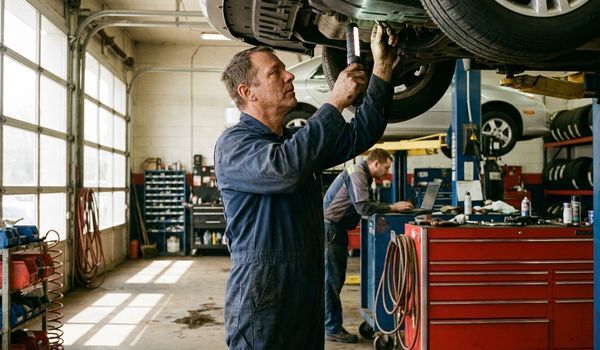
Auto repair shop financing statistics tell a clear story in 2026: demand for repair work is climbing, vehicles on the road are older than ever, and the shops capturing that demand are the ones investing in lifts, diagnostics, and ADAS calibration equipment with borrowed capital rather than drained savings. Whether you run a single-bay garage or a multi-location operation, the numbers behind how repair shops fund growth can help you benchmark your own decisions.
This report pulls together the most current industry data on market size, shop revenue, equipment costs, loan approval rates, and financing terms. Every figure is framed for one audience: auto repair shop owners who want to make smarter funding decisions this year.
In This Article
- The Auto Repair Industry at a Glance
- Key Auto Repair Shop Financing Statistics for 2026
- Revenue and Profitability Statistics
- Equipment and Technology Investment Statistics
- How Auto Repair Shops Use Financing
- The Most-Financed Equipment in Auto Repair Shops
- Financing Approval Rates, Terms, and Costs
- Auto Repair Shop Financing Options Compared
- What These Statistics Mean for Shop Owners
- Real-World Auto Repair Financing Scenarios
- How Crestmont Capital Helps Auto Repair Shops
- Frequently Asked Questions
- How to Get Started
- The Bottom Line
The Auto Repair Industry at a Glance
Before diving into financing data, it helps to understand the scale of the industry those dollars flow into. Auto repair is one of the most resilient corners of the small business economy, and the 2026 numbers confirm it.
The U.S. automotive repair and maintenance sector generates roughly $90 billion in annual revenue across mechanical repair shops alone, with the broader light-vehicle aftermarket (including parts, tires, and collision work) exceeding $400 billion. Industry analysts project steady 2% to 4% annual growth through the end of the decade, driven by an aging vehicle fleet and rising repair complexity.
According to the U.S. Census Bureau's County Business Patterns program, the automotive repair and maintenance sector covers well over 230,000 business establishments nationwide. Roughly 160,000 of those are general automotive repair shops, with the remainder split among transmission shops, oil change facilities, auto glass operations, and specialty service centers. The vast majority are small businesses: most shops employ fewer than 20 people, and a large share employ fewer than five.
Several structural trends define the industry right now:
- Record vehicle age. The average age of cars and light trucks on U.S. roads has climbed to approximately 12.6 years, an all-time high. Older vehicles need more frequent and more expensive repairs, which flows directly into shop revenue.
- A massive vehicle parc. Nearly 290 million registered vehicles are in operation across the country, and scrappage rates remain low as consumers hold onto cars longer in the face of elevated new-vehicle prices.
- A persistent technician shortage. Industry workforce studies estimate the sector needs hundreds of thousands of additional technicians over the next several years to meet demand. Shops are competing hard for certified talent, pushing wages up 15% to 25% since 2020 in many markets.
- Rising repair inflation. The cost of motor vehicle maintenance and repair has risen roughly 40% since 2019, outpacing overall inflation. Parts prices, labor rates, and shop overhead have all climbed, which lifts average repair orders but also squeezes margins.
All of this creates a favorable revenue environment for repair shops, but it also raises the stakes on capital investment. Serving modern vehicles requires modern equipment, and that is where financing enters the picture.
Key Stat: The average vehicle on U.S. roads is now about 12.6 years old, the oldest fleet in the nation's history. Every additional year of vehicle age translates into more repair spend per vehicle, and more opportunity for well-equipped shops.
Key Auto Repair Shop Financing Statistics for 2026
The headline financing numbers for 2026 reflect an industry that is borrowing strategically rather than reactively. Here are the statistics that matter most, compiled from lender data, industry surveys, and small business credit research:
- About 60% to 70% of independent repair shops use some form of external financing for major equipment purchases, rather than paying cash. Equipment financing and leasing remain the most common structures.
- The average equipment financing request from an auto repair shop falls between $25,000 and $75,000, most often covering lifts, alignment systems, diagnostic platforms, or ADAS calibration equipment.
- Approval rates for established shops run between 70% and 80% when the business has at least two years of operating history and consistent revenue. Newer shops and startups see approval rates closer to 40% to 55%, usually with stronger money-down requirements.
- Typical equipment financing terms span 24 to 72 months, with monthly payments structured to match the revenue the equipment generates. Rates for qualified borrowers generally range from the high single digits to the mid-teens, depending on credit profile and time in business.
- Working capital borrowing has grown sharply. A growing share of shops now carries a business line of credit or short-term working capital facility to smooth out parts inventory purchases and payroll between customer payments. Average working capital draws for single-location shops typically range from $15,000 to $50,000.
- SBA lending to automotive repair businesses remains strong. Automotive repair and maintenance consistently ranks among the more active NAICS categories for SBA-backed small business lending, reflecting both the sector's scale and its bankability.
- Shops that finance revenue-generating equipment report faster payback than shops that delay. Industry surveys of shop owners who financed lifts and diagnostic equipment show most recouping the full cost of the equipment within 18 to 36 months through added service capacity.
Rising repair costs are part of the story too. As CNBC's autos coverage has documented, vehicle repair and maintenance costs have climbed steeply in recent years, and consumers are spending more per visit than at any point on record. Higher average repair orders mean stronger shop revenue, which in turn supports larger financing approvals.
The pattern underneath these numbers is consistent: shops are borrowing to buy capability. The capital is going toward equipment that unlocks higher-value work, from ADAS calibrations to EV service, rather than toward covering operating shortfalls.
Ready to Upgrade Your Shop?
Join the majority of shop owners who finance growth instead of draining savings. Apply in minutes with the #1 business lender in the U.S.
Apply Now →Auto Repair Shop Revenue and Profitability Statistics
Financing decisions only make sense against the backdrop of what shops actually earn. The revenue picture for 2026 is healthy, though margins require active management.
The average single-location general repair shop generates between $650,000 and $900,000 in annual revenue, with well-run multi-bay operations in strong markets exceeding $1.5 million. Average repair order values have climbed into the $450 to $550 range nationally, up from the low $300s before 2020, driven by parts inflation, higher labor rates, and the growing complexity of modern vehicle systems.
On profitability, the benchmarks look like this:
- Gross profit margins on labor typically run 60% to 70%, while parts margins run 25% to 40% depending on sourcing relationships.
- Net profit margins for well-managed shops land between 10% and 20%. Shops below that range usually carry too much overhead relative to bay count or underprice labor.
- Labor rates now average $110 to $160 per hour in most metro markets, with dealer-adjacent and specialty European shops commanding $180 or more.
- Revenue per bay is a key efficiency metric: strong shops generate $15,000 to $25,000 per bay per month, and financing additional bay equipment is the most direct lever for lifting that figure.
- Customer pay mix has shifted. Deferred maintenance from the 2020 to 2022 period continues to work its way through the fleet, which keeps average ticket sizes elevated even as visit frequency normalizes.
One underappreciated figure: shops that invest in customer-facing technology, including digital vehicle inspections and online scheduling, report measurably higher average repair orders. Industry data shows approval rates for recommended work climbing 15% to 25% when customers receive photo and video documentation of needed repairs. That is one reason shop management software subscriptions now appear alongside lifts and compressors on financing schedules.
The revenue story matters for financing because lenders underwrite against it. A shop generating $75,000 or more in monthly revenue with six-plus months of consistent deposits is a straightforward approval for most equipment finance companies, including alternative lenders like Crestmont Capital that underwrite on cash flow rather than collateral alone.
Equipment and Technology Investment Statistics
Equipment is where most auto repair financing dollars land, and the cost curve keeps moving upward. The 2026 pricing benchmarks below reflect what shops are actually paying, based on equipment vendor data and financing schedules:
- Two-post and four-post lifts: $3,500 to $8,000 per lift installed, up roughly 20% from pre-2020 pricing due to steel and freight costs. Most general repair shops run three to six lifts.
- Wheel alignment systems: $25,000 to $70,000 for a modern 3D imaging alignment machine, plus $5,000 to $15,000 for a compatible alignment rack.
- Diagnostic scan tools: $1,500 to $15,000 per platform, with OEM-level subscriptions adding $1,000 to $5,000 per year per make family. Most shops now maintain two to four scan tools to cover their vehicle mix.
- ADAS calibration equipment: $15,000 to $45,000 for a full static and dynamic calibration setup. This is the fastest-growing equipment category in the industry, and one of the most frequently financed.
- Tire changers and wheel balancers: $8,000 to $20,000 combined for shop-grade equipment capable of handling low-profile and run-flat tires.
- Air compressors and shop infrastructure: $2,500 to $12,000 depending on capacity, with rotary screw compressors at the higher end.
- EV service equipment: $10,000 to $50,000 for insulated tooling, battery lifts, high-voltage PPE, and charging infrastructure, before training costs.
- Full shop buildouts: $150,000 to $500,000 or more for a ground-up four-to-six-bay facility, including equipment, which is why buildout financing packages have become a distinct product category.
The aggregate picture: outfitting a competitive general repair shop in 2026 requires $75,000 to $200,000 in equipment, roughly double what the same buildout cost a decade ago. That inflation is the single biggest driver of the financing statistics in this report. Very few owners write a check for that; the majority spread the cost across financing terms that let the equipment pay for itself out of added revenue.
Pro Tip: Shops that bundle multiple equipment purchases into a single financing agreement typically secure better overall terms than those financing piecemeal. If you are planning a lift, an alignment machine, and ADAS equipment over the next 18 months, pricing them as one package can cut your blended rate and simplify bookkeeping.
How Auto Repair Shops Use Financing
Financing use cases in the repair industry cluster into a handful of patterns. Understanding them helps explain the approval and terms data that follows.
1. Capacity expansion. The most common use case: adding lifts, bays, or a second location. A shop running at 90% bay utilization leaves money on the table every day, and financing a $6,000 lift that supports another $15,000 per month in revenue is the simplest math in the industry.
2. Capability upgrades. ADAS calibration, EV service, and European diagnostics are the three fastest-growing capability investments. Each opens a higher-margin service category, and each requires a $15,000 to $50,000 upfront commitment that financing spreads into manageable monthly payments.
3. Equipment replacement cycles. Lifts, compressors, and alignment machines wear out. Shops increasingly finance replacements on a planned cycle rather than waiting for catastrophic failure, which avoids the downtime that can cost a busy shop $1,500 or more per day per bay.
4. Working capital smoothing. Parts inventory, payroll during slow weeks, and customer warranty work all create timing gaps between spending and collection. Lines of credit and short-term working capital products fill those gaps without touching equipment budgets.
5. Acquisition and ownership transitions. With a large share of shop owners approaching retirement age, acquisition financing has become a meaningful slice of the market. Buyers typically finance 70% to 90% of the purchase price of an existing shop, often through SBA 7(a) structures or conventional term loans.
By the Numbers
Auto Repair Shop Financing - Key Statistics for 2026
$90B
Annual U.S. mechanical repair industry revenue
12.6 yrs
Record average age of vehicles on U.S. roads
70-80%
Financing approval rate for established shops
18-36 mo
Typical payback period on financed revenue equipment
The Most-Financed Equipment in Auto Repair Shops
Lender data paints a consistent picture of what repair shops actually finance. The rankings below reflect the share of equipment financing volume across the industry:
- Lifts (approximately 25% to 30% of financed volume). Two-post lifts lead, followed by four-post alignment lifts and heavy-duty truck lifts. Lifts are the single most commonly financed item because they directly gate bay capacity.
- Diagnostics and ADAS calibration (approximately 20%). The fastest-growing category by far. As ADAS features approach near-universal penetration on vehicles under five years old, calibration capability has shifted from optional to essential for collision-adjacent and general repair work alike.
- Alignment equipment (approximately 15%). High ticket size and clear revenue linkage make alignment machines a financing staple.
- Wheel and tire service equipment (approximately 10%). Tire changers, balancers, and road-force equipment, often financed by shops adding tire service as a new revenue line.
- Air conditioning service machines (approximately 8%). Recovery, recycling, and recharge stations, with demand boosted by the industry transition to new refrigerants.
- Shop management and inspection technology (approximately 7%). Software subscriptions are typically small dollar amounts, but laptops, tablets, and digital inspection hardware increasingly appear on financing schedules.
- EV service equipment (approximately 5%, but climbing). Early adopters are financing insulated tool sets, battery lifts, and charging infrastructure ahead of the EV fleet curve.
- Compressors, fluid systems, and miscellany (remainder). The long tail of shop infrastructure.
The common thread: the most-financed items are the ones with the clearest line from equipment to revenue. Lenders know this, which is why these categories also see the smoothest approvals.
Financing Approval Rates, Terms, and Costs
What does it actually take to get approved, and what does the money cost? The 2026 benchmarks:
Approval rates by profile. Established shops with two or more years in business, $500,000-plus in annual revenue, and owner credit above 650 see approval rates of 70% to 80% across equipment finance providers. Shops between one and two years old, or with owner credit in the 600 to 650 range, approve at roughly 55% to 65%, often with 10% to 20% down. Startups and first-time owners approve at 40% to 55% and almost always need money down plus a credible business plan.
Typical structures. Equipment financing agreements and equipment leases dominate. Terms run 24 to 72 months, with 36 to 60 months most common. Structures like $1 buyout leases and equipment finance agreements let shops own the equipment at term end, which suits long-life assets like lifts.
Cost of capital. For qualified borrowers, effective rates currently range from about 7% to 15% depending on credit strength, time in business, and term length. Weaker credit profiles can see pricing into the high teens or low twenties, which is where comparing multiple offers pays off. SBA-backed loans price lower but carry slower timelines and heavier documentation.
Speed. Alternative lenders now fund straightforward equipment deals in one to three business days from application, with approvals often same-day for requests under $150,000. Bank and SBA channels run three weeks to three months. For a shop that just lost a lift or landed a fleet contract, speed frequently outweighs rate in the decision.
Down payments. Established shops with strong profiles routinely qualify for zero-down or 10%-down structures. Newer businesses should expect 10% to 30% down depending on the equipment type and credit.
The practical takeaway: approval odds are high for operating shops with real revenue, the market is competitive enough to shop rates, and the structure of the deal matters as much as the rate itself.
Auto Repair Shop Financing Options Compared
Repair shops generally choose among four funding structures. The right pick depends on what you are buying, how fast you need it, and how your financials look on paper.
| Feature | Equipment Financing | Business Line of Credit | SBA Loan | Working Capital Loan |
|---|---|---|---|---|
| Best for | Lifts, alignment, ADAS, diagnostics | Parts inventory, payroll gaps, emergencies | Acquisitions, buildouts, large expansions | Fast cash for short-term needs |
| Typical amount | $10,000 to $500,000 | $10,000 to $250,000 | $50,000 to $5 million | $10,000 to $250,000 |
| Typical term | 24 to 72 months | Revolving, 12-month renewals | 7 to 25 years | 3 to 18 months |
| Funding speed | 1 to 3 business days | 1 to 5 business days | 3 weeks to 3 months | 24 to 72 hours |
| Relative cost | Low to moderate | Moderate, pay only on draws | Lowest rates, heaviest paperwork | Highest, priced for speed |
| Collateral | The equipment itself | Usually unsecured or blanket lien | Business assets plus personal guarantee | Unsecured, cash-flow underwritten |
Most established shops end up using two or three of these in combination: equipment financing for hard assets, a line of credit for operating rhythm, and SBA or term debt for the big swings like a second location or a building purchase. Our guide to auto repair shop business loans walks through each structure in more depth.
What These Statistics Mean for Shop Owners
Numbers without interpretation are trivia. Here is what the 2026 data actually signals for an owner making decisions this year.
The demand side is not your problem. A record-old fleet, elevated repair inflation, and deferred maintenance still working through the system mean service bays should stay full. The constraint for most shops is capacity and capability, not customers. That is exactly the situation where financing equipment makes sense: you are borrowing against demand you can already see.
The capability gap is widening. ADAS calibration is the clearest example. Vehicles with calibration-requiring systems now represent the majority of the under-warranty and near-warranty fleet, and calibration work carries premium labor rates with limited local competition. Shops that financed calibration capability early report it becoming a six-figure annual revenue line within two years. The same pattern is starting with EV service.
Labor economics favor investment. With technician wages up 15% to 25% since 2020 and no relief in sight, equipment that raises technician productivity (faster lifts, better diagnostics, flush and fluid machines) directly protects margin. A tech who bills one more hour per day because of better equipment covers a typical equipment payment several times over.
Approval odds favor the prepared. The shops landing 70% to 80% approval rates are the ones with clean, consistent deposits and organized financials. Six months of healthy bank statements and a simple explanation of what the equipment will do for revenue is genuinely most of what underwriting requires with alternative lenders.
Waiting has a cost. Every quarter spent delaying a lift or ADAS investment is a quarter of forgone revenue at current elevated ticket sizes. At a $500 average repair order, a single additional bay turning three more cars per week represents roughly $78,000 in annual revenue, far more than the annual cost of financing the equipment that enables it.
Real-World Auto Repair Financing Scenarios
Statistics come alive in context. These composite scenarios reflect the financing patterns behind the numbers above.
Scenario 1: The capacity-constrained general shop. A four-bay shop in suburban Texas runs at 95% utilization with a two-week booking backlog. The owner finances two four-post lifts and a 3D alignment machine, a $68,000 package over 60 months. The added capacity lifts monthly revenue by about $28,000. The equipment payment is covered in the first week of each month; the rest is margin.
Scenario 2: The ADAS early mover. A collision-adjacent mechanical shop finances a $32,000 ADAS calibration system rather than continuing to sublet calibrations to the dealer. Within 14 months, calibration revenue reaches $9,000 per month at 75% gross margin, and the shop picks up referral work from two nearby body shops that also stopped subletting.
Scenario 3: The seasonal cash-flow bridge. A shop in the Midwest hits a predictable spring slowdown each year. A $40,000 line of credit covers parts inventory and payroll through the soft weeks, with draws repaid by early summer. Total annual interest cost runs a few thousand dollars, far less than the cost of laying off and rehiring technicians.
Scenario 4: The second-location acquisition. A two-shop owner acquires a retiring competitor's location for $425,000, financing 85% through an SBA 7(a) structure. The acquired shop's existing cash flow covers the debt service from month one, and consolidated parts purchasing improves margins at both locations.
How Crestmont Capital Helps Auto Repair Shops
Crestmont Capital works with auto repair shops across all 50 states, and the statistics in this report mirror what we see in our own portfolio: lifts and diagnostics dominate requests, established shops approve quickly, and speed matters more than the last quarter-point of rate when a bay is down.
As the #1 rated business lender in the U.S., we offer the full range of structures covered above. Our equipment financing program funds lifts, alignment systems, ADAS equipment, and full shop packages, often within one to three business days and frequently with little or no money down for qualified shops. For operating rhythm, a business line of credit gives you draw-as-needed flexibility for parts and payroll, and our working capital loans cover larger short-term needs without collateral requirements.
If you are comparing loan structures, our breakdown of the best loan options for auto repair shops compares terms, speeds, and qualification profiles side by side. When you are ready, the application takes minutes and a funding specialist who knows the repair industry will walk you through the numbers.
Get the Equipment Your Shop Needs
Fast approvals for lifts, diagnostics, ADAS, and full shop packages. Funding in as little as 24 hours.
Apply Now →Frequently Asked Questions
How big is the auto repair industry in 2026? +
The U.S. automotive repair and maintenance sector generates roughly $90 billion annually across mechanical repair shops, with the broader light-vehicle aftermarket exceeding $400 billion. Industry analysts project steady 2% to 4% annual growth through the end of the decade, supported by an aging vehicle fleet and rising repair complexity.
How many auto repair shops are there in the United States? +
The automotive repair and maintenance sector includes well over 230,000 business establishments nationwide, according to U.S. Census Bureau data. Roughly 160,000 of those are general automotive repair shops, with the rest split among transmission, oil change, auto glass, and specialty service operations.
What is the average revenue of an auto repair shop? +
The average single-location general repair shop generates between $650,000 and $900,000 in annual revenue, with strong multi-bay operations exceeding $1.5 million. Average repair orders have climbed into the $450 to $550 range nationally, up from the low $300s before 2020.
What percentage of auto repair shops use financing for equipment? +
Industry surveys indicate that about 60% to 70% of independent repair shops use external financing for major equipment purchases rather than paying cash. Equipment financing and leasing are the most common structures, typically covering lifts, alignment systems, diagnostics, and ADAS calibration equipment.
What is the average equipment financing amount for a repair shop? +
The average equipment financing request from an auto repair shop falls between $25,000 and $75,000. Full shop buildouts and multi-equipment packages can reach $150,000 to $500,000 depending on bay count and capability scope.
What credit score do I need to finance auto repair equipment? +
Established shops with owner credit above 650 see approval rates of 70% to 80% across equipment finance providers. Scores in the 600 to 650 range still approve frequently, usually with 10% to 20% down. Alternative lenders like Crestmont Capital underwrite heavily on business cash flow, so strong shop revenue can offset a weaker personal score.
How much does a two-post lift cost to finance? +
A two-post lift costs $3,500 to $8,000 installed in 2026. Financed over 48 to 60 months, monthly payments typically run $75 to $175 per lift, which a single additional service bay can cover many times over at current average repair order values.
What are typical interest rates on auto repair shop equipment financing? +
Qualified borrowers with established shops currently see effective rates from about 7% to 15% depending on credit strength, time in business, and term length. Weaker credit profiles can see pricing into the high teens. SBA-backed loans price lower but require slower timelines and heavier documentation.
Can a new auto repair shop get financing? +
Yes, though terms differ. Startups and first-time owners approve at roughly 40% to 55%, usually with 10% to 30% down and a credible business plan. Lenders weight the owner's industry experience heavily, so a master technician opening a first shop is a far stronger applicant than a first-time operator.
How fast can an auto repair shop get funded? +
Alternative lenders now fund straightforward equipment deals in one to three business days, with same-day approvals common for requests under $150,000. Bank and SBA channels run three weeks to three months. When a lift fails or a fleet contract lands, speed often matters more than the last quarter-point of rate.
What is the most commonly financed equipment in auto repair shops? +
Lifts lead at roughly 25% to 30% of financed volume, followed by diagnostics and ADAS calibration equipment at about 20%, alignment machines at 15%, and wheel and tire service equipment at 10%. The common thread is a direct line from the equipment to added revenue.
Is ADAS calibration equipment worth financing? +
For most shops, yes. A full calibration setup runs $15,000 to $45,000, and shops that financed early report calibration becoming a six-figure annual revenue line within two years at premium labor rates. As ADAS features approach near-universal penetration on recent vehicles, the addressable work keeps growing.
What is the average age of vehicles on US roads and why does it matter? +
The average age of cars and light trucks on U.S. roads has reached approximately 12.6 years, an all-time record. Older vehicles need more frequent and more expensive repairs, which flows directly into shop revenue and supports the case for capacity and capability investment.
Can I finance a full auto repair shop buildout? +
Yes. Full buildouts of $150,000 to $500,000 or more are routinely financed, typically through a combination of equipment financing for the hard assets and term or SBA debt for construction and soft costs. Lenders evaluate the project against projected bay revenue and the owner's track record.
Does financing equipment hurt my shop's cash flow? +
Structured correctly, it protects cash flow. Financing preserves working capital for payroll, parts, and slow weeks while the financed equipment generates the revenue that covers its own payment. Most shops recoup the full cost of revenue-generating equipment within 18 to 36 months.
Turn These Statistics Into Your Growth Plan
The data favors shops that invest. Find out what your shop qualifies for in minutes, with no obligation.
Apply Now →How to Get Started
Complete our quick application at offers.crestmontcapital.com/apply-now - takes just a few minutes.
A Crestmont Capital advisor who knows the repair industry will review your numbers and match you with the right financing structure.
Receive your funds and put them to work - often within one to three business days of approval.
The Bottom Line on Auto Repair Shop Financing in 2026
The auto repair shop financing statistics for 2026 describe an industry with strong tailwinds and a clear playbook. A record-old vehicle fleet keeps bays full, repair inflation lifts ticket sizes, and capability investments in ADAS, diagnostics, and EV service are separating the growth shops from the standing-still ones. The majority of your competitors are already financing their equipment, approval rates for established shops sit at 70% to 80%, and funded deals are closing in days rather than months.
The shops that win this decade will be the ones that treat financing as a growth tool rather than a last resort: borrowing against visible demand, matching payment structures to the revenue the equipment produces, and keeping working capital free for the rhythm of the business. If the numbers in this report map onto your own shop's constraints, the next step is simple. Apply with Crestmont Capital, and put the 2026 statistics to work for you.
Disclaimer: The information provided in this article is for general educational purposes only and is not financial, legal, or tax advice. Funding terms, qualifications, and product availability may vary and are subject to change without notice. Crestmont Capital does not guarantee approval, rates, or specific outcomes. For personalized information about your business funding options, contact our team directly.

Allan Garfinkle
Allan Garfinkle is the Chief Revenue Officer at Crestmont Capital, where he has spent more than a decade leading revenue strategy, business development, and operational growth. With 28 years of experience building and advising startups and small businesses, Allan has helped more than 10,000 business owners navigate financing decisions, growth opportunities, and changing economic conditions. He earned a Bachelor of Science in Economics and an MBA with a concentration in Finance from Northeastern University, as well as a Juris Doctor from New England Law, where his studies focused on contracts and business law. His writing draws on extensive practical experience in small-business lending, equipment financing, business credit, and commercial finance.