Running an auto repair shop takes more than mechanical know-how. Between high-cost diagnostic equipment, fluctuating part inventories, payroll, and shop overhead, auto repair shop business loans are often essential to keep operations running smoothly and fund meaningful growth. Whether you are opening a second bay, upgrading your lift equipment, or simply bridging a slow month, the right financing product can make all the difference.
This guide covers every major loan option available to auto repair shop owners in 2026 — from equipment financing and SBA loans to working capital lines of credit — along with real-world guidance on how to qualify, what lenders look for, and how Crestmont Capital can help you access funding fast.
In This Article
- Why Auto Repair Shops Need Business Financing
- Best Loan Options for Auto Repair Shops
- Equipment Financing for Auto Repair Shops
- SBA Loans for Auto Repair Businesses
- Working Capital and Lines of Credit
- How to Qualify for an Auto Repair Shop Loan
- How Crestmont Capital Helps Auto Repair Shops
- Real-World Financing Scenarios
- Comparing Loan Options Side by Side
- How to Get Started
- Frequently Asked Questions
Why Auto Repair Shops Need Business Financing
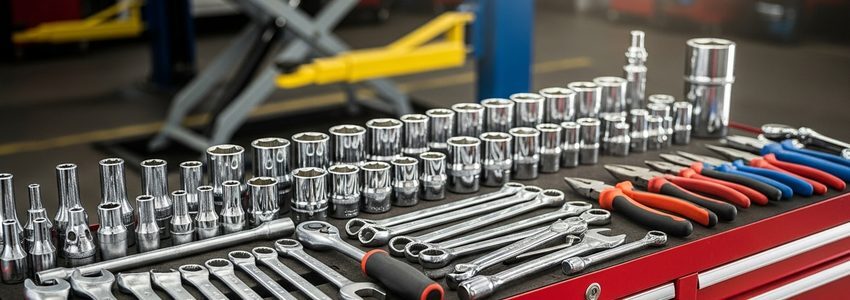
Auto repair is a capital-intensive business. A single two-post hydraulic lift can cost $3,000 to $7,000. A wheel alignment machine runs $10,000 to $20,000. Add nitrogen generators, tire changers, diagnostic scan tools, and a well-equipped shop can have $100,000 or more tied up in tools and equipment alone — before counting inventory, rent, and payroll.
Beyond equipment, auto repair shops face cash flow volatility. Revenues dip when weather changes reduce driving, when customers delay discretionary repairs, or when a large insurance claim payment takes weeks to settle. A business line of credit or working capital loan can bridge those gaps without disrupting operations.
Growth also demands capital. Opening a second location, adding an oil change bay, hiring ASE-certified technicians, or launching a fleet service program all require upfront investment. According to the U.S. Small Business Administration, over 70% of small businesses that grew beyond their initial size used some form of external financing to do so. Auto repair is no exception.
Industry Fact: The U.S. automotive repair and maintenance industry generates over $115 billion annually, according to IBISWorld. With over 160,000 auto repair shops operating nationwide, competition is fierce — and shops that invest in better equipment and efficiency consistently outperform those that do not.
Best Loan Options for Auto Repair Shops
Auto repair shop owners have access to a wide range of business financing products. The best option for your shop depends on how much you need, what the funds will be used for, how quickly you need access, and your current financial profile. Below is a comprehensive look at each major loan type.
By the Numbers
Auto Repair Shop Financing — Key Statistics
$115B+
U.S. auto repair industry annual revenue
160K+
Auto repair shops operating in the U.S.
$5K-$500K
Typical loan range for auto repair shops
1-5 Days
Typical funding time with alternative lenders
1. Equipment Financing
Equipment financing is the most common loan type for auto repair shops. It allows you to purchase lifts, diagnostic tools, wheel alignment systems, tire changers, and other essential shop equipment while spreading the cost over 12 to 84 months. The equipment itself serves as collateral, making approval easier than unsecured loans — even for shops with fair credit.
Equipment loans typically cover 80% to 100% of the equipment cost, with interest rates ranging from 5% to 20% depending on creditworthiness and loan term. Because the asset secures the loan, lenders can often approve borrowers with credit scores as low as 600.
2. SBA Loans
SBA loans — backed by the U.S. Small Business Administration — offer some of the lowest interest rates available for small businesses, typically prime plus 2.75% to 4.75%. For auto repair shops that qualify, SBA 7(a) loans up to $5 million can fund equipment purchases, real estate, working capital, and even business acquisitions. The SBA 504 loan is ideal for shops purchasing commercial property or major fixed assets.
The tradeoff is time. SBA loans typically take 30 to 90 days to fund and require detailed financial documentation. They are best suited for established shops with at least two years in business and strong financials.
3. Business Lines of Credit
A business line of credit gives auto repair shops revolving access to capital — similar to a business credit card, but typically with higher limits and lower rates. You draw funds as needed and pay interest only on the outstanding balance. This makes lines of credit ideal for managing cash flow gaps, purchasing parts inventory, covering payroll during slow seasons, or handling unexpected shop repairs.
Lines of credit for auto repair shops typically range from $10,000 to $250,000. Qualifications include at least 12 months in business, minimum monthly revenue of $10,000 to $15,000, and a credit score of 580 or higher.
4. Working Capital Loans
Working capital loans provide a lump sum of cash for day-to-day operational expenses. Unlike equipment loans, they are not tied to a specific asset. Auto repair shops use working capital loans to fund marketing campaigns, hire additional mechanics, cover rent during off-peak months, or expand service offerings. Terms typically range from 6 to 36 months with competitive rates.
5. Term Loans
Traditional term loans provide a lump sum repaid over a fixed schedule. They are versatile and can be used for nearly any business purpose. Auto repair shops with strong financial histories often qualify for term loans up to $500,000 from banks or alternative lenders, with repayment terms of 1 to 10 years. Rates vary based on creditworthiness and lender type.
6. Merchant Cash Advances
A merchant cash advance (MCA) provides upfront capital in exchange for a percentage of future revenue. While MCAs offer fast access (sometimes same-day), the effective cost is often high — factor rates typically range from 1.15 to 1.5. MCAs are best used as a short-term stopgap when other options are unavailable, not as a long-term financing strategy.
Need Financing for Your Auto Repair Shop?
Get fast, flexible funding from the #1 business lender in the U.S. Apply in minutes and get a decision the same day.
Apply Now →Equipment Financing for Auto Repair Shops
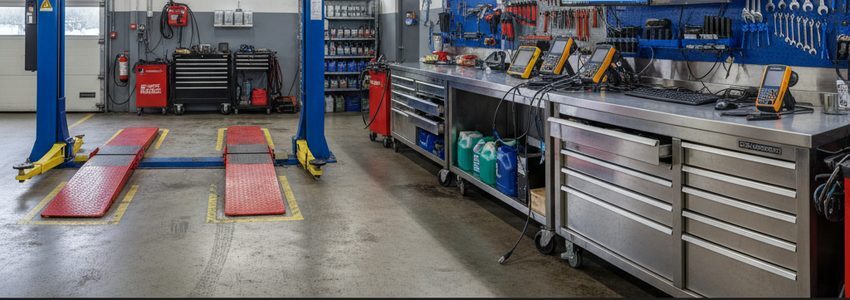
Equipment is the backbone of any auto repair operation. Without functional lifts, diagnostics computers, and specialty tools, a shop cannot serve customers efficiently — or at all. Equipment financing allows shop owners to acquire the tools they need today and pay for them over time.
Common equipment financed by auto repair shops includes:
- Two-post and four-post hydraulic lifts
- Wheel alignment and balancing machines
- Diagnostic scan tools and OBD systems
- Tire changers and nitrogen inflation systems
- Air compressors and pneumatic tool systems
- Brake lathes and rotor resurfacing machines
- HVAC refrigerant recovery systems
- Oil drain systems and fluid handling equipment
- Spray booths for paintwork
- Transmission and engine repair stands
Equipment financing terms typically span 24 to 84 months, with low monthly payments that match cash flow. Many lenders offer 100% financing — meaning no down payment required — which is particularly valuable when a shop needs to replace a failed lift or diagnostic system immediately.
Section 179 Tip: Auto repair shop owners who finance equipment may be able to deduct the full purchase price in the year of acquisition under Section 179 of the IRS tax code. In 2026, the deduction limit is $1.22 million. Consult your accountant to maximize this benefit.
SBA Loans for Auto Repair Businesses
For established auto repair shops with strong financials, SBA loans offer the most favorable terms on the market. The two primary programs relevant to auto repair shops are the SBA 7(a) and SBA 504 loans.
SBA 7(a) loans are the most flexible option, covering equipment, real estate, working capital, and business acquisitions up to $5 million. Repayment terms extend up to 10 years for working capital and 25 years for real estate. Interest rates are capped by the SBA, making them among the most affordable financing available.
SBA 504 loans are designed for major fixed asset purchases — commercial real estate or heavy equipment. They are structured as two loans: one from a Certified Development Company (CDC) and one from a private lender. The combined result is a lower blended rate than most conventional loans, making 504 loans ideal for shops purchasing their building or significant equipment.
To qualify for SBA loans, auto repair shops generally need:
- Minimum 2 years in business
- Good personal credit (typically 680+ for the best rates)
- Strong revenue and profitability documented by tax returns
- A clear business purpose for the funds
- Collateral (may be waived for smaller amounts)
The main downside: SBA loans are slow. Approval and funding typically takes 4 to 12 weeks. If you need capital quickly to replace a failed lift or cover payroll, alternative lenders like Crestmont Capital can fund in as little as 24 to 48 hours.
Working Capital and Lines of Credit for Auto Repair Shops
Cash flow is one of the biggest challenges for auto repair shop owners. Revenue can swing significantly depending on season, weather, and local economic conditions. A working capital loan or revolving line of credit gives shops the flexibility to cover expenses even when revenue is temporarily lower than expected.
Here are the most common working capital needs for auto repair shops:
- Payroll: Keeping ASE-certified mechanics on staff is expensive. During slow periods, payroll cannot be delayed.
- Parts inventory: Stocking common parts like brake pads, filters, and belts reduces turnaround time and improves customer satisfaction.
- Marketing: Digital advertising, Google Ads, and local promotions help attract new customers during slow seasons.
- Rent and utilities: Fixed overhead costs continue regardless of revenue fluctuations.
- Shop repairs and maintenance: Unexpected lift failures or electrical issues can shut down revenue-generating bays.
A business line of credit is particularly valuable because it is revolving — once repaid, funds become available again. This makes it a long-term cash flow management tool, not just a one-time fix. Many auto repair shop owners establish a line of credit during profitable periods so it is available when needed, without having to go through a new application process each time.
Flexible Financing Built for Auto Repair Shops
Crestmont Capital offers working capital loans and lines of credit designed for the cash flow realities of running an auto repair business.
Get Your Quote →How to Qualify for an Auto Repair Shop Loan
Lenders evaluate auto repair shop loan applications using several key factors. Understanding what lenders look for helps you prepare a stronger application and improve your chances of approval — and better terms.
Credit Score
Your personal credit score is a primary factor for most lenders. Conventional banks typically require a minimum score of 680 to 700. Alternative lenders like Crestmont Capital work with scores as low as 580, with equipment financing available for scores starting around 600. Building your business credit over time can reduce personal credit reliance and improve future borrowing options.
Time in Business
Most lenders require at least 6 to 24 months of operating history. Banks and SBA lenders typically want 2+ years. Alternative lenders may work with shops as young as 6 months, particularly for equipment financing backed by collateral.
Annual Revenue
Lenders want to see that your shop generates enough revenue to support loan payments. Working capital lenders typically require $100,000 or more in annual revenue. Equipment lenders may be more flexible, since the asset itself provides security. Providing at least 3 months of bank statements demonstrates consistent revenue flow.
Debt Service Coverage Ratio (DSCR)
Lenders calculate your Debt Service Coverage Ratio — net operating income divided by total debt payments. A DSCR above 1.25 means your business generates 25% more income than it needs to cover debt, which most lenders view as healthy. Banks typically require a minimum DSCR of 1.25; some alternative lenders will accept 1.10.
Collateral
Equipment loans use the financed asset as collateral. For unsecured working capital loans, lenders may require a personal guarantee or general business lien. Providing additional collateral — such as a vehicle title or commercial property — can improve approval odds and lower your interest rate.
Business and Financial Documents
Be prepared to provide: 3 to 6 months of business bank statements, last 2 years of business tax returns, a current profit and loss statement, balance sheet, and government-issued ID. Having these documents organized and ready speeds up the approval process significantly.
How Crestmont Capital Helps Auto Repair Shops
Crestmont Capital is a leading business lender rated #1 in the U.S., specializing in fast, flexible financing for small and mid-size businesses — including auto repair shops. Unlike traditional banks, Crestmont Capital offers streamlined applications, fast approvals, and funding in as little as 24 to 48 hours.
Crestmont Capital offers a full suite of financing options suited to auto repair shops:
- Equipment financing for lifts, diagnostics systems, and shop tools — with 100% financing available
- Working capital loans from $5,000 to $500,000 with flexible terms
- Business lines of credit for ongoing cash flow management
- SBA loan assistance for established shops seeking low-rate long-term financing
- Revenue-based financing for shops that prefer payments tied to monthly revenue
Our advisors understand the auto repair industry and work with shop owners to match them with the right product for their specific situation. Whether you need to replace a failed lift tomorrow or plan a major shop expansion next quarter, Crestmont Capital has a financing solution for you.
You can also explore our small business financing hub for a complete overview of available products, or visit our equipment financing page to see how we can help fund your next major equipment purchase.
Why Auto Repair Shop Owners Choose Crestmont Capital: Same-day decisions, no prepayment penalties, dedicated advisors with industry knowledge, and a simple online application that takes under 10 minutes to complete.
Real-World Financing Scenarios for Auto Repair Shops
Understanding how other shop owners have used financing can help you identify the right solution for your situation. Here are six real-world scenarios:
Scenario 1: Emergency Lift Replacement
A three-bay shop in Phoenix lost its main hydraulic lift to a hydraulic failure on a Monday morning. With $12,000 in pending repair appointments that week, the owner needed a replacement fast. Using equipment financing from Crestmont Capital, the shop secured a new four-post lift for $8,500 with a 48-month repayment term. The application was submitted Monday afternoon; funding arrived Tuesday. The shop was back at full capacity by Thursday — with minimal lost revenue.
Scenario 2: Fleet Service Contract Expansion
A shop in suburban Dallas landed a contract to service a regional delivery company's 45-vehicle fleet. The contract required dedicated bay space, a diagnostic upgrade, and the hiring of two additional technicians. The owner used a $65,000 working capital loan to cover the transition period while the contract ramped up — hiring staff in month one and covering overhead until fleet billing began in month two.
Scenario 3: Second Location Opening
After eight years of profitability, a single-location shop in Atlanta decided to open a second location across town. Total startup costs — tenant improvements, equipment, signage, and initial payroll — were estimated at $185,000. The owner used a combination of an SBA 7(a) loan for the bulk of the investment (at a competitive rate with a 10-year term) and a business line of credit for the first six months of operating cash flow needs.
Scenario 4: Slow Season Cash Flow Bridge
A transmission specialist in Michigan experiences a consistent revenue dip every January and February as residents avoid unnecessary repairs in harsh winter weather. Rather than cutting staff and losing trained mechanics to competitors, the owner established a $40,000 line of credit during a strong fall season. Over winter, $28,000 was drawn to cover payroll and utilities, then repaid by April when revenue recovered. The total interest cost was under $900 — far less than the cost of losing key employees.
Scenario 5: Marketing Investment to Compete with Dealerships
A general repair shop in Columbus was losing business to a newly opened dealership service center nearby. The owner invested $22,000 in a digital marketing campaign — including Google Ads, local SEO, and a new website with online booking — funded via a short-term working capital loan. Within six months, new customer bookings increased 34%, and the loan was fully repaid from the incremental revenue.
Scenario 6: Shop Acquisition
A mechanic with 15 years of experience but no business ownership used an SBA 7(a) loan to purchase an established three-bay shop from a retiring owner. The acquisition included the business, equipment, customer database, and commercial lease assignment for $275,000. With 10% down and SBA financing for the remainder over 10 years, monthly payments were manageable from day one with an already-established customer base.
Comparing Auto Repair Shop Loan Options Side by Side
| Loan Type | Best For | Loan Amount | Term | Speed |
|---|---|---|---|---|
| Equipment Financing | Lifts, tools, diagnostics | $5K - $500K | 2-7 years | 1-5 days |
| SBA 7(a) Loan | Expansion, acquisition, real estate | Up to $5M | Up to 25 years | 30-90 days |
| Business Line of Credit | Ongoing cash flow management | $10K - $250K | Revolving | 1-5 days |
| Working Capital Loan | Payroll, marketing, inventory | $5K - $500K | 6-36 months | 1-3 days |
| Term Loan (Bank) | Larger investments, established shops | $25K - $2M | 1-10 years | 2-4 weeks |
| Merchant Cash Advance | Emergency funds, last resort | $5K - $500K | 3-18 months | Same day |
Tips for Getting the Best Loan for Your Auto Repair Shop
Knowing which loan type you want is just the first step. Getting approved quickly and at the best possible terms requires preparation. Here are the most important steps auto repair shop owners can take before applying:
Separate Business and Personal Finances
A dedicated business bank account, business credit card, and EIN are foundational. Lenders want to see clean business financials — not transactions commingled with personal spending. Separation also protects your personal assets and helps you build business credit independently.
Build Your Business Credit Profile
Register with Dun & Bradstreet (free) to establish a DUNS number and PAYDEX score. Pay vendors and suppliers on time consistently. Open trade credit accounts with auto parts suppliers who report to business credit bureaus. Over 12 to 24 months, a strong business credit profile opens doors to better rates and higher loan amounts.
Maintain 3 to 6 Months of Bank Statements
Most lenders require 3 months of bank statements minimum. Keeping your business account active and showing consistent monthly deposits strengthens your application. Avoid large unexplained withdrawals in the months leading up to a loan application.
Understand Your Revenue Cycle
Auto repair revenue is seasonal. Apply for financing during or just after your strongest months, when bank statements show peak revenue. This is the most favorable time to maximize loan amounts and negotiate better terms.
Compare Multiple Lenders
Never accept the first offer without comparing alternatives. Different lenders specialize in different product types and borrower profiles. A working with a lender that knows the auto repair industry — like Crestmont Capital — can result in faster approvals and better terms than applying to a generic online lender.
Ready to Secure Financing for Your Shop?
Compare loan options, get personalized advice, and apply in minutes. No commitment required.
Apply Now →How to Get Started
Complete our quick application at offers.crestmontcapital.com/apply-now — it takes under 10 minutes and requires no commitment.
A Crestmont Capital advisor will review your shop's financial profile, discuss your goals, and match you with the best loan product for your situation.
Once approved, funds are typically deposited within 24 to 48 hours — so you can get back to doing what you do best: fixing cars and serving customers.
Conclusion
Auto repair shop business loans come in many forms, and the right choice depends on your specific needs, timeline, and financial profile. Equipment financing is ideal for shop tools and lifts. SBA loans offer the lowest rates for established shops planning major investments. Business lines of credit provide flexible working capital for day-to-day cash flow management. And working capital loans bridge seasonal gaps or fund growth initiatives quickly.
Whatever your financing goal, Crestmont Capital has the expertise and the product lineup to help your auto repair shop move forward. With fast approvals, competitive rates, and advisors who understand the auto repair industry, we make business financing straightforward and accessible.
Apply today at offers.crestmontcapital.com/apply-now and get your auto repair shop the capital it needs to grow.
Frequently Asked Questions
What types of loans are available for auto repair shops?
Auto repair shops can access equipment financing, SBA loans (7(a) and 504), business lines of credit, working capital loans, traditional term loans, and merchant cash advances. Equipment financing is the most common starting point, while SBA loans offer the best terms for established shops with strong financials.
How much can an auto repair shop borrow?
Loan amounts for auto repair shops typically range from $5,000 to $500,000 for most products, with SBA loans going up to $5 million. The amount you qualify for depends on your annual revenue, credit score, time in business, and the lender's specific criteria.
What credit score do I need to get a loan for my auto repair shop?
Requirements vary by lender and loan type. Banks and SBA lenders typically require a personal credit score of 680 or higher. Alternative lenders like Crestmont Capital work with scores as low as 580 for working capital loans and 600 for equipment financing.
Can a new auto repair shop get financing?
Yes, but options are more limited. Equipment financing is the most accessible for newer shops (under 12 months in business) because the equipment serves as collateral. SBA microloans and some alternative lenders may also work with shops that have been operating at least 6 months with documented revenue.
How fast can I get a loan for my auto repair shop?
Alternative lenders can approve and fund in 24 to 48 hours. Equipment financing often funds in 1 to 3 business days. SBA loans take 30 to 90 days. If you need fast capital for an urgent situation like equipment failure, alternative lenders like Crestmont Capital are the best option.
What can auto repair shop loans be used for?
Auto repair shop loans can be used for equipment purchases, facility upgrades, payroll, parts inventory, marketing campaigns, hiring new staff, opening additional locations, purchasing an existing shop, covering cash flow during slow seasons, or any other legitimate business expense.
Is equipment financing better than a term loan for buying shop equipment?
Equipment financing is usually the better choice for purchasing specific shop equipment. It is easier to qualify for (the equipment is the collateral), often has no down payment requirement, and may offer tax advantages under Section 179. Term loans provide more flexibility in how funds are used but typically require stronger credit and longer approval processes.
Do auto repair shop loans require collateral?
Equipment financing uses the financed equipment as collateral. SBA loans often require collateral for larger amounts. Working capital loans and business lines of credit from alternative lenders are frequently unsecured but may require a personal guarantee. Each lender has different requirements based on loan size and risk profile.
What documents do I need to apply for an auto repair shop loan?
Typically you will need 3 to 6 months of business bank statements, 1 to 2 years of business tax returns, a current profit and loss statement, a balance sheet, government-issued ID, and your business EIN. Equipment financing applications may also require a vendor quote or invoice for the equipment you intend to purchase.
Can I get a loan for an auto repair shop with bad credit?
Yes. Alternative lenders work with credit scores as low as 500 to 580, particularly for equipment financing with strong collateral. Revenue-based financing and merchant cash advances are also available with lower credit requirements. However, lower credit scores typically result in higher interest rates and shorter terms.
What interest rates should auto repair shops expect on business loans?
Interest rates vary by loan type and borrower profile. SBA loans range from 7% to 12%. Equipment financing ranges from 5% to 20%. Business lines of credit from alternative lenders range from 10% to 35% APR. Working capital loans may carry factor rates of 1.15 to 1.45. Strong credit and revenue always result in better rates.
Can I use a business loan to buy an existing auto repair shop?
Yes. SBA 7(a) loans are commonly used to finance business acquisitions, including purchasing an established auto repair shop. The existing shop's revenue history typically makes acquisition loans easier to qualify for than startup loans. Business acquisition loans typically require 10% to 20% down from the buyer.
How does a business line of credit work for an auto repair shop?
A business line of credit gives your shop access to a pre-approved pool of funds that you draw from as needed. You pay interest only on what you borrow, not the full credit limit. As you repay, the funds become available again — making it a revolving, reusable resource for managing cash flow, purchasing parts, covering payroll, or handling unexpected expenses.
How long does it take to get approved for an auto repair shop loan?
Approval time depends on the lender and loan type. Alternative lenders can provide same-day approval for working capital loans and equipment financing. SBA loans take 30 to 90 days due to federal review requirements. Having your documents organized and ready significantly speeds up the process with any lender.
Why is Crestmont Capital a good choice for auto repair shop financing?
Crestmont Capital is rated #1 in the U.S. for small business lending and offers a full range of financing products tailored to auto repair shops, including equipment financing, working capital loans, lines of credit, and SBA loan assistance. With fast approvals, same-day decisions, no prepayment penalties, and advisors who understand the auto repair industry, Crestmont Capital makes financing straightforward and accessible.
Disclaimer: The information provided in this article is for general educational purposes only and is not financial, legal, or tax advice. Funding terms, qualifications, and product availability may vary and are subject to change without notice. Crestmont Capital does not guarantee approval, rates, or specific outcomes. For personalized information about your business funding options, contact our team directly.