Auto repair is one of America's most stable small business sectors — with 280,000+ shops serving a car-dependent nation. But owning a shop means navigating expensive equipment, seasonal cash flow swings, payroll for skilled technicians, and facility upgrades to stay competitive. Auto repair shop business loans give owners the capital to grow, modernize, and thrive. Crestmont Capital has been funding automotive businesses since 2015.
$116B+
U.S. Auto Repair Industry
280,000+
Repair Shops in U.S.
$10K-$5M
Funding Available
Same-Day
Approvals Possible
Why Auto Repair Shops Need Business Financing
The automotive repair industry is a cornerstone of the American economy, consistently demonstrating resilience and stability. With over 280,000 repair shops across the nation, it's a vital sector that keeps vehicles running and people moving. According to IBISWorld, the U.S. auto repair industry generates over $116 billion annually. However, behind these impressive figures lies a complex financial landscape for individual auto repair shop owners. Managing an auto repair business comes with a unique set of challenges that often necessitate external financing to ensure sustained growth, operational efficiency, and competitive advantage.
High Cost of Essential Equipment
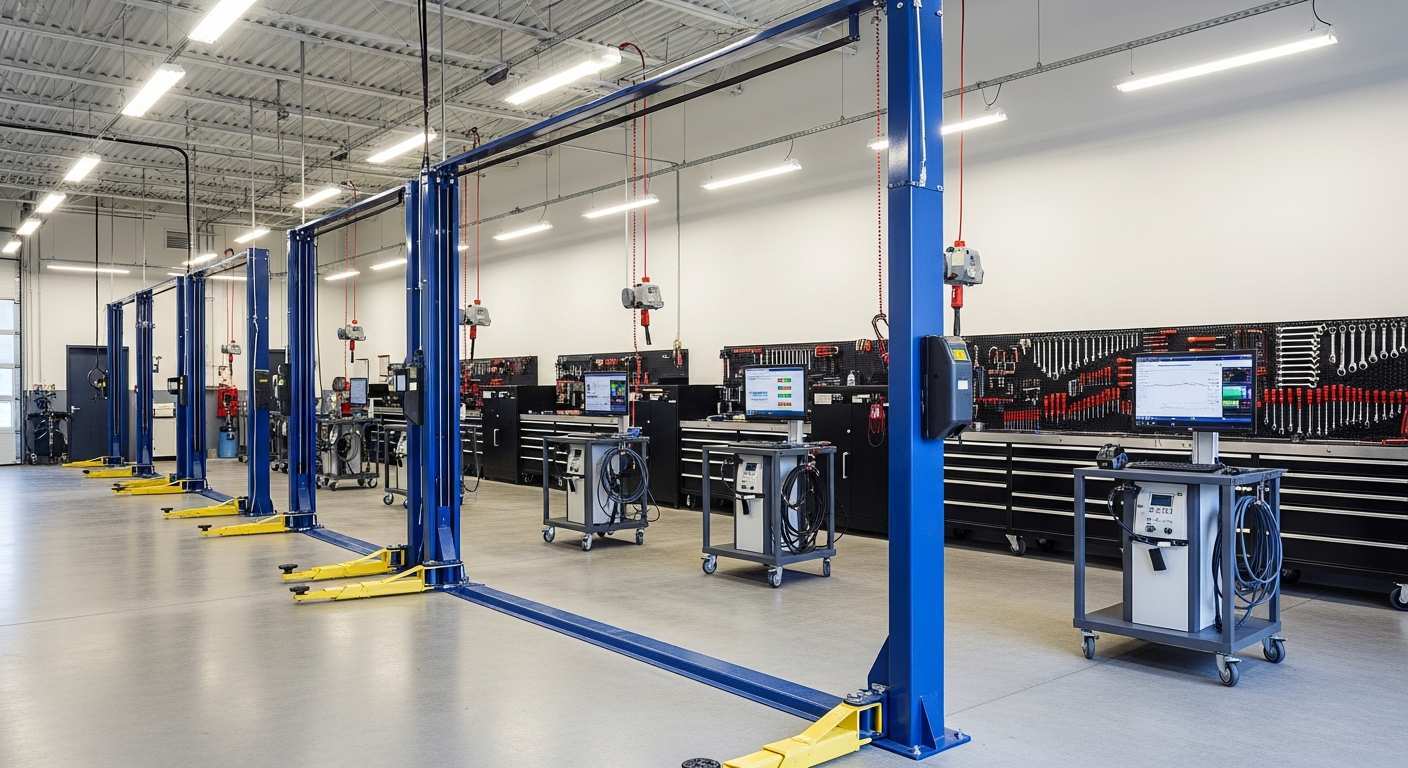
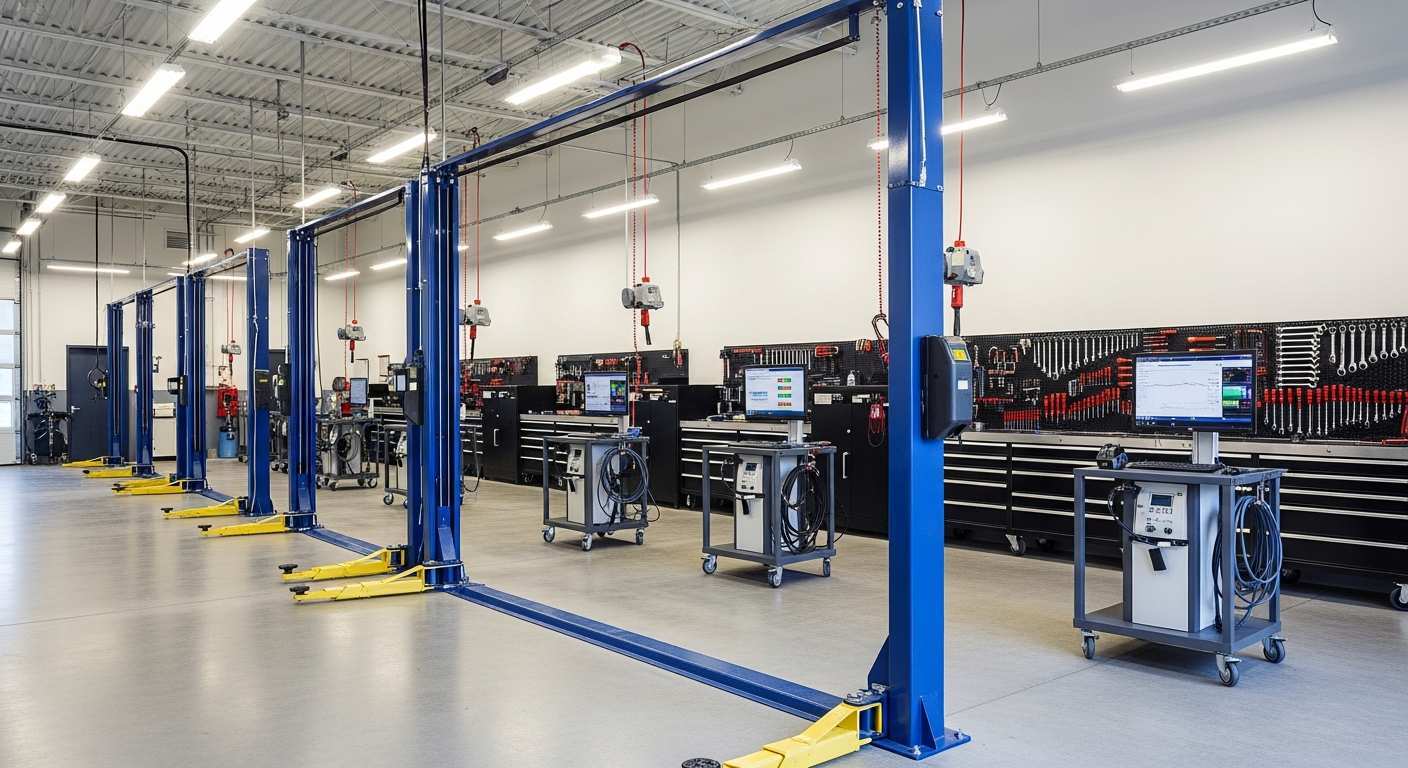
One of the most significant financial hurdles for any auto repair shop is the high cost of specialized equipment. Unlike many other small businesses, an auto repair shop cannot function without substantial investment in tools and machinery. Consider some of the core equipment needed:
- Vehicle Lifts: A single two-post lift, crucial for undercarriage work, can range from $3,000 to $15,000. For a multi-bay shop, this cost quickly multiplies. Four-post lifts or specialty alignment lifts can be even more expensive.
- Diagnostic Equipment: Modern vehicles are complex, relying heavily on sophisticated electronics. Diagnostic scanners and software packages, essential for identifying issues and reprogramming modules, can cost anywhere from $5,000 to $50,000, with ongoing subscription fees for updates.
- Wheel Alignment Machines: Proper alignment is critical for vehicle safety and tire longevity. High-precision alignment systems, including sensors and computer software, typically range from $20,000 to $60,000.
- Tire Changers and Balancers: These fundamental tools for tire service can cost between $5,000 and $20,000 for a quality set.
- Air Compressors: A powerful, reliable air compressor is the heart of many shop operations, powering air tools and lifts, and can cost several thousand dollars.
- Specialty Tools and Welding Equipment: Beyond the major items, countless specialty tools are required for specific repairs, engine work, or bodywork, alongside welding and fabrication equipment, adding thousands more to the investment.
These are not one-time costs; equipment wears out, technology advances, and shops must continually upgrade to handle newer vehicle models and maintain efficiency. Auto repair shop equipment financing is often the most practical solution for these capital-intensive purchases.
Seasonal Cash Flow Swings
Many auto repair shops experience seasonal fluctuations in business. For example, some regions might see a dip in revenue during the summer months as customers prioritize vacations over non-urgent car repairs, or during harsh winters when severe weather limits driving. Conversely, certain seasons might bring spikes in specific services, like tire changes in fall/spring or AC repairs in summer. These unpredictable cash flow dips can make it challenging to cover fixed costs like rent and payroll, highlighting the need for working capital loans for auto repair shops to bridge gaps and maintain stability.
High Payroll for Skilled Technicians
The backbone of any successful auto repair shop is its team of skilled, certified technicians. ASE-certified technicians, for instance, command competitive salaries, often ranging from $50,000 to $90,000 or more annually, depending on experience, certifications, and location. According to the U.S. Bureau of Labor Statistics (BLS), employment of automotive service technicians and mechanics is projected to grow, indicating a consistent demand for skilled labor. Attracting and retaining top talent requires competitive wages and benefits, which can be a significant ongoing expense, especially during slower periods. Loans for auto repair shops can help ensure payroll is met, preventing the loss of valuable employees.
Shop Lease and Facility Maintenance
Whether leasing or owning, the physical premises of an auto repair shop represent a substantial ongoing cost. Lease payments can be significant, and maintaining a clean, safe, and efficient facility requires regular investment. This includes everything from routine maintenance and utility costs to more extensive renovations for ADA compliance or to accommodate new equipment. Upgrading the physical space can improve customer experience and technician productivity, but it often requires a substantial capital injection.
Competition from Dealerships and National Chains
Independent auto repair shops face stiff competition from multiple fronts. Dealership service centers often have exclusive access to manufacturer training and parts, while national chains like Midas, Jiffy Lube, and Firestone leverage brand recognition and extensive marketing budgets. To compete effectively, independent shops must invest in marketing, customer service, and specialized equipment that allows them to offer a broader range of services or specialize in high-demand niches. Automotive repair business loans can provide the capital needed to enhance these competitive advantages.
Need for Parts Inventory
To ensure fast turnaround times and customer satisfaction, auto repair shops often need to stock a significant inventory of common parts (oil filters, brake pads, spark plugs, belts, etc.). This ties up capital that could otherwise be used for other operational needs. Managing inventory efficiently is key, but financing options can help ensure shops have the necessary parts on hand without straining cash flow, allowing them to complete repairs quickly and keep bays busy.
Certifications and Reputation Building
Earning certifications like ASE (Automotive Service Excellence), becoming AAA-approved, or joining networks like NAPA AutoCare or Bosch Service helps build trust and attract customers. While the direct costs of these certifications may not be exorbitant, the investment in training, maintaining standards, and marketing these credentials requires financial backing. A strong reputation, built on quality service and proper certifications, is paramount for long-term success, and financing can support the necessary investments to achieve and maintain it.
In essence, auto repair shop business loans are not just about survival; they are about enabling growth, embracing technological advancements, managing operational complexities, and securing a competitive edge in a dynamic industry. Whether it's a mechanic shop business loan for expansion or auto shop equipment financing for a critical upgrade, strategic financing is a powerful tool for owners looking to thrive.
Types of Auto Repair Shop Business Loans
Understanding the various financing options available is crucial for any auto repair shop owner looking to make informed decisions about their business's future. Crestmont Capital offers a comprehensive suite of products tailored to the unique needs of the automotive repair industry. From essential equipment upgrades to managing cash flow and expanding your footprint, there's a financing solution designed for your specific goals.
Equipment Financing for Auto Repair Shops
For most auto repair shops, equipment is not just a tool; it's the core engine of their business. Without modern, reliable equipment, a shop cannot efficiently diagnose, repair, or service today's technologically advanced vehicles. This makes equipment financing the #1 need for many shops, whether they're just starting out or looking to expand and modernize.
Equipment financing is specifically designed to help businesses acquire the machinery and tools they need without depleting their working capital. This includes financing for a wide array of critical auto repair equipment:
- Vehicle Lifts: Two-post, four-post, scissor lifts, and specialty alignment lifts.
- Diagnostic Equipment: Advanced scanners, oscilloscopes, smoke machines, and software subscriptions.
- Wheel Service Equipment: Alignment machines, tire changers, and wheel balancers.
- Air Compressors: Industrial-grade compressors and air dryer systems.
- Welding Equipment: MIG, TIG, and spot welders for body and frame repair.
- Specialty Tools: Transmission jacks, engine hoists, brake lathes, fluid exchange machines, and more.
How Equipment Financing Works: The process is straightforward. A lender provides funds to purchase specific equipment, and the equipment itself typically serves as collateral for the loan. This collateral-backed structure often makes approval easier and rates more favorable compared to unsecured loans, as it reduces the lender's risk. Once the loan is approved, the funds are disbursed, often directly to the vendor, and you make regular payments over the loan term.
Typical Terms and Rates: For auto shop equipment financing, terms commonly range from 2 to 7 years, aligning with the expected lifespan of the equipment. Rates can start as low as 6% APR for well-qualified borrowers with strong credit and established businesses, but can vary based on the borrower's financial health, the equipment type, and the loan term.
Buy vs. Lease Analysis: Equipment financing allows you to own the asset outright once the loan is repaid. This is different from an equipment lease, where you essentially rent the equipment for a period and then have the option to buy it at fair market value, return it, or upgrade. Owning the equipment builds equity for your business, while leasing can offer lower monthly payments and flexibility to upgrade more frequently, though you don't build equity. For long-term core equipment like lifts, buying is often preferred.
New vs. Used Equipment Financing: Crestmont Capital can finance both new and used equipment. Financing used equipment can be a cost-effective way to get necessary tools, especially for shops on a tighter budget or those needing a temporary solution. Lenders will typically assess the condition and remaining useful life of used equipment.
Increasing Capacity and Revenue: Upgrading or adding equipment directly translates to increased shop capacity and revenue per bay. For instance, adding a new two-post lift can allow a technician to work on more vehicles simultaneously, potentially increasing shop capacity by 30-50% per technician. A new, faster alignment machine can reduce service times, allowing more alignments per day. This direct correlation between investment and increased profitability makes auto shop equipment financing a powerful growth tool. Visit our equipment financing page for more details.
Working Capital Loans for Auto Repair Shops
While equipment financing handles long-term asset acquisition, working capital loans for auto repair shops address the day-to-day operational needs and fluctuations that are common in the industry. These loans provide a crucial financial cushion, ensuring your business remains stable and can seize opportunities, even during challenging times.
Working capital loans are typically unsecured, meaning they don't require specific collateral like equipment or real estate. They are designed to cover immediate, short-term expenses and bridge gaps in cash flow. Common uses for working capital in an auto repair shop include:
- Seasonal Cash Flow Dips: As discussed, many shops experience slower periods. A working capital loan can cover fixed costs like rent, utilities, and insurance when revenue temporarily declines, preventing financial strain.
- Payroll During Slow Months: Maintaining a skilled team is paramount. Working capital ensures you can meet payroll obligations for your ASE-certified technicians even when business is slow, avoiding layoffs and retaining valuable talent.
- Parts Inventory Purchases: Stocking common parts is essential for quick service. Working capital allows you to purchase inventory in bulk or as needed, ensuring you have the right parts on hand without tying up your operating cash.
- Marketing and Advertising Costs: Investing in marketing campaigns (e.g., seasonal promotions, local advertising, digital marketing) can help drive business during slow periods or attract new customers.
- Unexpected Expenses: From a sudden roof leak to a critical software update, unforeseen costs can arise. A working capital loan provides a buffer for these emergencies without disrupting your core operations.
How Working Capital Loans Work: You receive a lump sum of money, which you then repay over a set period with fixed payments. This predictability helps with budgeting. The funds are flexible and can be used for any legitimate business purpose, giving you the freedom to address your most pressing needs.
Terms and Funding Speed: Working capital loans typically have shorter terms, ranging from 6 months to 3 years. One of their key advantages is speed; funds can often be deposited into your business account within 24-48 hours of approval, making them ideal for urgent needs. This rapid access to capital provides shops with financial stability, allowing them to focus on service and growth rather than worrying about immediate cash shortages. Learn more about our flexible small business loans.
SBA Loans for Auto Repair Shops
When an auto repair shop is ready for a significant leap – whether it's acquiring real estate, undertaking a major expansion, or purchasing a competitor – SBA loans for auto repair shops often present the most advantageous financing solution. Backed by the U.S. Small Business Administration, these loans offer some of the longest terms, lowest interest rates, and largest loan amounts available on the market, making them ideal for substantial, long-term investments.
Crestmont Capital works with SBA-approved lenders to facilitate two primary types of SBA loans relevant to auto repair shops:
- SBA 7(a) Loans: This is the most versatile and common SBA loan program. It can be used for a broad range of purposes, including working capital, equipment purchases, leasehold improvements, debt refinancing, and even the acquisition of an existing business. Auto repair shops can borrow up to $5 million through the SBA 7(a) program. Terms typically extend up to 10 years for equipment and working capital, and up to 25 years for real estate.
- SBA 504 Loans: Specifically designed for the purchase or renovation of owner-occupied commercial real estate and/or major equipment. For an auto repair shop owner looking to buy the building their shop operates in or construct a new facility, the SBA 504 loan is an excellent option. It involves a partnership between a private lender (providing a first mortgage, usually 50% of the project cost), a Certified Development Company (CDC) backed by the SBA (providing a second mortgage for up to 40%), and the borrower (contributing 10-15% equity). This structure allows for lower down payments and long-term, fixed-rate financing on the CDC portion.
What the SBA Requires for Auto Shops: While highly beneficial, SBA loans have stricter eligibility requirements and a more extensive application process compared to conventional loans. Lenders will scrutinize:
- Time in Business: Typically, a minimum of 2 years in operation is preferred, demonstrating business stability.
- Personal Credit: A strong personal credit score (generally 680+) is crucial.
- Business Financials: Comprehensive financial statements, including profit & loss statements, balance sheets, and cash flow projections, are required to prove the business's ability to repay the loan.
- Business Plan: For expansion or acquisition, a detailed business plan outlining the project, market analysis, and financial projections is often necessary.
The application process for SBA loans can take several weeks to a few months due to the thorough underwriting required. However, the favorable terms, lower rates (often tied to the Prime Rate plus a margin), and longer repayment periods make them incredibly attractive for significant investments that drive long-term growth and stability for your auto repair shop. For more information, visit the official SBA website or explore our dedicated SBA loans page.
Business Line of Credit for Auto Repair Shops
The auto repair industry is inherently unpredictable. One week could be bustling with major repairs, while the next might see a slower pace with more routine maintenance. A business line of credit (LOC) for auto repair shops is an ideal financing tool for managing this inherent unpredictability, offering flexible access to funds when you need them and only charging interest on the amount you draw.
Unlike a term loan, which provides a lump sum upfront, a business line of credit is a revolving credit facility. Think of it like a business credit card, but with typically lower interest rates and higher credit limits. You are approved for a maximum credit limit, and you can draw funds up to that limit as needed. As you repay the drawn amount, that credit becomes available again, allowing you to reuse the line of credit repeatedly.
Ideal Uses for an Auto Repair Shop LOC:
- Managing Cash Flow Swings: Perfect for covering payroll, rent, or utilities during unexpected slow periods or seasonal dips.
- Parts Inventory Management: Quickly purchase parts for urgent repairs or take advantage of vendor discounts without waiting for customer payments.
- Marketing Spend: Fund a sudden marketing opportunity or launch a new promotional campaign.
- Minor Equipment Repairs: Cover the cost of unexpected repairs to existing equipment without impacting your operating budget.
- Employee Training: Invest in certifications or advanced training for your technicians when opportunities arise.
How to Use a LOC Strategically: The key to maximizing a business line of credit is to use it for short-term, fluctuating needs. It provides a safety net and operational flexibility. Repay promptly as revenue comes in to keep your interest costs down and your credit line open for future needs. It's particularly ideal for shops with an established history of consistent revenue, as lenders prefer to see a track record of financial stability.
Terms: Business lines of credit for auto repair shops typically have interest rates ranging from 7% to 20% APR. While the credit line itself is revolving, there may be an annual fee or a draw fee. Funding can be very fast, often within 1-3 days, making it an excellent resource for immediate needs. Explore our flexible business line of credit options.
Commercial Real Estate Loans / Buying Your Shop Building
For many auto repair shop owners, the dream is not just to run a successful business, but to own the land and building it operates from. Commercial real estate loans, and specifically options like the SBA 504 loan, make this dream a reality, offering significant advantages over leasing.
Why Owning vs. Leasing Matters for Auto Repair Shops:
- Elimination of Landlord Risk: Owning your building removes the risk of rent increases, unexpected lease terminations, or a landlord's decision to sell the property. This provides unparalleled stability for your business.
- Equity Building: Each mortgage payment contributes to building equity in a valuable asset. This equity can be leveraged for future financing or serve as a significant asset upon retirement or sale of the business.
- Ability to Customize Facility: As an owner, you have the freedom to make renovations, expand, or customize the facility to perfectly suit your operational needs, install specialized equipment, or enhance customer areas without landlord restrictions.
- Tax Advantages: Property ownership often comes with tax benefits, such as depreciation deductions and interest expense deductions.
- Appreciation: Commercial real estate can appreciate in value over time, providing an additional layer of wealth accumulation beyond the business itself.
SBA 504 Loan for Owner-Occupied Commercial Real Estate: As mentioned in the SBA section, the SBA 504 loan is specifically tailored for this purpose. It's designed to help small businesses acquire major fixed assets, primarily commercial real estate. Key features include:
- Lower Down Payments: Typically, only 10-15% down payment is required, making it more accessible than conventional commercial mortgages that often demand 20-30%.
- Longer Terms: Repayment terms for the real estate portion can extend up to 25 years, resulting in lower monthly payments and improved cash flow.
- Fixed Rates: The SBA 504 portion of the loan often comes with a fixed interest rate, providing predictability for your long-term expenses.
Typical Amounts: For auto repair shops, commercial real estate loans can range from $200,000 to $2 million or more, depending on the property value and location. Crestmont Capital specializes in structuring these buy-your-building deals for auto shops, guiding you through the complexities of the SBA 504 program or connecting you with conventional commercial mortgages. Our expertise ensures you get a financing solution that aligns with your long-term vision. Discover more about our long-term business loans.
Fast Business Loans for Emergency Repairs and Opportunities
In the auto repair business, time is literally money. When a critical piece of equipment fails – a main lift goes down, the air compressor dies, or your diagnostic machine malfunctions – every day your bay is offline or your technicians are idle can cost your business $500 to $2,000 or more in lost revenue. These are the moments when fast business loans become indispensable.
Fast business loans, often referred to as merchant cash advances or short-term loans, are designed for rapid approval and even faster funding, sometimes within the same day or next business day. They are perfect for:
- Equipment Emergencies: Quickly replacing a broken lift, repairing a critical diagnostic tool, or getting a new compressor installed to minimize downtime and prevent significant revenue loss.
- Urgent Inventory Needs: If a specific, high-demand part is needed immediately for multiple jobs and your regular suppliers are slow, a fast loan can cover the cost.
- Unforeseen Facility Repairs: A sudden plumbing issue, electrical problem, or structural damage that needs immediate attention to keep the shop operational.
- Seizing Below-Market Opportunities: Sometimes, a local competitor might be selling off equipment at auction for a fraction of its value, or an adjacent property becomes available at an attractive price. Fast funding allows you to jump on these time-sensitive deals before they disappear, giving your shop a competitive edge.
While these loans typically come with higher interest rates or factor rates due to their speed and increased risk, their value lies in preventing larger financial losses or enabling swift action on lucrative opportunities. Crestmont Capital understands the urgency of these situations and offers streamlined application processes to get your auto repair shop the funds it needs, fast. Explore our fast business loans for immediate solutions.
First-Time Business Loans for New Auto Repair Shops
Opening your first auto repair shop is an exciting venture, but it comes with a unique set of financial needs and challenges. Securing first-time business loans for new auto repair shops is crucial for covering initial setup costs and establishing a solid foundation for growth. Crestmont Capital recognizes the potential in aspiring auto shop owners and offers programs designed to help new businesses get off the ground.
The initial capital outlay for a new auto repair shop can be substantial, covering various essential elements:
- Leasehold Improvements: Customizing a leased space to meet the specific needs of an auto shop (e.g., ventilation systems, specialized flooring, office build-out, customer waiting areas).
- Initial Equipment Package: Purchasing the fundamental lifts, diagnostic tools, air compressors, and hand tools required to start operations. This can be a significant upfront cost.
- Licensing and Permits: Covering the various state and local business licenses, environmental permits, and certifications required to operate legally.
- Signage and Branding: Investing in exterior signage, interior branding, and initial marketing materials to attract first customers.
- Working Capital Reserve: Establishing a financial buffer to cover initial payroll, inventory, and operating expenses during the first few months before consistent revenue streams are fully established.
What Lenders Look for in New Shop Owners: While new businesses typically face more scrutiny, lenders like Crestmont Capital look for specific indicators of potential success:
- Industry Experience: A strong background in automotive repair, ideally with management or supervisory experience. ASE certifications are a significant plus.
- Personal Credit: Excellent personal credit (680+) demonstrates financial responsibility.
- Comprehensive Business Plan: A detailed plan outlining your market analysis, competitive advantages, operational strategy, and realistic financial projections.
- Personal Investment: Showing that you have invested some of your own capital into the business (e.g., 10-20% of startup costs) signals commitment.
- Cash Flow Projections: Clear, conservative projections for how the business will generate revenue and repay the loan.
Crestmont Capital offers programs tailored for first-time auto shop owners, often combining aspects of equipment financing for the necessary tools and working capital for initial operational expenses. We understand that every successful business starts somewhere, and we're committed to supporting the next generation of automotive entrepreneurs. Explore our solutions for first-time business loans.
Who Qualifies for Auto Repair Shop Financing?
Understanding the general qualifications for auto repair shop business loans can help you prepare your application and increase your chances of approval. While specific requirements can vary slightly depending on the loan product and lender, Crestmont Capital aims to be flexible and evaluate each business on its unique merits. Here’s a general overview of what lenders typically look for:
| Requirement | Typical Minimum | Notes |
|---|---|---|
| Time in Business | 6+ months | New shops considered with strong personal credit, industry experience, and a solid business plan. |
| Annual Revenue | $100,000+ | Lower minimums may apply for equipment-backed loans or smaller working capital needs. |
| Credit Score (Personal) | 600+ | 650+ preferred for best rates and terms; equipment loans can be more flexible due to collateral. |
| Business License | Required | Must have an active state and local business license. |
| Shop Type | All | Independent shops, franchises, specialty repair centers, and even mobile mechanics. |
| Collateral | May be required | Equipment itself serves as collateral for equipment loans; real estate for commercial mortgages. |
| Bank Statements | 3-6 months | To assess cash flow and financial health, especially for working capital and line of credit products. |
Real-World Financing Scenarios for Auto Repair Shop Owners
To truly understand the impact of auto repair shop business loans, it's helpful to see how they play out in real-world situations. These scenarios illustrate how Crestmont Capital has helped auto repair shop owners like you overcome challenges and achieve their growth objectives.
Scenario 1: Upgrading to a 4-Bay Shop — $85,000 Equipment Package
The Challenge: "Precision Auto Works," a popular 2-bay independent auto repair shop in Columbus, Ohio, was experiencing a common problem: success leading to bottlenecks. The owner, Mark, had built a strong reputation for quality service, resulting in a consistent 3-week backlog for appointments. While a good problem to have, it meant turning away new customers and frustrating existing ones with long waits, limiting growth potential. Mark realized he needed to expand his capacity to meet demand.
The Solution: Mark approached Crestmont Capital for auto shop equipment financing. After discussing his needs, he decided to expand his facility to a 4-bay setup. He secured an $85,000 equipment loan specifically for this upgrade. The package included four new, heavy-duty two-post lifts at an average cost of $8,500 each, and a state-of-the-art $51,000 Hunter Hawkeye Elite wheel alignment system, which would significantly improve efficiency and accuracy compared to his older model. The loan was structured with a favorable 60-month (5-year) term, resulting in manageable monthly payments of approximately $1,650.
The Outcome: With the additional two bays and advanced alignment system, Precision Auto Works immediately saw a dramatic increase in throughput. Mark was able to hire two new ASE-certified technicians, effectively doubling his capacity. The additional two bays alone began generating an extra $12,000 per month in revenue from new services and reduced backlog. This meant the $1,650 monthly loan payment was easily covered, and the loan effectively paid for itself in less than 7 months through the increased revenue. Mark's shop moved from a 3-week backlog to being able to accommodate same-week appointments, significantly improving customer satisfaction and attracting even more business. The investment not only solved his capacity problem but also positioned his shop as a modern, high-tech service center in the community.
Scenario 2: Surviving a Slow Winter — $30,000 Working Capital Loan
The Challenge: "North Star Automotive," an established auto repair shop in Minneapolis, Minnesota, consistently faced a predictable but challenging seasonal slump. From November through February, harsh winters and holiday spending habits led to a 35% drop in non-essential repair and maintenance revenue. While the shop could handle emergency repairs, the reduced cash flow made it difficult to cover fixed costs like payroll for its experienced technicians, rent, and utilities without dipping into critical reserves or delaying supplier payments.
The Solution: The owner, Sarah, understood the pattern and proactively sought a solution. She applied for a $30,000 working capital loan for auto repair shops from Crestmont Capital. The loan was approved quickly, providing the necessary funds to bridge the seasonal gap. Instead of just surviving, Sarah strategically used a portion of the loan to launch a targeted marketing push for winter-specific services: comprehensive battery checks, tire changeovers, antifreeze flushes, and heating system diagnostics. This proactive approach aimed to mitigate the revenue drop rather than just endure it.
The Outcome: The $30,000 working capital loan proved to be a lifesaver. It ensured all technicians received their full paychecks on time, maintaining team morale and preventing any skilled labor turnover. Rent and utility bills were paid without issue. The winter marketing campaign, funded by the loan, brought in enough additional business for seasonal services to offset some of the general revenue decline. By March, as the weather improved and customers started thinking about spring maintenance, North Star Automotive's revenue recovered strongly. Sarah was able to comfortably repay the loan in 10 months, having navigated the slow season without financial stress and having even boosted her market presence with the targeted advertising. The working capital loan provided stability and allowed her to maintain growth momentum.
Scenario 3: Buying the Building — $425,000 SBA 504 Loan
The Challenge: "Lone Star Auto Service," a highly successful independent auto repair shop in Dallas, Texas, had been leasing its prime commercial space for 8 years. The owner, David, was paying $4,200 per month in rent, and while his business was thriving, he was increasingly frustrated by rising lease costs and the lack of control over his facility. He wanted to eliminate landlord risk, build equity, and have the freedom to customize his shop, but he knew purchasing commercial real estate was a substantial investment.
The Solution: David approached Crestmont Capital, interested in a commercial real estate loan. Given his long-term goals and the significant capital requirement, an SBA 504 loan for auto repair shops was identified as the ideal solution. The building was appraised at $520,000. Crestmont Capital structured the deal: David contributed a 10% down payment ($52,000), and the remaining $468,000 was financed through a combination of a bank first mortgage and an SBA 504 debenture. The SBA 504 portion offered a below-market fixed interest rate and a 20-year term, providing long-term stability.
The Outcome: David successfully purchased his shop building. His new combined monthly mortgage payment (for both the bank and SBA portions) came out to approximately $3,100 – significantly lower than his previous $4,200 monthly rent. This immediately improved his monthly cash flow by $1,100. Beyond the immediate savings, David gained complete control over his facility, allowing him to plan for future expansions and equipment installations without landlord approval. Most importantly, he began building substantial equity in a valuable commercial property, transforming a recurring expense into a long-term asset. The SBA 504 loan not only secured his business's future but also created a significant wealth-building opportunity for David.
Scenario 4: Opening a Second Location — $200,000
The Challenge: Maria, the owner of "Sunshine Auto Care" in Miami, Florida, had grown her single shop into a highly profitable enterprise with a loyal customer base. She saw an untapped market in a neighboring, rapidly developing suburb and believed a second location would be a natural progression. However, opening a new shop required significant upfront capital for leasehold improvements, initial equipment, and working capital to cover the initial months of operation before profitability.
The Solution: Maria partnered with Crestmont Capital to finance her expansion. We structured a comprehensive financing package totaling $200,000, combining two distinct products to meet her varied needs. A $120,000 working capital term loan was secured to cover the extensive leasehold improvements (new paint, flooring, customer waiting area, service desk, electrical upgrades) and initial operational expenses like inventory and marketing. Simultaneously, an $80,000 equipment loan for auto repair shops was arranged to purchase four new two-post lifts, a diagnostic scanner, and a tire changer/balancer package for the new facility. Crestmont Capital coordinated both products to ensure a seamless funding process.
The Outcome: With the combined financing, Maria was able to open her second Sunshine Auto Care location on schedule and fully equipped. The working capital allowed her to make the new space welcoming and functional, while the equipment loan ensured her technicians had the best tools from day one. By strategically allocating the funds, Maria effectively managed the startup costs without straining her existing business's cash flow. The second location quickly gained traction, benefiting from her established brand reputation and smart local marketing. It reached its break-even point in month 9, and by the end of its first year, was contributing significantly to the overall revenue and profitability of Sunshine Auto Care. This strategic use of financing allowed Maria to successfully double her business's footprint and market reach.
Rates, Terms, and Costs to Expect
When considering auto repair shop business loans, understanding the typical rates, terms, and funding speeds for different products is essential for making an informed decision. Crestmont Capital prides itself on transparent terms and competitive offerings. Here's a general overview of what you can expect:
| Product | Loan Amount | Rate Range | Term | Funding Speed |
|---|---|---|---|---|
| Equipment Financing | $10K-$2M | 6-18% APR | 2-7 years | 1-3 days |
| Working Capital Loan | $10K-$500K | 8-25% APR | 6-36 months | 24-48 hours |
| SBA 7(a) Loan | $50K-$5M | Prime+2.75-4.75% | Up to 10 years | 2-6 weeks |
| SBA 504 (Real Estate) | $125K-$5M | Below-market fixed | 10-25 years | 3-6 weeks |
| Business Line of Credit | $25K-$500K | 7-20% APR | Revolving | 1-3 days |
| Fast/Emergency Loan | $5K-$250K | Factor rate | 3-18 months | Same day |
Note: Rates and terms are indicative and subject to change based on market conditions, borrower qualifications, and specific loan products. "Factor rate" loans are typically repaid via a percentage of daily or weekly sales, and the cost is expressed as a factor (e.g., 1.15) rather than an APR.
How the Application Process Works
Applying for auto repair shop business loans with Crestmont Capital is designed to be as straightforward and efficient as possible, allowing you to focus on running your business. We've streamlined our process to get you from application to funding with minimal hassle.
1. Apply Online
Our initial application is quick and easy. Simply visit offers.crestmontcapital.com/apply-now. The form takes approximately 5-10 minutes to complete, asking for basic information about your business and your financing needs. This step often involves a soft credit pull, which won't impact your credit score.
2. Submit Documents
Once your initial application is reviewed, we'll request a few standard documents. For most products like working capital or equipment financing, this typically includes your last 3-6 months of business bank statements, a copy of your active business license, and basic financial information. For SBA loans or larger requests, more comprehensive financials and a business plan may be required.
3. Underwriting Review
Our expert underwriting team will quickly review your application and submitted documents. For most of our flexible business loan products, you can expect an underwriting decision within 24 hours. SBA loans, due to their federal backing and comprehensive requirements, typically have a longer review period, ranging from a few weeks to a month or more.
4. Review Your Offer
If approved, you'll receive a clear, comprehensive loan offer. We believe in complete transparency, so your offer will detail all the essential terms: the loan amount, interest rate (or factor rate), repayment schedule, total payment amount, and any associated fees. Our dedicated loan advisors are available to walk you through the offer, answer all your questions, and ensure you understand every aspect before you commit.
5. Funding
Once you accept the offer, the funding process begins. For fast business loans or working capital, funds can be deposited into your business bank account as quickly as the same day. Equipment loans typically take 1-3 business days to process and disburse, often directly to your equipment vendor. Our goal is to get you the capital you need, precisely when you need it, to keep your auto repair shop running smoothly and growing.
Tips for Getting Your Auto Repair Shop Loan Approved
Securing a mechanic shop business loan can be a straightforward process, but preparing thoroughly can significantly improve your chances of approval and help you secure the best possible terms. Here are six essential tips for auto repair shop owners:
-
Separate Business and Personal Banking
This is perhaps the most critical step for any small business owner seeking financing. Lenders need a clear picture of your business's financial health, distinct from your personal finances. Commingling funds makes it difficult to assess your business's revenue, expenses, and profitability. Open a dedicated business checking account and use it for all your shop's income and expenditures. This demonstrates professionalism and makes financial analysis much easier for underwriters.
-
Maintain Accurate Revenue Records
Lenders rely heavily on your financial history to determine your ability to repay a loan. Consistent and accurate revenue records are paramount. Utilize modern shop management software (e.g., Shop-Ware, AutoRepair Cloud, Mitchell 1) to track sales, services performed, parts inventory, and labor costs. This software not only streamlines your operations but also generates professional, lender-friendly reports like profit & loss statements and balance sheets, making your application process smoother.
-
Have Your Certifications and Licenses Ready
The auto repair industry is built on trust and expertise. Lenders view professional certifications and industry affiliations favorably. Ensure you have your ASE certifications, active state and local business licenses, and any brand certifications (e.g., AAA-approved, NAPA AutoCare, Bosch Service) readily available. These demonstrate your commitment to quality, compliance, and professional standards, which can positively influence a lender's decision.
-
Show Consistent Monthly Revenue
While seasonal fluctuations are common, lenders prefer to see a pattern of consistent revenue generation, even if some months are lower than others. Demonstrate that your business has a reliable income stream. If you have slow months, be prepared to explain how you manage them (e.g., through marketing initiatives, diverse service offerings, or existing cash reserves). Steady revenue signals stability and a lower risk profile.
-
For Equipment Loans, Have the Vendor Quote Ready
When applying for auto shop equipment financing, knowing exactly what you intend to purchase is crucial. Obtain a detailed quote from your equipment vendor for the specific lifts, diagnostic tools, or alignment machines you need. This signals professionalism, demonstrates a clear plan for the funds, and helps the lender quickly assess the collateral value, potentially speeding up the approval process.
-
Know Your Credit Score and Address Any Errors
Your personal and business credit scores are significant factors in loan approvals and interest rates. Before applying for any loans for auto repair shops, obtain copies of your credit reports (from Equifax, Experian, and TransUnion) and review them carefully. Dispute any inaccuracies or errors you find, as these can negatively impact your score. Understanding your credit standing allows you to anticipate potential challenges and address them proactively.
Why Choose Crestmont Capital for Auto Repair Shop Financing
In the competitive landscape of small business lending, choosing the right financial partner can make all the difference for your auto repair shop's growth and stability. Crestmont Capital stands out as a premier choice, consistently rated #1 small business lender in the U.S., with a proud history of funding automotive businesses since 2015. We are not just lenders; we are partners who understand the unique dynamics and challenges of the auto repair industry.
Industry Expertise
We speak your language. Our team has a decade of experience funding auto repair shops, automotive businesses, and service-based companies. We understand the high cost of specialized equipment, the seasonal cash flow swings, the skilled labor market for ASE-certified technicians, and the need for continuous upgrades to stay competitive. This deep industry knowledge means our underwriting goes beyond simple credit scores, evaluating the full picture of your business's potential and operational realities.
Fast Decisions & Funding
We know that in the auto repair business, time is money. A broken lift or a missed opportunity can cost you significantly. That's why we prioritize speed and efficiency. Many of our loan products offer same-day decisions, and funding can be as fast as 24-48 hours, or even the same day for urgent needs. Our initial application involves a soft credit pull, so you can explore your options without impacting your credit score.
Multiple Products, Tailored Solutions
Whether you need auto shop equipment financing for a new alignment system, working capital for a slow season, an SBA loan to buy your building, or a business line of credit for ongoing flexibility, Crestmont Capital offers a diverse portfolio of auto repair shop business loans. We don't believe in one-size-fits-all solutions. Our dedicated loan advisors work with you to understand your specific goals and match you with the financing product that best fits your business's unique situation.
Transparent Terms & Dedicated Support
Transparency is a core value at Crestmont Capital. You'll receive clear, straightforward loan offers with no hidden fees or surprises. Our dedicated loan advisors are not just order-takers; they are experienced professionals who provide personalized guidance throughout the entire process. They are there to answer your questions, explain your options, and ensure you feel confident in your financing decisions. We are committed to helping your garage business loans fuel your success, leveraging insights into small business financing trends, as often highlighted by publications like Forbes or CNBC.
Frequently Asked Questions: Auto Repair Shop Business Loans
1. What can I use an auto repair shop business loan for?
Auto repair shop business loans are incredibly versatile and can be used for a wide array of purposes to grow and stabilize your operation. Common uses include purchasing essential equipment like vehicle lifts, diagnostic tools, and alignment machines, which are critical for modern repairs. They can also fund working capital needs such as covering payroll during slow seasons, stocking up on parts inventory, or investing in marketing campaigns. Many shops use these loans for facility upgrades, leasehold improvements, or even acquiring the commercial real estate their shop operates in. Loans can also cover unexpected emergencies, like major equipment breakdowns, or provide capital for expansion, such as opening a second location or acquiring a competitor's business.
2. How much can an auto repair shop borrow?
The amount an auto repair shop can borrow varies significantly depending on the type of loan, the lender, and the shop's financial health and needs. Crestmont Capital offers a broad range of funding, typically from $10,000 up to $5 million. For specific equipment purchases, loans might range from $10,000 to $2 million. Working capital loans usually fall within $10,000 to $500,000. Larger investments, such as commercial real estate purchases or major expansions, often utilize SBA loans which can go up to $5 million. Factors like your business's annual revenue, time in business, and credit score will influence the maximum loan amount you qualify for.