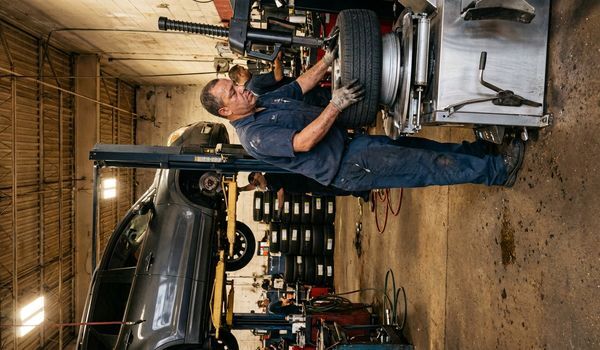
Tire shop financing statistics tell a consistent story in 2026: Americans are keeping their vehicles longer than at any point in history, replacement tire demand keeps climbing, and the shops capturing that demand are the ones investing in modern changers, balancers, alignment systems, and mobile service trucks with borrowed capital rather than drained savings. Whether you run a single-bay independent tire store or a multi-location dealership, the numbers behind how tire shops fund growth can help you benchmark your own decisions.
This report compiles the most current industry data on market size, shop revenue, equipment costs, loan approval rates, and financing terms. Every figure is framed for one audience: tire shop owners who want to make smarter funding decisions this year.
In This Article
- The U.S. Tire Industry at a Glance
- Key Tire Shop Financing Statistics for 2026
- Tire Shop Revenue and Profitability Statistics
- Equipment and Technology Investment Statistics
- How Tire Shops Use Financing
- The Most-Financed Equipment in Tire Shops
- Financing Approval Rates, Terms, and Costs
- Tire Shop Financing Options Compared
- What These Statistics Mean for Shop Owners
- Real-World Tire Shop Financing Scenarios
- How Crestmont Capital Helps Tire Shops
- Frequently Asked Questions
- How to Get Started
- The Bottom Line
The U.S. Tire Industry at a Glance
The tire business sits at the center of the American automotive aftermarket. Industry estimates place total U.S. tire shipments at roughly 330 million to 340 million replacement units per year, with tens of millions more going to original equipment manufacturers. Total retail tire sales across dealer channels are estimated in the range of $55 billion to $65 billion annually, making tires one of the largest single categories in the entire aftermarket.
The structure of the industry favors independent operators. According to U.S. Census Bureau County Business Patterns data, tire dealer establishments number in the tens of thousands nationwide, and the large majority are small, locally owned businesses rather than national chains. That fragmentation matters for financing: it means most tire shops are exactly the kind of business that banks underserve and specialty lenders prioritize.
Three demand drivers define the 2026 landscape:
- Record vehicle age. The average age of cars and light trucks on U.S. roads has reached approximately 12.6 years, an all-time high. Older vehicles consume tires, brakes, and alignment services at far higher rates than new ones, and every year of added fleet age expands the replacement market.
- Heavier vehicles. Trucks and SUVs now account for roughly four out of five new vehicles sold, and EVs add meaningful weight over their gas counterparts. Heavier vehicles wear tires faster and require more frequent rotation, balancing, and replacement.
- Miles driven have fully recovered. Total vehicle miles traveled in the U.S. has surpassed pre-2020 levels, which directly drives tire wear and replacement cycles across every region.
Key Stat: The average vehicle on U.S. roads is now about 12.6 years old, the oldest fleet in American history. Every additional year of vehicle age translates into more tire and service spend per vehicle, and more opportunity for well-equipped shops.
For shop owners, the implication is straightforward. Demand is not the constraint in 2026. Capacity, equipment, and working capital are. The shops growing fastest are the ones that treat financing as a growth tool rather than a last resort.
Key Tire Shop Financing Statistics for 2026
The headline tire shop financing numbers for 2026 reflect an industry borrowing strategically rather than reactively. Here are the statistics that matter most, compiled from lender data, industry surveys, and market research:
- Approximately 60% to 70% of independent tire shops use some form of financing for major equipment purchases, according to industry lending data. Cash purchases of big-ticket equipment have become the exception, not the rule.
- The average tire shop equipment financing transaction falls between $25,000 and $75,000. Single-machine deals (a changer or balancer) sit at the low end; full bay buildouts with alignment systems sit at the high end.
- Approval rates for established shops run 70% to 85% with specialty equipment lenders, compared with roughly 50% or lower at traditional banks for the same borrower profile.
- Median financing terms run 36 to 60 months for tire shop equipment, with 24-month terms common for smaller tools and 72-month terms available on six-figure packages.
- Working capital borrowing by tire shops has grown steadily as shops carry larger inventories. Tire prices have risen meaningfully since 2020, so the same shelf of inventory ties up far more cash than it did five years ago.
- Mobile tire service is the fastest-growing financed category. Lenders report double-digit annual growth in financing requests for mobile service vans and trucks, reflecting the shift toward on-site fleet and consumer service.
- Roughly 1 in 4 tire shop financing applications now includes an ADAS-capable alignment system. Calibrations have become a standard upsell on alignment work, and shops are financing the capability rather than watching the work go to competitors.
These numbers describe a healthy credit market for healthy operators. Lenders understand tire shop economics, collateral is strong, and repayment performance in the category has historically been among the best in the automotive aftermarket.
Ready to Upgrade Your Tire Shop?
Join the majority of shop owners who finance growth instead of draining savings. Apply in minutes with the #1 business lender in the U.S.
Apply Now →Tire Shop Revenue and Profitability Statistics
Financing decisions only make sense against the revenue they enable, and tire shop economics in 2026 support investment. Here is what the data shows:
- Average annual revenue for an independent tire shop ranges from roughly $700,000 to $1.5 million, depending on bay count, location, and service mix. Multi-location dealers commonly exceed $3 million per store.
- Gross margins on tire sales typically run 25% to 40%, while labor and service work carries gross margins of 50% to 65%. The most profitable shops treat tires as the traffic driver and services as the profit engine.
- Net profit margins for well-run shops land between 5% and 12%. Shops with alignment, ADAS calibration, and fleet service capabilities trend toward the top of that range.
- A single alignment bay can generate $100,000 to $200,000 in annual revenue. At those numbers, a $30,000 to $50,000 alignment system often pays for itself within 18 to 30 months, which is exactly why lenders treat it as preferred collateral.
- The average passenger tire replacement ticket now exceeds $600, up materially from pre-2021 levels as tire prices and vehicle sizes have increased. Light truck and SUV fitments routinely push tickets past $1,000.
- Fleet and commercial accounts represent the fastest-growing revenue line. Shops reporting dedicated fleet programs attribute 20% to 40% of total revenue to commercial accounts, with far more predictable volume than walk-in retail.
The revenue side of the ledger explains why financing approval rates in this category stay high. When a financed asset reliably produces two to four times its monthly payment in gross profit, defaults are rare and lenders compete for the paper.
Pro Tip: Before applying for financing, pull your last 12 months of revenue by category. Lenders approve faster, and at better terms, when you can show exactly how the new equipment adds to an existing revenue stream.
Tire Shop Equipment and Technology Investment Statistics
Equipment is the single largest capital category for tire shops, and 2026 pricing reflects both inflation and the technology content of modern machines. Current market pricing by category:
- Tire changers: $4,000 to $15,000. Basic tilt-back units start at the low end; touchless and leverless machines capable of handling run-flats and low-profile fitments run $10,000 to $15,000.
- Wheel balancers: $3,000 to $12,000. Road-force balancers, now considered essential for diagnosing vibration complaints, occupy the top of the range.
- Alignment systems: $15,000 to $50,000 for modern 3D imaging machines, with ADAS calibration packages adding $10,000 to $25,000. Alignment lifts add another $8,000 to $20,000.
- Lifts: $4,000 to $12,000 per two-post or four-post unit, with heavy-duty truck lifts reaching $25,000 or more.
- Mobile service trucks and vans: $60,000 to $150,000 fully upfitted with a compressor, generator, changer, and balancer. This category has seen the fastest growth in financing volume since 2022.
- TPMS tools and diagnostics: $1,500 to $5,000, an increasingly mandatory line item as TPMS service is now part of nearly every tire sale.
- Air compressors and shop infrastructure: $2,000 to $8,000 for rotary screw compressors sized to a typical four-bay shop.
Total startup or full-renovation budgets tell the bigger story. A new four-bay tire shop buildout in 2026 typically runs $150,000 to $500,000 including equipment, lifts, compressors, inventory, and working capital. Very few owners fund that from cash, which is why equipment financing has become the default path for both new shops and expansions.
Technology investment extends beyond machines. Shop management software, digital vehicle inspection tools, and online scheduling platforms now run $300 to $1,000 per month, and lenders increasingly bundle soft costs like software, installation, and training into equipment financing packages.
How Tire Shops Use Financing
Lender data and industry surveys break tire shop borrowing into five clear use cases, ranked by volume:
1. Equipment acquisition. This remains the dominant use, accounting for an estimated 55% to 65% of all tire shop financing activity. Changers, balancers, alignment systems, and lifts top the list because they directly gate revenue capacity.
2. Inventory and working capital. Tire prices have climbed sharply since 2020, so maintaining the same depth of inventory now requires meaningfully more cash. Shops increasingly use working capital loans and lines of credit to stock inventory ahead of seasonal peaks rather than letting shelves thin out during the busiest months.
3. Expansion and additional locations. Successful single-location operators are opening second and third stores at a steady pace. Acquisition and buildout loans for new locations typically combine equipment financing for hard assets with term debt for leasehold improvements and launch costs.
4. Mobile service expansion. Fleet tire service, roadside installation, and on-site consumer service are the industry's clearest growth channels. Financing a mobile unit lets a shop test the model for a monthly payment that a single busy week of fleet work can cover.
5. Refinancing and consolidation. A meaningful share of 2026 applications involve consolidating expensive short-term debt, merchant cash advances, or credit card balances accumulated during the inventory price spike into a single lower-rate term loan. This use case directly improves monthly cash flow without adding any new capacity.
By the Numbers
Tire Shop Financing - Key Statistics for 2026
$60B
Estimated annual U.S. retail tire sales
330M+
Replacement tires shipped in the U.S. each year
70-85%
Financing approval rate for established tire shops
18-30 mo
Typical payback period on a financed alignment system
The Most-Financed Equipment in Tire Shops
Lender data paints a consistent picture of what tire shops actually finance. The rankings below reflect the approximate share of equipment financing volume across the category:
- Alignment systems (approximately 25% to 30% of financed volume). The combination of high ticket price, strong payback economics, and ADAS capability makes the alignment rack the single most commonly financed item in the industry.
- Tire changers (approximately 20%). Touchless and leverless changers lead as shops upgrade to handle run-flat, low-profile, and EV fitments without damaging wheels.
- Mobile service trucks and vans (approximately 15% and climbing). This category barely existed in lender portfolios a decade ago and is now the fastest-growing segment.
- Wheel balancers (approximately 10%). Road-force balancers dominate new purchases, often financed alongside a changer as a matched pair.
- Lifts (approximately 10%). Two-post and four-post lifts for general service work, plus heavy-duty lifts for shops adding medium truck service.
- Compressors, TPMS tools, and shop infrastructure (approximately 10%). Smaller tickets, frequently bundled into larger packages.
The pattern worth noting: shops rarely finance a single machine in isolation. Industry lenders report that multi-item packages, typically a changer, balancer, and alignment system financed together, account for the majority of funded deals. Bundling simplifies approval and usually produces better terms than three separate transactions.
Our related guide on tire shop business loans walks through the loan structures themselves in detail, while this report focuses on the numbers behind the market.
Financing Approval Rates, Terms, and Costs
Tire shops enjoy some of the most favorable financing conditions in the small business landscape because the collateral is strong and the revenue math is easy to underwrite. Here is what borrowers actually see in 2026:
- Approval rates: 70% to 85% for established shops with at least one year of operating history applying to specialty equipment lenders. Startups face lower approval rates, roughly 40% to 60%, and typically need stronger personal credit or a larger down payment.
- Credit expectations: Approvals commonly start at a 620 to 650 personal credit score for equipment financing, with the best rates reserved for scores above 700. Time in business and revenue consistency can offset a middling score with many lenders.
- Rate ranges: Equipment financing for qualified tire shops generally prices between 7% and 15% APR equivalent, depending on credit profile, term length, and whether the borrower is an established shop or a startup. Working capital products price higher, reflecting the unsecured nature of the credit.
- Terms: 24 to 72 months is the standard window for equipment. Working capital loans typically run 6 to 24 months. SBA loans, used for acquisitions and real estate, extend 10 to 25 years.
- Down payments: Many equipment deals fund 100% of the purchase price for qualified borrowers. Startups and borderline credit profiles should expect 10% to 20% down.
- Funding speed: Specialty lenders routinely approve within 24 to 48 hours and fund within two to five business days. Bank and SBA processes take two to eight weeks, which is why most machine purchases run through specialty channels.
One cost trend worth watching: lenders report that tire shop borrowers increasingly choose slightly longer terms to keep payments low relative to the revenue the equipment produces, rather than minimizing total interest. When a financed alignment system produces $10,000 or more in monthly gross profit, optimizing for the lowest possible payment is often the smarter cash-flow decision.
Tire Shop Financing Options Compared
Tire shop owners in 2026 have five realistic funding channels. The right choice depends on the use of funds, urgency, and credit profile:
| Option | Best For | Typical Terms | Speed |
|---|---|---|---|
| Equipment financing | Changers, balancers, alignment systems, lifts, mobile trucks | 24-72 months, up to 100% of cost | 2-5 days |
| Working capital loans | Inventory purchases, seasonal cash gaps, marketing pushes | 6-24 months | 1-3 days |
| Business line of credit | Ongoing inventory float, payroll smoothing, opportunistic buys | Revolving, draw as needed | 2-7 days to establish |
| SBA loans | Acquisitions, real estate, large multi-location expansions | 10-25 years, lowest rates | 3-8 weeks |
| Term loans | Buildouts, renovations, debt consolidation | 1-5 years, fixed payments | 3-7 days |
Most growing shops end up using two or three of these simultaneously: equipment financing for machines, a line of credit for inventory float, and term or SBA debt when a real estate or acquisition opportunity appears. The U.S. Small Business Administration's business guide offers a useful overview of how government-backed programs fit alongside conventional financing.
What These Statistics Mean for Tire Shop Owners
Numbers without interpretation are trivia. Here is what the 2026 data actually says to an owner deciding whether to borrow:
First, the demand side is not your problem. Record vehicle age, heavier vehicles, and recovered miles driven all push tire and service volume upward. The binding constraint for most independent shops is capacity: how many vehicles you can turn per bay per day, and whether your equipment can handle modern fitments. Financing exists to remove exactly that constraint.
Second, the math on revenue equipment is unusually favorable. A financed alignment system producing $8,000 to $15,000 in monthly gross profit against a $700 to $1,000 monthly payment is not a close call. Industry data on approval rates shows lenders understand this math too, which is why established shops get approved at rates most retail categories never see.
Third, inventory strategy now requires a financing plan. With tire prices up materially since 2020, the same inventory depth costs far more cash. Shops that finance inventory ahead of seasonal peaks sell through it; shops that do not lose sales to better-stocked competitors during the highest-margin weeks of the year.
Fourth, the window on ADAS and mobile is still open but closing. Shops that financed alignment and calibration capability early are now collecting premium work their competitors cannot perform. Mobile service is at a similar inflection point. In both cases, the financing question is not whether the revenue exists; it is whether your shop captures it or cedes it.
For a broader view of how the neighboring auto repair category is financing similar investments, our auto repair shop financing statistics report covers complementary data on the same trends.
Key Stat: Industry lending data shows multi-item equipment packages, typically a changer, balancer, and alignment system financed together, account for the majority of funded tire shop deals. Bundling simplifies approval and usually produces better terms than separate transactions.
Real-World Tire Shop Financing Scenarios
The statistics above come to life in actual shops. These composite scenarios reflect the most common financing situations lenders see in the category:
Scenario 1: The alignment upgrade. A two-bay independent shop in Ohio was subletting alignment work to a competitor down the street, losing an estimated $6,000 per month in gross profit. The owner financed a $42,000 3D alignment system and lift over 60 months at roughly $850 per month. The bay paid for itself within the first quarter, and the shop now books alignment work two weeks out.
Scenario 2: The seasonal inventory play. A tire dealer in Michigan historically ran lean inventory and lost sales every fall when snow tire demand spiked. A $60,000 working capital facility let the shop stock 400 additional units ahead of the season. The inventory sold through in nine weeks, and the loan was repaid from the season's margin with room to spare.
Scenario 3: The mobile service launch. A three-location dealer in Texas financed a fully upfitted mobile service truck for $115,000 to chase fleet accounts. Within six months, the truck was generating $25,000 per month in fleet revenue against a payment of roughly $2,200, and the dealer ordered a second unit.
Scenario 4: The second location. A single-store owner in Florida acquired a retiring competitor's shop for $380,000, including equipment, inventory, and the customer list. An SBA 7(a) loan covered 85% of the purchase over 10 years. Combined-store revenue doubled, and the acquired location reached the owner's per-store profitability benchmark within its first year.
Scenario 5: The startup buildout. A former dealership service manager in Arizona opened a new four-bay shop with $275,000 in total project costs. A combination of equipment financing for the machines and a term loan for leasehold improvements covered 90% of the budget, preserving the owner's cash for the first six months of operating expenses.
Scenario 6: The consolidation. A shop in Georgia carrying three merchant cash advances from the 2023 inventory price spike consolidated $140,000 of high-cost debt into a single three-year term loan. Monthly debt service dropped by more than half, immediately restoring positive cash flow without any new revenue.
How Crestmont Capital Helps Tire Shops
Crestmont Capital has funded thousands of automotive businesses, and tire shops are one of the categories we know best. Our approach reflects the realities shown in the data above:
- Equipment financing built for the category. Changers, balancers, alignment systems, lifts, and mobile trucks are approved against the revenue they produce, not just a credit score. Established shops routinely qualify for 100% financing with terms up to 72 months.
- Working capital that matches your seasons. Our working capital programs fund in days, sized to let you stock inventory before peak season rather than during it.
- Flexible credit lines for inventory float. A business line of credit lets you draw against inventory opportunities as they appear, pay it down when the season closes, and only pay for what you use.
- SBA and term structures for acquisitions and expansion. When the right shop or location comes up for sale, we structure SBA loans and conventional term debt to close before the opportunity moves on.
- Speed that matches the business. Approvals in as little as 24 hours and funding in two to five days on most equipment and working capital requests, because a machine quote or a fleet contract does not wait for a bank committee.
According to U.S. Census Bureau business survey data, access to capital remains one of the most-cited constraints on small business growth across the automotive sector. Our job is to remove that constraint so the demand trends in this report work in your favor.
Get a Funding Decision in 24 Hours
Tell us what you are buying or building. We will match you with the right structure, from a single machine to a full second location.
Apply Now →Frequently Asked Questions
How big is the U.S. tire industry in 2026? +
Industry estimates place U.S. replacement tire shipments at roughly 330 million to 340 million units annually, with total retail tire sales estimated at $55 billion to $65 billion. Record vehicle age of about 12.6 years and heavier vehicle mix continue to push replacement demand upward.
How much revenue does the average tire shop make? +
An independent tire shop typically generates $700,000 to $1.5 million in annual revenue depending on bay count, location, and service mix. Net profit margins for well-run shops generally fall between 5% and 12%, with service-heavy shops at the top of the range.
What does tire shop equipment cost in 2026? +
Tire changers run $4,000 to $15,000, wheel balancers $3,000 to $12,000, alignment systems $15,000 to $50,000 plus ADAS packages, lifts $4,000 to $12,000, and fully upfitted mobile service trucks $60,000 to $150,000. A complete four-bay buildout typically totals $150,000 to $500,000.
What credit score do I need for tire shop financing? +
Equipment financing approvals commonly start at personal credit scores of 620 to 650, with the best rates reserved for scores above 700. Time in business and consistent revenue can offset a lower score with many specialty lenders.
What approval rate can tire shops expect? +
Established tire shops with at least a year of history see approval rates of roughly 70% to 85% with specialty equipment lenders, well above the rates traditional banks offer the same borrowers. Startups see approval rates closer to 40% to 60%.
How fast can a tire shop get funded? +
Specialty lenders routinely approve equipment financing within 24 to 48 hours and fund within two to five business days. Working capital can fund in as little as one to three days. Bank and SBA loans take longer, typically two to eight weeks, in exchange for lower rates.
Can I finance a mobile tire service truck? +
Yes. Mobile service trucks and vans are one of the fastest-growing financed categories in the industry, with fully equipped units running $60,000 to $150,000. Lenders treat them as standard commercial vehicle and equipment packages, and fleet service revenue often covers the payment within the first few months.
What are typical financing terms for tire shop equipment? +
Standard equipment terms run 24 to 72 months, with 36 to 60 months most common. Qualified established shops often finance 100% of the purchase price at rates generally between 7% and 15% APR equivalent, depending on credit, term, and equipment type.
Can a startup tire shop get financing? +
Yes, though the bar is higher. Startups typically need personal credit above 680, 10% to 20% down, relevant industry experience, and a credible business plan. Lenders look closely at the owner's track record running or managing shops when there is no business history to underwrite.
Is it better to lease or buy tire shop equipment? +
Both structures are common. Financing to own builds equity in durable machines that hold value, while leasing can lower monthly payments and simplify upgrades on fast-evolving technology like alignment and ADAS systems. The right answer depends on how long you plan to keep the equipment and how quickly the technology is changing.
How much working capital should a tire shop carry? +
A common benchmark is two to three months of operating expenses plus enough inventory depth to serve peak seasonal demand. With tire prices up materially since 2020, many shops now use lines of credit or working capital loans to carry that inventory instead of tying up cash.
What is the typical payback period on financed tire shop equipment? +
Revenue-producing equipment like alignment systems typically pays for itself in 18 to 30 months through the service revenue it unlocks. Changers and balancers used on every job often recoup even faster. That payback math is why lenders approve this category at high rates.
Can I finance tire inventory purchases? +
Yes. Working capital loans and business lines of credit are the standard tools for inventory financing. Shops commonly draw ahead of the winter and spring peaks, sell through the stock, and repay from the season's margin within months.
Does financing equipment hurt my shop's cash flow? +
Structured correctly, it protects cash flow. Financing preserves working capital for payroll, parts, and slow weeks while the financed equipment generates the revenue that covers its own payment. Most shops recoup the full cost of revenue-generating equipment within 18 to 36 months.
Are ADAS calibration systems worth financing for a tire shop? +
For most shops doing alignment work, yes. Calibration packages add $10,000 to $25,000 to an alignment system but unlock per-job charges that often recover the added cost within 12 to 24 months. As ADAS features approach near-universal penetration on recent vehicles, the addressable work keeps growing.
Put These Numbers to Work
The demand is there. Make sure your shop has the equipment and inventory to capture it. Fast approvals, no obligation.
Apply Now →How to Get Started
Complete our quick application at offers.crestmontcapital.com/apply-now - takes just a few minutes.
A Crestmont Capital advisor who knows the tire industry will review your numbers and match you with the right financing structure.
Receive your funds and put them to work - often within one to three business days of approval.
The Bottom Line on Tire Shop Financing in 2026
The tire shop financing statistics for 2026 describe an industry with tailwinds and clear math. Vehicle age is at a record high, replacement demand keeps growing, and the equipment that turns that demand into revenue is well understood by lenders. Approval rates for established shops run 70% to 85%, revenue equipment pays for itself in 18 to 36 months, and financing structures exist for every stage of the business from startup buildout to multi-location acquisition.
The shops that win in this environment are the ones that treat financing as a strategic tool: capacity when demand justifies it, inventory when the season calls for it, and new capabilities like ADAS and mobile service before competitors have them. If the numbers in this report describe where you want your shop to go, tire shop financing from a lender that knows the category is the fastest way to get there.
Coverage of the automotive market continues to document the same forces behind these trends: older vehicles, rising service demand, and an aftermarket that rewards well-equipped operators. Crestmont Capital is ready when you are.
Disclaimer: The information provided in this article is for general educational purposes only and is not financial, legal, or tax advice. Funding terms, qualifications, and product availability may vary and are subject to change without notice. Crestmont Capital does not guarantee approval, rates, or specific outcomes. For personalized information about your business funding options, contact our team directly.

Allan Garfinkle
Allan Garfinkle is the Chief Revenue Officer at Crestmont Capital, where he has spent more than a decade leading revenue strategy, business development, and operational growth. With 28 years of experience building and advising startups and small businesses, Allan has helped more than 10,000 business owners navigate financing decisions, growth opportunities, and changing economic conditions. He earned a Bachelor of Science in Economics and an MBA with a concentration in Finance from Northeastern University, as well as a Juris Doctor from New England Law, where his studies focused on contracts and business law. His writing draws on extensive practical experience in small-business lending, equipment financing, business credit, and commercial finance.