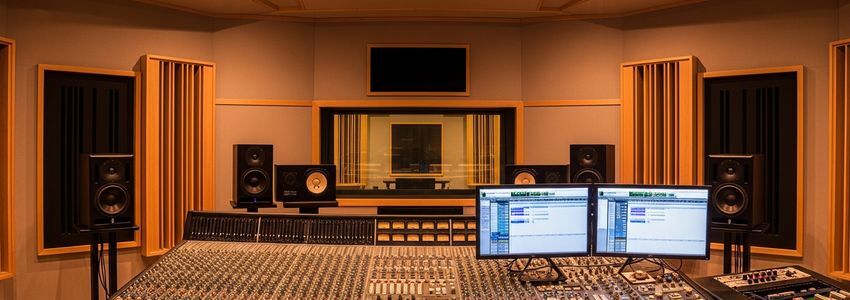
The music production industry is a multibillion-dollar ecosystem that powers everything from hit records and film scores to advertising jingles and podcast soundscapes. Behind every polished track is a business - a recording studio, a production company, or an independent producer investing in equipment, talent, space, and software. Like any capital-intensive industry, music production businesses regularly need financing to grow, upgrade, or simply stay competitive. Music production business loans provide the capital producers and studio owners need to scale without draining cash reserves or waiting years to save up.
In This Article
- What Are Music Production Business Loans?
- Key Benefits of Financing Your Music Business
- How Music Production Business Loans Work
- Types of Financing Available
- Who Qualifies
- How Producers Use Business Loans
- How Crestmont Capital Helps Music Businesses
- Real-World Scenarios
- Frequently Asked Questions
- How to Get Started
What Are Music Production Business Loans?
Music production business loans are financing products designed to fund the operational and growth needs of music studios, production companies, audio engineers, beatmakers, sound designers, and independent producers. These loans can cover equipment purchases, studio renovation, software licenses, staffing, marketing, and working capital.
Music businesses are service-based enterprises with real revenue, real overhead, and real cash flow cycles. Like a medical practice or a construction company, a music production business can demonstrate consistent income, client contracts, and growth potential - all factors that qualify it for business financing. The key difference from hobbyist music-making is the business model: regular clients, recurring revenue, and a structured operation.
Industry Context: According to the Recording Industry Association of America (RIAA), U.S. music industry revenues exceeded $17 billion in 2023, with recorded music and music licensing representing the largest shares. Independent studios and production companies are central to this ecosystem - and they need capital to compete.
Whether you run a commercial recording studio booking sessions at $200 per hour, a production company delivering custom beats to artists worldwide, or a post-production house handling audio mixing for film and television, the financing landscape has more options than most owners realize. Music production business loans are no longer the exclusive domain of major label-backed enterprises.
Key Benefits of Financing Your Music Production Business
Access to business financing gives music producers and studio owners the ability to invest in growth without sacrificing the liquidity they need for day-to-day operations. Here is why financing makes sense for music businesses at every stage.
- Upgrade equipment without cash drain: Professional-grade gear - SSL consoles, Neve preamps, high-end microphones, isolation booths - costs tens of thousands of dollars. Financing spreads that cost over time, preserving working capital for other needs.
- Scale before demand outpaces capacity: When your studio is booked solid and clients are getting turned away, expansion is not optional - it is urgent. A loan allows you to build out additional rooms or hire staff to capture revenue you are currently leaving on the table.
- Bridge gaps between projects: Music production revenue is often project-based and cyclical. A line of credit covers payroll and overhead during quiet periods without forcing you to take on undesirable clients just to pay the bills.
- Invest in software and licensing: Pro Tools, Logic, Waves plugins, Splice subscriptions, and orchestral sample libraries add up quickly. Business financing allows you to invest in the tools that improve your output quality and competitive positioning.
- Fund marketing and artist development: Building a reputation requires investment - a strong website, social media presence, music video production, and artist development programs all require capital before they generate returns.
Ready to Fund Your Music Business?
Get fast, flexible financing from the #1 business lender in the U.S. Apply in minutes - no obligation required.
Apply Now →How Music Production Business Loans Work
The mechanics of a music production business loan are similar to any small business loan. You apply with a lender, provide documentation of your business income and financials, and receive a funding offer with specified terms. The process varies significantly depending on whether you work with a traditional bank, an SBA-approved lender, or an alternative direct lender like Crestmont Capital.
Step 1 - Define Your Funding Need
Before applying, identify exactly what you need the capital for and how much. Equipment purchases, studio build-outs, software acquisitions, and working capital all have different cost profiles. Lenders respond positively to specificity. A producer who says "I need $80,000 to purchase a Neve 8078 console and upgrade the control room acoustic treatment" is a more compelling applicant than one who says "I need money to grow my business."
Step 2 - Gather Your Financial Documentation
Most lenders will want three to six months of business bank statements showing consistent revenue deposits, evidence of your time in business, and basic business information. Alternative lenders like Crestmont Capital have minimal documentation requirements and can approve applications in 24 to 48 hours. Traditional banks and SBA lenders require two to three years of tax returns, profit and loss statements, and balance sheets.
Step 3 - Submit and Review Offers
Once you submit your application, lenders evaluate your revenue, credit profile, time in business, and intended use of funds. When approved, you receive an offer detailing the loan amount, interest rate or factor rate, repayment terms, and any fees. Review these carefully - the total cost of capital matters more than the interest rate headline.
Step 4 - Receive Funding
Alternative lenders typically fund within one to three business days of approval. SBA loans and traditional bank loans may take 30 to 90 days. Once funded, you can deploy the capital toward your intended purpose immediately.
By the Numbers
Music Production Industry - Key Statistics
$17B+
U.S. music industry revenue (RIAA, 2023)
55K+
Recording studios operating in the U.S.
24-48 Hrs
Funding time with alternative lenders
$10K-$5M
Typical business loan range available
Types of Financing Available for Music Production Businesses
Music production businesses can access a range of financing products depending on their needs, credit profile, and timeline. Understanding each option allows you to select the right tool for the right situation.
Term Loans
A term loan provides a lump sum repaid over a fixed period - typically 12 to 60 months - with fixed or variable interest. This is the most straightforward structure for a known, one-time investment: buying a console, building a vocal booth, or purchasing a competitor's studio. Small business loans of this type are available from both banks and alternative lenders, with alternative lenders offering much faster approvals.
Business Line of Credit
A business line of credit provides revolving access to a set amount of capital. Draw what you need, repay it, draw again. For music producers with irregular project timelines and variable income, a line of credit provides a critical safety net. It is ideal for covering studio overhead between bookings, paying freelance engineers and session musicians, or funding marketing campaigns around new album releases.
Equipment Financing
Equipment financing is specifically designed for the purchase of business equipment - in this case, recording consoles, microphones, preamps, monitors, synthesizers, drum machines, acoustic panels, and video production gear. The equipment itself typically serves as collateral, which simplifies approval and can lower the cost. For capital-intensive equipment purchases, this is often the most efficient structure.
Working Capital Loans
Working capital loans cover operational expenses - payroll, utilities, rent, marketing, software subscriptions - rather than long-term asset investments. They are short- to medium-term products typically repaid within 3 to 18 months. For studios experiencing a slow booking period or waiting on a large licensing deal to close, working capital loans provide the bridge needed to keep operations running smoothly.
Revenue-Based Financing
Revenue-based financing repays the loan as a percentage of your daily or weekly revenue, making it naturally flexible for businesses with variable income. When revenue is high, repayments are higher. When revenue dips, repayments slow automatically. This makes it well-suited for music producers whose income fluctuates with project cycles.
SBA Loans
SBA loans offer outstanding terms - low rates, long repayment periods, and access to up to $5 million - but require strong credit, at least two years in business, and extensive documentation. For established music production companies with clean financials, SBA loans are worth pursuing. For newer businesses or those needing fast capital, alternative lenders are more practical.
| Loan Type | Best For | Funding Speed | Amounts |
|---|---|---|---|
| Term Loan | Equipment, expansion | 1-3 days (alt lender) | $10K-$5M |
| Line of Credit | Cash flow, ongoing needs | 1-3 days | $10K-$500K |
| Equipment Financing | Consoles, mics, monitors | 2-5 days | $5K-$500K |
| Working Capital | Payroll, overhead | 24-48 hours | $10K-$250K |
| Revenue-Based | Variable income businesses | 1-3 days | $10K-$500K |
| SBA Loan | Established studios | 45-90 days | Up to $5M |
Who Qualifies for Music Production Business Loans?
Qualification requirements vary by lender type, but here is a general overview of what most lenders evaluate when considering a music production business loan application.
Alternative Lenders (like Crestmont Capital)
Alternative lenders have the most accessible requirements. Most require a minimum personal credit score of around 550, at least six months to one year in business, and monthly revenue of $10,000 or more. Businesses with lower credit scores may still qualify if they demonstrate strong and consistent cash flow. These lenders prioritize revenue history over credit score alone.
For producers who need capital fast and cannot wait weeks for a bank decision, alternative lenders are the practical choice. Bad credit business loans are available for studio owners rebuilding their financial profile, provided consistent revenue can be documented.
Traditional Banks
Traditional banks look for credit scores of 680 or higher, at least two to three years in business, annual revenues above $250,000, and extensive financial documentation. Approval timelines stretch from weeks to months. For an established, profitable recording studio with clean books, banks can offer the best rates - but the process is slow and restrictive.
SBA-Approved Lenders
SBA lenders require credit scores typically between 640 and 680, at least two years in business, no federal debt defaults, and detailed documentation. The SBA 7(a) program is the most relevant for music production businesses seeking larger amounts for equipment, studio expansion, or business acquisition.
Key Factors That Strengthen Any Application
- Consistent monthly revenue: Lenders want to see regular deposits - studio session fees, production royalties, sync licensing income, and client contracts all count.
- Time in business: The longer you have been operating, the more trustworthy your revenue projections appear.
- Clear use of funds: A specific plan for how the loan will be deployed - and how it will generate return - is more compelling than a vague growth narrative.
- Positive bank balance trend: Consistently growing bank balances signal healthy business management.
- Client contracts or letters of intent: If you have upcoming bookings, projects, or licensing deals lined up, these strengthen your application significantly.
Pro Tip: Music producers often underestimate the strength of their financial profile. Regular invoicing to artists, labels, and sync licensing agencies creates a documented revenue history that lenders find compelling. If you have been collecting payment informally or inconsistently, formalize your invoicing before applying.
How Music Producers and Studio Owners Use Business Loans
Music production businesses deploy financing across a wide range of investments. Here are the most common - and most impactful - applications.
Studio Equipment Upgrades
Recording consoles, microphone collections, outboard gear, studio monitors, and acoustic treatment represent the core infrastructure of any professional studio. High-end equipment from manufacturers like SSL, API, Neve, Neumann, and Focal costs tens of thousands of dollars per piece. Equipment financing allows studios to acquire world-class gear on a payment schedule matched to the revenue that gear generates.
Studio Build-Out and Acoustic Treatment
Professional acoustic design - isolation rooms, floating floors, custom control room geometry, bass trapping, and diffusion panels - is expensive and time-consuming to build. A studio that sounds world-class commands premium rates and attracts premium clients. Business loans fund these capital-intensive improvements without depleting the cash reserves needed for daily operations.
Software Licenses and Subscriptions
Digital audio workstations, plugin suites, sample libraries, scoring software, and cloud-based collaboration tools are essential in modern production. These costs are recurring and cumulative. A business line of credit can cover annual software costs and renew as income comes in.
Staffing and Session Fees
Growing production companies hire audio engineers, mixing engineers, mastering engineers, assistants, and business development staff. Music labels, ad agencies, and film studios prefer working with established teams over solo operators. A working capital loan supports payroll during ramp-up periods when you are building your roster before client volume fully covers staffing costs.
Marketing and Brand Development
Building a reputation in music production requires consistent investment. A professional website, demo reel, social media presence, music video production, press outreach, and industry conference attendance all require capital. For studios targeting sync licensing clients - ad agencies, film studios, TV networks - a polished brand presence is non-negotiable.
Buying an Existing Studio
Acquiring an established recording studio with existing equipment, client relationships, and a known reputation can accelerate growth dramatically. Acquisition loans and SBA financing both support studio purchases, with the acquired studio's revenue history supporting the loan application.
Upgrade Your Studio Without Draining Cash
Crestmont Capital provides fast, flexible financing for music producers and studio owners nationwide. Apply in minutes.
Get Funded →How Crestmont Capital Helps Music Production Businesses
Crestmont Capital is a direct business lender serving music studios, production companies, and independent producers across the United States. As a direct lender - not a broker - we make credit decisions in-house and fund approved applications within one to three business days. No middlemen, no delays, no broker fees.
We understand that music production businesses do not fit the neat financial templates of retail stores or restaurants. Revenue may come from session booking fees, beat licensing, sync licensing, royalty streams, and production contracts - all of which represent legitimate, documentable business income. Our underwriting team evaluates the totality of your business finances, not just a credit score.
Music production businesses access our full lending suite through a single application:
- Small business loans from $10,000 to $5 million for major investments
- Business lines of credit for ongoing cash flow management
- Equipment financing for studio gear, acoustic treatment, and production technology
- Short-term business loans for immediate needs with fast approvals
- Bad credit business loans for studios rebuilding their financial profile
- Revenue-based financing with flexible repayment tied to your actual monthly income
Music businesses often need capital that moves at the speed of the industry - that means fast approvals and same-day decisions, not weeks of waiting. We also serve related creative and entertainment businesses, including music studio businesses, music stores, and entertainment companies looking to scale their operations.

Real-World Scenarios: Music Production Businesses Using Loans
These scenarios illustrate how music production business loans serve producers and studio owners at different stages of growth.
Scenario 1: The Independent Producer Going Commercial
A beatmaker and producer has been generating $12,000 per month licensing beats to independent artists online. He wants to build a proper studio with soundproofed rooms, a professional control room, and premium microphone collection to attract label-level clients willing to pay $500 per session. The build-out and equipment purchase total $120,000. With consistent monthly revenue and 18 months of business history, he qualifies for a term loan and opens the studio six months later with bookings already lined up.
Scenario 2: The Established Studio Adding a Mix Room
A 10-year-old recording studio in Nashville has one tracking room and one control room, both consistently booked. The owner turns away mixing clients weekly because her studio time is fully committed to tracking. Adding a dedicated mixing room requires $75,000 in construction and outfitting. A term loan funded in 48 hours allows her to break ground immediately, and the new room pays for itself within eight months of opening.
Scenario 3: The Film Score Composer Managing Cash Flow
A composer who creates scores for independent film and streaming content invoices clients on net-30 to net-60 terms. Three major scoring projects close simultaneously, but the payments will not arrive for 45 to 60 days. Payroll, software licenses, and studio rent are due now. A $40,000 business line of credit bridges the gap. Once client payments arrive, she repays the line and is ready for the next cycle.
Scenario 4: The Production House Buying a Competitor
A mid-size production company in Los Angeles has the opportunity to acquire a boutique studio whose owner is retiring. The studio has a 15-year client list, premium equipment, and an excellent location. The purchase price is $350,000. Using a combination of an SBA loan and bridge financing from Crestmont Capital, the acquisition closes in 60 days. The acquired client base immediately doubles the production company's monthly revenue.
Scenario 5: The Podcast Production Studio Scaling Fast
A podcast production studio that offers full-service recording, editing, and distribution support has grown from 5 to 40 clients in 18 months. The owner needs to hire three additional audio engineers and purchase 8 additional recording rigs to accommodate growth. A $65,000 working capital loan covers the staffing ramp-up and equipment while the expanded client roster fully covers costs within three months.
Scenario 6: The Sync Licensing Studio Building a Catalog
A music production company that licenses instrumental tracks to advertising agencies and video game developers wants to expand its catalog from 200 to 1,000 tracks in 12 months. Hiring additional composers and producers requires capital before the licensing revenue arrives. A revenue-based financing facility of $85,000 provides the capital, with repayments tied to the company's growing monthly sync income.
Frequently Asked Questions
Can a music producer qualify for a business loan?
Yes. Music producers who operate as a formal business entity - LLC, S-Corp, or sole proprietorship with a business bank account - and generate consistent revenue can qualify for business loans. Lenders evaluate your revenue history, credit score, and time in business. Alternative lenders like Crestmont Capital are particularly flexible and can work with credit scores as low as 550 when revenue is consistent.
How much can a music production business borrow?
Loan amounts depend on your revenue, credit profile, time in business, and the type of lender. Alternative lenders typically offer between $10,000 and $500,000. Traditional term loans through banks can go higher. SBA 7(a) loans go up to $5 million. Most lenders use a formula based on your monthly or annual gross revenue - generally one to three times your monthly revenue for working capital loans.
What credit score do I need for a music production business loan?
Traditional banks require 680 or higher. SBA lenders typically want 640 to 680. Alternative lenders like Crestmont Capital can work with scores as low as 550 when your business demonstrates strong, consistent monthly revenue. If your credit is less than ideal, focus on documenting your revenue consistently through a business bank account before applying.
What documents are needed to apply?
For alternative lenders, you typically need three to six months of business bank statements, basic business information (legal name, EIN, time in business, monthly revenue), and a description of how you plan to use the funds. SBA and bank loans require two to three years of tax returns, financial statements, and often a business plan. Starting with an alternative lender is faster and requires far less paperwork.
How fast can a music studio get funded?
Alternative lenders can fund within 24 to 48 hours of approval. In some cases, same-day funding is available for qualifying businesses. Traditional bank loans take four to twelve weeks. SBA loans take 45 to 90 days or longer. If speed matters, an alternative direct lender is the clear choice.
Is equipment financing available for recording gear?
Yes. Equipment financing is one of the most effective tools for music production businesses. Recording consoles, microphones, monitor speakers, outboard gear, synthesizers, computers, and acoustic treatment all qualify as business equipment. The equipment itself serves as collateral, which simplifies approval and often results in better terms than unsecured loans. Equipment financing preserves your working capital for operational needs.
Can I get a loan to build a home studio as a business?
If you operate a formal music production business from a home studio - generating income, filing business taxes, and maintaining a business bank account - you can apply for business financing. Lenders are concerned primarily with your business revenue and financial profile, not the physical location of your studio. However, some lenders may be more comfortable with commercial studio spaces. Documenting your business income clearly and consistently is key.
What is revenue-based financing and is it good for music producers?
Revenue-based financing provides capital in exchange for a percentage of your future monthly revenue until the loan is repaid. Because repayments are tied to actual income, they automatically shrink during slow periods and increase when revenue is strong. This makes it an excellent fit for music producers whose income fluctuates with project cycles and seasonal demand. The cost is typically higher than traditional loans, but the flexibility makes it worthwhile for many creative businesses.
How do I separate my personal and business finances before applying?
Open a dedicated business checking account and direct all client payments into it. Register your business formally as an LLC or corporation. Get an EIN from the IRS. Invoice clients professionally and keep records of all income and expenses. Even if you have been mixing personal and business finances for years, starting a clean business bank account three to six months before applying will significantly improve your application. Lenders want to see your business revenue clearly, not mixed in with personal transactions.
What interest rates should I expect?
Interest rates vary significantly by lender type and your financial profile. Traditional bank loans run 6% to 12%. SBA loans are priced at prime rate plus 2.5% to 4.75%. Alternative lenders charge higher rates - often 15% to 40% APR - to compensate for faster approvals and more flexible qualification standards. Always compare the total cost of capital - the full dollar amount you repay above principal - rather than just the stated rate, particularly when comparing products with different structures.
Can I use a business loan to invest in artist development?
Yes. Business loans can be used for artist development if it is a legitimate business expense for your production company. If you are investing in recording, mixing, mastering, music video production, marketing, or promotional campaigns for artists you have signed or partnered with, these are legitimate business costs. Document the business relationship clearly and ensure the investment is through your formal business entity.
How does a business line of credit differ from a business loan?
A business loan provides a lump sum upfront, which you repay on a fixed schedule over the loan term. Interest accrues on the full amount borrowed. A business line of credit provides revolving access to a credit facility - you draw what you need, repay it, and draw again. Interest accrues only on what you have drawn. A line of credit is more flexible and better suited to variable, ongoing expenses. A term loan is more efficient for a specific, one-time investment.
Is collateral required for music production business loans?
Not always. Many alternative lenders offer unsecured business loans that require no specific collateral - though a personal guarantee is typically expected. Equipment financing uses the purchased equipment as collateral. SBA and traditional bank loans for larger amounts often require collateral such as commercial real estate, equipment, or other business assets. The collateral requirement depends on loan size, lender type, and your financial profile.
Can I use business loan proceeds to pay myself?
Business loans are intended for business purposes, not personal compensation. However, if your music production company pays you a salary or owner's draw as part of your operating expenses, those expenses can be covered by working capital from a business loan. What you cannot do is draw a loan and transfer funds directly to your personal account as compensation. Consult with a business accountant about how to structure owner compensation properly within your business entity.
How do I improve my chances of getting approved?
Run all client payments through a dedicated business bank account. Invoice clients consistently and maintain payment records. Keep your bank balance positive and growing over time. Reduce outstanding personal debt to improve your credit score. Formalize your business entity if you have not already. Have a clear, specific use of funds in mind when applying. The more professional and organized your financial presentation, the stronger your application will be.
How to Get Started
Complete our quick application at offers.crestmontcapital.com/apply-now - no obligation, no hard credit pull to start.
A Crestmont Capital advisor will review your music business needs and match you with the right financing option for your situation.
Receive your funds - often within 24 to 48 hours - and invest in the studio, gear, and infrastructure that takes your music production business to the next level.
Conclusion
The music production industry is as competitive as it is creative - and staying ahead requires real capital investment. Whether you are a solo producer building out your first professional studio, an established recording facility expanding capacity, or a production company scaling a sync licensing operation, music production business loans give you the capital to grow without waiting.
From equipment financing and term loans to business lines of credit and revenue-based financing, the right product exists for your specific situation. Crestmont Capital works with music production businesses nationwide as a direct lender, delivering fast approvals, flexible terms, and funding in as little as one business day.
Do not let capital constraints slow your creative business down. Apply today and find out what you qualify for - in minutes, with no obligation and no hard credit pull required to get started.
Your Music Business Deserves Better Financing
Join thousands of small business owners who trust Crestmont Capital - the #1 rated business lender in the U.S. Apply now and get funded fast.
Apply Now →Disclaimer: The information provided in this article is for general educational purposes only and is not financial, legal, or tax advice. Funding terms, qualifications, and product availability may vary and are subject to change without notice. Crestmont Capital does not guarantee approval, rates, or specific outcomes. For personalized information about your business funding options, contact our team directly.