
 (800) 949-0401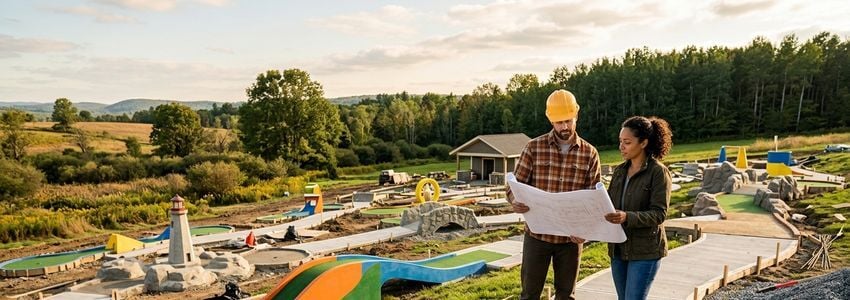
Mini Golf Course Construction Financing: The Complete Guide for Business Owners
Mini golf course construction financing gives entrepreneurs, family entertainment center operators, and existing attraction owners the capital they need to design, build, and open a profitable miniature golf course. Whether you are breaking ground on a themed 18-hole outdoor course or adding an indoor blacklight mini golf attraction to an existing venue, construction costs can run into the hundreds of thousands of dollars before a single putt is played. The right financing structure lets you build a high-quality course without draining cash reserves or delaying your opening date.
The global miniature golf course market is valued in the hundreds of millions of dollars and continues to grow as mini golf is increasingly positioned as a "premium anchor attraction" inside larger family entertainment centers, according to industry market research. For business owners ready to capitalize on this demand, understanding mini golf course construction financing is the first step toward a successful launch.
In This Article
- What Is Mini Golf Course Construction Financing?
- Key Benefits of Financing Your Course
- How Mini Golf Construction Financing Works
- Types of Financing Available
- Breaking Down Construction Costs
- Who This Financing Is Best For
- Comparing Your Financing Options
- How Crestmont Capital Helps
- Real-World Financing Scenarios
- Qualifying and Applying for Financing
- Frequently Asked Questions
- Next Steps
What Is Mini Golf Course Construction Financing?
Mini golf course construction financing is business capital specifically structured to cover the design, land preparation, materials, obstacles, landscaping, and buildout costs of a new or renovated miniature golf attraction. Unlike a general-purpose loan, this type of financing is scoped around the unique capital cycle of a construction project: large upfront costs, a defined build timeline, and a ramp-up period before the course starts generating steady revenue.
Financing in this category typically covers:
- Site preparation and grading for the course footprint, drainage, and utility hookups
- Course design and engineering, including theming, elevation changes, and water features
- Construction materials and labor, from concrete and turf to fiberglass obstacles
- Fixtures and equipment such as scoring kiosks, lighting, signage, and putters/balls inventory
- Landscaping and hardscaping around the course perimeter and walkways
- Working capital to bridge the gap between opening day and consistent cash flow
Because a mini golf course is a physical construction project with a clear scope and cost breakdown, lenders can underwrite it much like other commercial construction or leasehold improvement projects, while also factoring in the equipment financing needed for the specialized obstacles and technology that make a course competitive in today's market.
Key Benefits of Financing Your Course
Very few operators can pay cash for a full mini golf course build. Financing is not just a fallback option, it is a strategic tool that lets you build a better attraction, faster, while protecting your personal finances.
- Build to the standard your market demands. Financing lets you invest in themed obstacles, quality turf, and technology-enhanced features (automated scoring, lighting effects) rather than cutting corners to fit a limited cash budget.
- Preserve personal and business capital. Keeping a cash reserve after opening protects you from unexpected costs like weather damage, equipment repairs, or a slower-than-expected ramp-up period.
- Open sooner. Rather than saving for years to self-fund a build, financing allows you to capitalize on current demand and start generating revenue immediately.
- Build business credit. Successfully repaying a construction loan or equipment financing agreement establishes a track record that makes future expansion financing easier to secure.
- Match repayment to asset life. Structured financing lets you align loan terms with how long the course infrastructure will actually generate revenue, rather than paying everything off in year one.
Key Stat: The global family entertainment center industry has grown into a multibillion-dollar market, with mini golf increasingly positioned as a premium anchor attraction that drives foot traffic and increases dwell time at mixed-use venues.
How Mini Golf Construction Financing Works
Financing a mini golf course build generally follows a straightforward process, though the exact steps vary depending on whether you are financing new construction, a renovation, or a franchise buildout.
- Define your project scope and budget. Get written estimates from a mini golf course designer or general contractor, including a detailed line-item breakdown of site work, materials, and equipment.
- Choose the right financing structure. Larger construction-heavy projects often use a term loan or SBA loan for the buildout, paired with equipment financing for obstacles, scoring systems, and point-of-sale technology.
- Submit your application and documentation. Lenders will review your business plan, personal and business credit, financial statements, and contractor bids.
- Underwriting and approval. The lender evaluates your creditworthiness, the strength of your business plan, and the collateral value of the project and equipment.
- Funds disbursement. Depending on the loan type, funds may be released in a lump sum or in draws tied to construction milestones.
- Construction and opening. Once funded, your contractor builds the course while you finalize staffing, marketing, and your grand opening plan.
Ready to Break Ground on Your Course?
Get fast, flexible construction financing from the #1 business lender in the U.S. No obligation, apply in minutes.
Apply Now →Types of Financing Available for Mini Golf Course Construction
There is rarely a single loan product that covers every cost of a mini golf build. Most successful operators combine two or three financing tools to match each cost category with the right structure.
SBA Loans
SBA 7(a) loans are one of the most popular financing tools for ground-up construction projects like mini golf courses because of their long repayment terms (up to 25 years when real estate is involved) and competitive interest rates. According to the U.S. Small Business Administration, 7(a) loans can be used for real estate purchase, ground-up construction, renovation, equipment, and working capital, making them a strong fit for a full course buildout.
Commercial Construction and Term Loans
A traditional term loan provides a lump sum you repay over a fixed period, which works well for the core construction phase: grading, drainage, concrete, and structural elements of your course.
Equipment Financing
Equipment financing is ideal for the specialized components of a mini golf course, such as modular obstacle systems, automated scoring kiosks, lighting and sound systems, commercial mowers, and point-of-sale hardware. Because the equipment itself secures the loan, this option is often easier to qualify for than unsecured financing.
Business Lines of Credit
A business line of credit gives you flexible access to capital for change orders, unexpected site conditions, or early operating expenses without committing to a fixed loan amount upfront.
Unsecured Working Capital Loans
Once construction wraps up, an unsecured working capital loan can cover the gap between opening day and steady cash flow, funding payroll, marketing, and inventory for a pro shop or concession stand.
Breaking Down Construction Costs
Total investment for a new mini golf course varies significantly based on size, theming, indoor versus outdoor design, and regional labor and land costs. Below is a general cost breakdown business owners should factor into their financing request.
By The Numbers
Mini Golf Course Construction — Key Figures
$150K-$600K+
Typical full 18-hole build cost range
$490M
Estimated 2025 global mini golf market value
3-7 Yrs
Typical equipment financing term
10-30%
Typical owner injection requested by lenders
| Cost Category | Estimated Range | Notes |
|---|---|---|
| Design & Engineering | $10,000-$40,000 | Course layout, theming, drainage plans |
| Site Prep & Grading | $20,000-$80,000 | Excavation, drainage, utility hookups |
| Construction & Obstacles | $80,000-$300,000+ | Concrete, turf, fiberglass obstacles, water features |
| Lighting, Signage & Technology | $15,000-$60,000 | Automated scoring, blacklight fixtures, POS systems |
| Pro Shop & Concessions Setup | $10,000-$35,000 | Fixtures, initial inventory, register systems |
| Working Capital Reserve | $20,000-$60,000 | Covers 3-6 months of operating expenses |
Who This Financing Is Best For
Mini golf course construction financing serves a wide range of business owners, each with slightly different needs and financing strategies.
- First-time entrepreneurs building a standalone mini golf course from the ground up, who need construction financing paired with a working capital cushion.
- Family entertainment center operators adding a mini golf attraction to an existing arcade, bowling alley, or trampoline park to diversify revenue streams and increase dwell time.
- Existing course owners renovating or re-theming an aging attraction to compete with newer, technology-enhanced venues in their market.
- Indoor entertainment developers building weather-proof, blacklight, or glow-in-the-dark courses that operate year-round regardless of climate.
- Seasonal outdoor operators in warm-weather or tourist markets who need financing structured around a concentrated peak season.
Each of these owners benefits from a financing plan tailored to their specific build timeline, seasonality, and revenue model, which is why working with a lender that understands niche recreational businesses matters.
Comparing Your Financing Options
Choosing the right combination of financing tools depends on your project's size, timeline, and how much of the cost is real construction versus equipment and technology.
| Financing Option | Best For | Typical Term |
|---|---|---|
| SBA Loan | Full ground-up construction, real estate purchase | 10-25 years |
| Traditional Term Loan | Site work, structural build costs | 3-10 years |
| Equipment Financing | Obstacles, scoring kiosks, POS, mowers | 3-7 years |
| Business Line of Credit | Change orders, unexpected costs | Revolving, draw as needed |
| Working Capital Loan | Payroll, marketing, opening-period cash flow | 3-18 months |
How Crestmont Capital Helps
Crestmont Capital specializes in funding niche and recreational businesses that traditional banks often view as too unconventional. Rather than forcing your mini golf course build into a one-size-fits-all loan product, we help structure a financing package that matches how your project actually spends money.
Through our commercial financing division, we offer construction-stage capital paired with equipment financing for course obstacles and technology, plus a business line of credit to handle the unexpected. If your credit history is not perfect, our bad credit equipment financing options can still get your equipment purchases funded. And because entertainment venues share many of the same financing considerations as other attraction-based businesses, our guide to skate park business loans and our golf simulator equipment financing guide are worth reviewing for additional financing strategies that translate directly to a mini golf build.
Our team understands that a mini golf course is not a generic construction project. We work with owners to structure draws around construction milestones, align repayment terms with seasonal cash flow, and get equipment financing approved quickly so your obstacle installers are not left waiting on capital.
Let's Fund Your Mini Golf Vision
Crestmont Capital structures financing around your build timeline, not a generic template. Apply in minutes with no obligation.
Get Started →
Real-World Financing Scenarios
These illustrative scenarios show how different mini golf operators might structure financing based on their specific project.
Scenario 1: The Ground-Up Outdoor Course
A first-time entrepreneur wants to build an 18-hole themed outdoor course on a leased 1.5-acre lot. With a total project cost of $380,000, they combine an SBA 7(a) loan for site work and construction ($280,000) with equipment financing for scoring kiosks, lighting, and a mower fleet ($60,000), plus a working capital reserve ($40,000) funded through a short-term loan to cover the first four months of operation before the peak season ramps up.
Scenario 2: The Indoor Blacklight Renovation
An existing arcade owner wants to add a 9-hole indoor blacklight mini golf course to an underused section of their building. The $150,000 project uses a business line of credit to cover phased construction draws, paired with equipment financing for the specialized lighting, fluorescent paint systems, and automated scoring technology.
Scenario 3: The Family Entertainment Center Expansion
A multi-attraction venue operator adds mini golf as a third revenue stream alongside their existing trampoline park and arcade. They use a traditional term loan for the $220,000 construction cost, leveraging their existing business's cash flow history to secure favorable terms and a faster approval timeline than a brand-new business would receive.
Scenario 4: The Seasonal Tourist-Market Course
An operator in a coastal tourist town builds a course designed to generate the bulk of its annual revenue in a five-month peak season. Their financing includes a construction term loan with seasonal payment structuring, so loan payments scale down during the off-season months and increase during peak revenue periods.
Scenario 5: The Re-Theming Project
An owner of a 20-year-old course wants to modernize aging obstacles and add technology-enhanced features to compete with a new venue opening nearby. They use equipment financing to fund $95,000 in new obstacles, lighting, and a mobile app-integrated scoring system, preserving cash for a marketing push around the relaunch.
Qualifying and Applying for Financing
Lenders evaluate several factors when underwriting a mini golf course construction loan. Preparing these in advance significantly improves your approval odds and speeds up funding.
Documents You Will Need
- Detailed business plan with market analysis and financial projections
- Written contractor bids and a line-item construction budget
- Personal and business tax returns (typically 2-3 years, or personal returns for startups)
- Personal and business bank statements (3-6 months)
- Lease agreement or proof of land ownership
- Business licenses, permits, and articles of incorporation
Quick Guide
How to Apply for Mini Golf Construction Financing
Secure written, itemized quotes for design, site work, and construction.
Match each cost category (construction, equipment, working capital) to the right loan type.
Provide financials, bids, and business plan to your lender.
The lender reviews credit, collateral, and project viability.
Draws release on schedule or as a lump sum, depending on loan structure.
Pro Tip: Lenders typically want to see a 10-30% owner contribution toward total project cost. The larger your down payment, the more favorable your rate and terms are likely to be.
Frequently Asked Questions
Turn Your Blueprint Into a Business
Get matched with the right financing structure for your mini golf construction project. No obligation, apply in minutes.
Apply Now →Next Steps
You have the vision for a course that families will visit season after season. The next step is turning your blueprints and contractor bids into an actionable financing plan.
The Crestmont Capital team is ready to help structure the right mix of construction financing, equipment financing, and working capital for your project. We work with recreational and entertainment business owners every day, and we understand what lenders in this space expect to see.
Gather your contractor bids, pull together your basic financials, and reach out to start the conversation. The sooner you apply, the sooner your course can break ground.
Conclusion
Mini golf course construction financing makes it possible to build a course that stands out, without exhausting your personal savings or delaying your opening date. Whether you are launching a themed outdoor 18-hole attraction, adding an indoor blacklight course to an existing venue, or renovating an aging facility to compete with newer entrants, the right combination of SBA loans, term loans, equipment financing, and working capital can get your project off the ground.
The mini golf and family entertainment industries continue to grow, and being the operator with the best-financed, best-built course in your market is a real competitive advantage. Crestmont Capital specializes in helping niche recreational businesses secure the financing they need, quickly and without unnecessary red tape. If you are ready to move from blueprint to groundbreaking, our team is ready to help you find the right mini golf course construction financing for your project.
Disclaimer: The information provided in this article is for general educational purposes only and is not financial, legal, or tax advice. Funding terms, qualifications, and product availability may vary and are subject to change without notice. Crestmont Capital does not guarantee approval, rates, or specific outcomes. For personalized information about your business funding options, contact our team directly.








