
 (800) 949-0401
Golf Simulator Equipment Financing: The Complete Guide for Business Owners
Golf simulator financing gives entertainment venue owners, golf course operators, and indoor sports facility entrepreneurs the capital they need to install high-tech launch monitors, projection systems, and hitting bays without draining cash reserves. Whether you are opening a new golf simulator lounge, adding bays to an existing facility, or upgrading aging technology to compete with newer entrants in the market, the right equipment financing structure can be the difference between a thriving venue and a stalled expansion plan. Golf simulator financing has become one of the fastest-growing niches in equipment leasing as the indoor golf entertainment sector continues to expand across suburban strip malls, mixed-use developments, and standalone entertainment complexes nationwide.
In This Article
- What Is Golf Simulator Equipment Financing?
- Key Benefits of Financing Golf Simulator Equipment
- How Golf Simulator Financing Works
- Types of Financing Available
- Who Qualifies for Golf Simulator Financing?
- Comparing Your Financing Options
- How Crestmont Capital Helps Golf Simulator Businesses
- Real-World Scenarios
- Frequently Asked Questions
- How to Get Started
What Is Golf Simulator Equipment Financing?
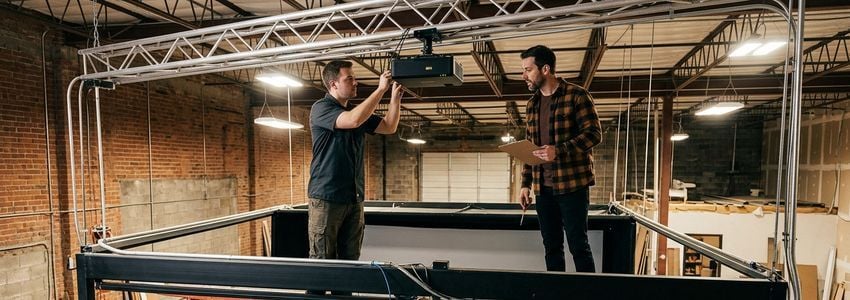
Golf simulator equipment financing is a specialized form of commercial equipment funding designed to cover the launch monitors, projectors, hitting mats, enclosures, screens, and simulation software that make up a modern indoor golf bay. Unlike a general business loan that funds broad operating expenses, this type of financing is tied directly to the equipment itself, which often makes it easier to qualify for and structure with predictable monthly payments.
A single commercial-grade golf simulator bay can run anywhere from twelve thousand to sixty thousand dollars depending on the launch monitor technology, screen quality, and enclosure build-out involved. Entry-level setups using consumer-grade launch monitors sit at the lower end, while premium installations with tour-level tracking technology and 4K projection push toward the top of that range. For a facility with four, six, or ten bays, the total equipment investment can easily reach into six figures before a single customer swings a club.
Golf simulator financing exists specifically to bridge that gap. Instead of writing a check for the full equipment cost upfront, business owners can spread payments across a lease or loan term, preserve working capital for staffing, marketing, and lease buildout, and get bays operational faster. Lenders and equipment finance companies evaluate the venue's business plan, the owner's credit profile, and projected revenue when structuring these deals.
Key Stat: A single commercial golf simulator bay typically costs between $15,000 and $30,000 for the equipment alone, with premium tour-level systems reaching $35,000 to $60,000 per bay once installation is included.
Key Benefits of Financing Golf Simulator Equipment
Financing golf simulator equipment rather than paying cash upfront offers several concrete advantages for entertainment venue owners:
- Preserve working capital. Keep cash on hand for rent, staffing, marketing launch campaigns, and unexpected buildout costs instead of tying it all up in hardware.
- Match payments to revenue. Monthly financing payments can be structured to align with the ramp-up period as your venue builds a member base and league schedule.
- Access newer technology sooner. Financing makes it possible to install premium launch monitors and 4K projection systems from day one rather than starting with budget equipment and upgrading later.
- Scale bay count faster. Instead of opening with two bays and expanding organically over years, financing allows many operators to open with the full planned bay count immediately, capturing more league and event revenue from launch day.
- Predictable fixed payments. Most equipment financing structures use fixed monthly payments, which makes budgeting and cash flow forecasting far easier than variable-rate debt.
- Potential equipment replacement flexibility. Certain lease structures allow for equipment upgrades or buyouts at the end of the term, which matters in a technology category that evolves quickly.
Ready to Build Out Your Golf Simulator Bays?
Get fast, flexible equipment financing from the #1 rated business lender in the U.S. No obligation, apply in minutes.
Apply Now →How Golf Simulator Financing Works
The mechanics of golf simulator financing follow a fairly standard equipment finance process, with a few nuances specific to the entertainment and hospitality niche.
First, the business owner identifies the equipment vendor and gets a formal quote covering launch monitors, screens, projectors, enclosures, flooring, and any simulation software licensing. This quote becomes the basis for the financing amount. Second, the lender reviews the applicant's business plan, time in business (or startup plan if pre-revenue), personal and business credit profile, and projected cash flow from bay rentals, memberships, leagues, and events. Third, once approved, the lender or leasing company either pays the equipment vendor directly or reimburses the business owner, and the equipment is installed. Fourth, the business begins making fixed monthly payments over a term that typically ranges from twenty-four to sixty months, depending on the equipment's useful life and the lender's underwriting criteria.
Some financing structures are true equipment loans, where the business owns the equipment from day one and the lender holds a security interest in the hardware as collateral. Other structures are equipment leases, where the leasing company retains ownership and the business either returns the equipment, renews the lease, or exercises a buyout option at the end of the term. The right structure depends on how quickly the operator expects simulator technology to become outdated, and whether ownership matters for the venue's long-term asset strategy.
Quick Guide
How Golf Simulator Financing Works, At a Glance
Confirm launch monitor, screen, projector, and enclosure pricing with your vendor.
Lender reviews credit, business plan, and projected bay revenue.
Lender funds the vendor directly; bays go live for your customers.
Terms typically run 24 to 60 months, aligned to equipment useful life.
Types of Financing Available
Golf simulator business owners generally have several financing structures to choose from, each suited to different priorities:
- Equipment Financing / Equipment Loans. The business borrows against the specific launch monitors, projectors, and enclosures being purchased, with the equipment itself serving as collateral. This tends to offer competitive rates because the lender has a tangible asset backing the loan.
- Equipment Leasing. The leasing company owns the equipment and the business makes monthly payments for the right to use it, often with an end-of-term option to renew, return, or buy out the hardware. This is popular in fast-evolving technology categories like simulator launch monitors.
- SBA Loans. For larger buildouts that combine simulator equipment with construction, leasehold improvements, and working capital, an SBA-backed loan can offer longer terms and lower rates for qualified borrowers.
- Business Lines of Credit. A revolving credit line can supplement equipment financing by covering smaller, recurring costs like software license renewals, mat replacements, or marketing pushes around league season.
- Working Capital Loans. Useful for covering the gap between opening day and reaching a stable customer base, working capital financing supports payroll, utilities, and operating costs while bay revenue ramps up.
- Vendor Financing Programs. Some golf simulator equipment manufacturers and dealers offer in-house financing or partner with third-party lenders directly, which can streamline the process since the vendor is already familiar with the equipment's resale value and depreciation curve.
Who Qualifies for Golf Simulator Financing?
Lenders evaluating golf simulator financing applications typically look at a combination of factors. Time in business matters, but it is not always disqualifying for startups. Many equipment lenders will finance a new golf simulator venue as long as the owner presents a solid business plan, has reasonable personal credit, and can show some combination of industry experience, capital reserves, or a strong lease location.
For established venues seeking to add bays or upgrade technology, approval tends to be faster and terms tend to be more favorable because the lender can underwrite against actual revenue history rather than projections alone. Personal credit score, existing business debt load, and the specific equipment vendor's reputation all factor into the underwriting decision. Facilities located in high-traffic entertainment districts, mixed-use retail centers, or near corporate office parks (where corporate league and event bookings are common) often present a stronger revenue case to lenders.
Owners coming from a golf industry background such as PGA professionals, former golf retail managers, or existing driving range and golf course operators expanding into simulator bays typically have an easier underwriting path because lenders view industry expertise as a risk-reducing factor.
Comparing Your Financing Options
Choosing between equipment financing, leasing, SBA loans, and lines of credit depends on your priorities around ownership, flexibility, and cost of capital. The table below breaks down the key differences.
| Financing Type | Typical Term | Ownership | Best For |
|---|---|---|---|
| Equipment Loan | 24 to 60 months | Business owns equipment immediately | Owners who want equity in the hardware and lower long-term cost |
| Equipment Lease | 24 to 48 months | Leasing company owns equipment | Operators who want to upgrade technology on a regular cycle |
| SBA Loan | Up to 10 to 25 years depending on use | Business owns equipment and any real estate | Full buildouts combining construction, equipment, and working capital |
| Business Line of Credit | Revolving, no fixed term | Not applicable, unsecured or secured credit line | Ongoing operating flexibility and smaller recurring costs |
How Crestmont Capital Helps Golf Simulator Businesses
Crestmont Capital works with entertainment venue owners across the country to structure equipment financing and equipment leasing solutions tailored to the golf simulator and indoor entertainment niche. Our team understands that a modern golf simulator bay is a significant capital investment, and we work to structure payment terms that match your venue's projected ramp-up curve rather than forcing a one-size-fits-all repayment schedule.
For operators looking to combine simulator equipment purchases with buildout costs, leasehold improvements, or working capital needs, we also offer access to SBA loans, business lines of credit, and unsecured working capital loans. This gives golf simulator business owners the flexibility to fund the full scope of their project, not just the hardware, through a single relationship.
Because Crestmont Capital finances a wide range of commercial equipment categories, our underwriting team has experience evaluating specialized technology assets like launch monitors and simulation software licensing, which can speed up approval compared to lenders unfamiliar with the golf entertainment space. We also work with operators expanding related recreation concepts, including businesses reviewing our driving range equipment financing guide or exploring broader outdoor recreation business loan options alongside their indoor simulator investment.
If you already operate a golf entertainment venue and are considering a full facility loan rather than equipment-only financing, our golf simulator business loans guide covers financing for the complete venue, including real estate, staffing, and marketing launch costs.
Let's Talk About Your Simulator Bay Buildout
Crestmont Capital structures equipment financing around your venue's ramp-up timeline. See what you qualify for today.
Apply Now →Real-World Scenarios
The following scenarios illustrate how golf simulator financing plays out for different types of business owners.
Scenario 1: The New Standalone Venue. A first-time entrepreneur signs a lease for a 6,000 square foot retail space and plans a six-bay golf simulator lounge with a bar and lounge area. Total equipment cost across six mid-range bays comes to roughly $150,000. Rather than depleting personal savings, she finances the equipment over 48 months through an equipment lease, preserving cash for buildout, staffing, and a marketing launch campaign timed to the start of league season.
Scenario 2: The Golf Course Add-On. An existing golf course operator wants to add two indoor simulator bays to keep members engaged during winter months and rain delays. With three years of course revenue history, the operator qualifies for equipment financing at favorable terms and adds the bays before the following winter season, creating a new year-round revenue stream.
Scenario 3: The Technology Upgrade. A four-bay simulator lounge that opened three years ago with entry-level launch monitors is losing customers to newer competitors with tour-level tracking technology. The owner uses equipment financing to upgrade all four bays to premium launch monitors and 4K projection, financing the upgrade over 36 months while raising hourly bay rates to offset the new payment.
Scenario 4: The Multi-Location Expansion. An operator with one successful simulator venue wants to open a second location in a nearby suburb. Using the strong revenue history from location one, the owner secures equipment financing for the second venue's bays while using a business line of credit to cover the gap period before the new location reaches profitability.
Scenario 5: The Corporate Entertainment Pivot. A former sports bar owner converts part of the space into three golf simulator bays targeting corporate happy hours and team-building events. Equipment financing covers the bay technology while the existing bar revenue supports the loan payments during the ramp-up period, and corporate bookings quickly become the venue's highest-margin revenue line.
Frequently Asked Questions
Get Your Bays Financed and Open Faster
Whether you're opening your first venue or adding bays to an existing one, Crestmont Capital can help. Apply in minutes.
Apply Now →How to Get Started
Confirm exact equipment specs and pricing for your planned bay count.
Pull together a business plan, bank statements, or tax returns as applicable.
Submit your application online in minutes with no obligation.
Once approved, equipment is purchased and your bays go live for customers.
Conclusion
Golf simulator financing has become an essential tool for entertainment venue owners looking to launch or expand indoor golf facilities without exhausting cash reserves on hardware alone. From entry-level launch monitors to tour-level premium systems, the right financing structure lets operators match monthly payments to their venue's revenue ramp-up, access better technology sooner, and scale bay count faster than a cash-only approach would allow. Whether you're opening your first standalone venue, adding bays to an existing golf course, or upgrading aging technology to stay competitive, golf simulator equipment financing can help you get there faster and on terms that fit your business.
Disclaimer: The information provided in this article is for general educational purposes only and is not financial, legal, or tax advice. Funding terms, qualifications, and product availability may vary and are subject to change without notice. Crestmont Capital does not guarantee approval, rates, or specific outcomes. For personalized information about your business funding options, contact our team directly.








