The American appetite for adventure, nature, and outdoor experiences is stronger than ever, fueling a vibrant and rapidly growing sector of the economy. This industry, which contributes over a trillion dollars annually to the U.S. economy, presents immense opportunities for entrepreneurs. Whether you operate a ski rental shop in the Rockies, a fishing charter on the Gulf Coast, or a climbing gym in a bustling city, securing the right capital is crucial for success. This is where outdoor recreation business loans become an essential tool, providing the financial leverage needed to purchase equipment, manage seasonal cash flow, expand operations, and thrive in a competitive market. Understanding the landscape of available financing is the first step toward turning your passion for the outdoors into a profitable and sustainable enterprise.
In This Article
- What Are Outdoor Recreation Business Loans?
- Types of Outdoor Recreation Businesses That Qualify
- Financing Options for Outdoor Recreation Businesses
- How Much Can You Borrow?
- How to Qualify for Outdoor Recreation Business Loans
- How Crestmont Capital Helps Outdoor Recreation Businesses
- Real-World Scenarios for Outdoor Business Funding
- How to Get Started
- Frequently Asked Questions
- Conclusion
What Are Outdoor Recreation Business Loans?
Outdoor recreation business loans are not a single, distinct financial product. Instead, the term refers to a broad category of commercial financing solutions specifically utilized by entrepreneurs in the outdoor industry. These businesses face a unique set of operational and financial challenges that standard business loans may not adequately address. For example, many outdoor businesses are highly seasonal, experiencing significant revenue peaks in certain months and deep troughs in others. They are also often equipment-intensive, requiring substantial upfront investment in everything from kayaks and mountain bikes to ski lifts and charter boats. Finally, they frequently operate on an experience-based model, where location, safety, and quality of gear are paramount to customer satisfaction and business reputation.
Financing designed for this sector acknowledges these realities. Lenders who understand the industry can appreciate the need for flexible repayment structures that align with seasonal cash flow, offer specialized equipment financing that uses the purchased assets as collateral, and provide access to working capital to bridge off-season gaps. These loans are the lifeblood for growth and stability, enabling owners to:
- Purchase or Upgrade Equipment: Acquire the latest gear to attract customers and ensure safety, such as a new fleet of e-bikes, modern camping equipment, or a state-of-the-art fishing vessel.
- Manage Seasonality: Cover fixed costs like rent, insurance, and core staff salaries during slow periods, ensuring the business is ready to capitalize on the busy season.
- Expand Operations: Open a second location, add a new tour offering, build a new climbing wall, or purchase real estate for a campground or retreat center.
- Increase Inventory: Stock up on retail goods like apparel, accessories, and supplies before peak demand hits, a common need for sporting goods stores.
- Fund Marketing Initiatives: Launch targeted advertising campaigns to attract tourists and locals ahead of the high season, boosting bookings and sales.
- Refinance Existing Debt: Consolidate higher-interest debts into a single, more manageable loan with better terms, improving overall cash flow.
In essence, these loans are strategic tools that empower outdoor businesses to overcome their inherent financial hurdles, invest in quality, and build a resilient, profitable operation that can weather any season.
Key Stat: According to the U.S. Bureau of Economic Analysis, the outdoor recreation economy accounted for $1.1 trillion in gross economic output in 2022, representing 2.2% of the total U.S. GDP. This highlights the sector's massive economic significance and growth potential.
Types of Outdoor Recreation Businesses That Qualify
The outdoor recreation industry is incredibly diverse, encompassing a wide array of businesses that cater to adventurers, families, and nature lovers. Lenders with experience in this sector recognize the unique capital needs of each sub-category. If your business facilitates outdoor activities, you likely qualify for some form of financing. Here are some of the most common types of businesses we see seeking funding:
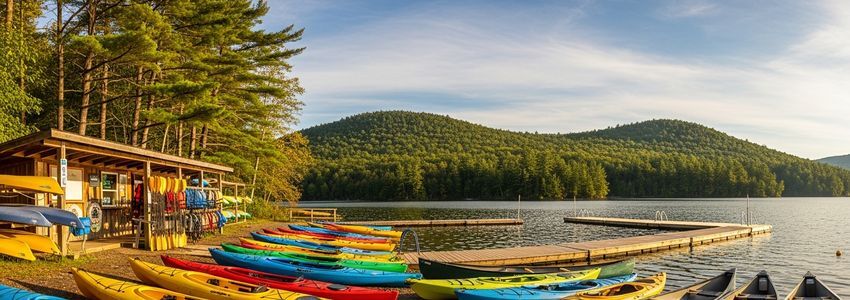
- Equipment Rental Shops: This is a cornerstone of the industry. Businesses renting kayaks, canoes, paddleboards, jet skis, mountain bikes, e-bikes, skis, or snowboards all require significant capital to build and maintain their inventory. Loans are used to purchase new fleets, replace aging gear, and cover maintenance costs.
- Outdoor Guide and Tour Services: Companies that lead guided hiking, backpacking, rock climbing, whitewater rafting, or wildlife-watching tours need funding for vehicles, safety equipment (ropes, harnesses, helmets), permits, insurance, and marketing to attract clients.
- Fishing Charter Companies: The cost of a commercial fishing vessel, along with its maintenance, fuel, insurance, and tackle, is substantial. Loans for fishing companies are critical for acquiring a boat, upgrading electronics, or covering operating expenses during the off-season.
- Campgrounds and RV Parks: These businesses require capital for land acquisition, site development, utility installation (water, electric), and amenities like bathhouses, pools, and camp stores. Financing can fund major expansions or facility upgrades.
- Climbing Gyms and Adventure Parks: Indoor and outdoor facilities like climbing gyms, zipline courses, and ropes courses have high initial setup costs for construction, climbing walls, safety systems, and specialized equipment. Loans are essential for both initial build-out and ongoing expansion.
- Sporting Goods and Outdoor Retailers: These stores need capital to manage inventory, especially with seasonal product lines. A loan can help a shop stock up on ski gear in the fall or camping supplies in the spring, ensuring they can meet customer demand.
- Ski and Snowboard Resorts: While often large operations, even smaller resorts or ski hills need financing for snowmaking equipment, ski lifts, grooming machines, and lodge renovations.
- Marinas and Boating Clubs: Funding is often used for dock repairs and expansion, dredging, purchasing rental boat fleets, or upgrading fuel stations and other facilities.
- Outdoor Education and Retreat Centers: Organizations that offer wilderness survival courses, environmental education, or corporate retreats need capital for property maintenance, curriculum development, and purchasing educational materials and gear.
- Hunting and Fishing Lodges: These destination businesses use loans to renovate cabins, purchase land or hunting leases, upgrade vehicles (ATVs, boats), and market to a global clientele.
This is not an exhaustive list. Any business that directly or indirectly supports the outdoor recreation economy, from adventure travel agencies to off-road vehicle rental companies, can benefit from tailored financing solutions.
Is Your Outdoor Business Ready to Grow?
Don't let a lack of capital hold you back. See how much you can qualify for in minutes.
Apply Now →Financing Options for Outdoor Recreation Businesses
Choosing the right type of financing is just as important as securing it. The best option depends on your specific need, financial situation, and timeline. Here is a breakdown of the most common and effective financing products for outdoor recreation businesses.
SBA Loans
Backed by the U.S. Small Business Administration, SBA loans are often considered the gold standard for small business financing. They offer long repayment terms, low interest rates, and high borrowing limits. While the application process can be more intensive than other options, the favorable terms make them ideal for significant investments. The two most popular programs are:
- SBA 7(a) Loans: This is the most versatile SBA loan. It can be used for a wide range of purposes, including working capital, equipment purchases, real estate acquisition, and refinancing debt. For an outdoor business, a 7(a) loan could fund the purchase of a new campground or the complete outfitting of a new guide service.
- SBA 504 Loans: This program is specifically for purchasing major fixed assets, such as commercial real estate or heavy machinery. An outdoor business could use a 504 loan to build a new retail location or purchase a large passenger vessel for tours.
Equipment Financing
Given the gear-intensive nature of the industry, equipment financing is a perfect fit. This type of loan is structured so that the equipment being purchased serves as its own collateral. This often makes it easier to qualify for than other types of loans. The lender holds a lien on the asset until the loan is paid off. This is an excellent way to acquire charter boats, tour vans, ski fleets, climbing walls, or any other expensive, tangible asset without tying up other business or personal collateral. Repayment terms are typically aligned with the expected useful life of the equipment.
Business Line of Credit
A business line of credit functions like a credit card for your business but with a much higher limit and lower interest rates. You are approved for a maximum credit amount and can draw funds as needed, up to that limit. You only pay interest on the amount you have drawn. Once you repay the funds, your available credit is replenished. This flexibility is invaluable for seasonal outdoor businesses. It can be used to cover payroll during a slow month, make an unexpected but essential repair to a tour boat, or seize a bulk inventory deal from a supplier.
Working Capital Loans
While a line of credit is for ongoing needs, a working capital loan provides a lump sum of cash to cover day-to-day operational expenses. These are often short-term loans designed to bridge a specific cash flow gap. For an outdoor business, this could mean funding a pre-season marketing blitz to fill up summer bookings or hiring and training seasonal staff before the revenue starts coming in. They are typically faster to obtain than SBA loans, making them ideal for more immediate needs.
Short-Term Loans
When an urgent need arises, short-term loans offer one of the fastest ways to get capital. With streamlined applications and funding often available in 24-48 hours, they are perfect for emergencies. Imagine the main engine on your whale-watching boat fails mid-season, or a storm damages the docks at your marina. A short-term loan provides the immediate cash injection needed to get back to business and avoid prolonged downtime and lost revenue.
Merchant Cash Advance (MCA)
A merchant cash advance is not a loan but rather the sale of a portion of your future credit and debit card sales at a discount. In exchange for an upfront lump sum of cash, you agree to pay back the provider with a fixed percentage of your daily card sales. This can be a viable option for businesses with high card transaction volumes, like retail shops or tour operators with online booking. The primary advantages are speed and accessibility, even for businesses with poor credit. However, the cost is typically higher than traditional loans, so it should be used strategically for short-term, high-return opportunities.
By the Numbers
Outdoor Recreation Industry - Key Statistics
$1.1 Trillion
Total annual economic output of the outdoor recreation industry in the U.S. (BEA, 2022).
5 Million
Number of jobs supported by the outdoor recreation industry nationwide.
54%
Percentage of Americans aged 6+ who participated in outdoor recreation at least once in 2022. (OIA)
$144.8 Billion
Value added by the "Boating/Fishing" category alone, the largest single contributor. (BEA)
How Much Can You Borrow?
The amount of capital you can secure for your outdoor recreation business depends on a combination of factors that lenders use to assess risk and repayment ability. There is no single answer, as funding can range from a few thousand dollars for a small working capital loan to several million for an SBA-backed real estate purchase. Understanding the key variables will help you set realistic expectations.
Lenders will evaluate the following criteria to determine your borrowing capacity:
- Annual and Monthly Revenue: This is often the most critical factor. Lenders want to see strong, consistent revenue streams. A common benchmark for many alternative lenders is a minimum of $10,000-$20,000 in monthly revenue. The higher your revenue, the more you can typically borrow. For seasonal businesses, lenders will often look at your total annual revenue and the consistency of your peak season performance year over year.
- Cash Flow: Beyond top-line revenue, lenders analyze your business's cash flow-the money moving in and out of your accounts. Positive cash flow demonstrates that you have enough liquid capital to cover your operating expenses and make loan payments. Be prepared to provide several months of business bank statements.
- Credit Score: Both your personal and business credit scores play a significant role. A higher credit score indicates a history of responsible debt management and reduces the perceived risk for the lender. While some financing options are available for those with lower scores, the best rates and terms are reserved for owners with strong credit (typically 680+).
- Time in Business: Most lenders prefer to work with established businesses that have a track record of success. The standard minimum is often one to two years in operation. However, alternative lenders and certain SBA programs may have options for businesses with as little as six months of history. Startups will face more challenges and will need a very strong business plan and personal financials.
- Use of Funds: The purpose of the loan matters. A request for a loan to purchase a revenue-generating asset (like a new tour boat) that can also serve as collateral may be viewed more favorably and allow for a larger loan amount than a request for unsecured working capital.
- Collateral: For secured loans like equipment financing or some term loans, the value of the collateral you can offer will directly impact the loan amount. This can include the asset being purchased, existing equipment, real estate, or accounts receivable.
As a general guideline, working capital or short-term loans might range from $5,000 to $500,000. Equipment financing is based on the cost of the asset, which could be anywhere from $25,000 for a new set of kayaks to over $1 million for a charter yacht. SBA loans can reach up to $5 million.
How to Qualify for Outdoor Recreation Business Loans
Securing financing requires preparation. Approaching a lender with a well-organized and comprehensive application package significantly increases your chances of approval and helps you secure the best possible terms. Think of it as preparing for a major expedition-success depends on having the right gear and a clear map.
Here is a checklist of what you will typically need to prepare:
- A Strong Business Plan (Especially for New Businesses): If you are a startup or seeking a large loan for expansion, a detailed business plan is essential. It should include an executive summary, company description, market analysis (including your target audience and competitors), marketing and sales strategy, and management team bios. Most importantly, it needs to have detailed financial projections, including forecasted revenue, expenses, and cash flow.
- Comprehensive Financial Documents: This is the core of any loan application. Be ready to provide:
- Business Bank Statements: Typically 3 to 6 months. This helps lenders verify your revenue and analyze your cash flow patterns.
- Business and Personal Tax Returns: Usually the past 2 to 3 years.
- Profit and Loss (P&L) Statements and Balance Sheets: Up-to-date and historical statements show your profitability and financial health.
- A Detailed List of Existing Debts: A debt schedule helps lenders understand your current obligations.
- Good Credit History: Before applying, check both your personal FICO score and your business credit score (if you have one). Address any errors or issues you find. While there are options for business owners with less-than-perfect credit, a strong score (generally 680 or higher) will open up more possibilities, including lower interest rates and better terms.
- Legal Business Documentation: Lenders need to verify that your business is legitimate and in good standing. Gather copies of:
- Business licenses and permits (state, county, and local)
- Articles of incorporation or organization
- Employer Identification Number (EIN) documentation
- Business lease agreements
- Clear Use of Funds Proposal: Be specific about why you need the money and how it will benefit your business. If you are buying equipment, provide a quote from the vendor. If you are expanding, provide a detailed budget for the project. A clear plan shows the lender that you are a responsible steward of capital and that their investment will be used to generate a return, ensuring you can repay the loan. According to a Forbes analysis of SBA data, the "Accommodation and Food Services" sector, which includes many recreational businesses, is a major recipient of small business loans, underscoring the importance of a professional application.
Pro Tip: For seasonal businesses, it's helpful to provide year-over-year financial statements. This demonstrates a consistent pattern of profitability during your peak season and helps lenders understand your annual revenue cycle, rather than penalizing you for predictable off-season lulls.

How Crestmont Capital Helps Outdoor Recreation Businesses
Navigating the world of business financing can be complex and time-consuming, especially when you are busy running your business. This is where partnering with an experienced lender like Crestmont Capital makes a significant difference. As the #1 business lender in the U.S., we specialize in providing fast, flexible, and reliable funding solutions tailored to the unique needs of industries like outdoor recreation.
Traditional banks often have rigid underwriting processes that fail to account for the seasonal nature and unique asset types of outdoor businesses. They may be hesitant to finance a fleet of snowmobiles or fund a business through a slow winter season. At Crestmont Capital, we understand your business model. Our team of funding advisors has the industry expertise to look beyond the surface and see the true potential of your operation.
Here’s how we help outdoor entrepreneurs succeed:
- A Wide Spectrum of Funding Options: We are not limited to a single type of loan. We offer a full suite of financing products, including small business loans, equipment financing, lines of credit, working capital, and more. This allows us to find the perfect financial tool for your specific goal, whether it is buying gear, managing cash flow, or funding a major expansion.
- A Streamlined and Efficient Process: We know that opportunity doesn't wait. Our online application takes just a few minutes to complete, and we require minimal documentation to get started. Our technology-driven platform allows for rapid underwriting, meaning you can get a decision in hours, not weeks.
- Fast Funding: For many of our loan products, capital can be deposited into your account in as little as 24 hours after approval. This speed is critical when you need to replace broken equipment mid-season or jump on a time-sensitive opportunity.
- Expert Guidance: You will be paired with a dedicated funding advisor who will work with you every step of the way. They will help you understand your options, prepare your application, and choose the loan that offers the best terms for your business's financial health and long-term goals.
We are committed to being more than just a lender; we are a financial partner invested in your growth. We have helped countless outdoor recreation businesses across the country get the capital they need to thrive, and we are ready to help you too.
Partner with the #1 Business Lender
Experience the Crestmont Capital difference. Get expert guidance and fast, flexible funding.
Get Started Today →Real-World Scenarios for Outdoor Business Funding
To better illustrate how different loan types can be applied, let’s look at a few practical, real-world scenarios that business owners in the outdoor recreation industry commonly face.
Scenario 1: The Mountain Bike Rental Shop
- The Challenge: "Peak Season Bikes" is a successful bike rental shop near a popular trail network. Their current fleet is three years old and showing wear. A new, more advanced generation of full-suspension and electric mountain bikes has hit the market, and customers are starting to ask for them. To stay competitive and command premium rental prices, the owner needs to upgrade the entire fleet of 40 bikes at a cost of $120,000.
- The Solution: The owner applies for equipment financing. Because the new bikes themselves serve as collateral for the loan, the application process is straightforward. They are approved for the full $120,000 with a 5-year repayment term.
- The Outcome: The shop acquires the state-of-the-art bike fleet before the busy summer season. They can increase their rental rates, attract more customers, and reduce maintenance costs, leading to a significant boost in revenue and profitability. The loan payments are manageable and built into their operating budget.
Scenario 2: The Whitewater Rafting Company
- The Challenge: "River Runners Inc." operates from May to September. During the winter off-season from October to April, they have minimal revenue but still have fixed costs like insurance, facility rent, and key staff salaries. The owner wants to launch a major digital marketing campaign in February to pre-book summer trips at an early-bird discount, but cash reserves are low.
- The Solution: The owner secures a $75,000 business line of credit. They draw $30,000 immediately to fund the marketing campaign and pay for boat show registration fees. They keep the remaining $45,000 available for any unexpected pre-season expenses.
- The Outcome: The marketing campaign is a huge success, and they book 50% of their summer capacity by April, providing a strong inflow of cash from deposits. They begin paying down the line of credit as revenue comes in, ensuring the full credit line is available for any mid-season needs.
Scenario 3: The Family-Owned Campground
- The Challenge: A campground that has been in business for 20 years wants to expand. The owners have an opportunity to purchase an adjacent 15-acre parcel of land to add 50 new RV sites with full hookups and build a modern bathhouse and small camp store. The total project cost is estimated at $850,000.
- The Solution: With a long history of profitability and strong financials, the owners are excellent candidates for an SBA 7(a) loan. They work with a lender like Crestmont Capital to prepare the detailed application.
- The Outcome: They are approved for the loan with a 25-year repayment term and a low interest rate. The expansion allows them to nearly double their capacity, significantly increasing their annual revenue. The long-term, low-cost financing makes the project financially viable and highly profitable over the long run. The SBA's commitment to small businesses makes large, transformative projects like this possible.
How to Get Started
Ready to take the next step and secure the funding your outdoor recreation business needs to grow? We've made the process simple and transparent. Follow these three steps to get started.
Complete our secure, streamlined application at offers.crestmontcapital.com/apply-now. It takes just a few minutes and requires no upfront documentation to see what you may qualify for.
A dedicated funding advisor will contact you to discuss your business needs and present you with clear, transparent funding options. We'll walk you through the rates, terms, and details of each offer so you can make an informed decision.
Once you select the best option for your business, we'll complete the final steps. For many of our products, funding can be deposited directly into your business bank account in as little as 24 hours.
Frequently Asked Questions
What is the minimum credit score required for an outdoor recreation business loan?
The minimum credit score varies by loan type. SBA loans typically require a score of 680+, while some alternative financing options may be available for business owners with scores as low as 550. A higher credit score generally leads to better rates and terms.
Can I get a loan if my business is seasonal?
Yes. Lenders like Crestmont Capital understand the cyclical nature of seasonal businesses. We typically look at your annual revenue and year-over-year performance rather than just a few slow months. Products like a business line of credit are specifically designed to help manage seasonal cash flow.
How quickly can I receive funding?
The funding timeline depends on the loan product. Working capital loans, short-term loans, and merchant cash advances can often be funded in as little as 24-48 hours. Equipment financing may take a few days, while SBA loans have a longer underwriting process that can take several weeks.
What documents do I need to apply?
For an initial application, you often only need basic business information. To finalize a loan, you will typically need 3-6 months of business bank statements, your business and personal tax returns, and basic legal documents like your articles of incorporation.
Can I get a loan for a startup outdoor business?
Financing a startup is more challenging as there is no business history to evaluate. However, it is possible. Options may include certain SBA microloans, personal loans, or financing based on a very strong business plan and excellent personal credit. Most lenders prefer at least 6-12 months of operating history.
Are these loans secured or unsecured?
Both options are available. Equipment financing is a secured loan by nature. SBA loans often require collateral. However, many working capital loans and business lines of credit are unsecured, meaning they do not require you to pledge specific assets. They may, however, require a personal guarantee.
What is the difference between a term loan and a line of credit?
A term loan provides a lump sum of cash upfront, which you repay over a set period with fixed payments. A line of credit gives you access to a revolving pool of funds that you can draw from and repay as needed, only paying interest on the amount you use. A term loan is better for large, one-time purchases, while a line of credit is ideal for managing ongoing cash flow.
Can I use a loan to buy an existing outdoor business?
Yes, business acquisition is a common and excellent use for a business loan. An SBA 7(a) loan is particularly well-suited for this purpose, as it offers long terms and high loan amounts, which are often necessary for purchasing an entire business.
Will applying for a loan affect my credit score?
Most lenders, including Crestmont Capital, use a "soft pull" to pre-qualify you, which does not affect your credit score. A "hard pull," which can have a small, temporary impact on your score, is only conducted when you decide to move forward with a specific loan offer.
What are typical interest rates for these loans?
Interest rates vary widely based on the loan type, your creditworthiness, time in business, and overall market conditions. SBA loans offer some of the lowest rates, often tied to the prime rate. Short-term loans and MCAs will have higher factor rates due to their speed and higher risk.
Can I repay my loan early without a penalty?
This depends on the specific loan product. Many of the loan options offered through Crestmont Capital do not have prepayment penalties, allowing you the flexibility to pay off your debt early and save on interest. However, some loan types may have them, so it's important to clarify this with your funding advisor.
How much revenue does my business need to have?
Most alternative lenders look for a minimum of $10,000 to $20,000 in monthly revenue, or at least $150,000 in annual revenue. Banks and SBA lenders may have higher thresholds. Consistent revenue is a key indicator of your ability to repay a loan.
Can I get a loan if I have an existing business loan?
Yes, it is often possible to get additional funding even if you have an existing loan. Lenders will assess your total debt-to-income ratio and your business's ability to service the additional payment. In some cases, you can use a new loan to refinance existing debt into a single, more manageable payment.
What is a personal guarantee?
A personal guarantee is a common requirement for business loans, especially unsecured ones. It is a legal promise from the business owner to repay the debt personally if the business defaults on the loan. This reduces the risk for the lender and is a standard part of most commercial financing agreements.
Is industry experience necessary to get a loan?
While not always a strict requirement, having relevant industry experience significantly strengthens your loan application. Lenders view it as a key indicator of your ability to successfully run the business, navigate industry-specific challenges, and ultimately repay the loan. This is especially true when seeking funding for a startup or business acquisition.
Conclusion
The outdoor recreation industry is more than just a business sector; it is a vital part of the American lifestyle and a powerful economic engine. For the entrepreneurs who dedicate themselves to sharing the outdoors with others, strategic financing is not a luxury-it is a fundamental component of growth and sustainability. From managing the predictable cycles of seasonality to making game-changing investments in new equipment and facilities, the right outdoor recreation business loans provide the fuel to navigate challenges and seize opportunities.
By understanding the different types of financing available and preparing a thorough application, you can position your business to secure the capital it needs to thrive. Whether you are a seasoned operator looking to expand or a new venture ready to make your mark, partnering with a lender who understands your unique journey is key. The great outdoors is waiting, and with the right financial backing, your business can be ready to meet the demand.
Ready to Fund Your Adventure?
Your journey to business growth starts here. Apply in minutes and discover your funding options.
Apply Now →Disclaimer: The information provided in this article is for general educational purposes only and is not financial, legal, or tax advice. Funding terms, qualifications, and product availability may vary and are subject to change without notice. Crestmont Capital does not guarantee approval, rates, or specific outcomes. For personalized information about your business funding options, contact our team directly.