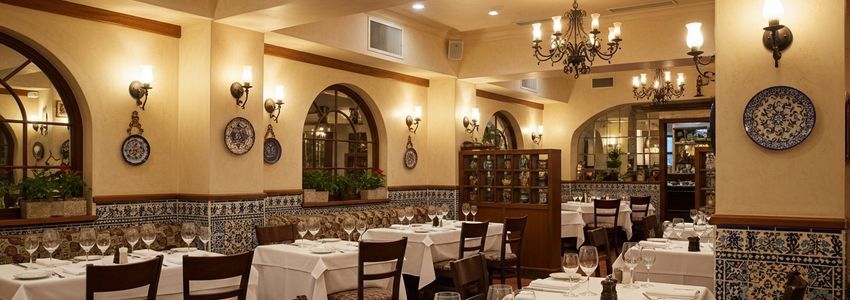
Running a Mediterranean restaurant is a rewarding venture, but keeping up with the demands of a competitive food service market requires consistent access to capital. Whether you need to upgrade your kitchen equipment, expand your dining room, hire additional staff, or manage seasonal cash flow gaps, Mediterranean restaurant business loans give you the flexibility to invest in your business without draining your reserves. This guide covers every major financing option available to Mediterranean restaurant owners and explains how Crestmont Capital can help you get funded fast.
In This Article
What Are Mediterranean Restaurant Business Loans?
Mediterranean restaurant business loans are financing products designed specifically to address the capital needs of Greek, Turkish, Lebanese, Israeli, Moroccan, and other Mediterranean cuisine-focused food service establishments. These businesses face unique financial pressures including specialized ingredient sourcing, distinct kitchen equipment requirements (such as wood-fired ovens, rotisseries, and dough preparation stations), and the need to create an authentic, immersive dining atmosphere that reflects Mediterranean culture.
Unlike generic small business loans, restaurant-focused financing solutions account for the irregular revenue patterns typical of food service businesses, including seasonal tourist traffic, weekend-heavy sales cycles, and holiday dining surges. Lenders experienced in restaurant financing understand that your cash flow statement looks different from a retail or services business, and they structure loan products accordingly.
Mediterranean restaurants range from quick-service falafel stands and casual gyro shops to upscale full-service establishments offering multi-course dining experiences. Regardless of your format, format, or scale, financing can support your operations, equipment, staffing, and expansion goals.
Industry Insight: The Mediterranean and Middle Eastern food market in the United States has seen consistent growth, with consumers increasingly seeking healthier dining options. Mediterranean cuisine aligns well with health-conscious dining trends, creating strong demand for well-capitalized operators who can invest in quality and consistency.
Key Benefits of Financing Your Mediterranean Restaurant
Access to business financing gives Mediterranean restaurant owners the flexibility to seize opportunities and navigate challenges without depleting working capital. Here are the most significant benefits:
- Kitchen Equipment Upgrades: Invest in commercial-grade rotisseries, wood-fired ovens, shawarma machines, dough mixers, and refrigeration systems that drive menu quality and consistency.
- Interior Design and Atmosphere: Mediterranean restaurants succeed partly on ambiance. Financing lets you invest in authentic decor, mosaic tilework, seating upgrades, and lighting that create a memorable dining experience.
- Inventory and Food Purchasing: Mediterranean cuisine relies on specialty ingredients like high-quality olive oil, fresh cheeses, spiced meats, and imported herbs. Bulk purchasing through financing improves your margins.
- Staff Hiring and Training: Build a skilled kitchen team and front-of-house staff who understand authentic Mediterranean cuisine and service standards.
- Marketing and Digital Presence: Fund social media advertising, photography of your dishes, loyalty programs, and reservation platform fees that keep tables filled.
- Seasonal Cash Flow Management: Bridge revenue gaps during slower months without putting personal finances at risk.
- Expansion to a Second Location: When your concept is proven, financing allows you to scale without waiting years to accumulate enough cash.
- Technology and POS Systems: Modern point-of-sale systems, online ordering platforms, and delivery integrations are essential in today's restaurant market.
Funding Built for Restaurant Owners
Get the capital your Mediterranean restaurant needs to grow. Fast approvals, flexible terms, no obligation to apply.
Apply NowHow Mediterranean Restaurant Loans Work
The process of obtaining restaurant financing is more accessible than many restaurant owners realize, especially when working with lenders experienced in food service businesses. Here is a step-by-step overview of how most restaurant loans work:
- Determine Your Funding Needs: Identify exactly what you need capital for - kitchen equipment, working capital, expansion, or debt refinancing. The clearer your goal, the faster the approval process.
- Gather Basic Documentation: Most alternative lenders require 3-6 months of bank statements, a voided business check, and basic business information. Traditional bank loans require more extensive documentation including full tax returns, financial statements, and business plans.
- Choose the Right Loan Product: Different financing products serve different needs. Short-term working capital loans work well for immediate cash flow needs, while equipment financing is structured around specific purchases, and term loans support long-term investments.
- Submit Your Application: Online applications with alternative lenders often take under 10 minutes. Some lenders can provide same-day decisions.
- Receive Funding: After approval, funds are typically deposited within 1-5 business days. Equipment financing may take slightly longer as it requires vendor coordination.
- Repay on Schedule: Restaurant loans typically feature daily, weekly, or monthly repayments. Some products like merchant cash advances repay automatically as a percentage of daily credit card sales.
Mediterranean Restaurant Financing at a Glance
$10K
Minimum Loan Amount
$5M+
Maximum Loan Amount
24 hrs
Typical Funding Speed
500+
Minimum Credit Score (varies)
6 months
Min. Time in Business
$10K/mo
Min. Monthly Revenue (varies)
Types of Financing Available for Mediterranean Restaurants
There is no single "restaurant loan" - the market offers a variety of financing structures, each suited to different needs. Understanding your options helps you choose the right product for your situation.
Small Business Loans (Term Loans)
Traditional term loans provide a lump sum repaid over a fixed period with a set interest rate. Small business loans are ideal for major investments like full kitchen renovations, opening a second location, or significant equipment purchases. Terms typically range from 6 months to 10 years.
Business Line of Credit
A business line of credit works like a credit card for your business - you draw what you need, when you need it, and only pay interest on what you use. This is excellent for managing cash flow gaps between payroll, food purchases, and revenue cycles. Most restaurants benefit from having a line of credit available even when they do not immediately need it.
Equipment Financing
Equipment financing is specifically designed for purchasing restaurant equipment. The equipment itself typically serves as collateral, which often means lower interest rates and higher approval rates. This product works well for commercial ovens, rotisseries, refrigeration units, dishwashers, POS systems, and shawarma machines. The loan or lease term is usually matched to the useful life of the equipment.
SBA Loans
SBA loans backed by the U.S. Small Business Administration offer the most competitive interest rates available to small businesses. The SBA 7(a) program is the most common for restaurant owners, providing up to $5 million for working capital, equipment, renovation, and expansion. However, SBA loans have a longer approval process - typically 30-90 days - and require more documentation.
Short-Term Business Loans
Short-term business loans provide fast funding with repayment terms typically ranging from 3-18 months. These are ideal when you need capital quickly and can repay it within a year from increased revenue. They carry higher rates than long-term loans but offer speed and minimal paperwork.
Merchant Cash Advance (MCA)
A merchant cash advance provides upfront capital in exchange for a percentage of your daily credit and debit card sales. Repayment adjusts with your revenue - when business is slow, you pay less. This flexibility makes MCAs popular with seasonal restaurants. However, the effective cost of capital is typically higher than traditional loans.
Same-Day Business Loans
Same-day business loans are available for qualified applicants who need capital urgently. If your commercial oven breaks down during peak season or you need to cover payroll this week, same-day funding can prevent operational disruption.
Long-Term Business Loans
Long-term business loans with terms of 3-10+ years are best suited for major investments where you want to keep monthly payments manageable. These work well for purchasing commercial real estate, undertaking complete restaurant build-outs, or financing substantial renovations.
Bad Credit Business Loans
If your credit score has taken hits from past financial challenges, bad credit business loans may still provide access to capital. Alternative lenders place greater emphasis on your monthly revenue, cash flow, and time in business than on credit scores alone.
Restaurant Financing Tip: According to the U.S. Small Business Administration, restaurants are one of the most active sectors for SBA loan usage. Understanding all your financing options - from MCAs to SBA loans - puts you in a position to choose the right product for your exact situation rather than defaulting to high-cost options out of convenience.
Who Qualifies for Mediterranean Restaurant Financing?
Lender requirements vary depending on the loan product, but here is what most lenders evaluate when reviewing restaurant loan applications:
Time in Business
Alternative lenders typically require a minimum of 6 months in operation. SBA and traditional bank loans generally prefer 2+ years in business. The longer your operating history, the more financing options become available to you.
Monthly Revenue
Most lenders want to see at least $10,000-$15,000 in monthly revenue for smaller loans. Larger loan amounts require proportionally higher revenue. Lenders review your bank statements to verify consistent cash flow rather than taking your word for projected revenue.
Credit Score
Credit requirements range widely by product. Merchant cash advances and same-day loans may approve businesses with credit scores as low as 500. SBA loans prefer scores of 680 or higher. Equipment financing often falls in the 600-650 range. Having a higher score will always give you access to better rates and terms.
Industry and Business Type
Restaurants are considered a higher-risk industry by some lenders due to slim profit margins and high failure rates. However, lenders experienced in food service recognize that well-managed Mediterranean restaurants with strong customer bases can be excellent credit risks.
Collateral
Many restaurant financing products are unsecured, meaning no collateral is required. Equipment loans use the purchased equipment as collateral. SBA loans may require a personal guarantee and business assets as collateral.
Personal Guarantee
Most small business loans, particularly SBA loans and traditional bank loans, require a personal guarantee from business owners with 20%+ ownership. This means your personal credit and assets are tied to the loan obligation.
See What Your Restaurant Qualifies For
Check your options in minutes. No impact to your credit score. Real rates, real terms from the #1 business lender in the U.S.
Get My OptionsHow Crestmont Capital Helps Mediterranean Restaurant Owners
Crestmont Capital is a direct lender specializing in restaurant business loans and small business financing across the United States. We understand the unique dynamics of food service businesses and have funded hundreds of restaurant owners across every segment of the industry, from fast-casual concepts to upscale dining.
Here is what sets Crestmont Capital apart for Mediterranean restaurant owners:
- Fast Application Process: Our online application takes less than 10 minutes to complete. You do not need to gather piles of paperwork before getting a decision.
- Same-Day and Next-Day Funding: Many qualified applicants receive funds within 24 hours of approval, critical when you need to act quickly on equipment repairs or inventory needs.
- Flexible Loan Structures: We offer short-term and long-term loans, lines of credit, equipment financing, and more - giving you the ability to match financing to your specific need.
- Revenue-Based Repayment Options: For restaurants with variable revenue, we offer repayment structures that flex with your sales, preventing financial strain during slow periods.
- No Pre-Payment Penalties: If your restaurant performs well and you want to pay off your loan early, Crestmont Capital does not penalize you for it.
- Dedicated Loan Advisors: Every applicant is paired with a specialist who understands the restaurant industry and can guide you through product selection and documentation.
Whether you operate a single-location neighborhood gyro shop or a multi-unit Mediterranean restaurant group, our team has the financing solutions to match your scale and ambition. We also offer bad credit business loans and business loans with no credit check for owners who have faced credit challenges in the past.
For restaurant owners who have been denied by traditional banks, Crestmont Capital offers fast business loans with more flexible underwriting criteria that focus on your restaurant's actual revenue performance rather than rigid credit score cutoffs.
Real-World Scenarios: How Mediterranean Restaurant Owners Use Financing
Understanding how other restaurant owners have used financing can help you identify whether and how funding fits your current situation.
Scenario 1: Commercial Kitchen Equipment Upgrade
Elena, who runs a family-owned Greek restaurant in Chicago, had been operating with aging commercial equipment that was increasingly causing breakdowns and delaying service. Her rotisserie oven was 15 years old, and her commercial refrigerators were struggling during hot summer months, leading to food spoilage costs. She financed $85,000 through Crestmont Capital's equipment financing program, replacing her oven, refrigerators, and commercial dishwasher. Within six months, she recouped her costs through reduced food waste and a 20% improvement in kitchen efficiency during dinner service.
Scenario 2: Second Location Expansion
Karim, who had successfully operated a Lebanese street food restaurant in Denver for eight years, identified an opportunity to open a second location in a high-traffic neighborhood. The build-out, equipment, initial inventory, and working capital required approximately $320,000. Using a combination of an SBA 7(a) loan for the long-term investment and a business line of credit for operational flexibility, Karim opened his second location within four months of identifying the opportunity. His second location reached profitability within 14 months.
Scenario 3: Seasonal Cash Flow Management
Sophia's Mediterranean restaurant in a beach community thrived during summer months but struggled to cover payroll and fixed expenses during the slow winter season. Rather than laying off her experienced kitchen staff each fall - and scrambling to rehire and retrain each spring - she established a business line of credit with Crestmont Capital. She draws on the line during winter, covers operations, and pays it down as summer revenue builds. The predictability has allowed her to retain her core team year-round.
Scenario 4: Marketing and Brand Investment

Yusuf, who operated a Turkish restaurant in Austin, Texas, had excellent food but struggled with visibility against larger competitors with bigger marketing budgets. He used a $45,000 small business loan to invest in professional food photography, a new website with online ordering, local paid advertising, and participation in local food festivals. Within 12 months, his monthly revenue had increased by 38%, and his online ordering revenue accounted for 22% of total sales.
Scenario 5: Emergency Equipment Repair
Maria's Mediterranean cafe in San Diego faced an unexpected crisis when her commercial HVAC system failed during a heat wave, making the dining room unusable. The repair bill came to $28,000. Using Crestmont Capital's same-day funding option, she received funds within hours of approval, contracted the repair immediately, and reopened within 48 hours rather than being closed for weeks waiting for traditional financing to process.
Scenario 6: Staff Expansion and Training
Nour, who owned a high-end Moroccan restaurant in New York City, was repeatedly losing business because she lacked the staff to handle large private dining groups. A $60,000 working capital loan allowed her to hire three experienced servers and a sous chef specialized in Moroccan cuisine, fund their first 90 days of compensation while they were being trained, and invest in a new reservation management system. Her private dining revenue grew by 65% the following year.
Related Reading: If you are also interested in financing for other restaurant types, see our guides on Italian restaurant business loans and Thai restaurant business loans for additional financing perspectives on specialty cuisine restaurants.
According to CNBC, restaurant industry revenues have shown strong recovery and growth over recent years, with consumers increasingly returning to dining out and seeking diverse culinary experiences. Mediterranean cuisine, with its health associations and globally recognized appeal, is particularly well-positioned to capture this spending growth.
The U.S. Small Business Administration reports that food service remains one of the most active industries for small business loan applications, with restaurants consistently demonstrating strong repayment histories when adequately capitalized.
Research from Forbes consistently shows that undercapitalization is a primary driver of restaurant business failure - reinforcing why strategic access to financing matters for long-term survival and growth.
How to Get Started
Complete our quick application at offers.crestmontcapital.com/apply-now - takes just a few minutes and requires no hard credit pull to check your options.
A Crestmont Capital advisor with food service industry experience will review your needs and match you with the right financing option for your Mediterranean restaurant.
Receive your funds and put them to work - often within 24 hours of approval, so your restaurant can keep moving forward without interruption.
Conclusion
The Mediterranean restaurant industry offers tremendous opportunity for owners who invest strategically in their operations, team, and customer experience. But opportunity requires capital, and capital requires the right financing partner. Mediterranean restaurant business loans from Crestmont Capital give you access to flexible, fast funding designed for the unique demands of the food service industry. Whether you are upgrading your kitchen, managing seasonal cash flow, opening a second location, or recovering from an unexpected expense, the right financing solution exists for your situation. Apply today and find out what your restaurant qualifies for.
Disclaimer: The information provided in this article is for general educational purposes only and is not financial, legal, or tax advice. Funding terms, qualifications, and product availability may vary and are subject to change without notice. Crestmont Capital does not guarantee approval, rates, or specific outcomes. For personalized information about your business funding options, contact our team directly.
Ready to Fund Your Mediterranean Restaurant?
Apply in minutes. Get funded as fast as the same day. No obligation - see your options now.
Apply NowFrequently Asked Questions
What types of financing are available for Mediterranean restaurants?
Mediterranean restaurant owners can access small business term loans, business lines of credit, equipment financing, SBA loans, merchant cash advances, short-term loans, long-term loans, and same-day funding options. The right product depends on your specific need, credit profile, and how quickly you need capital.
How much can I borrow for my Mediterranean restaurant?
Loan amounts typically range from $10,000 to $5 million or more, depending on your revenue, credit profile, time in business, and the type of financing you pursue. SBA loans can reach $5 million. Equipment financing amounts are typically tied to the cost of the equipment being purchased. Most alternative lenders offer $10,000 to $500,000 for working capital needs.
What is the minimum credit score needed for a restaurant business loan?
Credit score requirements vary by product. Some alternative lenders and merchant cash advance providers work with scores as low as 500. Equipment financing typically requires a minimum of 600-650. SBA loans prefer 680+. Even if your credit score is below average, strong revenue and cash flow can still qualify your restaurant for financing through alternative lenders.
Can I get a restaurant loan if I have bad credit?
Yes. Alternative lenders place much greater emphasis on your restaurant's monthly revenue and cash flow than on your personal credit score. If your Mediterranean restaurant has consistent sales - typically $10,000 or more per month - you may qualify for financing even with a credit score under 600. Crestmont Capital offers bad credit business loans specifically for business owners who have faced credit challenges.
How long does it take to get approved and funded?
Alternative lenders can provide decisions within hours and fund within 24 hours. SBA loans typically take 30-90 days from application to funding. Equipment financing usually takes 3-7 business days. The speed depends on the loan type, how quickly you provide documentation, and how straightforward your financial profile is.
What documents do I need to apply for a Mediterranean restaurant loan?
Most alternative lenders require 3-6 months of business bank statements, a voided business check, and basic business identification (EIN, business license). Traditional bank loans and SBA loans additionally require 2 years of business and personal tax returns, profit and loss statements, a balance sheet, and often a business plan. The faster the loan, the fewer documents typically required.
Can I use a business loan to open a new Mediterranean restaurant?
New restaurant startups are harder to finance than established operations because most lenders want to see a track record of revenue. SBA loans are the most accessible startup option. Equipment financing is often available for new businesses because the equipment serves as collateral. If you have an existing restaurant and want to open a second location, your existing revenue history makes the process much easier.
What is the difference between a restaurant term loan and a line of credit?
A term loan provides a lump sum upfront that you repay on a fixed schedule with interest. It is best for one-time investments like equipment purchases or renovations. A line of credit is revolving - you draw funds as needed, repay them, and borrow again. It is best for ongoing cash flow management, unexpected expenses, and seasonal needs where your capital requirements vary month to month.
Are there specific loan programs for minority-owned or immigrant-owned restaurants?
Yes. The SBA has programs that prioritize lending to minority-owned and underserved businesses, including the SBA 8(a) program and Community Development Financial Institutions (CDFIs). Many Mediterranean restaurant owners are first-generation immigrants who may qualify for these programs. Crestmont Capital also provides financing to businesses regardless of the owner's background, focused primarily on your business's financial performance.
How much does it cost to borrow money for a restaurant?
The cost varies significantly by product type, credit profile, and lender. SBA loan interest rates typically range from 6-11%. Equipment financing rates run 5-20% annually. Short-term alternative loans carry higher effective rates due to their speed and lower credit requirements. Merchant cash advances are priced as factor rates (typically 1.2-1.5x) rather than APR. Always compare the total cost of capital, not just the headline rate.
Can I use restaurant financing for marketing and advertising?
Yes. Working capital loans, lines of credit, and short-term loans can all be used to fund marketing investments including social media advertising, food photography, influencer marketing, website development, and third-party delivery platform setup. Many restaurant owners find that marketing investments generate strong ROI and are well worth financing when cash flow is tight.
What is equipment financing and is it right for my restaurant?
Equipment financing is a loan or lease structure where the purchased equipment serves as collateral. This typically results in lower interest rates and easier approval since the lender has a tangible asset securing the loan. For Mediterranean restaurants, equipment financing is ideal for major purchases like commercial ovens, rotisseries, shawarma machines, refrigeration units, and POS systems. The term usually matches the useful life of the equipment.
Can seasonal Mediterranean restaurants qualify for financing?
Yes. Many lenders work with seasonal businesses. The key is demonstrating strong revenue during your peak season and showing that your business has an established pattern. Some lenders offer seasonal repayment structures where payments are lower during slow months and higher during peak months, matching your repayment capacity to your revenue cycle.
How does a merchant cash advance work for restaurants?
A merchant cash advance (MCA) provides upfront capital in exchange for a percentage of your future daily credit and debit card sales. The provider collects a small percentage of each day's card sales until the full amount (plus fees) is repaid. The main advantage is that repayment flexes with your revenue - when sales are slow, you pay less. However, MCAs typically carry higher effective costs than traditional loans.
What is the best loan option for renovating a Mediterranean restaurant?
For restaurant renovations, SBA loans (particularly SBA 7(a) and SBA 504 programs) offer the best rates and longest terms, making them ideal for major renovations. Long-term business loans are the next best option. For smaller renovations under $100,000, short-term loans or lines of credit often make sense due to faster approval and simpler documentation requirements.