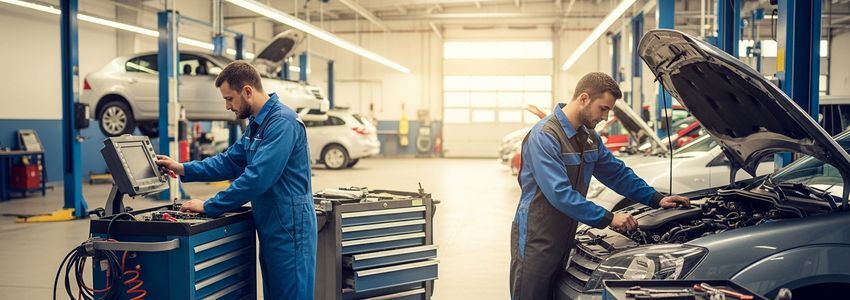
The auto repair industry is the backbone of American transportation, keeping millions of vehicles safe and operational. As a shop owner, you face constant pressure to invest in new technology, hire skilled technicians, and manage fluctuating cash flow. To meet these demands and drive growth, securing the right funding is not just an option-it is a necessity. Mechanic shop business loans provide the capital you need to navigate challenges and seize opportunities.
Whether you are looking to purchase a state-of-the-art diagnostic machine, expand your service bays, or simply cover payroll during a slow season, a tailored financing solution can make all the difference. Understanding the various types of loans, their benefits, and the application process is the first step toward building a more resilient and profitable auto repair business. This comprehensive guide will walk you through everything you need to know about financing your mechanic shop.
At Crestmont Capital, we specialize in providing fast, flexible funding solutions for businesses just like yours. We recognize the unique financial landscape of the auto repair industry and have helped countless shop owners get the capital they need to succeed. By exploring the options available, you can make an informed decision that aligns with your specific business goals.
In This Article
- What Are Mechanic Shop Business Loans?
- The Key Benefits of Securing Financing for Your Auto Repair Shop
- How Mechanic Shop Financing Works: A Step-by-Step Overview
- Types of Mechanic Shop Business Loans and Financing Options
- Who Qualifies for Auto Repair Shop Financing?
- How to Apply for a Mechanic Shop Business Loan: A Practical Guide
- How Crestmont Capital Streamlines Financing for Mechanics
- Real-World Scenarios: How Auto Shops Use Business Loans
- Comparing Your Financing Options: A Quick-Reference Table
- Next Steps: Secure Your Funding with Crestmont Capital
- Frequently Asked Questions About Mechanic Shop Loans
What Are Mechanic Shop Business Loans?
Mechanic shop business loans are a category of financial products designed specifically to meet the capital needs of auto repair and service centers. Unlike generic personal loans, these commercial financing options are structured to support business operations, investments, and growth. They are not a one-size-fits-all product but rather a suite of tools that can be tailored to your shop's unique circumstances.
These loans can be used for a wide range of purposes critical to running a modern auto service center. Common uses include purchasing new or used equipment like vehicle lifts and diagnostic scanners, renovating or expanding facilities, hiring and training technicians, or boosting working capital to manage day-to-day expenses. The funding can come from various sources, including traditional banks, credit unions, and alternative lenders like Crestmont Capital.
The core purpose of these loans is to provide an injection of cash that enables you to make strategic investments that generate a return. For example, financing a new ADAS (Advanced Driver-Assistance Systems) calibration tool might cost $40,000, but it could open up a new, high-margin revenue stream that pays for the equipment many times over. The right financing acts as a catalyst, turning planned improvements into tangible business growth.
Understanding the distinction between different loan types is crucial. Some loans provide a lump sum of cash upfront with a fixed repayment schedule, while others offer a flexible line of credit you can draw from as needed. The best choice depends on what you need the money for, how quickly you need it, and your business's financial health. We will explore these specific types in greater detail later in this guide.
The Key Benefits of Securing Financing for Your Auto Repair Shop
Strategic financing offers far more than just a temporary cash infusion. When used effectively, mechanic shop business loans can fundamentally improve your operations, competitiveness, and long-term profitability. The benefits extend across every aspect of your auto repair business.
One of the most significant advantages is the ability to invest in modern technology and equipment. The automotive industry is evolving rapidly, with electric vehicles (EVs) and complex computer systems becoming standard. A loan allows you to purchase the latest diagnostic tools, wheel alignment systems, and specialty equipment needed to service these advanced vehicles, preventing you from turning away customers and falling behind competitors.
Financing also empowers you to expand your physical capacity and service offerings. You can use funds to add more service bays, build a larger waiting area for customers, or even open a second location. This physical growth directly translates into the ability to service more cars per day, dramatically increasing your revenue potential.
Managing cash flow is a persistent challenge for many small businesses, and auto repair shops are no exception. A working capital loan or business line of credit provides a crucial safety net. It ensures you can cover payroll, order parts, and pay rent during seasonal lulls or when waiting on insurance or fleet account payments, maintaining operational stability year-round.
Finally, access to capital allows you to invest in your team and marketing efforts. You can hire more ASE-certified technicians, provide advanced training to existing staff, and launch targeted advertising campaigns to attract new customers. These investments in people and promotion are essential for building a strong reputation and a loyal customer base.
Ready to Upgrade Your Shop?
Get the capital you need for new equipment, expansion, or working capital. See your options in minutes.
Apply Now →How Mechanic Shop Financing Works: A Step-by-Step Overview
The process of obtaining a business loan can seem intimidating, but it follows a logical progression. While specific steps may vary slightly between lenders, the general framework remains consistent. Understanding this workflow helps demystify the process and prepares you for a smooth and successful application.
The journey begins with an initial assessment and application. First, you determine your business's needs: how much capital is required and for what specific purpose. You then complete an application, which typically asks for basic information about your business, its owners, revenue, and the desired loan amount. With a modern lender like Crestmont Capital, this initial application is often a simple online form that takes only a few minutes.
Next comes the underwriting and review stage. The lender's underwriting team will analyze your application and supporting documents to assess risk and determine your eligibility. They will review factors like your credit history, time in business, and annual revenue. This is where they verify the financial health of your shop and decide if you are a good candidate for funding.
If your application is approved, you will receive a loan offer or a set of options. This proposal will detail the approved loan amount, interest rate, repayment term, and any associated fees. It is critical to review this offer carefully to ensure you understand all the terms and conditions before accepting. A dedicated funding advisor can walk you through the details and answer any questions.
The final step is funding. Once you accept the offer and sign the loan agreement, the lender will disburse the funds directly into your business bank account. With efficient alternative lenders, this entire process from application to funding can happen in as little as 24 to 48 hours, allowing you to put the capital to work almost immediately.
Quick Guide
How to Get Mechanic Shop Financing - At a Glance
Apply online in minutes at Crestmont Capital - provide basic business and financial details.
A funding specialist reviews your application and matches you with the best financing option for your shop.
Many mechanic shop owners receive decisions within 24 to 48 hours of submitting their application.
Funds are deposited directly into your business account - often within days of approval.
Types of Mechanic Shop Business Loans and Financing Options
Not all business loans are created equal. The best financing option for your auto repair shop depends entirely on your specific needs, financial situation, and long-term goals. Here is a detailed breakdown of the most common types of small business financing available to mechanics.
Equipment Financing
Equipment financing is one of the most popular choices for auto repair shops, and for good reason. This type of loan is specifically designed for purchasing new or used machinery. The equipment itself-whether it is a vehicle lift, a tire balancer, or a diagnostic computer-serves as the collateral for the loan.
This structure significantly reduces the lender's risk, which often results in higher approval rates and more favorable terms, even for business owners with less-than-perfect credit. Repayment terms typically align with the expected useful life of the equipment, ranging from two to seven years. For more information, you can explore our detailed guide on equipment financing and what to expect for rates.
SBA Loans
SBA loans are partially guaranteed by the U.S. Small Business Administration, which makes them highly attractive to lenders and borrowers alike. This government backing allows banks and other lending institutions to offer long repayment terms and some of the lowest interest rates on the market. The two most common types are the SBA 7(a) and the SBA 504 loan.
SBA 7(a) loans are versatile and can be used for a wide range of purposes, including working capital, equipment purchase, and even refinancing existing debt. SBA 504 loans are specifically for major fixed assets like purchasing real estate or funding large-scale construction projects. While SBA loans offer excellent terms, the application process is known for being rigorous and time-consuming, requiring extensive documentation and a strong credit profile.
Industry Stat: The U.S. automotive repair and maintenance market is projected to reach over $800 billion by 2027, according to market analysis reports. This growth underscores the increasing need for well-equipped and modern repair facilities.
Business Term Loans
A traditional term loan provides a lump sum of capital that you repay with interest over a predetermined period. These loans feature fixed, predictable monthly payments, making them easy to budget for. Term lengths can range from one to ten years, depending on the lender and the loan's purpose.
Term loans are ideal for significant, one-time investments with a clear return, such as a major shop renovation, the acquisition of another repair business, or a large-scale marketing launch. Lenders will typically require a solid credit history and a few years of business operations to qualify for the best rates and terms.
Business Line of Credit
A business line of credit functions much like a credit card for your business. You are approved for a specific credit limit and can draw funds as needed, up to that amount. You only pay interest on the funds you actually use, not the entire credit line.
This flexibility makes it a perfect tool for managing cash flow, handling unexpected expenses like an emergency equipment repair, or seizing time-sensitive opportunities like a bulk discount on parts. As you repay the borrowed amount, your available credit is replenished, making it a reusable financial resource for ongoing needs.
Working Capital Loans
Working capital loans are short-term financing solutions designed to cover everyday operational expenses. These loans are not intended for large, long-term investments but rather for bridging temporary cash flow gaps. They provide the liquidity needed to pay for things like payroll, inventory, rent, and utilities.
Because they are meant to address immediate needs, working capital loans often have a fast application and funding process. Repayment terms are typically shorter, usually less than 18 months, with payments made on a daily or weekly basis. They are an excellent option for surviving a slow season or managing inconsistent revenue cycles.
Merchant Cash Advance (MCA)
A merchant cash advance is not technically a loan but rather a sale of a portion of your future credit and debit card sales. A provider gives you a lump sum of cash in exchange for an agreed-upon percentage of your daily card transactions until the advance is repaid in full. This repayment structure automatically adjusts to your sales volume.
MCAs are one of the most accessible forms of financing, often available to businesses with poor credit or a short operating history. However, this accessibility comes at a cost. MCAs typically have very high factor rates (similar to interest rates), making them one of the most expensive financing options. They should be considered carefully and are best used for urgent, short-term needs when other options are not available.
Who Qualifies for Auto Repair Shop Financing?
Lenders evaluate several key factors to determine a business's creditworthiness and risk level. While specific requirements vary between loan products and financial institutions, understanding the core criteria will help you prepare a stronger application. The primary qualifications generally revolve around your credit history, business revenue, and operating history.
Your personal and business credit scores are among the most important factors. A higher credit score indicates a history of responsible borrowing and timely repayments, reducing the lender's risk. For traditional bank loans or SBA loans, you will likely need a personal credit score of 680 or higher. Alternative lenders like Crestmont Capital offer more flexibility, often working with scores as low as 550 for certain products.
Annual revenue and cash flow are also critical. Lenders need to see that your auto shop generates sufficient income to comfortably handle loan repayments. Most lenders have a minimum annual revenue requirement, which could range from $100,000 to over $250,000. Consistent bank deposits and healthy profit margins will significantly strengthen your case.
The length of time your business has been in operation is another key indicator of stability. Most lenders prefer to see at least one to two years of operating history. Startups and very new businesses may find it more challenging to secure traditional financing, but options like MCAs or equipment financing may still be accessible. A well-documented business plan can also help new businesses make a compelling case for funding.
Finally, some loans may require collateral. Collateral is an asset (such as real estate, equipment, or inventory) that you pledge to the lender to secure the loan. If you default on the loan, the lender can seize the collateral to recoup their losses. While many modern financing options are unsecured, offering collateral can often help you qualify for larger loan amounts or better interest rates.
Key Insight: According to the SBA, a primary reason small businesses seek financing is to purchase assets like machinery and equipment. This highlights the critical role of equipment financing in industries like auto repair.

How to Apply for a Mechanic Shop Business Loan: A Practical Guide
Applying for a business loan is a structured process that requires careful preparation. By following a clear set of steps, you can increase your chances of approval and secure the best possible terms for your auto repair shop. Here is a practical guide to navigating the application process from start to finish.
Step 1: Define Your Funding Needs
Before you approach any lender, you must have a clear understanding of why you need the money and exactly how much you require. Are you buying a specific piece of equipment? Create a quote. Are you expanding your facility? Get estimates from contractors. A well-defined plan shows lenders you are serious and have a strategy for using their capital effectively.
This is also the time to assess how a new loan payment will fit into your budget. Analyze your current cash flow and project how the investment will increase your revenue. This will help you determine a comfortable repayment amount and loan term.
Step 2: Gather Necessary Documentation
Lenders require specific documents to verify your business's identity and financial health. Being prepared with these documents in advance will significantly speed up the process. While requirements vary, most applications will ask for a combination of the following.
Commonly requested documents include government-issued photo ID, a voided business check, bank statements from the last three to six months, and recent tax returns (both personal and business). You may also need financial statements like a profit and loss statement and a balance sheet. For a comprehensive list, review our business loan document checklist.
Step 3: Research and Compare Lenders
There are three main categories of lenders: traditional banks, credit unions, and alternative online lenders. Banks often offer low rates but have strict requirements and a slow process. Credit unions can be a good middle ground, but you typically need to be a member. Alternative lenders, like Crestmont Capital, specialize in speed and flexibility, offering a wider range of products and higher approval rates.
Compare factors like interest rates, fees, repayment terms, and customer reviews. Look for a lender with experience in the auto repair industry, as they will better understand your unique challenges and opportunities. A quick online application can often give you a pre-qualification without impacting your credit score.
Step 4: Submit Your Application and Review Offers
Once you have chosen a lender, complete and submit your application along with all required documents. Be thorough and accurate to avoid delays. After the lender's underwriting team reviews your file, you will receive a decision and, if approved, a formal loan offer.
Do not just look at the loan amount. Carefully examine the Annual Percentage Rate (APR), which includes both the interest rate and any fees, to understand the true cost of borrowing. Review the repayment schedule and ensure there are no hidden prepayment penalties. Once you are confident in the terms, you can sign the agreement and receive your funds.
Our Simplified 4-Step Funding Process
Apply Online
Fill out our simple online application in under 5 minutes. It's secure and won't affect your credit score.
Review Options
A dedicated funding advisor will contact you to discuss your customized loan options and answer questions.
Accept Offer
Once you select the best offer for your shop, you'll complete the final paperwork electronically.
Get Funded
Capital is deposited directly into your business bank account, often in as little as 24 hours.
How Crestmont Capital Streamlines Financing for Mechanics
At Crestmont Capital, we understand that as a mechanic shop owner, your time is best spent under the hood, not buried in paperwork. That is why we have designed our entire lending process around speed, simplicity, and a deep understanding of the auto repair industry. We are not just a lender; we are a financing partner dedicated to your success.
Our application process is entirely digital and takes just a few minutes to complete, without any impact on your credit score. We have eliminated the mountains of paperwork and long waiting periods associated with traditional banks. Our technology allows us to quickly assess your business's health and provide a decision in hours, not weeks.
Every client is paired with a dedicated funding advisor who understands the specific financial needs of an auto repair business. This expert will guide you through your options, explaining the pros and cons of each financing product in plain language. We believe in transparency and work to find the solution that best fits your goals, ensuring you feel confident in your financial decisions.
With access to a wide network of lending partners and a diverse portfolio of loan products, we can offer solutions for a broad range of credit profiles and business situations. From flexible equipment financing for that new alignment rack to fast working capital for an unexpected parts order, we have the tools to help your shop thrive. Our high approval rates and rapid funding times mean you get the capital you need, when you need it most.
Partner with the #1 Business Lender
Experience the Crestmont Capital difference. Our expert advisors are ready to help you find the perfect loan for your auto shop.
Get Your Free Quote →Real-World Scenarios: How Auto Shops Use Business Loans
To better understand the practical impact of financing, let's explore a few common scenarios where mechanic shop business loans provide the perfect solution. These examples illustrate how different loan types can be strategically applied to solve specific challenges and fuel growth.
Scenario 1: Upgrading to Advanced Diagnostic Equipment
The Challenge: Dave's Auto Repair has been in business for 15 years. He is noticing more customers coming in with complex electronic issues and ADAS-equipped vehicles that his older diagnostic tools cannot handle. He is turning away profitable work and risks being seen as outdated.
The Solution: Dave applies for $60,000 in equipment financing. He is quickly approved because the new diagnostic and calibration equipment serves as collateral. The loan allows him to purchase a complete ADAS service package, and the new revenue generated from these high-tech repairs easily covers the monthly loan payment, boosting his overall profitability.
Scenario 2: Expanding to a Second Location
The Challenge: Maria's garage is consistently booked solid, with a two-week waiting list for appointments. She has identified a prime location for a second shop in a neighboring town but lacks the significant capital needed for the down payment, renovations, and initial operating costs.
The Solution: With a strong credit history and several years of profitable operations, Maria is a great candidate for an SBA 7(a) loan. She secures a $350,000 loan with a 10-year term and a low interest rate. This capital covers the property down payment, the purchase of new lifts and tools, and provides enough working capital to support the new location until it becomes self-sustaining.
Scenario 3: Managing Seasonal Cash Flow Gaps
The Challenge: A family-owned shop in a northern state experiences a significant slowdown in business during the harsh winter months. While revenue drops, fixed costs like rent and payroll remain the same, putting a strain on their bank account.
The Solution: The owner applies for a $50,000 business line of credit at the beginning of the fall season. They do not draw any funds immediately but have it available as a safety net. During the slow winter months, they draw $20,000 to cover payroll and a large parts order. As business picks up in the spring, they quickly repay the drawn amount, restoring their full credit line for future needs.
Comparing Your Financing Options: A Quick-Reference Table
Choosing the right loan can be complex. This table provides a side-by-side comparison of the most common financing options for auto repair shops, helping you quickly identify which product best aligns with your needs.
| Feature | Equipment Financing | SBA Loan | Business Line of Credit | Working Capital Loan |
|---|---|---|---|---|
| Best For | Purchasing new or used machinery and tools. | Major expansions, real estate, or large investments. | Managing cash flow and unexpected expenses. | Short-term needs like payroll, inventory, and marketing. |
| Loan Amount | $5,000 - $5,000,000+ | Up to $5,000,000 | $10,000 - $250,000 | $5,000 - $500,000 |
| Repayment Term | 2 - 7 years | 7 - 25 years | Revolving; typically 6 - 24 month terms on draws. | 3 - 18 months |
| Funding Speed | 1 - 3 days | 30 - 90 days | 1 - 5 days | 1 - 2 days |
| Credit Requirement | Fair to Excellent (600+) | Good to Excellent (680+) | Good to Excellent (650+) | Poor to Excellent (550+) |
This table serves as a general guide. Specific terms, amounts, and requirements will always depend on the individual lender and your business's unique financial profile. It is always best to speak with a funding specialist to get precise details for your situation.
Next Steps: Secure Your Funding with Crestmont Capital
Taking the next step toward financing your auto repair shop is simple and straightforward. At Crestmont Capital, we have streamlined the process to get you the capital you need with minimal hassle. Follow these three steps to get started on the path to growth.
Submit Your Application
Fill out our secure, one-page online application in just a few minutes. There is no cost, no obligation, and no impact on your personal credit score to see what you qualify for.
Consult with an Advisor
A dedicated funding advisor will reach out to you, typically within a few hours, to discuss your business needs and review your customized financing options. This is your opportunity to ask questions and get expert guidance.
Receive Your Capital
Once you select the best offer and complete the final steps, your funds will be transferred directly to your business bank account. In many cases, capital is available in as little as 24 hours.
Don't Wait to Grow Your Business
The road to a better, more profitable shop starts here. Apply now and see how much you can qualify for.
Start Your Application →Frequently Asked Questions About Mechanic Shop Loans
What is the minimum credit score needed for a mechanic shop loan?
The minimum credit score varies by loan type and lender. For SBA loans or traditional bank loans, you will likely need a score of 680 or higher. However, alternative lenders like Crestmont Capital can often work with scores as low as 550 for products like working capital loans or equipment financing.
How quickly can I get funded?
Funding speed depends on the lender and loan product. Traditional banks and SBA loans can take several weeks or even months. With Crestmont Capital, the process is much faster. Many of our financing options, such as working capital loans and equipment financing, can be funded in as little as 24-48 hours after approval.
Can I get a loan if my auto repair shop is a new business?
While many lenders require at least one to two years in business, financing for startups is possible. Options like equipment financing (where the equipment is the collateral) or certain SBA microloans may be available. A strong business plan and good personal credit will be crucial for new businesses seeking funding.
What can I use the loan funds for?
You can use the funds for almost any legitimate business purpose. Common uses for mechanic shops include purchasing new equipment, expanding service bays, hiring and training technicians, launching marketing campaigns, increasing inventory of parts, or covering daily operating expenses through working capital.
Will I need to provide collateral?
It depends on the loan type. Equipment financing is self-collateralized by the machinery you purchase. Some large term loans or SBA loans may require other assets as collateral. However, many modern financing products, including working capital loans and business lines of credit, are unsecured and do not require specific collateral.
What documents are required to apply?
Basic requirements usually include a simple application, a few months of recent business bank statements, and a copy of your driver's license. For larger or more complex loans, you may also need to provide business and personal tax returns, financial statements (P&L, balance sheet), and a detailed business plan.
How is my interest rate determined?
Your interest rate is determined by several factors, including your credit score, time in business, annual revenue, the loan amount, and the loan term. Generally, businesses with stronger financial profiles and lower perceived risk will qualify for lower interest rates.
Can I pay off my loan early?
This depends on the lender and the specific loan product. Many loans from alternative lenders do not have prepayment penalties, allowing you to pay off the balance early and save on interest. However, some traditional bank loans or SBA loans might have prepayment penalties, so it is crucial to read your loan agreement carefully.
What is the difference between a term loan and a line of credit?
A term loan provides a single lump sum of cash that you repay in fixed installments over a set period. It is best for large, planned investments. A line of credit gives you access to a revolving pool of funds that you can draw from as needed, paying interest only on what you use. It is ideal for ongoing, fluctuating needs and cash flow management.
Will applying for a loan hurt my credit score?
Most alternative lenders, including Crestmont Capital, use a "soft credit pull" for the initial application and pre-qualification process. This does not impact your credit score. A "hard credit pull," which can have a small, temporary impact on your score, is typically only performed once you decide to move forward with a specific loan offer.
Can I get more funding if I already have a business loan?
Yes, it is often possible to obtain additional financing even if you have an existing loan. Lenders will evaluate your business's total debt load and its ability to service all its obligations. If your business shows strong revenue and a good payment history on the current loan, you may qualify for more capital or a refinancing option.
What are the typical repayment terms for an equipment loan?
Repayment terms for auto mechanic business loans for equipment are typically structured to match the useful life of the asset being financed. For most auto repair equipment, this ranges from two to seven years. This alignment ensures that the equipment is generating revenue for your business throughout the entire loan period.
Are there any industry-specific loan programs for mechanics?
While there are not many government programs exclusively for mechanics, many lenders have specialized knowledge of the auto repair industry. These lenders, like Crestmont Capital, understand your business model, cash flow cycles, and equipment needs, allowing them to offer more tailored and relevant financing solutions than a generic lender.
What is APR and why is it important?
APR stands for Annual Percentage Rate. It represents the total annual cost of borrowing and includes not only the interest rate but also any lender fees, such as origination fees or closing costs. Comparing the APR of different loan offers is the most accurate way to understand the true cost and find the most affordable option.
How do I choose the right lender for my auto shop?
Look for a lender that offers transparency, speed, and excellent customer service. Read reviews and testimonials from other business owners. It is also beneficial to partner with a lender that has experience in your industry and can provide expert advice tailored to the unique challenges and opportunities of running an auto repair shop.
Disclaimer: The information provided in this article is for general educational purposes only and is not financial, legal, or tax advice. Funding terms, qualifications, and product availability may vary and are subject to change without notice. Crestmont Capital does not guarantee approval, rates, or specific outcomes. For personalized information about your business funding options, contact our team directly.