
 (800) 949-0401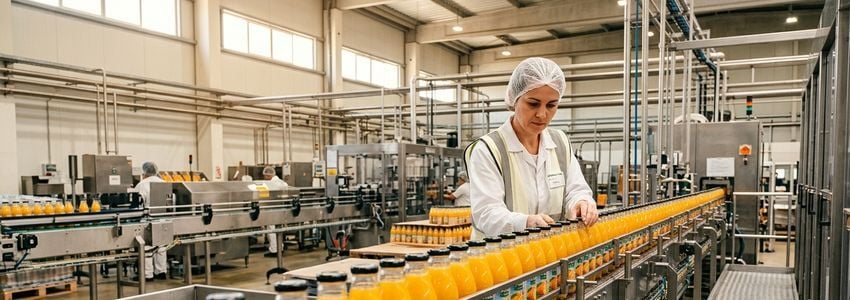
Juice Bottling Equipment Financing: The Complete Guide for Business Owners
Launching or scaling a juice business means confronting one unavoidable reality: bottling equipment is expensive. A single automatic filler-capper combination can run $40,000 to $250,000, and a full production line with pasteurization, labeling, and cold-fill capability can easily exceed $500,000. Juice bottling equipment financing gives beverage entrepreneurs a practical way to acquire this machinery without draining working capital or waiting years to self-fund a production line.
This guide walks through everything a juice business owner needs to know about financing bottling equipment - what it costs, how financing works, who qualifies, and how to choose the right lender. Whether you are a cold-pressed juice startup outgrowing a shared kitchen or an established beverage brand adding a second production line, the information below will help you make a confident financing decision.
In This Article
- What Is Juice Bottling Equipment Financing?
- Types of Juice Bottling Equipment You Can Finance
- Financing vs. Leasing: Which Is Right for You?
- How Juice Bottling Equipment Financing Works
- Rates, Terms, and Loan Amounts
- Who Qualifies for Financing
- How Crestmont Capital Helps Juice Producers
- Real-World Financing Scenarios
- Financing Options Compared
- The Application Process
- Frequently Asked Questions
- How to Get Started
What Is Juice Bottling Equipment Financing?
Juice bottling equipment financing is a form of asset-based commercial lending in which the bottling machinery itself secures the loan. A lender provides funds to purchase fillers, cappers, pasteurizers, labelers, and related production equipment, and the borrower repays the loan over a fixed term with interest. Because the machinery serves as collateral, approval standards are typically more flexible than unsecured business loans, and interest rates tend to be lower.
For juice producers, this structure means you can install a bottling line, add automation, or expand capacity while keeping cash reserves available for fruit and produce sourcing, labor, packaging, and distribution. Rather than saving for years to self-fund a production line, you put the equipment to work generating revenue immediately and use that revenue stream to cover the payments.
Equipment financing and equipment leasing are the two most common structures, and they differ in ownership, tax treatment, and long-term cost. Both are widely available to beverage businesses of every size, from a single cold-pressed juice bar adding its first semi-automatic filler to a regional beverage brand installing a fully automated aseptic bottling line.
Industry Insight: According to the U.S. Census Bureau's Annual Survey of Manufactures, non-alcoholic beverage manufacturing is one of the fastest-growing segments of the U.S. food and beverage industry, driven by consumer demand for cold-pressed, functional, and better-for-you juice products. Producers who can scale bottling capacity quickly are positioned to capture that growth before larger competitors move in.
Types of Juice Bottling Equipment You Can Finance
Nearly every piece of machinery in a juice production line qualifies for equipment financing. Lenders that understand food and beverage manufacturing recognize the resale value and useful life of this equipment, which makes them willing to finance a broad range of categories.
Fillers and Filling Systems
Fillers are the heart of any bottling operation. Gravity fillers, piston fillers, and volumetric fillers handle different viscosity levels, from watery juice blends to pulpy smoothies. Semi-automatic tabletop fillers start around $8,000, while fully automatic rotary fillers for high-volume operations can run $150,000 to $400,000 or more.
Cappers and Sealing Equipment
Capping machines apply screw caps, induction seals, or tamper-evident bands after filling. Single-head cappers for small operations cost $5,000 to $20,000, while multi-head rotary cappers integrated into a full line can exceed $75,000. Induction sealers, which create the foil seal under the cap, typically add another $3,000 to $15,000.
Pasteurizers and HPP Equipment
Pasteurization extends shelf life and satisfies food safety requirements for most retail juice products. Tunnel pasteurizers and flash pasteurizers range from $30,000 to $300,000 depending on throughput. High Pressure Processing (HPP) equipment, increasingly popular for cold-pressed juice brands that want to preserve nutrients without heat, is a larger investment, with tolling arrangements or dedicated in-house units running $250,000 to over $1 million.
Labeling and Coding Equipment
Automatic labeling machines apply pressure-sensitive or shrink-sleeve labels at line speed, while date and lot coders print expiration and batch information required for traceability. Labelers range from $10,000 for semi-automatic units to $100,000 or more for high-speed shrink-sleeve applicators.
Conveyors and Line Integration
Conveyor systems move bottles between filling, capping, labeling, and packaging stations. A complete conveyor and line-integration package for a mid-size operation typically costs $20,000 to $150,000, depending on line length and automation level.
Bottle Washers and Rinsers
Rinsing equipment removes debris and contaminants from bottles before filling. Air rinsers and water rinsers range from $5,000 for basic units to $60,000 for high-speed automated rinsers integrated into a full production line.
Cold Storage and Refrigeration
Fresh-pressed and HPP juice products typically require cold chain storage from production through distribution. Walk-in coolers, blast chillers, and refrigerated holding tanks range from $15,000 to $200,000 depending on capacity.
By the Numbers
Juice Bottling Equipment Financing - Key Facts
100%
Equipment cost can be financed with $0 down in many cases
2-7 Yrs
Typical repayment terms for bottling equipment loans
24-48h
Typical approval time with alternative lenders
$8K+
Minimum financing amount available for smaller equipment
Ready to Scale Your Juice Bottling Line?
Get fast, flexible equipment financing from the #1 business lender in the U.S. No obligation - apply in minutes.
Apply Now →Financing vs. Leasing: Which Is Right for You?
One of the most important decisions juice business owners face is whether to finance (purchase) or lease their bottling equipment. Both options spread the cost over time, but they differ significantly in ownership, tax treatment, and end-of-term flexibility.
Equipment Financing (Loans)
With equipment financing, you receive a loan to purchase the machinery outright. You own the equipment from day one, build equity in the asset, and retain full flexibility to modify, sell, or trade it in. At the end of the loan term, the equipment is yours free and clear, and you can claim depreciation on your taxes.
Equipment loans typically require a down payment of 10-20%, though some lenders offer 100% financing to qualified borrowers. Interest rates generally range from 7% to 26% depending on credit profile, loan amount, and term length.
Equipment Leasing
With equipment leasing, you make monthly payments to use the equipment during the lease term, but the leasing company retains ownership. At the end of the lease, you typically have three options: purchase the equipment at fair market value, renew the lease, or return the equipment. Leasing generally requires lower monthly payments and preserves your credit lines for other needs.
Leasing is particularly attractive for fillers and pasteurizers that may need upgrading as production volume grows, or for seasonal juice operations that want to avoid a long-term ownership commitment on rapidly evolving technology.
Capital Lease vs. Operating Lease
Capital leases (also called finance leases) function like loans - the asset and liability appear on your balance sheet, and you claim depreciation. Operating leases are treated as rental expenses, with monthly payments deductible but the asset excluded from your balance sheet. The right choice depends on your accounting approach, cash flow, and long-term plans for the equipment.
Pro Tip: For durable core machinery like fillers, cappers, and conveyors that often last 15-20 years with proper maintenance, purchasing via equipment loan usually makes more financial sense than leasing since you build equity in a long-lived asset. For rapidly evolving technology like HPP units or automated labelers, leasing can offer more flexibility to upgrade.
How Juice Bottling Equipment Financing Works
The equipment financing process is more straightforward than most beverage entrepreneurs expect. Here is a step-by-step breakdown of how it typically works from application to funding.
Quick Guide
How Juice Bottling Equipment Financing Works
Get a quote or invoice from the equipment manufacturer or dealer. New or used equipment both qualify.
Provide basic business information, time in business, revenue, and equipment details. Most applications take 5-10 minutes.
Alternative lenders like Crestmont Capital can approve applications within 24-48 hours. Banks may take 2-4 weeks.
Review and sign the loan documents. Funds are sent directly to the equipment seller - often within days of approval.
Install your equipment and begin production while making fixed monthly payments according to your loan schedule.
One of the key advantages of equipment-secured financing is that the lender primarily evaluates the equipment's value rather than solely your personal creditworthiness. This makes equipment loans accessible to beverage businesses that might not qualify for traditional unsecured working capital loans. Lenders want to know: is the equipment worth what we are lending, and can the business generate enough revenue to repay it?
Rates, Terms, and Loan Amounts
Understanding the cost structure of juice bottling equipment financing helps you compare offers intelligently and negotiate better terms. Here is what you need to know about each component.
Interest Rates
Equipment financing interest rates for juice and beverage businesses typically range from 7% to 26% per year. The rate you receive depends on several factors: personal credit score, business credit history, time in business, annual revenue, the age and type of equipment being financed, and the loan-to-value ratio.
Businesses with strong credit (680+ personal credit score) and at least 2 years in operation can often secure rates in the 7-13% range. Newer businesses or those with lower credit scores may see rates from 13-26%. Used equipment or highly specialized machinery that is harder to resell often commands higher rates than standard commercial equipment.
Loan Terms
Repayment terms for juice bottling equipment loans typically range from 24 months to 84 months (2-7 years). Shorter terms mean higher monthly payments but less total interest paid. Most lenders align the loan term with the expected useful life of the equipment - a semi-automatic filler might be financed over 3-5 years, while a full production line with a pasteurizer might qualify for a 7-year term.
Loan Amounts
Equipment loans are available from as little as $8,000 for small tabletop fillers up to $2 million or more for complete automated production lines. Most lenders finance 80-100% of the equipment purchase price, capped at the appraised or invoice value.
Down Payments
Some equipment lenders require a down payment of 10-20%, while others offer 100% financing for qualified borrowers. Putting money down reduces your monthly payment and total interest cost, but tying up capital in a down payment may not make sense if you have other high-return uses for those funds, such as expanding your sourcing relationships or marketing your product line.
Who Qualifies for Juice Bottling Equipment Financing
Equipment financing is among the most accessible forms of business lending because the machinery itself provides security. That said, lenders still evaluate several factors when making credit decisions.
Time in Business
Most conventional lenders require at least 2 years in business for equipment loans. Alternative lenders like Crestmont Capital have more flexible requirements and can often work with businesses as young as 6 months. Startups may still qualify if they can demonstrate strong personal credit, relevant industry experience, and a credible business plan.
Credit Score
A personal credit score of 650 or higher opens the door to most equipment financing options. Higher scores (700+) typically yield better interest rates and larger loan amounts. If your credit score is lower, your equipment collateral, business revenue, and the specific lender's risk appetite will determine whether you qualify.
Business Revenue
Lenders want to see that your business generates enough revenue to service the debt. For most equipment loans, lenders look for monthly revenue of at least 1.5-2x the proposed monthly payment. If you are purchasing a $100,000 bottling line with a $1,800 monthly payment, your business should show at least $2,700-3,600 in monthly revenue, ideally much more.
Equipment Age and Type
New equipment is easiest to finance. Used equipment can be financed but lenders may apply a higher rate or lower loan-to-value ratio. Very old equipment (15+ years) may not qualify for financing at all, or may require an independent appraisal. Highly specialized equipment that is harder to resell also tends to receive less favorable terms than standard bottling machinery.
Industry Experience
Lenders evaluate the experience of the business owner and management team. If you have significant food and beverage production experience but are launching a new juice brand, that background works in your favor. Demonstrating that you understand your market, have distribution relationships or retail accounts in place, and know how to operate the equipment reduces perceived risk.
Key Stat: According to the U.S. Small Business Administration, equipment financing is among the most commonly approved categories of small business loans, with approval rates consistently higher than unsecured financing because the collateral backing the loan reduces lender risk.
How Crestmont Capital Helps Juice Producers
Crestmont Capital is the #1-rated business lender in the United States, with deep expertise in food and beverage equipment financing for producers of every size. We understand the seasonal cash flow patterns and capital requirements of juice and beverage manufacturing, and we structure financing solutions that actually work for these businesses.
Our equipment financing programs offer:
- Loans from $8,000 to $2 million for new and used bottling equipment
- Fast approvals - often within 24-48 hours of application
- Flexible terms from 12 to 84 months
- Competitive rates for qualified borrowers
- $0 down options for strong-credit applicants
- Consideration for businesses with less-than-perfect credit
- Financing for both semi-automatic and fully automated bottling lines
Beyond equipment loans, we also offer equipment leasing, business lines of credit, and working capital loans that can complement your equipment financing and cover operational expenses during growth periods or seasonal fluctuations in fruit and produce costs.
Many beverage entrepreneurs researching bottling equipment financing are also evaluating adjacent production investments. If your juice line includes fermented or cultured products, our guide to commercial fermentation equipment financing covers financing for tanks, temperature control, and related machinery. And if cold brew or nitro beverages are part of your product mix, see our nitro cold brew equipment financing guide for financing options specific to that category.
Our advisors specialize in commercial and food-and-beverage lending. When you apply with Crestmont Capital, you work with a team that understands beverage manufacturing economics, not a generalist bank loan officer who has never evaluated a bottling line. That expertise translates into faster decisions, more creative structuring, and financing solutions designed for how your business actually operates.
Get Equipment Financing Designed for Your Bottling Line
Crestmont Capital offers fast, flexible equipment financing for juice and beverage producers. No obligation - apply in minutes.
Apply Now →
Real-World Financing Scenarios
Understanding how equipment financing plays out in practice helps juice business owners evaluate whether it makes sense for their situation. Here are six representative scenarios based on common business needs.
Scenario 1: Launching a Cold-Pressed Juice Brand from a Shared Kitchen
A cold-pressed juice entrepreneur outgrows a shared commercial kitchen and wants her own hydraulic press and semi-automatic filler. The equipment package costs $45,000. With a 690 credit score and 10 months of LLC history, she qualifies for 85% financing at 15% interest over 48 months. Her monthly payment is approximately $945, which she covers through farmers market and wholesale juice bar sales. Within eight months, the equipment has paid for itself in reduced co-packing fees.
Scenario 2: Family Beverage Company Adding an Automated Capper and Labeler
A family-owned juice company that has been in operation for nine years wants to add an automated capper and labeler to reduce labor costs and increase line speed. The equipment costs $110,000. The business has strong cash flow and a 730 credit score. They qualify for $110,000 at 9.5% over 60 months, resulting in a $2,310 monthly payment. The labor savings and increased throughput exceed the payment by a significant margin, making the investment cash-flow positive from month one.
Scenario 3: HPP Investment for a Nutrition-Focused Juice Brand
A juice producer wants to add High Pressure Processing to preserve nutrients without heat pasteurization and extend shelf life for retail distribution. An entry-level HPP unit costs $340,000 installed. The business has been operating for 6 years with $1.2 million in annual revenue. They secure $340,000 at 10% over 72 months for a monthly payment of $5,850. The extended shelf life and premium retail pricing HPP unlocks justify the investment within the first 18 months.
Scenario 4: Replacing Aging Equipment Under a Sale-Leaseback
A mid-size juice bottler owns several pieces of older equipment that are fully paid off. They want to modernize without depleting working capital ahead of a busy summer season. A lender offers a sale-leaseback: the business sells the equipment to the lender at appraised value and immediately leases it back at a fixed monthly rate. This frees up $150,000 in equity tied up in the machinery while providing a cash injection for seasonal fruit purchasing and staffing.
Scenario 5: Startup Juice Brand with Strong Personal Credit
A former food scientist wants to launch a functional juice and wellness shot brand. The business is less than a year old, but she has a 745 personal credit score, $60,000 in personal savings as a down payment, and two signed retail distribution agreements. The lender extends $180,000 in equipment financing secured by the fillers and pasteurizer, backed by her strong credit profile. The distribution agreements provide revenue certainty that supports approval.
Scenario 6: Large-Scale Line Expansion via Commercial Equipment Loan
An established beverage company with $6 million in annual revenue wants to install a complete second production line including a rotary filler, tunnel pasteurizer, and shrink-sleeve labeler totaling $850,000. Their strong financials and long operating history qualify them for SBA-backed equipment financing at competitive rates, with 10-year repayment and a first-year payment deferral that gives them time to ramp up the new production capacity.
Financing Options Compared
| Option | Ownership | Monthly Payment | Best For | Down Payment |
|---|---|---|---|---|
| Equipment Loan | You own from day 1 | Higher (includes principal) | Long-life durable equipment | 0-20% |
| Operating Lease | Lessor retains ownership | Lower | Technology that updates frequently | None typically |
| Capital/Finance Lease | Option to purchase at end | Moderate | When you want ownership option | None to low |
| SBA Equipment Loan | You own | Lower (longer terms available) | Established businesses, large amounts | 10-20% |
| Sale-Leaseback | Sold then leased back | Variable | Unlocking equity in owned equipment | None |
| Line of Credit | You own | Flexible (interest only option) | Multiple smaller equipment buys | None |
The Application Process: What to Expect and Prepare
Being prepared before you apply accelerates the approval process and helps you secure the best terms. Here is what lenders typically request for juice bottling equipment financing.
Documents You Will Need
Most equipment lenders require: a completed application form with business and personal information; 3-6 months of business bank statements showing revenue and cash flow; an equipment invoice or quote from the manufacturer or dealer; business tax returns for the past 1-2 years (for larger loan amounts); and a brief description of how the equipment will be used in your business. Some lenders may also request a food facility registration number, business license, or balance sheet.
What Lenders Evaluate
Lenders review your application against several criteria: your personal and business credit profile; time in business and operating history; monthly and annual revenue; current debt obligations relative to revenue (debt service coverage); the loan-to-value ratio of the equipment financing request; and the nature and condition of the equipment being financed.
How to Maximize Your Approval Chances
To improve your odds of approval and secure the best rates: check your personal credit report and dispute any errors before applying; have your bank statements and tax returns organized and ready; provide a specific equipment quote rather than a vague financing request; demonstrate steady or growing business revenue; and be prepared to explain any anomalies in your financials, such as seasonal dips tied to fruit availability.
Working with a lender experienced in food and beverage equipment financing, rather than a generalist bank, also improves both approval likelihood and efficiency. Specialists understand seasonal cash flow patterns and are less likely to be confused by fluctuations tied to sourcing costs or distribution cycles.
For more on what lenders evaluate in your financial profile, see our guide to what lenders consider in your business finances and our overview of SBA loan options for eligible businesses.
Start Your Equipment Financing Application Today
Get a decision in as little as 24 hours. No obligation to accept. Crestmont Capital funds juice bottling equipment loans fast.
Apply Now →Frequently Asked Questions
How to Get Started
Complete our quick application at offers.crestmontcapital.com/apply-now - takes just a few minutes. Have your equipment invoice or quote ready.
A Crestmont Capital equipment financing advisor will review your application and match you with the right loan structure for your bottling line's needs.
Receive approval often within 24-48 hours. Funds go directly to your equipment seller, and your new bottling machinery goes to work for your business.
Conclusion
Juice bottling equipment financing is one of the most effective tools available to beverage businesses looking to grow capacity, modernize production, or launch a new product line. By leveraging the equipment itself as collateral, producers can acquire expensive machinery while preserving working capital and maintaining cash flow flexibility. Whether you choose to purchase via an equipment loan or lease for flexibility, the right financing structure lets your machinery generate revenue that far exceeds the cost of capital.
Crestmont Capital has helped thousands of business owners across industries access the equipment financing they need to compete and grow. Our fast approvals, flexible terms, and deep expertise in food and beverage lending make us a trusted partner for juice producers across the country. Apply today and take the first step toward the bottling equipment investment that will transform your business.
Disclaimer: The information provided in this article is for general educational purposes only and is not financial, legal, or tax advice. Funding terms, qualifications, and product availability may vary and are subject to change without notice. Crestmont Capital does not guarantee approval, rates, or specific outcomes. For personalized information about your business funding options, contact our team directly.








