
 (800) 949-0401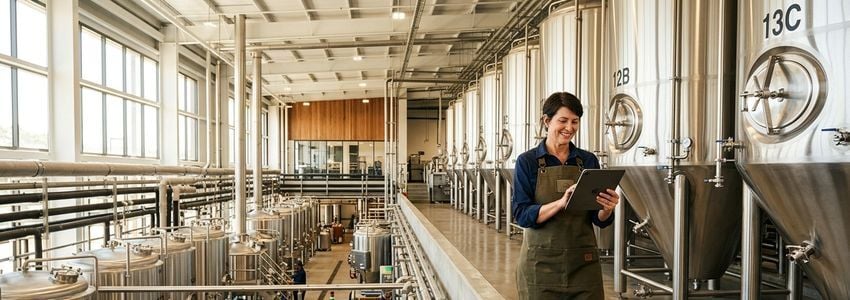
Commercial Fermentation Equipment Financing: The Complete Guide for Food and Beverage Producers
Commercial fermentation equipment financing gives food and beverage producers a way to fund fermentation tanks, bioreactors, culturing chambers, and packaging systems without paying the full cost upfront. From kombucha breweries and kimchi makers to yogurt producers, hot sauce manufacturers, and plant-based dairy alternative companies, fermentation-driven food businesses share one thing in common: the equipment is expensive, specialized, and often the single biggest barrier standing between a growing brand and the production capacity it needs.
In This Article
What Is Commercial Fermentation Equipment Financing?
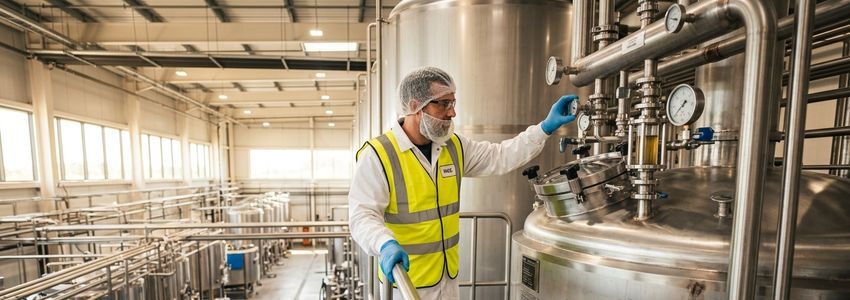
Commercial fermentation equipment financing is a category of equipment-secured business lending designed to fund the specialized machinery that food and beverage manufacturers use to control and scale fermentation. That includes jacketed stainless steel fermentation tanks, temperature-controlled culturing chambers, bioreactors, filtration and carbonation systems, and the supporting infrastructure (piping, sensors, CIP cleaning systems) that keeps a fermentation-based production line running safely and consistently.
Unlike a general working capital loan, this type of financing is structured around the specific piece of equipment being purchased. The lender evaluates the equipment's cost, useful life, and resale value, then structures an equipment loan or lease around those numbers. Because the equipment itself typically serves as collateral, producers often qualify for stronger terms than they would with unsecured financing of the same size.
This financing category covers a much wider range of businesses than breweries alone. Kombucha and hard kombucha producers, kimchi and sauerkraut manufacturers, tempeh and miso makers, yogurt and kefir producers, vinegar and hot sauce companies, and plant-based dairy alternative brands all rely on fermentation equipment that can cost anywhere from a few thousand dollars for a small culturing unit to hundreds of thousands of dollars for a full production-scale fermentation line.
Key Stat: According to the U.S. Small Business Administration, manufacturing businesses (including food and beverage producers) received billions of dollars in government-backed 7(a) and 504 loans in the most recent fiscal year, with equipment purchases representing one of the most common uses of those funds.
Key Benefits of Financing Fermentation Equipment
Paying cash for a fermentation line might seem like the simplest path, but for most growing food and beverage brands it is also the most expensive one once opportunity cost enters the picture. Financing offers several advantages that matter specifically to producers scaling a fermentation-based product line.
- Preserve working capital: Keep cash available for ingredients, packaging, labor, and marketing instead of tying it all up in stainless steel and controls.
- Match payments to revenue: Structure loan or lease terms so monthly payments align with the additional production volume the new equipment is expected to generate.
- Faster access to capacity: Approval and funding can happen in days rather than the months it might take to save enough cash to buy equipment outright.
- Qualify with equipment as collateral: Because the fermentation equipment itself secures the financing, newer or thinner-file producers sometimes qualify more easily than they would for an unsecured loan of comparable size.
- Predictable budgeting: Fixed monthly payments make cash flow forecasting easier compared to one large lump-sum outlay.
- Preserve other credit lines: Equipment-secured financing generally does not compete with an existing bank relationship or line of credit capacity.
How Fermentation Equipment Financing Works
The process for financing commercial fermentation equipment generally follows a predictable path, whether the equipment is new or used, and whether the producer is buying a single culturing tank or outfitting an entire production facility.
Quick Guide
How Fermentation Equipment Financing Works — At a Glance
Obtain pricing from a fermentation tank, bioreactor, or processing equipment manufacturer or supplier.
Provide basic business financials, time in business, and the equipment quote to the lender.
Most equipment financing decisions are returned within 24 to 72 hours, with term length tied to the equipment's useful life.
The lender pays the equipment vendor directly, or reimburses the producer, depending on deal structure.
New equipment is commissioned while the business makes fixed monthly payments over the agreed term.
Underwriting for fermentation equipment financing typically looks at time in business, monthly revenue or production volume, and the value and useful life of the equipment being financed. Because the equipment usually serves as its own collateral, producers with a shorter operating history or thinner credit file sometimes qualify more easily than they would for a comparable unsecured loan.
Ready to Scale Your Production Line?
Get fast, flexible fermentation equipment financing from the #1 business lender in the U.S. No obligation, apply in minutes.
Apply Now →Types of Fermentation Equipment You Can Finance
Fermentation-based food and beverage production covers a much broader category than most people realize, and financing options generally extend to any equipment used in the process, not just tanks alone.
- Fermentation and culturing tanks: Jacketed stainless steel vessels used for beverages like kombucha and hard kombucha, or for culturing dairy alternatives and yogurt.
- Bioreactors: Precision-controlled vessels used for controlled fermentation in functional beverage, supplement, and specialty ingredient production.
- Brining and curing tanks: Used by kimchi, sauerkraut, and pickle producers to manage large-batch lacto-fermentation.
- Culturing chambers and incubators: Temperature and humidity-controlled units used for tempeh, miso, cheese, and koji production.
- Filtration, carbonation, and bottling/canning lines: Downstream equipment that turns fermented product into a shelf-stable, packaged consumer good.
- CIP (clean-in-place) systems: Automated cleaning equipment that keeps fermentation vessels sanitary between batches, often required for food safety compliance.
- Cold storage and refrigeration: Walk-in coolers and refrigerated storage for finished fermented products awaiting distribution.
Who Fermentation Equipment Financing Is Best For
This type of financing tends to make the most sense for food and beverage producers who have already validated demand for their product and need production capacity to catch up with orders.
- Kombucha and functional beverage brands scaling from a shared co-packer to owned production
- Kimchi, sauerkraut, and fermented vegetable producers adding brining and curing capacity for retail or foodservice accounts
- Yogurt, kefir, and plant-based dairy alternative makers investing in culturing tanks and packaging lines
- Hot sauce and vinegar producers scaling fermentation batches beyond a commercial kitchen setup
- Tempeh, miso, and koji producers adding incubation and climate-controlled culturing capacity
- Specialty ingredient and nutraceutical companies using bioreactors for controlled fermentation processes
It is generally less well suited to businesses still in the concept or pre-revenue stage, since most lenders want to see at least some operating history and consistent sales or production volume before extending equipment-secured financing.
Comparing Your Financing Options
Choosing between an equipment loan, an equipment lease, and a broader working capital loan comes down to how the business wants to manage ownership, monthly payments, and flexibility as it scales. The table below breaks down the core tradeoffs.
| Feature | Equipment Loan | Equipment Lease | Working Capital Loan |
|---|---|---|---|
| Ownership | Producer owns equipment immediately | Lender owns equipment during term | N/A (unsecured cash) |
| Typical Monthly Payment | Moderate | Lower | Varies by amount and term |
| Best For | Long-term equipment ownership | Frequent upgrades or newer technology | Ingredients, labor, packaging, installation |
| Collateral | The equipment itself | The equipment itself (owned by lender) | Often unsecured or blanket lien |
How Crestmont Capital Helps
Crestmont Capital works with food and beverage producers across the country to structure financing for fermentation equipment purchases of every size, from a single culturing tank to a full production line buildout. Rather than forcing every business into one loan product, Crestmont evaluates the equipment, the timeline, and the producer's cash flow to recommend the structure that actually fits.
Producers can finance fermentation tanks, bioreactors, and related processing equipment through Crestmont's Manufacturing Equipment Financing program, or explore broader Equipment Financing and Equipment Leasing options for bundling multiple pieces of equipment into a single deal. Producers whose fermentation line runs alongside a commercial kitchen or food production facility can also look at Commercial Kitchen Equipment Financing or Food Equipment Financing for equipment that spans both categories.
If the expansion involves more than equipment alone, such as installation labor, facility buildout, or extra ingredient inventory to keep new capacity running, a Working Capital Loan can supplement the equipment purchase. Producers who prefer to draw funds in stages as a phased expansion rolls out often use a Business Line of Credit for that same flexibility.
For related reading on fermentation-adjacent equipment financing, see Crestmont's guide to brewery fermentation tank expansion financing and its companion piece on nitro cold brew and beverage equipment financing, both of which cover financing structures that overlap closely with commercial fermentation equipment.
Don't Let Equipment Capacity Cap Your Growth
Whether it's one new fermentation tank or a full production line, get financing structured around your business's cash flow.
Apply Now →Real-World Scenarios
Scenario 1: The Farmers Market Kombucha Brand Going Retail
A kombucha brand that started at farmers markets lands its first regional grocery chain account, which requires ten times the current production volume. The founder finances two new 500-gallon fermentation tanks plus a carbonation and bottling line through an equipment loan, sized so the new retail revenue covers the monthly payment with room to spare.
Scenario 2: The Kimchi Maker Outgrowing a Shared Kitchen
A kimchi producer that has been renting time in a shared commercial kitchen finally has enough consistent orders to justify its own facility. The company finances brining tanks, a walk-in cooler, and packaging equipment through a combination of an equipment loan and a working capital loan to cover the buildout and first months of increased vegetable purchasing.
Scenario 3: The Yogurt Producer Adding a Second Product Line
An established yogurt producer wants to launch a plant-based dairy alternative line without disrupting its existing dairy fermentation schedule. Rather than pulling capital from marketing or payroll, the company uses equipment leasing to add a dedicated set of culturing tanks for the new product line, keeping the core production budget untouched.
Scenario 4: The Hot Sauce Company Scaling Beyond the Kitchen
A hot sauce brand that has been fermenting mash in food-grade barrels in a rented commercial kitchen signs a lease on its first standalone facility. The move requires outfitting an entire fermentation and bottling operation from scratch. The company combines an equipment loan for tanks and bottling equipment with a working capital loan for installation labor and the first several months of pepper and ingredient purchasing.
Scenario 5: The Contract Fermentation Facility Ramp-Up
A contract fermentation and co-packing facility picks up a second client whose volume pushes total demand past current tank capacity. Because the additional revenue is already contracted, the facility qualifies for equipment financing based largely on the strength of the new agreement, adding capacity without waiting for a full season of increased cash reserves.
Pro Tip: Before ordering new fermentation tanks, confirm floor load capacity, drainage, and utility connections with your building. A financing plan that includes a small buffer for supporting infrastructure prevents a second, unplanned expense a few months later.
Frequently Asked Questions
Turn Growing Demand Into Production Capacity
Get financing structured around your fermentation-based food or beverage business, from a single tank to a full production line.
Apply Now →Next Steps
Contact fermentation tank or bioreactor manufacturers for pricing and lead times.
Have the last three to six months of business bank statements ready for a faster application.
Submit your application and get a financing decision, often within a business day or two.
Conclusion
A fermentation capacity bottleneck is a good problem for a food or beverage producer to have, but it is still a problem that costs real revenue every month it goes unsolved. Commercial fermentation equipment financing exists precisely to close that gap, letting a growing kombucha brand, kimchi producer, yogurt maker, or specialty fermentation business add the tanks, bioreactors, and processing equipment retailers and distributors are asking for without draining the cash reserves the rest of the business depends on. Whether the right fit is an equipment loan, a lease, or a working capital loan to cover installation and inventory, structuring the financing around expected revenue is what turns an equipment upgrade from a risk into a growth story.
Disclaimer: The information provided in this article is for general educational purposes only and is not financial, legal, or tax advice. Funding terms, qualifications, and product availability may vary and are subject to change without notice. Crestmont Capital does not guarantee approval, rates, or specific outcomes. For personalized information about your business funding options, contact our team directly.








