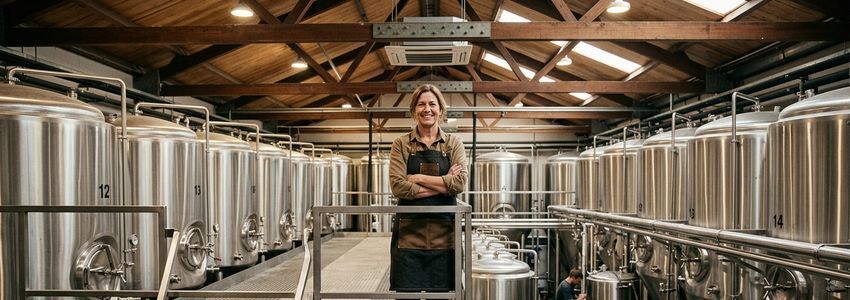
When a craft brewery outgrows its fermentation capacity, every batch left unbrewed is revenue walked away from the taproom, the distributor, and the retail shelf. Brewery equipment financing gives brewery owners a fast, structured way to fund new fermenters, brite tanks, and cellar upgrades without draining the cash reserves that keep day-to-day operations running. Whether the bottleneck is a waitlist of unfulfilled kegging orders or a distribution deal that requires double the current output, the right financing can turn tank capacity from a limitation into a growth lever.
In This Article
What Is Brewery Equipment Financing?
Brewery equipment financing is a category of commercial lending built specifically around the capital-intensive nature of beer production. Instead of applying for a general-purpose loan and hoping the underwriter understands cellar economics, brewery owners work with lenders who structure the deal around the value and useful life of the equipment itself, whether that is a set of new fermentation tanks, a brite tank, a glycol chiller, or a full cellar buildout.
For a fermentation tank expansion specifically, this usually means either an equipment loan (where the tanks serve as collateral) or an equipment lease (where the lender owns the equipment and the brewery pays for its use over a term). Both structures exist so a brewery does not have to pay the full purchase price of new stainless steel out of pocket before it can start selling the extra beer that capacity produces.
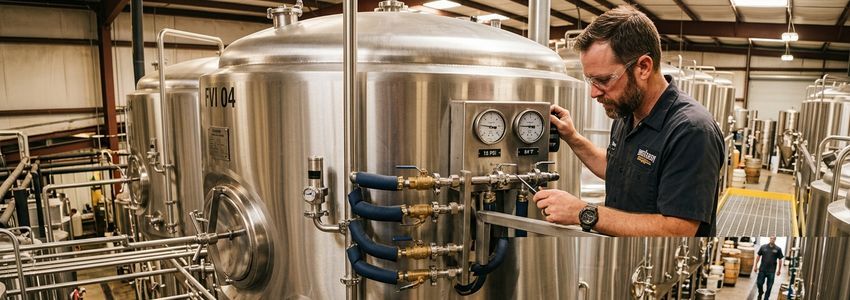
Fermentation tanks are not cheap. A single 30-barrel unitank can run tens of thousands of dollars, and most expansions involve adding multiple vessels plus supporting infrastructure such as glycol lines, temperature controls, and floor reinforcement. Financing spreads that cost over months or years, matched to the additional cash flow the new capacity is expected to generate.
Key Stat: According to the U.S. Census Bureau, beverage manufacturing has remained one of the more resilient small-manufacturing subsectors, with craft producers increasingly relying on equipment financing rather than cash reserves to fund capacity growth.
Key Benefits of Financing a Fermentation Tank Expansion
Paying cash for new fermenters might feel simpler on paper, but for most growing breweries it is the more expensive path once opportunity cost is factored in. Financing offers several advantages that matter specifically in a production environment where cash flow timing is everything.
- Preserve working capital: Keep cash on hand for ingredients, payroll, and marketing instead of tying it up in stainless steel.
- Match payments to revenue: Structure terms so payments align with the additional sales volume the new tanks will generate.
- Faster access to capacity: Approval and funding can happen in days, not the months it might take to save up for a cash purchase.
- Potential tax advantages: Equipment financing structures may allow the brewery to deduct lease payments or depreciate owned equipment, depending on how the deal is structured (always confirm specifics with a tax professional).
- Predictable budgeting: Fixed monthly payments make it easier to forecast cash flow compared to a large lump-sum cash outlay.
- Preserve other credit lines: Equipment-secured financing often does not compete with a brewery's existing bank relationship or line of credit capacity.
How Fermentation Tank Financing Works
The process for financing a fermentation tank expansion generally follows a predictable path, though the exact steps vary by lender and by whether the brewery is financing new or used equipment.
Quick Guide
How Brewery Equipment Financing Works — At a Glance
Obtain pricing from a fermenter manufacturer or supplier for the vessels and related equipment you need.
Provide basic business financials, time in business, and the equipment quote to the lender.
Most equipment financing decisions come back within 24 to 72 hours, with term length tied to the equipment's useful life.
The lender pays the equipment vendor directly, or reimburses the brewery, depending on the deal structure.
New fermenters are plumbed in and commissioned while the brewery makes fixed monthly payments over the agreed term.
Underwriting for brewery equipment financing typically looks at time in business, monthly revenue or production volume, and the value/useful life of the equipment being financed. Because the equipment itself often serves as collateral, brewery owners with newer businesses or thinner credit files sometimes qualify more easily than they would for an unsecured loan of the same size.
Ready to Expand Your Cellar?
Get fast, flexible brewery equipment financing from the #1 business lender in the U.S. No obligation — apply in minutes.
Apply Now →Types of Financing Available for Fermentation Tank Expansion
Not every brewery needs the same financing structure. The right fit depends on whether the brewery wants to own the equipment outright, keep monthly payments as low as possible, or preserve maximum flexibility for future upgrades.
- Equipment Loans: The brewery owns the tanks from day one, with the loan secured by the equipment itself. Best for breweries planning to keep the tanks long-term.
- Equipment Leasing: Lower monthly payments and the option to upgrade at the end of the term. Good for breweries that expect to keep scaling and may want newer, larger vessels down the road.
- Working Capital Loans: Useful when the expansion involves more than just tanks, such as installation labor, glycol system upgrades, or extra ingredient inventory to fill the new capacity.
- Business Line of Credit: A flexible option for breweries that want to draw funds as needed across a phased expansion rather than a single lump-sum purchase.
- Commercial Equipment Financing: Broader financing that can bundle fermentation tanks together with related brewhouse or packaging equipment into a single structured deal.
Who Fermentation Tank Financing Is Best For
This type of financing tends to make the most sense for breweries that have already validated demand for more beer than current capacity allows, whether that shows up as a taproom waitlist, a distributor asking for more volume, or a retail account the brewery cannot yet fully supply.
- Craft breweries adding capacity to fulfill a new distribution agreement
- Nano and microbreweries scaling from pilot-system batch sizes to production-scale tanks
- Breweries expanding sour or barrel programs that need dedicated fermentation space separate from core production
- Contract brewing operations taking on additional client volume that exceeds existing tank capacity
- Breweries relocating or expanding into a larger facility and outfitting a bigger cellar from scratch
It is generally less well suited to breweries still in the concept or pre-revenue stage, since most lenders want to see at least some operating history and consistent production or sales volume before extending equipment financing.
Comparing Your Financing Options
Choosing between an equipment loan, a lease, and a broader working capital loan comes down to how the brewery wants to manage ownership, monthly payments, and flexibility. The table below breaks down the core tradeoffs.
| Feature | Equipment Loan | Equipment Lease | Working Capital Loan |
|---|---|---|---|
| Ownership | Brewery owns tanks immediately | Lender owns tanks during term | N/A (unsecured cash) |
| Typical Monthly Payment | Moderate | Lower | Varies by amount and term |
| Best For | Long-term equipment ownership | Frequent upgrades / newer equipment | Covering installation, labor, inventory |
| Collateral | The tanks themselves | The tanks themselves (owned by lender) | Often unsecured or blanket lien |
How Crestmont Capital Helps
Crestmont Capital works with brewery owners across the country to structure financing for exactly this kind of expansion. Rather than forcing every brewery into a single loan product, Crestmont evaluates the equipment, the timeline, and the brewery's cash flow to recommend the structure that fits.
For fermentation tank purchases specifically, Crestmont's Brewing Equipment Financing program is built around the realities of craft beverage production, including seasonality in sales and the lead times involved in ordering custom stainless steel. Breweries that need to bundle tanks with other equipment, such as a new glycol chiller or canning line, can also explore Equipment Financing or Equipment Leasing as broader options.
If the expansion involves more than tanks alone, such as installation labor, floor reinforcement, or extra ingredient inventory to keep the new capacity running, a Working Capital Loan can supplement the equipment purchase. Breweries that prefer to draw funds in stages as a phased expansion rolls out often use a Business Line of Credit for that same flexibility.
Crestmont also works with breweries whose expansion goes beyond fermentation alone. For a review of the full range of financing options available to craft breweries and distilleries, including packaging lines, taproom buildouts, and distribution vehicles, see Crestmont's guide to brewery equipment financing and its companion piece on craft distillery business loans.
Real-World Scenarios
Scenario 1: The Distribution Deal Bottleneck
A regional craft brewery lands a distribution agreement with a chain of grocery stores across three counties. The deal requires doubling monthly output, but the brewery's four existing 15-barrel fermenters are already running at full capacity. Rather than turn down the account or delay the rollout by months while saving cash, the brewery finances two additional 30-barrel unitanks through an equipment loan, sized so the new production volume covers the monthly payment with room to spare.
Scenario 2: The Sour Program Expansion
A brewery known for its IPA lineup wants to launch a barrel-aged sour program, which requires dedicated tank space kept separate from the main production line to avoid contamination risk. Instead of pulling capital from marketing or payroll, the brewery uses equipment leasing to add two dedicated sour fermenters, keeping the core production budget untouched.
Scenario 3: The Facility Relocation
A nano-brewery outgrows its original 1,500-square-foot space and signs a lease on a facility three times the size. The move requires outfitting an entirely new cellar from scratch, including six fermenters, a brite tank, and a new glycol system. The brewery combines an equipment loan for the tanks with a working capital loan to cover installation labor and the first few months of increased ingredient purchasing.
Scenario 4: The Contract Brewing Ramp-Up
A contract brewing operation picks up a second client whose volume pushes total demand past current tank capacity. Because the additional revenue is already contracted, the brewery qualifies for equipment financing based largely on the strength of the new agreement, adding capacity without waiting for a full season of increased cash reserves.
Scenario 5: The Seasonal Surge
A seasonal brewery that sees a major sales spike every fall realizes its existing tanks cannot keep pace with pre-season demand for its flagship Oktoberfest release. The brewery uses a business line of credit to add temporary rental tanks for the peak season, while separately financing two permanent fermenters to handle the growing baseline demand in future years.
Frequently Asked Questions
What is brewery equipment financing?
Brewery equipment financing is a loan or lease structured specifically to fund brewing-related equipment purchases, such as fermentation tanks, brite tanks, glycol chillers, or canning lines, with terms tied to the equipment's cost and useful life.
How much does a new fermentation tank cost?
Costs vary widely by size, material, and manufacturer, but a mid-size stainless steel unitank commonly runs from the low tens of thousands of dollars upward. Custom fabrication, glycol jacketing, and installation add to the total project cost.
Can a new brewery qualify for fermentation tank financing?
Some lenders require at least six to twelve months of operating history, while others focus more heavily on the equipment value as collateral. Newer breweries sometimes qualify more easily for equipment-secured financing than for unsecured loans of comparable size.
What is the difference between financing and leasing fermentation tanks?
With a loan, the brewery owns the tanks from the start and builds equity as the loan is paid down. With a lease, the lender retains ownership during the term, which typically lowers the monthly payment but may include an end-of-term purchase or upgrade option.
How fast can a brewery get approved for equipment financing?
Many equipment financing applications are reviewed within 24 to 72 hours once basic financials and an equipment quote are submitted, though total time to funding can vary based on documentation and vendor lead times.
Can financing cover used fermentation tanks?
Yes, many equipment lenders finance both new and used tanks, though terms and rates can differ based on the age and condition of the equipment being purchased.
What credit score is needed for brewery equipment financing?
Requirements vary by lender, but because the equipment itself typically secures the loan, requirements can be more flexible than for unsecured financing. Stronger credit generally unlocks better rates and terms.
Does financing cover installation and glycol system upgrades?
Equipment financing generally covers the tanks and directly related hardware, while installation labor and supporting infrastructure like a glycol chiller upgrade are sometimes bundled in or financed separately through a working capital loan.
How long are typical repayment terms for fermentation tanks?
Terms often range from two to seven years, generally aligned with the expected useful life of the tanks, which for well-maintained stainless steel can extend well beyond a decade.
Should a brewery finance tanks or use cash reserves?
Many breweries find financing preferable because it preserves cash for ingredients, payroll, and marketing while allowing the new capacity's revenue to cover the loan payment over time, rather than tying up reserves in a single large purchase.
Can financing bundle fermentation tanks with other brewery equipment?
Yes, many commercial equipment financing packages allow breweries to bundle fermentation tanks with related equipment such as canning lines, glycol chillers, or kegging systems into a single application and repayment schedule.
What documents are needed to apply?
Typical documentation includes several months of business bank statements, a brief application, and a quote or invoice from the tank manufacturer or supplier. Additional financials may be requested for larger financing amounts.
Is a down payment required for fermentation tank financing?
Some equipment financing programs require no down payment, while others may ask for a small percentage upfront depending on the applicant's credit profile and the equipment's total cost. Terms vary by lender and deal structure.
What happens if the brewery outgrows the new tanks again later?
Breweries that anticipate continued growth sometimes prefer an equipment lease with an upgrade option, which makes it easier to move to larger or additional tanks at the end of the term rather than being locked into a single fixed setup.
How do I apply for brewery equipment financing?
Applying typically starts with an online application, an equipment quote, and a few months of business bank statements. Crestmont Capital's application can be completed in minutes with a decision often returned within a business day or two.
Don't Let Tank Capacity Cap Your Growth
Whether it's two more fermenters or a full cellar buildout, get financing structured around your brewery's production timeline.
Apply Now →Pro Tip: Before ordering new tanks, confirm floor load capacity and glycol system headroom with your building. A financing plan that includes a small buffer for supporting infrastructure prevents a second, unplanned expense a few months later.
Next Steps
Contact fermenter manufacturers or your usual equipment supplier for pricing and lead times.
Have the last three to six months of business bank statements ready for a faster application.
Submit your application and get a financing decision, often within a business day or two.
Conclusion
A fermentation tank bottleneck is a good problem to have, but it is still a problem that costs a brewery real revenue every month it goes unsolved. Brewery equipment financing exists precisely to close that gap, letting a growing brewery add the tank capacity distributors and taproom customers are asking for without draining the cash reserves the rest of the business depends on. Whether the right fit is an equipment loan, a lease, or a working capital loan to cover installation and inventory, structuring the financing around the new capacity's expected revenue is what turns an expansion from a risk into a growth story.
Disclaimer: The information provided in this article is for general educational purposes only and is not financial, legal, or tax advice. Funding terms, qualifications, and product availability may vary and are subject to change without notice. Crestmont Capital does not guarantee approval, rates, or specific outcomes. For personalized information about your business funding options, contact our team directly.