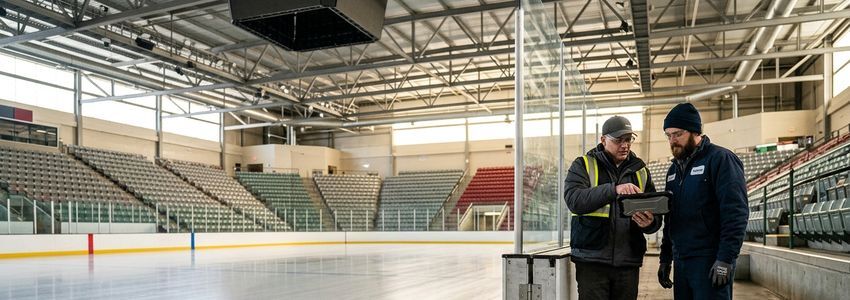
An ice rink refrigeration system is the single most expensive piece of equipment a skating facility will ever own, and when it fails or falls out of compliance, there is no way to keep the doors open without it. Rink owners facing a full replacement are usually looking at a six-figure project on a tight timeline, which is why an ice rink refrigeration system replacement is one of the most common reasons ice arenas, hockey facilities, and multi-sport recreation centers seek equipment financing rather than draining cash reserves.
This guide walks through how financing for a refrigeration system replacement actually works, what it costs, which loan structures make sense for a project this size, and how to evaluate ammonia versus synthetic refrigerant options before you sign a contract with an installer.
In This Article
- What Is an Ice Rink Refrigeration System?
- Signs Your System Needs Replacement
- Benefits of Financing the Replacement
- How Refrigeration Replacement Financing Works
- Types of Financing Available
- Ammonia vs. Synthetic Refrigerant Systems
- Who This Financing Is Best For
- How Crestmont Capital Helps
- Real-World Scenarios
- Next Steps
- FAQ
What Is an Ice Rink Refrigeration System?
An ice rink refrigeration system is the mechanical infrastructure that keeps a sheet of ice frozen and skateable year-round, regardless of the outdoor temperature or the number of skaters on the ice. At its core, the system circulates a chilled brine or glycol solution through a network of pipes embedded in the concrete rink floor, pulling heat out of the surface and rejecting it through a compressor and condenser package, usually located in a dedicated mechanical room or on the roof of the facility.
Most rinks built before the early 2000s run on ammonia (R-717) refrigerant, while many newer or renovated facilities use synthetic refrigerants such as R-134a, R-404A, or newer low-GWP blends like R-449A. Both approaches accomplish the same job, but they carry very different upfront costs, maintenance profiles, and regulatory considerations, which is a major factor in how a rink owner should plan the financing for a replacement.
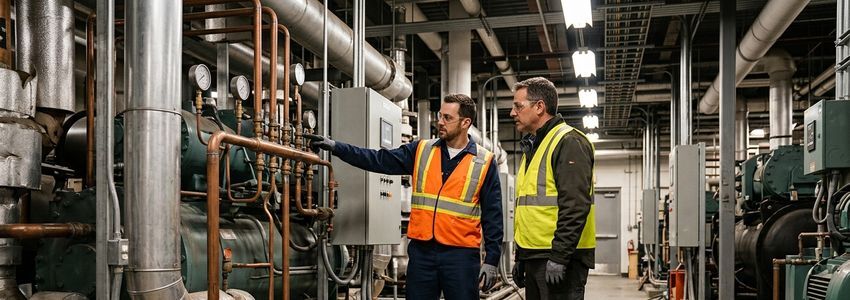
The full system typically includes compressors, condensers, brine chillers or a direct ammonia floor system, a network of underground piping, a control panel, and often a heat recovery unit that captures waste heat for use in snow melt pits, domestic hot water, or building heating. When any major component of this system fails, particularly the compressors, the entire sheet of ice is at risk within hours.
Signs Your Ice Rink Refrigeration System Needs Replacement
Refrigeration systems rarely fail without warning, but the warning signs are often dismissed as routine maintenance issues until the cost of patching the system exceeds the cost of replacing it outright. Rink owners and facility managers should watch for the following:
- Rising compressor run times to maintain the same ice temperature, indicating declining efficiency or refrigerant loss
- Frequent refrigerant top-offs, which suggest leaks in aging piping or seals that are becoming difficult and expensive to source parts for
- Inconsistent ice quality across the sheet, with soft spots near the boards or uneven hardness that affects skating conditions
- Escalating energy bills that outpace ice usage or facility hours, a sign the compressors are working harder than they should
- Age of the system exceeding 25 to 30 years, which is the typical useful life range for a well-maintained ammonia plant before major component failure becomes likely
- Difficulty finding replacement parts for older compressor models that have been discontinued by the manufacturer
- Failed inspections or insurance concerns tied to ammonia containment, ventilation, or leak detection systems that no longer meet current code
Any one of these signs on its own may not justify an immediate replacement, but two or three occurring together are a strong indicator that the system is approaching end of life. Planning the financing before a catastrophic failure forces an emergency shutdown gives rink owners far more control over cost, contractor selection, and project timeline.
Key Stat: The U.S. Small Business Administration's 504 loan program was created specifically to finance major fixed assets like refrigeration plants, offering long-term, fixed-rate financing of up to $5.5 million for qualifying projects, according to SBA.gov.
Don't Let a Refrigeration Failure Close Your Rink
Get fast, flexible financing built for major equipment replacements. No obligation to apply.
Apply Now →Benefits of Financing an Ice Rink Refrigeration Replacement
A full refrigeration system replacement for a single-sheet facility commonly runs from $400,000 to well over $1 million once engineering, permitting, demolition of the old plant, and floor work are included. Very few rink operators, whether a municipal parks department, a private hockey club, or a multi-rink entertainment complex, can absorb that cost from operating cash without disrupting the rest of the business.
- Preserve working capital for payroll, ice time programming, concessions inventory, and marketing instead of draining reserves into a single capital project
- Match payments to the asset's useful life so the facility is paying for the system over the same 15 to 25 years it will actually be in service
- Keep the rink operational faster since financed projects rarely wait on a capital campaign or a multi-year municipal budget cycle
- Bundle related costs such as floor demolition, new dasher board anchoring, and electrical upgrades into a single financed project instead of piecemeal spending
- Protect credit lines that may be needed for concessions equipment, Zamboni replacement, or seasonal cash flow gaps
- Potential tax treatment advantages depending on how the financing is structured, which your accountant can evaluate based on your facility's specific tax situation
How Ice Rink Refrigeration Replacement Financing Works
Financing a refrigeration system replacement follows a similar path to financing any major piece of commercial equipment, with a few extra steps because of the size and complexity of the project. Here is what the process typically looks like from start to finish.
Quick Guide
How Refrigeration Replacement Financing Works
Have a refrigeration engineer assess the existing plant and provide a detailed proposal covering equipment, demolition, and installation.
Compare an equipment loan, an SBA 504 loan, or an equipment lease based on your down payment, term, and ownership goals.
Provide business tax returns, a profit and loss statement, and the contractor quote to the lender for underwriting.
Review the interest rate, term length, and any down payment requirement before signing off on funding.
Funding is typically released directly to the installer or in draws tied to project milestones for larger jobs.
The equipment itself, along with any real property improvements tied to the mechanical room, generally serves as collateral. This is one reason refrigeration replacement financing tends to be more attainable than a general-purpose business loan of the same size, since the lender has a tangible, long-lived asset securing the loan.
Types of Financing Available for Refrigeration Replacement
Rink owners have several structures to choose from, and the right one depends on the size of the project, the age and ownership structure of the facility, and how quickly the work needs to happen.
- Equipment financing or equipment loans: A term loan secured by the refrigeration equipment itself, with repayment terms often stretched over 7 to 12 years to match the useful life of the compressors and piping.
- SBA 504 loans: Built specifically for major fixed assets like a refrigeration plant, an SBA 504 loan combines a bank loan (around 50% of project cost), a Certified Development Company loan backed by the SBA (up to 40%), and a borrower down payment (as low as 10%), with fixed rates and terms up to 25 years for long-life equipment.
- SBA 7(a) loans: More flexible than a 504 loan and usable for equipment plus related costs like electrical upgrades or floor work, with terms up to 10 years for equipment purchases.
- Equipment leasing: Instead of owning the system outright, a lease structure can lower the initial cash outlay and may include an end-of-term purchase option, which can appeal to facilities on tighter budgets or shorter planning horizons.
- Business line of credit: Useful for covering unexpected overages during installation, such as discovering additional piping damage once the old floor is demolished.
- Working capital loans: Can supplement a larger equipment loan to cover temporary revenue loss while the rink is closed for the retrofit.
By the Numbers
Ice Rink Refrigeration Financing - Key Figures
$5.5M
Maximum SBA 504 loan amount for qualifying manufacturing and major fixed asset projects
10%
Typical minimum down payment on an SBA 504 loan for an established business
25 Yrs
Maximum repayment term available for long-life fixed assets under SBA programs
57%
Share of small business applicants at small banks who were fully approved for financing, per Federal Reserve survey data
Ammonia vs. Synthetic Refrigerant Systems: What It Means for Your Budget
One of the biggest decisions in a refrigeration replacement project, and one that directly affects how much financing you need, is whether to stay with ammonia or switch to a synthetic refrigerant system. Both are used widely in ice rinks across the country, and the right choice depends on the size of the facility, local code requirements, and long-term operating budget.
| Factor | Ammonia (R-717) | Synthetic Refrigerant |
|---|---|---|
| Upfront installed cost | Higher, often starting around $700,000 for a single community rink plant | Generally lower initial capital outlay |
| Refrigerant cost | Significantly less expensive per pound than most synthetics | Higher per-pound cost, especially for higher-GWP blends |
| Energy efficiency | Strong coefficient of performance, often lower long-term electric costs | Varies by blend, generally competitive but can run higher |
| Maintenance and safety | Requires specialized technicians and stricter safety protocols | Broader pool of qualified service technicians |
| Regulatory outlook | Zero ozone depletion and global warming potential, generally favored long-term | Subject to ongoing EPA phasedown rules affecting availability of some blends |
Because ammonia systems typically carry a higher upfront cost, they are one of the clearest cases where spreading the investment over a financing term makes financial sense, allowing the facility to capture the long-term energy savings without absorbing the full capital cost in year one. Synthetic systems, while often cheaper to install, still commonly run into six figures for a full replacement and benefit from the same financing logic on a smaller scale.
Pro Tip: Ask your refrigeration contractor for a life-cycle cost comparison, not just an installed price. A system with a higher sticker price but lower energy and maintenance costs may pencil out better once you factor in a 15 to 25 year loan term.
Who This Financing Is Best For
Refrigeration replacement financing tends to work well for a wide range of facility types, though the ideal structure varies by ownership model:
- Privately owned single or multi-sheet arenas that need to move fast on a failing plant without disrupting league schedules or camp programming
- Municipal or nonprofit rinks where an SBA-backed loan or equipment lease can bridge the gap between budget cycles or capital campaign fundraising
- Multi-sport recreation complexes adding or upgrading an ice sheet alongside other amenities like turf fields or a fitness center
- Hockey training facilities and figure skating clubs where consistent ice quality is directly tied to member retention and program revenue
- Facilities converting from an older ammonia system to a modern, code-compliant plant to address insurance or safety concerns
Facilities that are newer, have strong seasonal revenue from leagues and public skate, and can document at least a couple of years of consistent cash flow generally see the most favorable terms, though refrigeration equipment financing is available to a broader range of credit profiles than an unsecured loan of the same size.
Ready to Replace Your Rink's Refrigeration Plant?
Crestmont Capital works with recreation and entertainment facilities nationwide on major equipment financing. Apply in minutes, no obligation.
Apply Now →How Crestmont Capital Helps
Crestmont Capital works with rink owners, recreation facility operators, and entertainment venues across the country to structure financing for major equipment projects like a refrigeration system replacement. Rather than a one-size-fits-all product, our team looks at the full scope of the project, including demolition, new compressors, piping, and any related building upgrades, to build a financing package that fits the facility's cash flow.
Our equipment financing programs are designed for exactly this kind of large, mission-critical purchase, with terms structured around the actual useful life of refrigeration equipment rather than a generic short-term loan. For facilities that prefer to preserve capital differently, our equipment leasing options can reduce the initial cash outlay while still getting the new system installed on schedule.
Rink owners exploring SBA-backed options can also work with our team on SBA loan programs, including structures similar to a 504 loan for major fixed assets. If the project involves overages or you need a cushion for unexpected costs once the old floor is opened up, a business line of credit or working capital loan can run alongside the primary equipment financing to keep the project fully funded.
If your facility is also managing other equipment needs during a renovation, our guide on commercial refrigeration business loans covers financing for related cooling systems, and our post on emergency refrigeration equipment replacement is a useful resource if your system fails before a planned upgrade can happen.
Real-World Scenarios
Scenario 1: The Municipal Rink With an Aging Ammonia Plant
A city-owned ice arena built in the late 1980s starts seeing repeated ammonia leaks and rising compressor run times each winter. The facility's annual capital budget process would take 18 months to approve full replacement funding, but the refrigeration engineer warns the system could fail within a single season. The city works with a lender to secure equipment financing structured around the facility's seasonal revenue from public skate and youth hockey programs, allowing the replacement to happen over the summer off-season without waiting on the next budget cycle.
Scenario 2: The Private Hockey Training Facility
A privately owned two-sheet hockey training center notices inconsistent ice quality on one rink and confirms the compressors are near end of life. Because the facility has strong, documented cash flow from year-round camps and league rentals, it qualifies for an equipment loan with a 10-year term, keeping monthly payments manageable while the second sheet stays open and generating revenue during the retrofit.
Scenario 3: The Multi-Sport Complex Adding Refrigeration Capacity
A recreation complex that previously operated a seasonal outdoor rink decides to convert it into a permanent, refrigerated sheet to extend the skating season and add year-round programming. The ownership group uses an SBA 504-style structure to finance the new refrigeration plant as a major fixed asset addition, spreading the cost over a term that matches the equipment's expected 20-plus year lifespan.
Scenario 4: The Nonprofit Skating Club Facing an Insurance Deadline
A nonprofit figure skating club is notified by its insurance carrier that outdated ammonia containment and leak detection systems must be upgraded within the year or coverage will be affected. Without the reserves to cover the retrofit, the club secures an equipment lease that lowers the initial cash requirement, allowing the safety upgrade to be completed on the insurer's timeline while spreading payments over several seasons of membership dues.
Scenario 5: The Entertainment Venue Bundling Related Upgrades
An entertainment venue with an ice sheet used for public skate and special events discovers during a compressor inspection that the dasher board anchoring and floor piping also need work. Rather than financing the refrigeration system separately from the related floor and electrical work, the facility bundles the full project into a single equipment loan, simplifying the paperwork and locking in one consistent monthly payment for the entire renovation.
Quick Guide
Next Steps to Financing Your Refrigeration Replacement
Have a qualified engineer evaluate the current system and estimate remaining useful life before it becomes an emergency.
Compare ammonia and synthetic options, along with installed cost and long-term operating estimates.
Review equipment loan, SBA, and leasing options based on your facility's ownership structure and cash flow.
Submit financials and the contractor quote, then schedule the installation for your facility's off-peak window.
Protect Your Ice Season Before It's at Risk
Talk to our team about financing a refrigeration system replacement on your timeline, not your budget cycle's.
Apply Now →Frequently Asked Questions
How much does it cost to replace an ice rink refrigeration system?
Costs vary widely based on rink size, refrigerant type, and the condition of existing piping, but a full replacement for a single-sheet facility commonly ranges from roughly $400,000 to over $1 million once demolition, new equipment, and floor work are included.
What financing options are available for ice rink refrigeration replacement?
Common options include equipment loans, SBA 504 loans for major fixed assets, SBA 7(a) loans, equipment leasing, business lines of credit, and working capital loans, often used in combination for larger projects.
How does an SBA 504 loan work for a refrigeration system?
An SBA 504 loan combines a bank loan for roughly half the project cost, a Certified Development Company loan backed by the SBA for up to 40 percent, and a borrower down payment as low as 10 percent, with fixed rates and terms that can extend to 25 years for long-life equipment.
Is ammonia or a synthetic refrigerant better for a new ice rink system?
Ammonia systems typically cost more upfront but offer lower long-term refrigerant and energy costs, while synthetic systems have a lower initial price tag but can carry higher refrigerant and operating costs over time. The right choice depends on facility size, budget, and local code requirements.
How long does a refrigeration system replacement take?
Most full replacements take several weeks to a few months depending on scope, and are usually scheduled during the facility's off-peak or summer season to minimize disruption to ice programming.
Can a nonprofit or municipal rink qualify for equipment financing?
Yes, many nonprofit and municipally affiliated rinks qualify for equipment financing or leasing, particularly when the facility can document consistent revenue from programming, leagues, or public skate sessions.
What documents are needed to apply for refrigeration equipment financing?
Lenders typically request business tax returns, a profit and loss statement, a balance sheet, and a detailed contractor quote outlining the scope of the refrigeration project.
Can financing cover more than just the compressors and condensers?
Yes, most equipment financing packages can be structured to include related costs such as floor demolition, new piping, dasher board anchoring adjustments, and electrical upgrades tied to the refrigeration project.
What credit score is needed to finance a refrigeration replacement?
Requirements vary by lender and loan type, but because the equipment itself typically secures the loan, refrigeration financing can be more attainable than an unsecured loan of a similar size, even for facilities with a less than perfect credit history.
Should I lease or buy new refrigeration equipment?
Buying through an equipment loan builds ownership and equity in the system over time, while leasing can lower the initial cash requirement and may suit facilities on a tighter budget or with a shorter planning horizon before a facility renovation or ownership change.
How do EPA refrigerant regulations affect my replacement decision?
Ongoing federal rules govern which refrigerants can be used in new equipment and when certain higher-impact refrigerants are phased out, so it is worth confirming with your contractor that any proposed system meets current and near-term regulatory requirements before finalizing the project scope.
Can I finance a refrigeration replacement alongside other rink upgrades?
Yes, many facilities bundle refrigeration replacement with related work like dasher boards, lighting, or a Zamboni upgrade into a single financing package to simplify payments and reduce total project downtime.
What happens if my refrigeration system fails before I've arranged financing?
Emergency equipment financing is available for sudden failures, though planning a replacement in advance generally gives facilities more time to compare contractors and secure more favorable financing terms.
How fast can refrigeration equipment financing be approved?
Timelines vary by lender and loan size, but equipment-secured financing for facilities with organized financials and a contractor quote in hand can often move through underwriting faster than a general-purpose commercial loan of similar size.
Where can I start the process of financing a refrigeration replacement?
Start by getting a written assessment and quote from a qualified refrigeration contractor, then speak with an equipment financing provider like Crestmont Capital to compare loan and lease structures for your project.
Conclusion
Replacing an ice rink refrigeration system is a major capital decision, but it does not have to be an all-cash decision. Whether your facility is dealing with an aging ammonia plant, a synthetic system nearing the end of its service life, or an insurance-driven upgrade deadline, financing structured around the equipment's actual useful life keeps the rest of your operation running while the new plant goes in. The right financing partner will help you weigh ammonia against synthetic options, match the loan term to the equipment's lifespan, and get the project funded on your facility's timeline rather than a budget cycle's.
Disclaimer: The information provided in this article is for general educational purposes only and is not financial, legal, or tax advice. Funding terms, qualifications, and product availability may vary and are subject to change without notice. Crestmont Capital does not guarantee approval, rates, or specific outcomes. For personalized information about your business funding options, contact our team directly.