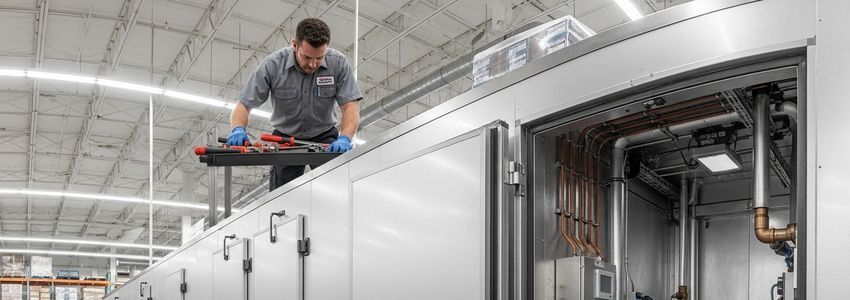
Commercial refrigeration contractors keep America's food supply cold, its restaurants running, and its grocery stores fully stocked. From walk-in coolers and blast freezers to industrial refrigeration systems serving food processing plants, the work is essential - and it is expensive. Whether you are purchasing a refrigerant recovery machine, hiring technicians, buying a service fleet, or financing a large commercial installation project, commercial refrigeration business loans can give your company the capital it needs to operate and grow.
In This Article
- What Are Commercial Refrigeration Business Loans?
- Why Commercial Refrigeration Contractors Need Financing
- Types of Commercial Refrigeration Business Loans
- How Much Can You Borrow?
- Qualification Requirements
- How to Apply Step by Step
- How Crestmont Capital Helps
- Real-World Scenarios
- Comparing Your Financing Options
- Frequently Asked Questions
- How to Get Started
What Are Commercial Refrigeration Business Loans?
Commercial refrigeration business loans are financing products designed to help refrigeration contractors, HVAC-R companies, food equipment installers, and refrigeration service providers fund their operations and growth. These loans can be used for a wide range of business needs - from buying refrigeration equipment and service vehicles to managing payroll during slow seasons or funding large commercial installation contracts.
Unlike consumer loans, commercial refrigeration business loans are underwritten based on your business's financial performance. Lenders look at your annual revenue, credit profile, time in business, and cash flow when evaluating your application. The goal is to match your company with capital that supports growth without creating unsustainable debt.
The commercial refrigeration industry in the United States generates over $10 billion in annual revenue, according to industry research. Refrigeration contractors work across a broad spectrum of clients - grocery chains, food processing facilities, restaurants, cold storage warehouses, pharmaceutical companies, and more. Each of these projects often requires significant upfront capital before any payment arrives, making access to working capital a consistent challenge for contractors at every stage of growth.
Industry Note: The U.S. Bureau of Labor Statistics projects employment for refrigeration mechanics and installers to grow 6% through 2032 - faster than the national average - driven by demand for energy-efficient commercial refrigeration systems and food safety compliance requirements.
Why Commercial Refrigeration Contractors Need Financing
Running a commercial refrigeration business involves unpredictable cash flow patterns. Large installations take weeks or months to complete, but payroll, truck payments, parts costs, and overhead continue on a daily and weekly basis. The gap between when work starts and when payment arrives is one of the most common financial pain points in the industry.
Here are the most common reasons commercial refrigeration contractors seek business financing:
- Equipment purchases: Refrigerant recovery machines, manifold gauges, leak detectors, recovery cylinders, vacuum pumps, refrigerant charging equipment, and specialty tools can cost thousands of dollars each.
- Service vehicle fleet: A refrigeration service van equipped with proper tools and parts inventory can run $60,000 to $100,000 or more when fully outfitted.
- Refrigerant inventory: Commercial refrigerant prices have risen significantly due to phase-down regulations, with some refrigerants costing $10 to $20 per pound or more. Stocking adequate inventory requires capital.
- Payroll and labor costs: Licensed commercial refrigeration technicians command competitive wages, and hiring ahead of a large project requires upfront commitment.
- Working capital for contract gaps: When large commercial clients pay in 30, 60, or 90 days, financing helps bridge the gap between project completion and payment.
- Business expansion: Opening a second location, adding service territory, or pursuing larger commercial and industrial accounts all require investment before revenue increases.
- Insurance and bonding: Many commercial refrigeration contracts require contractors to carry significant liability coverage and bonds before work begins.
Need Capital for Your Refrigeration Business?
Get fast, flexible financing from the #1 business lender in the U.S. Apply in minutes with no obligation.
Apply Now ->Types of Commercial Refrigeration Business Loans
Not every loan is the right fit for every situation. The best financing option for your refrigeration company depends on how much you need, how quickly you need it, what you plan to use it for, and where your business stands financially. Below are the most common types of financing available to commercial refrigeration contractors.
Equipment Financing
Equipment financing is one of the most practical options for refrigeration contractors. With this type of loan, the equipment itself serves as collateral, which often makes approval easier even for businesses with limited credit history. You can finance refrigeration tools, diagnostic equipment, service vehicles, compressors, condensing units, and other capital assets. Equipment financing typically offers terms from 12 to 84 months and allows you to spread the cost of major purchases over time while keeping your equipment current.
Small Business Administration (SBA) Loans
SBA loans are government-backed financing products that offer some of the most competitive rates and terms available to small businesses. The SBA 7(a) loan program is the most popular, offering up to $5 million for working capital, equipment, real estate, and other business needs. SBA loans have longer repayment terms - up to 10 years for working capital and 25 years for commercial real estate - which keeps monthly payments manageable. The application process is more involved than alternative lending, but the lower interest rates make it worth pursuing for eligible businesses.
Business Line of Credit
A business line of credit works like a business credit card - you are approved for a maximum amount and draw only what you need, paying interest only on what you use. This is an ideal tool for managing cash flow gaps between project completion and payment. Refrigeration contractors who handle multiple commercial accounts benefit especially from lines of credit because they provide a reliable financial cushion without requiring a new loan application every time capital is needed.
Working Capital Loans
Working capital loans are short-to-medium term loans designed to fund daily operations rather than long-term assets. They work well for covering payroll, purchasing refrigerant inventory, paying for subcontractors, or managing seasonal slowdowns. Unsecured working capital loans do not require collateral, which makes them accessible for businesses that do not own significant physical assets.
Term Loans
Traditional term loans provide a lump sum of capital repaid over a fixed schedule with a set interest rate. They are well-suited for specific projects with defined costs - such as opening a new service division, outfitting a new truck, or purchasing a building for your operations. Term loans from banks and alternative lenders typically range from $10,000 to $500,000 for small and mid-sized refrigeration businesses, with repayment periods ranging from 1 to 10 years.
Revenue-Based Financing
Revenue-based financing (RBF) is an alternative financing model where repayment is tied to a percentage of your monthly business revenue rather than a fixed monthly payment. This is especially useful for refrigeration contractors with seasonal revenue patterns - payments decrease during slow months and increase during busy periods. RBF is typically available for businesses generating at least $100,000 in annual revenue.
Equipment Leasing
If you need specific refrigeration equipment but prefer not to take on debt, equipment leasing allows you to use equipment for a set period and make monthly payments without owning the asset outright. At the end of the lease, you typically have the option to purchase, renew, or return the equipment. Leasing preserves working capital and may include maintenance and upgrade provisions.
By the Numbers
Commercial Refrigeration Industry - Key Statistics
$10B+
Annual U.S. commercial refrigeration industry revenue
6%
Projected job growth for refrigeration mechanics through 2032 (BLS)
$85K+
Average annual salary for commercial refrigeration technicians
90 Days
Typical commercial client payment terms that create cash flow gaps
How Much Can You Borrow?
The amount you can borrow through commercial refrigeration business loans depends on several factors, including your annual revenue, time in business, credit profile, and the type of loan you pursue. Here is a general overview of typical loan amounts by financing type:
| Loan Type | Typical Amount | Typical Term | Best For |
|---|---|---|---|
| Equipment Financing | $5,000 - $2M+ | 12 - 84 months | Tools, vehicles, compressors |
| SBA 7(a) Loan | Up to $5M | Up to 10 years | Large capital needs, expansion |
| Business Line of Credit | $10,000 - $500,000 | Revolving | Cash flow gaps, payroll |
| Working Capital Loan | $5,000 - $500,000 | 3 - 36 months | Operations, refrigerant stock |
| Term Loan | $10,000 - $500,000 | 1 - 10 years | Projects, expansion, hiring |
| Revenue-Based Financing | $20,000 - $500,000 | Flexible (revenue-tied) | Seasonal businesses |
Keep in mind that these are general guidelines. Your actual loan amount and terms will depend on your specific financial profile. Lenders will evaluate your business holistically, and working with an experienced financing partner can help you secure the best available offer for your situation.
Qualification Requirements for Commercial Refrigeration Business Loans
Every lender sets its own qualification standards, but most commercial refrigeration business loans require applicants to meet a baseline set of criteria. Understanding what lenders look for can help you prepare a stronger application and increase your chances of approval.
Credit Score
Your personal credit score is typically evaluated when applying for business financing, particularly for newer businesses. Most alternative lenders accept credit scores of 550 or above, while banks and SBA lenders generally prefer scores of 650 or higher. Improving your credit score before applying - by paying down balances, resolving collections, and avoiding new credit inquiries - can help you qualify for lower interest rates.
Time in Business
Lenders prefer established businesses because they carry a proven track record. Most commercial lenders require a minimum of 6 months to 2 years in business. If your refrigeration company is newer, equipment financing secured against the equipment itself is often easier to qualify for than unsecured working capital loans.
Annual Revenue
Revenue requirements vary by loan type. Alternative lenders typically require $100,000 or more in annual revenue for working capital products. SBA loans require demonstrated repayment ability, which is often evaluated based on revenue and profitability. For equipment financing, the value of the equipment relative to the loan amount is often more important than revenue thresholds.
Business Documentation
Most loan applications require some combination of the following documents:
- Business bank statements (3 to 6 months)
- Business tax returns (1 to 3 years)
- Personal tax returns
- Profit and loss statement
- Business license and contractor certifications
- List of major customers or contracts
- Equipment quotes (for equipment financing)
Pro Tip: Refrigeration contractors with EPA Section 608 certification and active commercial contracts can strengthen their loan applications significantly. Lenders view verified certifications and active client relationships as indicators of sustainable revenue.
How to Apply for Commercial Refrigeration Business Loans
The application process for commercial refrigeration financing depends on the type of lender and loan product you are pursuing. Alternative lenders like Crestmont Capital offer streamlined online applications that can be completed in minutes. Here is a step-by-step overview of the process.
Quick Guide
How Commercial Refrigeration Business Loan Applications Work
Provide basic business information, revenue details, and how much you need to borrow.
Upload bank statements, tax returns, or other documents as requested by the lender.
Receive your loan offer including amount, rate, and repayment terms - review carefully before accepting.
Once approved and documents are signed, funds are typically deposited within 1 to 3 business days.
For SBA loans, the application process is more involved and can take 30 to 90 days. You will work with an SBA-approved lender who helps compile documentation, review your business plan, and submit the application to the SBA for guarantee approval. The longer timeline is worth it for the substantially lower interest rates and longer repayment terms available through this program. According to the SBA's lending programs page, interest rates on SBA 7(a) loans are capped by law, making them among the most affordable options for small businesses.
How Crestmont Capital Helps Commercial Refrigeration Contractors
Crestmont Capital has been rated #1 in the country for small business lending. We specialize in connecting commercial refrigeration businesses with financing that fits their specific needs - whether that is fast working capital to bridge a payment gap, equipment financing for a new service fleet, or a term loan to fund business expansion.
Unlike banks that often turn away trade contractors due to seasonal revenue patterns or limited collateral, Crestmont Capital evaluates your business holistically. We understand that refrigeration contractors operate in a project-based business with variable cash flow, and we structure financing accordingly. Our commercial refrigeration business loans come with flexible repayment options and dedicated advisors who understand the trade industry.
Similar to what we offer for generator installation contractors and HVAC companies, our commercial refrigeration financing products are designed specifically for trade businesses that need responsive, practical capital solutions. We offer:
- Funding decisions in as little as 24 hours
- Loan amounts from $10,000 to $5 million
- Flexible repayment structures including daily, weekly, and monthly options
- Access to multiple financing products through a single application
- Dedicated business financing advisors available to guide you through the process
To explore your small business financing options, visit our website or start your application today. Our team will work with you to identify the right loan product and structure for your refrigeration business.
Ready to Fund Your Refrigeration Business?
Crestmont Capital offers fast, flexible financing for commercial refrigeration contractors. Apply in minutes and get funded fast.
Get My Funding Options ->Real-World Financing Scenarios for Refrigeration Contractors
Understanding how commercial refrigeration business loans work in practice can help you identify the right financing strategy for your situation. Here are several realistic scenarios that illustrate how different loan products serve different business needs.
Scenario 1: Expanding a Two-Truck Operation
A refrigeration contractor based in the Midwest has been running a two-person operation for four years, focusing on grocery store and convenience store accounts. A national grocery chain offers a regional service contract worth $300,000 per year - but fulfilling it requires adding a third service vehicle, hiring two certified technicians, and stocking additional refrigerant inventory. The owner applies for a $120,000 equipment financing loan to purchase and outfit a new service van and a $50,000 working capital loan to cover payroll and inventory costs during the contract ramp-up. Total monthly loan payments fit within the projected contract revenue, and the business doubles its workforce within six months.
Scenario 2: Bridging a 60-Day Payment Gap
A commercial refrigeration company completes a $200,000 walk-in cooler installation for a food processing plant. The contract payment terms are net-60, but the owner needs to meet payroll and pay suppliers within two weeks. Rather than delay hiring or miss supplier discounts, the owner draws $80,000 from a pre-approved business line of credit. When the client pays 60 days later, the line of credit is repaid in full, and the business is ready for the next project without any cash flow disruption.
Scenario 3: Upgrading to Newer Refrigerant Technology
Regulatory changes are accelerating the phase-down of certain refrigerants, and a refrigeration contractor recognizes the need to invest in newer equipment compatible with next-generation refrigerants. The upgrade - including new recovery machines, brazing equipment, and specialized manifold sets - totals $45,000. The owner uses equipment financing to spread the cost over 48 months at a manageable monthly payment, ensuring the business stays compliant and competitive without depleting cash reserves needed for daily operations.
Scenario 4: Winning a Hospital System Contract
A commercial refrigeration company with five years of experience receives an invitation to bid on a hospital system's annual refrigeration maintenance and emergency service contract. Winning the contract requires the company to carry $2 million in general liability insurance, post a performance bond, and have a licensed master refrigeration technician on staff. The owner uses a $75,000 term loan to fund the insurance premium increase, bonding costs, and the salary difference needed to hire a licensed master tech. The contract is won, revenue increases by 40%, and the loan is repaid within 18 months from contract revenue.
Scenario 5: Surviving a Slow Winter Season
A refrigeration contractor whose primary clients are restaurants and hospitality businesses experiences a significant revenue dip in January and February as client activity slows after the holidays. Rather than laying off two technicians they worked hard to train, the owner accesses a $60,000 working capital loan to cover payroll, insurance, and vehicle expenses through the slow period. When spring brings a surge of new commercial kitchen installations, the fully staffed team handles the workload, generating strong Q2 revenue and repaying the loan ahead of schedule.
Did You Know? According to CNBC's Small Business reporting, access to working capital is consistently cited as one of the top three barriers to small business growth in the United States. Commercial refrigeration contractors are not alone - most trade businesses face the same cash flow challenges.
Comparing Commercial Refrigeration Financing Options
Choosing between financing options requires understanding the trade-offs between speed, cost, flexibility, and eligibility requirements. Here is a practical comparison to help guide your decision.
Bank Loans vs. Alternative Lenders
Traditional bank loans typically offer lower interest rates and longer repayment terms, but approval processes can take weeks or months and require strong credit history, extensive documentation, and often collateral. Alternative lenders like Crestmont Capital can approve and fund loans in days, have more flexible eligibility requirements, but may charge higher interest rates. For refrigeration contractors who need capital quickly or do not meet traditional bank criteria, alternative lenders are often the better starting point.
Equipment Financing vs. Working Capital Loans
Equipment financing is purpose-specific - the loan covers the cost of a specific asset, and that asset serves as collateral. This typically results in lower interest rates and longer terms than working capital loans. Working capital loans are more flexible - the funds can be used for any business purpose - but they are usually shorter-term and may carry higher rates. The best strategy is often to use equipment financing for major purchases and working capital loans for operational needs.
Lines of Credit vs. Term Loans
A line of credit is best for recurring, unpredictable cash flow needs. It provides flexibility and allows you to pay down and redraw funds as needed. A term loan is better for specific, one-time capital needs with a predictable repayment schedule. Many refrigeration businesses benefit from having both - a term loan for expansion projects and a line of credit for day-to-day cash flow management.
According to research published by Forbes Advisor, small businesses that access multiple financing products - including both revolving credit and term financing - are more financially resilient than those relying on a single funding source.

Find the Right Loan for Your Refrigeration Business
Compare options and get funded fast. Our advisors specialize in trade contractor financing and will help you find the best fit.
Apply Now ->Frequently Asked Questions
What can I use a commercial refrigeration business loan for?
You can use commercial refrigeration business loans for a wide range of business needs, including purchasing or leasing service vehicles, buying refrigeration tools and diagnostic equipment, stocking refrigerant inventory, covering payroll during slow periods, funding large commercial installations, hiring additional technicians, expanding to new markets, upgrading shop facilities, purchasing insurance or bonds, or managing cash flow gaps between project completion and client payment.
What credit score do I need to qualify for a refrigeration business loan?
Credit score requirements vary by lender and loan type. Alternative lenders generally accept credit scores as low as 550, while banks and SBA lenders typically prefer scores of 650 or higher. Equipment financing may be available with scores as low as 580 when the equipment serves as collateral. Improving your score before applying can significantly improve your interest rate and loan terms.
How quickly can I get funded for a commercial refrigeration business loan?
Funding speed depends on the lender and loan product. Alternative lenders like Crestmont Capital can approve and fund loans in as little as 24 to 48 hours. Equipment financing typically takes 2 to 5 business days. Bank term loans and SBA loans take longer - often 2 to 8 weeks for traditional loans and 30 to 90 days for SBA loans. If speed is critical, alternative lenders or pre-approved lines of credit are the fastest options.
Do I need collateral to get a commercial refrigeration business loan?
It depends on the loan type. Equipment financing uses the equipment itself as collateral, so no additional assets are required. Unsecured working capital loans and lines of credit do not require specific collateral but may require a personal guarantee. SBA loans and bank term loans often require collateral for larger amounts. Your financing advisor can help you identify options that fit your collateral situation.
Can a new refrigeration business qualify for a loan?
Yes, newer refrigeration businesses can qualify, though options may be more limited. Equipment financing is typically the most accessible product for businesses under one year old because the equipment serves as security. Microloan programs through the SBA also serve startups. To improve your odds, build business credit, keep clean personal credit, and document any contracts or letters of intent from clients when applying.
What interest rates can I expect on commercial refrigeration business loans?
Interest rates vary widely based on the lender, loan type, and your financial profile. SBA loans typically range from 6% to 13% APR. Equipment financing from banks ranges from 5% to 15%. Alternative lenders may charge 10% to 40% or higher depending on risk profile and loan term. Your credit score, time in business, and annual revenue all affect the rate you receive. Comparing multiple offers is the best way to secure the lowest available rate.
How does refrigerant regulatory compliance affect my financing options?
Regulatory changes - such as the AIM Act phase-down of HFCs and ongoing EPA Section 608 requirements - create capital needs for refrigeration contractors to upgrade equipment, train technicians, and transition to new refrigerant systems. These compliance investments are typically financeable through equipment loans or working capital products. Lenders generally view compliance-driven investments positively because they protect the business's ability to continue operating legally.
Can I finance a refrigeration service vehicle with a business loan?
Yes. Commercial vehicle financing is available specifically for service vans, trucks, and specialty vehicles used in business operations. You can also finance the costs of outfitting the vehicle with shelving, tool storage, refrigerant cylinders, and signage through the same loan. Commercial vehicle loans typically offer terms of 24 to 84 months and may require a down payment of 10% to 20%.
Is a personal guarantee required for commercial refrigeration business loans?
Many lenders require a personal guarantee, especially for small businesses that have been operating for fewer than five years or that do not have substantial business assets. A personal guarantee means you agree to be personally responsible for repaying the loan if the business cannot. SBA loans always require a personal guarantee from owners with 20% or more ownership stake. Some alternative lenders offer options without personal guarantees for established businesses with strong revenue.
What documents do I need to apply for a refrigeration business loan?
The documentation required depends on the lender and loan type. For most alternative lenders, you will need your last 3 to 6 months of business bank statements and a government-issued ID. For bank loans and SBA loans, you may also need 2 to 3 years of business and personal tax returns, a profit and loss statement, a balance sheet, a business plan, and any relevant contractor licenses or certifications.
How does a business line of credit differ from a working capital loan for refrigeration companies?
A business line of credit is revolving - you draw what you need, repay it, and can draw again up to your credit limit. You only pay interest on what you use. A working capital loan is a lump-sum disbursement with fixed repayment terms. Lines of credit are better for recurring cash flow needs, while working capital loans are better for a specific, one-time need. Many refrigeration contractors use both products for different purposes.
Can I use an SBA loan to buy a commercial refrigeration business?
Yes. SBA 7(a) loans can be used for business acquisition purposes, including buying an existing commercial refrigeration company. The seller must typically carry a seller note for a portion of the purchase price, and the buyer must provide a down payment (usually 10% or more). The SBA loan can cover the remaining acquisition cost, including goodwill, equipment, customer contracts, and working capital. The application process for acquisition loans is more complex and typically takes 60 to 90 days.
How do seasonal cash flow patterns affect financing for refrigeration contractors?
Commercial refrigeration businesses often experience revenue fluctuations tied to construction cycles, client activity, and weather patterns. Lenders that specialize in trade contractor financing understand these patterns and can structure loans with flexible repayment terms. Revenue-based financing and business lines of credit are especially well-suited for businesses with seasonal revenue because they allow repayment to flex with income. Planning ahead - securing a credit line before slow periods rather than during them - is a best practice for refrigeration contractors.
What happens if I cannot repay my commercial refrigeration business loan?
If you fall behind on loan payments, contact your lender immediately. Many lenders offer hardship programs, deferment options, or restructuring arrangements for borrowers who communicate proactively. Defaulting on a secured loan can result in repossession of collateral. Defaulting on a loan with a personal guarantee can affect your personal credit and may result in legal action. The best approach is always to communicate with your lender before a payment is missed rather than after.
How do I compare commercial refrigeration business loan offers from multiple lenders?
When comparing loan offers, look beyond the headline interest rate. Compare the Annual Percentage Rate (APR), total cost of the loan, repayment term, prepayment penalties, origination fees, and any other charges. A loan with a higher interest rate but shorter term may cost less in total than a longer-term loan with a lower rate. Ask each lender to provide a full amortization schedule and a clear disclosure of all fees so you can make a true apples-to-apples comparison.
How to Get Started
Complete our quick application at offers.crestmontcapital.com/apply-now - takes just a few minutes and requires no obligation.
A Crestmont Capital advisor will review your refrigeration business's needs and match you with the right financing option for your goals.
Receive your funds and put them to work - often within days of approval. Grow your refrigeration business with confidence.
Conclusion
Commercial refrigeration business loans are an essential tool for contractors who want to grow their operations, manage cash flow, upgrade equipment, and compete for larger commercial accounts. Whether you are a one-truck operation looking to scale or an established refrigeration company pursuing major institutional contracts, the right financing can make the difference between stalled growth and sustainable expansion.
The key is matching the right loan type to your specific need. Equipment financing works best for capital assets. Lines of credit provide the flexibility to handle day-to-day cash flow. Working capital loans fund operational needs during gaps. SBA loans offer the lowest rates for longer-term investment. And Crestmont Capital brings all of these options together under one roof, with advisors who understand the commercial refrigeration industry and the financial challenges that come with it.
Do not let cash flow constraints keep your refrigeration business from winning the contracts and equipment upgrades you need. Explore your commercial refrigeration business loan options today and take the next step toward a stronger, more financially resilient operation.
Disclaimer: The information provided in this article is for general educational purposes only and is not financial, legal, or tax advice. Funding terms, qualifications, and product availability may vary and are subject to change without notice. Crestmont Capital does not guarantee approval, rates, or specific outcomes. For personalized information about your business funding options, contact our team directly.