
 (800) 949-0401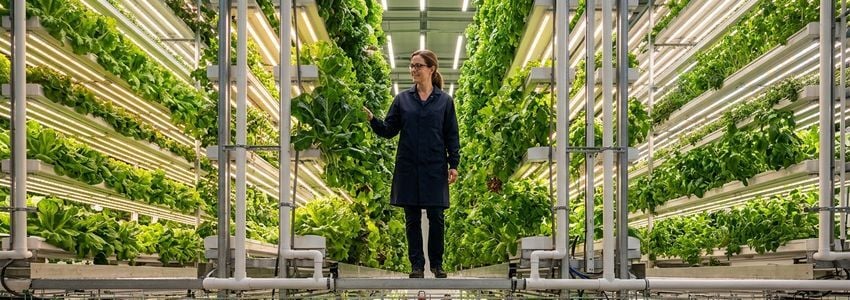
Commercial Hydroponic Farming Equipment Financing: The Complete Guide for Business Owners
Hydroponic farming equipment financing gives commercial growers a practical way to fund grow lights, nutrient delivery systems, climate control units, and vertical racking without tying up working capital. As indoor and controlled-environment agriculture continues to expand across the United States, growers who can move quickly on equipment upgrades are the ones who capture the strongest yields and the best margins.
This guide covers exactly what hydroponic farming equipment financing pays for, how the approval process works, which pieces of equipment growers finance most often, and how to decide between financing and leasing for your operation. You will also find real-world scenarios, a full FAQ, and clear next steps for getting funded.
In This Article
What Is Hydroponic Farming Equipment Financing?
Hydroponic farming equipment financing is a funding arrangement that allows commercial growers to acquire the machinery, systems, and infrastructure needed to run a soil-free growing operation, then pay for it over time instead of in one lump sum. Rather than draining cash reserves on a single large purchase, growers spread the cost across manageable monthly payments while the equipment goes to work generating revenue immediately.
The equipment itself typically becomes the collateral for the loan or lease, which is one reason hydroponic equipment financing tends to be more accessible than an unsecured business loan. Lenders view the physical asset, whether it is a nutrient film technique system, an ebb-and-flow table, or a full vertical rack array, as security that reduces their risk. That trade-off usually translates into faster approvals and more competitive terms for the grower.
This type of financing applies broadly across the controlled-environment agriculture space: commercial greenhouse operators converting to hydroponic beds, indoor vertical farms scaling production, aquaponics operations blending fish and plant systems, and even smaller urban farms moving from a hobbyist setup to a commercial-scale grow room. Whether the goal is a first buildout or an expansion, financing bridges the gap between what a grower can afford outright and what the operation actually needs to compete.
Key Stat: The global hydroponics market has been valued in the multi-billion-dollar range in recent years and continues to post strong double-digit annual growth, driven by urban land scarcity and rising demand for locally grown, pesticide-free produce, according to industry market research cited by Forbes.
Key Benefits of Financing Your Hydroponic Equipment
Growers who finance their equipment rather than paying cash upfront generally see a few consistent advantages:
- Preserved working capital. Cash stays available for seed stock, nutrients, labor, and unexpected operating costs instead of being locked into a single equipment purchase.
- Faster scaling. A grower with financing in place can add a new grow room or expand racking capacity as soon as demand justifies it, rather than waiting months to save enough cash.
- Predictable monthly costs. Fixed payments make budgeting simpler and help growers forecast margins with more confidence.
- Access to newer technology. Financing makes it realistic to invest in efficient LED lighting, automated dosing systems, and climate control technology that lowers long-term operating costs, rather than settling for older, less efficient equipment because it is the only thing affordable in cash.
- Potential tax advantages. Businesses should always confirm current-year treatment with a qualified tax professional, since financed equipment may qualify for certain deductions depending on the structure of the agreement.
- Credit line preservation. Using equipment-specific financing instead of a general business line of credit keeps that credit line open for other needs.
How Hydroponic Equipment Financing Works
The process for financing hydroponic equipment follows a fairly standard path, whether the grower is buying a single piece of equipment or outfitting an entire facility.
Step 1: Identify the equipment and total project cost. Growers typically start with a quote from an equipment vendor or a buildout estimate from a contractor. This might cover grow lights, racking, irrigation and nutrient delivery systems, HVAC and dehumidification, or a combination of everything needed for a new or expanded grow space.
Step 2: Submit an application. Most equipment financing applications ask for basic business information, time in business, monthly or annual revenue, and the equipment quote or invoice. Many lenders can process this with minimal paperwork compared to a traditional bank loan.
Step 3: Underwriting and approval. Because the equipment secures the financing, underwriting tends to move faster than unsecured lending. Lenders look at business revenue, time in operation, and sometimes personal credit, but the collateral reduces how much weight falls on any single factor.
Step 4: Funding and equipment delivery. Once approved, funds are released to pay the equipment vendor directly, or in some cases disbursed to the business to complete the purchase. Many growers can move from application to funded equipment in a matter of days rather than weeks.
Step 5: Repayment. Monthly payments begin on a fixed schedule, typically ranging from 24 to 84 months depending on the equipment type and total amount financed. Terms are usually structured so the equipment is generating revenue well before the loan or lease term ends.
Types of Hydroponic Equipment You Can Finance
Hydroponic and controlled-environment agriculture operations rely on a wide range of specialized equipment, most of which can be financed either individually or as part of a larger buildout package.
Lighting Systems
LED grow lights represent one of the largest capital expenses in a modern hydroponic operation and one of the most commonly financed line items. Full-spectrum and tunable LED systems cost significantly more upfront than older lighting technology but reduce energy costs over the equipment's lifespan, making financing a natural fit since the savings help offset the monthly payment.
Growing Systems and Racking
Nutrient film technique (NFT) channels, deep water culture systems, ebb-and-flow tables, and vertical racking systems form the physical backbone of the grow space. Vertical racking in particular can represent a large capital outlay when a grower is trying to maximize square footage in an indoor facility.
Climate Control Equipment
HVAC systems, dehumidifiers, and CO2 enrichment equipment keep temperature, humidity, and air composition within the narrow ranges most crops require. These systems often run continuously and represent both a significant purchase price and an ongoing energy cost that factors into the financing decision.
Irrigation and Nutrient Delivery
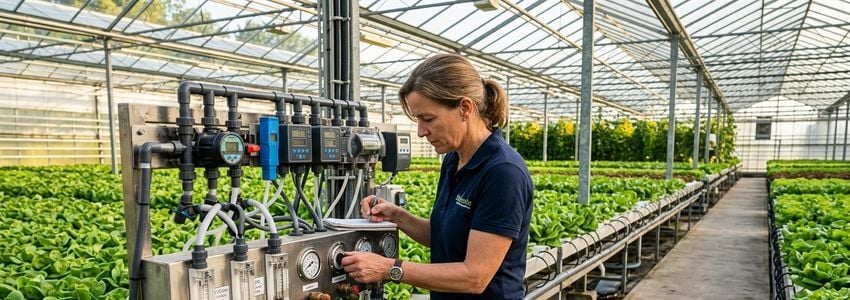
Automated dosing pumps, reservoirs, filtration systems, and fertigation controllers ensure crops receive consistent nutrient concentrations without manual intervention. Automating this process reduces labor costs, which is often part of the return-on-investment case for financing.
Monitoring and Automation Technology
Sensor networks, environmental controllers, and software platforms that track pH, electrical conductivity, temperature, and humidity in real time help growers catch problems before they affect yield. These systems are increasingly bundled into financing packages alongside the physical grow equipment.
Building Infrastructure
For growers converting a warehouse, retrofitting a greenhouse, or building out a new facility, financing can extend to structural elements like insulation, flooring designed for wet environments, and electrical upgrades needed to support the equipment load.
Who This Financing Is Best For
Hydroponic farming equipment financing tends to make the most sense for a specific set of growers and operators:
- Commercial greenhouse operators converting soil-based sections to hydroponic beds or expanding existing hydroponic capacity.
- Indoor vertical farm operators who need to maximize output per square foot and depend heavily on racking, lighting, and climate control equipment.
- Aquaponics businesses integrating fish production systems with hydroponic grow beds, which often require both agricultural and specialized water-system equipment.
- Urban and container farms operating in repurposed warehouse space or shipping containers, where efficient use of vertical space and equipment is critical to profitability.
- Established growers scaling production to meet contracts with grocery chains, restaurants, or food distributors that require consistent, high-volume supply.
- Growers replacing aging equipment where older lighting or climate systems are driving up energy costs and hurting yield consistency.
This financing is generally a poor fit for pure hobbyist growers without a registered business, or for operations still in the concept stage without any revenue history or a signed lease on a growing facility.
Comparing Your Financing Options
Growers generally choose between a few structures when financing hydroponic equipment. Each comes with trade-offs worth understanding before signing.
| Option | Best For | Ownership | Typical Term |
|---|---|---|---|
| Equipment Financing (Loan) | Growers who want to own equipment outright and build equity | Owned once paid off | 24-84 months |
| Equipment Leasing | Growers who want lower monthly payments or plan to upgrade often | Return, buy out, or upgrade at end of term | 24-60 months |
| SBA 7(a) or 504 Loan | Larger buildouts including real estate and heavy infrastructure | Owned once paid off | Up to 25 years (504) |
| Working Capital Loan | Smaller equipment purchases bundled with other operating needs | Owned once paid off | 6-24 months |
A grower buying a single piece of equipment, such as an LED lighting array, often finds a straightforward equipment loan or lease is the simplest path. A grower planning a full facility buildout, including structural changes to a warehouse or greenhouse, may find an SBA loan better suited to the larger scope and longer repayment runway.
Ready to Upgrade Your Grow Operation?
Get fast, flexible equipment financing from the #1 business lender in the U.S. No obligation, apply in minutes.
Apply Now →By The Numbers
Controlled-Environment Agriculture at a Glance
90%
Less water used by hydroponic systems versus traditional field agriculture
$32B
Total SBA 7(a) loan volume approved in fiscal year 2025
Days
Typical turnaround for equipment financing approval and funding
$1.16M
Average SBA 504 loan size for major fixed asset purchases in FY2025
How Crestmont Capital Helps
Crestmont Capital works with commercial growers to structure equipment financing that matches the realities of a hydroponic operation, from a single lighting upgrade to a full facility buildout. We understand that agricultural technology purchases often need to move fast to align with growing seasons, lease timelines, or supply contracts.
For growers who need working capital alongside equipment financing, our unsecured working capital loans can cover nutrients, labor, and other operating costs during a ramp-up period. Businesses tackling a larger structural project, such as converting a warehouse into a vertical farm, may also benefit from our SBA loan programs, which offer longer terms for major fixed-asset investments.
Growers who already have equipment in place but need to free up cash for expansion sometimes explore our business line of credit options, which provide flexible access to capital without committing to a fixed equipment-specific term. And for operations financing multiple pieces of agricultural equipment over time, our agricultural equipment financing page outlines options across the broader farming equipment category, which pairs well with a hydroponics-specific buildout.
If you are researching how other growers have approached similar equipment decisions, our post on vertical farming rack system financing covers the racking side of a buildout in more detail, and our broader guide to hydroponics business loans covers financing options beyond equipment alone, including working capital for day-to-day operations.
Let's Get Your Equipment Funded
Our team specializes in fast turnaround for agricultural and specialty equipment financing. See your options with no obligation.
Get Started →Pro Tip: Get a detailed, itemized quote from your equipment vendor before applying. Lenders move faster when they can see exactly what is being financed, and a clear breakdown of lighting, racking, and climate systems helps underwriters assess the request quickly.
Real-World Scenarios
Scenario 1: The Greenhouse Conversion
A family-owned greenhouse business growing tomatoes in soil for 20 years wanted to convert half of its facility to a hydroponic nutrient film system to increase yield density and reduce water costs. The owner used equipment financing to cover the channel systems, dosing pumps, and updated lighting, keeping cash reserves available for the transition period while both growing methods ran in parallel.
Scenario 2: The Warehouse Vertical Farm Startup
A group of investors leased a 15,000 square foot warehouse to build an indoor vertical farm supplying leafy greens to regional grocery chains. Because the buildout involved racking, LED lighting across multiple tiers, and a full HVAC and dehumidification system, they combined an SBA loan for the structural buildout with equipment financing for the grow systems themselves.
Scenario 3: The Aquaponics Expansion
An aquaponics operator running a small tilapia-and-lettuce system wanted to double capacity after securing a supply contract with a local restaurant group. Equipment financing covered the additional fish tanks, biofilters, and grow beds needed to scale, with payments structured to align with the ramp-up period before the new production came fully online.
Scenario 4: The Energy-Cost Upgrade
An established indoor herb grower was running older high-pressure sodium lighting that drove up monthly electricity bills and generated excess heat, straining the climate control system. Financing a full LED retrofit reduced both energy costs and cooling demand, with the monthly savings covering a meaningful portion of the new equipment payment.
Scenario 5: The Urban Container Farm
A small business operating hydroponic systems inside repurposed shipping containers needed to replace failing nutrient delivery pumps and add automated monitoring sensors across three units. A smaller equipment loan covered the upgrade without disrupting cash flow needed for ongoing container leases and delivery logistics.
Frequently Asked Questions
Don't Let Cash Flow Slow Your Grow
Whether you need a single lighting upgrade or a full facility buildout, get financing built around your growing operation.
Apply Now →Next Steps
Request a detailed, itemized quote from your equipment vendor covering lighting, racking, climate control, or whatever your project requires.
Provide basic business details, time in operation, and revenue information along with the equipment quote.
Compare term length, monthly payment, and total cost before signing so the structure fits your operation's cash flow.
Once approved, funds are released quickly so your equipment can be ordered, installed, and put to work.
Conclusion
Hydroponic farming equipment financing gives growers a realistic path to scale a controlled-environment operation without exhausting cash reserves on lighting, racking, climate systems, or nutrient delivery equipment. Whether you are converting a greenhouse, building out an indoor vertical farm, or replacing aging equipment to cut energy costs, the right financing structure can put modern growing technology to work faster than saving up cash ever could.
If you are ready to explore hydroponic farming equipment financing for your operation, Crestmont Capital can walk you through the options and help match the right structure to your project. Contact our team to get started, or apply directly to see what you qualify for.
Disclaimer: The information provided in this article is for general educational purposes only and is not financial, legal, or tax advice. Funding terms, qualifications, and product availability may vary and are subject to change without notice. Crestmont Capital does not guarantee approval, rates, or specific outcomes. For personalized information about your business funding options, contact our team directly.








