Hydroponics business loans are changing the way modern farmers and commercial growers fund their operations. Whether you're launching your first indoor farm, expanding a vertical growing facility, or upgrading your nutrient delivery systems, accessing the right financing can mean the difference between a thriving operation and one that struggles to keep up with demand. The hydroponics industry has seen explosive growth in recent years, with the global hydroponics market projected to reach over $17 billion by 2030 according to industry analysts - and with that growth comes an increasing need for smart, flexible business financing. This guide covers everything you need to know about hydroponics business loans, from types of funding available to qualification requirements, real-world examples, and how Crestmont Capital can help you grow.
In This Article
What Are Hydroponics Business Loans?
Hydroponics business loans are financing products specifically designed - or adapted - to help indoor farmers, vertical growers, greenhouse operators, and commercial hydroponic businesses access capital. These loans can fund everything from the initial buildout of a grow facility to working capital for daily operations, equipment purchases, inventory, and expansion.
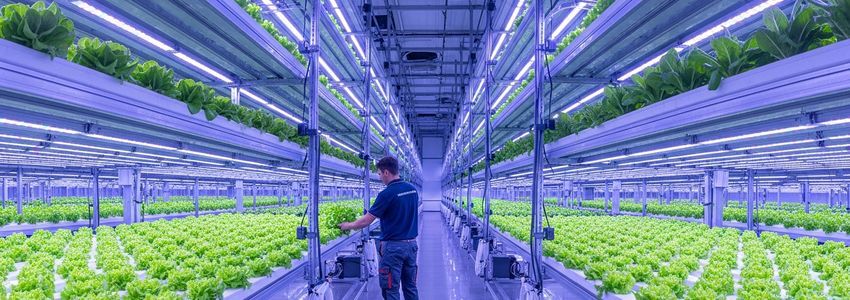
Unlike traditional agricultural loans that often focus on farmland and soil-based operations, hydroponics financing acknowledges the capital-intensive nature of controlled environment agriculture (CEA). Hydroponic systems, LED grow lights, HVAC systems, nutrient monitoring equipment, and the physical infrastructure of a modern grow facility all require significant upfront investment.
At its core, a hydroponics business loan is simply a small business loan or specialized agricultural financing product used to fund growth in the hydroponic and indoor farming sector. While few lenders market products exclusively labeled "hydroponic loans," many business financing options are readily available and well-suited to this growing industry.
The Hydroponics Industry at a Glance
According to data from the USDA, the controlled environment agriculture sector has grown significantly, with indoor food production becoming a priority area for investment and lending. The Small Business Administration has expanded its agricultural lending programs to include non-traditional farming methods, including hydroponics, aquaponics, and vertical farming. As consumer demand for locally-grown, pesticide-free produce continues to rise, the business case for hydroponic operations has never been stronger.
Hydroponics businesses typically need capital for:
- Grow systems and equipment (NFT, DWC, aeroponics, ebb-and-flow)
- LED lighting systems and climate control
- Water filtration and nutrient delivery systems
- Facility construction or renovation
- Seeds, clones, growing media, and nutrients
- Labor costs and payroll
- Packaging, distribution, and marketing
- Working capital for day-to-day operations
Ready to Fund Your Hydroponic Operation?
Get fast, flexible business financing from the #1 business lender in the U.S. No obligation - apply in minutes.
Apply NowKey Benefits of Hydroponic Business Financing
Accessing capital for your hydroponic business offers several distinct advantages that can accelerate growth, improve profitability, and give you a competitive edge in the market.
1. Scale Without Depleting Cash Reserves
One of the biggest challenges hydroponic businesses face is managing cash flow while scaling operations. Adding grow rooms, upgrading lighting systems, or bringing on additional staff requires significant capital. A well-structured business loan lets you grow without emptying your operating reserves.
2. Invest in Higher-Yield Equipment
The difference between budget and commercial-grade hydroponic equipment can be dramatic in terms of yield, efficiency, and long-term operating costs. Financing lets you invest in LED systems with better energy efficiency, automation tools that reduce labor costs, and premium nutrient monitoring systems - all of which can pay for themselves over time.
3. Capture Market Opportunities Quickly
The local and organic food market moves fast. When a new wholesale contract, retail partnership, or distribution opportunity arises, having access to capital via a business line of credit means you can act on it immediately rather than waiting to accumulate savings.
4. Separate Personal and Business Risk
Using proper business financing - rather than personal credit cards or savings - keeps your personal financial profile separate from your business operations. This is especially important as your hydroponic business grows and takes on more operational complexity.
5. Build Business Credit
Consistently using and repaying business loans builds your business credit profile, which can lead to better rates and larger loan amounts over time. This is a strategic advantage for businesses planning to scale significantly.
How Hydroponics Business Financing Works
The process for obtaining a hydroponics business loan is similar to applying for any small business loan, with a few nuances specific to agricultural and controlled-environment operations.
Step 1: Identify Your Financing Need
Before applying, clearly define what you need the funds for. Are you purchasing equipment? Covering operating expenses during a slow season? Expanding your facility? The purpose of the loan affects which product is best suited and how much you should request.
Step 2: Assess Your Business Profile
Lenders will evaluate your business based on time in business, revenue, credit score, and financial statements. For newer hydroponic operations, demonstrating a clear revenue model and growth trajectory is especially important.
Step 3: Compare Loan Products
Different financing products serve different needs. Equipment financing is best for purchasing grow systems and LED lights. A working capital loan works well for covering operational gaps. A business line of credit provides ongoing flexibility. An SBA loan may offer the lowest rates for established operations with strong financials.
Step 4: Gather Documentation
Standard documents include business bank statements (typically 3-6 months), tax returns, proof of business registration, and financial statements. Some lenders also want a business plan for newer operations.
Step 5: Apply and Receive Funds
With many alternative lenders, the application process is streamlined and fast - often resulting in approval within 24-48 hours and funding within a few business days.
Hydroponics Industry Financing at a Glance
$17B+
Global hydroponics market projected by 2030
11%+
Annual growth rate for indoor farming sector
$25K-$5M
Typical hydroponic business loan range
24-48hrs
Typical approval time with alternative lenders
Types of Hydroponic Business Loans
Several financing products are well-suited to hydroponic businesses, each with distinct advantages depending on your situation and goals.
1. Equipment Financing
Equipment financing is one of the most popular choices for hydroponic operations because the equipment itself - grow systems, LED lights, HVAC units, water filtration - serves as collateral. This typically means lower interest rates and larger loan amounts than unsecured products. Terms usually range from 12 to 84 months depending on the value and useful life of the equipment. You can typically finance 80-100% of the equipment cost, preserving working capital for operations.
2. Small Business Term Loans
A standard term loan delivers a lump sum of capital repaid over a fixed period with regular payments. These are excellent for facility buildouts, major expansions, or one-time investments. Term loans from alternative lenders can often be obtained much faster than from traditional banks, making them ideal when opportunity timing matters.
3. Business Line of Credit
A business line of credit provides revolving access to capital up to a set limit. You draw what you need, repay it, and draw again. This is ideal for managing seasonal gaps in hydroponic production, covering input costs before a major harvest, or handling unexpected equipment repairs. Lines of credit offer the most flexibility of any financing product.
4. SBA Loans
SBA loans - particularly the 7(a) and 504 programs - offer low interest rates and long repayment terms, making them ideal for larger investments. The SBA's definition of agriculture has expanded to include modern farming methods including hydroponics. However, SBA loans involve more documentation and a longer approval timeline - typically 60-90 days - so they're best for planned capital needs rather than urgent ones.
5. Working Capital Loans
Working capital loans are short-to-medium-term loans designed to cover day-to-day operational expenses. For hydroponic businesses, this might include payroll, nutrients and growing media, packaging, and energy costs between production cycles. These are usually easier to qualify for and fund quickly.
6. Merchant Cash Advance (MCA)
An MCA provides capital in exchange for a percentage of future sales. While MCAs are more expensive than traditional loans, they can be useful for hydroponic businesses with strong but variable cash flow. Repayment scales with revenue, meaning slower periods result in smaller payments.
7. USDA Agricultural Loans
The USDA's Farm Service Agency (FSA) offers direct and guaranteed loan programs that can apply to hydroponic and greenhouse operations. The USDA's agricultural lending programs cover a wide range of farm types and can be a good option for operations in rural or underserved areas. These often come with favorable terms but also involve significant paperwork.
Who Qualifies for Hydroponics Business Loans?
Qualification requirements vary by lender and product type, but here are the general benchmarks most lenders look for:
General Eligibility Criteria
- Time in Business: Most conventional lenders prefer 1-2 years in business. Some alternative lenders will work with businesses as young as 6 months.
- Annual Revenue: Typically a minimum of $100,000-$250,000 in annual revenue, though some working capital products have lower thresholds.
- Credit Score: Conventional loans usually require a personal credit score of 640+. Bad credit options exist for scores as low as 500 in some cases.
- Business Bank Account: Most lenders require a dedicated business checking account with consistent transaction history.
- Profitability or Revenue Growth: Demonstrating consistent or growing revenue is more important than being profitable on paper, especially for early-stage operations.
Industry-Specific Considerations
Because hydroponics is sometimes classified as an agricultural business, there can be additional factors at play. Some conventional bank lenders have limited experience with controlled-environment agriculture, which can lead to slower approvals or more conservative terms. Working with a lender experienced in agricultural business lending - or an alternative lender that focuses on cash flow rather than industry classification - can significantly improve your outcomes.
For additional background, the agricultural business loans guide on the Crestmont Capital blog covers the broader landscape of farm financing in detail.
How Crestmont Capital Helps Hydroponic Businesses
Crestmont Capital is the #1 business lender in the U.S., and we specialize in helping small and mid-sized businesses - including farms, greenhouses, and controlled-environment agriculture operations - access the capital they need to grow. Our approach is simple: we focus on your business's cash flow and revenue potential, not just your credit score or the type of industry you're in.
What Sets Crestmont Capital Apart
- Fast Approvals: Get approved in as little as 24 hours with minimal paperwork.
- Flexible Terms: Loan amounts from $10,000 to $5 million with terms tailored to your business needs.
- No Industry Restrictions: We work with hydroponic farms, vertical farms, greenhouse operators, and indoor growing facilities of all sizes.
- Bad Credit Options: Even if your credit score isn't perfect, we have products designed for businesses like yours.
- Dedicated Support: Our lending specialists understand agricultural and specialty farming businesses and can guide you to the best product for your situation.
Whether you need equipment financing for a new LED system, a line of credit for operational flexibility, or a term loan to fund a facility expansion, Crestmont Capital can help you find the right fit quickly.
Get Funded for Your Hydroponic Business
Fast approvals, flexible terms, and no industry restrictions. Join thousands of businesses that trust Crestmont Capital.
Apply NowReal-World Examples of Hydroponic Business Financing
Sometimes the best way to understand how business loans work in practice is to look at real-world scenarios. Here are four examples of how hydroponic businesses might use financing at different stages of growth.
Scenario 1: The Urban Vertical Farm Startup
Maria runs a small vertical farm in a converted warehouse in a mid-size city. She's been operating for 14 months, growing leafy greens for local restaurants and a weekly CSA subscription. Her annual revenue has grown to $180,000, but she needs $75,000 to add two new grow towers and upgrade her LED system to increase yield capacity by 40%. She applies for a small business term loan through Crestmont Capital, gets approved in 36 hours, and receives funding within 3 business days. The loan covers the new equipment and installation, and the additional yield capacity more than covers the monthly payments within the first three months of operation at full capacity.
Scenario 2: The Greenhouse Operator Expanding to Retail
James operates a 10,000-square-foot greenhouse growing herbs and microgreens. He has a contract with a regional grocery chain and wants to expand production to meet a new contract that would double his revenue. The expansion requires $250,000 for facility construction and additional grow systems. He applies for an SBA 7(a) loan through Crestmont Capital, taking advantage of the lower interest rate for a major capital investment. The longer approval timeline (about 45 days) is acceptable because the grocery chain contract doesn't start for 90 days. The low interest rate saves him significantly compared to a shorter-term alternative loan.
Scenario 3: The Established Hydroponic Farm with Cash Flow Gaps
Sandra's hydroponic operation has been running for four years with annual revenue of $600,000. The business is profitable but experiences seasonal cash flow gaps between production cycles - she needs to pay employees and purchase nutrients before the harvest revenue comes in. A $50,000 business line of credit from Crestmont Capital solves the problem. She draws from the line as needed during low-revenue periods and repays it when the harvest revenue comes in. The revolving nature means she always has access to capital without taking on permanent debt.
Scenario 4: The Startup with Limited Credit History
David just launched a hydroponics operation focused on specialty herbs for high-end restaurant clients. He has 8 months of operating history, $90,000 in annual revenue, and a personal credit score of 580 due to student loan debt. Traditional banks won't lend to him. Through Crestmont Capital's bad credit business loan program, he qualifies for a $25,000 working capital loan. This covers his operating costs while he continues to grow revenue, and repaying the loan helps build his business credit score for future, larger financing needs.
Frequently Asked Questions About Hydroponics Business Loans
Can I get a business loan for a hydroponics operation? +
Yes. Hydroponics businesses can access many of the same loan products available to other small businesses, including term loans, equipment financing, lines of credit, working capital loans, and SBA loans. Some lenders classify hydroponic operations as agricultural businesses, which may open additional loan programs. Alternative lenders like Crestmont Capital focus on revenue and cash flow, making approval more accessible regardless of how the industry is classified.
What can I use a hydroponics business loan for? +
Hydroponics business loans can be used for virtually any legitimate business expense: grow systems and equipment, LED lighting, HVAC and climate control, facility construction or renovation, seeds and growing media, nutrients, payroll, marketing, packaging, distribution, working capital, and more. Equipment financing specifically requires that funds be used for the equipment serving as collateral.
How much can I borrow for a hydroponic business? +
Loan amounts for hydroponic businesses typically range from $10,000 to $5 million depending on the lender, product type, and the financial strength of your business. Equipment financing amounts are often tied to the value of the equipment being purchased. Term loans and SBA loans can range from $25,000 to several million dollars. Working capital products and lines of credit are typically in the $10,000 to $500,000 range for most operations.
Do I need collateral to get a hydroponic business loan? +
It depends on the loan type. Equipment financing is secured by the equipment itself, so no additional collateral is typically required. SBA loans may require collateral in the form of business assets or real estate. Many alternative lenders offer unsecured working capital loans and lines of credit that don't require specific collateral, though they may require a personal guarantee from the business owner.
What credit score do I need for a hydroponic business loan? +
Credit score requirements vary by lender and product. SBA loans typically require a personal credit score of 680 or higher. Traditional bank loans generally want 650+. Many alternative lenders will approve businesses with scores as low as 500-580, especially if revenue and cash flow are strong. Crestmont Capital works with borrowers across a wide credit score range and focuses on the overall financial health of your business rather than credit score alone.
How long does it take to get approved for a hydroponic business loan? +
Approval timelines vary widely. With alternative lenders like Crestmont Capital, you can often get approved in 24-48 hours and receive funds within 1-3 business days. SBA loans take significantly longer - typically 30-90 days from application to funding. Traditional bank loans fall somewhere in between, usually 1-4 weeks. The urgency of your funding need should factor into which type of lender you approach.
Can a new hydroponics business get a loan? +
Yes, though options may be more limited for businesses under 6-12 months old. Some alternative lenders offer startup-friendly products with less stringent time-in-business requirements. USDA loan programs can also be accessible to newer agricultural businesses. Having a solid business plan, demonstrating early revenue traction, and offering collateral can improve approval odds for startups. SBA microloans are another option for very early-stage operations.
What interest rates should I expect on a hydroponic business loan? +
Interest rates vary significantly based on loan type, creditworthiness, and lender. SBA loans typically range from approximately 6%-10% APR. Equipment financing often falls in the 6%-20% range. Alternative working capital loans and MCAs may have factor rates or APRs ranging from 10%-50% or higher depending on risk profile. A strong credit score and solid business revenue will always help you qualify for better rates. Always ask for the APR (annual percentage rate) to make an apples-to-apples comparison across loan offers.
Does the USDA offer loans for hydroponic farmers? +
Yes. The USDA's Farm Service Agency (FSA) has expanded its definition of farming to include hydroponics, aquaponics, and other controlled-environment agriculture methods. Programs like the Farm Operating Loan and Farm Ownership Loan can apply to hydroponic operations. USDA loans often feature favorable interest rates and terms but require substantial documentation and can take 60-90 days to process. The USDA also has specific programs for beginning farmers and for operations in underserved communities.
What's the difference between a hydroponic business loan and equipment financing? +
A general business loan provides capital that can be used for any legitimate business purpose - working capital, facility costs, payroll, marketing, etc. Equipment financing is specifically structured to purchase equipment, which serves as collateral for the loan. Equipment financing often offers lower rates than unsecured loans because the lender has collateral. If you need capital specifically for grow systems, LED lights, or HVAC, equipment financing may be the better and more affordable choice. For broader operational needs, a term loan or line of credit is more flexible.
Are there grants available for hydroponic businesses? +
Yes, though grants for hydroponic businesses are competitive and often limited. The USDA offers various grant programs through its Value-Added Producer Grants (VAPG) and Specialty Crop Block Grant programs that hydroponic operations may qualify for. State agricultural departments often have their own grant programs. Private foundations and impact investors also fund sustainable agriculture initiatives. Grants don't need to be repaid, making them highly valuable, but they take significant time and effort to apply for and are not guaranteed. Many businesses pursue grants alongside loans to maximize their capital access.
Can I finance LED lighting and grow equipment separately? +
Yes. Equipment financing can cover individual pieces of equipment including LED grow lights, hydroponic systems, climate control units, and water filtration equipment. Some lenders bundle all equipment in a single loan while others finance individual items separately. Many LED and hydroponic equipment suppliers also offer in-house financing or work with preferred lenders, which can simplify the process. Always compare the terms of supplier financing with third-party equipment loans to ensure you're getting the best deal.
What documents do I need to apply for a hydroponic business loan? +
Requirements vary by lender, but most will ask for: 3-6 months of business bank statements, 1-2 years of business tax returns, proof of business registration or LLC/incorporation documents, a government-issued ID, and basic financial statements (profit and loss, balance sheet). Some lenders may also request a business plan, equipment invoices or quotes, and projections for new operations. Alternative lenders typically have lighter documentation requirements than banks or SBA lenders.
How does a line of credit help a hydroponic business? +
A business line of credit is particularly valuable for hydroponic operations because it provides flexible, ongoing access to capital without the structure of a fixed term loan. Hydroponic businesses often face gaps between input costs (nutrients, energy, labor) and harvest revenue. A line of credit lets you draw exactly what you need when you need it, repay it as revenue comes in, and draw again next cycle. This makes it ideal for managing the production cycle cash flow dynamics unique to farming and controlled-environment agriculture.
Is hydroponics considered agriculture for loan purposes? +
In most cases, yes. The USDA, SBA, and many state agricultural agencies now recognize hydroponics, aquaponics, and vertical farming as legitimate agricultural operations. This means hydroponic businesses may qualify for agricultural loan programs, grants, and other support that wouldn't be available to a non-agricultural business. However, classification can vary by lender and jurisdiction. Some lenders may classify hydroponics as a manufacturing or food production business rather than agriculture, which affects which loan programs apply. It's worth asking each lender how they classify your operation before applying.
How to Get Started with Hydroponics Business Financing
- Review your current revenue, bank statements, and credit score to understand your profile.
- Define your specific capital need - what you're funding and how much you need.
- Choose the right loan product based on your need (equipment vs. working capital vs. expansion).
- Gather required documents: bank statements, tax returns, business registration, and ID.
- Apply with Crestmont Capital - online application takes less than 10 minutes.
- Review your offer and ask about rate, term, and total cost of capital.
- Accept funding and invest strategically in your operation.
Start Growing Your Hydroponic Business Today
Flexible financing, fast approvals, and a lender that understands your business. Apply now and get funded in as little as 24 hours.
Apply NowConclusion
The hydroponics industry represents one of the most exciting growth sectors in modern agriculture. As consumer demand for locally-grown, sustainable produce continues to rise, hydroponic businesses are positioned to capture significant market share - but capitalizing on that opportunity requires access to reliable, flexible financing. Whether you're starting your first indoor grow operation or scaling an established facility, understanding your loan options is essential to making smart financial decisions.
Hydroponics business loans span a wide range of products - from equipment financing and SBA loans to working capital lines of credit and alternative term loans. The right choice depends on your specific situation: how much you need, what you're using it for, how quickly you need it, and your business's financial profile. By taking the time to understand each option and working with a lender that understands agricultural and controlled-environment businesses, you can secure the capital you need on terms that support your growth.
Crestmont Capital is here to help. As the #1 business lender in the U.S., we specialize in connecting small businesses - including hydroponic farms and indoor growing operations - with the right financing solutions fast. Our application process is simple, our approvals are quick, and our team is dedicated to helping your business thrive.
Disclaimer: The information provided in this article is for general educational purposes only and is not financial, legal, or tax advice. Funding terms, qualifications, and product availability may vary and are subject to change without notice. Crestmont Capital does not guarantee approval, rates, or specific outcomes. For personalized information about your business funding options, contact our team directly.

Allan Garfinkle
Allan Garfinkle is the Chief Revenue Officer at Crestmont Capital, where he has spent more than a decade leading revenue strategy, business development, and operational growth. With 28 years of experience building and advising startups and small businesses, Allan has helped more than 10,000 business owners navigate financing decisions, growth opportunities, and changing economic conditions. He earned a Bachelor of Science in Economics and an MBA with a concentration in Finance from Northeastern University, as well as a Juris Doctor from New England Law, where his studies focused on contracts and business law. His writing draws on extensive practical experience in small-business lending, equipment financing, business credit, and commercial finance.