
 (800) 949-0401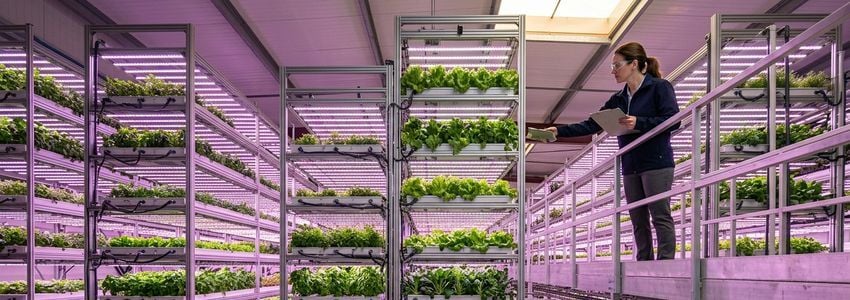
Vertical Farming Rack System Financing: The Complete Guide for Business Owners
Vertical farming rack system financing gives indoor growers a practical way to acquire multi-tier growing racks, LED lighting arrays, and climate control infrastructure without draining cash reserves. Whether you are launching a controlled-environment leafy greens operation or scaling an existing indoor farm, the right financing structure can determine how quickly you can add capacity and respond to new retail or wholesale contracts. This guide covers every financing option available, what lenders evaluate, and how to move fast when the right rack system becomes available.
In This Article
- What Is Vertical Farming Rack System Financing?
- Key Benefits for Indoor Growers
- How Vertical Farming Rack System Financing Works
- Types of Equipment You Can Finance
- Who Vertical Farming Rack Financing Is Best For
- Comparing Your Financing Options
- How Crestmont Capital Helps
- Real-World Scenarios
- Frequently Asked Questions
- How to Get Started
What Is Vertical Farming Rack System Financing?
Vertical farming rack system financing is a type of equipment financing that allows indoor agriculture businesses to acquire multi-tier growing racks, along with the LED lighting, irrigation, and climate control systems that support them, through a structured loan or lease rather than a large upfront cash purchase. The racks and associated equipment typically serve as collateral, which streamlines underwriting and allows faster approvals than a general-purpose business loan.
According to the U.S. Small Business Administration, equipment financing remains one of the most widely used funding tools for capital-intensive small businesses precisely because it preserves working capital while enabling growth. A single commercial-grade vertical growing rack with integrated lighting and irrigation can run from $3,000 to $25,000 per unit, and a full production room can require a dozen or more racks, making financing a practical necessity for most indoor farms scaling beyond a pilot facility.
The mechanics are straightforward: a lender or leasing company advances funds to purchase the rack systems and supporting infrastructure, and the borrower repays through fixed monthly installments over a term that typically runs 24 to 72 months. Rates depend on credit profile, time in business, and the type and age of equipment. At the end of the term, the borrower either owns the equipment outright or exercises a buyout option depending on the structure chosen.
Industry Fact: The global vertical farming market is projected to reach roughly $7.5 billion in 2026 and grow to $18.4 billion by 2031, a compound annual growth rate near 19.7%, according to market research compiled by Mordor Intelligence. Equipment financing is the backbone that lets growers scale rack capacity in step with that demand.
Key Benefits for Indoor Growers
Financing a vertical farming rack system rather than paying cash outright gives growers several strategic and financial advantages worth understanding before committing capital.
- Preserves working capital for seed stock, nutrients, labor, and packaging while the rack system pays for itself over time.
- Builds business credit through consistent on-time payments reported to commercial credit bureaus.
- Enables faster capacity growth by letting you deploy new racks as soon as a contract or retail placement is secured, rather than waiting months to save cash.
- Predictable monthly payments that integrate cleanly into crop planning and budgeting.
- No dilution of ownership compared with raising equity capital to fund infrastructure.
Preserves Working Capital
Vertical farming racks represent a significant capital outlay when purchased in volume. Paying cash for a $150,000 rack buildout eliminates funds that could be deployed toward nutrient supply contracts, packaging equipment, additional labor, or a second growing room. Financing spreads that cost over time and keeps operating cash available for the recurring expenses that actually generate revenue.
Builds Business Credit
Consistently making on-time equipment loan payments builds your business credit profile with commercial credit bureaus. A stronger credit profile leads to better terms on your next financing request, whether that is an additional rack expansion or a working capital loan to bridge seasonal cash flow gaps.
Enables Faster Growth
Rather than saving capital over a year or more to build out one growing room, financing lets you install racks immediately and fund the next expansion from operating revenue generated by the first room. Many indoor farms use this approach to scale from a single pilot room to a full production facility within 18 to 24 months.
Ready to Expand Your Growing Operation?
Get fast, flexible financing from the #1 business lender in the U.S. No obligation - apply in minutes and get a decision quickly.
Apply Now →How Vertical Farming Rack System Financing Works
Understanding the step-by-step process removes uncertainty and helps you move faster when a purchasing opportunity or a new lease space becomes available.
Quick Guide
How Rack System Financing Works - At a Glance
Provide basic business information, credit profile, and details about the rack system and supporting equipment you want to finance.
The lender evaluates your credit, business financials, and the equipment. Most equipment loans are reviewed within 24-48 hours.
You receive a loan or lease agreement detailing the rate, term, monthly payment, and any end-of-term options.
The lender pays the equipment vendor directly, or in some cases provides funds to you. Racks and systems are delivered and installed.
Monthly payments begin, often within 30 days of funding. Your first harvest cycles generate revenue that services the debt.
One important nuance: lenders distinguish between new and used equipment. New rack systems typically qualify for higher advance rates, up to 100% of cost, while used equipment may require an invoice or appraisal and typically sees advance rates of 75-90% of fair market value. Most lenders will finance rack systems and LED fixtures up to 8-10 years old with the right documentation, since these components generally have a long useful life when properly maintained.
Types of Equipment You Can Finance
Almost every category of vertical farming infrastructure is eligible for financing. Lenders who work with indoor agriculture understand the modular, expandable nature of these systems and are comfortable financing a wide range of unit types and price points.
Multi-Tier Growing Racks
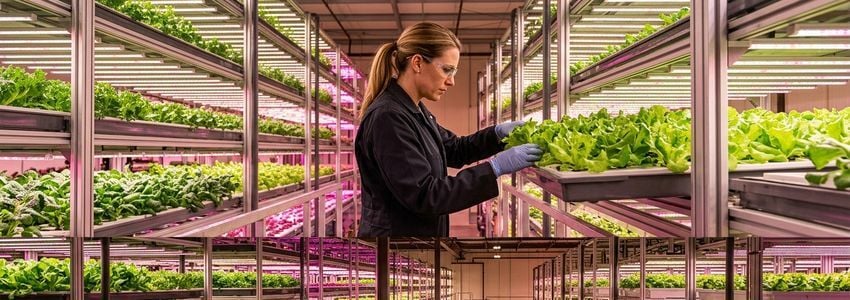
The core structural component of any vertical farm, these steel or aluminum racks hold multiple growing trays stacked vertically to maximize square footage. Commercial units range from simple two-tier shelving to automated systems with a dozen or more levels. Pricing typically runs $3,000 to $15,000 per rack depending on tier count, automation, and materials.
LED Grow Lighting Arrays
Full-spectrum LED fixtures tuned for specific crop types are one of the largest line items in a rack buildout. Because lighting directly drives crop yield and quality, growers often finance lighting alongside the racks themselves rather than as a separate purchase. Expect $500 to $2,000 per fixture depending on spectrum control and coverage area.
Irrigation and Nutrient Delivery Systems
Drip, ebb-and-flow, aeroponic, and NFT (nutrient film technique) delivery systems are all financeable, whether purchased as standalone units or integrated into a rack package. These systems are typically bundled into the same financing transaction as the racks to simplify documentation.
Climate Control and HVAC Equipment
Precise temperature, humidity, and CO2 control are essential to consistent yields in a sealed growing environment. Dehumidifiers, HVAC units, and CO2 injection systems are commonly financed alongside racks, particularly for larger production rooms where climate control is a major capital expense.
Automated Seeding and Harvesting Equipment
Larger operations increasingly finance automated seeding lines, transplant robots, and mechanized harvesting equipment. These systems carry a higher price point but reduce labor costs significantly, which lenders view favorably when evaluating cash flow projections.
Monitoring and Control Software Hardware
Sensor arrays, environmental controllers, and the hardware supporting farm management software are generally eligible for inclusion in an equipment financing package, especially when bundled with the primary rack purchase.
By the Numbers
Vertical Farming Rack System Financing - Key Statistics
$7.5B
Global vertical farming market size in 2026
19.7%
Projected CAGR through 2031
24-72
Months available for repayment terms
100%
Of new equipment cost can often be financed
Who Vertical Farming Rack Financing Is Best For
Rack system financing fits a range of indoor agriculture business models, though the ideal candidate typically shares a few common traits.
Established Indoor Farms Scaling Capacity
Operations with a proven growing room and consistent sales channels are the strongest candidates. Lenders favor businesses that can demonstrate revenue from an existing room when evaluating a request to finance additional rack capacity.
CEA Startups With Signed Off-Take Agreements
Early-stage controlled-environment agriculture (CEA) businesses with a signed purchase agreement from a grocery chain, restaurant group, or distributor present a much stronger financing case than a startup without confirmed demand. A signed contract demonstrates that the rack investment will generate predictable revenue.
Vertical Farms Converting Warehouse or Retail Space
Businesses repurposing warehouse, shipping container, or retail space into growing rooms often need to finance racks alongside build-out costs. Equipment financing for the racks themselves can be paired with a separate working capital facility to cover the broader build-out.
Multi-Site Operators Standardizing Equipment
Growers expanding to a second or third location frequently finance identical rack systems across sites to standardize crop production and simplify staff training. Bundling multiple site orders into one financing facility often improves pricing.
Comparing Your Financing Options
Vertical farm operators have access to several distinct financing channels. Each has different qualification requirements, approval timelines, costs, and structures. Understanding your options helps you choose the right lender for your situation.
| Option | Typical Rate Range | Approval Time | Best For |
|---|---|---|---|
| Traditional Bank Loan | 5-8% | 30-90 days | Established farms, strong financials |
| SBA Equipment Loan | 7-11% | 60-90 days | Longer terms, lower rates, patient timelines |
| Equipment Finance Company | 8-18% | 24-72 hours | Fast approvals, flexible criteria |
| Alternative Business Lender | 10-25% | 1-3 days | Startups, time-sensitive purchases |
| Equipment Leasing | Varies by term | 24-72 hours | Frequent tech upgrades, lower monthly cost |
Pro Tip: If your rack system technology is likely to be upgraded within 3-4 years as LED efficiency and automation improve, leasing may preserve more flexibility than a term loan. If you expect to run the same racks for 7+ years, financing to full ownership typically costs less over the life of the equipment.
Traditional Bank Loans
Bank equipment loans offer the lowest interest rates but come with the most stringent qualification requirements. Strong credit, two or more years of tax returns, solid collateral, and patient timelines are the norm. Banks are best for established growers with strong financials who are not in a time-sensitive purchasing situation.
SBA Equipment Loans
The SBA 7(a) loan program can be used to purchase vertical farming equipment and offers competitive rates with longer repayment terms than most conventional loans. SBA loans are government-guaranteed, which allows lenders to extend credit to businesses that might not otherwise qualify, though the trade-off is a lengthy approval process and extensive documentation.
Equipment Finance Companies and Alternative Lenders
Specialized equipment finance companies and alternative lenders focus on speed and flexibility. They typically approve smaller transactions within 24-72 hours and evaluate applications based heavily on cash flow and the underlying equipment value rather than credit score alone, making them a strong fit for growing operations that need to move quickly on a rack purchase.
How Crestmont Capital Helps Indoor Growers
Crestmont Capital specializes in equipment financing for agricultural and specialty growing operations across the United States. Our finance team understands the operational realities of controlled-environment agriculture, including crop cycle timing, seasonal cash flow, and the modular way most vertical farms scale rack capacity over time.
We offer both term financing and equipment leasing for vertical farming rack systems, whether you are buying a full production room package from an original equipment manufacturer or acquiring used racks from another grower. Financing amounts from $25,000 to $2 million are available with terms from 24 to 72 months, and our agricultural equipment financing programs are structured specifically for growers rather than adapted from generic commercial lending products.
Our application process is streamlined: most growers receive a decision within 24 hours of submitting a completed application and supporting documents. We work with businesses that have limited operating history, seasonal revenue patterns, and complex financial situations, not just the top tier of applicants. For growers who need financing for used rack systems, our used equipment financing program provides a path to acquiring proven infrastructure at a lower entry cost.
Our Advantage: Crestmont Capital is rated the #1 business lender in the U.S. We offer flexible terms, fast approvals, and dedicated agricultural finance advisors who understand vertical farming operations and can structure financing that works for your growing business.
Beyond equipment financing, growers working with Crestmont can also access unsecured working capital loans to bridge cash flow gaps between rack installation and first harvest revenue, or to cover nutrients, labor, and packaging costs while new production rooms ramp up. Many of our clients also review our guide on vertical farm business loans for a broader look at funding an indoor agriculture operation beyond equipment alone, as well as our hydroponics business loans guide for growers running soil-free systems.
Get Approved for Vertical Farming Equipment Financing
Crestmont Capital works with indoor growers at every stage - from startups to multi-site operators. Apply today and get a fast decision on the financing your operation needs.
Get Your Quote →Real-World Scenarios
Understanding how other indoor growers have used rack system financing helps clarify the practical value of these products.
Scenario 1: Retail Contract Drives Rack Expansion
A regional leafy greens grower lands a supply agreement with a five-store grocery chain that requires triple the current weekly output. Rather than tying up cash reserves, the owner finances eight additional four-tier racks with integrated LED lighting over 60 months. The new racks are installed and producing within three weeks of application, allowing the grower to meet the first delivery deadline in the contract.
Scenario 2: Warehouse Conversion for a New CEA Startup
An entrepreneur with a signed off-take agreement from a regional distributor converts a 12,000-square-foot warehouse into a controlled-environment growing facility. The rack systems, lighting, and climate control equipment, totaling $340,000, are financed through a single facility over 72 months. Financing preserves the startup's cash for the tenant build-out and first three months of operating expenses.
Scenario 3: Technology Upgrade From Fluorescent to LED
An established microgreens operation upgrades its rack lighting from older fluorescent fixtures to full-spectrum LED arrays to improve yield and cut energy costs. The lighting retrofit across 40 racks is financed over 36 months, and the energy savings largely offset the monthly payment within the first year, while yield improvements generate additional revenue.
Scenario 4: Second-Location Expansion With Standardized Equipment
A vertical farm operator with one profitable location secures a second facility lease in a new metro market. To keep crop production and staff training consistent, the operator finances an identical rack and irrigation package to the original location. Standardizing equipment across both sites simplifies maintenance and allows staff to transfer between facilities with minimal retraining.
Scenario 5: Used Equipment Acquisition After a Competitor Closure
When a nearby indoor farm closes operations, a growing business acquires its rack systems and climate control infrastructure at a discount. Because the equipment is used, the buyer works with a lender offering used equipment financing, securing an appraisal to establish fair market value and financing the purchase over 48 months at a lower total cost than new equipment would have required.
Scenario 6: Bridging Cash Flow Between Harvest Cycles
A seasonal specialty crop grower finances a rack expansion ahead of a peak sales period, then combines the equipment loan with a short-term working capital facility to cover labor and packaging costs until the first harvest generates revenue. This layered approach lets the grower scale ahead of demand without straining day-to-day cash flow. According to Forbes research on small business capital access, timing financing ahead of a demand spike, rather than reacting to it, consistently separates businesses that capture growth opportunities from those that miss them.
Frequently Asked Questions
Ready to Scale Your Indoor Farm?
Get fast, flexible financing for your vertical farming rack system from the #1 business lender in the U.S. No obligation - apply in minutes.
Apply Now →How to Get Started
Get a firm quote from the rack manufacturer or vendor. Include model details, tier count, lighting specifications, and total purchase price. This information speeds up the financing process significantly.
Complete our quick application at offers.crestmontcapital.com/apply-now. It takes just a few minutes to submit, and you can upload documents directly through the portal.
A Crestmont Capital advisor will review your application, discuss your production goals, and match you with the most appropriate financing structure for your operation.
Once approved, funds are typically released to the vendor within days. Your rack system is ordered, delivered, and installed as quickly as the vendor can deliver.
Conclusion
Vertical farming rack system financing is the most practical path for most indoor growers to acquire the multi-tier racks, lighting, and climate control infrastructure they need to grow, replace aging equipment, or respond to new retail and wholesale contracts. With flexible structures ranging from simple term loans to equipment leases, there is a product for nearly every business situation, whether you are a startup with a signed off-take agreement, an established grower scaling to a second location, or a multi-site operator standardizing equipment. The key is choosing the right structure for your ownership goals and cash flow position, working with a lender who understands controlled-environment agriculture, and moving quickly when the right rack system becomes available. Crestmont Capital is ready to help you finance your next vertical farming rack system acquisition with competitive terms and fast decisions. Apply today and get your growing operation moving forward.
Disclaimer: The information provided in this article is for general educational purposes only and is not financial, legal, or tax advice. Funding terms, qualifications, and product availability may vary and are subject to change without notice. Crestmont Capital does not guarantee approval, rates, or specific outcomes. For personalized information about your business funding options, contact our team directly.








