
 (800) 949-0401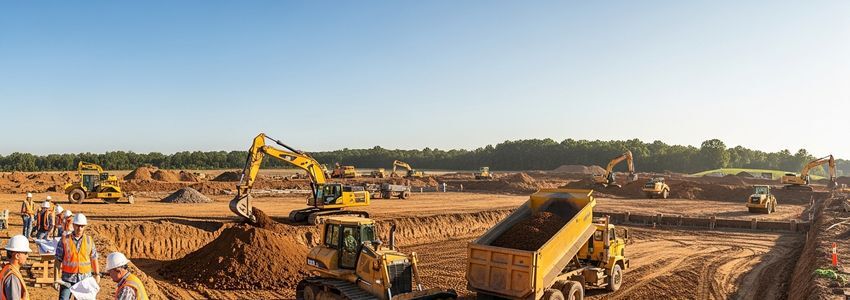
Construction Equipment Financing: A Real-World Case Study of Growth Done Right
When a construction business wants to grow, it almost always runs into the same wall: the equipment needed to win bigger contracts costs hundreds of thousands of dollars. For most small and mid-size contractors, that capital simply does not exist in a bank account. Construction equipment financing is the solution that breaks through this barrier - and for many firms, it is the direct reason they are still in business and expanding today.
This guide walks through how construction equipment financing works in practice, using a realistic case study of a small contractor who used financing to go from a two-machine operation to a full fleet capable of landing commercial contracts. Along the way, we cover financing types, qualification requirements, real-world numbers, and how Crestmont Capital helps construction businesses get the equipment they need to grow.
In This Article
- What Is Construction Equipment Financing?
- Case Study: How One Contractor Scaled Rapidly
- Types of Construction Equipment Financing
- How Construction Equipment Financing Works
- Key Benefits for Construction Businesses
- Who Qualifies?
- Financing vs. Buying vs. Leasing
- How Crestmont Capital Helps
- Real-World Scenarios
- How to Get Started
- Frequently Asked Questions
What Is Construction Equipment Financing?
Construction equipment financing is a type of business loan specifically designed to fund the purchase, upgrade, or replacement of heavy machinery and job-site tools. Instead of paying the full purchase price upfront, a business finances the equipment and repays the lender over a fixed term - typically 24 to 84 months - while putting the equipment to work immediately.
Common equipment financed through these programs includes excavators, bulldozers, loaders, cranes, concrete pumps, backhoes, dump trucks, pavers, and graders. The equipment itself typically serves as collateral, which makes approval easier than many traditional business loans and allows lenders to offer competitive rates even to younger companies.
The construction industry runs on heavy iron. A contractor without the right equipment is effectively locked out of larger commercial projects, government contracts, and specialty work that commands premium pricing. Financing solves that problem by converting a large capital outlay into predictable monthly payments that are covered by the revenue the equipment generates.
Industry Insight: According to the Equipment Leasing and Finance Association (ELFA), the construction sector accounts for over $50 billion in equipment finance volume annually in the United States - making it one of the most active industries for equipment lending.
Case Study: How One Contractor Scaled from Two Machines to a Full Fleet
The Starting Point
Consider a realistic scenario that plays out across the country every year. A general contractor based in the Southeast - let's call him Marcus - started his company five years ago with two pieces of used equipment: a compact excavator and a skid steer. He was doing small residential site work and utility trenching, billing around $800,000 per year.
Marcus knew commercial projects paid better. A municipal sidewalk replacement contract in his area was worth $1.4 million. A commercial parking lot expansion project was worth $900,000. The problem? Both required equipment he did not own: a full-size hydraulic excavator, a motor grader, and a tandem-axle dump truck. Combined retail cost: approximately $620,000.
Paying cash was not an option. Saving up would have taken three years - and the contracts would be gone by then. Marcus needed another path.
The Financing Approach
Marcus contacted Crestmont Capital and applied for construction equipment financing. Within 48 hours, he had a term sheet. Within a week, he was approved for $590,000 in equipment financing - enough to cover the three pieces of machinery with a small down payment. The loan was structured over 60 months at a competitive rate, giving him monthly payments of approximately $11,800.
His first contract win - the municipal sidewalk project - generated $1.4 million over seven months. His equipment payment for those seven months totaled $82,600. The equipment paid for itself in the first job.
The Growth Impact
Within 18 months of completing the financing, Marcus's business had grown from $800,000 in annual revenue to $2.7 million. He had added four full-time employees, qualified for a larger bonding limit, and was bidding on projects that had been completely inaccessible before. His equipment fleet went from two machines to seven, with the original two pieces now fully paid off and three more acquired through a second financing round.
His story is not unique. It is the standard growth arc for construction companies that use financing strategically rather than waiting to save capital that competes against operating expenses and payroll every month.
By the Numbers
Construction Equipment Financing - Key Statistics
$50B+
Annual construction equipment finance volume in the U.S.
80%
Of U.S. businesses use some form of financing or leasing for equipment
2-7 Days
Typical approval timeline for construction equipment financing
$5K-$10M+
Financing range available for construction equipment
Types of Construction Equipment Financing
Not all construction equipment financing works the same way. Contractors have several distinct options, each with different structures, benefits, and ideal use cases. Understanding these options helps you choose the right product for your specific situation.
Equipment Loans
An equipment loan works like a traditional secured loan. The lender advances the purchase price of the equipment, and the borrower repays it over a fixed term with interest. At the end of the loan term, the business owns the equipment outright. Equipment loans are ideal for machinery that retains value well, equipment you plan to use long-term, and situations where ownership is important for resale or collateral purposes.
Equipment Leasing
With an equipment lease, the lender purchases the equipment and rents it to the business for a set period. The business makes monthly lease payments but does not own the equipment during the lease term. At the end of the lease, options typically include purchasing the equipment at fair market value or a predetermined price, renewing the lease, or returning the equipment. Leasing often comes with lower monthly payments than loans and works well for equipment that becomes obsolete quickly, like telematics systems, surveying technology, or specialized environmental equipment.
Operating Leases vs. Finance Leases
Operating leases keep equipment off the balance sheet (under certain accounting standards) and are treated as operating expenses. Finance leases are treated more like ownership and appear on the balance sheet. Your accounting team can help you determine which structure is better for your financial reporting.
Sale-Leaseback
If you already own equipment and need capital, a sale-leaseback allows you to sell the equipment to a lender and immediately lease it back. You receive a lump sum of cash, continue using the equipment, and make monthly payments. This is a powerful way to unlock capital from machinery you already own without disrupting operations.
Ready to Finance Your Next Piece of Equipment?
Get fast, flexible construction equipment financing from the #1 business lender in the U.S. Apply in minutes with no obligation.
Apply Now →How Construction Equipment Financing Works
The process for securing construction equipment financing is straightforward, especially through an alternative lender like Crestmont Capital. Most approvals happen within 24 to 72 hours, and funding can be completed in as little as one week.
Quick Guide
How Construction Equipment Financing Works - At a Glance
Determine what you need to buy, the vendor or auction source, and the price or estimated value.
Complete a short application including business information, revenue figures, and the equipment details. Crestmont Capital typically requires minimal documentation for initial review.
Within 24 to 48 hours, you receive a proposed loan amount, rate, term length, and monthly payment. Review and accept if it works for your business.
Sign the loan documents, the lender funds the equipment purchase (or pays the vendor directly), and your equipment is ready to work.
Key Benefits of Construction Equipment Financing
Construction equipment financing delivers advantages that go well beyond simply getting a piece of machinery. Here is what makes it such a powerful growth tool for contractors:
Preserves Working Capital
Cash is the lifeblood of a construction business. Between payroll, materials, insurance, fuel, and bonding costs, a contractor's cash reserves are constantly under pressure. Paying $300,000 out of pocket for an excavator would drain a small operation. Financing preserves that capital for operations and opportunities instead.
Enables Immediate Revenue Generation
Equipment does not sit idle after financing closes. It goes to work on jobs that generate revenue from day one. In most cases, the revenue a piece of financed equipment generates far exceeds the monthly payment - making financing cash-flow positive almost immediately for working contractors.
Supports Bonding and Insurance Requirements
Larger contracts often require performance bonds and higher insurance coverage. Having a documented, owned (or financed) fleet of equipment on your balance sheet strengthens your bonding capacity and signals financial stability to sureties and insurance carriers.
Builds Business Credit
Consistent, on-time payments on an equipment loan build your business credit profile. Stronger credit opens doors to larger financing lines, better interest rates, and more flexible terms in the future. Many contractors use equipment financing as the foundation for building commercial credit before they need it for larger loans.
Potential Depreciation Advantages
Financed equipment can be depreciated over its useful life under applicable accounting rules. Your CPA or financial advisor can advise on how depreciation schedules apply to your specific situation.
Key Stat: The ELFA reports that 8 out of 10 U.S. companies that use equipment financing say it has a direct positive impact on their ability to manage cash flow and respond to business opportunities. In construction - a cash-intensive industry - that impact is especially pronounced.
Who Qualifies for Construction Equipment Financing?
One of the most common misconceptions is that equipment financing is only available to large, established companies. In reality, many lenders - including Crestmont Capital - work with small and mid-size construction businesses, including those with limited credit history or thin balance sheets.
General Qualification Guidelines
Most equipment financing programs look at a combination of factors. Time in business is important: most lenders prefer at least 12 to 24 months of operating history, though startup programs exist for newer companies. Credit score matters, but equipment financing is generally more accessible than unsecured loans because the equipment itself secures the loan. A score of 600 or above is typically sufficient for most programs, with better rates available above 650.
Revenue and cash flow are examined to ensure the business generates enough income to service the debt. For construction businesses, lenders typically want to see monthly revenue of at least two to three times the proposed monthly payment. Industry experience and the value of the specific equipment being financed also factor into underwriting decisions.
New Businesses and Startups
Even if your business is less than a year old, financing options may be available. Startup equipment financing programs often require higher credit scores, larger down payments, or personal guarantees, but they allow newer contractors to enter the market with professional-grade equipment rather than renting at high daily or weekly rates.
| Factor | Typical Minimum | Ideal Range |
|---|---|---|
| Time in Business | 12 months | 2+ years |
| Credit Score | 580-600 | 650+ |
| Monthly Revenue | 2-3x payment | 4-5x payment |
| Down Payment | 0-10% | 10-20% |
| Equipment Type | New or used | New or quality used |
| Loan Term | 24 months | 36-84 months |
Financing vs. Buying vs. Leasing: Which Is Right for You?
Contractors regularly debate whether to finance, buy outright, or lease. The right answer depends on your cash position, how long you plan to use the equipment, and whether future ownership matters to your business model.
Buying Outright
Paying cash eliminates interest costs and gives immediate full ownership, but it depletes working capital and is only realistic for businesses with strong cash reserves. For equipment that costs $200,000 or more, buying outright can create a dangerous cash shortage that makes it impossible to cover ongoing operational expenses. Most financial advisors recommend against it unless the business has multiple months of operating expenses in reserves after the purchase.
Equipment Financing (Loan)
Financing preserves cash while building equity in the equipment. Monthly payments are predictable, the interest rate is fixed, and the business owns the equipment at payoff. This is the preferred structure for equipment you plan to use for many years and that retains significant residual value - excavators, loaders, dump trucks, and large cranes all fit this profile.
Equipment Leasing
Leasing offers lower monthly payments than financing and allows you to upgrade to newer equipment at the end of the lease term. It works well for technology-heavy equipment that becomes obsolete, specialty tools used on specific project types, or situations where keeping the balance sheet cleaner is a priority. However, you do not build equity and may face restrictions on hours, modifications, and end-of-lease conditions.
Pro Tip: Many construction businesses use a hybrid approach - financing core fleet equipment they plan to own long-term while leasing specialty items (GPS machine control systems, telematics hardware) that benefit from regular upgrades.
How Crestmont Capital Helps Construction Businesses
Crestmont Capital is rated the #1 business lender in the U.S. and specializes in providing fast, flexible financing solutions to construction companies at every stage of growth. Whether you are purchasing your first piece of heavy equipment or expanding an existing fleet, Crestmont Capital's team works directly with contractors to structure financing that fits their cash flow and project timelines.
Unlike traditional bank lenders that impose rigid documentation requirements and lengthy approval timelines, Crestmont Capital offers a streamlined process designed for the pace of the construction industry. Applications can be submitted in minutes, term sheets are issued within 24 to 48 hours, and funding typically closes within a week.
Crestmont Capital finances a wide range of construction equipment through its construction equipment financing programs, including excavators, bulldozers, loaders, graders, dump trucks, concrete pumps, cranes, and more. For larger fleet needs, commercial fleet financing is available to cover multiple vehicles and machines under a single program.
Contractors who need additional working capital beyond equipment - to cover payroll during a project, purchase materials before a draw, or bridge cash flow gaps between invoices - can also access unsecured working capital loans and business lines of credit through Crestmont Capital.
Get the Equipment Your Business Needs
Crestmont Capital finances construction equipment from $5,000 to $10 million and beyond. Fast approvals. Flexible terms. No hidden fees.
Apply Now →Real-World Scenarios: How Contractors Use Construction Equipment Financing
Scenario 1: The Excavation Contractor Scaling to Commercial Work
A residential excavation contractor with $1.2 million in annual revenue identifies a commercial opportunity in site preparation for a shopping center development. The contract requires a 50,000-pound excavator and a motor grader - equipment costing $480,000 combined. The contractor finances both pieces through Crestmont Capital with a 60-month term, monthly payment of $9,200, and closes the contract within three weeks. The project generates $850,000 over five months.
Scenario 2: The Paving Company Adding a Second Crew
A paving company that runs one crew has enough leads to support two. Adding a second crew requires a second paver, roller, and support truck - approximately $310,000 in equipment. The owner finances the package through equipment financing and uses the second crew to take on $1.6 million in additional paving contracts that would otherwise have gone to competitors. The equipment is paid off in four years while the business doubled its revenue.
Scenario 3: The Demolition Contractor Replacing Aging Equipment
A demolition contractor's primary excavator is 14 years old and beginning to require expensive repairs. Replacing it before a major breakdown preserves project schedules and avoids emergency repair costs. The contractor refinances the old machine (sale-leaseback) to generate cash and uses that plus new financing to acquire a late-model replacement. Monthly costs are slightly higher, but reliability increases dramatically and repair bills disappear.
Scenario 4: The Landscaping Company Breaking into Construction
A commercial landscaping company with strong financial statements wants to add hardscaping and grading capabilities. Financing a compact excavator, mini skid steer, and dump trailer for $85,000 allows them to self-perform work they currently subcontract, increasing their margin by 22% on every job that uses these capabilities.
Scenario 5: The Concrete Contractor Expanding into Flatwork
A concrete contractor focused on foundations and walls wants to add flatwork (parking lots, sidewalks, warehouse floors). The equipment addition - a laser screed, ride-on trowel, and concrete vibrators - costs $95,000. Financing at 48 months makes the monthly payment $2,400, easily covered by the increased volume of flatwork contracts the new capability unlocks.
Scenario 6: The Utility Contractor Winning Public Bids
A utility contractor bids on a $2.8 million water main replacement project. Winning it requires a trenching machine and a vacuum excavation unit totaling $620,000. The contractor secures financing for both, wins the bid, and completes the project in eight months - generating a net profit of $390,000 after all costs including equipment payments.
How to Get Started
Complete our quick application at offers.crestmontcapital.com/apply-now - takes just a few minutes.
A Crestmont Capital advisor will review your equipment needs and match you with the right financing structure and terms.
Receive your approval, close the financing, and put your equipment to work on your next contract - often within days of application.
Frequently Asked Questions
Start Growing Your Construction Business Today
Crestmont Capital has helped thousands of contractors finance the equipment that fuels their growth. Get your fast decision today.
Apply Now →Disclaimer: The information provided in this article is for general educational purposes only and is not financial, legal, or tax advice. Funding terms, qualifications, and product availability may vary and are subject to change without notice. Crestmont Capital does not guarantee approval, rates, or specific outcomes. For personalized information about your business funding options, contact our team directly.








