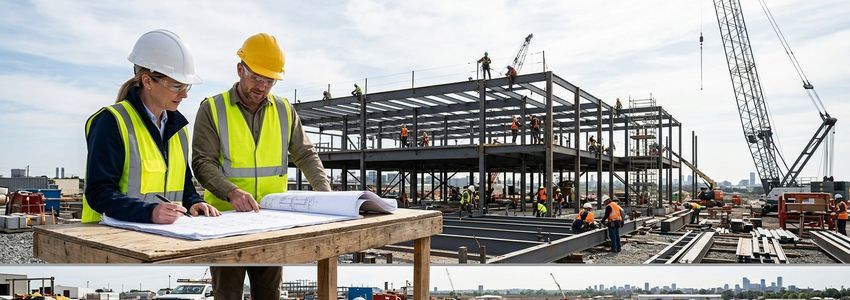
Running a construction company means managing a constant tension between the money you have and the money you need. Projects take months to complete, but your costs start on day one. You are paying for labor, materials, equipment, and insurance long before a client cuts you a final check. That gap is not a sign of poor management. It is the structural reality of how construction work gets financed, and it is exactly why construction company financing has become one of the most in-demand categories of business lending in the United States.
Whether you are a general contractor bidding on a $5 million commercial project, a specialty subcontractor managing seasonal cash swings, or a builder looking to purchase a new excavator before a big job kicks off, there are financing options built specifically for your situation. This guide breaks down every major loan type, what you need to qualify, and how to match the right product to your actual business needs.
In This Article
- Why Construction Financing Is Different
- Types of Business Loans for Construction Companies
- How to Qualify for a Contractor Business Loan
- Real-World Financing Scenarios
- Comparing Your Construction Financing Options
- How Crestmont Capital Helps Construction Businesses
- How to Get Started
- Frequently Asked Questions
Why Construction Company Financing Is Different
Construction businesses face financing challenges that simply do not exist in most other industries. The project-based revenue model creates long stretches where significant expenses must be paid with no corresponding income. A contractor who wins a $2 million hospital renovation may spend $300,000 in the first 60 days on mobilization, materials, and labor before receiving a single progress payment from the owner.
On top of that, the industry runs on retainage. General contractors routinely hold back 5 to 10 percent of each payment to subcontractors until final completion. This means a subcontractor finishing their scope of work in month three of a 12-month project may wait another nine months to collect their full payment. That is not unusual. That is standard practice.
Industry Insight: According to the U.S. Census Bureau, construction is the second-largest industry by revenue in the United States, generating over $2 trillion annually. Yet access to capital remains one of the top challenges cited by construction business owners, with cash flow gaps ranking as the primary reason small contractors fail in their first five years.
The equipment demands make things even more complex. Heavy machinery such as excavators, cranes, and concrete pumps can cost hundreds of thousands of dollars each. Buying outright ties up capital that could fund three more jobs. Leasing or financing equipment keeps cash available but adds monthly obligations. Most successful contractors use a blend of owned and financed equipment, which requires careful planning and access to multiple credit facilities.
All of these dynamics explain why construction company financing is not a one-product solution. The best contractors in the country typically maintain access to several financing products simultaneously, drawing on each one for the specific purpose it was designed to serve.
Construction Financing Built for Contractors
Get fast, flexible funding from the #1 business lender in the U.S. Apply in minutes. No obligation.
Apply Now →Types of Business Loans for Construction Companies
The right loan depends on what you are trying to accomplish. Here is a breakdown of the most common construction financing products and the specific situations each one handles best.
Working Capital Loans
A working capital loan is a short- to medium-term loan designed to cover operating expenses during revenue gaps. For construction companies, this typically means payroll, subcontractor payments, insurance premiums, and materials purchases between progress billings. Loan amounts generally range from $25,000 to $500,000, with terms from 6 to 24 months.
Working capital loans are funded quickly, often within 24 to 72 hours of approval, and typically require minimal documentation compared to traditional bank loans. They are not meant for buying equipment or funding expansion. They are a cash flow bridge, and they work best when you know exactly how and when you will repay them. Learn more about unsecured working capital loans and how they apply to contractor operations.
Business Lines of Credit
A business line of credit gives you access to a revolving pool of funds you can draw from as needed and repay over time. Unlike a term loan, you only pay interest on what you have drawn. This makes it ideal for construction companies that face unpredictable cash demands month to month.
A general contractor managing three simultaneous projects might draw $150,000 in week one to cover mobilization costs, repay $80,000 when the first progress payment arrives, then draw again the following month for the next phase. The business line of credit functions like a financial safety net that you can use and replenish repeatedly throughout the year.
Construction Equipment Financing
Equipment is often the single largest capital expenditure for a construction business. Financing allows you to acquire the machinery you need for a job while spreading the cost over the equipment's useful life. Interest paid on equipment loans is a business expense, and the equipment itself serves as collateral, which typically makes these loans easier to qualify for than unsecured products.
Crestmont Capital offers dedicated construction equipment financing covering everything from compact skid steers to large tower cranes. Terms typically range from 24 to 72 months, with financing available for new and used equipment. If you are funding a down payment for equipment, a separate working capital loan may also help.
Heavy Machinery Financing
For contractors working in earthmoving, demolition, or large-scale infrastructure, the equipment requirements go beyond standard construction tools. Specialty financing products are available for dozers, excavators, graders, and other heavy iron. Heavy machinery financing is structured around the asset's value and the project it will support, with lenders often willing to look at the contract value of upcoming work as part of the underwriting decision.
SBA Loans for Contractors
Small Business Administration loans are government-backed loans offered through approved lenders. They carry lower interest rates than most alternative financing products and longer repayment terms, sometimes up to 25 years for real estate or 10 years for working capital. The tradeoff is a longer application process and more stringent qualification requirements.
For established construction companies with solid financials, SBA loans can be a powerful tool for funding major equipment purchases, acquiring another company, or financing a commercial building. The SBA 7(a) loan program is the most commonly used for contractor working capital and equipment needs. According to the SBA's official loan programs page, 7(a) loans can fund amounts up to $5 million with competitive rates.
Invoice Financing and Factoring
When slow-paying clients, general contractors holding retainage, or disputed pay applications create a cash crunch, invoice financing gives you immediate access to money you have already earned. You submit outstanding invoices to a lender, who advances 70 to 90 percent of the invoice value immediately. When the client pays, you receive the remaining balance minus a small fee.
This is particularly valuable for subcontractors dealing with slow-paying GCs. Rather than waiting 60 to 90 days for payment, you can access working capital today. Invoice financing turns your receivables into immediate cash without adding traditional debt to your balance sheet.
Commercial Real Estate Financing
Many construction companies eventually want to own their own shop, office, or yard space. Commercial real estate financing allows you to purchase or refinance a facility rather than paying rent to a landlord. This builds equity over time and eliminates the risk of a landlord not renewing your lease when you have heavy equipment stored on the premises.
Quick Guide
How to Apply for Construction Company Financing - At a Glance
Determine if you need working capital, equipment, a line of credit, or invoice financing. The right product depends on your specific situation.
Collect 3-6 months of bank statements, recent tax returns (if available), contractor license, and any active contract or bid documents for the job you are financing.
Apply online in minutes. Many lenders, including Crestmont Capital, can review and pre-approve your application the same day.
A funding specialist reviews your offer with you, explaining rates, terms, and repayment structure. No obligation until you sign.
Funds are deposited directly to your business account, often within 24 to 72 hours of approval. Put the capital to work immediately.
How to Qualify for a Contractor Business Loan
Qualification requirements vary by lender and loan type, but here is what most construction business lenders will evaluate when reviewing your application.
Time in Business
Most lenders require a minimum of 6 to 12 months in business for working capital products. SBA loans and traditional bank financing typically want to see at least 2 years of operating history. Newer contractors may have more limited options but can often qualify through specialty lenders who focus on construction industry experience rather than credit history alone.
Annual Revenue
Minimum revenue thresholds vary. Alternative lenders often set the bar at $150,000 to $250,000 in annual gross revenue. For larger loan amounts, expect lenders to want $500,000 or more. The good news for contractors is that project contracts can sometimes substitute for revenue history, particularly if you have signed agreements for upcoming work that justify the loan amount.
Credit Score
Personal credit scores play a significant role for small construction companies where the owner and the business are financially intertwined. A score above 650 will open most alternative lending products. Scores above 700 give access to SBA loan programs and bank financing. Even borrowers with scores in the 580 to 640 range can often qualify for equipment financing, since the asset serves as collateral.
If your credit is a concern, reviewing how bad credit equipment financing works may open doors you did not know were available.
Cash Flow and Bank Statements
Alternative lenders place heavy emphasis on bank statements because they show real-time business health. Lenders want to see consistent deposits, manageable overdrafts, and average daily balances that demonstrate the business can service new debt. Three to six months of statements is standard. Some programs look at 12 months for larger requests.
Contractor License and Bonding
Most lenders financing construction companies will verify your contractor license is current and in good standing. If your project requires bonding, some lenders specialize in financing the bonding premium so you can secure the bond needed to start the job before your financing fully kicks in.
Pro Tip: Organize your financial documents before applying. Contractors who submit clean, complete applications with contracts, licenses, and bank statements get faster approvals and better offers. Lenders reward preparedness with better terms.
Real-World Financing Scenarios for Construction Companies
Abstract descriptions of loan types only go so far. Here is how construction company financing works in practice across four common situations contractors face every year.
Scenario 1: The Payroll Gap Before a Progress Payment
A mid-sized general contractor is three months into a $1.8 million school renovation. Weekly payroll runs $85,000. The next scheduled progress payment from the school district is 23 days away. The contractor has $110,000 in the business account. After paying two weeks of payroll and covering materials deliveries, there will not be enough to meet the third week's obligation.
Solution: A $150,000 working capital loan funded in 48 hours covers payroll and materials until the progress payment arrives. The contractor pays back the loan immediately upon receiving the draw, keeping total interest cost minimal. This is exactly the scenario working capital loans are designed for.
Scenario 2: Equipment Purchase Before a Large Contract
A site preparation contractor has just been awarded a $3.2 million contract to grade a 40-acre commercial development. The contract requires excavation equipment the company does not own. Renting for the full project duration would cost $280,000. Purchasing a quality excavator costs $320,000 but adds a productive asset to the fleet for future jobs.
Solution: Equipment financing at 60 months covers the excavator with a manageable monthly payment. The equipment pays for itself on this job alone and continues generating revenue for years afterward. The contractor preserves cash flow and gains a permanent asset. This is why dedicated construction equipment financing is often more valuable than a general working capital loan for major purchases.
Scenario 3: Slow-Paying GC Causing Subcontractor Cash Crunch
An electrical subcontractor completed their rough-in scope on a 200-unit apartment project six weeks ago. The invoice for $175,000 has been submitted to the general contractor. Payment terms are net-60, but the GC has been running at net-90 due to the owner's payment disputes. The subcontractor has three more active projects requiring materials purchases and payroll this week.
Solution: Invoice financing against the $175,000 outstanding receivable provides an immediate advance of $140,000 (80 percent). The subcontractor pays their obligations, the GC eventually pays the invoice, and the financing company collects their fee from the balance. No loans on the books, no waiting, no cash crisis. This is what invoice financing for construction businesses solves.
Scenario 4: Expansion Into a New Market
A commercial roofing contractor based in Dallas has been approached about entering the Houston market, where a client has three upcoming commercial properties. Expanding requires hiring a site supervisor, purchasing additional equipment, funding marketing, and covering the startup costs of a new operational territory. Total need: $400,000 over 18 months.
Solution: A combination of an SBA 7(a) loan for the equipment and an unsecured working capital loan for the operating costs provides the capital stack needed to enter the new market without straining existing operations. According to Forbes Finance Council, multi-product financing strategies are increasingly common among construction firms scaling beyond a single market.

Comparing Your Construction Financing Options
Every product in the construction financing toolkit has specific strengths and limitations. Use this comparison to identify which options fit your situation best before you apply.
| Loan Type | Best For | Typical Amount | Speed | Credit Req. |
|---|---|---|---|---|
| Working Capital Loan | Payroll, materials, subcontractor payments | $25K - $500K | 24-72 hours | 580+ |
| Business Line of Credit | Ongoing, revolving cash flow management | $10K - $250K | 3-7 days | 620+ |
| Equipment Financing | Machinery, vehicles, tools | $10K - $5M+ | 2-5 days | 580+ |
| Invoice Financing | Slow-paying clients and retainage | Up to 90% of invoice value | 24-48 hours | No minimum (invoice-based) |
| SBA 7(a) Loan | Long-term capital, real estate, major equipment | Up to $5M | 30-90 days | 680+ |
| Revenue-Based Financing | Contractors with strong revenue, flexible repayment | $10K - $500K | 24-72 hours | 550+ |
Note that construction company financing is rarely a single product decision. Most established contractors maintain both a line of credit for daily operations and a separate equipment financing facility. Adding invoice financing during peak receivables periods creates a flexible three-layer capital structure that handles virtually any cash flow scenario.
Build Your Construction Financing Stack
Crestmont Capital helps contractors access multiple financing products in one place. Talk to a specialist about building your capital strategy.
Get Your Options →How Crestmont Capital Helps Construction Businesses
Crestmont Capital is one of the leading business lenders in the United States, with a strong focus on the construction and contractor market. We understand that your revenue cycle does not match a standard calendar, that your equipment needs are specific and often urgent, and that traditional banks are often too slow or too conservative to meet your real-world demands.
Here is what working with Crestmont Capital looks like for construction companies:
- Fast approvals: Many contractors get approved the same day they apply. Funds typically arrive within 24 to 72 hours.
- Multiple product options: We match you with the right product for your situation, whether that is working capital, equipment financing, an invoice advance, or a line of credit.
- Construction industry expertise: Our specialists understand project-based cash flow, retainage, and bid cycles. You do not have to explain your business model to us.
- No-obligation review: You can apply, get an offer, and review the terms with no commitment to accept. We believe you should see exactly what you qualify for before making any decisions.
- Flexible qualification: We work with contractors who have limited credit history, newer businesses, and non-traditional revenue cycles that do not fit a traditional bank's underwriting model.
Beyond general construction financing, Crestmont Capital also offers specialized products for construction company business loans tailored to your industry, along with dedicated equipment programs for every type of heavy iron your operation depends on.
According to CNBC's Small Business coverage, construction and contracting businesses consistently rank among the most capital-intensive small businesses in America, with the median contractor needing access to $250,000 or more in working capital to sustain growth. That is exactly the segment Crestmont Capital was built to serve.
If you have worked with a previous lender and found the process slow or the terms inflexible, you are not alone. Many contractors come to Crestmont Capital after experiencing frustrating rejections or overly conservative approvals from their local bank. We move at the speed your business operates.
Did You Know? Contractors who maintain a relationship with a business lender before they urgently need capital almost always get better terms than those who apply in a crisis. Setting up a line of credit now, even if you do not draw on it immediately, means the money is ready when a bid lands or a cash gap appears.
How to Get Started
Complete our quick application at offers.crestmontcapital.com/apply-now in minutes. Have 3 months of bank statements and basic business information ready.
A Crestmont Capital advisor who understands the contractor business will review your needs and match you with the best financing option for your situation.
Receive your funds, often within 24 to 72 hours of approval. Deploy capital immediately to cover payroll, purchase equipment, or bridge your next cash flow gap.
Construction Company Financing: The Bottom Line
Construction company financing is not a luxury. For most contractors, it is the operational infrastructure that keeps projects running, keeps workers paid, and keeps the business positioned to take on the next opportunity. The cash flow cycle in construction is long and unforgiving. Waiting 60 to 90 days for payment while your payroll obligations come due every two weeks is simply the reality of the industry.
The contractors who grow consistently are the ones who treat access to capital as seriously as they treat their equipment maintenance schedule. They know which products they need, they maintain relationships with lenders before the need becomes urgent, and they use financing strategically rather than reactively.
Crestmont Capital provides the full range of construction company financing options that growing contractors depend on. Whether you need a working capital bridge, equipment financing for a new excavator, or an invoice advance to survive a slow-paying client, we have the product and the expertise to get you funded quickly. Apply today and find out what your construction business qualifies for.
Frequently Asked Questions
Ready to Fund Your Next Project?
Apply in minutes and get a same-day decision on construction company financing from Crestmont Capital.
Apply Now →Disclaimer: The information provided in this article is for general educational purposes only and is not financial, legal, or tax advice. Funding terms, qualifications, and product availability may vary and are subject to change without notice. Crestmont Capital does not guarantee approval, rates, or specific outcomes. For personalized information about your business funding options, contact our team directly.