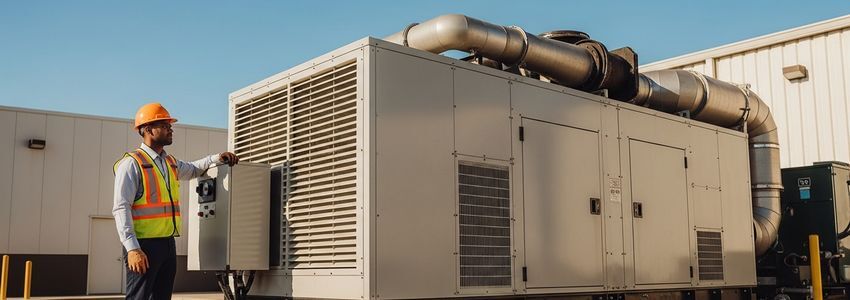
In today's fast-paced business environment, uninterrupted power is not a luxury-it's a necessity. A sudden power outage can bring operations to a grinding halt, leading to lost revenue, damaged inventory, data loss, and a tarnished reputation. For industries ranging from healthcare and manufacturing to restaurants and data centers, the cost of a single hour of downtime can be catastrophic. This is where a reliable backup power source, such as a commercial or industrial generator, becomes a mission-critical asset.
However, these powerful machines represent a significant capital investment. A commercial-grade generator can cost anywhere from $10,000 to over $500,000, depending on its size, fuel type, and features. For many businesses, paying this amount upfront in cash isn't feasible or financially prudent. It can deplete working capital needed for growth, inventory, or payroll.
This is precisely where generator financing comes in. It provides a strategic pathway for businesses of all sizes to acquire the essential power-generation equipment they need without draining their cash reserves. By spreading the cost over manageable monthly payments, you can protect your business from power disruptions while maintaining healthy cash flow. This comprehensive guide will walk you through everything you need to know about financing a generator, from how it works to the various options available and how to qualify.
In This Article
What Is Generator Financing?
Generator financing is a specific type of business funding designed to help companies purchase new or used commercial and industrial generators. Instead of paying the full purchase price upfront, a business can secure a loan or lease from a lender like Crestmont Capital to cover the cost. The business then repays the lender in regular installments over a predetermined period, typically ranging from 24 to 84 months.
At its core, generator financing is a form of equipment financing. The generator itself serves as the collateral for the loan. This is a significant advantage for many businesses because it often means that no additional collateral, such as real estate or other business assets, is required. If the business were to default on the loan, the lender's recourse would be to repossess the generator. This secured nature of the financing often leads to higher approval rates and more favorable terms compared to unsecured business loans.
This type of financing is not just for the generator unit. Comprehensive financing packages can often cover "soft costs" associated with the purchase, including:
- Installation: The cost of professional installation, including site preparation, electrical work, and fuel line connections.
- Delivery and Freight: The expense of transporting a large, heavy piece of equipment to your location.
- Automatic Transfer Switch (ATS): The critical component that automatically switches your business's power source from the grid to the generator during an outage.
- Extended Warranties and Service Contracts: Additional coverage to protect your investment and ensure its longevity.
By bundling these costs into a single loan, businesses can acquire a complete, turnkey power solution with one simple monthly payment. This simplifies budgeting and eliminates the need to source separate funding for different parts of the project. Understanding the fundamentals of equipment financing is a great first step, and you can learn more in our detailed guide, Equipment Financing 101: How It Works.
Why Businesses Need Generator Financing
The need for reliable backup power has never been greater. An increasingly strained national power grid, combined with more frequent and severe weather events, has led to a rise in power outages across the country. For a business, downtime is not just an inconvenience-it's a direct threat to the bottom line. Generator financing provides the means to mitigate this risk effectively.
Here are the primary reasons why businesses across various sectors invest in backup and industrial generators through financing:
- Preventing Revenue Loss: This is the most direct and compelling reason. Every minute your business is closed due to a power outage is a minute you aren't serving customers, producing goods, or billing for services. A restaurant can't cook, a retail store can't process payments, and a consulting firm can't access its servers. A generator ensures continuity, allowing you to remain open and operational, capturing revenue that would otherwise be lost forever.
- Protecting Perishable Inventory: For businesses like restaurants, grocery stores, florists, and pharmaceutical labs, a power outage can lead to thousands of dollars in spoiled inventory. Refrigeration and climate control systems are vital. A backup generator is an insurance policy against these catastrophic losses, and financing makes this protection affordable.
- Ensuring Operational Continuity: In many industries, continuous operation is non-negotiable. Manufacturing plants rely on uninterrupted power to keep production lines moving. A sudden shutdown can damage equipment, ruin a batch of products, and cause lengthy delays. Data centers require constant power to prevent data loss and service interruptions for their clients, where downtime can cost millions per hour.
- Maintaining Safety and Security: Power outages can create significant safety risks. Emergency lighting, security systems, fire suppression systems, and access control all depend on electricity. For healthcare facilities like hospitals and clinics, a generator is a matter of life and death, powering life-support machines and critical medical equipment.
- Meeting Regulatory and Compliance Requirements: Certain industries are legally or contractually required to have a backup power source. Healthcare facilities (HIPAA), financial institutions, and government contractors often have strict uptime and data integrity mandates that necessitate a generator. Financing helps these businesses meet compliance without a massive capital expenditure.
- Powering Remote or Off-Grid Operations: For industries like construction, agriculture, mining, and events, grid power may not be available at the job site. Industrial generator financing allows these companies to acquire portable or prime power generators to run their heavy equipment and operations anywhere.
- Preserving Working Capital: This is the core financial benefit. Even if a business has enough cash to buy a generator outright, it's often not the wisest use of funds. That cash could be better invested in marketing, hiring new staff, expanding inventory, or other growth-driving activities. Financing keeps your cash liquid and available for these opportunities, turning a large capital expense into a manageable operating expense.
According to a report from CNBC, power outages cost the U.S. economy an estimated $150 billion annually. Investing in a generator is a proactive measure to protect your slice of the economy from becoming part of that statistic.
Ready to Secure Your Power Supply?
Don't let a power outage disrupt your business. Get a fast, free quote for generator financing today.
Apply Now →How Generator Financing Works
The process of obtaining financing for a commercial or industrial generator is designed to be straightforward and efficient, especially when working with a specialized lender like Crestmont Capital. While the specifics can vary slightly between lenders, the general steps are consistent. Here’s a breakdown of the typical journey from identifying your need to powering up your new equipment.
Step 1: Determine Your Power Needs and Select a Generator
Before you can apply for financing, you need to know what you're buying. Work with a qualified electrician or a generator vendor to assess your business's power requirements. This involves calculating the total wattage of all critical equipment you need to run during an outage. This will determine the necessary size (in kilowatts, or kW) of the generator. You'll also need to decide on the fuel type (diesel, natural gas, propane) and whether you need a standby model with an automatic transfer switch or a portable/towable unit.
Step 2: Get a Quote from a Vendor
Once you've identified the right generator, obtain a formal quote from one or more equipment vendors. This quote should be comprehensive, itemizing the cost of the generator unit, the automatic transfer switch (if applicable), delivery fees, and estimated installation costs. This document is crucial as it tells the lender exactly how much funding you require.
Step 3: Complete a Simple Financing Application
This is where you engage the lender. At Crestmont Capital, we've streamlined this process with a simple one-page online application. You'll provide basic information about your business, such as its legal name, address, time in business, and annual revenue. You'll also provide personal information as the owner. For most transactions under $250,000, this application is all that's needed to start the approval process.
Step 4: Underwriting and Credit Approval
Once your application is submitted, it goes to the lender's underwriting team. They will review your business's financial health and credit history to assess the risk of the loan. Key factors they consider include:
- Business and personal credit scores
- Time in business
- Annual revenue and cash flow
- Industry stability
Because the generator itself secures the loan, the underwriting process for equipment financing is often much faster and has more flexible credit requirements than a traditional bank loan. Lenders like Crestmont Capital can often provide a credit decision in just a few hours.
Step 5: Review Terms and Sign Documents
Upon approval, the lender will present you with one or more financing options. These documents will clearly outline the term length (e.g., 60 months), the fixed monthly payment amount, and any interest rate or fees. You can review these options and select the one that best fits your budget. Once you've chosen, you'll sign the financing agreement, which can typically be done electronically for maximum convenience.
Step 6: Funding and Equipment Purchase
After the signed documents are received, the financing is finalized. The lender will then coordinate directly with your chosen generator vendor. They will issue a purchase order and transfer the funds directly to the vendor to pay for the equipment. This process is seamless for you-you don't have to handle the large sum of money yourself. The vendor, once paid, will arrange for the delivery and installation of your generator.
Step 7: Begin Your Repayment Schedule
Your first monthly payment will typically be due about 30 days after the financing documents are signed and the equipment is delivered. You will then continue to make these fixed monthly payments for the duration of your term, allowing you to budget with certainty.
By the Numbers
Generator Financing - Key Statistics
$130 Billion
Annual cost of weather-related power outages to the U.S. economy, highlighting the need for backup power. (Source: U.S. Dept. of Energy)
67% Increase
Increase in major power outages caused by weather in the U.S. over the past decade, making generators more critical. (Source: Associated Press)
8 in 10
Nearly 80% of U.S. businesses use some form of financing to acquire equipment, including generators. (Source: Equipment Leasing and Finance Assoc.)
$10k - $500k+
The typical cost range for a commercial generator, making financing an essential tool for acquisition. (Source: Industry Averages)
Types of Generator Financing
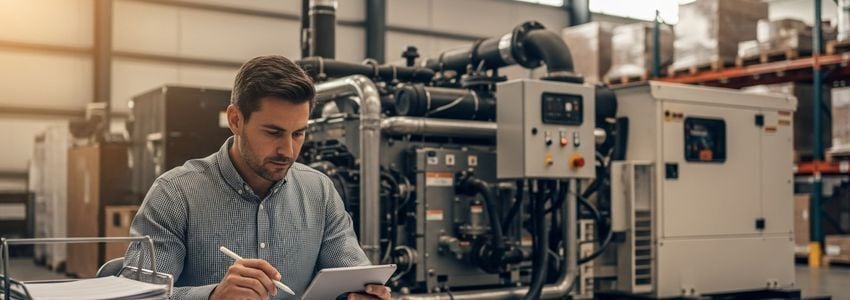
When you decide to finance a generator, you'll encounter several different financing products. Each has its own structure, benefits, and accounting implications. Understanding these options will help you choose the best path for your business's financial strategy. The most common types of commercial generator financing include Equipment Financing Agreements (EFAs), Capital Leases, and Operating Leases.
Equipment Financing Agreement (EFA)
An Equipment Financing Agreement, or EFA, is the most straightforward and popular form of equipment financing. It functions much like a traditional loan. The lender provides 100% of the funds to purchase the generator, and you make fixed monthly payments over a set term. With an EFA, you are the owner of the equipment from day one. The lender simply holds a security interest (a lien) on the generator until the loan is fully paid off.
Best for: Businesses that want to own the generator outright at the end of the term and take full advantage of tax depreciation benefits like Section 179.
Capital Lease (or Finance Lease)
A capital lease is very similar to an EFA and is often treated as a purchase for tax and accounting purposes. It's structured as a lease, but it meets certain criteria (as defined by accounting standards) that make it function like a loan. Typically, a capital lease will include a bargain purchase option at the end of the term, such as a $1 buyout. Once you make the final payment and pay the $1, you own the generator free and clear.
Best for: Businesses that want the benefits of ownership and depreciation, similar to an EFA, but may prefer the "lease" terminology or structure for internal reasons.
Operating Lease (or Fair Market Value Lease)
An operating lease functions more like a long-term rental. You pay a monthly fee to use the generator for a set period. These monthly payments are often lower than with an EFA or capital lease because you are only paying for the depreciation of the equipment during the lease term, not its full value. At the end of the term, you do not own the equipment. You typically have three options:
- Return the generator to the lender.
- Purchase the generator at its Fair Market Value (FMV).
- Renew the lease for an additional term.
Best for: Businesses that need the equipment for a specific project, want the lowest possible monthly payment, or want to avoid the responsibilities of ownership. It's also a good option for technology that may become outdated, though this is less of a concern for generators.
SBA Loans
Loans backed by the U.S. Small Business Administration (SBA), such as the 7(a) and 504 loan programs, can also be used to purchase major equipment like an industrial generator. SBA loans are known for their long repayment terms and competitive interest rates. However, the application process is significantly more complex and time-consuming than direct equipment financing. It requires extensive documentation and can take several weeks or even months to get approved and funded.
Best for: Well-established businesses with strong financials that are undertaking a larger project (e.g., purchasing a building and equipment simultaneously) and have the time to navigate the lengthy application process. For more information, you can visit the official SBA website.
Key Point: For most businesses seeking to finance just a generator, an Equipment Financing Agreement (EFA) offers the best combination of simplicity, speed, and ownership benefits.
| Feature | Generator Financing (EFA) | Cash Purchase | Generator Leasing (Operating) |
|---|---|---|---|
| Ownership | You own the equipment from day one. | You own the equipment from day one. | The lender owns the equipment. You are renting it. |
| Upfront Cost | Low. Often just the first payment. 100% financing is common. | High. The full purchase price is paid at once. | Low. Typically first and last month's payment. |
| Monthly Payment | Fixed, predictable payments covering principal and interest. | None. | Lower fixed payments, as you only pay for usage/depreciation. |
| Tax Benefits | Potential to deduct the full purchase price in year one (Section 179) and interest payments. | Potential to deduct the full purchase price in year one (Section 179). | Lease payments are typically treated as a deductible operating expense. |
| Cash Flow Impact | Minimal initial impact. Preserves working capital. | Major negative impact. Depletes cash reserves. | Minimal initial impact. Predictable operating expense. |
| End-of-Term | You own the generator free and clear. | You own the generator free and clear. | Return, renew, or purchase at Fair Market Value. |
Who Qualifies for Generator Financing?
One of the primary advantages of working with a direct lender like Crestmont Capital is the flexibility in qualification criteria. Unlike traditional banks that often have rigid, black-and-white requirements, alternative lenders can take a more holistic view of your business. However, there are several key factors that all lenders will assess during the underwriting process.
Credit Score: Both your personal and business credit scores are important. A strong credit history demonstrates a track record of responsible borrowing. While a high score (680+) will open up the best rates and terms, many lenders, including Crestmont, have programs for businesses with fair or challenged credit. We can often find financing solutions for credit scores as low as 550, especially since the generator itself provides security for the loan.
Time in Business: Lenders prefer to work with established businesses. The standard requirement is typically two years in business. This shows a history of operations and revenue generation. However, there are specific programs available for newer businesses and startups, especially if the owner has strong personal credit and relevant industry experience. Don't assume you won't qualify if you're under the two-year mark; it's always worth applying.
Annual Revenue: Your business's annual revenue is a key indicator of its ability to handle a new monthly payment. While there isn't a universal minimum, lenders will look for sufficient and consistent cash flow to comfortably cover the new debt obligation along with your existing expenses. Generally, businesses with at least $150,000 in annual revenue are well-positioned for approval.
Industry: The industry you operate in can play a role. Lenders are very comfortable financing generators for stable, essential industries like healthcare, manufacturing, construction, transportation, and food services. Businesses in industries perceived as higher risk may face more scrutiny, but financing is still widely available.
Down Payment: One of the most attractive features of generator financing is that a significant down payment is often not required. Many programs offer 100% financing, allowing you to acquire the equipment with little to no money out of pocket. In some cases, particularly for businesses with challenged credit or startups, a lender might ask for a 10-20% down payment or the first and last monthly payments upfront to reduce their risk.
At Crestmont Capital, we pride ourselves on our high approval rates. We work with a wide spectrum of businesses, from established corporations with excellent credit to newer companies building their financial history. Our goal is to find a small business financing solution that works for your unique situation.
Benefits of Financing vs. Buying Outright
When faced with the need for a commercial generator, business owners have two primary acquisition methods: buying it with cash or financing it. While paying cash might seem like the simplest option, financing often provides superior strategic and financial advantages for the business.
1. Immediate Cash Flow Preservation
This is the single most important benefit. A commercial generator is a major expense. Paying cash means a large, immediate drain on your bank account. This liquid capital could be used for other critical business needs: hiring employees, launching a marketing campaign, purchasing inventory, or simply having a safety net for unexpected expenses. Financing converts this large one-time cost into a small, predictable monthly payment, keeping your cash free to work for you and grow your business.
2. 100% Financing and Bundled Costs
Financing allows you to fund the entire project, not just the sticker price of the generator. This includes soft costs like taxes, delivery, installation, and training. A cash purchase might cover the machine, but you would still need to find separate funds for these essential associated expenses. A good financing package rolls everything into one loan with one simple payment.
3. Significant Tax Advantages
This is a powerful but often overlooked benefit. Thanks to Section 179 of the IRS tax code, businesses can often deduct the full purchase price of qualifying new or used equipment in the year it is put into service. For 2023, the deduction limit is $1,160,000. This means if you finance a $50,000 generator, you may be able to deduct the entire $50,000 from your taxable income. This can result in tax savings that could potentially exceed your total payments for the first year. Always consult with a tax professional, but this incentive is specifically designed to encourage businesses to invest in equipment.
4. Budgeting with Predictability
Generator financing almost always comes with a fixed interest rate and a fixed monthly payment. This makes budgeting simple and predictable. You know exactly how much you need to pay each month for the entire term of the loan, with no surprises. This stability is invaluable for long-term financial planning, unlike variable-rate lines of credit.
5. Fast and Simple Acquisition
Saving up enough cash to buy an expensive piece of equipment can take months or even years. In that time, your business remains vulnerable to power outages. The financing process, by contrast, is incredibly fast. You can apply online in minutes, get approved in hours, and have the generator ordered and on its way within a day or two. It allows you to solve a critical business problem immediately.
6. Building Business Credit
Making regular, on-time payments on an equipment financing agreement helps to build a positive credit history for your business. This will make it easier and more affordable to secure financing for future needs, whether it's for more equipment, a commercial property, or a line of credit.
Power Your Business with Confidence.
Our streamlined application takes just minutes. See your financing options and get funded in as little as 24 hours.
Apply Now →How Crestmont Capital Can Help
Choosing the right financing partner is just as important as choosing the right generator. At Crestmont Capital, we specialize in providing fast, flexible, and reliable equipment financing solutions for businesses across the United States. We understand that acquiring an industrial generator is a critical investment in your company's stability and success, and we've built our process to reflect that.
Here’s how Crestmont Capital stands out as a leader in industrial generator financing:
- Speed and Efficiency: We know that you can't afford to wait. Our online application takes only a few minutes to complete, and we can often provide a credit approval within 2-4 hours. We can fund your purchase and pay your vendor in as little as 24 hours, getting your new generator delivered and installed without delay.
- Flexible Programs for All Credit Profiles: We don't believe in a one-size-fits-all approach. We have a wide range of financing programs designed to accommodate businesses of all types, from A-credit corporations to startups and those with challenged credit. Our goal is to find a way to say "yes."
- High Approval Rates: Because we are a direct lender with a deep understanding of equipment financing, we are able to approve a high percentage of the applications we receive. The fact that the generator itself is the collateral gives us the confidence to fund businesses that traditional banks might turn away.
- Dedicated Account Managers: When you work with Crestmont, you're not just a number. You'll be assigned a dedicated account manager who will be your single point of contact throughout the entire process. They will answer your questions, explain your options, and guide you from application to funding.
- Financing for All Types of Generators: We finance the full spectrum of power generation equipment. Whether you need a massive diesel standby generator for a manufacturing plant, a quieter natural gas unit for a retail location, or a towable generator for a construction site, we have you covered. We offer both new and used generator financing and leasing options.
- Simple, Transparent Process: We believe in making financing easy to understand. Our agreements are written in plain English, and your account manager will walk you through all the terms so you can make an informed decision with confidence.
Our mission is to be more than just a lender; we aim to be a long-term financial partner for your business. We're here to provide the capital you need to acquire critical assets, protect your operations, and fuel your growth.
Real-World Scenarios: Who Uses Generator Financing?
To better understand the practical application of generator financing, let's look at how it helps businesses in various industries solve real-world problems.
Restaurant and Food Service
The Problem: A popular restaurant in a storm-prone area experiences frequent, short-term power outages. During a 4-hour outage last summer, they lost over $5,000 in refrigerated and frozen inventory and had to turn away dozens of customers during the dinner rush.
The Solution: The owner decides to purchase a 50kW natural gas standby generator with an automatic transfer switch, quoted at $22,000 installed.
How Financing Helps: Instead of draining their cash reserves needed for payroll and food suppliers, the owner uses an EFA from Crestmont Capital. They are approved for a 60-month term with a monthly payment of around $495. This affordable payment protects them from future losses, and they can potentially write off the entire $22,000 on their taxes for the year.
Hospital or Urgent Care Clinic
The Problem: A growing urgent care clinic needs to ensure it meets healthcare regulations (like those from The Joint Commission) which mandate reliable backup power for life-support systems, patient monitoring, and electronic health records. A major outage would pose a serious risk to patient safety.
The Solution: The clinic needs a 150kW diesel generator with a weatherproof enclosure and a large fuel tank, costing $75,000.
How Financing Helps: A large cash outlay would delay their plans to purchase new diagnostic equipment. They secure financing for the full amount, including installation. This allows them to achieve regulatory compliance immediately while preserving capital for revenue-generating medical technology. The predictable monthly payment is easily incorporated into their operating budget.
Construction Company
The Problem: A general contractor wins a bid for a large project to build a new commercial complex on an undeveloped site with no access to the power grid for the first six months. They need a powerful, mobile generator to run their tools, welding equipment, and site office.
The Solution: They need a 100kW towable diesel generator, which costs $45,000.
How Financing Helps: The contractor finances the generator over a 48-month term. This allows them to acquire the asset specifically for this profitable project without tying up the company's line of credit. The generator pays for itself through the revenue generated from this job and will be an asset for many future projects.
Key Point: The cost of financing a generator is almost always significantly less than the cost of a single major power outage.
Manufacturing Plant
The Problem: An automotive parts manufacturer operates 24/7. A recent grid failure caused a 2-hour plant-wide shutdown, which ruined a batch of sensitive materials, forced a costly reset of their CNC machinery, and resulted in over $100,000 in lost production and labor costs.
The Solution: To prevent this from ever happening again, they need a robust 1,000kW (1 MW) industrial generator, an investment of $350,000.
How Financing Helps: This is a major capital expenditure. Financing is the only viable option. They secure a 7-year (84-month) financing term, which makes the monthly payment manageable. The cost is easily justified as an insurance policy against future multi-six-figure losses.
Agricultural Operation
The Problem: A large poultry farm relies on electricity to power its automated feeding systems, ventilation fans, and climate control to keep tens of thousands of birds safe. A power outage, especially during a heatwave, could be devastating.
The Solution: The farm needs a 200kW generator to run its critical systems. The cost is $80,000.
How Financing Helps: Farming is a business with seasonal cash flow. Financing allows the owner to acquire the generator during a slower season without impacting their available cash for planting or harvesting. They opt for a financing plan with seasonal or deferred payments to better match their revenue cycle.
Data Center or Tech Company
The Problem: A co-location data center has a service-level agreement (SLA) with its clients that guarantees 99.999% uptime. Any downtime results in substantial financial penalties and loss of customer trust.
The Solution: They are expanding and need a new redundant power system, including a 2 MW generator and an uninterruptible power supply (UPS) system, costing over $1 million.
How Financing Helps: For a high-growth tech company, cash is king and is best used for R&D and talent acquisition. They use a comprehensive equipment financing package from Crestmont Capital to fund the entire power infrastructure project. This allows them to scale their operations and meet their SLA commitments without depleting their venture capital funding.
Frequently Asked Questions
1. What is generator financing?
Generator financing is a type of business loan or lease specifically used to purchase a commercial or industrial generator. Instead of paying the full price in cash, a business makes regular monthly payments to a lender over a set term. The generator itself typically serves as the collateral for the loan, making it a form of secured equipment financing.
2. How much does a commercial generator cost?
The cost varies widely based on size (kW), fuel type (diesel, natural gas, propane), brand, and features. A smaller 20kW generator for a small business might cost $10,000-$15,000. A mid-size 150kW unit for a larger facility could be $60,000-$90,000. Large industrial generators (500kW and up) can easily exceed $150,000 and run into the millions. These prices typically do not include the automatic transfer switch and installation, which can add 30-100% to the total project cost.
3. What credit score do I need to finance a generator?
While a strong credit score (680+) will secure the best rates, it's not always a requirement. Lenders like Crestmont Capital offer programs for a wide range of credit profiles. We can often find solutions for business owners with FICO scores as low as 550, especially for established businesses with steady revenue. The secured nature of the loan provides flexibility.
4. How long are generator financing terms?
Financing terms typically range from 24 to 84 months (2 to 7 years). Shorter terms will have higher monthly payments but lower overall interest costs. Longer terms offer more affordable monthly payments, which can be beneficial for cash flow. The best term for your business depends on your budget and financial goals.
5. What types of generators can be financed?
Virtually any type of commercial or industrial generator can be financed. This includes standby generators, prime power generators, mobile/towable generators, and portable generators. We finance all major fuel types, including diesel, natural gas, and propane, from all leading manufacturers like Caterpillar, Cummins, Generac, and Kohler.
6. Is generator financing the same as generator leasing?
Not exactly, though the terms are often used interchangeably. True financing (like an EFA) means you are borrowing money to buy the equipment, and you own it at the end. A true lease (an operating lease) is like a long-term rental where you don't own the equipment. It typically has lower payments but no ownership. Crestmont Capital offers both options to fit your business needs.
7. Can I finance a used generator?
Yes, absolutely. Financing a used generator is a common and smart way to save money. Lenders are very comfortable financing used equipment, provided it is in good working condition and purchased from a reputable dealer. The financing process for a used generator is identical to that for a new one.
8. What are typical interest rates for generator financing?
Interest rates are determined by your credit score, time in business, and the financing term. Businesses with strong credit and a long history can expect very competitive rates, often in the single digits. Businesses with challenged credit or less time in business will see higher rates to reflect the increased risk. The best way to know your rate is to complete a no-obligation application.
9. How quickly can I get approved for generator financing?
The process is very fast. With Crestmont Capital, you can often get a credit approval in as little as 2-4 hours after submitting a simple online application. Funding can happen in as little as 24 hours. This is a major advantage over traditional bank loans, which can take weeks or months.
10. Do I need a down payment for generator financing?
Often, no. Many of our programs offer 100% financing, meaning you can acquire the generator with zero money down. Some programs may require the first monthly payment upfront. For businesses with more challenging credit profiles, a down payment of 10-20% may be requested to secure the financing.
11. Can a startup business finance a generator?
Yes, it is possible. While most lenders prefer to see at least two years in business, Crestmont Capital has specific programs designed for startups (businesses with less than two years of history). Approval for startups often relies more heavily on the owner's personal credit score and may require a slightly larger down payment, but financing is definitely an option.
12. What documents do I need to apply for generator financing?
For most transactions under $250,000, the process is very simple. All you typically need is our one-page online application and a quote for the generator from your chosen vendor. For larger transactions, we may request additional documents like bank statements or business tax returns to verify revenue.
13. Can I finance both the generator and installation costs?
Yes. This is a key benefit of working with an equipment financing specialist. We can bundle all "soft costs"-including installation, shipping, and the automatic transfer switch-into one financing agreement with one convenient monthly payment. This provides you with a complete, turnkey power solution.
14. What happens if my generator needs repairs during the financing period?
You are the owner of the equipment, so you are responsible for its maintenance and repairs, just as you would be if you paid cash. Most new generators come with a manufacturer's warranty, and we highly recommend regular maintenance to ensure reliability. You can also finance an extended warranty or service contract as part of your initial purchase.
15. Why choose Crestmont Capital for generator financing?
Crestmont Capital offers a unique combination of speed, flexibility, and expertise. We provide fast approvals (often in hours), high approval rates for all credit types, and a simple application process. Our dedicated account managers offer personalized service, and we can finance 100% of your project cost. We are committed to being a reliable financial partner to help you secure the critical assets your business needs to thrive.
How to Get Started with Generator Financing
Securing your business against power outages is a critical step towards long-term stability and success. With the right financing partner, the process is quick and painless. Here’s how to get started with Crestmont Capital today.
Step 1: Assess Your Needs
Work with an equipment vendor to determine the right size and type of generator for your business. Get a detailed quote that includes the generator, transfer switch, and estimated installation costs.
Step 2: Apply Online in Minutes
Fill out our secure, one-page online application. It takes less than five minutes and requires only basic information about you and your business. This can be done from any device, anytime.
Step 3: Review Your Options
A dedicated account manager will contact you-often within a few hours-to discuss your approval and present you with clear, easy-to-understand financing options. They will answer all your questions.
Step 4: Get Funded
Once you select your preferred term, you'll sign the documents electronically. We then pay your vendor directly, and they will schedule the delivery and installation of your new generator. It's that simple.
Don't Wait for the Next Outage.
Secure your business's future today. Apply now and ensure you have the power you need, when you need it.
Apply Now →Disclaimer: The information provided in this article is for informational purposes only and does not constitute financial or legal advice. Crestmont Capital is a commercial lender and does not offer tax or legal advice. Please consult with a qualified professional before making any financial decisions. All financing is subject to credit approval.
Disclaimer: The information provided in this article is for general educational purposes only and is not financial, legal, or tax advice. Funding terms, qualifications, and product availability may vary and are subject to change without notice. Crestmont Capital does not guarantee approval, rates, or specific outcomes. For personalized information about your business funding options, contact our team directly.