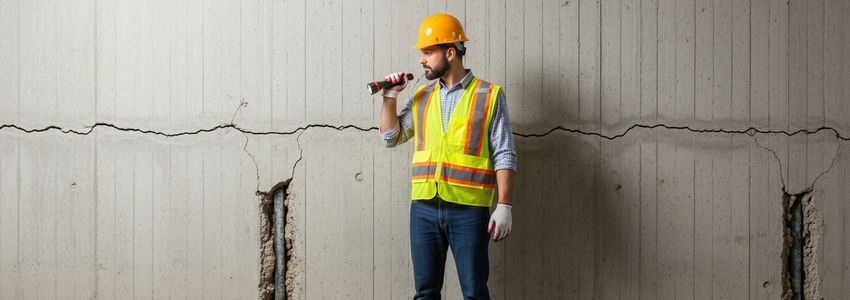
Foundation repair business loans provide specialized financing for structural repair contractors who need working capital, equipment funding, and growth capital to scale their operations. Whether you run a local foundation company or a regional structural repair firm, accessing the right financing can mean the difference between landing large contracts and watching competitors take the work.
Foundation repair is one of the most capital-intensive trades in the construction industry. Jobs often require heavy hydraulic equipment, steel piers, specialized lifting gear, and large crews - all before a single invoice is collected. This financing guide breaks down every loan option available to foundation repair business owners, how to qualify, and how Crestmont Capital can get you funded fast.
In This Article
What Are Foundation Repair Business Loans?
Foundation repair business loans are financing products designed specifically to meet the operational and growth needs of structural repair contractors. These loans cover a wide range of business expenses - from purchasing hydraulic pier equipment and polyurethane foam injection rigs to covering payroll during slow seasons and funding marketing campaigns to generate more leads.
Unlike general consumer loans, business loans for foundation contractors are evaluated based on your company's revenue, time in business, creditworthiness, and cash flow patterns. Because foundation repair work is often project-based and seasonal, lenders who understand the trades industry offer more flexible structures than traditional banks.
The foundation repair industry in the United States is a multi-billion dollar market. Homeowners spend billions annually on basement waterproofing, pier and beam correction, slab leveling, and crack repair. According to the U.S. Small Business Administration, specialty trade contractors are among the most common borrowers in the small business lending market - and foundation companies fall squarely into this category.
Industry Insight: The U.S. foundation repair and waterproofing market is valued at over $4 billion annually, driven by aging housing stock, extreme weather events, and homeowners prioritizing structural safety. This means strong and sustained demand for qualified foundation repair contractors.
Types of Financing Available for Foundation Repair Companies
No two foundation repair businesses are alike, and no single loan product fits every situation. The right financing depends on what you need the capital for, how quickly you need it, and your company's financial profile. Here are the main options available:
1. Working Capital Loans
Working capital loans provide immediate cash to cover operating expenses - payroll, materials, subcontractors, insurance, and overhead - while you wait for project payments to come in. Foundation repair jobs often involve 30-60 day payment cycles, making working capital financing essential for cash flow stability. These loans are typically short-term (6-18 months) with fixed weekly or monthly payments.
2. Equipment Financing
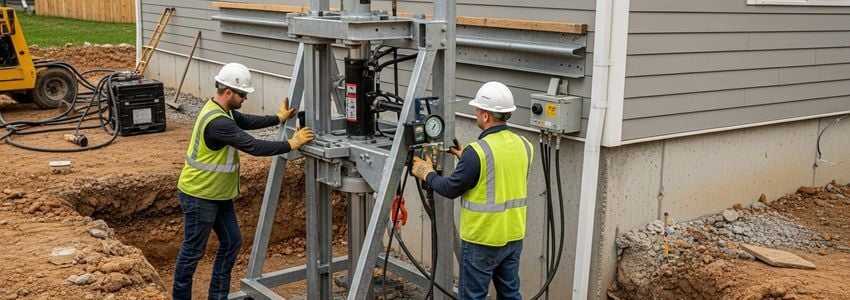
Equipment is the backbone of any foundation repair operation. Helical piers, push piers, carbon fiber straps, hydraulic rams, injection pumps, and concrete lifting equipment can cost tens of thousands of dollars per unit. Equipment financing lets you acquire this gear without depleting cash reserves, using the equipment itself as collateral. Terms typically run 24-84 months with fixed monthly payments.
3. Business Lines of Credit
A business line of credit gives you a revolving pool of capital you can draw from as needed. It's ideal for foundation contractors who need flexible access to funds - for instance, purchasing materials for multiple projects simultaneously, or covering unexpected costs mid-job. You only pay interest on what you draw.
4. SBA Loans
SBA loans - particularly the 7(a) program - offer some of the best rates and longest terms available to small businesses. Foundation repair companies with strong financials and 2+ years in business may qualify for SBA loans up to $5 million. The tradeoff is a longer approval timeline (weeks to months), making SBA loans better suited for planned expansion than urgent needs.
5. Revenue-Based Financing
Revenue-based financing provides capital in exchange for a percentage of future monthly revenue until the advance is repaid. This option works well for foundation contractors with strong revenue but limited collateral or credit history. Repayments flex with your business performance - when revenue is lower (slow season), you pay less.
6. Invoice Financing
If your foundation repair company does commercial or insurance work with net-30 or net-60 payment terms, invoice financing lets you unlock cash tied up in unpaid invoices. A lender advances 80-90% of the invoice value upfront, then collects from your client when the invoice is due. This eliminates waiting and keeps cash moving.
7. Merchant Cash Advances
MCAs provide a lump sum in exchange for a portion of daily or weekly credit/debit card sales. While they offer fast approval (sometimes same-day), they carry higher costs than traditional loans. MCAs are best used for short-term, urgent capital needs when other options aren't available quickly enough.
Ready to Fund Your Foundation Repair Business?
Get fast, flexible financing from the #1 business lender in the U.S. Apply in minutes with no obligation.
Apply Now →How Foundation Repair Business Financing Works
The lending process for foundation repair companies follows a straightforward path, though timelines vary by lender type. Here's what the typical process looks like when working with a direct lender like Crestmont Capital:
Step 1: Submit Your Application
Most modern lenders accept online applications that take 5-15 minutes to complete. You'll provide basic business information, monthly revenue figures, time in business, and the amount you're requesting. No lengthy business plan is required at the application stage.
Step 2: Document Review
After your application, your lender will typically request 3-6 months of business bank statements. These documents allow the underwriting team to verify your revenue, assess cash flow patterns, and determine how much you can responsibly borrow. For larger loans (over $250,000), additional documents like tax returns and profit-and-loss statements may be required.
Step 3: Underwriting and Approval
Underwriters analyze your application to determine risk and appropriate loan terms. Many online lenders complete this step within hours; traditional banks may take days or weeks. You'll receive an offer outlining the loan amount, interest rate or factor rate, repayment schedule, and any fees.
Step 4: Accept Terms and Fund
Once you accept the offer, funds are typically deposited into your business bank account within 1-3 business days. For equipment financing, the lender may pay the vendor directly. Once funded, you can deploy capital immediately.
Quick Guide
How Foundation Repair Financing Works - At a Glance
Complete the simple application with your business details and revenue figures.
Provide 3-6 months of bank statements for review - fast and secure.
Receive your offer within hours to days with clear, transparent terms.
Funds deposited in 1-3 business days. Deploy capital and grow your business.
Foundation Repair Industry Statistics
Understanding the broader industry context helps you make smarter financing decisions and position your business for growth. These figures illustrate why foundation repair is a strong sector for business investment:
By the Numbers
Foundation Repair Industry - Key Statistics
$4B+
Annual U.S. foundation repair market value
60%
Of U.S. homes have some form of foundation issue
5-7%
Annual industry growth rate projected through 2028
$5K-50K
Average cost per foundation repair project
According to data from the U.S. Census Bureau, specialty trade contractors - which includes foundation repair firms - represent one of the largest segments of American small business employment. As housing stock ages and climate-related soil shifting becomes more common, demand for qualified foundation repair professionals continues to outpace supply in most markets.
Who Qualifies for Foundation Repair Business Loans?
Most foundation repair companies can qualify for some form of business financing, even if they don't meet the strict requirements of traditional bank lending. Here are the general criteria lenders evaluate:
Time in Business
Most lenders want to see at least 6-12 months of operating history. Some alternative lenders will work with newer businesses (3-6 months), though rates may be higher. SBA loans typically require 2+ years in business. If you're just starting out, equipment financing secured by the equipment itself can be easier to access than unsecured working capital loans.
Monthly Revenue
Lenders want to see sufficient revenue to support loan repayments. Most working capital lenders look for at least $10,000-$15,000 in monthly revenue as a minimum threshold, though higher revenue opens access to more products and better rates. Equipment lenders are often more flexible since the asset provides security.
Credit Score
Your personal credit score matters, especially for newer businesses. A score of 650+ opens access to most alternative lending products. Scores of 700+ qualify for better rates and longer terms. Some lenders specialize in bad credit business loans for contractors with scores below 600, though at higher rates. Check out our guide to construction business loans for more on credit requirements in the trades.
Cash Flow Consistency
Lenders review your bank statements to assess cash flow health. Foundation repair is seasonal in many markets, so underwriters who specialize in contractor financing understand seasonal revenue patterns. What they look for is consistent deposit patterns and manageable outstanding debt.
Industry Experience
For larger loan amounts, some lenders want to see demonstrated expertise in the foundation repair industry. Certifications from industry associations like the Foundation Repair Association (FRA), licenses, bonding, and insurance all signal professionalism and reduce perceived lending risk.
Pro Tip: Even if you don't qualify for the best rates today, working with a lender to structure a loan and making consistent on-time payments is one of the fastest ways to build your business credit profile and unlock better financing terms within 12-18 months. See our guide to equipment financing basics for more strategies.
How Crestmont Capital Helps Foundation Repair Contractors
Crestmont Capital is the #1 business lender in the United States and has deep expertise financing specialty trade contractors, including foundation repair companies. We understand the unique financial challenges of running a structural repair business - the project-based revenue, seasonal variability, equipment intensity, and long collection cycles - and we structure financing accordingly.
Here's what sets Crestmont Capital apart for foundation repair contractors:
Speed: We can approve and fund working capital loans and equipment financing in as little as 24-48 hours. When you land a large job and need to move fast on equipment or materials, we don't make you wait.
Flexibility: We offer a wide range of loan products - from short-term working capital to long-term equipment financing - so you can match the right product to your specific need. We also structure repayments around your cash flow patterns, including seasonal businesses.
No-Collateral Options: For unsecured working capital loans, we don't require you to pledge real estate or personal assets. Your business revenue is your collateral.
Transparent Terms: No hidden fees, no surprise prepayment penalties. We explain every term in plain English before you sign anything.
Contractor-Specific Expertise: Our advisors understand the trades industry. We know what a helical pier installation project looks like, why cash flow gaps happen, and how to build a financing solution that actually fits your business. For a deeper look at our construction financing capabilities, visit our construction company business loans page.
Get the Capital to Take On Bigger Projects
From $10,000 to $5 million - Crestmont Capital has the right financing to grow your foundation repair business.
Get Your Free Quote →Real-World Scenarios: How Foundation Repair Companies Use Business Loans
Abstract financial concepts are easier to understand in real-world context. Here are six scenarios that illustrate how foundation repair contractors use business financing to grow their companies:
Scenario 1: Purchasing a New Helical Pier Rig
A foundation repair contractor in Ohio has been renting hydraulic pier installation equipment for two years at $800/week, totaling over $40,000 annually. By securing a $65,000 equipment loan with a 60-month term, the company purchases its own rig with payments of approximately $1,200/month - saving $6,000 per year while building equity in a business asset. The equipment now allows them to take on additional jobs that were previously limited by rental availability.
Scenario 2: Covering Payroll During Winter Slowdown
A Texas foundation company typically sees a 30-40% revenue dip in December and January due to frozen ground conditions. Rather than laying off their best crew members, the owner uses a $50,000 working capital line of credit to cover payroll through the slow months and pays it back in full by March when revenue rebounds. Keeping the crew intact means they can ramp up faster and capture spring business without the cost of rehiring and retraining.
Scenario 3: Landing a Commercial Contract
A foundation repair company is awarded a $280,000 commercial foundation stabilization contract for a strip mall complex. The job requires $60,000 in materials upfront and the client pays net-45. The company uses invoice financing to access $50,000 against the first completed phase invoice, keeping operations funded without waiting six weeks for payment. This allows them to start the next phase immediately and complete the project on schedule.
Scenario 4: Buying Out a Competitor
A regional foundation company with $1.8M in annual revenue has the opportunity to acquire a smaller local competitor whose owner is retiring. The acquisition will add $600,000 in annual revenue, a customer list, and another service vehicle. Using a $250,000 SBA 7(a) loan, the company completes the acquisition, consolidates operations, and increases its market share significantly.
Scenario 5: Fleet Expansion
A growing foundation repair business in the Southeast needs to add two service trucks and a trailer to support an additional two-man crew. Each truck costs $45,000 used. Through a commercial vehicle financing program, the company finances all three vehicles with a combined $120,000 loan at 84-month terms, keeping monthly payments manageable and preserving working capital for operations.
Scenario 6: Marketing and Lead Generation Investment
A foundation contractor has strong technical skills but limited lead flow. Using a $25,000 short-term working capital loan, the company invests in Google Local Services Ads, a website rebuild with before-and-after project galleries, and a direct mail campaign to targeted ZIP codes with older housing stock. The marketing investment generates $180,000 in new contracts within six months, delivering a 7:1 return on the loan amount.
Loan Type Comparison for Foundation Repair Contractors
Choosing the right financing product depends on your timeline, credit profile, and intended use. This comparison table helps you identify which option fits your situation:
| Loan Type | Best For | Funding Speed | Typical Terms |
|---|---|---|---|
| Working Capital Loan | Payroll, materials, cash flow gaps | 1-3 days | 6-24 months |
| Equipment Financing | Piers, rigs, trucks, trailers | 2-5 days | 24-84 months |
| Business Line of Credit | Ongoing flexible access to capital | 2-5 days | Revolving (1-2 yrs) |
| SBA 7(a) Loan | Large purchases, acquisitions | 30-90 days | Up to 10-25 years |
| Invoice Financing | B2B/commercial invoice cash flow | 1-2 days | 30-90 days per invoice |
| Revenue-Based Financing | High revenue, lower credit score | 1-3 days | Flexible % of revenue |
Working Capital Tip: Many established foundation repair companies benefit from having both a working capital loan AND a business line of credit simultaneously. The term loan provides predictable, fixed repayments for known expenses, while the line of credit gives you a flexible backstop for unexpected costs or fast-moving opportunities. Learn more about working capital strategies for growing businesses.
Common Uses for Foundation Repair Business Loans
Foundation repair contractors use business financing for a broad range of operational and growth purposes. Understanding the most common applications helps you plan your funding request effectively:
Equipment Purchases: Hydraulic push pier systems, helical piers and anchors, polyurethane foam injection equipment, carbon fiber strapping systems, wall anchor systems, sump pumps and drainage systems, concrete lifting equipment, and compaction grouting rigs all represent major capital expenditures that equipment financing can cover.
Fleet Vehicles: Service trucks, pickups with bed liners and toolboxes, flatbed trailers for pier transport, and equipment trailers are essential for job mobility. Fleet financing keeps monthly costs predictable while preserving cash.
Marketing and Lead Generation: Foundation repair is a competitive market in most metros. Investing in Google Ads, local SEO, review generation systems, and direct mail campaigns drives consistent lead flow. Business loans for marketing spend provide ROI when deployed strategically.
Hiring and Training: Skilled foundation repair technicians are hard to find and harder to keep. Using working capital to offer competitive compensation packages, fund training programs, and invest in team development reduces turnover and builds long-term capacity.
Technology and Software: CRM systems, job management software, estimating tools, and drone inspection technology improve efficiency, customer experience, and close rates. These investments often pay back quickly through operational improvements.
Seasonal Bridge Financing: Many foundation repair markets have distinct slow seasons (winter in cold climates, extreme summer heat in some southern markets). Bridge financing covers operating costs through slow periods without sacrificing team stability.
According to data from AP News reporting on small business trends, specialty trade contractors who invest in equipment and workforce development consistently outperform industry peers in revenue growth, customer retention, and profit margins.
Don't Let Capital Hold Back Your Best Jobs
Crestmont Capital specializes in fast, flexible financing for contractors. No long waits. No unnecessary paperwork.
Apply Now - Takes Minutes →How to Prepare Your Loan Application
Strong preparation significantly increases your approval odds and helps you secure better terms. Here's what to have ready before applying for a foundation repair business loan:
Bank Statements: 3-6 months of business bank statements are the most common requirement. Make sure your statements show consistent deposit activity and manageable overdrafts or negative balances (ideally none).
Business License and Contractor License: Most states require foundation repair contractors to be licensed. Having your license documentation readily available speeds up the process and demonstrates legitimacy.
Insurance Certificates: General liability insurance and workers' compensation certificates show lenders that your business is professionally managed and protected against common risks.
Revenue Documentation: Some lenders also want to see tax returns (personal and business) for the past 1-2 years, or year-to-date profit-and-loss statements. For larger loan amounts, having these documents prepared in advance accelerates approvals.
Clear Use of Funds Statement: Know exactly what you're going to use the money for. Lenders appreciate specific, clear answers ("purchasing a $45,000 hydraulic pier rig to expand service capacity") over vague ones ("general business needs").
Frequently Asked Questions
What types of loans are available for foundation repair companies?
Foundation repair companies can access working capital loans, equipment financing, business lines of credit, SBA loans, invoice financing, revenue-based financing, and merchant cash advances. The right option depends on what you need the capital for and your company's financial profile.
How much can a foundation repair company borrow?
Loan amounts vary widely based on revenue, creditworthiness, and lender type. Working capital loans typically range from $10,000-$500,000. Equipment financing can cover single pieces of equipment or entire fleets. SBA loans can reach up to $5 million. Generally, lenders offer loan amounts equal to 1-3 times monthly revenue, with higher amounts available for strong-credit borrowers.
What credit score do I need to get a foundation repair business loan?
Requirements vary by lender and product. Alternative lenders typically require a minimum personal credit score of 550-600 for working capital products. Scores of 650+ open access to better rates and more products. Equipment financing may be available with scores as low as 600 since the equipment serves as collateral. SBA loans generally require 680+. The higher your score, the better your terms.
How fast can I get funding for my foundation repair business?
Speed depends on the lender and loan type. Working capital loans and business lines of credit through alternative lenders like Crestmont Capital typically fund within 1-3 business days after application approval. Equipment financing may take 2-5 business days. SBA loans have the longest timelines, typically 30-90 days. For urgent needs, alternative lenders are the fastest path to capital.
Can I get a foundation repair business loan with bad credit?
Yes, though options narrow as credit scores decrease. Many alternative lenders work with business owners who have credit scores in the 550-600 range. Revenue-based financing and merchant cash advances are the most accessible products for bad credit borrowers since they rely more heavily on revenue than credit score. Equipment financing secured by collateral is also more accessible for lower-credit borrowers.
Do I need collateral to get a foundation repair business loan?
Not always. Many working capital loans and lines of credit from alternative lenders are unsecured, meaning they don't require business or personal assets as collateral. Equipment financing uses the equipment itself as collateral. SBA loans may require collateral for larger amounts. A personal guarantee is often required but is different from pledging a specific asset as collateral.
What documents do I need to apply for a foundation repair business loan?
For most working capital loans, you'll need 3-6 months of business bank statements, a completed loan application, and basic business information (business license, EIN). For larger loans or SBA products, you may also need business and personal tax returns (1-2 years), profit-and-loss statements, and contractor licensing documentation. The faster and more complete your documentation, the faster you'll get funded.
Can a startup foundation repair company get a business loan?
Startups face more limited options but aren't locked out. Equipment financing is often accessible for new businesses since the equipment serves as collateral. Some alternative lenders work with businesses that are 3-6 months old if revenue is strong. SBA microloans (up to $50,000) are available for startups in many markets. As your business establishes a revenue history, more and better options become available.
How does equipment financing work for foundation repair gear?
Equipment financing allows you to purchase specific business equipment - helical pier systems, hydraulic press rigs, foam injection equipment, service trucks - while making monthly payments over a fixed term (typically 24-84 months). The equipment itself serves as collateral, which generally makes these loans easier to qualify for than unsecured working capital loans. At the end of the term, you own the equipment outright.
What interest rates should I expect on a foundation repair business loan?
Interest rates vary significantly based on lender type, loan product, and your business profile. SBA loans carry the lowest rates (Prime + 2.75%-4.75%). Traditional bank loans run 6-15% APR. Alternative lenders typically charge 15-50% APR for working capital. Equipment financing rates range from 6-25% depending on credit. Revenue-based financing and MCAs are priced using factor rates (1.1-1.5x) rather than traditional interest rates, which equates to higher effective APRs.
Can I use a business loan to hire foundation repair technicians?
Yes. Working capital loans and lines of credit can be used to fund payroll for new hires, cover training costs, and provide the financial stability to make long-term workforce commitments. Many foundation repair companies use business loans specifically to hire and retain skilled technicians, which is one of the most significant growth levers in the trades industry.
Is seasonal revenue a problem when applying for a foundation repair loan?
Seasonal revenue is common in the foundation repair industry and experienced lenders understand this pattern. Some lenders specialize in seasonal businesses and can structure flexible repayment schedules that account for lower-revenue months. Providing additional context about your business model and seasonal patterns during the application process helps underwriters evaluate your file accurately rather than penalizing you for normal industry variability.
What is invoice financing and how does it help foundation repair companies?
Invoice financing (also called accounts receivable financing) allows you to unlock cash tied up in unpaid customer invoices. If you complete a $40,000 commercial foundation repair project with net-45 payment terms, invoice financing lets you access approximately 80-90% ($32,000-$36,000) of that invoice value immediately. The lender is repaid when your client pays the invoice. This is particularly valuable for foundation contractors doing commercial or insurance claim work with long payment cycles.
How does an SBA loan work for a foundation repair business?
SBA 7(a) loans are partially guaranteed by the U.S. Small Business Administration, which reduces risk for lenders and allows them to offer better rates and longer terms than conventional business loans. Foundation repair companies can use SBA loans for equipment, real estate purchases, working capital, and business acquisitions. The application process is more extensive than alternative lending, but the resulting terms - rates around Prime + 2.75-4.75% and terms up to 10-25 years - make SBA loans the most cost-effective long-term financing option for qualified businesses.
How can I improve my chances of getting approved for a foundation repair business loan?
To maximize approval odds: keep your personal and business credit scores as high as possible by paying bills on time; maintain clean bank statements with consistent deposits and no overdrafts; build business credit by establishing trade accounts with suppliers; keep existing debt levels manageable; have clear documentation of your revenue and business operations; apply for an amount proportional to your monthly revenue; and work with a lender who understands the construction and trades industry. Even modest improvements in these areas can significantly expand your financing options.
How to Get Started
Complete our quick application at offers.crestmontcapital.com/apply-now - takes just a few minutes and requires no commitment.
A Crestmont Capital advisor who understands the foundation repair industry will review your needs and match you with the right financing option. We speak contractor, not banker.
Receive your funds - often within 24-48 hours of approval - and put them to work. Grow your equipment fleet, hire top technicians, and take on the bigger jobs your business is capable of.
Conclusion
Foundation repair business loans give contractors the financial foundation they need to grow - from acquiring specialized equipment and hiring skilled technicians to covering cash flow gaps and landing large commercial contracts. The foundation repair industry represents a strong, growing market with consistent demand and strong project economics. The contractors who grow fastest are those who invest strategically in their operations and don't let capital constraints hold them back.
Whether you're looking for a foundation repair business loan to buy your first helical pier system, expand your fleet, or bridge a seasonal cash flow gap, Crestmont Capital has a financing solution designed for contractors like you. We're the #1 business lender in the U.S. for a reason - speed, flexibility, and a genuine understanding of the trades industry.
Ready to explore your financing options? Apply online today and get a decision in hours, not weeks.
Disclaimer: The information provided in this article is for general educational purposes only and is not financial, legal, or tax advice. Funding terms, qualifications, and product availability may vary and are subject to change without notice. Crestmont Capital does not guarantee approval, rates, or specific outcomes. For personalized information about your business funding options, contact our team directly.