
 (800) 949-0401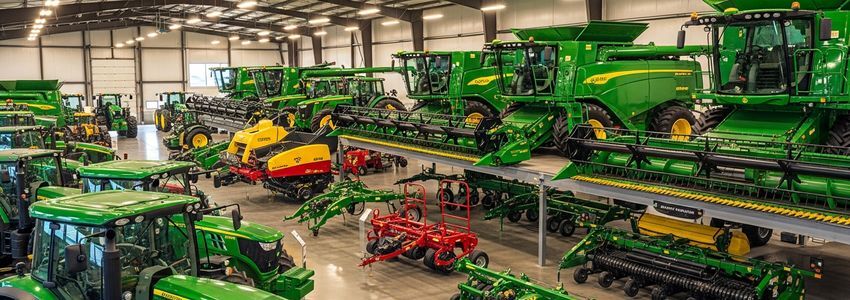
Farm Equipment Dealer Business Loans: The Complete Financing Guide
Farm equipment dealers sit at a critical intersection of the agricultural economy. You carry six-figure tractors and combines, manage sprawling lots of inventory, and work with customers whose purchasing decisions are tied to harvest cycles and commodity prices. Running a successful dealership requires capital - sometimes a lot of it, all at once. Farm equipment dealer financing gives dealerships the working capital, inventory funding, and growth capital they need to stay competitive in an industry where timing and cash flow are everything.
In This Article
- What Is Farm Equipment Dealer Financing?
- Types of Loans for Farm Equipment Dealers
- How Farm Equipment Dealer Financing Works
- What Dealers Use Business Loans For
- Industry Snapshot: Farm Equipment Dealers by the Numbers
- Who Qualifies for Dealer Business Loans
- How Crestmont Capital Helps Equipment Dealers
- Real-World Financing Scenarios
- Loan Options Compared
- Frequently Asked Questions
- How to Get Started
What Is Farm Equipment Dealer Financing?
Farm equipment dealer financing refers to business loans and credit products specifically structured for companies that sell, rent, or service agricultural equipment. This includes full-line dealers selling tractors, combines, and planters, as well as specialty dealers focused on irrigation equipment, hay tools, or precision agriculture technology.
Unlike general small business loans, farm equipment dealer financing accounts for the unique cash flow patterns of the agricultural industry. Inventory costs are enormous - a single John Deere 8R tractor can retail for $350,000 or more. Floor plan financing, working capital lines, and term loans all play distinct roles in how a dealer stays operational, competitive, and profitable.
According to the U.S. Small Business Administration, agricultural equipment dealers represent a multi-billion dollar segment of the American small business landscape, with most dealerships operating as regional independents that rely on third-party financing for day-to-day operations.
Key Insight: The agricultural equipment industry in the U.S. generates approximately $40 billion in annual sales. Farm equipment dealers face some of the most capital-intensive operating environments of any retail sector - making access to business financing a survival issue, not just a growth strategy.
Types of Loans Available for Farm Equipment Dealers
Farm equipment dealerships can access several distinct types of financing, each designed for different business needs. Understanding which loan type matches your situation is the first step toward securing capital efficiently.
Floor Plan Financing (Inventory Financing)
Floor plan financing is the backbone of most equipment dealerships. It allows you to stock expensive equipment without tying up all your own capital. The lender pays the manufacturer or wholesaler directly, and you repay the loan as units are sold. This revolving credit facility keeps your lot full without draining your operating account. For inventory financing solutions designed for high-value product cycles, Crestmont Capital can structure terms that align with your sales pace.
Working Capital Loans
Seasonal cash flow gaps are a fact of life for agricultural dealers. Spring planting season drives massive equipment purchases while fall and winter can be slow. A working capital loan bridges these gaps, ensuring you can meet payroll, pay supplier invoices, and keep service bays running even when unit sales lag.
Business Lines of Credit
A business line of credit gives farm equipment dealers flexible access to funds on demand. Draw what you need, when you need it, and only pay interest on what you use. This is particularly useful for dealers who need to respond quickly to manufacturer promotions, trade-in opportunities, or unexpected large service parts orders.
Equipment Financing for Dealer Operations
Ironically, equipment dealers need financing for their own operational equipment. Service department lifts, diagnostic software systems, shop tools, loaner fleet vehicles, and parts management systems all represent capital expenditures. Equipment financing lets you acquire what you need without depleting operating reserves.
SBA Loans
SBA loans offer farm equipment dealers longer repayment terms and government-backed guarantees that can make approval more accessible. The SBA 7(a) program in particular works well for dealerships looking to purchase real estate, expand facilities, or refinance existing high-cost debt. The tradeoff is a longer approval timeline compared to alternative lenders.
Term Loans
Conventional term loans work well for defined capital projects - building a new showroom, expanding service capacity, or acquiring a competing dealership. You receive a lump sum and repay over a fixed period, making budgeting straightforward and predictable.
Ready to Fund Your Dealership?
Get fast, flexible financing from the #1 business lender in the U.S. No obligation - apply in minutes.
Apply Now →How Farm Equipment Dealer Financing Works
The application and approval process for farm equipment dealer business loans is more straightforward than many dealers expect. Lenders evaluate your dealership on financial performance, operational history, and the nature of your funding request.
Step 1: Define Your Capital Need
Before approaching any lender, clearly define what you need the money for. Inventory replenishment requires different loan structures than a facility expansion. Working capital shortfalls are handled differently than long-term equipment purchases for your service department. A clear purpose helps lenders match you with the right product and strengthens your application.
Step 2: Gather Your Financial Documentation
Expect lenders to request three to six months of business bank statements, your two most recent years of business tax returns, a current profit and loss statement, and a balance sheet. Dealerships with real estate may also need property documentation. According to Forbes, having organized financials is one of the single biggest factors in both approval odds and funding speed.
Step 3: Know Your Credit Profile
Lenders will review both your personal credit score and your business credit profile. Most traditional lenders look for a personal credit score of 650 or higher, though alternative lenders may work with scores in the 580-620 range with compensating factors like strong revenue and long time in business.
Step 4: Submit and Negotiate
Once you submit your application, the lender underwrites your file and issues a term sheet. Review rate, term, collateral requirements, and any covenants carefully before accepting. Many offers are negotiable - especially for well-qualified dealerships with established revenue histories.
Step 5: Receive Funds and Deploy
Approval and funding timelines vary. Alternative lenders can fund in as little as 24-72 hours. SBA loans may take 30-90 days. For time-sensitive opportunities like manufacturer closeout deals or competitor acquisition, faster-moving lenders can be a significant advantage.
Quick Guide
How Farm Equipment Dealer Financing Works - At a Glance
Inventory, working capital, expansion, service operations - specify your purpose clearly.
Bank statements, tax returns, P&L, balance sheet, and any collateral documentation.
Lender reviews financials, credit profile, and business performance to assess risk.
Funds arrive in 24 hours to 90 days depending on loan type. Use capital for stated purpose.
What Farm Equipment Dealers Use Business Loans For
The uses of farm equipment dealer financing are as varied as the dealerships themselves. Here are the most common applications:
Inventory Acquisition and Floor Planning
Stocking premium equipment brands - John Deere, Case IH, New Holland, Kubota, AGCO, and others - requires massive upfront capital. Dealers typically use floor plan credit lines to pay manufacturers directly and repay lenders as units sell. This is the single most common financing need in the industry.
Service Department Expansion
Parts and service revenue is the profit backbone of most equipment dealerships. Many dealers use term loans to add service bays, upgrade diagnostic equipment, hire certified technicians, and stock high-demand replacement parts inventory - all of which generate higher-margin recurring revenue compared to unit sales alone.
Seasonal Cash Flow Management
Pre-season demand in March through May can be intense, while November through January may see sharp revenue drops. A working capital line of credit or bridge loan ensures you can meet fixed overhead costs like payroll, facility leases, and insurance regardless of seasonal sales cycles.
Precision Agriculture Technology Investment
GPS systems, variable rate application controllers, telematics, and farm management software are increasingly standard expectations from farm customers. Dealers who invest in demonstrating and supporting these technologies command premium relationships and higher service revenue. Business financing can fund the technology investment before the revenue materializes.
Facility Upgrades and Real Estate
A lot expansion, new showroom, covered storage for used equipment, or an updated service facility can dramatically increase a dealership's competitive position. SBA 504 loans or conventional commercial real estate loans are commonly used for these capital-intensive projects.
Acquisition of Competing Dealerships
Consolidation in the agricultural equipment sector has been ongoing. Smaller independent dealers are frequently acquisition targets for larger regional groups, and well-capitalized dealers use acquisition loans to expand their geographic footprint and manufacturer relationships.
Farm Equipment Dealers by the Numbers
By the Numbers
Farm Equipment Dealer Financing - Key Industry Statistics
$40B+
Annual U.S. farm equipment sales
8,500+
Farm equipment dealerships in the U.S.
70%
Of dealer profit from parts and service
2.3M
U.S. farms that rely on dealer networks
Who Qualifies for Farm Equipment Dealer Business Loans
Qualification requirements vary by lender type. Alternative lenders have more flexible criteria than traditional banks, while SBA loans offer the best terms but require the strongest financial profiles.
Alternative Lenders (Fastest Approval)
- Minimum 1 year in business
- Monthly revenue of $15,000 or more
- Personal credit score of 580 or higher
- Active business bank account
- No open bankruptcies
Conventional Bank Loans
- Typically 2+ years in business
- Strong annual revenue (generally $500,000+)
- Personal credit score of 680 or higher
- Collateral (real estate, equipment inventory, receivables)
- Comprehensive financial documentation
SBA Loans
- 2+ years in business required
- Credit score of 650+ minimum for most SBA lenders
- For-profit business with reasonable owner equity
- Business must exhaust other financing options first
- Owner must have skin in the game (personal guarantee required)
Pro Tip: Farm equipment dealers with strong manufacturer relationships and documented floor plan history often qualify for larger credit lines than their revenue alone would suggest. Lenders recognize that floor plan turnover demonstrates active inventory management and consistent sales performance.
How Crestmont Capital Helps Farm Equipment Dealers
Crestmont Capital works directly with farm equipment dealers to structure financing that fits their business model, not the other way around. As the #1-rated business lender in the U.S., Crestmont understands that dealership cash flow does not follow a standard monthly pattern - and our loan products are built accordingly.
Whether you need a flexible revolving line to manage seasonal inventory swings, a term loan for a facility upgrade, or fast working capital to bridge a gap between unit sales, Crestmont Capital provides direct access to lending decisions and personalized service from advisors who understand the agricultural industry.
Our small business loans are available from $10,000 to $5 million, with repayment terms structured to match your actual cash flow cycle. For dealers with established revenue and clean financials, decisions can be made in as little as 24 hours. Explore your options through our related resources:
- Agricultural Business Loans: The Complete Guide to Farm Financing - broader context on farm business lending
- Farm Equipment Financing: The Complete Guide for Farmers - financing options for equipment purchasers
- Grain Elevator Business Loans - financing for adjacent ag-sector businesses

Grow Your Dealership with Smart Financing
Flexible terms, fast decisions, and a lender who understands agricultural business cycles.
Apply Now →Real-World Financing Scenarios for Equipment Dealers
Scenario 1: Spring Inventory Surge
A mid-size dealership in the Midwest needs to stock 15 new utility tractors ahead of spring planting season. The total invoice value is $1.8 million. The owner uses a floor plan credit facility to pay the manufacturer immediately, receives the units, and repays the floor plan as each tractor sells over the following 60-90 days. Without floor plan financing, the dealer could stock only 2-3 units at a time - missing the peak demand window entirely.
Scenario 2: Service Department Revenue Growth
A dealer in the Southeast finds that their service department is turning away business because their two service bays are always booked three weeks out. They take a $250,000 term loan to add two additional bays, purchase a new diagnostic platform, and hire two certified technicians. Within 18 months, service revenue increases 60%, and the loan is paid off ahead of schedule.
Scenario 3: Manufacturer Closeout Opportunity
A manufacturer offers a limited-time closeout on a line of planters at 22% below normal wholesale. A dealer with an available line of credit immediately draws $400,000 to purchase the units, resells them over the next three months at strong margins, and repays the line - generating $85,000 in additional profit from an opportunity that only existed for 10 days.
Scenario 4: Competitor Acquisition
A regional dealer group identifies a competing independent dealership for sale in an adjacent county. Using an SBA 7(a) acquisition loan, they purchase the business including real estate, inventory, and customer relationships. The acquisition doubles their service territory and adds a second manufacturer franchise line, increasing total dealership revenue by 35% in the first full year.
Scenario 5: Precision Agriculture Technology Investment
A forward-thinking dealer invests $180,000 in precision agriculture demonstration equipment - GPS systems, yield mapping tools, and variable rate controllers - to position their team as trusted advisors rather than simply equipment salespeople. Financed with a 36-month term loan, the investment leads to stronger repeat customer relationships and a 25% increase in add-on technology sales attached to new equipment purchases.
Scenario 6: Working Capital Bridge During Slow Season
Winter hits hard and equipment sales drop for four months. The dealer draws on their business line of credit to cover $85,000 in monthly operating costs including payroll, facility lease, and parts inventory replenishment. When spring arrives and sales resume, they repay the line and carry zero residual balance - having avoided layoffs or operational disruptions that would have hurt their spring season performance.
Loan Options Compared: What Works Best for Equipment Dealers
| Loan Type | Best For | Typical Amount | Speed |
|---|---|---|---|
| Floor Plan / Inventory Line | New and used unit inventory | $250K - $10M+ | 1-3 weeks |
| Working Capital Loan | Seasonal cash flow gaps | $25K - $500K | 24-72 hrs |
| Business Line of Credit | Flexible ongoing capital | $50K - $1M | Days to 2 weeks |
| Term Loan | Facility upgrades, service expansion | $50K - $2M | 1-7 days |
| SBA 7(a) Loan | Acquisition, real estate, refinance | Up to $5M | 30-90 days |
| Equipment Financing | Shop tools, lifts, diagnostic systems | $10K - $500K | 24-72 hrs |
Note: According to a CNBC report on small business financing, companies in capital-intensive sectors like equipment dealerships are among the fastest-growing users of alternative lending solutions because of their speed advantage and flexible underwriting compared to traditional bank products.
Frequently Asked Questions
How to Get Started
Complete our quick application at offers.crestmontcapital.com/apply-now - takes just a few minutes.
A Crestmont Capital advisor will review your dealership needs and match you with the right financing option - whether that is a working capital line, term loan, or floor plan alternative.
Receive your funds and put them to work - often within days of approval. Stock your lot, expand your service department, or bridge your seasonal cash flow gap.
Conclusion
Farm equipment dealer financing is an essential tool for running a competitive, profitable dealership in today's agricultural economy. From floor plan credit that keeps your lot stocked to working capital loans that bridge seasonal gaps, the right financing structure can mean the difference between capturing a market opportunity and watching it go to a better-capitalized competitor.
The key is matching the loan product to the specific need - revolving inventory credit for stock management, term loans for facility investment, lines of credit for flexible operational needs, and SBA loans for major acquisitions or real estate. Farm equipment dealer business loans are widely available through a range of lenders, with terms that can be tailored to the agricultural sales cycle.
Crestmont Capital has helped thousands of equipment dealers, agricultural businesses, and capital-intensive retailers access the funding they need to grow. Apply today and discover what farm equipment dealer financing can do for your dealership.
Ready to Apply for Dealer Financing?
Fast decisions, flexible terms, and a lender who understands agricultural dealership cash flow cycles.
Apply Now →Disclaimer: The information provided in this article is for general educational purposes only and is not financial, legal, or tax advice. Funding terms, qualifications, and product availability may vary and are subject to change without notice. Crestmont Capital does not guarantee approval, rates, or specific outcomes. For personalized information about your business funding options, contact our team directly.








