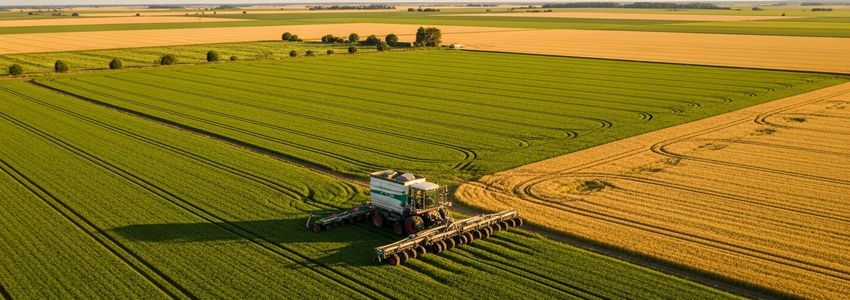
Running a successful farm or agricultural operation means keeping up with the equipment demands of modern agriculture. Tractors, combines, irrigation systems, planters, and harvesters represent enormous capital investments that most farming operations cannot purchase outright. Farm equipment financing gives agricultural businesses the ability to acquire the machinery they need now and pay over time, preserving working capital for seed, labor, fuel, and operations.
Whether you run a family farm, a commercial crop operation, a livestock facility, or a specialty agricultural business, the right financing structure can determine whether your season runs smoothly or falls short. This guide covers everything you need to know about farm equipment financing, including how it works, what qualifies, what lenders look for, and how to get funded fast.
In This Article
What Is Farm Equipment Financing?
Farm equipment financing is a type of equipment financing designed specifically for agricultural machinery and equipment. Through this structure, a lender provides capital to purchase farm equipment, and the borrower repays the loan in fixed installments over a defined term. In most cases, the equipment itself serves as collateral, which means lenders can often approve financing without requiring additional business or personal assets as security.
The agricultural sector operates on thin margins and highly seasonal cash flow cycles. A corn or soybean farmer, for example, may generate the bulk of annual revenue during fall harvest, while expenses run throughout the year. Farm equipment financing helps bridge these gaps by spreading large capital expenditures across manageable monthly payments rather than demanding a large upfront cash outlay.
Farm equipment financing is distinct from a general small business loan in that it is specifically tied to a piece of equipment. The equipment purchase triggers the financing, and the machinery secures the debt. This asset-backed structure often results in lower rates and higher approval odds compared to unsecured business loans.
Industry Insight: According to the USDA Economic Research Service, U.S. farms spend over $25 billion annually on machinery and equipment. Access to affordable financing directly determines how quickly farmers can modernize and scale their operations.
Need Farm Equipment Financing Today?
Fast approvals for tractors, combines, irrigation systems, and more. Apply in minutes with Crestmont Capital.
Apply Now →How Farm Equipment Financing Works
The mechanics of farm equipment financing are straightforward. A farmer or agricultural business owner identifies a piece of equipment they need to purchase, applies for financing, and - once approved - receives funds used to complete the purchase. Repayment then occurs over a fixed term, typically ranging from 12 months to 84 months depending on the equipment value and lender terms.
Here is how the process typically unfolds step by step:
- Identify the equipment: You locate the tractor, harvester, irrigation system, or other machinery you intend to purchase, whether new or used.
- Apply for financing: You submit a financing application with basic business and financial documentation. Many lenders can provide decisions within 24 to 48 hours.
- Get approved and review terms: The lender confirms your loan amount, interest rate, repayment term, and any down payment requirements.
- Equipment purchase: Funds are disbursed directly to the equipment dealer or seller, completing the purchase.
- Repay over time: Fixed monthly payments are made over the agreed-upon term. The equipment serves as collateral throughout this period.
Interest rates on farm equipment financing vary depending on the lender, the borrower's credit profile, the equipment type, and the loan term. Rates can range from around 5% to 25% annually. Equipment with strong resale value - such as major-brand tractors and combines - often qualifies for the most competitive rates because the collateral reduces lender risk.
Quick Guide
How Farm Equipment Financing Works - At a Glance
Identify the specific farm machinery or equipment you need to purchase - new or used.
Submit a quick application with basic financial details. Decisions often arrive within 24-48 hours.
Confirm the loan amount, interest rate, repayment term, and any required down payment.
Funds go directly to the dealer or seller. You take ownership and begin using the equipment immediately.
Types of Farm Equipment Financing
Farmers have access to several different financing structures when it comes to acquiring agricultural equipment. Understanding each option helps you choose the approach that best fits your operation's cash flow, ownership goals, and budget.
Equipment Loans
An equipment loan is the most straightforward financing option. You borrow the full purchase price (or a portion after a down payment), repay over a fixed term with interest, and own the equipment outright once the loan is repaid. Equipment loans are ideal for high-value, long-lasting machinery like tractors, combines, and balers that you intend to use for many years.
Equipment Leasing
With an equipment lease, you pay for the use of the equipment rather than ownership. Lease payments tend to be lower than loan payments for the same equipment, which can free up cash for other operational needs. At the end of the lease term, you typically have the option to purchase the equipment at fair market value, return it, or enter a new lease on updated machinery.
Farm equipment leasing makes sense when you want access to newer machinery without committing to long-term ownership, or when rapid technology changes make ownership less attractive. Our equipment leasing programs give farmers flexibility without sacrificing the equipment they need.
Agricultural Business Lines of Credit
A business line of credit can also fund smaller equipment purchases or bridge the gap between equipment acquisition and revenue from the harvest season. Lines of credit provide revolving access to funds, meaning you draw what you need and repay over time - making them highly useful for seasonal agricultural businesses.
SBA Loans for Farm Equipment
The Small Business Administration (SBA) offers loan programs that can be used to purchase agricultural equipment. SBA loans typically feature longer terms and competitive rates but have more documentation requirements and longer processing times compared to alternative lenders.
Working Capital Loans for Equipment
Some farmers use working capital loans to fund smaller equipment purchases, operational supplies, or equipment repairs. These unsecured loans are approved based on business revenue and cash flow rather than specific equipment collateral.
By the Numbers
Farm Equipment Financing - Key Statistics
$25B+
Annual U.S. farm machinery spending (USDA)
$150K+
Average cost of a new full-size tractor
84 Mo.
Maximum repayment term available
2M+
Farms operating across the United States
What Farm Equipment Qualifies for Financing?
Farm equipment financing covers an extensive range of agricultural machinery - both new and used. Lenders generally consider the equipment's useful life, resale value, and condition when structuring loan terms. Equipment that retains value well and has an active secondary market tends to qualify for the longest repayment terms and most competitive rates.
Commonly Financed Farm Equipment
- Tractors: Row-crop tractors, utility tractors, compact tractors, and orchard tractors ranging from small utility models to 400+ horsepower row-crop machines.
- Combines and Harvesters: Grain combines, corn headers, flex headers, and specialty harvesting equipment for vegetables, fruit, and cotton.
- Tillage Equipment: Plows, discs, cultivators, rippers, and subsoilers used for field preparation.
- Planting Equipment: Planters, drills, air seeders, and precision planting systems.
- Sprayers: Self-propelled sprayers, pull-behind sprayers, and drone spray systems for crop protection applications.
- Irrigation Systems: Center pivot systems, drip irrigation equipment, pumps, and water management infrastructure.
- Hay and Forage Equipment: Round balers, square balers, mowers, tedders, rakes, and forage harvesters.
- Grain Handling: Grain bins, conveyors, augers, and drying systems.
- Livestock Equipment: Feedlots, ventilation systems, feeding equipment, and milking machinery for dairy operations.
- Trucks and Utility Vehicles: Grain trucks, flatbeds, ATVs, and UTVs used in farm operations.
- Technology and Precision Ag: GPS systems, telematics, yield monitors, and autonomous vehicle systems.
Used Equipment Note: Many lenders will finance used farm equipment, though maximum loan terms may be shorter and rates slightly higher than for new machinery. Equipment typically needs to be in good working condition and not more than 10-15 years old for optimal financing terms.
Qualification Requirements for Farm Equipment Financing
Qualifying for farm equipment financing is generally more accessible than qualifying for traditional bank loans. Alternative lenders focus heavily on business cash flow and operational history rather than complex financial statements or pristine credit scores. Here is what most lenders evaluate:
Time in Business
Most equipment financing lenders require at least 6-12 months of operating history. Agricultural operations that have been farming for 2 or more years typically qualify for the most favorable terms. If your operation is newer, lenders may require a stronger down payment or higher credit score to offset the shorter track record.
Annual Revenue
Lenders want to confirm your operation generates enough revenue to support the loan payments. A general guideline is that monthly loan payments should not exceed 10-20% of your monthly gross revenue. For farm operations with highly seasonal income, lenders may look at annual revenue rather than monthly figures when assessing affordability.
Credit Score
While equipment financing is more credit-flexible than traditional bank loans, your personal and business credit scores still factor into the approval decision and the interest rate offered. Scores above 650 typically qualify for standard programs. Those with lower scores may still qualify, particularly through bad credit business loan options or by providing a larger down payment.
Down Payment
Many equipment financing programs require little or no down payment, particularly for strong borrowers with good credit and established revenue. Larger down payments reduce your monthly payment amount and overall interest costs, and can help lower-credit-score borrowers qualify for better rates.
Equipment Type and Age
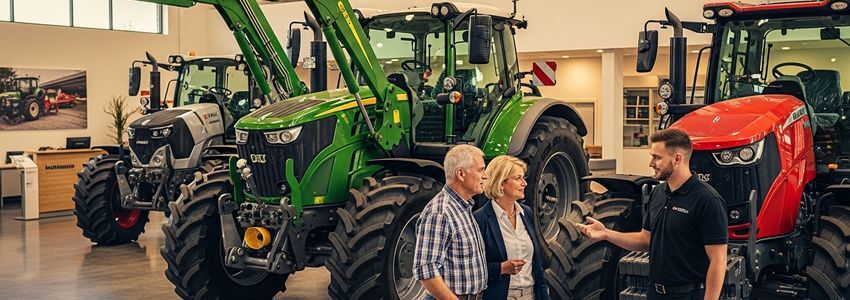
The specific equipment being financed affects approval odds and terms. New equipment from recognized manufacturers (John Deere, Case IH, New Holland, AGCO) typically qualifies for the longest terms and lowest rates. Older or more obscure equipment may face shorter financing terms because of lower resale value.
| Credit Profile | Typical Rate Range | Max Term | Down Payment |
|---|---|---|---|
| Excellent (720+) | 5% - 10% | 84 months | 0-10% |
| Good (680-719) | 8% - 15% | 60 months | 10-15% |
| Fair (620-679) | 12% - 20% | 48 months | 15-20% |
| Challenged (below 620) | 18% - 25% | 36 months | 20-30% |
Note: Rates and terms vary by lender and individual application. The above represents general market ranges.
How Crestmont Capital Helps Agricultural Businesses
Crestmont Capital specializes in helping farmers and agricultural businesses secure the financing they need to grow, modernize, and keep operations running efficiently. As a direct lender, we can move quickly on approvals without the bureaucratic delays associated with traditional bank financing - which matters when planting season is approaching and your equipment needs to be operational.
We work with a wide range of agricultural borrowers, including crop farmers, livestock producers, specialty crop operations, dairy farms, poultry operations, and agricultural service companies. Our team understands the unique cash flow cycles of farming and structures repayment accordingly.
Here is what sets Crestmont Capital apart for agricultural equipment financing:
- Fast approvals: Many applications receive a decision within 24-48 hours, so you can move quickly when the right equipment becomes available.
- Flexible terms: We offer repayment terms from 12 to 84 months, allowing you to match payments to your operational cash flow.
- New and used equipment: We finance both new machinery from dealers and used equipment from private sellers or auctions.
- Seasonal payment structures: We understand harvest cycles and can help structure financing to align with your revenue timing.
- All credit profiles considered: We work with borrowers across the credit spectrum, including those who have been turned away by traditional banks.
Beyond equipment financing, we also offer small business loans, business lines of credit, and working capital solutions to cover the full range of agricultural business needs.
Ready to Finance Your Farm Equipment?
Apply in minutes and get a decision fast. Crestmont Capital works with farmers and agricultural businesses across the U.S.
Apply Now →Real-World Farm Equipment Financing Scenarios
Understanding how farm equipment financing applies in real operations helps illustrate when and how to use it most effectively. Here are several realistic scenarios that represent common agricultural financing situations.
Scenario 1: Corn and Soybean Farmer Upgrading a Tractor
A third-generation corn and soybean farmer in Iowa runs 1,200 acres and has been farming for over 20 years. His primary tractor is reaching end-of-life and he needs to replace it before spring planting. A new 350-horsepower row-crop tractor carries a price tag of $285,000. Rather than liquidating grain inventory at a poor price, he applies for equipment financing, is approved for the full amount at 8% over 60 months, and has the new tractor ready before the first field day of the season.
Scenario 2: Dairy Farmer Adding a Milking Robot
A 250-head dairy operation in Wisconsin wants to install robotic milking units to reduce labor dependency and improve herd productivity. Each robotic milking unit costs approximately $175,000. The dairy owner finances two units through a 72-month equipment loan, with monthly payments spread evenly. The improved milk yield and labor savings more than cover the monthly payment within the first year of operation.
Scenario 3: Start-Up Specialty Crop Farm Acquiring Initial Equipment
A new organic vegetable farm in California's Central Valley needs a tractor, bed shaper, transplanter, and drip irrigation system totaling $80,000 to launch operations. With 18 months in business and moderate credit, they qualify for a 48-month equipment loan with a 15% down payment. The financing allows the farm to launch its first full growing season without depleting all available cash.
Scenario 4: Livestock Operation Expanding Feeding Infrastructure
A commercial cattle operation in Texas needs to expand its automated feeding system to support a larger herd. The equipment purchase totals $120,000. The operation uses a combination of equipment financing for the hardware and a working capital loan to cover the installation and infrastructure upgrades, keeping the cost centers separate and manageable.
Scenario 5: Custom Harvesting Business Scaling Up
A custom harvesting company that travels across the Midwest during harvest season needs to add a second combine to its fleet to accommodate growing client demand. The operation generates substantial seasonal revenue but has limited cash in the off-season. The owner uses equipment financing secured by the new combine, with payments structured to align with the harvest season revenue cycle.
Scenario 6: Orchard Expanding with Specialty Harvesting Equipment
A apple orchard in Washington State wants to purchase a self-propelled platform harvester to improve picking efficiency and reduce labor costs during harvest. The harvester costs $95,000. After a quick approval process, the orchard owner is funded within 3 days, taking delivery of the harvester just ahead of the fall harvest season.
Pro Tip: If your farming operation has a highly seasonal revenue cycle, discuss this with your lender upfront. Some lenders offer seasonal or skip-payment structures that can reduce payment burden during the off-season. This is particularly valuable for operations with income concentrated in fall harvest months.
Frequently Asked Questions
What is farm equipment financing?
Farm equipment financing is a loan or lease structure that allows farmers and agricultural business owners to acquire tractors, combines, irrigation systems, and other farming machinery by spreading the cost over time. The equipment typically serves as collateral for the loan, which often results in accessible approval requirements and flexible repayment terms.
What types of farm equipment can I finance?
Most farm equipment qualifies for financing, including tractors, combines, harvesters, sprayers, planters, tillage equipment, balers, irrigation systems, grain bins, livestock equipment, and agricultural trucks. Both new and used equipment can typically be financed, though terms may vary based on equipment age and condition.
How long are farm equipment financing terms?
Farm equipment financing terms typically range from 12 months to 84 months (7 years), depending on the equipment type, loan amount, lender, and borrower profile. Higher-value equipment with long useful lives, such as large tractors and combines, often qualifies for the longest repayment terms.
What credit score do I need to finance farm equipment?
Credit score requirements vary by lender. Many equipment financing programs work with credit scores as low as 580-620. Borrowers with higher scores (680+) typically qualify for lower rates and longer terms. Even farmers with challenged credit may qualify by providing a larger down payment or demonstrating strong business revenue.
Can I finance used farm equipment?
Yes. Many lenders finance used farm equipment, including machinery purchased from dealers, private sellers, and auctions. Equipment typically needs to be in good working condition. Loan terms for used equipment may be slightly shorter and rates slightly higher than for new equipment because of the difference in resale value and remaining useful life.
How much can I borrow for farm equipment?
Farm equipment financing amounts range from as little as $10,000 for smaller implements to over $1 million for large combines, precision irrigation systems, or multiple pieces of equipment. The amount you qualify for depends on the equipment value, your business revenue, credit profile, and time in operation.
Do I need a down payment for farm equipment financing?
Down payment requirements vary by lender and borrower profile. Many equipment financing programs offer zero-down options for strong borrowers. Others may require 10-20% down depending on credit score, time in business, or equipment type. A larger down payment can improve approval odds, reduce your monthly payment, and lower the total interest paid.
What is the difference between financing and leasing farm equipment?
With equipment financing (a loan), you borrow money to purchase the equipment and own it outright once the loan is repaid. With leasing, you pay for the use of the equipment over a set term and typically have the option to purchase it at the end. Lease payments are generally lower than loan payments for equivalent equipment, but you do not build equity during the lease period.
How quickly can I get farm equipment financing approved?
Alternative lenders like Crestmont Capital can often provide approvals within 24-48 hours. Traditional banks and credit unions may take 1-4 weeks to process agricultural equipment loan applications. If you need equipment quickly - before planting season or ahead of harvest - working with a direct lender significantly speeds up the process.
Can a new farm business qualify for equipment financing?
Yes, though newer agricultural operations may face additional requirements. Many equipment financing programs require at least 6-12 months in business. Start-up farms may need to provide a stronger credit profile, a larger down payment, or additional documentation showing projected revenue. SBA microloan programs and USDA Farm Service Agency loans also offer options for beginning farmers.
Is there financing available for farm equipment with bad credit?
Yes. Farmers with imperfect credit can often still qualify for equipment financing, particularly when the equipment itself provides strong collateral. Strategies include making a larger down payment, choosing a shorter loan term, or working with a lender that specializes in alternative credit profiles. Rates will be higher for challenged credit, but financing is available.
What documents do I need to apply for farm equipment financing?
Common documentation includes: business bank statements (3-6 months), most recent business or personal tax returns, a government-issued ID, equipment quote or invoice from the seller, and basic business information (entity type, EIN, years in operation). Some lenders require additional documentation for larger loan amounts.
Can I finance farm equipment for a sole proprietorship or LLC?
Yes. Farm equipment financing is available for sole proprietors, partnerships, LLCs, S-corps, and corporations. Sole proprietors may find that personal credit score and personal tax returns carry more weight in the approval process. LLC and corporate borrowers are often evaluated on both the business financials and personal credit of the primary owner(s).
How do interest rates on farm equipment financing compare to bank rates?
Traditional bank equipment loan rates tend to range from 4-9% for well-qualified borrowers, but bank approvals are slower and documentation requirements are more intensive. Alternative lenders like Crestmont Capital offer rates from approximately 6-20% depending on creditworthiness, with significantly faster approvals and more flexible qualification criteria. The speed and accessibility of alternative lending often outweighs a modest rate difference for time-sensitive farm operations.
What happens if I cannot make a payment on my farm equipment loan?
If you are having trouble making a payment, contact your lender immediately. Most lenders prefer to work out a modified payment schedule rather than pursue repossession. Missing payments damages your credit score and, in severe cases, may result in the lender repossessing the equipment. Planning for seasonal cash flow gaps ahead of time - including discussing payment deferral options with your lender before applying - is the best way to avoid payment difficulties.
Get Your Farm Funded Today
Crestmont Capital offers fast, flexible farm equipment financing across the U.S. No obligation - apply in minutes.
Apply Now →How to Get Started
Complete our quick application at offers.crestmontcapital.com/apply-now - it takes just a few minutes and requires basic business information and financial details.
A Crestmont Capital advisor will review your application, discuss your equipment needs, and match you with the best financing structure for your agricultural operation.
Receive your funds and complete the equipment purchase. Many farm equipment financing deals fund within 1-3 business days of final approval.
Conclusion
Farm equipment financing is one of the most practical and accessible tools available to modern agricultural businesses. Rather than letting capital constraints limit what your operation can accomplish, equipment financing allows you to acquire the machinery you need now and repay over time in a way that works with your cash flow. From tractors and combines to irrigation systems and precision agriculture technology, the right financing structure keeps your farm competitive and productive.
Crestmont Capital has helped thousands of small businesses access the capital they need to grow. Our farm equipment financing programs are designed to move fast, require minimal paperwork, and work with the full range of agricultural borrowers. If you are ready to upgrade your fleet, expand your operation, or replace aging equipment before the next season, we are here to help.
Start your application today and see what farm equipment financing can do for your agricultural operation.
Disclaimer: The information provided in this article is for general educational purposes only and is not financial, legal, or tax advice. Funding terms, qualifications, and product availability may vary and are subject to change without notice. Crestmont Capital does not guarantee approval, rates, or specific outcomes. For personalized information about your business funding options, contact our team directly.