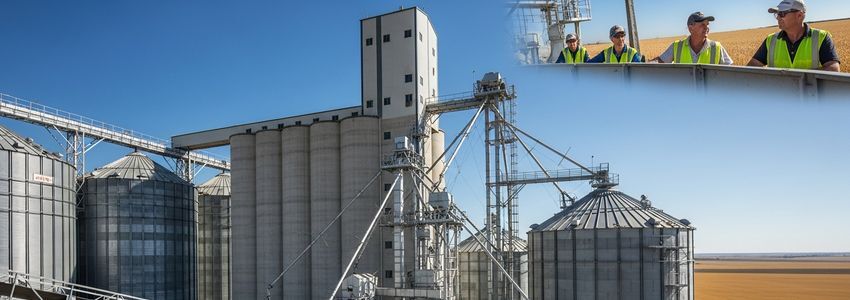
Running a grain elevator is one of the most capital-intensive operations in American agriculture. From towering concrete storage bins to high-capacity conveyor systems, bucket elevators, dryers, and the computer-controlled automation that makes modern grain handling possible - the equipment costs alone can run into the millions. Add in the working capital demands of buying grain at harvest, paying farmers, and waiting for commodity markets to move in your favor, and it becomes clear: grain elevator businesses live and die by their access to financing.
Whether you operate a small country elevator serving local farmers, a regional cooperative with multiple facilities, or an independent storage operation looking to expand capacity, this guide covers every financing option available in 2026. You'll learn what lenders look for, how to qualify for the best rates, and how Crestmont Capital can help you secure the capital you need to keep grain flowing.
In This Article
- What Are Grain Elevator Business Loans?
- Types of Financing for Grain Elevator Businesses
- Working Capital: The Lifeblood of Grain Operations
- Equipment Financing for Grain Handling Systems
- SBA Loans for Grain Elevator Businesses
- How to Qualify for Grain Elevator Financing
- Grain Elevator Financing: Key Stats and Process
- Financing Grain Elevator Expansion Projects
- Financing Options with Bad Credit
- How to Apply for a Grain Elevator Business Loan
- Next Steps
- Frequently Asked Questions
Need Financing for Your Grain Elevator Business?
Crestmont Capital offers fast, flexible business loans for grain elevator operators, agribusinesses, and rural enterprises. Get a decision in as little as 24 hours.
Apply Now - Free & No ObligationWhat Are Grain Elevator Business Loans?
Grain elevator business loans are commercial financing products tailored to the unique needs of grain storage, handling, and merchandising operations. These businesses require capital for a wide variety of purposes:
- Grain purchasing: Buying grain from farmers at harvest time when prices may be favorable
- Equipment: Bucket elevators, conveyors, grain dryers, augers, aeration systems, weigh scales, and automation controls
- Facility construction and expansion: Adding storage bins, concrete tanks, or a new elevator leg
- Working capital: Covering operating expenses between grain purchases and sales
- Technology upgrades: Remote monitoring, grain management software, and electronic ticketing systems
- Refinancing: Restructuring existing debt to improve cash flow
Unlike a simple retail or service business, a grain elevator's financing needs are tied closely to commodity markets, crop calendars, and regional agricultural dynamics. Lenders who understand agribusiness can structure deals that match seasonal cash flows and peak demand periods.
According to the U.S. Small Business Administration, agribusinesses are among the most underserved sectors when it comes to traditional bank financing, creating significant demand for alternative lending channels that understand the agricultural sector.
Types of Financing for Grain Elevator Businesses
Grain elevator operators have access to a diverse menu of financing options. The right product depends on your specific need, credit profile, time in business, and urgency.
1. Term Loans
A small business term loan provides a lump sum upfront, repaid over a set period with fixed or variable interest. For grain elevator businesses, term loans work well for:
- Major capital expenditures (grain bins, dryers, automation systems)
- Facility acquisition or construction
- Long-term debt refinancing
Loan terms typically range from 1 to 10 years, with amounts from $50,000 to $5 million or more depending on your financials. Interest rates vary widely - from around 6% for bank loans to 15-30% for alternative lenders - based on your creditworthiness and the lender.
2. Business Line of Credit
A business line of credit is ideal for the revolving working capital needs that define grain elevator operations. You draw funds as needed - for grain purchases, operating expenses, or unexpected repairs - and repay what you use, restoring your available credit. This flexibility is critical during harvest season when cash demands spike unpredictably.
3. Equipment Financing
Dedicated equipment financing uses the purchased equipment as collateral, making qualification easier and interest rates competitive. Bucket elevators, grain dryers, conveyor systems, and automated grain management equipment all qualify for equipment loans or leases.
4. SBA Loans
The U.S. Small Business Administration's loan programs - particularly the SBA 7(a) and SBA 504 - offer some of the lowest rates and longest terms available. SBA loans are excellent for expansion projects, real estate purchases, and major equipment acquisitions, though the application process takes longer than alternative lenders.
5. Agricultural Commodity Financing / Warehouse Receipts
Some lenders extend credit secured by the value of grain stored in your facility, documented with warehouse receipts. This specialized financing is particularly common for larger operations but requires specific licensing and insurance.
6. Fast Business Loans / Bridge Financing
When harvest comes early, elevator capacity is short, or you need to act quickly on a grain merchandising opportunity, fast business loans from alternative lenders can provide capital in 24-48 hours. Rates are higher, but the speed can be worth it.
7. USDA Farm Service Agency (FSA) Programs
The USDA's Farm Service Agency offers specialized loan programs for agricultural storage facilities, grain handling operations, and rural businesses. The USDA Business & Industry guaranteed loan program can be a powerful option for rural grain elevator operators.
Stat Spotlight: Grain Storage in America
According to the USDA NASS Grain Stocks report, U.S. grain storage capacity exceeds 26 billion bushels, with on-farm and off-farm storage split roughly evenly. Private commercial grain elevators handle a significant portion of the country's corn, soybeans, wheat, and sorghum - representing billions in storage and handling fees annually. This scale makes financing access critical for competitiveness.
Working Capital: The Lifeblood of Grain Operations
If there is one universal truth about grain elevator financing, it is this: working capital determines whether you survive harvest season. Grain elevators are essentially commodity traders who buy grain from farmers, store it, and sell it later (hopefully at a better price). This creates massive, short-duration capital needs.
The Harvest Cash Crunch
Consider a mid-size elevator handling 5 million bushels of corn during fall harvest. At $4.50/bushel, that is $22.5 million in grain purchases - most occurring within 8-10 weeks. Even if your elevator extends basis contracts and delayed pricing options, the capital demand is enormous. Without a robust line of credit, you may miss out on grain or damage relationships with local farmers.
Seasonal Cash Flow Patterns
Grain elevator cash flows follow highly predictable seasonal patterns:
- Fall (Sept-Nov): Peak outflows for grain purchases; maximum working capital demand
- Winter (Dec-Feb): Storage income; waiting for price improvement
- Spring/Summer (Mar-Aug): Grain sales; capital recovery; preparation for next harvest
Lenders who understand this cycle can structure revolving credit facilities that match these patterns, rather than forcing flat monthly payments that stress cash flow during grain-buying season.
How Much Working Capital Do You Need?
A rough formula: multiply your peak bushel throughput by the average purchase price, then determine what percentage you must purchase with borrowed funds (versus deferred pricing, hedged positions, or counterparty credit). A $5M working capital line is not unusual for a mid-size independent elevator handling 3-7 million bushels annually.
A business line of credit is typically the best working capital solution, since you can draw and repay continuously as you buy and sell grain throughout the marketing year.
Flexible Working Capital for Grain Elevator Operations
Need a line of credit that scales with harvest season? Crestmont Capital understands agribusiness cash flows. Apply today for a customized solution.
Get Working Capital NowEquipment Financing for Grain Handling Systems
A grain elevator is defined by its equipment. Modern facilities require a constellation of interconnected systems, each with significant capital costs. Let's break down the major equipment categories and financing options for each.
Bucket Elevators and Leg Systems
The vertical leg system is the heart of every grain elevator - moving grain from receiving pits to the tops of storage bins. A single new bucket elevator leg can cost anywhere from $150,000 to over $1 million depending on capacity (typically measured in bushels per hour). Financing terms of 5-7 years with 10-20% down are common for this type of equipment.
Grain Dryers
Continuous-flow and batch grain dryers are among the largest capital investments a grain elevator makes. Commercial dryers capable of handling harvest moisture levels range from $100,000 for smaller batch units to $500,000+ for high-capacity commercial continuous-flow dryers. Equipment financing with 3-7 year terms and the dryer as collateral is standard.
Conveyor Systems and Aeration Equipment
Ground conveyors, overhead conveyors, and bin-bottom aeration systems complete the material handling infrastructure. A full conveyor system upgrade can run $200,000-$500,000. These often qualify as components of a larger equipment financing package.
Grain Bins and Storage Tanks
Adding storage capacity is one of the most common capital projects for grain elevator operators. Steel flat-bottom bins range from $80,000 to $500,000+ per bin depending on size and features. Concrete tanks are even more expensive. These improvements are typically real property and may qualify for SBA 504 financing or commercial real estate loans.
Automation and Controls
Modern grain elevator management systems - remote monitoring, automated aeration controls, electronic ticketing, and grain management software - can cost $50,000-$250,000 for a complete installation. These technology upgrades can be financed through equipment loans or business term loans.
Pro Tip: Section 179 and Bonus Depreciation
Equipment purchased for your grain elevator may qualify for Section 179 deductions or bonus depreciation under federal tax law, allowing you to deduct a significant portion of the purchase price in the year acquired. Consult your tax advisor to understand how these provisions apply to your situation before selecting a financing structure.
SBA Loans for Grain Elevator Businesses
The Small Business Administration offers two primary loan programs that are well-suited to grain elevator businesses: the SBA 7(a) and the SBA 504. Understanding the differences helps you choose the right program.
SBA 7(a) Loans
The SBA 7(a) is the most versatile SBA loan program. SBA 7(a) loans can be used for:
- Working capital (up to 10-year repayment term)
- Equipment purchases (up to 10-year repayment term)
- Real estate (up to 25-year repayment term)
- Business acquisition
- Refinancing existing debt
Maximum loan amount is $5 million, with SBA guaranteeing up to 85% of loans under $150,000 and 75% above. Interest rates are tied to the prime rate plus a margin, typically resulting in rates between 6-10% in 2026. The qualification bar is higher than alternative lenders - typically 2+ years in business, good personal credit (650+), and demonstrable cash flow.
SBA 504 Loans
The SBA 504 program is purpose-built for major fixed asset purchases: real estate and heavy equipment. For grain elevator businesses expanding storage capacity or purchasing a new facility, the 504 can be ideal:
- Up to $5.5 million in SBA participation (higher for manufacturing and energy projects)
- Long terms: 10, 20, or 25 years
- Below-market fixed interest rates
- Typically requires 10% borrower equity (vs. 20-30% for conventional loans)
The 504 requires a Certified Development Company (CDC) as intermediary, adding some complexity to the process. However, for a $2-5 million grain storage expansion, the savings in interest cost over 20 years can be substantial.
Working with an experienced SBA lender like Crestmont Capital can streamline the application and help you understand which program best fits your project. Learn more at our SBA loans page.
How to Qualify for Grain Elevator Financing
Qualifying for grain elevator business loans requires preparing both your business finances and your personal financial picture. Here is what lenders evaluate:
Credit Score Requirements
The minimum credit score required depends on the financing type:
- SBA loans: Typically 650+ personal credit score
- Bank term loans: 680+ preferred
- Alternative lenders: 550+ (some as low as 500 for secured loans)
- Equipment financing: 620+ with strong collateral
If your personal credit is below optimal, explore options through our bad credit business loans page, or consider equipment financing where the collateral compensates for credit challenges.
Time in Business
Most traditional lenders require 2+ years in business. Alternative lenders may work with businesses as young as 6-12 months. Startups or newly acquired elevators face the most challenges and should explore SBA-backed options or equipment financing with strong personal guarantees.
Revenue and Cash Flow
Lenders evaluate annual revenue (typically want to see at least 1.25x debt service coverage) and cash flow trends. For grain elevators, the seasonal nature of revenue means lenders should analyze annualized financials rather than a single month or quarter. Be prepared to show 2-3 years of tax returns and year-to-date financials.
Collateral
Grain elevator businesses typically have substantial collateral available:
- Real property (land, buildings, concrete tanks, steel bins)
- Equipment (bucket elevators, dryers, conveyor systems)
- Grain inventory (with proper documentation and insurance)
- Accounts receivable (storage fees, basis contracts)
- Personal assets (real estate, investment accounts) for personal guarantees
Industry-Specific Factors
Lenders familiar with agribusiness will also consider:
- Licensed capacity and actual throughput history
- USDA grain warehouse licensing status
- Commodity hedging practices and open position risk
- Trade relationships with farmers and grain buyers
- Insurance coverage (property, crop, liability)
Stat Spotlight: Agriculture Financing Demand
A Bloomberg analysis of USDA data shows that farm sector debt in the U.S. exceeded $500 billion in recent years, with equipment and storage financing representing a growing share. Commercial grain storage operators face increasing pressure to modernize facilities to remain competitive, driving demand for capital.
Grain Elevator Financing: Key Stats and Process
The Grain Elevator Financing Landscape: 2026 Overview
The Grain Elevator Loan Application Process
Financing Grain Elevator Expansion Projects
Expanding a grain elevator - whether adding storage capacity, building a new receiving pit, or upgrading to a high-speed dryer - is one of the most common reasons operators seek financing. Expansion projects require careful planning to match the financing structure with the project timeline and expected return on investment.
Evaluating the ROI of Expansion
Before approaching lenders, be prepared to show the business case for your expansion. Key metrics include:
- Additional bushels handled: How much more grain can you receive and store?
- Incremental storage income: What is your storage fee per bushel per month?
- Handling fee revenue: At what rate do you charge per bushel handled?
- Payback period: When do the incremental revenues cover the debt service?
A well-prepared feasibility analysis dramatically improves your loan application success rate. Lenders want to see that the expansion pays for itself within the loan term.
Construction Financing vs. Permanent Financing
Large expansion projects may require a two-phase approach:
- Construction or bridge loan: Short-term financing to fund the construction period
- Permanent financing: Long-term loan (SBA 504, bank term loan) that replaces the construction loan upon project completion
Alternatively, some lenders offer a single construction-to-permanent loan that converts automatically once the project is complete, saving time and closing costs.
Agricultural Real Estate Considerations
Grain storage facilities are typically classified as agricultural real estate, which affects both appraisal methodology and available loan products. Appraisers use income capitalization, cost approach, and comparable sales methods for agricultural storage facilities. Understanding how your elevator will be appraised helps you set realistic expectations for loan-to-value ratios.
According to CNBC reporting on USDA data, agricultural real estate values have remained strong in most regions, which is positive news for grain elevator operators seeking equity-based financing.
Financing Options with Bad Credit
Not every grain elevator operator has a pristine credit history. Equipment failures, commodity market downturns, or past business challenges can leave marks on your credit profile. The good news: options exist for borrowers with less-than-perfect credit.
Secured Equipment Loans
When the equipment itself serves as collateral, lenders are often willing to extend credit to borrowers with lower credit scores. The risk is lower for the lender, so qualification requirements are relaxed. This is an excellent option for purchasing a used grain dryer or bucket elevator system.
Asset-Based Lines of Credit
If you have substantial grain inventory or accounts receivable, an asset-based line of credit (ABL) allows you to borrow against those assets regardless of your credit score. The lender's primary security is the asset value, not your creditworthiness.
Alternative Lenders
Non-bank lenders and online business lenders often have more flexible qualification criteria than traditional banks. While rates may be higher, these lenders can provide access to capital when banks say no. Crestmont Capital's bad credit business loans are designed specifically for business owners facing credit challenges.
Partner or Co-Borrower
If your personal credit is problematic, bringing in a business partner with stronger credit as a co-borrower can improve qualification odds significantly. The co-borrower's personal guarantee provides additional security for the lender.
Building Credit While Operating
If immediate expansion isn't critical, taking 6-12 months to improve your credit profile can dramatically change your financing options. Pay down existing debt, correct errors on your credit report, and establish trade lines with suppliers who report to commercial credit bureaus.
For grain elevator operators with credit challenges, our team at Crestmont Capital can help you find the most appropriate financing path. Apply online to get started with no obligation.
How to Apply for a Grain Elevator Business Loan
The loan application process for grain elevator businesses follows a predictable path. Being well-prepared accelerates approval and improves your chances of securing the best terms.
Step 1: Determine Your Financing Need
Before applying, clearly define what you need the money for, how much you need, and how long you need to repay it. Matching the loan product to the purpose is critical - using a short-term loan for long-term capital expenditures creates cash flow problems; using long-term debt for working capital is inefficient.
Step 2: Gather Your Documents
Most lenders will request:
- 3 years of business tax returns
- Current year-to-date financial statements (P&L and balance sheet)
- 3 months of business bank statements
- Personal tax returns (last 2 years)
- Business plan or project narrative (for expansion projects)
- Existing debt schedule
- USDA grain warehouse license (if applicable)
- Proof of insurance
- Equipment quotes or invoices (for equipment financing)
Step 3: Apply Online
Modern lenders like Crestmont Capital allow you to apply entirely online in minutes. Our application at offers.crestmontcapital.com is straightforward and secure. You'll receive a decision quickly - often same-day or next-day for alternative lending products.
Step 4: Underwriting Review
Once your application is submitted, a credit analyst reviews your financial profile. For larger requests or SBA loans, this process takes longer. Be responsive to requests for additional information - delays at this stage slow the entire process.
Step 5: Closing and Funding
Once approved, you'll review and sign loan documents. Funds are typically deposited into your business bank account within 1-3 business days for alternative lenders, or 2-4 weeks for SBA loans. Equipment financing may involve direct payment to the equipment seller.
Tips for a Stronger Application
- Present seasonal cash flow with appropriate context (show annual rather than peak-period data)
- Include a brief explanation of how your elevator operates and how you manage commodity risk
- Highlight any long-term farmer or buyer relationships that provide revenue stability
- If expanding, include detailed project plans and ROI projections
- If requesting working capital, explain your grain purchasing and marketing strategy
Internal Links to Relevant Topics
As you explore your financing options, these related guides from Crestmont Capital's blog may be helpful:
- Agricultural Business Loans: The Complete Financing Guide
- Equipment Financing 101: How It Works and Who Should Use It
Ready to Finance Your Grain Elevator Business?
Crestmont Capital is a top-rated U.S. business lender offering fast, flexible financing for grain elevator operators and agribusinesses nationwide. Get started in minutes.
Apply Now - No ObligationNext Steps: Securing Your Grain Elevator Financing
Your Action Plan
- Define your need: Is this a working capital line, equipment purchase, or expansion project?
- Check your credit: Pull your personal and business credit reports and address any errors
- Gather documents: Compile 3 years of tax returns, recent financials, and bank statements
- Compare options: Consider SBA loans for large projects, equipment financing for major purchases, and lines of credit for working capital
- Apply with Crestmont Capital: Get a decision quickly with our simple online application
- Use funds strategically: Match your repayment terms to the cash flow generated by the financed asset
Frequently Asked Questions About Grain Elevator Business Loans
What types of loans are available for grain elevator businesses?
Grain elevator businesses can access term loans, business lines of credit, SBA 7(a) and 504 loans, equipment financing, USDA Business & Industry guaranteed loans, agricultural commodity financing (warehouse receipt loans), and fast alternative business loans. The best option depends on the purpose of the financing, your business profile, and how quickly you need funds.
How much can I borrow for a grain elevator business?
Loan amounts vary widely depending on the lender and loan type. Alternative lenders may offer $10,000 to $500,000; SBA loans go up to $5 million (or more for 504 projects); bank term loans can reach $10 million or more for well-qualified borrowers. The amount you can borrow is primarily driven by your revenue, cash flow, collateral, and intended use of funds.
What credit score do I need for a grain elevator business loan?
Requirements vary by lender. SBA loans typically require a 650+ personal credit score. Traditional banks often prefer 680+. Alternative lenders like Crestmont Capital may work with scores as low as 550-600, especially for secured loans where collateral compensates for lower credit. Equipment financing is often available to borrowers with scores as low as 620 when the equipment serves as collateral.
Can I get financing for a grain elevator with bad credit?
Yes. Several options exist for grain elevator operators with less-than-perfect credit: secured equipment loans, asset-based lines of credit (using grain inventory or receivables as collateral), and alternative business lenders with more flexible qualification criteria. Crestmont Capital's bad credit business loans are designed for exactly this situation.
How do SBA loans work for grain elevator businesses?
SBA loans are government-backed loans made by approved lenders. The SBA guarantees a portion of the loan, reducing risk for the lender and enabling better terms for borrowers. For grain elevators, the SBA 7(a) is most versatile (working capital, equipment, real estate up to $5M) while the SBA 504 is designed for major real estate and equipment projects with longer terms and lower fixed rates. Application timelines are longer than alternative lenders - typically 4-8 weeks.
What can I use grain elevator business loan funds for?
Common uses include: purchasing grain from farmers (working capital), acquiring or constructing storage bins and facilities, buying or upgrading grain handling equipment (dryers, bucket elevators, conveyors), implementing automation and technology systems, refinancing existing debt, acquiring another elevator operation, and covering operating expenses during off-season periods.
How long does it take to get a grain elevator business loan?
Timeline varies significantly by lender type. Alternative lenders like Crestmont Capital can fund in as little as 24-48 hours. Traditional bank term loans typically take 2-4 weeks. SBA loans take 4-8 weeks on average, though SBA Express loans can be faster. Equipment financing typically takes 3-5 business days.
What collateral do lenders accept for grain elevator loans?
Grain elevator businesses typically have substantial collateral available: real property (land, buildings, storage bins), equipment (bucket elevators, dryers, conveyor systems), grain inventory (with proper documentation and insurance), accounts receivable (storage fees, basis contracts), and personal assets for personal guarantees. Lenders generally prefer assets that are easy to value and liquidate in the event of default.
Can a startup grain elevator get financing?
Startup financing for grain elevators is challenging but possible. Options include: USDA Farm Service Agency programs designed for rural business startups, SBA 7(a) loans with a strong personal guarantee, equipment financing where the equipment serves as collateral, and seller financing if acquiring an existing operation. A detailed business plan and strong personal financial profile (high credit score, significant net worth) are essential for startups.
Are USDA loan programs available for grain elevator businesses?
Yes. The USDA's Business & Industry (B&I) guaranteed loan program is specifically designed for rural businesses, including grain storage and handling operations. These loans are made by approved lenders with USDA guarantees of up to 80%, enabling access to capital in rural communities. The USDA FSA also offers specialized storage facility loan programs. Visit the USDA Rural Development website for current program details.
How do seasonal cash flows affect grain elevator loan qualification?
Seasonal cash flows are a defining feature of grain elevator businesses, and experienced lenders understand this. When evaluating your application, provide annual (not monthly) financial summaries and explain the seasonal pattern. Lenders who understand agribusiness will analyze your peak demand, off-season income, and annual net income rather than judging a single difficult month out of context. Structuring working capital lines with annual review periods accommodates the harvest cycle naturally.
What interest rates should I expect for grain elevator business loans?
Interest rates depend on the loan type and your qualifications. SBA loans typically range from 6-10% in 2026. Bank term loans may be 6-12%. Equipment financing runs 5-15%. Alternative lenders charge more - typically 15-35% APR for term loans, though rates vary widely based on risk factors. A business line of credit rate depends on how much you draw and for how long. Improving your credit score, offering strong collateral, and demonstrating stable cash flow are the best ways to secure lower rates.
Can I finance used grain handling equipment?
Yes. Many lenders offer equipment financing for used grain handling equipment, though loan-to-value ratios are often lower than for new equipment (typically 70-80% of appraised value vs. 80-100% for new). You'll need an equipment appraisal, proof of inspection, and sometimes a seller invoice. Used bucket elevators, grain dryers, and conveyor systems are common candidates for used equipment financing.
Does Crestmont Capital finance grain elevator businesses?
Yes. Crestmont Capital is a leading business lender that works with agribusinesses including grain elevator operators. We offer term loans, business lines of credit, equipment financing, and SBA loan assistance. Our team understands the unique financing needs of agricultural operations and can structure solutions that match your seasonal cash flows and business goals. Apply online to get started.
What documents do I need to apply for a grain elevator business loan?
Typical documentation requirements include: 3 years of business tax returns, current year-to-date profit and loss statement and balance sheet, 3 months of business bank statements, 2 years of personal tax returns, personal financial statement, existing debt schedule, proof of business ownership (articles of incorporation, operating agreement), USDA grain warehouse license if applicable, insurance certificates, and - for expansion projects - project plans, cost estimates, and ROI projections. Having these documents ready before applying significantly speeds up the approval process.
Disclaimer: The information provided in this article is for general educational purposes only and is not financial, legal, or tax advice. Funding terms, qualifications, and product availability may vary and are subject to change without notice. Crestmont Capital does not guarantee approval, rates, or specific outcomes. For personalized information about your business funding options, contact our team directly.