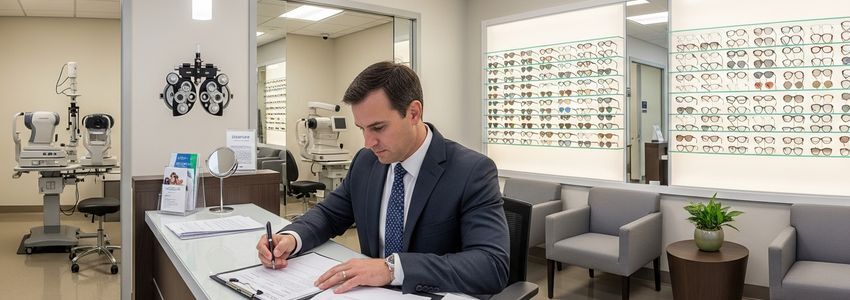
Eye care practices occupy a unique position in healthcare — combining the clinical rigor of a medical practice with the retail dynamics of an optical dispensary. Optometrists and ophthalmologists deliver essential preventive care and medical treatment, while their optical retail operations generate significant additional revenue from eyeglasses, contact lenses, and premium lens technologies. This dual clinical-retail model creates both strong revenue potential and distinctive financing needs that differ from most other healthcare practice types. Whether you are an optometrist opening your first private practice, an ophthalmologist upgrading surgical equipment, or a group practice expanding to additional locations, this guide covers every financing option available to eye care business owners.
In This Article
- Why Eye Care Practices Need Business Financing
- Types of Eye Care Business Loans
- Equipment Financing for Eye Care Practices
- SBA Loans for Eye Care Practices
- How to Qualify for an Eye Care Business Loan
- Eye Care Loan Rates, Terms, and Amounts
- Best Uses for Eye Care Practice Financing
- Eye Care Industry Statistics
- How to Apply and What to Prepare
- Why Eye Care Practices Choose Crestmont Capital
- Frequently Asked Questions
Why Eye Care Practices Need Business Financing
Eye care practices require capital investment across both clinical equipment and retail optical inventory — a combination that creates distinctive financing needs:
- Diagnostic and clinical equipment — slit lamps ($3,000–$25,000), autorefractors ($5,000–$20,000), optical coherence tomography (OCT) machines ($25,000–$80,000), visual field analyzers ($12,000–$40,000), retinal cameras ($15,000–$60,000), corneal topographers ($10,000–$35,000)
- Surgical equipment (ophthalmology) — phacoemulsification systems ($50,000–$200,000), LASIK excimer lasers ($300,000–$800,000), femtosecond lasers ($400,000–$1,000,000), retinal lasers ($30,000–$120,000)
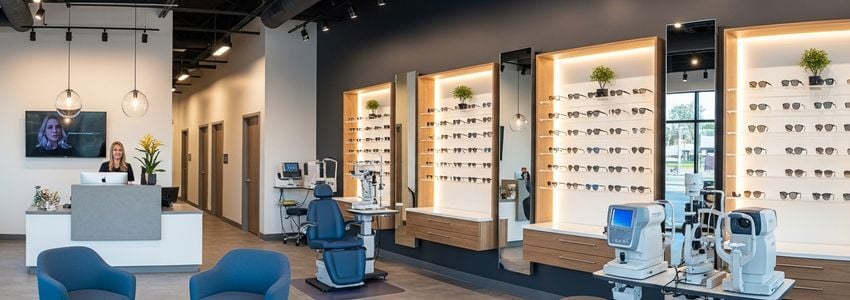
- Optical dispensary inventory — frames, lenses, contact lens inventory ($20,000–$80,000 initial inventory for a well-stocked dispensary)
- Leasehold improvements — examination lanes, dispensary buildout, waiting room, dark room, optical lab ($40,000–$200,000)
- Practice management and EMR systems — OfficeMate, Eyefinity, RevolutionEHR ($5,000–$25,000 setup plus monthly)
- Working capital — insurance credentialing delays, accounts receivable float, dispensary inventory replenishment, staffing during ramp-up
- Practice acquisition — purchasing an established optometry or ophthalmology practice with existing patient base and optical dispensary
Dual Revenue Model: Eye care practices that optimize both their clinical and optical dispensary revenue streams generate substantially higher total revenue than purely clinical practices. Well-managed optical dispensaries can contribute 40–60% of total practice revenue. Financing investments in both clinical technology and dispensary enhancement pays off across both revenue streams. For healthcare practice financing context, see our Medical Practice Loans: The Complete Financing Guide for Physicians and Healthcare Owners. For equipment financing details, see our Construction Equipment Financing: The Complete Guide for Contractors and Construction Companies.
Types of Eye Care Business Loans
Healthcare Practice Term Loans
Banks and specialty healthcare lenders offer practice-specific term loans for licensed optometrists and ophthalmologists. These practice loans recognize the professional credential and predictable earning capacity of licensed eye care providers. Terms typically run 5 to 10 years at competitive rates (8%–15%) for qualified ODs and MDs with strong credit profiles.
SBA 7(a) Loans
SBA 7(a) loans are among the most commonly used financing tools for eye care practice startups and major expansions. With loan amounts up to $5 million and terms up to 10 years, SBA 7(a) loans cover leasehold improvements, equipment, optical dispensary buildout, working capital, and practice acquisitions at competitive rates. Eye care practices qualify as professional healthcare service businesses under SBA guidelines.
Equipment Financing
Ophthalmic equipment — diagnostic instruments, imaging systems, and surgical equipment — qualifies for equipment financing using the assets as collateral. Equipment lenders familiar with medical equipment can efficiently finance OCT systems, retinal cameras, and surgical platforms. Terms run 36 to 84 months at rates of 6%–22%. Ophthalmology surgical equipment at $300,000–$1,000,000 is typically financed through specialty medical equipment programs or SBA 504.
SBA 504 Loans
For ophthalmology practices purchasing their surgical center or office building, or financing large surgical equipment packages, SBA 504 loans provide below-market fixed rates (on the SBA portion) and long terms (10 years for equipment, 20–25 years for real estate) with only 10% down from the borrower.
Business Lines of Credit
A revolving line of credit addresses two eye care cash flow needs: the insurance reimbursement lag (vision and medical claims may take 30 to 60 days to pay) and the optical inventory replenishment cycle. Lines of $25,000–$150,000 cover operational cash flow without requiring new loan applications for each purchase cycle.
Inventory Financing
Optical dispensary frame and lens inventory qualifies for inventory financing using the inventory as collateral. Inventory financing advances 50%–70% of optical inventory value, enabling a larger and more complete frame selection without tying up operating cash in frame boards.
Ready to Launch or Grow Your Eye Care Practice?
Get fast, flexible financing from the #1 business lender in the U.S. No obligation — apply in minutes.
Apply Now →Equipment Financing for Eye Care Practices
Ophthalmic equipment is the largest capital investment for most eye care practices. Key equipment categories and typical financing needs:
| Equipment | Typical Cost | Best For |
|---|---|---|
| Slit Lamp (digital) | $5K–$25K | Anterior segment examination — every optometry practice |
| OCT (Optical Coherence Tomography) | $25K–$80K | Retinal/glaucoma imaging; revenue-generating procedure |
| Autorefractor / Phoropter | $5K–$20K | Refractive examination |
| Visual Field Analyzer | $12K–$40K | Glaucoma monitoring; billing-eligible procedure |
| Retinal Camera (fundus) | $15K–$60K | Fundus photography; diabetic retinopathy screening |
| Corneal Topographer | $10K–$35K | Contact lens fitting, LASIK evaluation |
| Phacoemulsification System (cataract) | $50K–$200K | Cataract surgery — ophthalmology |
| LASIK Excimer Laser | $300K–$800K | Refractive surgery — ophthalmology/LASIK center |
Equipment financing for eye care practices typically requires:
- Equipment invoice or quote
- 6+ months in business
- Credit score 580–620+
- Basic revenue documentation
- OD or MD license
SBA Loans for Eye Care Practices
Eye care practices qualify for all major SBA programs as professional healthcare service businesses:
| Program | Max Amount | Best Use | Min. Credit | Timeline |
|---|---|---|---|---|
| SBA 7(a) | $5 million | Practice startup, equipment, expansion, acquisition | 650+ | 60–90 days |
| SBA 504 | $5.5M (CDC) | Facility purchase, LASIK/surgical equipment packages | 680+ | 60–120 days |
| SBA Express | $500,000 | Equipment, working capital, expansion | 650+ | 30–45 days |
How to Qualify for an Eye Care Business Loan
Credit Score Requirements
- Healthcare practice / bank term loans: 700+
- SBA 7(a) loans: 650–680+
- Online alternative term loans: 600–650+
- Equipment financing: 580–620+
- Business lines of credit: 600–650+
Time in Practice / Business
- Banks and SBA (established practices): 2 years preferred
- SBA startup loans: New practice with OD or MD credential + business plan
- Equipment financing: 6 months (startups considered with license)
- Online alternative lenders: 6 months to 1 year
Annual Revenue
- SBA and bank loans (established): $200,000+ annually
- Online term loans: $100,000+ annually
- Equipment financing: Varies by equipment value; license is primary credential
Eye Care-Specific Considerations
- OD or MD licensure: Active state license is the primary professional credential for eye care practice financing. Lenders view licensed ODs and MDs as lower-risk borrowers due to professional oversight and income predictability.
- Insurance panel participation: Vision insurance (VSP, EyeMed, Davis Vision, Spectera) and medical insurance credentialing status determines the practice's revenue potential. Panel participation documentation strengthens loan applications.
- Optical dispensary revenue: Practices with strong optical dispensary operations (40–60% of total revenue from optical sales) demonstrate the dual revenue model that makes eye care practices highly profitable.
- Equipment revenue analysis: OCT, visual fields, retinal cameras, and other diagnostic equipment generate billable procedure revenue beyond the basic exam. Lenders appreciate seeing these equipment investments justified by projected billing revenue.
Eye Care Practice Loan Rates, Terms, and Amounts
| Loan Type | Typical Rate | Term | Amount Range | Speed |
|---|---|---|---|---|
| SBA 7(a) Loan | 10%–13% | Up to 10 years | $50K–$5M | 60–90 days |
| Healthcare Practice Loan | 8%–15% | 5–10 years | $50K–$2M | 2–8 weeks |
| Equipment Financing | 6%–22% | 3–7 years | $5K–$1M+ | 1–14 days |
| Online Term Loan | 15%–45% | 3 months–5 years | $10K–$500K | 1–5 days |
| Business Line of Credit | 8%–30% | Revolving | $15K–$150K | 1–7 days |
Best Uses for Eye Care Practice Financing
Opening a New Optometry Practice
Transitioning from an employed OD position to private practice ownership is the most common use of eye care startup financing. A well-capitalized optometry practice startup requires $150,000 to $400,000 covering leasehold improvements, examination equipment, optical dispensary buildout and inventory, practice management software, and working capital. SBA 7(a) loans of $125,000 to $350,000 (with the OD contributing 15–20% equity) are the standard financing structure for optometry practice startups.
Adding OCT and Advanced Diagnostic Technology
OCT (Optical Coherence Tomography) is the single highest-ROI equipment investment for most optometry practices. An OCT system ($25,000–$80,000) generates billable procedures at $50–$120 per scan for retinal imaging, macular degeneration monitoring, and glaucoma management. A practice performing 5 OCT scans per day generates $75,000–$150,000+ in annual procedure revenue from a single instrument — paying off its financing cost within months while generating ongoing revenue for years.
Expanding the Optical Dispensary
The optical dispensary is often the highest-margin revenue component of an eye care practice. A practice that sells 50 pairs of eyeglasses per month at $350 average revenue generates $210,000 in annual optical revenue — typically at 50–60% gross margin. Investing in a better frame selection ($20,000–$50,000 in additional inventory), improved dispensary design, and lens technology upgrades directly increases optical revenue. Inventory financing or a line of credit covers these investments.
Adding LASIK or Refractive Surgery
Ophthalmology practices adding LASIK capability require a $300,000–$800,000 excimer laser platform financed through medical equipment financing or SBA 504. LASIK procedures generate $1,500–$3,000+ per eye in self-pay revenue. A practice performing 10 LASIK procedures per month at $2,500 average generates $300,000 in annual LASIK revenue — the laser typically pays for itself within 12 to 24 months at moderate case volume.
Acquiring an Established Eye Care Practice
Purchasing an established optometry or ophthalmology practice provides immediate patient revenue, insurance panel credentials, optical dispensary operations, and staff team — eliminating the startup ramp-up period. SBA 7(a) acquisition loans are the most commonly used vehicle for eye care practice acquisitions. Practice purchase prices typically range from 60% to 80% of gross annual collections for optometry and 100% to 150%+ of EBITDA for ophthalmology.
Eye Care Industry Statistics
- The U.S. eye care services industry generates approximately $40–45 billion in annual revenue across optometry practices, ophthalmology practices, and optical retail (American Optometric Association)
- Approximately 75% of U.S. adults use some form of vision correction — glasses or contact lenses — creating a large, stable patient base with recurring annual exam needs
- There are approximately 40,000 practicing optometrists in the United States, with the profession growing steadily as the aging population increases demand for eye care services
- The average optometry practice generates $600,000 to $1,200,000 in annual revenue, combining clinical exam revenue with optical dispensary sales
- OCT technology adoption in optometry has grown to over 80% of full-scope practices, reflecting the procedure's established clinical role in retinal and glaucoma management
- The aging Baby Boomer population is driving above-average demand growth for eye care services — cataracts, macular degeneration, glaucoma, and diabetic retinopathy all increase in prevalence with age
How to Apply and What to Prepare
For New Practice Startup Financing
- Active state OD or MD license
- Business plan with financial projections (revenue per exam, optical capture rate, insurance mix)
- Personal financial statement and credit report
- Evidence of equity contribution (bank statements)
- Signed office lease or letter of intent
- Equipment quotes and dispensary buildout estimates
For Established Practice Loans
- 2 to 3 years of business and personal tax returns
- Year-to-date profit and loss statement
- Balance sheet
- 12 months of business bank statements
- Insurance participation documentation (vision and medical panel credentials)
- Practice management system patient and revenue reports
- Personal financial statement
Application Tips
- Quantify your optical capture rate: The percentage of patients who purchase eyeglasses from your dispensary (capture rate) is a key indicator of optical revenue potential. A 50% capture rate at $350 average sale on 1,000 annual comprehensive exams = $175,000 in optical revenue. Document this metric when applying for dispensary enhancement financing.
- Document insurance panel participation: VSP, EyeMed, and major medical insurance panel credentials demonstrate revenue predictability that lenders value.
- Justify equipment ROI: For major equipment purchases (OCT, retinal camera, surgical equipment), including a brief analysis of expected procedure volume and billing revenue per use demonstrates financial planning sophistication.
Why Eye Care Practices Choose Crestmont Capital
Crestmont Capital is the #1 rated business lender in the United States. We work with eye care practitioners at every stage — from newly licensed ODs opening their first private practice to multi-location ophthalmology groups financing surgical suite expansions. We understand the dual clinical-retail revenue model, ophthalmic equipment financing, and the unique capital structure of eye care practices.
- Healthcare practice expertise: We understand optometry and ophthalmology practice financing
- Fast approvals: Decisions in as little as 24 hours for qualified established practices
- Multiple products: SBA programs, practice loans, equipment financing, inventory financing, and working capital solutions
- Transparent terms: No hidden fees, complete cost disclosure before you sign
Get Your Eye Care Business Loan Today
Apply in minutes. No obligation. We understand eye care practice financing.
Apply Now →Frequently Asked Questions
Frequently Asked Questions: Eye Care Business Loans
Disclaimer: This article is provided for general educational purposes only and does not constitute financial, legal, or clinical practice advice. Loan rates, terms, and requirements vary by lender and are subject to change. Revenue, ROI, and financial projections are estimates based on publicly available industry data and vary significantly by practice, market, fee schedule, and patient volume. Consult a qualified financial advisor and optometry practice management consultant before making practice financing decisions.