
 (800) 949-0401
Eco-Friendly Equipment Financing for Sustainable Business Growth: The Complete 2026 Guide
Running a greener business is no longer just good for the planet. It is increasingly good for your bottom line. Solar panels, energy-efficient HVAC systems, electric delivery vehicles, LED lighting upgrades, and water-saving irrigation tools are all examples of eco-friendly equipment that can cut operating costs, attract environmentally conscious customers, and qualify your business for special financing programs. The challenge for most small business owners is the upfront cost. That is where green equipment financing comes in.
This guide covers everything you need to know about financing eco-friendly equipment in 2026, from the types of funding available and how to qualify, to the top lenders, real-world examples, and a step-by-step plan to get started today.
In This Article
- What Is Green Equipment Financing?
- Why Eco-Friendly Equipment Matters for Your Business
- Types of Financing Available
- How Green Equipment Financing Works
- Who Qualifies
- Top Eco-Friendly Equipment You Can Finance
- How Crestmont Capital Helps
- Real-World Scenarios
- Comparison: Financing vs. Leasing vs. Paying Cash
- Frequently Asked Questions
- How to Get Started
What Is Green Equipment Financing?
Green equipment financing refers to business loans, equipment loans, and lease agreements specifically used to purchase, install, or upgrade environmentally friendly equipment. The term covers a wide range of products: commercial solar installations, energy-efficient industrial machinery, electric or hybrid fleet vehicles, smart HVAC systems, LED lighting conversions, and more.
Unlike generic small business loans, many green equipment financing programs come with added incentives. Some lenders offer reduced interest rates for verified sustainable purchases. Government-backed programs through the Small Business Administration (SBA) and the U.S. Department of Energy provide favorable terms for qualifying eco-friendly projects. And some utility companies partner with lenders to offer special on-bill financing options that let you repay the cost of efficiency upgrades through your utility bill over time.
At its core, though, eco-friendly equipment financing works the same way as standard equipment financing: a lender provides the capital to purchase the equipment, and you repay that capital (plus interest and fees) over a set term. The equipment itself often serves as collateral, which can make approval easier even for businesses with limited credit history.
Did You Know: According to the U.S. Small Business Administration, energy-efficient upgrades can reduce a small business's operating costs by 10% to 30% annually, making green equipment one of the highest-ROI investments a business owner can make.
Why Eco-Friendly Equipment Matters for Your Business
The case for going green has never been stronger. Energy costs represent a significant line item for most small businesses, and modern eco-friendly equipment can dramatically reduce those costs. A commercial solar installation, for example, can offset or eliminate electricity bills for decades. Energy-efficient refrigeration units can cut energy usage by 20% or more compared to older models. Electric delivery vehicles eliminate fuel costs and reduce maintenance expenses over time.
Beyond cost savings, consumer preferences are shifting. A 2023 Forbes survey found that over 60% of consumers say they are more likely to purchase from a company with a clear sustainability commitment. For restaurants, retailers, hotels, and service businesses, investing in visible green upgrades can be a genuine competitive advantage that attracts new customers and builds brand loyalty.
There is also the regulatory landscape to consider. Many states and municipalities are tightening environmental regulations, particularly around emissions, waste disposal, and energy consumption. Businesses that invest in eco-friendly equipment now are better positioned to comply with future rules without scrambling for emergency capital.
Finally, many eco-friendly investments also qualify for federal and state incentive programs including rebates, grants, and utility credits that can significantly reduce the net cost. When you combine these incentives with low-cost financing, the business case for sustainable equipment becomes compelling even in the short term.
Ready to Finance Your Green Equipment?
Crestmont Capital helps businesses across the U.S. fund eco-friendly upgrades fast. Apply in minutes with no obligation.
Apply Now →Types of Financing Available for Eco-Friendly Equipment
Business owners looking to finance sustainable equipment upgrades have several options. The right choice depends on your credit profile, cash flow, the type of equipment, and how long you plan to use it.
Equipment Loans
A traditional equipment loan provides a lump sum to purchase the equipment outright. You own the equipment from day one and make fixed monthly payments over a term typically ranging from 24 to 84 months. The equipment serves as collateral, which simplifies the approval process. Equipment loans are ideal for long-lived assets like solar installations, industrial machinery, or HVAC systems where you plan to keep the equipment for many years.
Equipment Leasing
Equipment leasing allows you to use the equipment without purchasing it outright. You make regular payments over a lease term and, at the end, may have the option to purchase the equipment at a residual value, renew the lease, or return the equipment. Leasing is a good option for technology-driven green equipment that may become outdated quickly, since you can upgrade to newer, more efficient models at the end of the lease term. Leasing also tends to require lower upfront capital than purchasing.
SBA Green Loans
The U.S. Small Business Administration offers several loan programs that can be used for eco-friendly equipment purchases. The SBA 7(a) loan is the most versatile, with amounts up to $5 million and terms up to 10 years for equipment. The SBA 504 loan is specifically designed for fixed assets including energy-efficient equipment and renewable energy systems, with amounts up to $5.5 million and some of the lowest fixed interest rates available in the market. SBA loans are backed by the federal government, which reduces lender risk and often results in better terms for borrowers.
Business Lines of Credit
A business line of credit is a revolving credit facility that lets you draw funds as needed up to a set limit. This can be useful for phased green upgrades where you are rolling out improvements over time rather than making a single large purchase. You only pay interest on what you actually use, which gives you flexibility to manage cash flow during the transition.
Green Business Loans and Specialty Programs
Some lenders offer dedicated green business loan programs with preferential rates for verified sustainable purchases. These programs often partner with certification bodies like LEED, ENERGY STAR, or state-run clean energy agencies to verify that the financed equipment meets specific environmental standards. Utility companies also offer on-bill financing programs that allow businesses to repay the cost of energy efficiency upgrades through their utility bills over time, with no separate loan application required.
Working Capital Loans
If the eco-friendly upgrade you need does not fit neatly into an equipment category (for example, a comprehensive energy audit followed by multiple small improvements), a working capital loan can provide flexible funding. These are typically unsecured loans with shorter terms and higher rates than equipment loans, but they offer speed and flexibility that specialized equipment loans sometimes cannot match.
How Green Equipment Financing Works: Step by Step
Understanding the financing process from application to funding helps you move quickly and avoid common pitfalls. Here is a typical timeline for eco-friendly equipment financing:
Quick Guide
How Green Equipment Financing Works at a Glance
Determine exactly what eco-friendly equipment you need, get vendor quotes, and calculate the expected ROI from energy savings or efficiency gains.
Decide between an equipment loan, lease, SBA loan, or line of credit based on your ownership goals, cash flow, and credit profile.
Prepare recent bank statements, business tax returns, equipment invoices or quotes, and proof of business ownership.
Submit your application to a lender. Equipment financing approvals can happen as fast as 24 to 48 hours for straightforward requests.
Funds are paid directly to the vendor or deposited in your account. Your equipment is delivered, installed, and starts generating savings.
Who Qualifies for Eco-Friendly Equipment Financing?
Qualification requirements vary by lender and loan type, but most equipment financing programs look at a consistent set of factors. Here is what lenders typically evaluate:
Credit Score
Most equipment lenders want to see a minimum personal credit score of 600 to 650 for standard equipment loans. SBA programs generally require a score of 650 or higher. Some alternative lenders will work with scores as low as 550, though the terms will be less favorable. Having a strong business credit history can also compensate for a lower personal score in some cases.
Time in Business
Lenders typically prefer businesses that have been operating for at least 12 to 24 months. Startups can still qualify through SBA microloan programs, vendor financing, or by providing additional collateral or a personal guarantee. For established businesses with two or more years of operating history, options are significantly broader.
Annual Revenue
Most equipment lenders look for annual revenue of at least $100,000 to $150,000. Your revenue helps lenders gauge your ability to manage loan payments comfortably alongside your other business obligations. Strong revenue can offset a lower credit score or limited credit history.
Cash Flow
Lenders want to see that your business generates enough cash flow to cover loan payments. Typically, lenders look for a debt service coverage ratio (DSCR) of 1.25 or higher, meaning your net operating income should be at least 25% more than your total debt payments. Green equipment that generates provable energy savings can actually strengthen your DSCR calculation over time.
The Equipment Itself
Since eco-friendly equipment often serves as collateral, lenders consider the equipment's resale value, expected lifespan, and whether it is standard or highly specialized. Well-known categories like solar panels, electric vehicles, and ENERGY STAR-rated HVAC systems are generally easy to finance because lenders understand their value and resale potential.
Pro Tip: Even if your credit score is below 650, you may still qualify for eco-friendly equipment financing through SBA microloan programs, CDFI (Community Development Financial Institution) lenders, or vendor financing programs. Some utility-sponsored energy efficiency programs have no credit check requirements at all.
Top Eco-Friendly Equipment You Can Finance in 2026
The range of eco-friendly equipment that qualifies for business financing is broader than most owners realize. Below are some of the most popular categories:
Solar Energy Systems
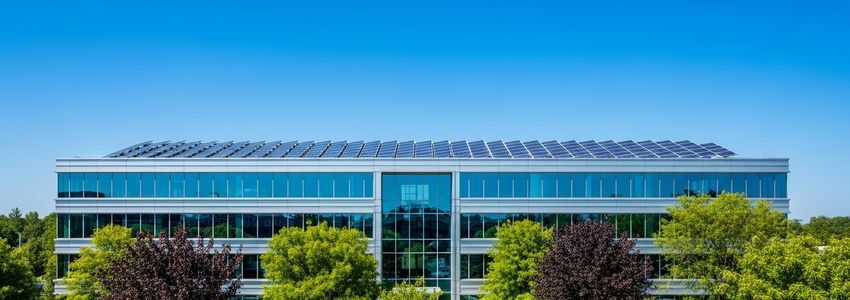
Commercial solar installations are among the most commonly financed green upgrades. A rooftop or carport solar system can generate enough electricity to significantly reduce or eliminate your utility costs. Financing terms for solar systems typically run 5 to 25 years, with monthly payments that are often lower than the electricity savings the system generates from day one. CNBC has reported that commercial solar payback periods have shortened to as little as 4 to 7 years in many markets, making this one of the fastest-returning green investments available.
Electric and Hybrid Fleet Vehicles
For businesses that rely on delivery vehicles, service trucks, or company cars, transitioning to electric or hybrid vehicles can generate substantial fuel and maintenance savings. The upfront cost of electric commercial vehicles is higher than traditional counterparts, but the total cost of ownership is increasingly competitive as battery technology improves and charging infrastructure expands. Fleet vehicle financing is well established, and electric vehicles can qualify for the same commercial auto loan programs as traditional vehicles.
Energy-Efficient HVAC Systems
Heating, ventilation, and air conditioning represent one of the largest energy expenditures for commercial buildings. Modern ENERGY STAR-rated commercial HVAC systems can reduce HVAC energy consumption by 20% to 50% compared to units that are 10 or more years old. Given the high cost of commercial HVAC systems (often $20,000 to $100,000 or more for a full installation), financing is almost always required.
LED Lighting Upgrades
Commercial LED lighting conversions are fast, cost-effective, and can reduce lighting energy use by 50% to 80%. Many utility companies offer rebates for LED upgrades, further reducing the net cost. The relatively modest investment required for most lighting upgrades (typically $5,000 to $50,000) makes them accessible through equipment loans, business lines of credit, or even utility on-bill financing programs.
Water Conservation Equipment
For businesses in agriculture, food service, manufacturing, hospitality, or landscaping, water conservation equipment can deliver significant operational savings. Drip irrigation systems, low-flow commercial fixtures, water recycling systems, and rainwater harvesting installations can all be financed through equipment loans. In water-stressed regions, the cost savings and regulatory compliance benefits are especially compelling.
Energy-Efficient Industrial Machinery
Manufacturing businesses, construction companies, and other industrial operations can finance energy-efficient replacements for older machinery. Variable frequency drives, high-efficiency motors, smart compressed air systems, and advanced process controls all qualify as financeable equipment upgrades. The capital equipment financing options available for industrial businesses are robust and can accommodate purchases from tens of thousands to several million dollars.
By the Numbers
Green Equipment Financing in 2026
30%
Average energy cost reduction from green equipment upgrades
$5.5M
Maximum SBA 504 loan amount for energy-efficient equipment
4-7 Yrs
Typical solar payback period for commercial installations
60%+
Consumers who prefer buying from sustainable businesses
How Crestmont Capital Helps You Finance Eco-Friendly Equipment
Crestmont Capital specializes in fast, flexible business financing for small and mid-size companies across the United States. Whether you are looking to finance a commercial solar installation, upgrade your fleet to electric vehicles, or invest in energy-efficient manufacturing equipment, we have financing solutions designed to fit your timeline and budget.
Our equipment financing programs offer competitive rates, flexible terms, and same-day approvals in many cases. We work with businesses across all industries and credit profiles, including startups and businesses with less-than-perfect credit. Our team of financing specialists understands the nuances of green equipment investments and can help you structure a deal that maximizes your savings and minimizes your monthly payment obligation.
Here is what sets Crestmont Capital apart for eco-friendly equipment financing:
- Fast approvals: Get a decision in as little as 24 hours, with funding available within days of approval
- Flexible terms: Equipment loan terms from 12 to 84 months, with options for deferred payments while you wait for equipment installation
- All equipment types: We finance solar, HVAC, LED lighting, electric vehicles, water conservation systems, and more
- All credit profiles: Programs available for excellent, fair, and challenged credit
- No hidden fees: Transparent pricing with no prepayment penalties on most programs
You can also pair equipment financing with other products from our portfolio. For example, many business owners use an equipment loan to fund a major sustainable upgrade and a business line of credit to manage cash flow during the transition period. For larger projects, our SBA loan programs offer some of the most favorable long-term rates available for eco-friendly equipment investments.
Our blog has additional resources to help you navigate the financing process. If you are comparing your options, our guide to Equipment Financing 101 covers the basics in plain language. And if you are weighing whether to finance or lease your equipment, our detailed comparison of equipment leasing vs. equipment financing will help you decide what is right for your situation.
Build a Greener Business Today
Our specialists are standing by to help you find the right financing for your eco-friendly equipment. No commitment required.
Get Your Free Quote →Real-World Scenarios: Green Equipment Financing in Action
Understanding how other businesses have used eco-friendly equipment financing can help you visualize the possibilities for your own operation.
Scenario 1: The Restaurant Owner Going Solar
A family-owned restaurant in Southern California was spending $4,200 per month on electricity. After getting quotes for a commercial rooftop solar installation at $180,000, the owner applied for a 10-year equipment loan through Crestmont Capital. With a 7.5% interest rate, the monthly payment came to approximately $2,140. Combined with utility rebates that reduced the installation cost by $25,000, the restaurant is now paying less per month in loan payments than it was in electricity and will own the system free and clear within 10 years. The net long-term savings are projected at over $300,000.
Scenario 2: The Landscaping Company Electrifying Its Fleet
A regional landscaping company with 12 gas-powered trucks wanted to transition to electric vehicles to reduce fuel costs and qualify for commercial contracts that required a sustainability certification. Using a combination of commercial vehicle financing and a small business line of credit, the company replaced six of its trucks with electric models over 18 months. Fuel savings of approximately $2,800 per month more than offset the financing payments, and the company secured two new commercial contracts worth over $200,000 annually specifically because of its green fleet.
Scenario 3: The Hotel Upgrading Its HVAC
A 60-room independent hotel in the Southeast was facing a full HVAC system replacement at an estimated cost of $320,000. Using an SBA 504 loan, the hotel financed the upgrade at a fixed interest rate over 20 years. The new high-efficiency system reduced the hotel's HVAC energy consumption by 38%, cutting monthly utility bills by $3,100. The annual savings of $37,200 significantly exceeded the annual loan payments of approximately $21,600, resulting in positive cash flow from the investment from year one.
Scenario 4: The Food Manufacturer Installing LED Lighting
A mid-size food processing plant with 40,000 square feet of production space converted its entire lighting system to LED fixtures for $85,000. The company used a 5-year equipment loan at 8.9% interest, resulting in monthly payments of approximately $1,760. Lighting energy costs dropped from $6,400 per month to under $2,200, generating monthly savings that more than covered the loan payment. The project paid for itself in under 2 years while the loan ran for 5 years, with net positive cash flow throughout.
Scenario 5: The Farm Investing in Irrigation Technology
A specialty produce farm in the Central Valley of California spent $45,000 installing a precision drip irrigation system. Using agricultural equipment financing, the farm secured a 60-month loan at 6.75% interest. Water costs declined by 35%, saving approximately $1,400 per month during the growing season. The system paid for itself within three growing seasons, and the farm was also able to apply for a USDA Environmental Quality Incentives Program (EQIP) grant that covered 40% of the installation cost.
Scenario 6: The Auto Body Shop Purchasing a Low-Emission Spray Booth
An auto body shop invested in a new water-based paint system and low-emission spray booth at a cost of $95,000. The investment was required to meet new state air quality regulations and also reduced the shop's paint waste disposal costs significantly. A 72-month equipment loan at 8.2% kept monthly payments manageable at approximately $1,660, while compliance with new regulations enabled the shop to avoid a potential $50,000 fine and continue operating without interruption.
Comparing Your Financing Options: Loan vs. Lease vs. Cash
Choosing the right financing structure for your eco-friendly equipment depends on your priorities around ownership, cash flow, and total cost. Here is how the main options compare:
| Feature | Equipment Loan | Equipment Lease | Cash Purchase |
|---|---|---|---|
| Ownership | Yes, after payoff | Option to buy at end | Immediate full ownership |
| Upfront Cost | Low (often 10-20% down) | Very low (first payment only) | Full purchase price |
| Monthly Payments | Fixed, predictable | Often lower than loan payments | None |
| Cash Flow Impact | Preserves working capital | Preserves working capital | Depletes reserves |
| Best For | Long-lived assets you want to own | Technology that may become outdated | High-cash businesses avoiding interest |
| Total Cost | Principal + interest over term | Lease payments + potential buyout | Purchase price only |
For most eco-friendly equipment investments, equipment loans tend to offer the best combination of low upfront cost, predictable payments, and long-term ownership benefits. Solar systems, HVAC equipment, and commercial machinery are typically owned for 15 to 25 years, making ownership more valuable than the short-term flexibility of leasing.
Important Note: According to the Reuters coverage of the green business lending market, businesses that can document projected energy savings from their equipment investments often qualify for better loan terms because lenders can factor in future cash flow improvements. Bring your energy audit or vendor savings projections to your loan application.
Frequently Asked Questions About Green Equipment Financing
How to Get Started with Eco-Friendly Equipment Financing
Conduct an energy audit or get vendor quotes to identify the eco-friendly equipment that will deliver the greatest cost savings or compliance benefit for your business.
Research federal, state, and utility rebate programs that may reduce your net equipment cost before applying for financing.
Complete our quick application at offers.crestmontcapital.com/apply-now. It takes just a few minutes and decisions can come back within 24 hours.
A Crestmont Capital advisor will present your financing options, explain the terms, and help you choose the structure that best fits your budget and timeline.
Receive your funds, order your equipment, and start generating the energy savings and operational improvements that make eco-friendly equipment such a powerful business investment.
Conclusion
Eco-friendly equipment financing is one of the smartest investments a small business owner can make in 2026. With rising energy costs, shifting consumer preferences, tightening regulations, and an expanding array of available incentives, the business case for sustainable equipment has never been stronger. And with flexible financing options that spread the cost over time, you do not need deep reserves to get started.
Whether you are looking at solar panels, an electric fleet, an HVAC overhaul, LED lighting, water conservation systems, or energy-efficient industrial machinery, the right green equipment financing solution is available to fit your budget, your credit profile, and your sustainability goals. Crestmont Capital is here to help you find it.
Ready to take the next step? Apply now and get a decision in as little as 24 hours.
Start Your Sustainable Business Journey
Fast, flexible eco-friendly equipment financing from the #1 business lender in the U.S. No obligation. Apply in minutes.
Apply Now →Disclaimer: The information provided in this article is for general educational purposes only and is not financial, legal, or tax advice. Funding terms, qualifications, and product availability may vary and are subject to change without notice. Crestmont Capital does not guarantee approval, rates, or specific outcomes. For personalized information about your business funding options, contact our team directly.








